This site is supported by our readers. We may earn a commission, at no cost to you, if you purchase through links. This content is for general informational and educational purposes only and is not a substitute for professional medical, dermatological, or nutritional advice.
The average beard oil label lists a dozen ingredients, but most guys recognize maybe two. The rest reads like a chemistry exam. That gap between what’s on the label and what it does to your skin is where bad beard products hide.
Carrier oils aren’t filler. Jojoba, argan, and castor each behave differently on skin, absorbing at different rates and delivering distinct benefits. Essential oils at the wrong concentration don’t moisturize. They irritate. And that innocent-looking "parfum" entry can legally hide hundreds of individual chemicals.
Knowing your healthy beard oil ingredients separates a product that actually works from one that only smells good.
Table Of Contents
- Key Takeaways
- How to Read Beard Oil Ingredients
- Best Carrier Oils for Beard Health
- Beneficial Essential Oils for Beards
- Beard Oil Ingredients to Avoid
- Top 8 Healthy Beard Oils and Serums
- Frequently Asked Questions (FAQs)
- What is the healthiest beard oil to use?
- What ingredients should I avoid in beard oil?
- What are the main ingredients in beard oil?
- What is the best homemade beard oil?
- How often should I apply beard oil daily?
- Can beard oil help with patchy beard growth?
- Can I make homemade beard oil safely at home?
- Can beard oil replace a beard conditioner entirely?
- Does organic certification guarantee better ingredient quality?
- Can beard oil also be applied to mustaches?
- Conclusion
Key Takeaways
- The ingredient list on any beard oil bottle is ranked by weight, so if your hero carrier oil shows up near the bottom, you’re mostly paying for filler.
- Carrier oils like jojoba and argan do the real conditioning work, while essential oils need to stay below 3% concentration or they’ll irritate your skin instead of helping it.
- "Fragrance" or "parfum" on a label can legally cover hundreds of hidden chemicals — if a product doesn’t name its scent ingredients, skip it.
- No beard oil, no matter how well-formulated, can create new follicles in patchy areas — for that, you need a dermatologist, not a bottle.
How to Read Beard Oil Ingredients
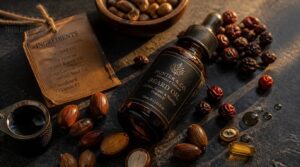
A beard oil label tells you everything you need to know, if you know how to decode it. Most guys skip this step and end up with clogged pores, irritation, or a bottle that goes rancid in two months. Here’s how to read the label like a chemist, starting with the basics.
Knowing which beard oil ingredients to avoid gives you a real edge before you even flip the bottle over.
Carrier Oils Versus Essential Oils
Before you judge a beard oil by its bottle, you need to know what’s actually inside it. Most formulas split into two ingredient families: carrier oils and essential oils.
Here’s the quick breakdown:
- Carrier oils (jojoba oil, argan oil) are fatty, triglyceride-based bases that sit on skin longer and don’t evaporate.
- Essential oils are concentrated volatile extracts with strong plant scents.
- Carrier oils absorb slowly and can be used at full strength.
- Essential oils evaporate fast and need dilution first.
Think of carrier oils as the vehicle and essential oils as the passengers. The base does the conditioning; the aromatics add scent and activity. Because essential oils are complex chemical mixtures, they’re more reactive, which is why they only belong in small amounts. A common guideline is a 2–3% dilution ratio for skincare, or about 10–12 drops of essential oil per ounce of carrier oil.
Ingredient Order and Concentration
Flip the bottle over. The ingredient list tells you more than the front label ever will.
Ingredients appear in descending order by weight. The first five usually make up the bulk of any beard oil formula. So if jojoba oil leads the list, that’s your true base. If it sits near the bottom, you’re mostly paying for cheaper filler.
Here’s the catch: anything at 1% or below can appear in any order. Essential oils often hide down there, which is fine, since they belong at 2–3% anyway. But when a hero carrier oil ranks last, its concentration is likely trace-level.
Position ranks ingredients. It doesn’t reveal exact percentages. Use it as your clue, not your guarantee.
Antioxidants, Vitamins, and Preservatives
Now scan the list for protective ingredients. Vitamin E (tocopherol) is the workhorse here. Its antioxidant properties stop carrier oils from going rancid. Look for tocopherol, or vitamin enrichment claims backed by actual listing. A pure vitamin E tocopherol antioxidant oil can also be applied directly to extend the shelf life of homemade blends.
Vitamin C and A appear too, though oil-soluble forms matter more in beard oils.
Preservatives? Most pure oils skip them. But water-based serums need natural preservatives like rosemary extract. If you see parabens instead, keep reading the label.
Comedogenic Ratings by Skin Type
Vitamins protect the oil. Comedogenic ratings protect your face.
The comedogenic scale runs 0 to 5. Zero means it won’t clog pores. Ratings 4 to 5 mean high breakout risk for acne-prone skin.
Here’s the catch: ratings test ingredients alone. Your beard oil blends 5 to 10 ingredients together, and concentration changes everything.
Skin type compatibility beats any label. Check where that oil sits on the ingredient list.
Shelf Life and Storage Stability
A fresh bottle doesn’t stay fresh forever. Most beard oils last 6 to 24 months, and the PAO symbol (open jar icon) tells you the window after opening.
Your beard oil storage controls the clock. Heat above 40°C speeds rancidity. Light breaks down vitamin E and fades scent. Keep bottles sealed, cool, and out of sunlight.
Three rules that extend beard oil shelf life:
- Store below 25°C, away from windows
- Use amber or dark glass bottles
- Seal tightly to limit oxygen exposure
Follow these and your beard oil benefits last longer. Ignore them and you’re rubbing oxidized oil on your face.
Best Carrier Oils for Beard Health
Carrier oils make up the bulk of any beard oil formula, so they do the heavy lifting for hydration, shine, and skin health. Not all of them perform equally, and the wrong pick can leave your beard greasy or your skin irritated. Here are the five best carrier oils and what each one actually brings to your beard.
Jojoba Oil for Balanced Hydration
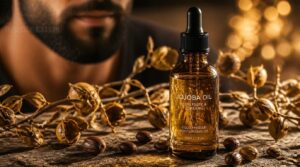
Jojoba oil is the closest match to your skin’s own sebum. On labels, it appears as Simmondsia Chinensis Seed Oil. Technically, it’s a liquid wax, not a triglyceride oil. That structure seals in beard hydration without greasy buildup.
Jojoba oil is the only beard oil ingredient that chemically mirrors your skin’s own sebum
It carries vitamin E plus antibacterial and antioxidant benefits. Use it straight, no dilution needed. It also keeps for years on the shelf.
Argan Oil for Strength and Shine
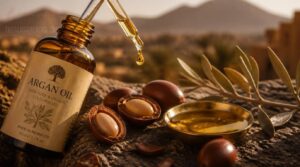
Argan oil, pressed from Argania spinosa kernels, is a strength and shine workhorse. Its vitamin E and polyphenols act as one of nature’s strongest antioxidants, protecting follicles from free radical damage.
It absorbs fast rather than sitting on top, so beard softening happens without grease. Oleic and linoleic acids condition each strand. You only need a few drops for visible beard shine—more just wastes product.
Castor Oil for Moisture Retention
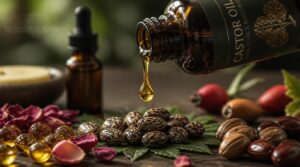
Thick by nature, castor oil is built for moisture retention. Its ricinoleic acid forms a film that cuts water loss by roughly 50 µg/cm2.h in the first hour.
Apply to slightly damp skin:
- Traps moisture against skin health beneath the beard
- Mix 1 part castor to 2–3 parts lighter natural oils
- Heavy alone; dilute in beard oil
- Patch test first
Sweet Almond Oil for Conditioning
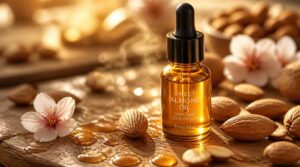
Sweet almond oil, one of the lighter natural oils, brings 68% oleic acid and 21% linoleic acid together for effective hair conditioning and skin moisturization.
Its lipids strengthen the hair’s surface film, smoothing cuticle scales and reducing friction between fibers. That translates directly to beard softening and added shine. It also delivers vitamins A and E to the skin below.
Grapeseed Oil for Oily Skin
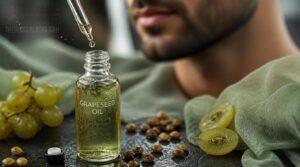
If your skin runs oily, grapeseed oil is your smartest carrier choice. At 65–75% linoleic acid, it absorbs quickly and won’t clog pores.
That noncomedogenic, lightweight profile helps sebum regulation without suffocating your skin. For beard oil application, massage a few drops onto clean skin at night. It locks in moisture without the greasy finish that heavier carrier oils leave.
Beneficial Essential Oils for Beards
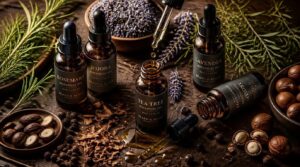
Essential oils are the active muscle behind most quality beard formulas. Each one targets a specific problem, whether that’s flaking skin, excess oil, or irritation. Here are the ones that actually earn their place in your routine.
If your beard grows in with a wave or curl, it’s worth checking whether you have 3A curl patterns, since curlier hair absorbs oils differently.
Tea Tree Oil for Dandruff
Few ingredients fight beard dandruff as efficiently as Tea Tree Oil. Its antifungal properties target Malassezia furfur, the fungus driving beardruff. A 5% concentration clinically dropped scalp lesion scores. That’s your baseline for skin health beneath the beard:
- Reduces fungal activity
- Cuts visible flaking
- Calms scalp irritation
- Delivers antibacterial support
- Effective beardruff treatment option
Cedarwood Oil for Sebum Balance
Cedarwood Oil targets a different problem than tea tree. It works by restoring sebum balance, tackling the oily buildup that clogs follicles.
Its astringent quality regulates oil without stripping moisture. Compounds like cedrol (16–25%) and α-cedrene deliver antiinflammatory activity. It’s noncomedogenic, so follicle blockage isn’t a concern.
Dilute 2–3 drops per tablespoon of beard oil ingredients.
Lavender Oil for Sensitive Skin
Lavender oil does something cedarwood can’t: calming reactive skin. It’s antiinflammatory and hypoallergenic, making it the go-to for sensitive skin prone to redness.
Its two main compounds, linalyl acetate (up to 51%) and linalool (up to 35%), do the heavy lifting. Mix 1–2 drops per teaspoon of beard oil. Always patch test first.
Peppermint and Eucalyptus Cooling Benefits
Where lavender calms, peppermint and eucalyptus energize. Peppermint’s menthol activates TRPM8 cold receptors, delivering real cooling benefits without actually lowering temperature. Eucalyptol (1,8-cineole) in eucalyptus beard oil mirrors that effect.
- Cuts surface itch on contact
- Refreshes beard odor throughout the day
- Carries antiinflammatory properties to irritated follicles
- Clears airway sensation during application
- Stimulates scalp circulation beneath your beard
Safe Dilution and Patch Testing
Always check beard oil ingredients for essential oils before applying to beard oil sensitive skin. Run a beard oil patch test: apply a quarter-sized amount to your inner elbow, wait 48 hours, then check at 96 hours for redness.
For beard oil dilution, keep essential oils under 2% of your mixture. Beard oil hypoallergenic labels don’t make this step optional.
Beard Oil Ingredients to Avoid

Not every ingredient on a beard oil label is working in your favor. Some common ones quietly cause dryness, irritation, or buildup over time. Here’s what to watch out for before you buy.
Synthetic Fragrance and Hidden Allergens
That word "fragrance" on the label? It can hide hundreds of individual chemicals.
Manufacturers legally list synthetic fragrances as just "parfum" without naming each compound. Many contain known contact allergens that trigger itchy, red rashes — sometimes 24 hours after exposure.
Your face and hands are especially vulnerable. If a beard oil lists "fragrance" without specifics, skip it.
Parabens and Harsh Preservatives
Even though parabens prevent bacterial and mold growth in cosmetics, butylparaben and propylparaben raise real concerns. Some health organizations classify them as potential endocrine disruptors — chemicals that can interfere with normal hormonal function.
Scan labels for methylparaben, ethylparaben, propylparaben, and butylparaben. A beard oil worn all day means prolonged skin contact, and that daily exposure adds up quickly.
Overconcentrated Essential Oil Blends
Too much of a good thing burns. Essential oils are highly concentrated plant extracts, and applying them undiluted is one of the most common causes of skin irritation in beard oil ingredients. Safe blends need to stay below 5% total concentration.
At higher levels, the hundreds of active compounds in each oil stack up fast and overwhelm your skin’s tolerance.
Mineral Oil and Heavy Occlusives
Mineral oil doesn’t absorb. It sits on your skin like a film, slowing water loss rather than nourishing the follicle.
You’ll find it labeled "paraffinum liquidum" on ingredient lists. It scores 0 out of 5 for comedogenic potential, but in beard oils it often leaves a heavy, greasy finish that’s hard to rinse out and traps residue over time.
Silicones and Product Buildup
That smooth, glassy finish in some beard oils? It likely comes from silicones.
These ingredients create a water-insoluble film on strands that standard washing won’t remove. Spot them by checking for "-cone" or "-siloxane" endings on beard oil ingredient lists. The product buildup compounds over time, risking pores clogging and making your beard grooming routine feel like a losing battle.
Top 8 Healthy Beard Oils and Serums
Now that you know what to look for, finding the right product gets a lot easier. The eight oils and serums below were chosen based on clean, functional ingredients that hold up under label scrutiny. Each one brings something different to the table, so you can match the formula to your beard’s actual needs.
1. Beard Growth Serum for Thicker Beard
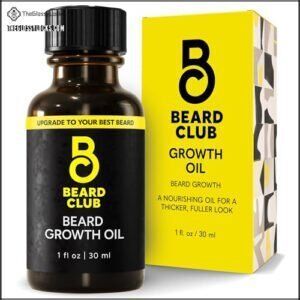
A well-formulated beard growth serum targets patchy spots where oil alone won’t cut it. This one blends castor, cedar, and avocado oils to condition follicles and deliver a steady supply of nutrients directly to the skin beneath your beard.
Castor oil’s ricinoleic acid improves moisture retention by 30-40%, so the skin supporting your hair stays hydrated long enough to reduce itch and flaking. Cedar oil helps regulate sebum, keeping your skin balanced rather than greasy or stripped.
Apply a small amount daily to cleansed skin and focus on areas of thin or patchy growth. Use circular motions until you get even coverage.
Results vary. Some users report fuller patches over consistent weeks of use; others see minimal change. The cedar-sandalwood scent runs strong, so keep that in mind. For conditioning, itch relief, and root support, it holds up.
| Best For | Men looking to condition their beard, reduce itch, and gradually improve fullness in patchy areas with consistent daily use. |
|---|---|
| Product Type | Growth Serum |
| Carrier Oils | Castor, Cedar, Avocado |
| Scent Profile | Cedar-Sandalwood (Strong) |
| Key Actives | None |
| Primary Benefit | Itch Relief and Conditioning |
| Skin Suitability | All Beard Types |
| Additional Features |
|
- Blends castor, cedar, and avocado oils to hydrate skin, reduce beard itch, and support healthier-looking facial hair
- Absorbs reasonably well in small amounts and fits easily into a morning or nighttime grooming routine
- Can help soften and condition beard hair over time with regular application
- The cedar and sandalwood scent is strong and tends to linger, which may not suit everyone
- Hair growth results are inconsistent — some users see no visible improvement even after weeks of use
- Thick, oily formula is prone to staining fabric and requires careful, measured application without an included dropper
2. Beard Oil Smart Beard Serum
If your beard needs more than conditioning, Smart Beard Serum steps up the formula. Alongside carrier oils like castor and jojoba, it brings in actives: niacinamide, biotin, and caffeine. These work at the follicle level rather than just coating the hair shaft.
That difference matters. Serums penetrate deeper than standard oils, delivering nutrients where growth actually starts. Clinical data points to a 7.97% density increase after 90 days, though results vary. Some users notice texture improvements within days; others finish the bottle without much change.
One flag: certain formulas include 5% minoxidil, so keep those away from children. Apply 3 to 5 drops to damp skin daily. It absorbs cleanly, no greasy residue.
| Best For | Anyone looking to go beyond basic beard conditioning with active ingredients that target growth and density at the follicle level. |
|---|---|
| Product Type | Active Serum |
| Carrier Oils | Castor, Jojoba |
| Scent Profile | Mild to Undetectable |
| Key Actives | Niacinamide, Biotin, Caffeine |
| Primary Benefit | Density and Growth Support |
| Skin Suitability | All Beard Types |
| Additional Features |
|
- Lightweight formula absorbs quickly without leaving a greasy residue
- Active ingredients like niacinamide, biotin, and caffeine work at the follicle level to support growth and density
- Users report noticeable improvements in beard texture and thickness within days of starting use
- Results vary significantly — some users finish the bottle without seeing meaningful improvement
- The scent is inconsistent across users, ranging from nearly undetectable to unpleasant
- Formulas containing 5% minoxidil require extra caution, especially around children
3. Beard Growth Oil Cedarwood Tea Tree
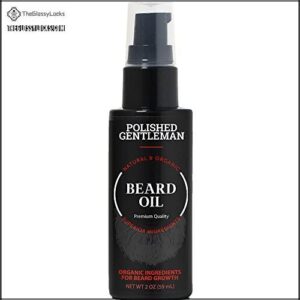
Not every formula needs actives to perform. This cedarwood and tea tree mix keeps it simple: jojoba and argan handle the conditioning base while the essential oil pair targets skin health directly.
Tea tree clears the follicle environment with antimicrobial action at 2-5%, making it the go-to for beardruff. Cedarwood regulates sebum and reduces inflammation at the follicle base. Together, they get to the root of the issue rather than masking symptoms. That’s a more sustainable fix than layering on serums.
Paraben-free, sulfate-free, and alcohol-free, this 2-ounce formula is made in a cGMP-certified US facility. Apply a few drops post-shower, massage into the skin beneath, and it absorbs without residue.
| Best For | Anyone dealing with beard itch, flakes, or rough texture who wants a clean, no-fuss daily oil that actually treats the skin underneath. |
|---|---|
| Product Type | Essential Oil Blend |
| Carrier Oils | Jojoba, Argan |
| Scent Profile | Cedarwood-Tea Tree (Subtle) |
| Key Actives | Tea Tree (Antimicrobial) |
| Primary Benefit | Beardruff and Skin Health |
| Skin Suitability | Irritation-Prone Skin |
| Additional Features |
|
- Lightweight blend of jojoba and argan absorbs cleanly without leaving a greasy film
- Cedarwood and tea tree work together to reduce beardruff and soothe irritated skin at the follicle level
- Paraben-free, sulfate-free, alcohol-free, and made in a cGMP-certified US facility
- The cedarwood and tea tree scent may not appeal to everyone, even though it’s fairly subtle
- Consistency runs on the thinner side, which can feel underwhelming if you prefer a richer oil
- Some customers have questioned whether the price matches the 2-ounce size
4. Natural Beard Growth Serum
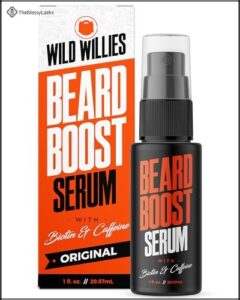
If simple essential oil blends handle skin health, active ingredient technology takes it further. This serum leads with Capilia Longa, a stem cell-derived compound from turmeric root. In a 90-day clinical study, participants saw a 49% increase in hair density and a 7.97% boost in follicular activity.
Jojoba and avocado oils handle the hydration base while biotin and caffeine stimulate dormant follicles beneath the surface. That’s a meaningful combination: conditioning the hair you have while recruiting follicles that aren’t producing yet.
No parabens, no synthetic dyes, and zero reported skin intolerance across all beard types. At $24.97, it delivers clinically supported results without compromising ingredient integrity.
| Best For | Anyone looking to fill in patchy areas or grow a thicker, fuller beard using a serum backed by active ingredients and clinical data. |
|---|---|
| Product Type | Active Serum |
| Carrier Oils | Jojoba, Avocado |
| Scent Profile | Not Specified |
| Key Actives | Capilia Longa, Biotin, Caffeine |
| Primary Benefit | Follicle Activation and Density |
| Skin Suitability | All Beard Types |
| Additional Features |
|
- Combines biotin and caffeine to wake up dormant follicles while natural oils keep existing hair soft and hydrated
- Backed by a 90-day clinical study showing a 49% increase in hair density
- Free from parabens and synthetic dyes, with no reported skin intolerance across beard types
- Results depend heavily on genetics and how consistently you use it
- Needs ongoing application to maintain effects — skipping it means losing ground
- Not a solution for medical hair loss conditions
5. Bossman Jelly Beard Oil Hammer Scent
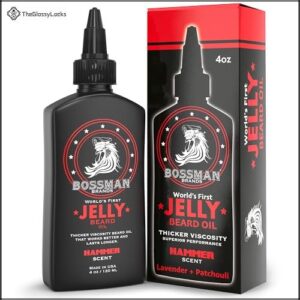
The jelly format is what separates Bossman from traditional liquid oils. That thicker consistency traps moisture more effectively, making it especially useful for thick, frizzy, or curly beards that liquid formulas can’t tame.
The base combines avocado oil, castor oil, shea butter, and cocoa seed butter. All alcohol-free and paraben-free. Castor oil’s ricinoleic acid improves moisture retention by 30-40%, while shea butter seals the hair shaft without greasy residue.
The Hammer scent layers geranium, lavender, vanilla, and patchouli into a warm, long-lasting aromatic profile that holds through most of the day.
At 4 fluid ounces, you’re getting double what most competitors offer in a single jar. Shake before use for consistent texture.
| Best For | Anyone with a thick, frizzy, curly, or hard-to-manage beard who wants all-day moisture and conditioning without greasy residue. |
|---|---|
| Product Type | Conditioning Jelly |
| Carrier Oils | Avocado, Castor, Shea Butter |
| Scent Profile | Geranium, Lavender, Patchouli |
| Key Actives | None |
| Primary Benefit | Moisture Lock and Frizz Control |
| Skin Suitability | Coarse and Curly Beards |
| Additional Features |
|
- Jelly consistency locks in moisture better than liquid oils, making it ideal for coarse or unruly beards
- Packed with natural ingredients (shea butter, avocado oil, castor oil) that nourish without alcohol or harsh chemicals
- A generous 4oz jar lasts several months and delivers a long-lasting, warm scent throughout the day
- Can feel heavy or transfer onto hands and surfaces in hot weather if not fully absorbed
- The Hammer scent is bold — not a great fit for anyone who prefers fragrance-free products
- Requires shaking before each use and some trial-and-error to find the right amount for your beard length
6. Maxx Beard Growth Natural Solution
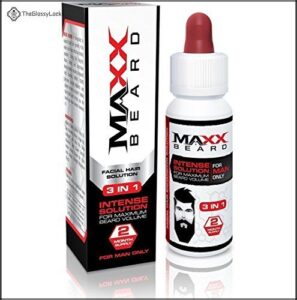
Maxx Beard takes a more clinical approach than most oils on this list. Its liposome delivery system pushes active ingredients deeper into the skin rather than just coating the surface.
The formula combines biotin, niacin, and 15% argan oil alongside a proprietary herbal mix of He Shou Wu, pomegranate extract, and red clover. Peptides like Myristoyl Pentapeptide-17 add a targeted layer of follicle support, making this more serum than traditional oil.
Apply no more than 1 mL at night using the included dropper. The 2 oz bottle covers roughly 3 months of daily use.
Some users report mild irritation or dryness early on. Always patch test first.
| Best For | Anyone serious about tackling patchy beard areas who wants a more targeted, serum-style treatment over a standard beard oil. |
|---|---|
| Product Type | Clinical Serum |
| Carrier Oils | Argan (15%) |
| Scent Profile | Not Specified |
| Key Actives | Biotin, Niacin, Peptides |
| Primary Benefit | Deep Follicle Penetration |
| Skin Suitability | Patchy or Thinning Areas |
| Additional Features |
|
- Liposome delivery system drives active ingredients deeper into the skin for better absorption
- Nutrient-rich formula with biotin, niacin, argan oil, and herbal extracts covers multiple angles of follicle support
- One 2 oz bottle lasts up to 3 months, making it cost-effective for long-term use
- Results vary widely and may take 3 months to notice any visible improvement
- Some users experience skin irritation, burning, or dryness, especially early in use
- Effectiveness ultimately depends on genetics and consistent daily application
7. Delta Genesis Beard Growth Oil
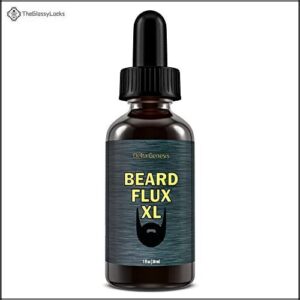
Delta Genesis targets follicle activity from the inside out. Its caffeine-infused formula stimulates circulation at the scalp level, pairing well with its botanical oil mix of argan, safflower, jojoba, and amla.
Argan’s comedogenic rating of 0 keeps pores clear while delivering vitamin E. Jojoba mimics sebum, boosting skin hydration up to 30%. Together, they soften and condition without clogging.
The formula is fragrance and paraben free, making it a solid pick for sensitive skin. Most users notice less itchiness within weeks. Visible growth commonly follows after 6 to 8 weeks of consistent daily use.
At 2.4 oz, it’s priced higher than basic alternatives, but the clean ingredient list justifies the investment.
| Best For | Anyone with sensitive skin who wants a clean, natural beard oil that helps reduce itchiness and supports fuller growth with consistent use. |
|---|---|
| Product Type | Botanical Oil |
| Carrier Oils | Argan, Jojoba, Safflower, Amla |
| Scent Profile | Fragrance-Free |
| Key Actives | Caffeine |
| Primary Benefit | Gentle Sensitive Skin Support |
| Skin Suitability | Sensitive Skin |
| Additional Features |
|
- Fragrance and paraben free, making it gentle enough for sensitive or irritation-prone skin
- Combines argan, jojoba, safflower, and amla oils for deep moisture and conditioning without clogging pores
- Caffeine-infused formula may help stimulate follicle activity to support fuller, healthier-looking beard growth
- Priced higher than basic argan oil alternatives, which may not suit every budget
- Results vary — some users report little to no noticeable improvement in growth
- Effectiveness depends on consistent, long-term use, so patience is required before seeing visible changes
8. Honest Amish Classic Beard Oil
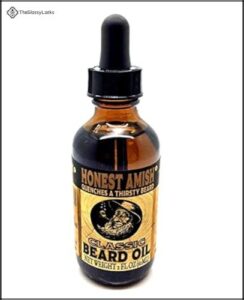
Honest Amish Classic Beard Oil packs eight carrier oils into a 2-ounce bottle: argan, jojoba, pumpkin seed, avocado, sweet almond, apricot kernel, and kukui nut. Argan’s comedogenic rating of 0 keeps pores clear while delivering vitamin E. Jojoba mimics sebum, boosting skin hydration up to 30%.
Cedarwood, lavender, and peppermint supply the scent through natural essential oils only. No synthetic fragrance, no parabens, no sulfates. The label is actually clean.
That woodsy, licorice-forward aroma is divisive. Factor it in before you purchase.
Apply a dime-sized amount to a damp beard post-shower. Most users notice reduced itch and softer hair within days. For a handcrafted organic formula without chemical fillers, this one holds up.
| Best For | Anyone with a sensitive beard and skin who wants a clean, organic daily oil without synthetic additives. |
|---|---|
| Product Type | Classic Beard Oil |
| Carrier Oils | Argan, Jojoba + 6 More |
| Scent Profile | Woody, Earthy, Licorice |
| Key Actives | None |
| Primary Benefit | Softening and Daily Hydration |
| Skin Suitability | All Beard Types |
| Additional Features |
|
- Eight carrier oils (including argan and jojoba) deeply condition beard hair and skin while absorbing quickly with no greasy residue
- Made with all-natural and organic ingredients — no synthetic fragrance, parabens, or sulfates
- Noticeably reduces beard itch and improves softness and manageability within days of use
- The woody, earthy, black-licorice scent is polarizing and may be too strong or unpleasant for some users
- Fragrance fades within half a day, so you’ll need to reapply if scent matters to you
- At just 2 ounces, the bottle is small and may run out faster with daily use
Frequently Asked Questions (FAQs)
What is the healthiest beard oil to use?
The healthiest beard oil uses jojoba or argan oil as the carrier base. Add vitamin E for freshness. Keep essential oils diluted, and skip synthetic fragrance entirely.
What ingredients should I avoid in beard oil?
What ingredients should I avoid in beard oil? Think of your label like a strict bouncer list. Skip synthetic fragrances, parabens, silicones, mineral oil, and sulfates. They clog pores and trigger real skin irritation fast.
What are the main ingredients in beard oil?
Most beard oils contain carrier oils like jojoba or argan as the base, plus essential oils for scent. Many also include vitamin E for antioxidant protection.
What is the best homemade beard oil?
You get what you put in. Mix jojoba oil and argan oil as your base carrier oils, add vitamin E to prevent oxidation, then drop in cedarwood or tea tree for targeted beard oil ingredients.
How often should I apply beard oil daily?
Apply beard oil once daily after showering. Start with 2–3 drops and spread them in your palms first. Dry or brittle beards do better with twice-daily use. Oily skin? Scale back to every other day.
Can beard oil help with patchy beard growth?
Not exactly. Oils like jojoba and argan condition existing hair and skin, but no oil creates new follicles. Patchy spots really need a dermatologist, not a bottle.
Can I make homemade beard oil safely at home?
Yes, and it’s simpler than you think. Like a chemist carefully measuring doses, keep essential oils to 2-3 drops per ounce, use jojoba or argan as your carrier base, and always store in amber glass.
Can beard oil replace a beard conditioner entirely?
Not fully. Oil coats and lubricates your hair shaft, but conditioner’s butters and waxes deliver deeper softening and detangling that oil simply can’t replicate for thicker beards.
Does organic certification guarantee better ingredient quality?
Does organic certification guarantee better ingredient quality? Not exactly. Organic certification covers farming practices, not every processing step. Even organic virgin argan oil can still contain conventional additives. Always carefully read the full ingredient list.
Can beard oil also be applied to mustaches?
Can beard oil be applied to mustaches? It can. Mustache hair covers roughly 10% of a full beard’s surface area — beard oil absorption rate is actually faster here, so one to two drops is enough.
Conclusion
Take a guy who buys three different beard oils a year, each one smelling great but leaving his skin dry and irritated. The fourth time around, he actually reads the label first. Jojoba is listed second. No parfum. Tea tree under one percent. He never goes back to guessing again.
That’s the real value of knowing your healthy beard oil ingredients cold. The label tells you everything. You just have to know what you’re reading.