This site is supported by our readers. We may earn a commission, at no cost to you, if you purchase through links.
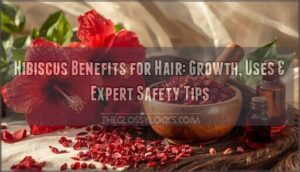
Your scalp produces sebum every day, yet some ancient beauty traditions skip modern oils entirely and reach for dried flowers instead. Hibiscus has been strengthening hair and calming irritated scalps in Ayurvedic medicine for centuries, long before lab-synthesized serums promised similar results.
The crimson petals pack vitamins C and A, amino acids that build keratin, and anthocyanins that shield follicles from oxidative damage. These compounds don’t just coat your strands—they penetrate the scalp to improve blood flow and reduce inflammation at the root level.
Whether you’re battling breakage, thinning edges, or dullness, this flower offers a gentler path to resilient hair without harsh additives.
Table Of Contents
Key Takeaways
- Hibiscus delivers vitamins C and A, amino acids for keratin production, and antioxidants that penetrate your scalp to improve blood flow and reduce inflammation at the follicle level.
- You can use hibiscus as an oil, mask, powder, shampoo, or tea—each method strengthens hair, reduces breakage, and soothes scalp irritation through consistent application over 3-6 months.
- While Ayurvedic traditions have used hibiscus for centuries, modern human studies remain limited, so results vary individually and won’t reverse permanent pattern baldness.
- Always patch-test hibiscus products for 24 hours before full use, avoid them if you’re pregnant or taking anticoagulants, and choose organic sources with clear ingredient labels.
Key Nutrients in Hibiscus for Hair
Hibiscus isn’t just a pretty flower—it’s packed with nutrients that work from root to tip. The petals and leaves contain vitamins, minerals, and plant compounds that strengthen your hair and protect your scalp.
Here’s what makes hibiscus such a powerhouse for healthier hair.
Vitamins and Antioxidants
Hibiscus delivers serious vitamin therapy through Vitamin C and carotenoids that fight free radicals attacking your hair follicle cells. These antioxidant benefits shield you from oxidative stress, which can stall hair growth and weaken strands. Anthocyanins calm scalp inflammation, while Vitamin A balances oil production. It’s natural remedies for hair growth that support hair nutrition from the root up.
Additionally, understanding scientific study summaries can provide valuable insights into the effectiveness of various hair growth treatments.
Amino Acids and Minerals
Beyond antioxidants, your scalp craves protein synthesis to build strong keratin strands. That’s where hibiscus for hair growth shines through its amino acid profile—aspartic acid and glycine fuel follicle repair. Mineral balance matters too: iron, calcium, magnesium, zinc, and copper in hibiscus oil support keratin production and enzyme activity for healthier hair follicle nutrition. Understanding language patterns can also help in researching the benefits of hibiscus for hair growth.
- Iron and zinc act as cofactors that regulate your hair growth cycle.
- Calcium and magnesium strengthen follicle structure from within.
- Amino acids provide the building blocks your body needs for new hair.
Natural Plant Compounds
The real magic happens when flavonoids like quercetin and kaempferol boost scalp circulation, while polyphenols—gallic acid and ferulic acid—calm inflammation around your follicles.
Tannins balance oily roots, and phytosterols in hibiscus oil cleanse without stripping moisture.
For those exploring growth-enhancing treatments, minoxidil beard growth results show how targeted formulations work best when scalp health is already optimized.
Anthocyanins shield hair from oxidative stress, turning hibiscus leaves and hibiscus powder into potent allies for hibiscus for hair growth routines.
Like curry leaves’ role in supporting hair follicle health, hibiscus works at the cellular level to protect strands from environmental damage.
Major Hibiscus Benefits for Hair
Hibiscus isn’t just another trendy ingredient—it’s backed by centuries of traditional use and growing modern interest.
From strengthening your roots to bringing back that natural glow, this flower addresses multiple hair concerns at once.
Here’s what hibiscus can actually do for your hair.
Stimulates Hair Growth
Think of your hair follicles as tiny engines that need the right fuel to run. Hibiscus delivers amino acids that ramp up keratin production, while its flavonoids boost scalp health by improving circulation. The vitamin C acts as a bodyguard, protecting follicles and supporting collagen. Here’s what this means for your hair growth patterns:
For even faster results, you can pair hibiscus treatments with onion juice application techniques, which work synergistically to wake up dormant follicles.
Hibiscus fuels your hair follicles like an engine, delivering amino acids for keratin, flavonoids for circulation, and vitamin C to protect growth
- Stronger follicle stimulation through improved blood flow to your scalp
- Enhanced hair thickness as keratin production increases in each strand
- Better moisture retention from natural plant compounds that reduce fragility
- Accelerated hair regrowth when you use hibiscus oil consistently
- Optimized growth patterns through antioxidant protection of follicle cells
Prevents Hair Loss and Breakage
Shedding can feel like a battle you’re losing strand by strand. Hibiscus fights back with vitamins C and B that support your scalp health, while amino acids boost keratin synthesis to reduce breakage. Polyphenols calm inflammation that triggers hair loss, and antioxidants shield follicles from oxidative stress. Regular topical use has shown improved hair density in preliminary studies.
| Hair Loss Solution | How Hibiscus Helps |
|---|---|
| Follicle Strengthening | Amino acids build stronger keratin structure |
| Breakage Prevention | Fatty acids moisturize shafts, reducing brittleness |
| Scalp Health Tips | Anti-inflammatory compounds soothe irritation |
| Hair Follicle Care | Antioxidants protect from oxidative damage |
| Hair Regrowth Support | Consistent use improves density over time |
Delays Premature Graying
Hibiscus oil promotes melanin production and hair pigmentation through antioxidant-rich polyphenols that protect follicle health. Anthocyanins in hibiscus show promise for color enhancement by shielding melanocyte cells from oxidative stress. While human trials on graying prevention remain limited, regular hibiscus hair care may slow premature graying, though results vary individually.
Adds Shine and Softness
Hibiscus oil coats your hair shaft with natural mucilage and amino acids, creating a smooth surface that reflects light beautifully. This cuticle care mechanism reduces frizz while boosting softness through plant-based conditioning agents.
Unlike synthetic additives that may irritate delicate scalps, hibiscus offers safe natural ingredients for skin that work gently without compromising results.
Regular use of hibiscus-infused natural hair remedies delivers cumulative shine enhancement and hair smoothening effects, rivaling synthetic products. The gloss factors stem from mildly acidic compounds that tighten cuticle scales for improved hair care results.
Soothes Scalp and Reduces Dandruff
Your scalp deserves relief from the itch-scratch cycle that dandruff causes. Hibiscus addresses flaky skin at its source with anti-inflammatory compounds that calm scalp irritation while antifungal properties reduce yeast linked to dandruff.
This scalp treatment works through:
- Balancing scalp pH to discourage fungal growth
- Soothing itchy scalp with natural cooling agents
- Supporting scalp health through moisture retention
Regular hibiscus application improves overall scalp comfort.
How to Use Hibiscus for Hair Care
You don’t need expensive salon treatments to tap into hibiscus’s hair-boosting power. Whether you prefer oils, masks, powders, or a simple cup of tea, there’s a method that fits your routine.
Here’s how to put this vibrant flower to work for stronger, healthier hair.
Hibiscus Hair Oil
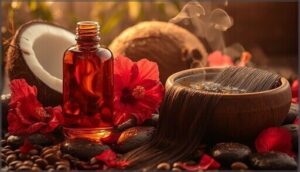
You can create your own herbal hair treatment by infusing hibiscus powder into a carrier oil like coconut or jojoba. Oil extraction methods matter—cold-pressing preserves nutrients best.
Warm the blend gently, then use scalp massage techniques to boost circulation and promote hair growth.
Blending hibiscus hair oil with essential oils adds aromatherapy benefits. Natural preservatives like vitamin E extend shelf life and effectiveness.
Hibiscus Hair Masks and Pastes
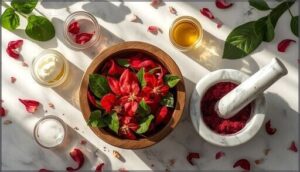
You can blend fresh petals or dried hibiscus powder with yogurt, coconut oil, or aloe vera to whip up DIY hair masks that coat every strand. These natural hair remedies deliver hibiscus paste benefits like moisture and shine.
Apply your herbal hair masks for 20–30 minutes, then rinse thoroughly. Mixing hibiscus leaves paste with amla or fenugreek creates powerful herbal combinations for stronger, softer hair.
Hibiscus Powder and Shampoo
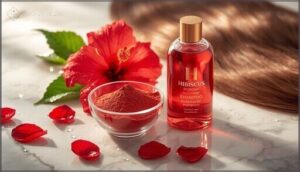
You can also grab pre-made hibiscus powder or shop for a ready-to-use shampoo packed with this potent herb. Powder formulation works as a gentle shampoo ingredients base that bolsters scalp treatment, controls excess oil, and may boost hair coloration with a subtle reddish tint.
Here’s what hibiscus powder and shampoo bring to your hair care routine:
- Promotes hair growth by delivering antioxidants directly to follicles
- Reduces hair loss through keratin synthesis and improved scalp health
- Adds natural shine and softness for smooth, manageable strands
- Acts as a mild astringent to balance sebum production
- Offers plant-based cleansing without harsh synthetic additives
Always patch-test first and rinse thoroughly to avoid residue.
Drinking Hibiscus Tea for Hair Health
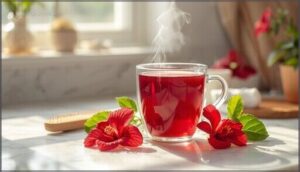
Sipping hibiscus tea for hair health offers an inside-out approach that’s gentler than topical treatments. This herbal infusion delivers polyphenols and vitamin C to support collagen maintenance and combat oxidative stress, which can slow hair aging.
Regular daily consumption provides hydration that nourishes your scalp from within, creating a healthier environment for growth. Plus, it’s caffeine-free—perfect if stimulants make you jittery.
Ayurvedic and Scientific Perspectives
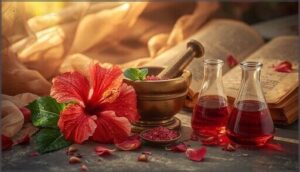
Hibiscus has deep roots in Ayurvedic medicine, where it’s been used for centuries as a trusted remedy for hair concerns.
Modern science is starting to catch up, examining what makes this plant work at a cellular level. Here’s what ancient wisdom and current research reveal about hibiscus for your hair.
Traditional Ayurvedic Uses
In Ayurveda, hibiscus stands out as a powerful Keshya herb—a time-honored ingredient in herbal hair tonics designed to nourish your scalp. Ancient Ayurvedic hair care practices often pair hibiscus with Amla or Brahmi in Pitta balancing formulas that restore vitality.
These Ayurvedic hair remedies tap into dosha therapy principles, offering herbal hair treatment options that support healthy growth and shine naturally.
Modern Research and Studies
Study findings on hibiscus for hair growth remain limited. A 2003 trial showed hibiscus leaf extract improved hair follicles and length in rats, yet human clinical trials are scarce.
Research gaps emphasize the need for controlled studies measuring scalp health and hair follicle stimulation.
While some trials note hibiscus powder promotes keratinocyte activity, evidence for preventing hair loss in people is still emerging.
Expert Insights and Recommendations
Professionals highlight standardized hibiscus extracts paired with amla or coconut oil to strengthen hair follicle health and root vitality. Patch testing helps detect sensitivity before applying herbal remedies to your scalp.
Scalp massage with hibiscus-infused formulations boosts blood flow for enhanced hair nourishment. Choose products with clear labeling of the hibiscus plant’s species and minimal additives to optimize hair growth benefits and support safe hair care routines.
Safety, Side Effects, and Best Practices
Hibiscus is generally safe for topical use, but it’s not risk-free for everyone. Some people experience mild reactions, while others need to skip it entirely based on their health profile.
Let’s walk through the key safety considerations you should know before adding hibiscus to your hair care routine.
Possible Allergic Reactions
Though hibiscus is generally safe, you can still experience allergy symptoms if your body reacts to compounds in the plant. Some people develop skin irritation or hypersensitivity reactions, especially those with pollen sensitivity to related plants.
Watch for these signs when using hibiscus powder or other hair care products:
- Contact dermatitis (redness, itching, or rash on your scalp)
- Hives or swelling after applying hibiscus treatments
- Respiratory symptoms if you’re sensitive to hibiscus pollen
- Digestive discomfort from drinking hibiscus tea
If irritation occurs, stop use immediately and consider dermatitis treatment options with your healthcare provider.
Safe Application Methods
To protect your scalp health and treatment success, always conduct patch testing before full application. Apply a small amount of hibiscus powder or hair mask behind your ear, then wait 24 hours to check for allergy checks.
| Application Method | Best Practice |
|---|---|
| Hair masks | Limit to 20–30 minutes; rinse thoroughly |
| Scalp massage | Use clean hands; avoid broken skin |
| Product storage | Keep away from heat and sunlight |
Tips for Choosing Quality Hibiscus Products
You want herbal remedies that actually work, so picking the right organic hair care products matters. Look for clear product labels that list 100% pure hibiscus powder without fillers. Check ingredient sourcing and cold-pressed extraction methods. Brand reputation signals quality control—hunt for third-party testing, lot numbers, and certifications. Steer clear of vague claims and mystery ingredients in plant-based hair products, because your scalp deserves transparency.
- Verify botanical name (Hibiscus rosa-sinensis or sabdariffa) on organic hair solutions packaging
- Confirm independent lab results for pesticides and heavy metals
- Choose cold-pressed or solvent-free extraction methods for maximum potency
- Cross-reference batch codes on brand websites to catch counterfeits
- Compare concentration percentages across products for true value
Who Should Avoid Hibiscus for Hair
Certain conditions require you to skip hibiscus remedies altogether. If you have a hibiscus allergy or skin sensitivity, topical products can trigger redness and irritation. Pregnancy precautions matter—consult your doctor before applying herbal remedies to your scalp.
Medication interactions with anticoagulants pose real risks, and the FDA hasn’t approved hibiscus for hair loss.
Explore hair product alternatives and prioritize hair care and maintenance strategies that suit your unique health profile.
Frequently Asked Questions (FAQs)
Can hibiscus be used on all hair types?
Hibiscus works across straight, wavy, curly, and coily hair types by supporting scalp health and moisture retention.
Your hair porosity and curl patterns may affect results, so adjust concentration and carriers to match your specific texture and regimen.
Can hibiscus help with scalp psoriasis or eczema?
Think of scalp conditions like fires—you don’t just toss water and hope. Hibiscus leaves show anti-inflammatory promise in lab studies, but evidence for psoriasis relief or eczema treatment remains thin.
Consult your dermatologist before using herbal remedies for hair.
How long before seeing visible hair growth results?
Most people notice subtle improvements in hair density and scalp health within 4 to 8 weeks of consistent hibiscus use.
Visible results and regrowth patterns generally emerge after 3 to 6 months of regular application.
Does hibiscus work better on certain hair types?
Dry or textured hair often benefits most from hibiscus masks due to natural conditioning properties.
Those with oily scalps may appreciate its astringent effects on sebum balance, while fine hair sees subtler results.
Can hibiscus reverse baldness or receding hairlines?
Unfortunately, no human trials prove hibiscus can reverse baldness or receding hairlines. While animal studies show follicle stimulation and scalp health improvements, established pattern hair loss involves permanent follicle miniaturization beyond botanical reversal.
Is fresh hibiscus more effective than dried forms?
Like wine concentrating its bouquet as it ages, dried hibiscus flowers and leaves pack more phytochemicals per gram than their fresh counterparts.
Removing moisture intensifies antioxidants, making dried forms ideal for consistent hair growth formulations.
Conclusion
A single crimson petal holds centuries of wisdom your scalp has been waiting for. When you trade synthetic shortcuts for hibiscus benefits for hair, you’re choosing a path that strengthens from the follicle up—not just the surface.
The research backs what Ayurveda knew all along: real resilience grows when you nourish the root. Patch-test first, choose quality sources, and let this flower rewrite what healthy hair means for you.
- https://elsevier.blog/sub-points-outlining-organization/
- https://www.gauthmath.com/solution/1837934067002466/2-Main-point-1-Subpoint-2-Subpoint-3-Subpoint
- https://www.sciencedirect.com/science/article/pii/S0749208123000268
- https://mcluhan.unk.edu/lawson/?page_id=187
- https://libraryguides.ccbcmd.edu/c.php?g=1408884&p=10790074