This site is supported by our readers. We may earn a commission, at no cost to you, if you purchase through links.

Most beard oils on store shelves smell great but hide a simple truth: they’re easy to make yourself—and often work better when you do. The difference shows in the feel of your beard, the way it lays, and even how your skin reacts underneath.
With a few natural oils and a glass dropper, you can craft a blend that hydrates, softens, and adds a clean, subtle scent that suits you.
Making your own homemade beard oil recipe isn’t about saving money—it’s about control, quality, and knowing exactly what’s touching your face every morning.
Table Of Contents
- Key Takeaways
- Key Benefits of Homemade Beard Oil
- Essential Ingredients for Beard Oil
- Choosing The Right Carrier Oils
- Selecting Essential Oils for Scent and Care
- Step-by-Step Homemade Beard Oil Recipe
- Top 4 Oils for DIY Beard Oil
- Frequently Asked Questions (FAQs)
- How do I make my own beard oil?
- Which homemade oil is best for beard growth?
- What ingredients make good beard oil?
- Can You Make your own beard oil?
- What is a DIY Beard oil recipe?
- How do you make live bearded oil?
- Can I make a 2 oz bottle of Beard oil?
- How do you make a sweet mint Beard oil?
- How can I make beard oil at home?
- What is the most important ingredient in beard oil?
- Conclusion
Key Takeaways
- Making your own beard oil gives you control over ingredients and quality, leading to a softer, healthier beard and calmer skin than most store-bought options.
- The core of a good DIY beard oil is choosing the right carrier oils (like jojoba, argan, almond, grapeseed, or coconut) matched to your skin type, then keeping essential oils at about 1% for safety.
- Smart ingredient choices—hydrating carrier oils, targeted essential oils (tea tree, lavender, peppermint, cedarwood, rosemary), and boosters like vitamin E—help reduce itch and dandruff, boost shine, and support healthy growth.
- Proper technique matters: mix roughly 30–60 ml of carrier oils with a few drops of essential oils, store the blend in dark glass in a cool place, and apply a small amount daily to both beard and skin.
Key Benefits of Homemade Beard Oil
Homemade beard oil doesn’t just look good on your shelf—it changes how your beard feels and behaves every day. A few drops can take your beard from dry and unruly to soft and well-kept.
For expert tips on blending nourishing oils that boost softness and shine, check out this guide to the best beard growth oils.
Here’s what makes this simple oil mix such a game changer for daily grooming.
Hydration and Moisturization
Hydration is the quiet power move behind real beard health. Your homemade beard oil uses natural skincare oils to lock in skin hydration, protect the barrier, and keep moisture balance steady even in dry air.
Jojoba and argan boost oil absorption, beard conditioning, and hair elasticity so your beard stays soft, flexible, and strong instead of brittle.
Reducing Itch and Beard Dandruff
Once your beard is hydrated, you want it calm—not snowing flakes on your shirt. A smart homemade beard oil recipe can hit Beard Dandruff, Skin Irritation, and Fungal Infections at the same time by feeding the skin and starving the yeast that causes flakes.
- Use jojoba or argan to mimic natural oils and support Scalp Health under your beard.
If you’re choosing between them, you can review their argan vs jojoba benefits for specific skin and hair goals. - Add a little tea tree oil for antifungal backup and Itch Relief when beard dandruff flares.
- Work a few drops down to the skin daily to keep itch, redness, and tightness in check.
- Follow basic beard care tips: wash 2–3 times a week with a gentle cleanser, then reapply your oil so the skin under your beard never has a chance to dry out.
Smoother, Softer, and Shinier Beard
Once you’ve calmed the itch, it’s time to focus on feel and finish. A well-made DIY beard oil smooths cuticles and seals in Beard Hydration, giving Hair Texture that’s soft to the touch.
With nourishing carrier oils and essential oils in your beard oil recipe, you’ll boost Beard Shine and Skin Health, and make Beard Styling simple.
Promoting Healthy Beard Growth
Once your beard feels smooth, you want it to actually fill in. A good DIY beard oil recipe feeds Beard Nutrition to each Hair Follicle, using carrier oils and vitamin E for natural hair growth promotion and Beard Thickness.
Consistent use boosts Growth Stimulation, nurtures Scalp Health, and helps your beard growth reach its real potential instead of stalling out.
For an easy blend of jojoba, pumpkin seed, and castor oils that combats itch and doubles as a hair conditioner, check out this.
Essential Ingredients for Beard Oil
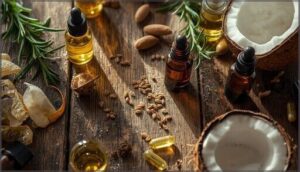
Your beard oil only works as well as the ingredients you put into it, so this is where things really start to matter.
In this next part, you’ll see the key carrier oils, essential oils, and boosters that actually do the heavy lifting for your beard and skin. Scan through them and pick the ones that fit your beard, your skin, and the kind of scent you want to wear every day.
Carrier Oils Overview
Carrier oils form the backbone of your homemade beard oil. They’re plant-derived bases packed with fatty acids like oleic and linoleic that nourish skin and hair.
Their oil composition dictates skin absorption—jojoba oil mimics sebum for quick uptake, while argan oil and coconut oil deliver deep moisture. Check the comedogenic rating to avoid breakouts; sweet almond oil scores low.
Follow storage tips: dark glass, cool spot for 1-2 year shelf life.
Essential Oils and Their Benefits
Essential oils give your DIY beard oil its edge—both in scent and performance. They’re Aromatic Therapies drawn from pure Oil Extraction Methods, packed with Botanical Benefits that target skin and hair. Blend them for mood, growth, and balance in your beard oil recipe:
- Tea tree clears flakes and bacteria.
- Lavender calms irritation.
- Peppermint boosts circulation.
Vitamin E and Additives
Powerful yet underrated, vitamin E upgrades your DIY beard oil from simple moisture to real beard nourishment. Known for its antioxidant properties, it protects both your skin and hair from dryness and oxidation.
Here’s how additives like vitamin E and others boost your homemade beard oil:
| Additive | Key Benefit |
|---|---|
| Vitamin E | Skin protection and hair strengthening |
| Panthenol | Adds smoothness and hydration |
| Squalane | Lightweight softness and barrier support |
Choosing Ingredients for Your Skin Type
Think of your skin type as the boss that decides which oils get on the team in your homemade beard oil. You’re matching carrier oils, essential oils, and additives to the way your face actually behaves.
- Oily Skin Blends: Go light and fast-absorbing. Jojoba and grapeseed keep shine down and won’t clog pores, while a touch of tea tree helps with breakouts.
- Dry Skin Solutions: Reach for richer carrier oils like argan and sweet almond to lock in moisture and calm flakes under your beard.
- Sensitive Skin Care: Keep it simple. Jojoba, argan, and almond with little or no essential oils cut down your risk of redness and burning.
- Normal or combo skin: Mix light and medium oils, then adjust drops by area—less on oily spots, more on dry patches—for balanced, daily skin care and a dialed-in feel.
Choosing The Right Carrier Oils
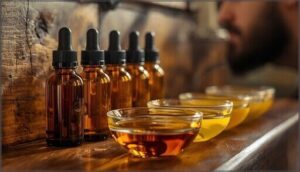
Carrier oils are the base of your beard oil, so choosing the right ones matters more than you might think. The oils you pick will control how your beard feels, how your skin reacts, and even how long your blend lasts on the shelf.
Next, you’ll see the main carrier oils worth using and how each one can work for your beard routine.
Jojoba Oil Benefits
Jojoba oil is your beard’s quiet workhorse, built to behave like natural skin sebum so your face doesn’t freak out when you put it on. It’s light, pore non-clogging, and forms a breathable barrier that locks in moisture while still letting skin breathe, which nourishes hair follicle health.
In a DIY beard oil or beard oil recipe, it’s one of the most forgiving carrier oils you can use alongside essential oils.
Argan Oil Properties
Argan oil is a key ingredient in any beard oil recipe. Its fatty acid composition — nearly half oleic acid plus a solid chunk of linoleic — penetrates deep without leaving grease behind.
The oil’s tocopherol content (up to 90mg per 100g) fights oxidative damage, while its phytosterol profile keeps skin calm.
Its impressive oxidative stability means your DIY beard oil stays fresh up to two years.
Sweet Almond, Coconut, and Grape Seed Oils
After argan manages long-term skin support, sweet almond, coconut, and grape seed step in as your everyday workhorses for Skin Hydration and Beard Nourishment.
Sweet almond brings vitamin E and a light feel, coconut’s lauric acid backs Hair Strength, and fast-absorbing grape seed keeps pores clear.
Together, these Natural Ingredients give your beard oil recipe serious power for DIY beard oil, homemade beard oil, and modern carrier oils that actually respect your beard oil standards.
Carrier Oil Blending Tips
Now take those carrier oils—jojoba oil, argan oil, coconut oil—and master blending for your DIY beard oil. Start with Oil Ratio Guidelines: 95-98% carriers, 2-5% essentials. Here’s how:
- Skin Type Matching: 50% jojoba for oily skin, richer mixes for dry.
- Viscosity Control: Blend thick coconut with light jojoba for easy spread.
- Blend Texture Tips: Test 10ml batches, adjust 10% at a time.
- Shelf Life Factors: Dark bottles, cool storage for 6-12 months.
Own your beard’s feel.
Selecting Essential Oils for Scent and Care

Essential oils give your beard oil its scent, personality, and a boost of care for your skin. The right blend can make your beard smell clean and feel healthier at the same time.
Here’s how different oils can shape your mix and what to watch for when choosing them.
Tea Tree Oil for Skin Health
Tea tree is the quiet workhorse of beard care essential oils. Its antimicrobial benefits target the bacteria and fungi behind breakouts and flaking, making it a smart pick for DIY beard oil.
It manages dandruff defense, calming inflammation around irritated follicles, and even helps with oil regulation on oily patches. Keep it at a 1–3% dilution for safe, effective skin health.
Lavender and Peppermint Oil Effects
If tea tree keeps your beard clean, lavender and peppermint bring the comfort. This combo adds Skin Soothing and Beard Calming power to your DIY Beard Oil.
Lavender relaxes irritated skin, while peppermint boosts circulation for better Scalp Health. Together, their Aromatherapy Benefits refresh every application—perfect Oil Blending for smooth, balanced beard oil.
Cedarwood and Rosemary Oils
Cedarwood oil and rosemary give your DIY Beard Oil a serious upgrade in both scent and performance. Their warm, woodsy-meets-fresh Aroma Therapy hits first, but the real magic is how they support Skin Balance, Hair Follicles, and overall Beard Texture using time-tested Natural Remedies in your homemade beard oil recipe and essential oil routine.
- Deep, woody base from cedarwood oil with a clean herbal lift from rosemary.
- Daily use helps keep skin clear, calm, and balanced under your beard.
- Consistent massage into the beard boosts healthier-looking growth and stronger strands.
Safe Essential Oil Dilution
Getting essential oils right in your homemade beard oil isn’t a guessing game—it’s about respecting Facial Dilution Limits. For most DIY recipes, stick to 1% max: that’s 6–9 drops per 30 ml carrier oil. Watch out for Phototoxic Oils like lemon. Always patch test.
Here’s a quick breakdown:
| Term | Safe Limit | Practical Tip |
|---|---|---|
| Facial Dilution | 0.5–1% | 6–9 drops per 30 ml carrier |
| Phototoxic Oils | 0.4–2% max | Use less if sun exposed |
| Individual Maxims | Varies by oil | Check each oil’s guideline |
| Patch Testing | Always | Test before full use |
| DIY Recipes | 1% is safest | Start low, adjust as needed |
Step-by-Step Homemade Beard Oil Recipe
Now that you’ve got your oils picked out, it’s time to put them to work. Making your own beard oil is quick once you’ve got the right tools and ratios.
Here’s how to mix, store, and customize your blend the right way.
Tools and Supplies Needed
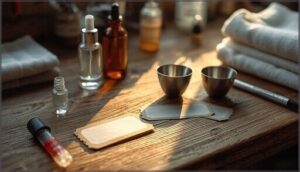
The right setup makes all the difference when crafting your homemade beard oil. Here’s what you’ll need:
- Glass Bottles to store and protect your blend from light.
- Mixing Bowls and Funnels for clean, spill-free combining of carrier oils and essential oils.
- Labels and Sanitizers to keep your DIY recipes safe, organized, and long-lasting.
Measuring and Mixing Ingredients

Think of this part like dialing in a clean lift at the gym: your Ingredient Ratios have to be tight. Start with a 1 oz batch of carrier oils, then add about 2–3% essential oils to keep the recipe skin-safe and powerful.
Use proper Measurement Tools like a 1 ml dropper or pipette for accuracy, then follow a calm Mixing Technique—combine carrier oils first, add essential oils second, and roll the bottle gently so the ingredients marry without bubbles.
Work at normal room Storage Conditions so your homemade beard oil stays stable and ready to use.
Proper Storage Methods
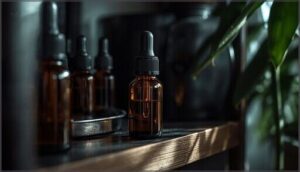
Your homemade beard oil is only as good as its storage, so treat it like a small lab project, not a random bathroom bottle.
Use dark glass as your Bottle Material for UV Protection, airtight droppers or pumps for better Handling Hygiene, and keep it at an Ideal Temperature, cool and shaded, to Extend Shelf Life on your preservative-free blend and protect its scent, feel, and shelf life.
Customizing Your Beard Oil Blend

Why copy someone else’s blend when you can build your own? Dial in scent layering by pairing warm base essential oils with a fresh citrus or mint top note, then adjust viscosity balance using lighter carrier oils like grapeseed against heavier castor or argan.
Use skin targeting and seasonal tweaks in small 10 ml test oil blends to see which ingredients your homemade beard oil recipe really loves.
Top 4 Oils for DIY Beard Oil
Now that you know how to mix your own blend, the next step is choosing the right oils to build it on.
Below are four standout options that work hard for both your beard and the skin underneath. Scan through them and pick the ones that match how you want your beard to feel and perform.
1. Plant Therapy Organic Argan Oil
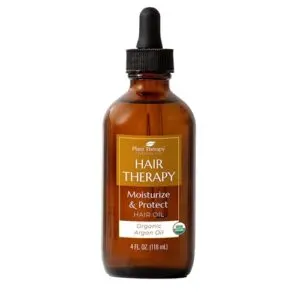
Power move number one in your beard kit is a clean, high‑grade argan oil, and Plant Therapy’s organic option checks every box. This USDA Certified Organic, cold‑pressed oil is 100% pure, so you’re not rubbing fillers or fake fragrance into your face.
It’s lightweight, absorbs fast, and hits both the beard and the skin underneath with vitamin E and fatty acids for softer hair, less itch, and fewer flakes.
A 4 oz bottle and roughly two‑year shelf life give you plenty of room to experiment with DIY blends and daily use.
| Best For | Anyone looking for a pure, organic oil to soften their beard, moisturize dry skin, and add healthy shine to hair without heavy residue. |
|---|---|
| Bottle Size | 4 oz |
| Organic Certification | USDA Certified Organic |
| Fragrance Free | Yes |
| Moisturizes Hair | Yes |
| No Additives | Yes |
| Multipurpose Use | Hair, skin, nails |
| Additional Features |
|
- 100% pure, cold‑pressed, and USDA Certified Organic with no additives or fragrances.
- Lightweight and fast‑absorbing, ideal for skin, hair, nails, and cuticles.
- Deeply hydrates and boosts shine while helping reduce beard itch and flakes.
- May cause breakouts with overuse or on sensitive skin.
- Pricier than some other argan oils on the market.
- Absorption may vary depending on hair or skin type.
2. Plant Therapy Jojoba Body Oil
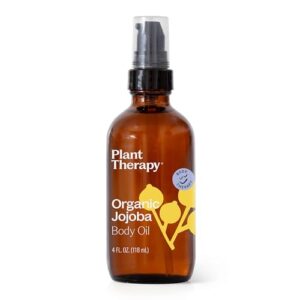
Argan covers shine and softness; now you need something that behaves like your skin’s own oil to keep that beard zone under control.
That’s where Plant Therapy’s Organic Jojoba Body Oil steps in. It’s 100% golden jojoba, USDA Certified Organic, non‑comedogenic, and free of fragrance and fillers, so you can use it daily without clogging pores or annoying your skin.
Because it mimics natural sebum and has a long, stable shelf life, it’s a killer base oil for any DIY beard blend you build next.
| Best For | Anyone looking for a clean, lightweight oil that hydrates skin, softens beard hair, and doubles as a natural base for DIY blends. |
|---|---|
| Bottle Size | 4 fl. oz |
| Organic Certification | USDA Certified Organic |
| Fragrance Free | Yes |
| Moisturizes Hair | Yes |
| No Additives | Yes |
| Multipurpose Use | Hair, skin, nails |
| Additional Features |
|
- 100% pure, cold‑pressed, USDA Organic jojoba oil with no fragrances or additives.
- Absorbs fast without leaving a greasy feel, great for all skin types.
- Works as a multitasker for skin, hair, and nails.
- Some users report pump issues or messy dispensing.
- Packaging may leak if not sealed well during shipping.
- Needs to warm up if stored in a cold space.
3. Horbach Abyssinian Hair And Skin Oil
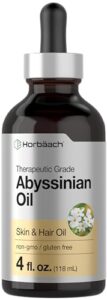
Once you’ve got jojoba holding things steady, bring in Horbach Abyssinian Hair and Skin Oil for a lighter punch of nourishment. Made from pure Crambe abyssinica seed oil, it’s vegan, paraben‑free, and fragrance‑free, so it won’t clash with any scents you add later.
The texture feels slick going on but absorbs fast, leaving your beard soft and hydrated without that greasy film. Think of it as the smooth finisher—clean, stable, and built to keep skin and whiskers balanced.
| Best For | Anyone looking for a lightweight, natural oil to hydrate skin and hair without added fragrance or chemicals. |
|---|---|
| Bottle Size | 4 fl oz |
| Organic Certification | No |
| Fragrance Free | Yes |
| Moisturizes Hair | Yes |
| No Additives | Yes |
| Multipurpose Use | Hair, skin |
| Additional Features |
|
- Made from pure Crambe abyssinica seed oil, vegan, and lab tested for quality.
- Moisturizes deeply and softens skin and hair without feeling greasy.
- Works well for dry skin, eczema, and curly or coarse hair.
- May feel too heavy for fine or thin hair types.
- Lacks scent, which some users miss.
- Occasionally hard to find due to limited availability.
4. Us Organic Sea Buckthorn Berry Oil
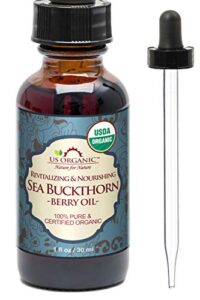
Now, if you want to bring more muscle to your blend, add a touch of Us Organic Sea Buckthorn Berry Oil. It’s powerful stuff—USDA certified organic, packed with omega fatty acids, vitamins, and antioxidants. Just 5–10% is enough to boost hydration and skin repair under the beard.
The oil’s deep orange tone comes from carotenoids, so mix it with lighter carriers like jojoba or almond to keep color transfer low while still getting that rich, conditioning payoff.
| Best For | People looking for a deeply nourishing, organic oil to hydrate skin, promote regeneration, and add glow to beards, hair, or face care blends. |
|---|---|
| Bottle Size | 1 oz |
| Organic Certification | USDA Certified Organic |
| Fragrance Free | Yes |
| Moisturizes Hair | Yes |
| No Additives | Yes |
| Multipurpose Use | Hair, skin |
| Additional Features |
|
- Pure, USDA-certified organic and CO2-extracted for maximum nutrients.
- Packed with fatty acids, amino acids, and vitamins that boost repair and elasticity.
- Works great as a moisturizer or anti-aging treatment for skin and scalp.
- Can stain skin, clothing, or bedding if not diluted.
- Has a strong, earthy scent that some may find musky.
- May leave an orange tint on lighter skin tones when used undiluted.
Frequently Asked Questions (FAQs)
How do I make my own beard oil?
Picture running your fingers through a soft, controlled beard that actually listens when you style it.
To make your own oil, mix light carrier oils like jojoba and argan, add a few drops of essential oils, shake, then apply daily.
Which homemade oil is best for beard growth?
Rosemary oil tops the list for beard growth—it dilates blood vessels like minoxidil, boosts circulation, and fights follicle-damaging free radicals.
Pair it with castor oil’s ricinoleic acid for thicker, stronger hairs that fill in patches fast. Your beard will thank you.
What ingredients make good beard oil?
Good beard oil leans on nutrient-rich carrier oils like jojoba, argan, sweet almond, grapeseed, or coconut for moisture and softness, then adds a little vitamin E plus targeted essential oils like tea tree, cedarwood, peppermint, lavender, or rosemary for scalp health, scent, and extra growth support.
Can You Make your own beard oil?
Bold beards, built by you. Yes, you can make your own beard oil using simple carrier oils like jojoba, argan, sweet almond, or coconut plus a few drops of essential oils such as tea tree or cedarwood.
Mix about one ounce of carrier oil with 5–10 drops of essential oil in a glass dropper bottle, shake, then let it rest so the scent blends.
Store it in a cool, dark place and it’ll usually stay fresh for around 6–12 months, especially if you add a bit of vitamin E oil as an antioxidant.
What is a DIY Beard oil recipe?
A DIY beard oil recipe is a simple mix of about 1 ounce of carrier oils like jojoba, argan, or sweet almond with a few drops of essential oils such as cedarwood, peppermint, or tea tree for scent and skin benefits.
How do you make live bearded oil?
To make live bearded oil, blend one ounce of jojoba and argan oils with six drops of cedarwood and peppermint essential oils.
Shake well, store in a dark glass bottle, and apply daily after showering.
Can I make a 2 oz bottle of Beard oil?
You absolutely can. A 2 oz beard oil bottle holds about 60 ml, which is a sweet spot for daily use and testing new blends.
It usually runs 57 ml carrier oils and roughly 3 ml essential oils, giving you a solid 1–3% dilution and enough product for weeks of consistent grooming.
How do you make a sweet mint Beard oil?
Don’t worry—it’s easier than you think. Mix 30 ml carrier oils like jojoba, almond, and coconut with about 8 drops peppermint and 3 spearmint oil. Shake well, let rest, then apply daily for cooling hydration.
How can I make beard oil at home?
You can mix about 30 mL of a carrier blend like jojoba and argan oil with roughly 5–10 drops of essential oils in a small amber dropper bottle, shake well, let it rest, then apply a few drops daily.
What is the most important ingredient in beard oil?
Funny thing: everyone obsesses over scent, but the real MVP in beard oil is the carrier oil.
It makes up about 95–98% of the formula, does the actual moisturizing, and delivers all the benefits to your skin and beard.
Conclusion
Think of your beard oil like a custom-built engine: tuned to your face, your skin, your standards. You now know which oils to choose, how much to use, and how to mix them without guesswork.
With your homemade beard oil recipe dialed in, you control the shine, softness, and scent every single day. Stay curious, keep adjusting your blend, and let your beard show that you’re the one calling the shots, not the shelf.