This site is supported by our readers. We may earn a commission, at no cost to you, if you purchase through links. This content is for general informational and educational purposes only and is not a substitute for professional medical, dermatological, or nutritional advice.

Grab a beard trimmer with no plan, and you’ll end up with a patchy mess by week three. Most beginners jump straight to trimming and skip the steps that actually build a healthy beard underneath. That’s backwards.
Your skin does the real work here. Wash it wrong, skip the oil, or trim too aggressive early on, and you’re fighting your own follicles.
Learning how to groom a beard for beginners means starting with the right tools and building a routine your skin can handle. Get the basics down first. The shaping comes easy after that.
Table Of Contents
- Key Takeaways
- What Beginners Need Before Grooming a Beard
- How to Groom a Beard for Beginners
- How to Wash and Condition Your Beard
- How to Trim and Shape a Beginner Beard
- Daily Beard Care Mistakes to Avoid
- Frequently Asked Questions (FAQs)
- What are the basic steps to groom a beard?
- What is the 3 month beard rule?
- What are common beard grooming mistakes?
- What is the 2 finger rule for beard?
- How long does it take to grow a beard?
- Does diet affect beard growth and thickness?
- How do I deal with beard itch early on?
- Can genetics limit how full my beard grows?
- Should I trim my beard during the growing phase?
- How long does it take to grow a full beard?
- Conclusion
Key Takeaways
- Skip the trimmer at first and focus on skin care, since healthy skin underneath is what actually builds a fuller beard.
- Wash your beard two to three times a week with sulfate-free shampoo, then follow with oil and conditioner to protect natural oils and prevent itch. Once your wash routine is set, you can keep your beard soft, healthy, and itch-free with these simple grooming habits that fit easily into a busy week.
- Wait at least a month (ideally three) before your first trim, since cutting too early damages follicles and causes patchy growth.
- When you do trim, start with longer guards, work slowly in small passes, and use guard gradation to blend patchy spots into a natural shape.
What Beginners Need Before Grooming a Beard

Good grooming starts with the right gear, not guesswork. Before you touch your beard, get these five tools in place. Here’s exactly what you need to get started.
A solid comb, brush, and pair of scissors form the foundation, but for the full lineup worth investing in, check out this guide to essential men’s beard grooming accessories.
Beard Trimmer
Your beard trimmer is the backbone of your whole beard maintenance routine. Pick one with adjustable guards and stainless or titanium blades for durability. Floating blades adapt to your jawline for closer cuts. Cordless models let you trim anywhere.
Wipe blades after each use and oil them monthly. Store your trimmer in a dry, ventilated pouch. Consider models with self-sharpening blade technology for long-lasting sharpness.
Barber Scissors
Your trimmer grips bulk, but scissors give you control. Grab a pair with convex edges for smooth, hollow-ground slicing through hair.
Look for VG10 or high carbon steel blades that hold sharpness longer. Check tension adjustment so blades don’t snag, and pick ergonomic grips to ease wrist strain. Wipe and oil blades after each session.
Beard Shampoo
Once your scissors are sorted, look at what’s cleaning the beard itself.
Skip regular head shampoo — it’s too harsh. Grab a sulfate-free beard shampoo with mild surfactants, keratin protein, glycerin, chamomile, and vitamin E. This gentle cleanser lifts dirt without stripping oils, softens hair, calms skin, and builds real antioxidant protection into your beard care routine.
Beard Oil
Clean skin still needs moisture, and that’s where oil comes in.
Grab a bottle with carrier oils like jojoba or argan as the base — these deliver real beard hydration without clogging pores. Essential oils like pine, citrus, or lavender add scent. Massage 3-5 drops into skin daily after showering. Store it capped tight; heat and air shorten shelf life fast.
Comb and Brush
Two tools, two jobs. A boar bristle brush distributes oil and trains hair direction each morning.
For detangling, reach for a wide-tooth comb—wood or carbon fiber resists static better than plastic. Comb before brushing to work out knots gently.
Clean bristles weekly. Rinse, air dry, and your grooming tools last years instead of months.
How to Groom a Beard for Beginners

You’ve got your tools ready and your beard is ready for work. Now it’s time to build a routine you can repeat every week. Follow these five steps in order, and you’ll never guess wrong again.
Wash Your Beard
Water sets the tone for every wash. Keep it lukewarm, never hot, to protect skin and hair.
Grab beard shampoo, work up a gentle lather, and massage the skin underneath for a couple minutes. Rinse fully.
- Wash two to three times a week
- Rinse with lukewarm water only
- Follow up with beard conditioner
This routine builds real beard hygiene, not just a quick rinse.
Pairing your wash-day steps with a quick-drying microfiber beard wrap keeps moisture balanced without adding extra time to your routine.
Pat Dry Gently
Shake your beard for ten seconds before the towel touches it. That drips off most of the water and saves your hair from unnecessary weight.
Grab a microfiber towel and press, don’t rub. Squeeze gently along the grain, working neck to chin, for 30-60 seconds until it’s damp, not dripping.
Apply Beard Oil
Now for the good stuff: beard oil. Warm 2-3 drops between your palms, then work them into damp hair, roots to tips.
- Press oil into the skin, not just hair
- Cover cheeks, chin, and mustache evenly
- Use fingertips for targeted coverage
- Repeat with both hands for full coats
Daily use conditions skin and cuts frizz fast.
Comb Out Tangles
Knots don’t work themselves out. Grab a wide-tooth comb and start at the tips, working up to roots.
| Tool | Best For | Technique |
|---|---|---|
| Wide-tooth comb | Beards 2-4 inches | Comb outward, then downward |
| Fingers | Curly, coiled hair | Gentle upward strokes |
| Hybrid brush | Thick beards | Bristles plus pins |
Detangle after showering, when hair’s warm and flexible.
Trim Slowly
Rushing here costs you inches you can’t get back. Hold your trimmer perpendicular to skin, pull skin taut, and use the Light Pass Technique: 1-2mm per pass.
- Start with the longest guard
- Trim one section fully before moving on
- Step back every 30 seconds to check shape
- Compare both sides for symmetry
How to Wash and Condition Your Beard

Washing your beard is more than just soap and water. Do it wrong and you’ll dry out your skin or leave it dirty underneath. Here’s what you need to know to get it right.
For an added boost, consider working in a few drops of one of the best essential oils for beard and hair growth, like rosemary, which has clinical backing to rival minoxidil.
If thinning hair is part of the picture, pairing a good beard care routine with insights from this guide to laser caps with near-infrared technology for deeper follicle stimulation can round out your overall grooming approach.
Wash Two to Three Times
Twice weekly is your starting point for a short beard under an inch. Stick with two to three washes a week — that’s the sweet spot for most beginners.
Watch for over-washing signs: itchy skin, dull hair, or a tight feeling after rinsing. If that happens, drop one session. Time washes with your shower routine so steam softens hair naturally.
Use Sulfate-Free Cleanser
Now check the label on that shampoo. Sulfate-free cleansers protect your natural oil layer, retaining up to 75% of sebum versus 40% with regular shampoo.
That means less itch and better pH balance (4.5-5.5), matching your skin’s natural mantle.
Why it matters:
- Prevents brittle, breaking hair
- Cuts itch intensity by 33%
- Reduces dandruff buildup
- Lets beard oil absorb properly
- Keeps skin hydrated daily
Massage Skin Underneath
Once your beard’s clean, work the skin underneath while it’s still damp. Add a light oil layer, then use finger circle technique along the jawline. Follow with gentle downward strokes, then short upward motions toward the roots. Two minutes is plenty for beginners.
This boosts skin hydration and helps real beard skin care, not just surface shine.
Condition for Softness
Once that massage is done, work in a moisturizing beard conditioner while hair’s still damp. Leave it two to five minutes.
Use gentle rinse temperature, warm not scalding, then detangle with a wide-tooth comb from ends up. Follow with beard oil for lasting softness. Regular conditioning routine, two to three times weekly, keeps skin hydration and facial skin comfortable long-term.
Avoid Harsh Soaps
Ditch bar soap and body wash for beard duty. Those bars often pack sulfates, dyes, and fragrance that strip skin oil fast.
Reach for products built with:
- Sulfate free and pH balanced formulas
- Fragrance free, dye free ingredients
- No antibacterial additives
A proper beard shampoo and conditioner keep skin comfortable, not tight or itchy, between oiling sessions.
How to Trim and Shape a Beginner Beard
Trimming turns a wild beard into a shaped one. It’s not about rushing straight to short. Follow these steps in order, and you’ll build real control over your look.
Start With Longer Guards
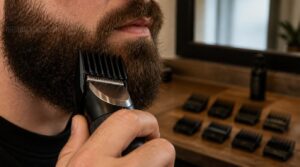
Grab a guard in the 10-13mm range before you touch skin. That’s your safety margin — room to fix mistakes without starting over.
Thick, coarse beards need bigger guards than fine ones for the same length. Test length, then drop a size. A quality trimmer with snug-fitting guards prevents uneven cuts and overtrimming.
Define The Neckline

Finding your neckline starts with a reference point: one finger’s width above the Adam’s apple. Tilt your head up to spot it clearly.
Use a U-shaped curve for a natural look, especially with round faces. A quality trimmer with sharp guard settings keeps lines clean.
Comb hairs down first, then trim below your marked line for a crisp, defined edge.
Shape Cheek Lines

Your cheek line is the boundary where beard meets bare skin. Picture a straight edge running from sideburn down to the mustache corner.
- Steep angle for round faces
- Curved line for angular jaws
- Higher placement for fullness
- Lower placement for a chinstrap look
Check symmetry often. Touch up every 1-2 days to keep defined lines sharp.
Trim The Mustache
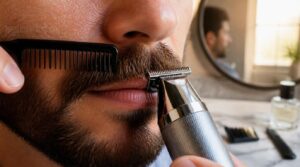
A wild mustache throws off your whole beard shape. Comb it dry first to spot uneven hairs before you cut.
Set your mustache length guard around 1-2 cm, then work outside in. Switch to precision trimmers for lip line trimming—keep hair off your upper lip. This early edge cleanup prevents bigger grooming mistakes down the road.
Blend Uneven Areas

Patchy spots aren’t a flaw—they’re just uneven growth waiting on the right technique. Use the Guard Gradation Method: longer guard on thick patches, shorter on thin ones, smoothing toward the center.
- Comb first to spot bald zones
- Trim with the grain, smooth against it
- Keep 2-3 length zones for natural depth
This Length Zone Variation disguises patchy areas better than one flat length ever could.
Daily Beard Care Mistakes to Avoid

Even good beards run into trouble from small daily habits. Most damage comes from routine, not accidents. Here are five mistakes to watch for.
Over-Trimming Too Soon
Grabbing the trimmer too early kills your progress fast. Cutting more than 1-2mm during early growth injures follicles, causing patchy, uneven growth.
Follow trim frequency guidelines: wait one month minimum before your first trim. This protects your follicle recovery timeline and prevents split ends.
Patience now builds a fuller beard later—rushing costs you months.
Patience with your growing beard now pays off with a fuller, healthier beard later
Skipping Beard Oil
Skipping oil after patience pays off? Rookie move.
Dry skin symptoms show up fast: flaking, tightness, itching. Skin then overcorrects with sebum overproduction, raising acne risk.
Don’t like oil? Try an oil-free moisturizer.
- Flaking and dandruff
- Tight, itchy skin
- Excess oil buildup
- Clogged pores
- Breakouts along the jaw
Good beard maintenance means daily protection, not just growth patience.
Ignoring Skin Care
Your beard hides the skin under it—that’s the problem.
Guys focus on hair and forget the skin barrier underneath. That’s how dandruff, irritation, and beardruff take hold.
Exfoliate weekly. Keep moisturizing facial skin daily. Skip this and you risk clogged pores, infection, and stalled growth. Beard hygiene starts at the roots, not the tips.
Brushing Too Roughly
That skin work only pays off if your brush technique holds up too.
Going hard with the brush causes real damage. Over-brushing strips natural oils and weakens strands until they snap. Stick to brush frequency limits: once or twice daily, max.
Use gentle brushing technique with light pressure. Start at the ends, work upward. A natural bristle brush cuts friction and irritation better than synthetic types.
Using Drying Products
Reaching for a regular bath towel is a habit worth breaking. Rough cotton fibers cause frizz and strip oil fast.
- Use a microfiber towel or drying cap instead
- Pat gently for 30-60 seconds, don’t rub
- Leave slight dampness for better oil absorption
- Apply beard oil or balm right after
- Skip blow dryers to avoid heat damage
Quick-dry microfiber cuts drying time in half.
Frequently Asked Questions (FAQs)
What are the basic steps to groom a beard?
Master five moves: wash two to three times weekly, moisturize beard skin with oil, detangle beard hair with a wide-tooth comb, trim slowly with the grain, and schedule grooming sessions weekly to protect beard edges and maintain beard length.
What is the 3 month beard rule?
Give it three full months without trimming. That’s the rule: let every follicle finish its cycle. You’ll move through itch, patchy growth, then real fullness, gaining honest data on your beard’s true shape before cutting anything.
What are common beard grooming mistakes?
One wrong guard length can undo weeks of growth in seconds. The five real killers? Overwashing, harsh soaps, sloppy neckline work, skipping oil, and dull tools that tug instead of cut clean.
What is the 2 finger rule for beard?
Place two fingers above your Adam’s apple for the neckline measurement guide, and along your jawline for cheekline finger placement. This two-finger technique keeps beard length proportional, guiding trimming decisions and protecting your face’s natural shape as you shape and groom.
How long does it take to grow a beard?
Patience isn’t a beard product, but you’ll need it anyway. Stubble shows in 1–2 weeks, half an inch by month one. A full beard takes 2–6 months, shaped by genetics, hormones, and health.
Does diet affect beard growth and thickness?
Yes. Protein intake benefits keratin production, while zinc, omega-3s, and vitamin D fuel healthy follicles. Stay hydrated, eat balanced meals, and your beard care pays off with thicker, stronger growth over time.
How do I deal with beard itch early on?
The itch that pushes you to quit is the same itch proving your beard’s growing. Apply beard oil daily, wash gently, and exfoliate weekly. Skin comfort returns fast once dryness eases.
Can genetics limit how full my beard grows?
Your genes set real limits here. Genetic beard density runs 60-78% heritable, controlled by follicle count and key genes like EDAR. Know your baseline, then work grooming and hair follicle health to get the fullest beard possible.
Should I trim my beard during the growing phase?
Light trimming is fine, just keep it minimal. Clean the neckline, snip flyaways, and leave the bulk untouched. This early trim benefit lets natural growth patterns show before real shaping starts — usually around week four.
How long does it take to grow a full beard?
Only 33% of American men can grow a dense full beard. Expect 2 to 4 months for full growth, depending on genetics, hormones, and consistent beard care for beginners. Patience builds real beard confidence.
Conclusion
Patience pays off when you build a beard the right way. You now know how to groom a beard for beginners: wash gently, oil daily, comb often, and trim slow. Skip a step, and your skin pays for it.
Stick with the routine, and your beard fills in stronger every week. Grab your tools, follow the steps, and let consistency do the shaping. That patchy mess won’t stand a chance.
Your best beard starts today.