This site is supported by our readers. We may earn a commission, at no cost to you, if you purchase through links. This content is for general informational and educational purposes only and is not a substitute for professional medical, dermatological, or nutritional advice.

Your kitchen already holds a gentle cleanser. That jar of honey on the shelf? Massage it onto damp skin for 60 seconds, and it cleans while it softens.
Homemade face remedies can work beautifully, but only when you use the right ingredients the right way. Lemon juice, baking soda, and cinnamon sound harmless, yet they often leave skin red and raw. Safe DIY care comes down to simple recipes, exact amounts, and smart habits (like patch testing first!).
Below, you’ll find cleansers, scrubs, and masks matched to your skin type, plus the safety steps that keep every batch fresh and kind to your face.
Table Of Contents
Key Takeaways
- Stick with gentle kitchen staples like honey, oats, yogurt, and aloe, and skip lemon juice, baking soda, cinnamon, and undiluted essential oils, since they can burn your skin and damage its barrier.
- Match your recipe to your skin type, such as avocado, honey, and yogurt for dry skin, colloidal oatmeal for sensitive skin, and clay or egg white for oily skin, and keep masks to 10-20 minutes with lukewarm rinsing.
- Patch test every new ingredient on your inner elbow for 48 hours, add only one new remedy a week, and exfoliate no more than once or twice weekly.
- Keep your batches small and fresh by storing water-based mixes in the fridge and tossing them after five days, and remember that homemade care supports your routine but won’t fade scars or replace a dermatologist for persistent or painful problems.
Natural Face Cleansers for Everyday Use

A gentle facial wash doesn’t need a long ingredient list, and your kitchen likely has most of what you need.
If you’d rather skip the mixing, this roundup of gentle fragrance-free face wash options includes a dermatologist-recommended cleanser that keeps skin’s natural oils intact.
Start with honey. It’s a natural humectant, so it holds moisture in, and it has mild antibacterial properties. Massage half a teaspoon onto damp skin for 60 seconds, then rinse with lukewarm water. For a fuller recipe, try this four-ingredient honey face wash that skips harsh chemicals and fits into an everyday skincare routine.
Prefer something sudsier? Mix one teaspoon of liquid castile soap with four tablespoons of water. This diluted castile soap lifts dirt without stripping your natural oils. Never use it straight.
For sensitive or easily flushed skin, try finely ground oatmeal, or stir aloe vera gel into your honey. Chamomile tea works too. Brew it, cool it, and use it as your base. Your skin will thank you!
Gentle Homemade Exfoliants Without Harsh Scrubs
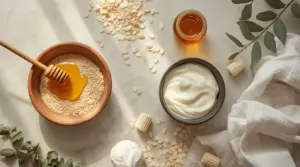
If you’ve got honey and oatmeal out from cleansing, you’re halfway to a gentle exfoliant.
Grind two tablespoons of rolled oats into a fine powder, then stir in one teaspoon of honey and a splash of water. Massage onto damp skin in small circles for 30 seconds, then rinse with lukewarm water.
Want something that works without scrubbing? Smooth plain Greek yogurt over clean skin and leave it for 20 minutes. Its lactic acid loosens dead cells on its own, so there’s no rubbing at all. Rinse and pat dry.
Limit exfoliating to once or twice weekly, and skip it if skin feels raw or looks red. Gentle doesn’t mean you can overdo it (your skin barrier needs breathing room)!
Homemade Face Mask Recipes by Skin Type
Your skin type decides which mask will feel good and which will cause trouble, so it pays to match the recipe to your face.
Below, you’ll find simple kitchen-friendly recipes for dry, sensitive, and oily skin, each with exact measurements and timing. Pick the one that fits you best, and remember you’re in control of what goes on your skin!
If you’d like to see how tomatoes help different skin types and why they work so well, this guide to the benefits of tomato for skin, face, and hair is a handy place to start.
Hydrating Masks for Dry Skin

Picture tight, thirsty skin turning soft and dewy, like a petal after rain. This mask can get you there.
Mash ½ ripe avocado with 1 tbsp honey and 1-2 tbsp yogurt. Smooth it on, wait 10-20 minutes, then rinse with lukewarm water. Afterward, you’ll feel:
- Comforted
- Glowing
- Cared for
- Calm
Your skin deserves this gentle moment, so enjoy it!
Soothing Masks for Sensitive Skin

Got sensitive skin? Keep things simple. Oatmeal facial masks calm redness, and colloidal oatmeal blends smoothly.
| Mask | Mix |
|---|---|
| Oat calm | 2 tbsp colloidal oatmeal, 1 tbsp aloe gel |
| Oat honey | 2 tbsp oat flour, 1 tsp honey, water |
| Oat yogurt | 2 tbsp colloidal oatmeal, 1 tbsp yogurt |
Apply a thin layer, wait 10 minutes, then rinse lukewarm. Patch test first!
Gentle Masks for Oily Skin
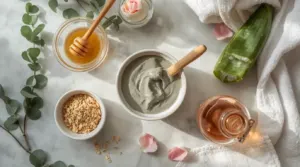
A good mask calms shine without stripping your skin. Try one of these, once or twice weekly:
- Clay (bentonite or kaolin), rinsed before it cracks
- Egg white, for a few hours of tightened pores
- Honey, a gentle antibacterial humectant
- Oatmeal, mixed with aloe vera gel
- Rosewater, as a mild toner afterward
Rinse with lukewarm water after 10-20 minutes, then moisturize.
Safety Tips for Homemade Face Remedies
Kitchen ingredients can still irritate your skin, so a little know-how goes a long way. Below, you’ll find three simple safety habits that keep your DIY routine gentle. Let’s start with what to skip, then move on to testing and storage!
Irritating Ingredients to Avoid
Your kitchen holds plenty of skin troublemakers! Skip baking soda, lemon juice, cinnamon, nutmeg, toothpaste, and undiluted essential oils. They can burn, sting, and wreck your skin barrier. Mustard facial masks, vinegar facial masks, mayonnaise facial masks, and egg facial masks are better left off too.
Your face is gentler than your pantry. Choose gentle, skin-friendly ingredients instead, every time.
Patch Testing Before Facial Use
Think of a patch test as a dress rehearsal before opening night. Your face is the big stage, so let a small, quiet patch of skin take the first bow. Once your patch test passes, these easy homemade skin care recipes are a gentle way to start experimenting with natural ingredients.
- Dab a pea-sized amount on your inner elbow.
- Leave it for 48 hours, rinsing at once if it burns.
- Check for redness, itching, or swelling.
No reaction? You’re probably good to go! Repeat whenever you try a new ingredient.
Fresh Preparation and Safe Storage
Picture a jar of cucumber mask turning cloudy in the back of your cabinet.
| Sign | You feel |
|---|---|
| Fuzzy mold | Dread |
| Sour smell | Doubt |
| Clear label | Confidence |
| Cold, fresh jar | Peace |
Keep fresh preparation simple: wash produce, use clean tools, and label every jar with the date. Store water-based mixes in the fridge and toss them after five days (no exceptions!).
Skincare Routine Tips for Homemade Remedies

Even the gentlest homemade skincare works best when it has a plan behind it. Think of your routine as a simple rhythm, not a pile of experiments.
- Start with cleansing. Use pH-balanced cleansing morning and night, then pat your face dry.
- Add one new remedy at a time. Wait a week before trying another, so you’ll know what’s working (or not).
- Limit exfoliating to once or twice weekly. Your skin needs recovery days!
- Moisturize while skin’s still damp. This gives your skin barrier support right when it’s most receptive.
Watch how your skin responds, and adjust. Redness, tightness, or stinging means it’s time to scale back. A natural skincare routine should feel calm, never punishing. Trust what your skin says.
Your skin speaks up through stinging, tightness, or redness, so let those signals guide you toward a calmer, gentler routine
Frequently Asked Questions (FAQs)
Do homemade face remedies really work as well as store-bought products?
Not quite, no. Homemade options can soothe and moisturize, but they’re best as occasional treats. Store-bought products offer tested stability and targeted active ingredients, plus reliable results (which homemade batches can’t promise). Think of DIY as a supporting player!
How long does it take to see results?
You’ll feel a cleaner, smoother face right after rinsing, but real changes take patience. Expect visible clarity within a week or two. Texture and glow usually improve by week four, matching your skin’s 28-day cycle.
Can homemade remedies help with acne scars or dark spots?
Picture a faint brown smudge where a pimple used to be. Homemade remedies won’t reliably fade it, and they can’t fill indented or raised scars. Skip lemon juice (it irritates), wear sunscreen daily, and see a dermatologist.
When should someone see a dermatologist instead of trying remedies?
Stop the remedies and call a dermatologist if a problem lingers, worsens, or keeps coming back. Painful, deep acne needs prescription acne treatment. Pus, spreading redness, fever, or facial swelling? Get care right away.
Are homemade face remedies safe during pregnancy?
Wondering if your kitchen-made skincare is okay right now? Often, yes. Stick with gentle basics like honey, yogurt, and oatmeal, skip essential oils and lemon juice, and always do a patch test first.
Conclusion
Picture a Sunday night: you stir 1 tablespoon of honey into 2 tablespoons of oats, rest it on your cheeks for ten minutes, and rinse. Your skin feels calm and soft, not tight or red.
That’s what good homemade face remedies do. Measure carefully, patch test first, and make small batches. Store them cold. Skip lemon juice and baking soda. Your skin doesn’t need a kitchen experiment. It needs kindness, patience, and a little honey.
- https://www.vegansociety.com/news/blog/conscious-choices/six-ingredients-include-natural-diy-skincare-routine
- https://www.radiantdermtx.com/post/natural-and-dyi-skincare-remedies
- https://cosmoderma.org/beakers-versus-botanicals-analyzing-the-efficacy-of-homemade-skincare-in-comparison-to-manufactured-skincare-products