
This site is supported by our readers. We may earn a commission, at no cost to you, if you purchase through links.
You drag a manual razor across your jaw and wince—another morning of razor burn, tiny nicks, and that raw feeling that lasts for hours. Electric shavers promise to end that cycle, but most people don’t understand the elegant engineering that makes them gentler on skin.
Unlike traditional blades that scrape directly against your epidermis, electric shavers use a protective guard system that keeps cutting edges recessed, allowing oscillating or rotating blades to shear hair through perforated openings at thousands of strokes per minute. This barrier design fundamentally changes how metal interacts with your skin, distributing pressure across a wider surface area while minimizing friction and direct contact.
The mechanics explain why dermatologists often recommend electric options for patients battling chronic irritation, ingrown hairs, or sensitivity issues that make manual shaving painful.
Table Of Contents
- Key Takeaways
- How Do Electric Shavers Cut Hair?
- What Happens When Shavers Touch Skin?
- Foil Vs. Rotary Shavers on Skin
- Why Electric Shavers Reduce Irritation
- Techniques for Comfortable Electric Shaving
- How Skin Type Affects Shaver Performance
- Cleaning and Maintenance Impact on Skin
- Common Skin Reactions and Solutions
- Frequently Asked Questions (FAQs)
- Conclusion
Key Takeaways
- Electric shavers use a protective guard system that keeps recessed blades from directly touching your skin, shearing hair through perforated openings at thousands of strokes per minute—this barrier design fundamentally reduces friction, pressure, and the scraping that causes razor burn and irritation with manual razors.
- Foil shavers distribute pressure evenly across flat surfaces and work best for sensitive skin with fine-to-medium hair, while rotary shavers pivot independently to follow facial contours and handle thick, coarse growth more effectively on uneven areas like the jawline and neck.
- Proper technique matters more than shaver type—holding your device at a 30-degree angle with light pressure, shaving with the grain, and preparing skin with warm water and exfoliation prevents nicks, ingrown hairs, and post-shave sensitivity regardless of which electric shaver you choose.
- Daily cleaning and timely replacement of blades (every 12-18 months) and foils (every 1-2 years) directly prevent bacterial buildup and dull-blade friction that trigger inflammation, breakouts, and chronic irritation—maintenance protects your skin as much as proper shaving technique does.
How Do Electric Shavers Cut Hair?
Electric shavers don’t work like the razors you grew up with—they use a completely different cutting system that keeps blades away from your skin. Understanding this mechanism helps you pick the right shaver and use it properly.
Let’s break down exactly how these devices capture and cut hair without scraping your face.
Blade and Guard Mechanism Explained
Electric shavers rely on motor-driven blades housed behind a protective guard—think of it as a safety net between metal and skin. The blades oscillate or rotate at thousands of strokes per minute, shearing hair as it passes through perforated openings. This blade geometry and guard design work together to minimize friction reduction and direct skin interaction, giving you cutting action that sidesteps the razor burn manual razors often deliver.
Electric shavers trap hair in perforated guards while motor-driven blades oscillate at thousands of strokes per minute, cutting without touching skin
Understanding the importance of clear science information, such as clear writing guides, can help explain complex concepts like electric shaver mechanics.
Hair Capture and Cutting Process
Your facial hair enters narrow capture slots engineered for ideal hair alignment—each strand funnels through perforations in the guard where oscillating or rotating blades shear it in fractions of a second. This cutting mechanism minimizes skin interaction by keeping blade geometry recessed, so you get efficient hair removal without the tugging that triggers razor burn.
Proper shaver maintenance keeps those channels clear for consistent shaver efficiency. Understanding research methodology is vital for developing advanced shaving technologies.
Differences From Manual Razors
Unlike a manual razor that drags blade geometry directly across your epidermis, electric shavers create a razor gap between cutting edges and skin. That separation means less heat exposure, better friction reduction, and enhanced skin protection.
The guarded design prevents the scraping that triggers razor burn and skin irritation—you’re commanding a safer shaving technique without sacrificing results.
What Happens When Shavers Touch Skin?
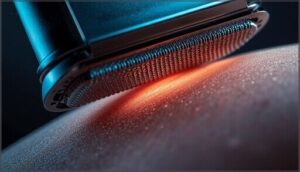
When your electric shaver touches your face, it’s not just buzzing along randomly—there’s a precise interaction happening between metal, skin, and hair. The design of the shaver head determines how much contact occurs and what kind of stress your epidermis experiences.
Let’s break down exactly what’s happening at that surface level.
Protective Skin Guards
Think of protective skin guards as your personal bodyguard against blade exposure. These engineered barriers shield your epidermis from direct blade contact, creating a consistent gap that prevents razor burn and skin irritation.
Guard materials—often ceramic or polymer-coated—reduce friction while adapting to your skin geometry.
For sensitive skin, guard maintenance is critical: worn guards lose their protective edge, increasing your risk of nicks and ingrown hairs.
Pressure and Friction Reduction
When your skin meets the blade, smart engineering kicks in. Multi-foil configurations spread force across a wider contact area, lowering friction mechanics and pressure distribution on your epidermis.
Lightweight ergonomic grips help you apply gentler strokes—essential for sensitive skin prone to razor burn.
Sharp blade geometry paired with lubricating coatings creates smooth gliding that electric shavers leverage to minimize skin irritation through proper shaving techniques and tips.
Effects on The Epidermis
The moment blade meets surface, your epidermal damage risk drops markedly. Here’s what protective engineering delivers:
- Friction reduction through foil guards shields your skin barrier from direct blade contact
- Cutaneous response stays minimal—transient redness fades fast
- Epithelial protection prevents micro-abrasions that compromise the stratum corneum
- Sensitive skin benefits from reduced barrier disruption
- Skin irritation decreases when you maintain sharp, clean blades
Proper skin care transforms shaving from risky to routine.
Foil Vs. Rotary Shavers on Skin
Not all electric shavers treat your skin the same way. The design you choose—foil or rotary—directly affects how the device moves across your face and whether it aggravates or protects sensitive areas.
Here’s what each type does to your skin and how to pick the right one for your face.
How Foil Shavers Glide Over Skin
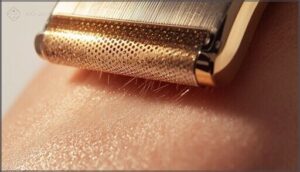
When you understand foil mechanics, you take back control of your shave. The perforated hood traps hair while a thin barrier shields your skin from blade contact. Foil materials like nickel-teretanyl blends reduce skin friction, and glide technology distributes pressure evenly across your contours. Electric shavers with sophisticated shaver dynamics deliver smooth motion, minimizing skin irritation—especially essential for sensitive skin prone to shaving irritation.
| Foil Feature | Skin Benefit | Why It Matters |
|---|---|---|
| Micro-slits | Guide hair safely | Prevent blade contact |
| Smooth coating | Reduce friction | Less drag on skin |
| Flexible foil | Conform to contours | Even pressure distribution |
| Tight tolerances | Consistent cutting gap | Avoid snagging |
Rotary Head Movement and Contouring

Rotary mechanics employ spinning discs that pivot independently, tracing facial contours like a pilot steering through valleys and peaks. Each rotary shaver module conforms to jawlines and chin angles without damaging your skin. This contouring technique lets you regain comfort on uneven terrain—your cheekbones, neck, and around the mouth—where shaver geometry matters most for sensitive skin prone to shaving and skin irritation.
| Rotary Feature | Skin Adaptation | Contouring Benefit |
|---|---|---|
| Pivoting modules | Follow curves | Reduce pressure |
| Rotating discs | Maintain contact | Smooth transitions |
| Multiple cutters | Adjust topology | Access tight angles |
| Flexible heads | Conform dynamically | Minimize drag |
Skin Sensitivity and Shaver Choice
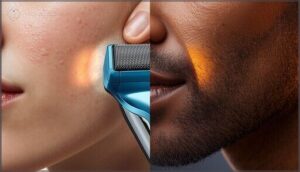
Your foil-versus-rotary decision hinges on matching shaver materials and design to your skin sensitivity and hair texture. Foil shavers distribute pressure evenly across sensitive areas, ideal for reactive skin types and fine hair. Rotary heads excel with thick, coarse growth and contoured faces, though blade trapping can worsen irritation factors. Understanding these mechanics lets you command electric shavers that respect your unique skin.
| Shaver Type | Best For Skin Types | Hair Texture Match |
|---|---|---|
| Foil | Sensitive skin | Fine to medium |
| Foil | Minimal irritation factors | Straight growth patterns |
| Rotary | Normal to oily skin | Thick and coarse |
| Rotary | Contoured sensitive areas | Variable density |
| Both | Shaving for sensitive skin | Requires proper technique |
Why Electric Shavers Reduce Irritation
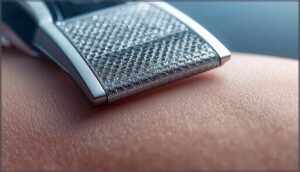
Electric shavers aren’t just convenient—they’re engineered to protect your skin from the trauma manual razors inflict. The protective guard system creates a barrier between blades and epidermis, fundamentally changing how hair removal affects your skin’s surface.
Here’s how that design translates into three measurable benefits you’ll notice every time you shave.
Minimizing Nicks and Cuts
The protective guard system is your first line of defense—it keeps blades from directly contacting skin while you shave. Here’s how cutting edge tech delivers shaver safety and nick prevention:
- Multiple blade configurations distribute pressure evenly across your face, preventing concentrated force that causes cuts
- Sharp blade sharpness reduces tugging and the need to press hard, protecting sensitive skin
- Optimized angles minimize blade-skin engagement, enhancing skin guarding during each pass
- Limited strokes prevent over-shaving that triggers nicks and irritation
Preventing Razor Burn
Nicks are just one battle—razor burn is the war you actually want to win. Electric shavers cut hair above the skin’s surface rather than scraping the epidermis like manual blades do. That means less friction, less inflammation, and far fewer angry red patches.
When you shave with the grain using gentle pressure, you’re giving your sensitive skin the relief it’s been begging for.
Ingrown Hair Prevention
Beyond razor burn lies the ingrown hair trap. Electric shavers cut above the follicle opening, reducing the hair re-entry risk that manual blades create.
Exfoliate regularly to clear dead skin cells, shave with the grain, and replace blades frequently. Apply a salicylic acid post-shave product to keep pores clear.
These shaving techniques transform ingrown remedies from reactive guesswork into proactive skin care that actually works.
Techniques for Comfortable Electric Shaving

You’ve got the right shaver, but how you use it makes all the difference between a smooth shave and an irritated mess. The mechanics matter, sure—but your technique controls how much friction hits your skin and whether you walk away comfortable or red.
Let’s break down the three fundamentals that separate a rushed, rough shave from one that actually works with your skin.
Proper Angle and Pressure
Think of your electric shaver as a precision instrument—angle and pressure control make all the difference. Hold it at roughly 30 degrees to your skin, not flat and not too steep. Light pressure wins every time.
- Against the grain boosts closeness but demands gentler passes to minimize skin traction
- Brief, controlled strokes reduce friction and prevent that pulling sensation you want to avoid
- Adjust your angle as you move across contours to keep contact consistent and comfortable
Shaving Dry Vs. Wet Skin
Skin hydration makes or breaks shave comfort. Dry shaving can strip surface moisture and increase friction, especially if you have sensitive skin.
Wet shaving with water or lubricating products creates a protective film that lowers shear forces and micro-irritation.
Most electric shavers handle both—choose dry for speed, wet for gentler glide and faster skin recovery.
Pre-Shave Preparation
Your pre-shave routine sets the tone for how your skin reacts. Start with gentle facial cleansing using warm water to soften hair and open pores. Pat dry, then apply a light moisturizer for skin hydration—but let it absorb fully.
Check your shaver sanitizing status and blade condition. For sensitive skin, skip heavy shaving cream with electric devices; exfoliation the night before prevents clogging and improves glide.
How Skin Type Affects Shaver Performance

Your skin isn’t just a backdrop for shaving—it’s an active participant that shapes how well your electric shaver performs. Sensitive skin reacts differently than resilient skin, acne changes the game entirely, and your hair density determines whether your shaver glides smoothly or struggles to keep up.
Here’s how to match your shaver and technique to what your skin actually needs.
Sensitive Vs. Normal Skin Reactions
Your skin’s barrier function determines how much control you have over shaving outcomes. Sensitive skin shows elevated inflammation response and transepidermal water loss, leading to prolonged redness and discomfort. Normal skin bounces back within hours.
Here’s what drives reaction severity:
- Baseline hydration levels – Lower moisture increases friction-induced skin irritation
- Inflammatory triggers – Reactive skin amplifies minor micro-traumas
- Recovery time – Barrier dysfunction extends healing from hours to days
Shaving techniques for sensitive skin must prioritize gentle pressure and hypoallergenic aftercare to prevent escalating skin conditions and irritation.
Acne-Prone and Irritated Skin
Inflammation complicates every pass you make over acne-prone skin. Active lesions heighten friction trauma, risking post-inflammatory hyperpigmentation and barrier disruption. Your shaver choice and hygiene practices directly determine whether you’re controlling breakouts or worsening them.
| Irritation Factor | Impact on Acne-Prone Skin |
|---|---|
| Sebum buildup | Clogs foils, increases bacteria transfer |
| Friction over pustules | Spreads infection, worsens inflammation |
| Dirty blades | Introduces microbes, triggers flare-ups |
| Harsh products | Strips barrier, elevates sensitivity |
| Excessive pressure | Aggravates lesions, delays healing |
Prioritize non-comedogenic aftercare and daily shaver cleaning for skin barrier repair and ingrown hair prevention.
Adapting Shaving to Hair Density
Thick beard growth demands more from your electric shavers than sparse coverage does. Hair density directly affects skin friction and how long the blade stays in contact with each area, so denser zones need careful technique adjustments to avoid irritation.
Here’s how to adapt your shaving technique to hair type and beard growth patterns:
- Reduce passes over dense areas – Multiple strokes increase friction and pulling sensations that compromise shaving and skin health.
- Use adjustable guards – Blade adjustment features let you tailor exposure without pressing harder, protecting against ingrown hairs.
- Shave gradually – Dense hair benefits from slower, deliberate strokes that prevent clipping and minimize micro-trauma.
- Prioritize shaver maintenance and care – Clean foils after every dense-area pass to prevent clogging and bacteria transfer.
Your density varies by face zone, so treat your jawline differently than your upper lip for maximum comfort.
Cleaning and Maintenance Impact on Skin

Your shaver touches your face every day, but what’s living on those blades between shaves can cause more irritation than the shaving itself. Bacteria, dead skin cells, and trapped oils build up fast, turning your grooming tool into a skin problem.
Here’s how proper cleaning and timely replacement protect your skin from unnecessary inflammation and breakouts.
Preventing Bacteria and Irritation
You don’t want yesterday’s stubble breeding tomorrow’s breakout. Daily cleaning of your razor head slashes bacterial growth by up to 99%, directly protecting against skin irritation and razor burn.
Disinfect with alcohol wipes after each use—this simple shaver hygiene step drops surface bacteria dramatically within minutes.
Store your electric shaver in a dry spot to prevent moisture-loving microbes from multiplying and triggering inflammation or ingrown hairs.
Replacing Blades and Foils
Dull blades don’t just underperform—they drag across your epidermis, multiplying friction and irritation. Manufacturer guidelines recommend blade replacement every 12–18 months, foils every 1–2 years, but visible wear demands earlier action.
- Always match exact part numbers for compatibility—mismatched foil shavers or razor maintenance components trigger unnecessary skin trauma
- Test new blades on a small area first to gauge sensitivity
- Replace blade and foil together as matched pairs for even cutting performance
Daily and Weekly Care Routines
Beyond scheduled replacements, your daily care routine shapes long-term grooming and skin health. Rinse disassembled components under running water immediately after each pass to halt bacteria colonization. Weekly, deep-clean foils with a soft brush and sanitize parts using manufacturer-approved solutions—shaver sanitizing prevents surface bacteria from triggering post-shave inflammation.
Pair shave preparation with consistent post-shave care for ideal skin exfoliation and barrier protection.
| Routine | Action |
|---|---|
| Daily | Rinse foils; apply light moisturizer |
| Weekly | Brush buildup; sanitize guards |
| Pre-Shave | Cleanse skin; soften hair with warmth |
| Post-Shave | Hydrate epidermis; skip alcohol-based products |
Common Skin Reactions and Solutions

Even the gentlest electric shaver can trigger reactions in your skin—from temporary redness to lingering sensitivity that makes you second-guess your routine. The good news is that most of these responses are predictable, manageable, and completely normal.
Let’s walk through what you might experience after shaving and how to calm your skin down fast.
Redness and Micro-Irritations
Redness and micro-abrasions affect 30–40% of new electric shaver users because shaver guards create friction on your skin, triggering temporary inflammation. Heat from the motor and pressure above 300 grams worsen razor burn and irritation, especially if you have sensitive skin.
These micro abrasions usually fade within hours, but proper technique and sharp blades prevent skin irritation and ingrown hairs from becoming chronic problems.
Managing Post-Shave Sensitivity
You can take control of post-shave sensitivity by acting fast. Apply alcohol-free aftershave products within five minutes—they cut stinging by half and support redness minimization.
Cooling moisturizers reduce itch prevention needs by 25–40%, while barrier creams lower friction to shield sensitive skin from razor burn and irritation.
These simple skin care steps safeguard against ingrown hairs and deliver real skin soothing when your epidermis needs it most.
Choosing Aftercare Products
Your aftershave alternatives matter more than you think. Fragrance-free options slash irritation by 30% compared with scented formulas—that’s real sensitive skin care in action.
Skip alcohol-based splashes; they cause stinging and dryness. Instead, reach for balms with aloe or chamomile for post-shave hydration.
Non-comedogenic moisturizer selection protects against breakouts while delivering the personal hygiene your skin demands after every shave.
Frequently Asked Questions (FAQs)
Do electric shavers work on wet facial hair?
Many wet and dry shavers handle damp facial hair well if they’re rated IPX4 or higher for water resistance.
Wet shaving tips suggest using foam or gel for lubrication, which softens hair and improves electric shaver safety during cutting.
How often should you replace electric shaver heads?
Most foil shavers need fresh heads every 12 to 18 months. Replace sooner if your shave feels rough despite cleaning—worn blades tug rather than cut, increasing friction and irritation on your skin.
Can electric shavers cause allergic reactions or dermatitis?
Yes, electric shavers can trigger allergic reactions or dermatitis in sensitive individuals. Nickel sensitivity, contact dermatitis from foil materials, and friction-induced irritation are documented concerns—especially for acne-prone skin or those with existing skin conditions.
Do electric shavers work differently on neck skin?
Your neck curves more than your jawline, so rotary heads adapt better here while foil shavers need deliberate angle adjustments.
Skin guard designs reduce nicks, but lighter pressure and multidirectional passes remain essential.
Conclusion
Your skin is terrain, not a battlefield—and understanding how electric shavers work on skin means recognizing that gentler contact yields better results. The recessed blade system, protective guards, and oscillating mechanics transform daily grooming from a test of endurance into a sustainable routine.
Choose your shaver type thoughtfully, maintain it diligently, and adjust your technique to match your skin’s unique needs. That combination delivers what manual razors often can’t: consistent comfort without compromise.
- https://jamanetwork.com/journals/jamadermatology/article-abstract/534895
- https://onlinelibrary.wiley.com/doi/full/10.1111/ics.12329
- https://www.ncbi.nlm.nih.gov/pubmed/27212467
- https://www.usa.philips.com/c-f/XC000004492/how-do-i-get-the-best-results-with-my-philips-shaver
- https://dermnetnz.org/topics/pseudofolliculitis-barbae