This site is supported by our readers. We may earn a commission, at no cost to you, if you purchase through links. This content is for general informational and educational purposes only and is not a substitute for professional medical, dermatological, or nutritional advice.
Skin loses roughly 30% of its moisture-holding capacity by the time most people hit their 50s—not because of neglect, but because aging shrinks sebaceous glands, depletes ceramides, and quietly dismantles the lipid barrier holding everything together. That’s when a good moisturizer stops being optional and starts acting more like maintenance for a leaking roof.
The right formula doesn’t just sit on the surface; it recruits ingredients like hyaluronic acid, peptides, and ceramides to do targeted repair work inside the stratum corneum. Understanding how facial moisturizers help aging skin means knowing which ingredients do what, and why your skin responds differently than it did a decade ago.
Table Of Contents
- Key Takeaways
- How Moisturizers Help Aging Skin
- Why Aging Skin Needs Moisture
- Key Anti-Aging Moisturizer Ingredients
- Humectants, Emollients, and Occlusives
- Choosing Moisturizers by Skin Type
- Top 5 Facial Moisturizers
- Frequently Asked Questions (FAQs)
- What is the 3 minute rule for moisturizer?
- Can moisturizer replace a prescription anti-aging treatment?
- How long before moisturizer results become visible?
- Does moisturizer work differently on menopausal skin?
- Can you layer multiple moisturizers at once?
- Do expensive moisturizers outperform drugstore options?
- Conclusion
Key Takeaways
- Aging skin loses up to 30% of its moisture-holding capacity due to shrinking sebaceous glands and ceramide depletion, making a barrier-focused moisturizer a biological necessity, not a luxury.
- Ceramides, hyaluronic acid, and peptides are the core ingredients that actually repair aging skin—ceramides rebuild the barrier, hyaluronic acid draws in water, and peptides signal your skin to produce more collagen.
- Your skin type dictates your formula: dry mature skin needs ceramide-rich occlusives, oily aging skin needs lightweight niacinamide-based gels, and sensitive skin needs fragrance-free, minimal-ingredient options.
- Price doesn’t equal performance—drugstore picks like La Roche-Posay Toleriane deliver clinically proven barrier repair at under $8 per ounce, while premium options justify cost only when the formulation genuinely offers superior ingredient technology.
How Moisturizers Help Aging Skin
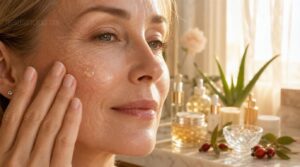
A good moisturizer doesn’t just sit on top of your skin — it actually gets to work on several real problems that come with aging. The right formula can make a noticeable difference in how your skin looks and feels day to day.
Understanding why facial moisturizer matters for long-term skin health helps you choose a formula that actually works with your skin, not just on it.
Here’s what moisturizers can actually do for mature skin.
Replenish Lost Hydration
As you age, your skin loses its natural reservoir polymers — the humectants like hyaluronic acid and glycerin that once kept it plump and comfortable. Applying moisturizer to damp skin using the damp skin technique activates layered hydration by drawing moisture into the epidermis before locking it in.
Evening rehydration boost routines support moisture locking overnight, helping ceramides restore what daily exposure quietly strips away. Topical ceramide application can reduce transepidermal water loss by up to 30%.
Support The Skin Barrier
Hydration alone isn’t enough if your skin barrier is compromised. Think of it as a brick wall — ceramides are the mortar.
When lipid restoration happens through the right moisturizer, your acid mantle stabilizes, pH optimization follows, and microbiome balance improves naturally.
Antimicrobial peptides function better in this balanced environment, providing your skin barrier with lasting barrier support and moisture retention throughout the day.
Soften Fine Lines
Fine lines respond well to the right combination of ingredients. Hyaluronic acid plumps skin within minutes, while peptides support collagen stimulation over weeks. Adding retinoid smoothing, gentle exfoliation, and sun protection addresses fine lines from multiple angles.
- Peptides and hydrators work gradually but visibly
- Light-diffusing film creates an optical blur effect instantly
- Retinoids need consistency, results build over months
- SPF prevents new UV-driven wrinkle formation daily
Improve Rough Texture
Rough texture tells a clearer story than fine lines do.
Emollients like squalane slip into spaces between skin cells, softening uneven patches on contact. Urea softening and lactic acid renewal loosen dead surface buildup, while panthenol conditioning restores pliability.
Ceramides rebuild the barrier underneath, niacinamide steadies it, and humectant ingredients keep hydration where keratin softening and skin texture improvement can actually hold.
Reduce Dryness-related Dullness
Dull skin is often just thirsty skin. When barrier lipids decline, moisture escapes faster, and that dryness interrupts light scattering reduction across your surface — the glow disappears.
Barrier lipid restoration through ceramide-rich moisturizers, combined with a hydrating serum, tackles this directly. Flake-minimizing techniques like gentle emollients smooth texture overnight.
Consistent moisture retention timing and a skin barrier repair routine keep brightness steady day after day.
Why Aging Skin Needs Moisture
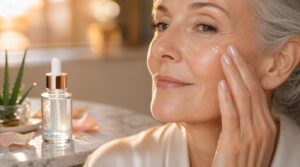
Aging skin doesn’t just feel drier — it actually loses its ability to hold onto moisture the way it once did. That’s not a cosmetic complaint; it’s biology working against you.
Here’s what’s really happening beneath the surface.
Slower Natural Oil Production
As you age, your sebaceous glands quietly produce less sebum — and that sebum decline impacts ripple across your entire complexion. Surface lubrication loss leaves skin rougher, duller, and more reactive.
Here’s what that looks like in practice:
- Lipid film weakening lets moisture evaporate faster
- Antioxidant oil reduction exposes skin to daily stressors
- Sensory trigger increase makes skin feel tighter after washing
- Oil production decline dulls your natural glow over time
Weaker Moisture Barrier
Think of your skin barrier as a brick wall — and Lipid Depletion slowly pulls out the mortar. This pH Shift triggers Enzyme Imbalance, causing Desquamation Disruption that leaves gaps in coverage. As Irritant Penetration rises, skin barrier dysfunction accelerates.
The consequences unfold systematically: Lipid barrier repair becomes critical as mortar gaps widen, allowing moisture to escape faster. The pH Shift causes enzymes to misfire, leading to uneven shedding. Meanwhile, weakened barrier support enables irritant penetration, heightening sensitivity noticeably.
| Barrier Change | What Happens | Why It Matters |
|---|---|---|
| Lipid barrier repair needed | Mortar gaps widen | Moisture escapes faster |
| pH Shift occurs | Enzymes misfire | Shedding becomes uneven |
| Irritant Penetration rises | Barrier support weakens | Sensitivity increases noticeably |
Barrier strengthening through the right moisturizer refills those gaps directly, restoring balance and resilience.
For women over 50, choosing the right formula matters most—these top-rated facial moisturizers for mature skin go beyond surface hydration to genuinely rebuild what time has worn down.
Increased Water Loss
Your skin loses water constantly — even without sweating. As lipid layer breakdown accelerates with age, transepidermal water loss (TEWL) acceleration kicks in, and a surface microclimate shift leaves the barrier less able to slow that loss.
Humidity-driven evaporation pulls moisture outward faster, while sweat-sebum imbalance reduces natural protection. This dual disruption weakens the skin’s defensive functions, accelerating dryness.
Barrier strengthening with hydrating humectants and lipid barrier repair ingredients directly counters this transepidermal water loss before dryness deepens.
Thinner, More Fragile Skin
Your skin literally gets thinner as you age — subcutaneous thinning and reduced collagen mean the barrier that once shielded you grows fragile. Microvascular fragility increases bruising from the lightest contact, while lipid loss accelerates transepidermal water loss.
Delayed wound healing follows.
Replenishing ceramides and hyaluronic acid rebuilds what’s been lost, supporting a skin barrier that’s working harder than ever just to hold itself together.
Greater Sensitivity Risk
Your barrier thins, and suddenly everything stings. Fragrance triggers redness, alcohol drying out already-parched skin, and preservative allergies you never noticed before become real problems. Excessive exfoliation only worsens barrier compromise.
That’s why fragrance-free, paraben-free, eczema-friendly formulas matter so much now — they deliver barrier support without the hidden irritants.
Fragrance sensitivity isn’t a weakness; it’s your skin asking for smarter choices.
Fragrance sensitivity is not a flaw — it is your skin demanding the smarter care it deserves
Key Anti-Aging Moisturizer Ingredients
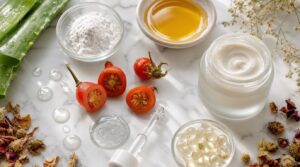
Not all moisturizer ingredients are created equal, especially for aging skin. Some work harder than others to restore what time takes away.
These are the ones worth looking for on the label.
Hyaluronic Acid for Plumping
Hyaluronic acid is one of the hardest-working ingredients in any anti-aging routine. It holds up to 1,000 times its weight in water, delivering an instant skin plumping effect that softens fine lines and wrinkles within minutes.
Look for molecular weight variants — sodium hyaluronate included — since triple weight hydration targets multiple skin depths.
Always apply to damp skin; formulation’s pH range around 4–7 ensures stability and a real skin elasticity boost.
Ceramides for Barrier Repair
While hyaluronic acid pulls moisture in, ceramides keep it there — think of them as the mortar holding your skin’s "bricks" together.
Lipid matrix restoration depends on the right ceramide subtypes, like Ceramide NP and AP. Look for moisturizers using blended barrier lipids alongside ceramide-cholesterol synergy:
- Reduces transepidermal water loss
- Mimics your skin’s natural lipid composition
- Strengthens skin barrier function within days
- Enhances anti-aging skincare results long-term
Peptides for Firmness Support
Ceramides shore up your barrier — but peptides take things further by telling your skin to rebuild. These short amino acid chains work through collagen signaling, prompting fibroblasts to ramp up collagen synthesis and improve skin elasticity.
A tripeptide blend can also handle MMP regulation, slowing collagen breakdown. This dual action enhances the skin’s structural integrity and resilience.
Copper peptide formulas like GHK-Cu add another layer of antiaging skincare support through peptide stability and signaling, reinforcing the skin’s regenerative processes.
Vitamin C for Brightness
Peptides rebuild structure from within — but if dullness and dark spots are your concerns, vitamin C antioxidant action is what you want next.
It works through tyrosinase inhibition, slowing melanin production to address hyperpigmentation at the source. Vitamin C also boosts collagen synthesis and delivers photoprotection synergy when paired with SPF, enhancing overall skin defense.
Proper pH stabilization ensures the formula remains active, allowing antioxidant brightening and skin tone brightening to effectively reach your skin.
Niacinamide for Tone
Niacinamide is where tone control gets practical. It works on multiple fronts — slowing melanin transfer to fade dark spots, delivering redness reduction, and providing inflammation calm that stops discoloration from worsening after flare-ups.
These niacinamide benefits also include collagen support for smoother texture and pigment lightening without irritation. For aging skin, it’s one of the most reliable ingredients for steady, visible skin tone brightening.
Humectants, Emollients, and Occlusives
Not all moisturizing ingredients do the same job — they each plays a distinct role in keeping your skin hydrated and healthy.
The good news is that understanding how they work together makes choosing the right product much easier.
Here’s a closer look at the three key types your moisturizer should include.
Humectants Attract Water
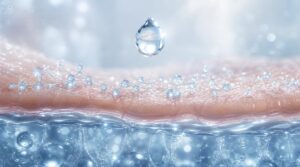
Think of humectants as tiny sponges built into your moisturizer. Ingredients like glycerin and hyaluronic acid use Water Binding Chemistry — their hydroxyl groups literally grab and hold moisture molecules. Here’s what shapes how well they work:
- Humidity-Driven Performance: They draw moisture from the air most effectively above ~80% humidity.
- Dry-Climate Limitations: In dry air, they draw moisture from deeper skin layers, risking increased water loss.
- Stratum Corneum Swelling: This temporary plumping visibly softens fine lines within 24 hours.
- Synergistic Occlusive Pairing: Layering a humectant with an occlusive locks hydration in place.
Emollients Smooth Rough Areas
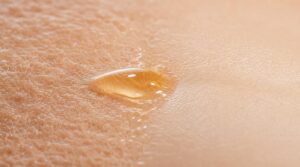
Emollients are your skin’s texture fixers. Acting as Film Formers, ingredients like squalane, shea butter, and petrolatum coat the surface, filling in rough, uneven areas so skin feels noticeably smoother.
Keratin Softeners like Urea Softening agents and Allantoin Soothers gently break down hardened outer cells.
Lipid Replenishment through these emollient ingredients also restores the intercellular matrix, so dry patches feel softer, not just temporarily masked.
Occlusives Seal Moisture In
Occlusives are the final lock on your skin’s hydration. Through a Film-Forming Mechanism, occlusive ingredients coat the surface and reduce transepidermal water loss by roughly 50%.
Three key Occlusive Ingredient Types to know:
- Petrolatum – strongest seal, ideal for very dry areas
- Dimethicone – lighter skin feel impact, less greasy
- Beeswax – natural barrier against irritants
These barrier-supportive ingredients work alongside emollient ingredients to keep moisture where it belongs.
Balanced Formulas Work Best
No single ingredient type does the job alone. The best moisturizers for aging skin rely on Humectant Emollient Synergy — humectants draw water in while emollients smooth the surface, so your skin feels comfortable rather than just temporarily damp.
Barrier Lipid Pairing with ceramides reinforces this effect, strengthening the skin’s protective layer to lock in hydration.
Peptides and Active Base Harmony ensure formulas remain gentle, maintaining irritation-free blends that soothe mature skin.
This combination achieves strong texture spreadability, allowing the moisturizer to absorb evenly across the skin barrier without residue.
Layering Improves Comfort
Layering your moisturizer isn’t just a trend — it’s a smart barrier strategy. Starting with a hydrating serum or lightweight gel creates a Cushioning Air Gap that draws water close to the skin. Following with a rich cream texture builds a Layered Barrier Seal with Gradual Slip Build.
This approach delivers multiple benefits:
- Achieves uniform hydration spread across dry zones
- Sustains extended comfort duration between reapplications
- Reduces patchy, rough texture throughout your daily skincare routine
- Targets drier areas like cheeks with an extra layer
- Keeps the skin barrier stable without heavy buildup
Choosing Moisturizers by Skin Type
Not every moisturizer works for every skin type, and that gap matters more as your skin ages. The right formula depends on what your skin actually needs — not just what’s trending or highly rated.
Here’s how to match your moisturizer to your skin type, starting with the most common concerns.
Dry Mature Skin
If your skin feels perpetually tight or rough no matter what you do, lipid loss is likely the culprit. Aging triggers reduced skin elasticity, environmental dehydration, and microbiome imbalance — all worsening dryness.
For dry skin care and mature skin hydration, reach for ceramide-rich creams. These formulas combat dryness and restore the skin barrier effectively.
| Concern | What Helps |
|---|---|
| Lipid loss | Ceramide-rich creams |
| Nutrient deficiency | Peptide moisturizers |
| Age-related itching | Fragrance-free formulas |
| Reduced skin elasticity | Occlusive-heavy textures |
| Environmental dehydration | Hyaluronic acid + occlusive seal |
Sensitive Aging Skin
Sensitive skin doesn’t just feel reactive — it often is. Redness triggers like UV exposure, temperature shifts, and harsh cosmetics can fire up inflammatory signaling and accelerate barrier lipid loss. Your best defense? A fragrance-free moisturizer for mature sensitive skin packed with barrier-supportive ingredients.
- Ceramides rebuild the lipid layer
- Hydrating humectants like glycerin calm dehydration-driven dullness mechanism
- Niacinamide quiet redness without irritating
- Minimal ingredient lists block environmental irritants
- Lightweight textures support skin elasticity improvement without overloading reactive skin
Combination Mature Skin
Combination mature skin plays by different rules than sensitive skin. Your T-zone stays oilier while cheeks tend dry — that’s barrier unevenness working against you.
A T-zone lightweight formula with niacinamide manages oil control without stripping, while ceramides and hyaluronic acid deliver cheek hydration where you need it most. Zonal moisture and texture harmony come from applying each product where it actually belongs.
Oily Aging Skin
Oily aging skin presents a unique challenge: shiny, yet thirsty for water. This paradox demands a targeted solution.
A lightweight formula enriched with hyaluronic acid and niacinamide addresses this imbalance. Niacinamide regulates sebum production and controls shine, while non-comedogenic formulas prevent pore congestion.
Seek a mattifying finish that delivers real oil control without compromising hydration or stripping the skin. This ensures a balanced, healthy complexion.
Day Versus Night Textures
Think of your moisturizer routine as having two shifts. Your daytime moisturizer works fast, absorbs quickly for a matte finish, and plays nicely with sunscreen and makeup compatibility.
At night, richer textures take over for overnight skin repair without pilling on your pillow.
- Absorption Speed is faster in lightweight formula day creams
- Matte finish keeps makeup compatibility intact all day
- Night creams resist pillow interaction better due to thicker consistency
- Temperature comfort improves when heavier occlusives are reserved for bedtime
- Layer a hydrating serum beneath your nighttime or daytime staple for best results
Top 5 Facial Moisturizers
With so many moisturizers on the market, narrowing it down can feel overwhelming—especially when your skin’s needs are specific. These five options stand out for their ingredient quality, real-world results, and how well they address common concerns in aging skin.
Here’s what each one brings to the table.
1. Yoé Ympossible Ultra Nourishing Moisturizer
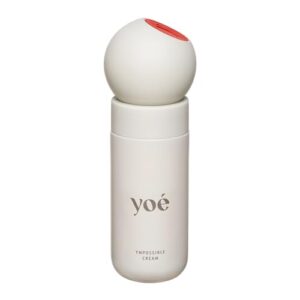
The Yoé Ympossible Ultra Nourishing Moisturizer packs a lot into a small 30 mL bottle. It combines ceramides, hyaluronic acid, peptides, vitamin C, and tranexamic acid — a lineup that covers hydration, barrier repair, and brightening in one step.
The SynerGenius encapsulation technology helps deliver these actives where they’re actually needed.
It’s fragrance-free, vegan, and EWG Verified, so sensitive skin types can use it confidently.
At $185, it’s a splurge, but the formulation quality justifies the cost.
| Best For | Anyone with sensitive, dry, or barrier-compromised skin who wants a single cream that handles hydration, brightening, and anti-aging without the fragrance or fuss. |
|---|---|
| Price | $185.00 |
| Volume | 30 mL |
| Fragrance-Free | Yes |
| Skin Type | Dry to Normal |
| Anti-Aging | Yes |
| Non-Comedogenic | Yes |
| Additional Features |
|
- Loaded with heavy hitters — ceramides, hyaluronic acid, vitamin C, and EGF — so you’re getting real multi-tasking in one jar.
- Safe for sensitive skin and post-retinol use, and it’s fragrance-free, vegan, and EWG Verified.
- Works as a daily moisturizer or an overnight mask, so it pulls double duty without needing a separate product.
- At $185 for just 30 mL, you’re paying a premium — and you’ll burn through it fast with daily use.
- Anti-aging results are subtle, not dramatic, so don’t expect a night-and-day transformation.
- The chunky pump packaging feels a bit oversized for how little product you actually get.
2. Doctor Rogers Anti Aging Face Cream
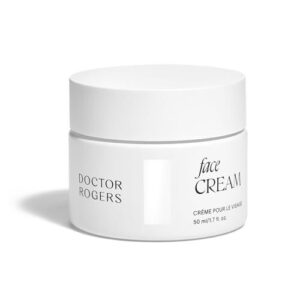
Doctor Rogers Anti Aging Face Cream delivers clean and effective skincare at $78 for 1.7 oz. Its fragrance-free, non-comedogenic formula is centered on ingredients your skin actually needs. Key components include niacinamide to even tone and strengthen the barrier, squalane to restore lost lipids, and Centella Asiatica to calm irritation.
Glycerin draws moisture into the skin, while shea butter and jojoba esters seal it in, creating lasting hydration. These ingredients work synergistically to address dryness and sensitivity.
The texture is rich without feeling heavy, making it ideal for daily use. This cream suits dry or sensitive mature skin, offering nourishment without overwhelming the complexion.
| Best For | People with dry, sensitive, or mature skin who want a clean, fragrance-free moisturizer that layers well under makeup and skips the common irritants. |
|---|---|
| Price | $78.00 |
| Volume | 50 mL |
| Fragrance-Free | Yes |
| Skin Type | Dry, Sensitive, Mature |
| Anti-Aging | Yes |
| Non-Comedogenic | Yes |
| Additional Features |
|
- Packed with skin-loving ingredients — niacinamide, squalane, and centella asiatica — that hydrate, brighten, and calm all at once.
- Fragrance-free, non-comedogenic, and free of parabens, sulfates, and silicones, so it’s a solid pick for sensitive or reactive skin.
- Lightweight enough to wear day or night, and plays well with serums and other products in your routine.
- At $78 for 1.7 oz, it’s a real investment — especially with some reports that the container looks underfilled.
- A few users found it heavier than expected, and some woke up with skin feeling drier than anticipated.
- The price point makes it tough to commit to as an everyday staple if you’re watching your skincare budget.
3. Caudalie Premier Cru Anti Aging Cream
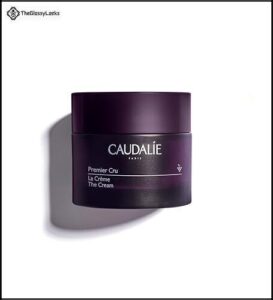
Caudalie First Cru Anti Aging Cream packs a lot into one jar — and the clinical numbers back it up. In a 44-person study, 93% saw reduced forehead wrinkles and 98% noticed smoother smile lines after 56 days.
The formula combines micro-hyaluronic acid, ceramides, peptides, and niacinamide to hydrate, firm, and even skin tone. It absorbs quickly without feeling greasy, making it ideal for dry or mature skin.
At $119 for 50 mL, it’s a premium investment — but the refillable design helps offset the cost over time.
| Best For | Anyone with dry or mature skin who wants a serious anti-aging cream and doesn’t mind paying a premium for clinically-backed results. |
|---|---|
| Price | $119.00 |
| Volume | 50 mL |
| Fragrance-Free | No |
| Skin Type | Dry, Mature |
| Anti-Aging | Yes |
| Non-Comedogenic | Yes |
| Additional Features |
|
- Strong clinical results — 93% saw fewer forehead wrinkles and 98% noticed smoother smile lines in just 56 days
- Absorbs fast and doesn’t feel greasy, so it works well under makeup or as part of a morning routine
- Refillable jar design means you’re not tossing the whole thing every time, which softens the cost a bit over time
- $119 for 50 mL is a real splurge, especially when results aren’t guaranteed for everyone
- The thick, tightening formula can feel heavy if your skin runs oily or sensitive
- The study only had 44 participants — solid, but not exactly a massive sample size
4. Dermalogica Dynamic Skin Recovery SPF50 Moisturizer
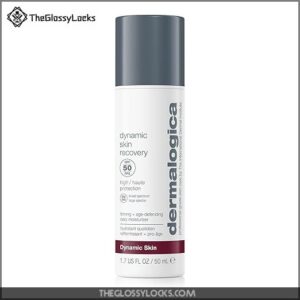
Dermalogica Active Skin Recovery SPF50 is worth a close look if you want SPF baked right into your morning moisturizer. It delivers broad-spectrum UVA/UVB protection while peptides support collagen, and humectants work to plump fine lines throughout the day.
The medium-weight formula absorbs without greasiness or white cast — easy to layer under makeup. Its clean, fragrance-conscious formulation suits sensitive and mature skin well.
At $87 for 1.7 oz (roughly $51 per ounce), you’re paying a premium, but the 2-in-1 convenience is real.
| Best For | Anyone who wants solid SPF 50 protection and anti-aging benefits in one step — especially those with sensitive, acne-prone, or mature skin. |
|---|---|
| Price | $87.00 |
| Volume | 48 mL |
| Fragrance-Free | No |
| Skin Type | Acne-Prone, Sensitive |
| Anti-Aging | Yes |
| Non-Comedogenic | Yes |
| Additional Features |
|
- Broad-spectrum SPF 50 with anti-aging peptides built right in — no extra step needed
- Lightweight, no white cast, and plays nice under makeup or mixed with foundation
- Clean formula — no artificial fragrances, colorants, or parabens, so it’s gentle on sensitive skin
- At $87 for 1.7 oz, it’s a steep price — roughly $51 per ounce
- Has a rose-floral scent that some people find too strong or irritating
- The bottle isn’t TSA carry-on friendly, and some users have reported leaking issues
5. La Roche Posay Toleriane Double Repair Moisturizer
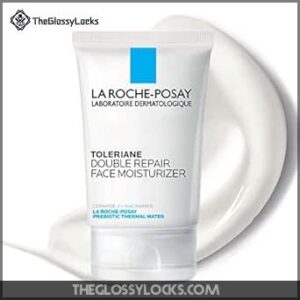
La Roche-Posay Toleriane Double Repair Moisturizer is the quiet workhorse of this list. At $24.99 for 3.2 oz — about $7.80 per ounce — it delivers real clinical ingredients without the luxury price tag. Ceramide-3 rebuilds your barrier, glycerin pulls in moisture fast, and niacinamide gradually evens skin tone and calms redness.
It’s oil-free, fragrance-free, and non-comedogenic, so sensitive and combination skin types don’t have to worry about breakouts or stinging.
The prebiotic thermal water adds a soothing layer that reactive skin genuinely appreciates.
| Best For | Anyone with sensitive, combination, or reactive skin who wants a no-fuss daily moisturizer that actually delivers on barrier repair without breaking the bank. |
|---|---|
| Price | $24.99 |
| Volume | 95 mL |
| Fragrance-Free | Yes |
| Skin Type | All Skin Types |
| Anti-Aging | Yes |
| Non-Comedogenic | Yes |
| Additional Features |
|
- Repairs your skin barrier within an hour and keeps it hydrated for up to 48 hours — morning and night, sorted.
- Ceramide-3, niacinamide, and glycerin is a solid trio that handles moisture, redness, and uneven tone all at once.
- Oil-free and fragrance-free, so it plays nicely under makeup or sunscreen without clogging pores or causing flare-ups.
- At $24.99, it’s pricier than your average drugstore moisturizer, which might give budget shoppers pause.
- If your skin is seriously dry or compromised, this alone probably won’t cut it — you’d want something richer layered on top.
- It can pill when used over certain vitamin C serums, and the lid needs manual cleaning since it doesn’t self-wipe.
Frequently Asked Questions (FAQs)
What is the 3 minute rule for moisturizer?
The 3-minute rule is simple: apply your moisturizer within three minutes of cleansing, while your skin is still slightly damp.
If you’ve just used a sheet mask, it’s worth checking whether you should moisturize after a sheet mask to lock in all that extra hydration.
That small window helps lock in surface moisture before it evaporates.
Can moisturizer replace a prescription anti-aging treatment?
Moisturizer can’t replace a prescription anti-aging treatment. It manages dryness, texture, and barrier support well, but it won’t deliver the deeper cell-turnover changes that retinoids produce.
Think of it as a strong teammate, not a substitute.
How long before moisturizer results become visible?
You’ll feel instant smoothness right after applying, and tightness often eases within an hour or two.
For real barrier and texture changes, give it two to four weeks.
Does moisturizer work differently on menopausal skin?
Yes — and meaningfully so. Menopause markedly shifts your skin’s moisture needs, stripping natural oils and weakening the barrier.
Thus, moisturizers with ceramides, occlusives, and humectants become less optional and far more essential for daily comfort.
Can you layer multiple moisturizers at once?
You can, and many people find it helpful. Apply the lighter, water-based layer first, let it absorb, then follow with a richer cream to seal everything in.
Do expensive moisturizers outperform drugstore options?
Not always. Drugstore staples like CeraVe — packed with ceramides, glycerin, and niacinamide — deliver real, measurable results.
Price often reflects packaging and branding, not better ingredients.
Focus on the formula, not the label.
Conclusion
Your skin isn’t failing—it’s simply asking for a different kind of attention. Learning how facial moisturizers help aging skin means recognizing that ceramides, peptides, and hyaluronic acid aren’t luxury additions; they’re structural necessities.
The right moisturizer doesn’t stop the clock, but it does keep the machinery running smoother, longer.
Choose ingredients that match what your skin actually needs, apply consistently, and let the formula do the quiet, cumulative work it was designed to do.
- https://clearstem.com/blogs/skin-care-learning-center/top-anti-aging-ingredients-reduce-fine-lines-wrinkles?srsltid=AfmBOopVxJdIVqcygLKlWPA0z1LW8qOTGlkNuvP8MghXT-mDNEkQ9Z_S
- https://www.halecosmeceuticals.com/blog/the-science-of-ceramide-peptide-a-key-ingredient-in-skincare-formulations
- https://www.nytimes.com/wirecutter/reviews/best-retinol-products/