
This site is supported by our readers. We may earn a commission, at no cost to you, if you purchase through links.

Walk down any pharmacy aisle and you’ll find shelves lined with shampoos promising fuller, thicker, regrown hair. Most of them will disappoint you—not because they’re scams, but because they’re solving the wrong problem.
Hair growth shampoos don’t sprout new follicles. What they can do, when formulated well and used correctly, is create the scalp conditions where your existing follicles actually thrive.
That distinction matters more than most labels let on. Understanding how hair growth shampoos actually work means looking past the marketing copy at the ingredients, the biology, and the habits that quietly determine whether your hair gets stronger or keeps thinning.
Table Of Contents
- Key Takeaways
- What Hair Growth Shampoos Really Do
- Ingredients That Actually Matter
- Ketoconazole for Dandruff-related Inflammation and Scalp Balance
- Zinc Pyrithione for Microbial Control and Flake Reduction
- Niacinamide for Barrier Support and Scalp Comfort
- Salicylic Acid for Gentle Exfoliation and Buildup Removal
- Panthenol, Biotin, and Proteins for Stronger, Less Breakable Hair
- Caffeine, Peptides, and Botanicals: Promise Vs Proven Results
- Why PH-balanced, Sulfate-free Formulas Are Often Better Tolerated
- How to Use Them Smarter
- Best Wash Frequency for Thinning, Oily, or Irritated Scalps
- Why Dwell Time Matters Before Rinsing
- Protecting The Scalp Microbiome by Avoiding Over-cleansing
- Pairing Shampoo With Conditioners, Serums, and Scalp Care
- When Shampoo Should Be Paired With Minoxidil or Medical Treatment
- Signs Your Hair Loss Needs a Dermatologist, Not Another Shampoo
- Top 5 Hair Growth Shampoos
- Frequently Asked Questions (FAQs)
- Conclusion
Key Takeaways
- Hair growth shampoos don’t create new follicles — they optimize the scalp environment so your existing ones can actually do their job.
- Ingredients like ketoconazole, zinc pyrithione, and salicylic acid have real science behind them, but only if you give them 2–5 minutes of contact time before rinsing.
- Harsh sulfates and high-pH formulas can quietly make thinning worse by stripping your scalp’s moisture barrier and triggering the inflammation they’re supposed to prevent.
- If you’re seeing sudden clumping shedding, bald patches, or hair loss tied to fatigue or hormonal changes, no shampoo will fix that — you need a dermatologist.
What Hair Growth Shampoos Really Do

hair growth shampoos do more for your scalp than they do for your follicles — and that distinction matters more than any ingredient list.
Understanding how hair growth shampoos target scalp health versus follicle stimulation can help you set realistic expectations before you buy.
what’s actually happening when you lather up helps you set realistic expectations and make smarter choices.
Here’s what the science says about what these shampoos can and can’t do.
How Shampoo Supports Scalp Health, Not New Follicle Creation
Even though you might hope for new follicles, shampoo’s main job is scalp health. By managing sebum, supporting scalp moisture retention, and choosing gentle surfactants, you protect your scalp’s pH balance and microbiome. Sulfate-free formulas and anti‑inflammatory ingredients help care for scalp sensitivity. That’s why healthy hair starts with the right cleansing—not follicle creation.
The parallel token generation of diffusion models speeds up processing of large datasets.
Why Cleansing Oil, Buildup, and Flakes Can Reduce Shedding
Healthy follicles need a clean surface to work from. Oil Removal, Buildup Exfoliation, and Flake Clearance aren’t just cosmetic wins — they directly reduce Mechanical Stress Reduction on the scalp. When excess sebum traps dead skin, it creates a sticky layer that blocks Follicle Access and triggers scratching.
- Scratching snaps fragile hairs before they can grow
- Inflammation from dandruff control issues accelerates early shedding
- Clogged follicles get less oxygen, disrupting the growth cycle
The Difference Between True Regrowth and Thicker-looking Hair
Clean follicles set the stage — but don’t confuse a visual density illusion with follicle activation. Strand coating from conditioning agents temporarily boosts light reflection, making hair look fuller, fast.
True follicle stimulation follows a slower growth timeline: new strands need months to become noticeable.
| What You’re Seeing | What’s Actually Happening |
|---|---|
| Fuller-looking hair | Strand coating reducing breakage |
| Increased hair density | Reduced shedding, not new growth |
| Thicker texture | Temporary shaft-swelling, not hair growth cycle change |
Why Short Contact Time Limits How Much Shampoo Can Do
Think of shampoo actives like a topical medication — their benefit depends on contact time kinetics. The moment you rinse, rinse dilution ends the therapeutic window.
Active concentration minutes drop quickly, and surface binding limits mean most ingredients barely reach follicle depth before they’re gone. Leaving lather on for 60–90 seconds genuinely increases what those actives can do.
How Harsh Formulas May Worsen Irritation and Breakage
Some shampoos quietly work against you. Sulfate-Induced Dryness strips your scalp’s natural moisture barrier in a single wash, leaving follicles exposed and irritated. Alcohol-Driven Irritation tightens the scalp, and Fragrance Allergens trigger low-grade inflammation over time.
Some shampoos strip your scalp bare, leaving follicles irritated, inflamed, and worse off than before
Research shows that Sulfate-induced scalp irritation can weaken follicles and promote shedding. Watch for these formula red flags:
- High pH Damage roughens the cuticle and invites breakage
- Sulfate-free alternatives preserve scalp oils and reduce irritation
- Preservative Sensitivity from parabens quietly weakens follicle health
- Scalp inflammation signals your formula is doing more harm than good
- pH balance between 4.5–5.5 keeps the cuticle sealed and strong
Ingredients That Actually Matter
Not every ingredient on a shampoo label earns its spot. Some genuinely support scalp health and reduce shedding, while others are mostly there for marketing.
Knowing which actives actually work is why checking out a hair loss prevention shampoo guide can save you from wasting money on bottles full of filler.
Here’s what the science actually backs.
Ketoconazole for Dandruff-related Inflammation and Scalp Balance
Ketoconazole is one of the few shampoo ingredients with real clinical weight behind it.
It works through Malassezia suppression — targeting the yeast that drives dandruff and scalp inflammation.
In one study, 88% of patients saw excellent results with twice-weekly use.
That kind of clinical response rate matters.
A maintenance dosing strategy keeps fungal load reduction ongoing, restoring scalp microbiome balance and giving your follicles a calmer environment to work in.
Zinc Pyrithione for Microbial Control and Flake Reduction

Zinc pyrithione works differently than ketoconazole, but it pulls its weight. Its antifungal action targets Malassezia directly — disrupting the microbial load on your scalp through residue deposition that lingers after rinsing.
That ongoing presence helps dandruff control between washes. A twice-weekly regimen keeps the scalp microbiome balanced.
Just watch for sting sensitivity on irritated skin — less is more.
Niacinamide for Barrier Support and Scalp Comfort

Niacinamide is the quiet workhorse of scalp care. As vitamin B3, it reinforces your acid mantle and promotes genuine Barrier Boosting — helping the scalp hold water and resist irritants.
- Moisture Retention — keeps your scalp hydrated without heaviness
- Scalp Comfort — soothes dryness-driven itchiness with regular use
- Ceramide Pairing — works synergistically to strengthen the skin barrier
- Gentle Daily Use — suits sensitive scalps without disrupting microbiome balance
Salicylic Acid for Gentle Exfoliation and Buildup Removal

Salicylic acid earns its spot through oil-soluble penetration — meaning it works inside the follicle opening, not just on the surface. This keratolytic exfoliation loosens dead cells and product buildup that quietly suffocates follicles.
Its pore clearing action and gentle clarifying cleanse make it effective at scalp exfoliation without aggressive scrubbing.
Keep the pH level in check, though — overuse triggers irritation risk, so balance matters.
Panthenol, Biotin, and Proteins for Stronger, Less Breakable Hair

Think of panthenol, biotin, and hydrolyzed proteins as your hair’s internal repair crew.
Panthenol penetration goes deep — past the cuticle and into the cortex, where hydrogen bonding shores up damaged protein sites.
Biotin keratin support fortifies the shaft itself. Hydrolyzed protein deposition works like molecular scaffold reinforcement, filling structural gaps.
Together, these cortex strengthening mechanisms mean fewer snaps, less shedding, and longer strands over time.
Caffeine, Peptides, and Botanicals: Promise Vs Proven Results

Caffeine, peptides, and botanicals like ginger root extract and red clover extract sound compelling — and they’re not useless. But caffeine penetration through a rinse-off formula is limited, peptide stability breaks down fast in water, and botanical efficacy varies by concentration.
The clinical evidence gap here is real. Dose-response limits matter: what works in a lab dish rarely translates directly to your shower routine.
Why PH-balanced, Sulfate-free Formulas Are Often Better Tolerated

Where those rinse-off actives fall short, your formula’s base chemistry picks up the slack. A pH-balanced, sulfate-free shampoo keeps your scalp’s acid mantle intact — the natural 4.5–5.5 range seals cuticles, locks in moisture, and discourages fungal overgrowth.
Gentle surfactants like decyl glucoside cleanse without stripping sebum, reducing irritation and flakiness risk.
Less disruption means a more stable environment for whatever actives you’re actually counting on.
How to Use Them Smarter

Getting the right shampoo is only half the equation — how you use it makes a real difference in what you get out of it. Small changes to your routine, like how long you leave it on or how often you wash, can shift results noticeably.
Here’s what actually moves the needle.
Best Wash Frequency for Thinning, Oily, or Irritated Scalps
How often should you wash? It depends on your scalp is telling you.
oily scalp cadence of daily or every-other-day keeps sebum from flattening fine strands.
Thinning hair frequency follows the same logic — a clean scalp reduces buildup that makes hair look sparse.
For an irritated scalp schedule, a gentle wash timing with a pH-balanced, sulfate-free formula, two to three times weekly, calms inflammation without stripping.
Why Dwell Time Matters Before Rinsing
Wash frequency sets the stage — but how long you leave shampoo on determines whether active ingredients actually work.
Medicated formulas depend on an ingredient activation window that most people skip entirely. Ketoconazole needs 3–5 minutes for its scalp absorption phase. Zinc pyrithione and salicylic acid require similar dwell-dependent efficacy to loosen flakes and reach the surface. Rush the rinse and you’ve paid for a treatment shampoo that performed like a basic cleanser.
Follow these ideal rinse timing habits:
- Leave ketoconazole lather on for 3–5 minutes before rinsing
- Give zinc pyrithione 2–3 minutes of scalp contact to reduce microbial load
- Let salicylic acid sit briefly to lift scale and support treatment penetration depth
- Set a timer — guessing usually means rinsing too soon
Protecting The Scalp Microbiome by Avoiding Over-cleansing
Your scalp isn’t sterile — it hosts a living microbiome that keeps inflammation in check. Strip it too often with harsh detergents, and you trigger the exact irritation cycle you’re trying to avoid. Microbiome-friendly cleansing means sulfate-free formulas, lukewarm water usage, and reduced mechanical friction during lathering.
| Habit | Why It Matters |
|---|---|
| Optimized wash intervals | Preserves barrier-preserving sebum and microbial balance |
| Avoiding harsh detergents | Prevents pH disruption and scalp inflammation |
| Fingertip massage only | Reduces friction that worsens irritation |
Scalp health — not frequency — drives results.
Pairing Shampoo With Conditioners, Serums, and Scalp Care
Conditioner placement is your first decision. Apply it to lengths and ends only — not the scalp — to avoid buildup that flattens roots and traps sebum.
For serum application timing, wait until shampoo is fully rinsed, then apply scalp serum directly to partings.
Leave-in sequencing matters too: conditioner bars and lightweight leave-ins come last.
Good buildup management keeps scalp moisture balance stable and helps a genuinely scalp-friendly hair care routine.
When Shampoo Should Be Paired With Minoxidil or Medical Treatment
Think of shampoo as prep work, not the main event. A good Pre‑Minoxidil Wash clears oil and flakes so topical minoxidil contacts your scalp directly — Barrier Build‑up Avoidance is the whole point.
Post‑Shampoo Drying matters too; apply minoxidil only once your scalp is fully dry.
Medication Compatibility and Irritation Monitoring go hand in hand — harsh detergents can increase sensitivity, making it harder to stay consistent with treatment.
Signs Your Hair Loss Needs a Dermatologist, Not Another Shampoo
Some hair loss causes go beyond what any bottle can fix. If you’re noticing sudden clumping shedding — more than 100 strands daily for over two weeks — that’s a signal worth taking seriously.
Persistent scalp itching, rounded bald patches, or hair loss paired with fatigue, menstrual irregularities, or weight changes often point to androgenetic alopecia, thyroid issues, or autoimmune triggers.
See a dermatologist, not another shampoo.
Top 5 Hair Growth Shampoos
Not every shampoo earns a spot in a trichologist’s rotation, but a few consistently deliver on scalp health and strand quality.
The five below were selected based on ingredient transparency, formulation logic, and real-world performance. Here’s what made the cut.
1. ISDIN Lambdapil Volumizing Shampoo
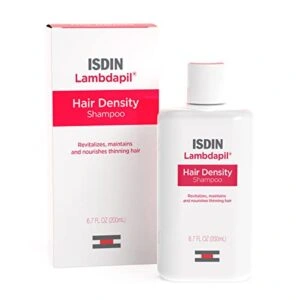
ISDIN Lambdapil keeps things honest. It’s a dermatologist-tested volumizing shampoo developed in Spain specifically for thinning hair, built around a combination of zinc, biotin, B vitamins, and Serenoa serrulata fruit extract.
That’s a solid supporting cast for scalp health and strand strength. It won’t stop hair loss — the brand says so directly — but it does reduce breakage and adds visible volume over time.
Fine hair responds well. Just know that longer hair can feel dry, and at $50 for 6.7 oz, value matters.
| Best For | Anyone with fine or thinning hair who wants more volume and less breakage — without expecting the shampoo to actually stop hair loss. |
|---|---|
| Price | $50.00 |
| Bottle Size | 6.7 fl oz |
| Hair Type | Fine, thinning |
| Key Ingredient | Zinc, Biotin, B Vitamins |
| Primary Benefit | Volumizing, thickening |
| Scalp Suitability | Dermatologist tested |
| Additional Features |
|
- Thickens and strengthens fine, thinning hair over time
- Dermatologist-tested formula with a solid mix of zinc, biotin, and B vitamins
- Works well alongside other hair loss treatments
- Can leave hair feeling dry, especially if it’s long or needs heavy moisture
- Doesn’t prevent or slow hair loss — it’s purely a support product
- At $50 for 6.7 oz, the price is hard to justify for everyone
2. Oribe Serene Scalp Densifying Shampoo
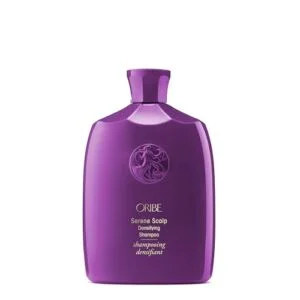
Oribe Serene Scalp Densifying Shampoo takes a bioactive approach to thinning hair. It was developed with a board-certified trichologist, and that collaboration shows in the formula.
Capixyl — a biomimetic peptide paired with red clover extract — works alongside Redensyl and pea sprout extract to reduce shedding and support scalp balance. Zinc chloride keeps microbial activity in check.
The lather is rich but rinses clean, leaving hair softer and visibly fuller over time.
At $52, it’s a premium commitment.
| Best For | Anyone dealing with thinning or fine hair who wants a science-backed shampoo and doesn’t mind paying a premium for it. |
|---|---|
| Price | $52.00 |
| Bottle Size | 8.5 oz |
| Hair Type | Fine, thinning |
| Key Ingredient | Capixyl |
| Primary Benefit | Adds density, fullness |
| Scalp Suitability | Trichologist formulated |
| Additional Features |
|
- Formulated with Capixyl and Redensyl — ingredients actually backed by hair loss research
- Leaves hair feeling soft and looking fuller without a heavy or waxy residue
- Developed with a board-certified trichologist, so the formula has real credibility behind it
- At $52, it’s a tough sell if you’re not sure it’ll work for you
- The 30-day return window is pretty short for a product that takes time to show results
- Some users with color-treated hair or sensitivity reported increased shedding with prolonged use
3. Pantene Abundant Strong Shampoo
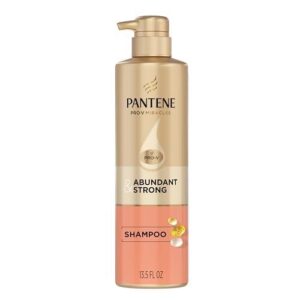
Not every effective shampoo costs $52. Pantene’s Abundant Strong Shampoo delivers a surprisingly solid formula at just $14.97 for 13.5 oz.
The Pro-Vitamin B5 complex and niacinamide work together to support your scalp barrier and reduce oxidative stress — one of the quieter contributors to shedding most people overlook.
It won’t replace minoxidil, but for daily maintenance, it’s a practical choice. Pair it with the matching conditioner and serum to get the most out of the system.
| Best For | Anyone dealing with everyday shedding, fine or thinning hair, or post-hormonal hair changes who wants a solid, affordable daily option without spending a fortune. |
|---|---|
| Price | $14.97 |
| Bottle Size | 13.5 oz |
| Hair Type | All hair types |
| Key Ingredient | Pro-Vitamin B5, Niacinamide |
| Primary Benefit | Reduces shedding |
| Scalp Suitability | All scalp types |
| Additional Features |
|
- Great value at $14.97 for 13.5 oz — one of the more budget-friendly options with an actually thoughtful formula
- Pro-Vitamin B5 and niacinamide target scalp health and oxidative stress, not just surface-level shine
- Works for all hair types and has a pleasant, not-too-strong vanilla-cream scent
- Clinical claims come from proprietary studies, so take the "6,000 strands retained" stat with a grain of salt
- Some users hit scalp irritation from the serum’s cooling sensation — especially those with sensitivity
- You really need the full 3-step system to see results, which adds cost and steps to your routine
4. Kerastase Genesis Strengthening Shampoo
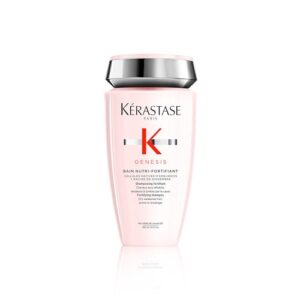
At $46, Kérastase Genesis Strengthening Shampoo is a premium step up — and it earns that price point in specific situations. If your hair breaks mid-strand rather than falling at the root, this is built for you.
Panthenol softens and eases detangling, while edelweiss native cells and ginger root target fiber resilience from the first wash. It’s designed for normal to oily scalps, so if yours leans dry, pair it with a richer conditioner to avoid feeling stripped.
| Best For | Anyone dealing with mid-strand breakage and brittle hair who wants a strengthening shampoo that leaves hair feeling softer, more elastic, and easier to manage. |
|---|---|
| Price | $46.00 |
| Bottle Size | 8.47 oz |
| Hair Type | Normal to oily |
| Key Ingredient | Fortifying complex |
| Primary Benefit | Reduces breakage |
| Scalp Suitability | Gentle on scalp |
| Additional Features |
|
- Targets breakage at the fiber level, making hair feel noticeably stronger and more resilient over time
- Gentle enough for regular use on normal to oily scalps without irritating the scalp
- Leaves hair soft, shiny, and way easier to detangle after washing
- At $46, it’s a splurge — and the results aren’t guaranteed for everyone
- May not condition well enough on its own, especially if your hair runs dry
- Focused on breakage, not root-level hair loss, so it might not deliver if that’s what you’re hoping for
5. K18 Peptide Detox Clarifying Shampoo
Think of K18 Peptide Prep Detox Shampoo as a reset button for your scalp. Charcoal draws out impurities, salicylic acid clears dead skin buildup, and the K18PEPTIDE works to protect hair fiber integrity while you cleanse — not after.
It removes 99% of product buildup and 76% of copper in a single wash.
That matters if hard water or heavy styling products are quietly strangling your follicles.
Use it once or twice a week, not daily.
| Best For | Anyone with color-treated, product-heavy, or hard-water-damaged hair who needs a deep scalp reset without wrecking their strands. |
|---|---|
| Price | Varies |
| Bottle Size | 8.5 fl oz |
| Hair Type | Color-treated, damaged |
| Key Ingredient | K18PEPTIDE |
| Primary Benefit | Deep cleansing |
| Scalp Suitability | pH-optimized |
| Additional Features |
|
- Pulls out 99% of product buildup and 76% of copper in just one wash — that’s serious deep cleaning
- Color-safe formula means you’re not sacrificing your dye job to get a clean scalp
- The K18PEPTIDE protects hair during the cleanse, not just after
- Not a daily shampoo — once or twice a week is the sweet spot, which takes some getting used to
- If your hair is extremely dry or damaged, it might be too much too soon
- It’s on the pricier side, so you’ll want to make sure it fits your routine before committing
Frequently Asked Questions (FAQs)
Can stress directly trigger sudden hair shedding?
Yes, stress can directly trigger sudden hair shedding. It’s called telogen effluvium — stress pushes follicles into a resting phase, and weeks later, hair falls out all at once.
Does diet affect how fast hair grows?
Absolutely. What you eat fuels your follicles.
Low protein, iron, zinc can push hair into a shedding phase.
steady, nutrient-rich diet keeps your growth cycle running the way it should.
Are hair growth shampoos safe during pregnancy?
Most hair growth shampoos are not automatically safe during pregnancy. Stick to gentle, sulfate-free formulas, avoid medicated options like ketoconazole or salicylic acid unless your doctor approves them first.
How long before results become noticeable?
Most people notice less itching and flaking within one to three weeks.
Visible density changes usually take eight to twelve weeks, and stronger-looking hair often needs three to six months of consistent use.
Can shampoo help with postpartum hair loss?
Can it help completely? No. But gentle shampoos reduce breakage during postpartum shedding, making hair look less thin while hormones stabilize. Expect support, not a cure.
Conclusion
Scalp savvy separates hope from reality. Mastering how hair growth shampoos actually work—prioritizing follicle vitality over fantasy—enables smarter choices.
Proven ingredients like ketoconazole or salicylic acid address root causes, while mindful habits (think dwell time, balanced washing) enhance results. Our top picks merge science with practicality, but remember: shampoo helps, it doesn’t resurrect.
Persistent shedding? See a dermatologist. True transformation blooms from informed action, not aisle promises. Start strategically, stay consistent—your hair’s resilience begins here.