
This site is supported by our readers. We may earn a commission, at no cost to you, if you purchase through links.

Most people wait too long to replace their disposable razors, pushing dull blades past the point of safe, effective shaving. The average disposable razor lasts between five and ten shaves, though this range shifts dramatically based on your hair type, shaving habits, and how you care for the blade between uses.
Using a razor beyond its prime doesn’t just compromise your shave quality—it increases your risk of nicks, razor burn, and bacterial infections as the protective coating wears down and microscopic damage accumulates on the blade edge.
Understanding when to retire your razor and how to extend its lifespan protects both your skin and your wallet.
Table Of Contents
- Key Takeaways
- How Long Do Disposable Razors Last?
- Factors Affecting Disposable Razor Lifespan
- Maintenance Tips to Extend Razor Life
- Cost and Environmental Considerations
- Safe Replacement and Disposal Practices
- Frequently Asked Questions (FAQs)
- What are some signs that it’s time to replace my disposable razor?
- Can I extend the life of my disposable razor?
- How can I sharpen the blades on my disposable razor?
- How can I keep my disposable razor clean?
- How long do electric shaver blades last?
- How long does a straight razor last?
- How often should you change safety razor blades?
- Can you sharpen disposable razor blades at home?
- Do disposable razors expire if left unused?
- What causes razor burn and how to prevent it?
- Conclusion
Key Takeaways
- Most disposable razors deliver between 5 and 10 effective shaves before blade dullness compromises both shave quality and skin safety, though this range shifts based on your hair thickness, shaving frequency, and maintenance habits.
- Clear warning signs tell you when replacement is overdue: tugging sensations during strokes, visible rust or blade damage, increased skin irritation, and the need for multiple passes over the same area all signal declining performance that puts your skin at risk.
- Proper post-shave care—rinsing thoroughly, drying completely, and storing in well-ventilated areas away from shower humidity—can extend blade lifespan significantly by preventing rust formation and bacterial growth that accelerate deterioration.
- Beyond the $30-75 annual cost for regular shavers, disposable razors contribute roughly 2 billion units to U.S. landfills yearly, making reusable alternatives like safety razors ($25/year long-term) worth considering for both financial savings and environmental impact reduction.
How Long Do Disposable Razors Last?
Most disposable razors are designed to last between 5 and 10 shaves, though this depends on several factors unique to your skin and hair. The key is knowing when your razor stops performing well—something you’ll feel during your shave.
Let’s break down what you can expect from your disposable razor, the warning signs that it’s time for a replacement, and how different brands compare.
Typical Lifespan in Number of Shaves
Most disposable razors deliver 5 to 10 shaves, though this range shifts based on blade count and design. Single-blade models usually last 3 to 7 uses, while multi-blade versions—like Gillette’s 5-blade disposables—can provide up to 20.
Your razor’s lifespan depends on hair thickness, shaving frequency, and how well you maintain it between uses. To extend usage, proper razor maintenance is essential.
Signs Your Razor Needs Replacing
Blade dullness shows up through clear warning signs. You’ll notice tugging sensations during each stroke, skin irritation shortly after shaving, and uneven shave results requiring multiple passes over the same spots. One key sign is increased skin sensitivity, indicating it’s time for a replacement.
Here’s what to watch for:
- Increased pressure needed to remove hair cleanly
- Visible damage like rust, bent edges, or worn lubricating strips
- Performance decline with more nicks, longer shaving time, and buildup that won’t rinse away
These indicators tell you it’s time for a fresh blade.
Variations by Brand and Blade Count
Understanding how blade count and brand choices affect razor blade lifespan helps you make smarter purchasing decisions. Gillette’s Fusion5 cartridges generally deliver around 14 to 20 shaves, while their Mach3 versions last roughly 10 to 15. BIC’s three-blade disposables average just four uses.
Here’s a quick brand cost comparison:
| Brand | Blade Count | Average Shaves |
|---|---|---|
| Gillette Fusion | 5 blades | 14-20 |
| BIC Comfort 3 | 3 blades | 4 |
| Dorco Pace | 6 blades | 10 |
Multi-blade longevity doesn’t always scale with blade count—manufacturer usage vs guidance often differs from real-world performance.
Factors Affecting Disposable Razor Lifespan

Not every disposable razor wears out at the same rate. Several factors can either shorten or extend how many shaves you get from a single blade.
Let’s look at what affects your razor’s lifespan and how you can work with these variables.
Hair Thickness and Coarseness
Your hair’s characteristics play a major role in razor lifespan. Coarser strands with greater hair shaft diameter exert higher cutting force impact on blade edges, accelerating blade damage mechanics through microscopic chipping.
Ethnic hair variation matters too—Asian hair’s thickness and Caucasian hair’s density increase shaving load factors differently. In effect, thicker or denser hair dulls blades faster, shortening blade life compared to finer hair types.
Shaving Frequency and Technique
When you shave daily versus once weekly, blade lifespan changes dramatically. Daily shavers generally exhaust a disposable in one to two weeks (5 to 10 shaves), while weekly users stretch the same razor beyond a month.
Technique matters equally:
- Light pressure reduces edge microchipping
- Single-pass strokes minimize cumulative blade wear
- Thorough rinsing prevents debris buildup between blades
Poor shaving technique accelerates blade wear and increases skin irritation, razor burn, and nicks. Best shaving frequency paired with proper technique extends blade lifespan and protects your skin.
Skin Sensitivity and Comfort Preferences
If you’re prone to skin irritation or burning after shaving, your razor choice directly affects how long you’ll tolerate a blade—not just how many shaves it technically delivers. Nearly 60% of men report redness with traditional razors, and clinical guidance for sensitive skin recommends limiting disposable use to two- or three-blade designs.
Comfort features like lubrication strips and guarded blades reduce friction, extending both blade life and your shaving experience.
Storage and Maintenance Conditions
Where you stash your razor matters as much as how you use it. Studies show that bathrooms trap heat and moisture—a perfect storm for bacterial growth and rust formation. Leaving your razor in the shower or on a wet ledge exposes blades to constant humidity, accelerating material degradation that cuts your disposable razor lifespan in half.
Proper razor storage and consistent maintenance directly extend how many comfortable shaves you’ll get before replacement.
- Rinse thoroughly under warm water after every shave to flush away trapped hair and shaving cream residue
- Pat dry with a clean towel immediately—moisture left on blades promotes rust spots within days
- Store outside the shower in a well-ventilated spot where humidity stays below 60%
- Clean weekly with diluted vinegar in hard-water areas to prevent mineral buildup that dulls edges
- Check for rust regularly; even small spots signal it’s time to replace your razor
Maintenance Tips to Extend Razor Life
You don’t need to toss your disposable razor after every shave if you take care of it properly. A few simple habits can keep the blades sharper and cleaner for longer, saving you money and getting more mileage out of each razor.
Here’s what you should do after every use to extend your razor’s lifespan.
Proper Cleaning After Each Use

You can’t extend your razor’s life without keeping it clean. After each shave, rinse your blade under warm running water—front to back—to flush trapped hair and debris that harbor bacteria. For better hygiene, occasionally use a mild antibacterial cleanser on the cartridge, then rinse thoroughly.
Don’t tap the razor on hard surfaces or wipe blades on towels; these habits dull edges and strip protective coatings. Shake off excess water gently instead.
| Cleaning Step | Why It Matters |
|---|---|
| Rinse under running water | Removes hair, product residue, and bacteria |
| Use mild antibacterial soap (occasional) | Reduces microbial contamination beyond water alone |
| Avoid tapping on sink | Prevents blade misalignment and coating damage |
| Skip towel wiping | Preserves blade sharpness and protective layers |
| Shake off excess water | Minimizes moisture without damaging blade geometry |
Drying and Storing Razors Correctly

Humidity control makes all the difference in blade care. After you’ve cleaned your razor, pat the handle dry but let blades air-dry completely—never trap moisture with protective caps right away.
Store your razor upright on a hook or stand in a well-ventilated spot away from wet countertops.
Proper blade positioning and drying practices reduce infection control risks while keeping edges sharper longer.
Preventing Rust and Bacterial Growth

Think of your razor as a magnet for trouble—bacteria can multiply faster than you’d expect in a damp bathroom. To protect your skin, follow these shaving hygiene practices:
- Rinse blades thoroughly after each use to remove hair and debris through proper blade cleaning
- Soak in rubbing alcohol for 5–10 minutes weekly as one of the most effective disinfection methods
- Dry completely before storage, since moisture impact accelerates rust prevention failures
- Use open-air stands with hygienic design that improve airflow
- Control bathroom humidity through ventilation—your storage environment directly affects bacterial growth
These razor maintenance and handling practices keep blades safer between shaves.
Cost and Environmental Considerations

Beyond the inconvenience of frequent replacements, disposable razors carry a real financial and environmental cost that’s worth considering. If you shave daily, those individual razors add up quickly—both in your wallet and in landfills.
Let’s break down what you’re actually spending, the impact on the planet, and how reusable options compare.
Yearly Cost of Disposable Razors
Your yearly spending on disposable razors hinges on shaving frequency and brand comparison. If you shave every other day, expect to spend roughly $30 to $75 annually on disposable razor use, though daily shavers can exceed that range.
Alternative systems like double-edge razors offer long-term savings—around $13 per year—making cost optimization straightforward when you weigh the cost-effectiveness of disposable razors against reusable options.
Environmental Impact of Frequent Replacement
Beyond your wallet, frequent disposable razor use carries a significant environmental impact. Each year, roughly 2 billion disposable razors end up in U.S. landfills, where plastic waste generation and landfill persistence create problems lasting centuries.
Roughly 2 billion disposable razors reach U.S. landfills each year, where plastic components persist for centuries
Plastic and steel components resist breakdown, contributing to greenhouse emissions during production and resource consumption throughout manufacturing.
Recycling challenges persist since most facilities can’t process these small, mixed-material items, making eco-friendly alternatives worth considering.
Comparison to Reusable Razor Options
Switching to reusable options can slash both costs and environmental impact. Consider these alternatives to your disposable razor:
- Cartridge systems deliver 10–15 shaves per head, costing roughly $50–100 annually versus $30–120 for disposables—though premium cartridges sometimes exceed disposable expenses.
- Safety razors offer impressive savings at about $25 yearly long-term, with durable metal grips lasting decades.
- Electric shavers require higher upfront investment but eliminate frequent blade purchases entirely.
Safe Replacement and Disposal Practices
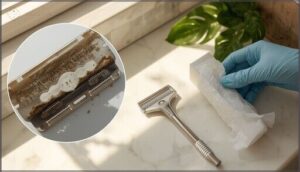
Knowing when to replace your razor protects your skin from unnecessary irritation and infection. Let’s cover how to recognize when it’s time for a new razor, how to dispose of used ones responsibly, and how to choose the right option for your skin and shaving habits.
Proper disposal matters too—both for safety and for minimizing environmental impact.
Recognizing Dull or Damaged Blades
You’ll know your blade has crossed the line when it starts tugging at your hair instead of gliding smoothly—a classic sign of a dull razor.
Watch for uneven hair removal, visible blade damage like rust or bent edges, and increased skin irritation signs such as redness or nicks.
These replacement indicators tell you the blade deterioration has compromised both safety and performance, making risks of shaving with a dull blade too high to ignore.
Safe Disposal Methods for Used Razors
After your last shave with a disposable razor, don’t just toss the blade into household trash—loose sharps put waste workers at risk. Place used razor blades in puncture-resistant sharps containers or heavy-duty plastic bottles with secure lids, clearly labeled to prevent injury.
Some communities offer drop-off sites, and mail-back programs like Gillette’s TerraCycle partnership let you recycle disposable razors safely while supporting recycling initiatives.
Choosing The Right Razor for Your Needs
Choosing the right razor depends on your skin type, shaving goals, and budget concerns. If you shave daily and value convenience, a disposable razor with three to five blades balances cost with comfort. Consider lifestyle factors like travel frequency and storage space.
Patients with sensitive skin often do better with multi-blade cartridges that reduce pressure per stroke, while those prioritizing sustainability should explore reusable alternatives that address long-term shaving needs.
Frequently Asked Questions (FAQs)
What are some signs that it’s time to replace my disposable razor?
If your disposable razor tugs during passes, causes visible irritation or more nicks, or shows rust buildup, blade sharpness has declined.
These signs of a dull razor mean it’s time for replacement.
Can I extend the life of my disposable razor?
Yes, you can—proper razor maintenance is key. Drying techniques and storage methods fight corrosion, while alcohol application reduces bacteria.
Shaving frequency, blade material, and careful handling all influence blade sharpness and extend your disposable razor’s usable life.
How can I sharpen the blades on my disposable razor?
While denim stropping and leather stropping can realign disposable razor edges, manufacturers don’t recommend sharpening their blades.
You’re better off focusing on drying techniques and corrosion prevention to extend usable life safely.
How can I keep my disposable razor clean?
Rinse your disposable razor under warm water after each use, wash it with mild soap weekly, and pat it dry. Store in a well-ventilated area to prevent bacterial growth and extend blade life.
How long do electric shaver blades last?
Electric shavers generally need blade replacement every 12 to 18 months under regular use. Shaving frequency, cleaning importance, and hair coarseness affect blade longevity.
Watch for performance signs like tugging—that’s when replacement intervals matter most.
How long does a straight razor last?
Unlike disposables that dull in days, a quality straight razor’s blade longevity spans decades—even a lifetime—with proper edge maintenance cycles.
Steel structural longevity, routine stropping, and careful honing preserve blade sharpness indefinitely.
How often should you change safety razor blades?
You should replace your safety razor blade every five to seven shaves to maintain blade sharpness and reduce irritation.
Coarse hair or daily shaving may require more frequent razor blade replacement frequency.
Can you sharpen disposable razor blades at home?
DIY sharpening methods like stropping on denim might seem promising for extending disposable razor lifespan, but blade damage and hygiene concerns outweigh potential benefits.
Manufacturers don’t design these razors for home sharpening—replacement remains safer.
Do disposable razors expire if left unused?
Picture a forgotten disposable razor in your bathroom drawer—years old but untouched. Technically, razor blades don’t expire, but moisture and humidity cause corrosion that degrades sharpness. Always inspect for rust before use.
What causes razor burn and how to prevent it?
Razor burn stems from friction, dull blades, and poor shaving technique.
Prevent it by using quality lubricant, shaving with hair growth direction, maintaining sharp blades, and incorporating gentle exfoliation methods to minimize skin sensitivity and irritation.
Conclusion
Don’t let a dull blade cut into your skin health or budget. Understanding how long disposable razors last—usually five to ten shaves—allows you to replace them before irritation, infection, or injury occurs.
By recognizing the warning signs of blade degradation and practicing proper maintenance between uses, you’ll get the most out of both safety and value.
Your skin deserves sharp, clean blades every time you shave, not the compromise of pushing worn razors past their expiration.
- https://www.aad.org/public/everyday-care/skin-care-basics/hair/how-to-shave
- https://eu.roseskinco.com/blogs/beauty-hacks/how-often-should-i-replace-my-razor
- https://jacobrayrazors.com/cost-of-wet-shaving/
- https://www.lorealparisusa.com/beauty-magazine/skin-care/skin-care-essentials/how-often-should-you-change-your-razor
- https://ethicalunicorn.com/the-environmental-impacts-of-disposable-razors-sustainable-alternatives/