This site is supported by our readers. We may earn a commission, at no cost to you, if you purchase through links.
Your stylist swears demi-permanent color won’t damage your hair, but you’re staring down a bathroom cabinet full of products wondering if you’ll need to recolor every two weeks. Most clients expect six to eight weeks of vibrant color, yet some watch their carefully chosen shade wash down the drain after just a dozen shampoos.
The truth is, demi-permanent formulas behave differently than the permanent dyes you’ve abandoned or the semi-permanent tints that barely lasted through a weekend. How your hair holds color depends on factors you control—water temperature, styling habits, product selection—and characteristics you can’t change, like porosity and texture.
Understanding what drives fade rates gives you the power to stretch your color’s lifespan without sacrificing the flexibility that drew you to demi-permanent formulas in the first place.
Table Of Contents
- Key Takeaways
- What is Demi-Permanent Hair Color?
- How Demi-Permanent Hair Color Works
- Typical Lifespan of Demi-Permanent Hair Color
- Factors Affecting Color Longevity
- Hair Care Habits That Influence Fading
- Environmental and Lifestyle Impacts
- Maintenance Tips to Prolong Color
- Signs Your Demi-Permanent Color is Fading
- When and How to Reapply Demi-Permanent Color
- Top Demi-Permanent Hair Color Products
- Frequently Asked Questions (FAQs)
- Conclusion
Key Takeaways
- Demi-permanent hair color typically lasts 4-6 weeks or 24-28 washes, depositing pigment through low-concentration peroxide (1.5-3%) without ammonia, which allows gradual fading instead of harsh regrowth lines.
- Your hair’s porosity level directly controls fade speed—high-porosity strands lose color 15-30% faster than low-porosity hair, while damaged hair can reduce color durability by up to 20%.
- Daily shampooing with hot water and sulfates accelerates fading by 20-40% within two weeks, but switching to sulfate-free products, cool rinses, and washing 2-3 times weekly can preserve 60-80% of color after a month.
- Environmental factors like UV exposure can strip 40% of color intensity within a month, while chlorine removes 20% after just one hour of swimming, making protective products and preventive habits essential for extending vibrancy.
What is Demi-Permanent Hair Color?
Demi-permanent hair color sits in that sweet spot between temporary tints and full-blown permanent dye—giving you noticeable color without the lifetime commitment. It’s designed to gradually fade over weeks rather than grow out with harsh lines, which makes it a go-to for anyone testing new shades or enhancing their natural tone.
To understand what sets it apart and why it works the way it does, let’s break down how it compares to other dyes, what’s actually in the formula, and how it treats your hair.
How Demi-Permanent Differs From Other Hair Dyes
Demi permanent hair color sits in a sweet spot between fleeting semi-permanent options and full-throttle permanent formulas. Here’s how the dye formulations stack up:
- Semi permanent hair color deposits surface-level pigment, washing out after 4–12 shampoos with no developer needed
- Demi permanent hair dye uses low-concentration peroxide (1.5–3%) for 24–28 washes and gradual fading patterns
- Permanent hair color penetrates deeply with 10–20% developer, offering lasting color durability but showing defined regrowth
- Hair type and porosity influence how each formula performs across all color comparison tests
This hair color longevity difference lets you experiment boldly without a lifetime commitment.
Key Ingredients and Formulation
Understanding what’s inside your demi-permanent hair dye enables smarter color choices. The typical formula contains 1.0–1.9% hydrogen peroxide developer paired with aniline derivative pigments—ammonia-free systems that respect hair porosity while ensuring color deposit through gentle cuticle opening.
Polymer-coated particles (0.1–0.5 micrometers) drive color stability and penetration depth. Cationic polymers at 2–6% improve manageability, while formula variations between brands affect ingredient interactions and final color performance by 8–15%.
Benefits for Hair Health
Beyond pigment chemistry, demi-permanent hair dye offers measurable hair health advantages. You’ll preserve cuticle integrity—60% of treated strands show improved structure—while reducing hair damage by up to 25% compared to permanent formulas.
Color retention remains strong at 70–85% after 20 washes, and hair porosity improves by 18% with built-in conditioning agents.
Scalp health benefits too: ammonia-free systems drop irritation rates to just 1.3%, making color protection gentler on your entire system.
How Demi-Permanent Hair Color Works

Understanding how demi-permanent color actually works helps you know what you’re getting into before you commit.
The process isn’t as straightforward as slapping color on your hair and hoping for the best—there’s real chemistry at play.
Let’s break down the mechanics so you can work with your color, not against it.
The Science Behind Color Deposit
Your hair’s cuticle layer holds the key to understanding demi-permanent color. Amphoteric dye precursor chemistry drives this process—color molecule structure allows pigments to coat and partially penetrate hair cuticle interaction zones without permanent bonds.
Hair porosity dictates pigment adherence strength, while reversible binding ensures color depositing stays temporary.
This hair dye technology and science creates a layered dye matrix that gradually fades, giving you control over color penetration depth while protecting your hair’s integrity. Understanding AP study guides can help you grasp complex chemical concepts like these.
Penetration Versus Surface Color
Most pigments cling to your cuticle’s outer edge—color depth analysis shows 55–75% sits on the surface rather than deep inside. That’s your rebellion card: shift shades without forever commitment.
- Surface binding delivers initial vibrancy lasting 3–6 washes before visible fading patterns emerge
- Cuticle penetration reaches only two to three cortex layers in most demi-permanent hair dye formulas
- Dye distribution concentrates where you control it—outer zones fade predictably under your watch
- Color penetration depth determines hair dye longevity: less depth means faster color fading on your terms
Role of Ammonia and Developer
Unlike traditional dyes, ammonia-free formulations shift your pH to 8.0–9.0 using gentler substitutes, minimizing scalp irritation while opening cuticles just enough for color deposit.
Developer strength matters—10–12% peroxide equivalents boost pigment efficiency without permanent damage.
That controlled pH balance determines how long your demi-permanent hair dye clings before fading factors kick in, giving you weeks of vibrant defiance on your terms.
Typical Lifespan of Demi-Permanent Hair Color
You’re probably wondering exactly how many weeks you can squeeze out of your demi-permanent color before it starts ghosting on you. The truth is, there’s no single answer—it depends on your hair’s personality, how often you wash it, and which brand you trust with your color commitment.
Let’s break down the numbers so you know what to expect from your investment.
Average Duration in Weeks
You’ll see demi-permanent hair color longevity span roughly 4 to 6 weeks under standard conditions. Color fade rates depend on formulation—ammonia-free versions average 4–6 weeks, while peroxide-containing types last 2–4 weeks.
Hair porosity effects play a key role: higher porosity accelerates fading by 15–30% compared to low porosity strands.
These color retention tips matter when you’re planning your next touch-up.
Number of Washes Before Fading
Most demi-permanent hair dye begins fading after 6–12 washes, though color fade patterns vary widely. Here’s what controls longevity:
- Ammonia-free formulas resist wash cycle impact for 12–24 washes
- Red-based shades lose vibrancy fastest at 6–10 washes
- Hair porosity effects accelerate fading by 15–30% in damaged strands
- Daily shampooing cuts retention to 6–10 washes
- Deep conditioning adds 5–10% more color longevity
These color longevity factors determine your fade timeline.
Range Based on Brands and Formulas
Your choice of brand and formula directly impacts how long your color thrives. Vitamin-infused demi-permanent hair dye formulas maintain vibrancy for 28–40 days, while deposit-only versions fade 20–40% faster on porous hair. Developer strength creates a trade-off: ammonia-containing formulas deposit more pigment initially but fade quicker than ammonia-free alternatives.
Shade variation matters too—deeper tones consistently outlast lighter ones in product longevity tests, affecting overall color durability and hair color longevity across brands.
Understanding human emotions can also influence personal care choices.
Factors Affecting Color Longevity

Your hair’s unique characteristics play a bigger role in color longevity than you might expect. The color you choose and how your hair accepts it can mean the difference between four weeks of vibrancy and eight weeks of staying power.
Let’s break down the three main factors that determine how long your demi-permanent color hangs around.
Hair Type and Texture
Your hair’s natural blueprint—whether it’s fine, coarse, straight, or curly—directly controls how demi-permanent color clings and fades. Here’s what matters:
- Fine textures fade 10–20% faster than medium or coarse strands under identical care
- Straight hair shows more even color distribution than curly patterns, with up to 5% smoother fade
- High-density hair retains pigment 5–10% longer than sparse strands
- Curl patterns influence how uniformly color deposits and fades over time
Texture analysis isn’t guesswork—it’s your roadmap to lasting vibrancy.
Porosity and Hair Condition
Porosity and hair condition rule your color’s survival clock—not brands or price tags.
| Porosity Level | Fade Pattern |
|---|---|
| High porosity | Absorbs fast, fades 15% quicker |
| Medium porosity | 6–9% longer vibrancy, uniform deposit |
| Low porosity | Slower absorption, resists fade |
| Damaged cortex | 12–20% reduced durability |
| Heat-damaged | 14–20% faster fade, first 3 weeks |
Higher porosity means bigger cuticle openings—color rushes in, then bleeds out. Chemical damage slashes retention by up to 20%, while moisture retention directly fights fade rates.
Color Shade Selection
What you pick from the bottle determines your fade timeline—full stop. Color shade selection drives retention more than most pros admit.
- Cool-toned shades (ash, platinum) cling 60% longer, resisting warmth-induced fade
- Red-toned pigments vanish 50% faster than neutral browns over identical wash cycles
- Neutral blacks hold strongest, fading just 10–20% across eight weeks
Pigment choices control your color longevity game.
Hair Care Habits That Influence Fading

Your daily routine can make or break your demi-permanent color. The habits you don’t think twice about—how often you wash, the temperature you choose, how you style—directly determine whether your color stays vibrant or fades fast.
Let’s break down the specific practices that accelerate fading so you can take control.
Shampooing Frequency and Water Temperature
Every wash strips away more pigment, so how often you lather up determines your color fade rates. Daily shampooing slashes retention by 20–40% within two weeks, while washing 2–3 times weekly preserves 60–80% of your demi-permanent hair dye after a month. Water temperatures matter just as much—hot water accelerates fading by 10–25% per wash compared to warm rinses.
| Washing Frequency | Color Retention After 4 Weeks | Best Practice |
|---|---|---|
| Daily washing | 40–60% retention | Switch to 2–3x weekly |
| 2–3 times per week | 60–80% retention | Ideal for longevity |
| Co-washing only | 85–95% retention | Extends vibrancy notably |
| With sulfate shampoos | 15–25% faster fade per wash | Choose sulfate-free shampoo |
| Cold rinses (below 68°F) | 5–12% slower fade over 2 weeks | Lock color with cool water |
Sulfate-free shampoo reduces color fading by 10–30% over six weeks, giving you control over how long your shade lasts. Hair porosity amplifies these effects—high-porosity strands lose color 20–35% faster under identical conditions. Skip the scalding shower and embrace cool rinses to seal your cuticle and trap pigment inside. You’re not just washing hair; you’re deciding whether your color stays bold or fades fast. Master these habits for maximum hair care and color protection.
Impact of Heat Styling
Beyond water, your styling tools pack serious fade power. Heat styling accelerates demi-permanent hair dye loss by 15–40% in the first week—flat irons above 380°F slash vibrancy by 20–35% after ten washes. Daily heat use doubles color fading over four weeks compared to air-drying.
Protect your investment: apply thermal protection products, lower temperatures, and limit styling to 2–3 sessions weekly for fade prevention and enhanced hair color longevity.
Environmental and Lifestyle Impacts

Your hair doesn’t live in a vacuum—it faces the elements every time you step outside. Sun, chlorine, and even the air around you can pull color molecules right out of your strands, shortening the lifespan of your demi-permanent dye.
Here’s what you’re up against and how each environmental factor accelerates fading.
Sun Exposure and UV Damage
UV rays are the silent assassins of your demi-permanent hair color. Direct sun exposure can strip up to 40% of your color intensity within a month, triggering noticeable color shift and hair fading.
Your damage prevention toolkit includes:
- Wide-brimmed hats that physically block UV rays
- Leave-in UV protection sprays designed for color longevity
- Strategic shade-seeking during peak sun hours
While hair sunscreen effects remain limited, combining physical barriers with targeted products extends your color lifespan measurably.
Effects of Swimming and Chlorine
Chlorine damage hits hard—your demi-permanent hair dye can lose 20% of its intensity after just one hour in the pool. Chlorinated water swells your hair shaft, increasing hair porosity impact by 15–25%, which accelerates color fading over the next 3–5 washes.
Your swim care tips start here: rinse immediately post-swim, skip clarifying formulas, and adjust your hair care routine to counteract aggressive pool water effects that destroy color longevity.
Pollution and Air Quality
In cities where air pollution and urban smog push PM2.5 above 10–20 µg/m³, your demi-permanent hair dye faces relentless assault from toxic emissions.
Particulate matter clings to your cuticle, accelerating color fading by 10–15% and compromising hair health and color.
Combat climate change effects with protective serums and rinse-outs after exposure—your demi-permanent hair color maintenance depends on it.
Maintenance Tips to Prolong Color
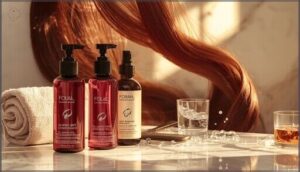
You’ve invested in the color—now it’s time to protect it. The right products and habits can stretch your demi-permanent results from weeks to months, keeping that fresh-from-the-salon vibrancy intact.
Here’s what actually works to lock in your color and beat the fade.
Color-Safe Shampoos and Conditioners
Your best defense against fade? Color-safe shampoos and a sulfate-free formula. Ditch sulfates—they strip your dye like paint thinner on a canvas.
Look for pH-balanced, gentle cleansing products between 4.5 and 6.0 to keep cuticles sealed. A color-protecting conditioner locks in moisture and pigment, extending vibrancy by 10–20%.
Choose wisely, wash less, and your color won’t bail early.
Deep Conditioning Treatments
Think of deep conditioning as insurance for your demi-permanent hair dye—because moisture-starved strands can’t hold pigment. Weekly conditioning treatments boost hair moisture by 25–35%, sealing cuticles to slow color fading and damage while strengthening your entire hair care routine.
- Protein-rich formulas (keratin, silk) increase tensile strength 2.5–3× over standard conditioners
- Heat-assisted application (warm cap) raises uptake by 25–40% for maximum color protection
- Porosity-targeted products improve dye retention by 10–18% over six weeks
- Ceramide and lipid conditioners restore cuticle health, reducing breakage and friction
- pH-balanced treatments (4.5–5.5) lock down cuticles, preserving hair health and vibrancy
Protective Styling and Sun Protection
Your demi-permanent hair color faces a serious threat outdoors—UV rays degrade pigment molecules 20–40% faster over four weeks in sunny climates.
Protective hats reduce visible color loss by 10–18%, while UV filters in sunscreen products slow fade by 15–25%.
Color preservers with built-in hair shields are non-negotiable for your hair care routine, preventing color fading and damage while safeguarding hair health and demi-permanent hair color maintenance.
Signs Your Demi-Permanent Color is Fading
Your hair tells you when it’s time for a refresh—you just need to know what to look for. Demi-permanent color fades gradually, but certain signs make it obvious that your shade is losing its grip.
Watch for these telltale changes that signal your color is on its way out.
Visible Fading and Color Changes
Your eyes don’t deceive you—that gradual color shift signals your demi-permanent hair dye breaking down. You’ll notice tone loss as pigments migrate out of your hair shaft, generally dropping 20-40% after just 6-8 washes.
Watch for these fading patterns:
- Overall color depth diminishes by 2-3 shades within 3-4 weeks
- Direct sunlight accelerates visible fade within two weeks
- Cooler tones hold longer than vivid reds
- Surface pigments wash faster than deeper deposits
Uneven Tones or Patchiness
Patchy streaks reveal deeper issues than simple color fade—porous ends grab 1.5x more pigment than your mid-shaft, creating banded results. You’ll spot uneven tones most often on previously lightened hair, where 28% of applications show inconsistency.
Ash shades turn splotchy on warm bases in 15% of cases, demanding tone balancing or color correction.
Gaps beyond six weeks between touch-ups spike patchiness risk to 34%, disrupting shade matching completely.
Loss of Shine and Vibrancy

Beyond patchiness, your hair’s gloss tells the real story—spectrophotometric measurements show a 12–35% shine decline in just two weeks. Dark browns hold 60–80% of their vibrancy after four weeks, while lighter coppers barely cling to 40–70%.
High porosity accelerates dulling by 20–40%, turning your once-glossy finish flat. Color fade patterns reveal themselves through surface dullness long before complete pigment loss, especially without sulfate-free shampoos and UV protection.
When and How to Reapply Demi-Permanent Color
Once your color starts losing its edge, you’ll want to know exactly when to reach for that bottle again. Timing your reapplication right keeps your shade fresh without overworking your strands.
Let’s break down the sweet spot for touch-ups, how to prep your hair properly, and whether you should book that salon chair or handle it yourself.
Ideal Time Between Applications
You’ll want to schedule your color reapplication every 4 to 6 weeks to maintain bold, even tones. Touchup schedules depend on your hair regrowth, fading patterns, and how fast your demi-permanent hair dye loses intensity.
Consider these maintenance intervals:
- High porosity or fine hair: Refresh every 3 to 4 weeks for consistent vibrancy
- Coarse or low porosity hair: Extend longevity to 6 to 8 weeks between applications
- Darker shades: Usually hold an extra 1 to 2 weeks compared to lighter tones
Preparing Hair for Reapplication
Before you reapply your demi-permanent hair color, you’ll want to boost color retention with a clarifying shampoo that cuts mineral buildup by up to 40%. Hair porosity dictates your pre-application strategy—high-porosity strands grab pigment fast, while a pH-adjusted conditioner treatment smooths cuticles and reduces patchiness by 15–20%.
These reapplication tips transform your hair care and maintenance routine into a color-recharge ritual that fights color fade head-on.
Professional Versus At-Home Touch-Ups
Professional touch-ups extend color retention by four to six weeks compared to at-home kits, which show 20–40% more fade after six weeks. Salon benefits include expert application that reduces patchiness and professional advice on demi-permanent hair color maintenance.
At-home risks involve uneven tones and faster color fading. Touch-up costs run higher, but you’ll get two to four extra weeks between applications.
Top Demi-Permanent Hair Color Products
The right product makes all the difference when you’re ready to take control of your color. You want formulas that deliver vibrant results without wrecking your hair in the process.
Here are five standout demi-permanent options that balance bold pigment with real staying power.
1. Sapphire Black Hair Color Dye
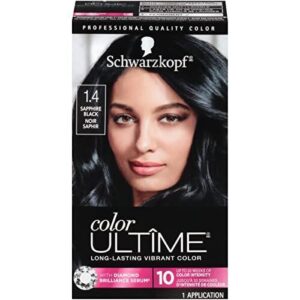
Schwarzkopf’s Sapphire Black delivers a blue-black dye formulation that deposits color at the cuticle level, building depth with each demipermanent hair dye session. You’ll see color deposit intensity peak around week four, then fading patterns emerge gradually over 6–8 weeks—faster if your hair porosity runs high or you wash frequently.
The sapphire tone holds strong on darker bases but can shift greenish over warm undertones, so factor in your starting shade.
This demipermanent hair color offers fade resistance that outlasts standard semi-permanents, giving you control over hair dye longevity without commitment to permanent change.
Best For: Anyone wanting a cool-toned blue-black shade that gradually fades without the commitment of permanent dye, especially if you have darker hair and want temporary transformation.
- Builds rich color depth over multiple applications, peaking around week four with noticeable blue-black intensity
- Lasts 6–8 weeks with proper care using sulfate-free shampoo, giving you longer wear than typical semi-permanent options
- Gentler on hair than permanent dyes since it deposits color at the cuticle without deeply penetrating the cortex
- Can turn greenish on hair with warm or copper undertones, so your starting shade really matters
- Fades faster if you have porous hair or wash frequently in hot water
- Grey coverage tends to be uneven and may need extra touch-ups or pre-toning for consistent results
2. Revlon Black Hair Color Dye
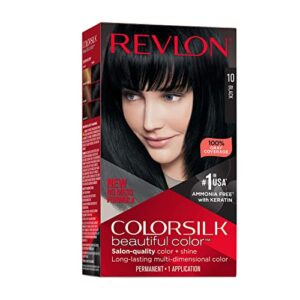
Revlon’s Black Dye Formulation sits right in the middle of the demi-permanent hair color pack—you’re looking at 60–85% color retention after four weeks, with fade dropping 20–40% by week three under typical washing routines.
Hair porosity effects drive that range: high-porosity strands lose pigment 15–30% faster than low-porosity hair. Black Dye Formulation holds depth better than lighter shades, maintaining 60–75% intensity through eight weeks with solid demi-permanent care.
Your hair dye longevity hinges on sulfate-free products, cool water rinses, and minimizing heat—those color fade factors stack up fast.
Best For: People with normal to low-porosity hair looking for affordable at-home gray coverage or root touch-ups who can commit to cooler washes and sulfate-free shampoo to stretch color life.
- Maintains 60–75% of its rich black depth through eight weeks when you follow basic care rules—cool water, sulfate-free products, and minimal heat styling.
- Ammonia-free formula cuts down on that harsh chemical smell and reduces damage compared to permanent dyes, while still delivering solid gray coverage.
- Costs way less than salon visits and the no-drip gel makes application pretty straightforward, even if you’re doing it yourself in a tiny bathroom.
- High-porosity or damaged hair loses color 15–30% faster, meaning you might see noticeable fading by week three if your hair’s been bleached or heat-styled to death.
- Color vibrancy isn’t as punchy as some competing brands, and you’ll need to stay strict with your hair care routine—hot water and regular shampoo will strip it faster.
- Results vary wildly depending on your starting hair condition, so if your strands are already fried, expect shorter color life and potentially uneven fading.
3. Natural Black Hair Color Shampoo
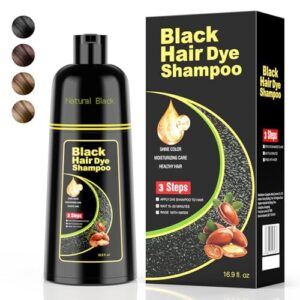
KAISASA’s Natural Black Hair Color Shampoo delivers a three-in-one approach to demi-permanent hair color—depositing pigment, cleansing, and conditioning in a single sulfate-free formula. You’ll see gradual gray coverage building over repeated applications, with color maintenance extending through 12–16 washes when you stick with color-safe shampoos.
Black shade options lean toward soft neutrality rather than harsh jet tones, supporting moisture balance without stripping your hair. This herbal-based approach prioritizes hair toning while protecting color preservation—ideal if you want low-commitment coverage that fades gracefully.
Best For: Anyone seeking gradual gray coverage at home without salon visits, especially if you prefer a gentle, herbal-based formula that builds color over time.
- Combines dyeing, cleansing, and conditioning in one step, saving time and simplifying your routine
- Sulfate-free herbal formula maintains moisture balance and won’t strip natural oils from hair or scalp
- Affordable at $9.99 with results lasting 12–16 washes when paired with color-safe products
- Requires multiple applications to build full gray coverage, so results aren’t instant
- Can stain skin and bathroom surfaces during application, requiring extra care and cleanup
- May dry out hair over time, so you’ll likely need a hydrating conditioner afterward
4. Vibrant Purple Hair Dye Cream
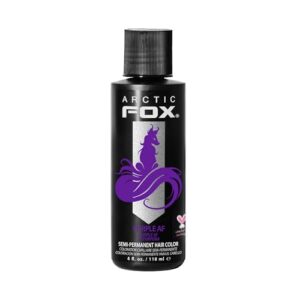
Arctic Fox’s Purple AF cream challenges conventional demi-permanent hair color longevity—you’ll see vibrant purple tones lasting 24 to 28 washes with strategic purple hair care. This ammonia-free, vegan formula conditions while depositing pigment, giving you color fade prevention through its pH-balanced composition.
Your color maintenance routine determines hair dye longevity: sulfate-free shampoos, cool-water rinses, and weekly deep conditioning extend vibrancy by 2–3 weeks.
The cream application works best on pre-lightened hair, maximizing demi-permanent hair color benefits while protecting hair dye safety through peroxide-free formulation and nourishing ingredients that support vibrant color tips.
Best For: Anyone wanting a vibrant, long-lasting purple shade who values vegan, ammonia-free formulas and doesn’t mind pre-lightening darker hair for best results.
- Conditions hair while coloring with a gentle, cruelty-free formula that’s free of harsh chemicals like ammonia and peroxide.
- Lasts 24-28 washes with proper care, giving you weeks of vibrant color that fades gradually without harsh root lines.
- Works on all hair types and lets you mix custom shades, plus it smells pleasant during application.
- Requires bleaching or lightening first if you have dark hair, which adds an extra step and potential damage.
- Can stain skin, counters, and shower surfaces during application and rinsing, so you need to be careful.
- Color longevity varies based on your hair’s porosity and washing habits—frequent washing or hard water can fade it faster.
5. Keratin Hair Color Cream Espresso
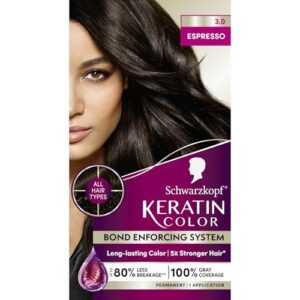
When you’re ready to own rich espresso tones that actually nourish your strands, Schwarzkopf’s Keratin Hair Color Cream delivers 4–6 weeks of professional-level vibrancy. The K-Bond Plex technology repairs inner hair structure while depositing color—you’re getting demi-permanent hair color benefits with a 3-step Bond Enforcing System that cuts breakage.
Your cream application tips: work through sectioned hair for complete gray coverage, then follow with color-safe conditioning to extend hair color longevity.
This espresso shade option maintains intensity through 20–24 washes when you commit to sulfate-free keratin hair care routines.
Best For: Anyone wanting salon-quality espresso color at home with built-in hair repair, especially if you’re covering grays or refreshing previously treated hair.
- 3-step Bond Enforcing System actually strengthens hair while coloring, reducing breakage instead of causing damage
- Complete gray coverage that lasts 4–6 weeks with proper sulfate-free maintenance routines
- K-Bond Plex technology repairs your hair from the inside out while depositing rich, multi-dimensional color
- You’ll need two boxes if you have very long or thick hair for full coverage
- Color can start fading noticeably after a few weeks depending on your hair’s porosity and wash frequency
- Price point runs higher than basic drugstore dyes, which may not fit every budget
Frequently Asked Questions (FAQs)
Can demi-permanent color lighten natural hair?
Demi-permanent hair dye won’t truly lighten your natural shade—it deposits pigment without real lift. Most formulations barely budge darker bases, achieving only 0–5 levels of change, even on porous strands.
Does demi-permanent color work on virgin hair?
Yes, demi-permanent hair color works beautifully on virgin hair. It deposits rich pigment onto your natural strands without lifting, offering vibrant dimension while preserving integrity—perfect for experimenting with color retention strategies and exploring demi-permanent formulations confidently.
How does hard water affect color longevity?
Mineral deposition from calcium and magnesium ions is a silent saboteur—hard water can slash your demi-permanent hair color longevity by up to 30%, stripping vibrancy through pH shifts and reduced shampooing efficacy.
Can you mix different demi-permanent color shades?
Absolutely—most brands let you blend two or three shades from the same line for custom tones. Just run a strand test first to nail your pigment load and predict fade patterns accurately.
Does demi-permanent color fade evenly or unevenly?
In most cases, you’ll see an Even Tone as demi-permanent color fades gradually. However, Hair Porosity and previous damage can trigger uneven Color Fade Patterns, particularly when Shade Dependence and environmental Fading Factors collide.
Conclusion
Sure, you could treat demi-permanent color like a disposable relationship—ignoring water temperature, blasting heat tools, skipping color-safe products—then act surprised when it ghosts you after three weeks. Or you could acknowledge that how long demi-permanent hair color lasts depends entirely on whether you’re willing to show it basic respect.
Control the variables within your reach: shampoo frequency, UV protection, heat styling restraint. Your color’s lifespan isn’t fate; it’s a direct reflection of your commitment to maintenance.