This site is supported by our readers. We may earn a commission, at no cost to you, if you purchase through links.
You just spent two hours and $150 at the salon, and three weeks later, your vibrant auburn is already shifting toward brassy copper. Hair dye doesn’t fade on a fixed schedule—permanent color can hold strong for eight weeks while fashion shades like red or pastel pink might wash out noticeably after just ten shampoos.
The timeline depends on your hair’s porosity, the pigment depth you chose, and how often you’re shampooing with hot water. High-porosity strands grab color fast but release it just as quickly, while dense pigments in darker shades show dramatic tone shifts as they dilute.
Understanding what accelerates fade—from UV exposure to heat styling—puts you back in control of how long your color stays true.
Table Of Contents
- Key Takeaways
- Factors That Affect Hair Dye Fading
- Permanent Hair Dye Fading Timeline
- Semi-Permanent Hair Dye Fade Duration
- Demi-Permanent and Temporary Dye Lifespans
- How Hair Texture Impacts Color Fade
- Lifestyle Habits That Accelerate Fading
- How to Slow Down Hair Dye Fading
- Fastest and Slowest Fading Hair Colors
- Top 5 Products to Manage Hair Dye Fade
- Tips for Long-Lasting Vibrant Hair Color
- Frequently Asked Questions (FAQs)
- What factors influence the rate at which hair color fades?
- How can I prevent my hair dye from fading too quickly?
- What is the difference between permanent and semi-permanent hair dye?
- How can I prolong the longevity of my hair color?
- What are some best practices for maintaining vibrant hair color?
- Can I remove hair dye without bleach?
- How soon can I re-dye after fading?
- Will hair masks strip out my color?
- Does hair dye fade differently on gray hair?
- Conclusion
Key Takeaways
- Permanent dye lasts 4-8 weeks, while semi-permanent fades after 8-10 shampoos, with fashion colors like red and pastel washing out fastest due to their fragile pigment molecules.
- Your hair’s porosity controls fade speed more than any other factor—high-porosity strands grab color quickly but release it just as fast, while low-porosity hair resists initial penetration yet holds pigment longer once locked in.
- Daily shampooing, hot water, heat styling above 350°F, and UV exposure strip color 30-40% faster than protective routines using sulfate-free products, cool rinses, and thermal protection.
- Color-depositing conditioners, silk pillowcases, and limiting washes to 2-3 times weekly can extend your color’s vibrancy by weeks, giving you real control over how long your investment lasts.
Factors That Affect Hair Dye Fading
Your hair dye won’t fade at the same rate as someone else’s, even if you both walked out of the salon with identical shades. The speed at which your color disappears depends on a mix of biological factors, daily habits, and environmental conditions that constantly interact with your hair.
If you’re using Adore, check out how long Adore hair dye lasts since certain shades in their line cling to strands longer than others.
Hair dye fading speed varies wildly between people—it’s shaped by your biology, daily habits, and environment, not just the color itself
Understanding these variables gives you the power to control how long your color stays vibrant or how quickly you can shift to something new.
If you want to extend that vibrancy even further, check out these proven tips for keeping colored hair luscious and long-lasting.
Hair Type and Porosity
Porosity testing is your secret weapon for controlling color fade. The hair cuticle’s openness shapes color absorption and dye penetration, with high porosity hair grabbing pigment fast but losing it sooner.
If your color comes out patchy or uneven, fixing unevenly dyed hair starts with understanding your porosity levels across different sections.
Keratin binding holds color, but fine or damaged strands often struggle with longevity.
A quality deep conditioner for color-treated hair can restore protein balance and seal the cuticle, helping fine or damaged strands hold pigment longer.
Know your hair type—porosity and color go hand-in-hand when you want lasting results.
Color Choice and Intensity
Your color choice drives how fast fade happens. Darker, intense shades show dramatic tone shifts as they dilute, while warm fashion colors—reds, oranges, copper—lean pinkish or brassy over time. Here’s what controls color longevity:
- Pigment depth impacts how vivid your hair color starts and how noticeably it fades.
- Dye saturation determines initial color vibrancy and fade patterns you’ll see.
- Color intensity influences overall color fade speed and maintenance needs.
- Formulation pH affects penetration for lasting color fading prevention.
Shampooing and Conditioning Habits
Your hair care routine makes or breaks color fade. Daily shampooing strips pigment faster—you’ll lose 20-40% of visible color within the first week if you wash constantly. Swap to sulfate-free, color-safe products for gentle cleansing that preserves dye molecules.
Conditioning locks in moisture balance and maintains scalp health, especially if your hair porosity runs high. Cut back on shampooing frequency, and your color protection game gets stronger.
Environmental Exposure
Beyond what you wash with, what you expose your hair to daily chips away at color longevity. UV damage from sun exposure oxidizes dye molecules—vibrant shades fade 30% faster without UV protection. Heat styling, chlorine from pools, saltwater, and even pollution effects weaken cuticle integrity, speeding up color fade.
Watch out for these fading factors:
- Ultraviolet light accelerates dye oxidation
- Chlorine dulls and strips pigment quickly
- Saltwater pulls color from your cuticle
- Heat and humidity alter hair structure
- Indoor pollution compromises dye retention
Seasonal UV shifts alone cause noticeable color changes across multiple brands.
Permanent Hair Dye Fading Timeline
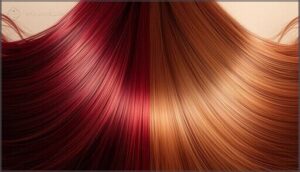
Permanent hair dye doesn’t vanish overnight, but it won’t cling to your strands forever either. The fading process follows a predictable pattern that spans several weeks, though your specific timeline depends on multiple factors working together.
Here’s what you can expect as your color gradually transitions from fresh to faded.
Typical Duration (4-8 Weeks)
When you commit to permanent dye, you’re looking at a solid 4–8 week window before noticeable color fade patterns appear. Here’s what influences that fading time:
| Dye Longevity Factors | Impact on Color Retention |
|---|---|
| Hair porosity effects | High porosity fades faster |
| Shampoo frequency | More washes = quicker color fade |
| Heat styling habits | Accelerates hair color fading |
| UV exposure | Dulls pigment over time |
Your color longevity depends on how well you protect those pigment molecules locked inside your hair shaft.
Signs of Fading Over Time
Vibrancy loss hits you first—your once-brilliant shade starts looking washed out and lackluster. You’ll notice dullness signs creeping in around week three, especially at your ends where porosity runs higher.
Tone change follows as color molecules break down, shifting cooler shades warmer.
Pair that with simple protective habits like minimizing heat styling to keep your color looking fresh longer.
Fade patterns emerge unevenly, with mid-lengths losing intensity faster than freshly dyed roots, signaling your color retention is weakening.
Factors That Shorten or Extend Lifespan
Your daily choices either lock in your permanent color or strip it fast. Hair porosity dictates dye penetration and color binding strength, while washing frequency directly controls color retention and fade prevention.
- Sulfate shampoos yank color molecules out with each lather
- Hot water showers crack open cuticles, releasing locked-in pigment
- UV rays degrade color chemistry, accelerating color fade
- Chlorine exposure strips color binding, shortening dye longevity dramatically
Semi-Permanent Hair Dye Fade Duration
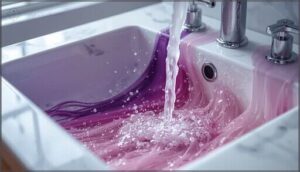
Semi-permanent dye doesn’t penetrate your hair shaft like permanent color does—it coats the outside, which means it washes out gradually with each shampoo. You’re looking at around 8 to 10 washes before you’ll notice significant fading, though your actual results depend on several factors.
Let’s break down what you can expect as your color fades and what influences how quickly it disappears.
Average Longevity (8-10 Shampoos)
Semi-permanent dye gives you freedom to experiment—it usually holds strong for 8 to 10 shampoos before color fade kicks in. Hair dye longevity depends on your hair porosity effects and shampoo frequency, so if you’re washing daily, expect fading time to speed up.
Color retention tips matter here: porous or previously treated hair may lose vibrancy faster, while virgin hair hangs onto dye longevity a bit longer.
Fade Patterns and What to Expect
Your hair won’t fade like a light switch flipping off—it shifts gradually. Expect fade patterns to start with a softening of color depth within the first week, especially if hair porosity is high.
Color fade usually shows up as dulling vibrancy rather than complete color longevity loss, with fade rates varying based on underlying fading factors and how your hair holds pigment.
Influences on Fading Speed
Your wash routine, styling habits, and even the water you rinse with can speed up or slow down how quickly that semi-permanent color fades. Hair porosity determines how well color depth holds, while environmental factors like sun exposure and chlorine intensify fading patterns.
Hot water opens cuticles, releasing pigment faster, and dye formulas with larger molecules tend to wash out quicker, affecting overall color longevity and intensity retention.
Demi-Permanent and Temporary Dye Lifespans
If you’re not ready to commit to a long-term color change, demi-permanent and temporary dyes give you the freedom to experiment without locking yourself in.
These formulas sit on the spectrum between fleeting fun and moderate commitment, each offering different fade timelines based on how the color interacts with your hair.
Understanding how long each type lasts helps you pick the right option for your goals, whether you’re testing a bold shade or maintaining subtle dimension.
Demi-Permanent Dye (12-24 Shampoos)
Demi-permanent hair dye holds its ground for roughly 12 to 24 shampoos before you’ll notice significant color fade. Unlike semi-permanent hair dye, this formula penetrates deeper into your hair shaft, creating better color longevity even on high-porosity strands.
Dye color depth and hair porosity directly influence fading prevention tips—healthier cuticles lock in pigment longer, while damaged hair shows color fade patterns much faster.
Temporary Dye (1-3 Washes)
Temporary dye sits on your hair’s surface rather than achieving true dye penetration, which explains why you’ll see noticeable color fading after just 1 to 3 washes. These formulas use larger pigment molecules that create an immediate color shift but lack wash resistance—perfect when you’re testing bold shades without commitment.
Fading patterns depend heavily on your hair’s porosity, with porous strands showing faster color longevity factors decline than healthier cuticles.
Suitability for Different Hair Goals
Choosing between demi-permanent and temporary formulas comes down to matching color preferences with your maintenance routines and styling options.
If you’re after medium color intensity without strict upkeep, demi-permanent dye formulations work well across various hair texture types, giving you manageable color longevity.
Temporary dyes suit experimental looks where quick fading time actually becomes an advantage rather than a frustration.
How Hair Texture Impacts Color Fade
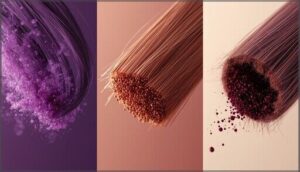
Your hair texture plays a surprisingly powerful role in how quickly color vanishes from your strands. Fine hair usually releases pigment faster than coarse hair, while porosity and damage levels dramatically shift how well your hair grabs onto—and holds—color molecules.
Let’s break down exactly how these texture factors control your color’s staying power.
Fine Vs. Coarse Hair
Fine Hair often grabs color fast because of higher cuticle permeability, but that same openness means pigments slip out just as quickly with each wash. Coarse Hair, on the other hand, resists initial color penetration but holds onto dye molecules longer once they’re locked in.
Understanding your hair texture and porosity levels gives you real control over color fading and helps you plan smarter maintenance routines.
Porosity and Absorption
Hair porosity dictates how your cuticle structure manages dye uptake and color penetration. High porosity grabs pigment fast because of cuticle gaps, boosting initial color deposit—but those same openings let color escape with every wash, speeding up fading.
Low porosity resists color penetration at first, yet once dye molecules lock in, your hair holds onto color intensity longer. Knowing your hair porosity and color absorption rates puts you in the driver’s seat for managing fade.
Damage and Color Retention
Cuticle damage rewrites your color retention story—chemically treated or heat-ravaged strands leak dye faster than healthy hair because compromised keratin structure can’t lock pigment in place. When your cuticle layer splinters open, color binding weakens and dye penetration becomes a revolving door:
- Bleached hair loses color 40% faster than virgin strands
- Heat styling cracks cuticle scales, accelerating fading time
- High hair porosity from damage doubles dye leakage rates
- Intact keratin structure maximizes color protection between washes
Lifestyle Habits That Accelerate Fading

Your daily routine has more control over color fade than you might realize. While hair type and dye choice set the foundation, the real color thieves are hiding in your everyday habits—the ones you repeat without thinking.
Let’s break down the lifestyle factors that pull pigment from your strands faster than anything else.
Frequent Washing
If you’re shampooing daily, you’re basically rinsing money down the drain. Frequent washing accelerates color fade by stripping pigment molecules from your hair cortex with each lather. Water temperature matters too—hotter water loosens your cuticle, increasing color leakage during shampooing.
| Washing Frequency | Color Fade Timeline |
|---|---|
| Daily washing | Fades 5-7 days faster |
| Every 2-3 days | Moderate fading patterns |
| Weekly washing | Extends color lifespan |
| With clarifying shampoo | Rapid color stripping |
Shampoo effects compound over time, so cutting back preserves your investment in vibrant hair maintenance.
Heat Styling and Hot Water
Think your flat iron is harmless? Heat styling breaks down pigment molecules in your hair shaft, triggering faster color fading with every pass. Tools above 350°F cause the most heat damage, while hot water during shampooing opens your cuticle and leaches dye.
Protect your investment with thermal protection products and lukewarm rinses—your color lock depends on smarter water temperature choices and gentler styling techniques in your hair care routine.
Sunlight and Chlorine Exposure
UV damage and chlorine effects work together to strip your color faster than almost any other lifestyle habit. Sun exposure breaks down dye molecules through photo-degradation, while chlorine oxidizes pigments and raises porosity—creating a double threat to your shade.
Fight back with these fade prevention essentials:
- Apply UV protection leave-ins with broad-spectrum filters before heading outdoors
- Rinse hair immediately after swimming to remove residual chlorine
- Use chelating shampoos designed for color-treated hair post-swim
- Wear hats during peak sun hours to minimize direct exposure
- Refresh with color-depositing conditioners to combat unavoidable fading
Sunscreen products for hair aren’t optional—they’re your first line of defense against the color fading process.
How to Slow Down Hair Dye Fading
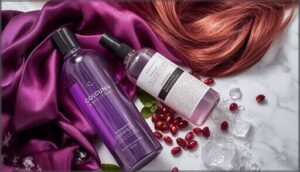
You don’t have to surrender your color to every shampoo and styling session. With the right protective strategies, you can keep your hair looking vibrant for weeks longer than you’d expect.
Here’s how to take control of your color’s lifespan and make those dye molecules work harder for you.
Use Color-Safe Shampoos and Conditioners
Want to break free from constant color touch-ups? Your hair care routine starts with swapping to color-safe shampoo and conditioners. These products use pH balance and gentle cleansing agents that lock in moisture while protecting against color fade. They create a barrier around your hair shaft, keeping those dye molecules exactly where they belong. Using the right color protection products can make a significant difference in maintaining your hair color.
| Benefit | How It Works |
|---|---|
| Color Preservation | Sulfate-free formulas prevent color molecules from washing out |
| Moisture Lock | Seals cuticle to trap hydration and prevent dye leaching |
| pH Balance | Acidic ingredients close cuticle after dyeing for better retention |
| UV Protection | Filters shield hair from sun damage that accelerates fading |
| Color Depositing | Some conditioners add pigment back with each wash |
Limit Shampooing Frequency
Beyond picking the right products, your color preservation strategy needs shampoo reduction. Washing every 2–3 days instead of daily keeps dye molecules locked in your hair shaft, slowing color fade dramatically.
Cooler rinses close cuticles tighter than hot water, boosting fade prevention.
Between washes, gentle cleansing with dry shampoo maintains freshness without stripping pigment—your hair care routine just got smarter and your color protection stronger.
Minimize Heat Styling
Your flat iron and blow dryer speed up color fading by opening cuticles and releasing pigment. Always apply heat protectant spray before styling, and dial down to 265–350°F to dodge thermal damage.
Keep heat styling to once daily or less—better yet, air-dry when you can. Lower temps preserve your color’s intensity without sacrificing your look.
Protect Hair From UV and Chlorine
Heat isn’t your only enemy—sunlight and pool chemicals wreak havoc on color intensity and fading. UV rays break down dye molecules, while chlorine strips pigment and leaves brassy tones behind.
Grab a hair sunscreen with UV protection or toss on a swim cap for instant color longevity and retention. Rinse with fresh water after every dip to block chlorine damage and keep your shade locked in longer.
Fastest and Slowest Fading Hair Colors
Not all hair colors are created equal in terms of staying power. Some shades cling stubbornly to your hair shaft for months, while others wash down the drain after just a few shampoos.
Understanding which colors fade fastest—and which hold their ground—gives you the control to plan your next color move with confidence.
Fashion Colors (Red, Green, Pastel)
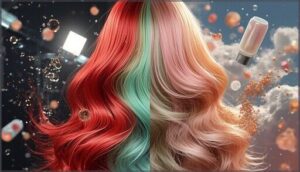
Fashion colors burn brightest but fade fastest—reds, greens, and pastels are color rebels that don’t stick around long. Here’s what you’re up against with vibrant tones:
- Red shades fade within 4–12 washes due to fragile pigment molecules and UV photo-bleaching
- Green shows uneven fade patterns as coppery tones emerge
- Pastel maintenance demands constant attention—lower color intensity means rapid initial color fade
- Semi-permanent formulations offer limited color longevity compared to permanent dyes
- Professional color protectants extend fading time by 20–40% depending on your hair’s porosity
Color stability? Not their strong suit.
Darker Shades (Brown, Black)
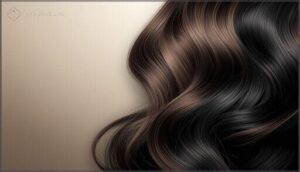
Dark shade maintenance is where you win the longevity game—brown and black dyes hold strong for 4–6 weeks with 60–80% color retention in healthy hair. Permanent hair dye in these tones resists color fading better than lighter shades, giving you serious color depth that sticks.
Your fade prevention strategy? Cool water washes, sulfate-free formulas, and UV protection keep that dark intensity locked in despite minor hair damage.
Blondes and Unnatural Colors

Bleached blondes and unnatural shades—vivid pinks, greens, purples—face the fastest color fade due to porous hair care challenges. Your bleach damage opens the cuticle wide, so vibrant tone maintenance requires color depositing treatments every 4–6 weeks.
Hair color fading accelerates with UV and chlorine exposure, demanding aggressive color protection strategies to prevent those electric hues from washing out into pale ghosts.
Top 5 Products to Manage Hair Dye Fade
Whether you’re ready to strip out an old color or keep your current shade looking fresh, the right product makes all the difference. Some formulas work to gently fade unwanted dye, while others deposit fresh pigment to maintain vibrancy between salon visits.
Here are five top-rated products that give you control over your color’s lifespan.
1. Keracolor Color Fading Shampoo
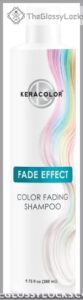
If you want to gradually dial down semi-permanent or direct dyes without harsh stripping, Keracolor Color Fading Shampoo offers controlled liberation from unwanted tones. This sulfate-free formula uses Vitamin C to gently break down dye molecules while keratin and coconut oil protect hair integrity during the Color Fading Process.
You’ll notice visible fading within 1-4 washes, with hair porosity influencing speed—porous strands release pigment faster. The Shampoo Ingredients work through mild chemical interactions rather than aggressive bleaching, making it ideal for Gentle Removal when you’re ready to shift between shades.
| Best For | Anyone looking to gently fade semi-permanent or direct dye colors without damaging their hair, especially if you want gradual control over the lightening process. |
|---|---|
| Item Form | Liquid |
| Hair Type | Dull |
| Cruelty-Free | Not specified |
| Application Time | Varies |
| Price Range | $9.75 |
| Color Removal | Semi-permanent |
| Additional Features |
|
- Fades unwanted color in 1-4 washes without harsh sulfates or bleach, giving you control over how much intensity you remove
- Contains nourishing ingredients like keratin, biotin, and coconut oil that protect and hydrate hair during the fading process
- Works well on porous hair types and helps correct color mistakes or transition between shades safely
- Can dry out your hair if overused, so you’ll need to follow up with a good conditioner or deep treatment
- Less effective on permanent dyes or non-porous hair, and won’t completely strip stubborn colors in one go
- More expensive than regular shampoos, and some users don’t love the coconut scent
2. Color Oops Hair Fading Wash Kit
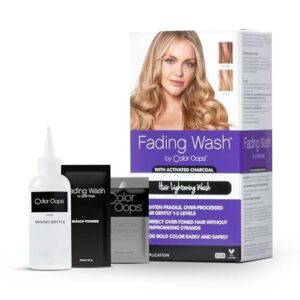
For bold Color Correction moves, the Color Oops Hair Fading Wash Kit strips up to two levels of artificial pigment without bleach-based Hair Damage. You’re controlling the Fading Process through a color-reversing formula that shrinks dye molecules, letting them rinse away rather than chemically destroying them.
Expect results in one 20-minute session, though porous hair may need a second round for complete Color Removal. At $14.99, it’s your fast track to hitting reset when Hair Dye experiments go sideways, giving you Fade Control that respects your hair’s integrity while clearing the canvas for what’s next.
| Best For | Anyone who’s dyed their hair too dark or picked the wrong shade and needs to quickly fade artificial color without the harshness of bleach. |
|---|---|
| Item Form | Liquid |
| Hair Type | All |
| Cruelty-Free | Yes |
| Application Time | Varies |
| Price Range | $14.99 |
| Color Removal | 1-2 levels |
| Additional Features |
|
- Shrinks dye molecules instead of bleaching them out, so it’s gentler on your hair than traditional lightening methods
- Works fast—most people see results in just one 20-minute session
- Affordable at $14.99 compared to salon color correction services
- Might need a second application if your hair is porous or really soaked up the color
- Won’t work on natural hair color, only removes artificial dye
- Results can be unpredictable depending on your hair type and the original color you’re trying to fade
3. Color Out System Hair Color Remover
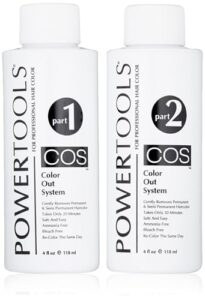
The Color Out System Hair Color Remover removes stubborn permanent dye in 20 minutes flat, using an ammonia-free formula that reverses oxidation instead of blasting your strands with harsh chemicals. You’re looking at true Color Removal without the Hair Damage bleach-based methods inflict.
At $22.99, this Color Correction tool lets you reclaim Color Restoration control when Fading isn’t happening fast enough naturally. It’s your answer to unwanted Hair Dye, enabling same-day recoloring once you’ve hit reset—though you’ll want a hydrating conditioner afterward to lock in moisture.
| Best For | Anyone who’s dealing with a hair color disaster and needs to strip permanent or semi-permanent dye quickly without frying their hair in the process. |
|---|---|
| Item Form | Liquid |
| Hair Type | All |
| Cruelty-Free | Not specified |
| Application Time | 20 minutes |
| Price Range | $22.99 |
| Color Removal | Permanent/Semi/Demi |
| Additional Features |
|
- Works in just 20 minutes and lets you recolor the same day, so you’re not stuck waiting around
- Skips the ammonia and bleach, which means less damage than traditional color stripping methods
- Handles all types of color—oxidative permanent, semi-permanent, and demi-permanent dyes
- The smell is pretty rough, so you’ll want good ventilation while using it
- Stubborn colors might need two or three rounds to fully disappear, especially darker shades
- Leaves hair feeling dry and thirsty, so a deep conditioner afterward isn’t optional
4. Color X Change Gentle Hair Decolorizer
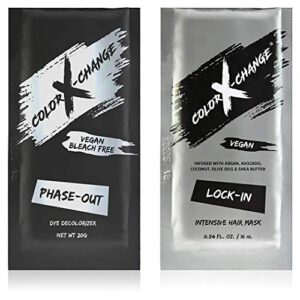
If you’re chasing Color Removal without the scalp burn, Color X Change Gentle Hair Decolorizer strips artificial pigment in 15–40 minutes using a PPD- and ammonia-free formula that prioritizes Gentle Processing over aggressive bleaching.
At $6.69, this Hair Decolorizer manages Color Correction when natural fading drags its feet, letting you execute a Color Change without wrecking your strands—though you’ll need to follow up with Damage Repair conditioner since moisture loss is still real.
Patch-test 48 hours ahead, saturate evenly, and rinse cool to minimize cuticle stress during Color Maintenance.
| Best For | Anyone looking to fade or remove artificial hair color gently without the harsh chemicals found in traditional bleach, especially if you’ve got a sensitive scalp or want to prep for a new shade. |
|---|---|
| Item Form | Liquid |
| Hair Type | All |
| Cruelty-Free | Yes |
| Application Time | Varies |
| Price Range | $6.69 |
| Color Removal | Gentle removal |
| Additional Features |
|
- Free from PPD, ammonia, peroxide, and parabens, so it’s way gentler on your scalp and hair than typical color strippers
- Works in 15–40 minutes to gradually lift artificial pigment, giving you control over how much color you remove
- Comes in at just $6.69, making it an affordable option for at-home color correction
- May need multiple applications to get the results you’re after, especially if you’re working with stubborn or dark dyes
- Can still dry out your hair and irritate your scalp despite being gentler than alternatives
- Has a strong smell that some users find pretty unpleasant during application
5. Keracolor Color Depositing Hair Conditioner
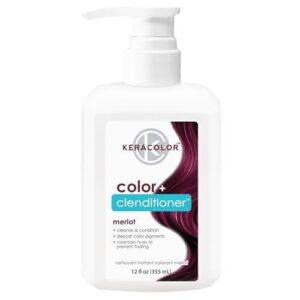
While decolorizers strip pigment, Keracolor Color Depositing Hair Conditioner builds it back—reviving Color Fade without re-dyeing your entire head.
At $22 for 12 ounces, this Semi-Permanent formula delivers Color Deposit alongside keratin and coconut oil, so you’re conditioning while maintaining vibrancy between salon trips.
Hair Porosity determines how quickly Fading Patterns emerge, but weekly application keeps Merlot reds and other shades locked in.
Just watch for scalp staining during rinse—Conditioner Benefits don’t include mess-proof application.
| Best For | Anyone who wants to refresh or maintain their hair color between salon visits without the commitment or damage of permanent dye. |
|---|---|
| Item Form | Liquid |
| Hair Type | All |
| Cruelty-Free | Yes |
| Application Time | Varies |
| Price Range | $22.00 |
| Color Removal | N/A – Color deposit |
| Additional Features |
|
- Cleanses, conditions, and deposits color in one step, saving time and simplifying your routine
- Packed with nourishing ingredients like keratin, coconut oil, and shea butter that leave hair soft and healthy
- Gradual fade over multiple washes means no harsh demarcation lines as color wears off
- Won’t provide full grey coverage if that’s what you’re after
- Can stain your skin, scalp, and shower if you’re not careful during application
- Results vary widely depending on your hair’s porosity and starting color
Tips for Long-Lasting Vibrant Hair Color
You’ve invested time and money into your hair color, so making it last shouldn’t feel like a gamble. The good news is that a few smart, consistent habits can dramatically extend the life of your color and keep it looking fresh between salon visits.
Here are four essential strategies that’ll help you maintain vibrant, fade-resistant hair color for weeks longer than you thought possible.
Weekly Color-Depositing Treatments
Between dye sessions, you can rebel against fade by using color-depositing products once a week to refresh pigment saturation and maintain your chosen shade. These color deposit formulas work best on high-porosity hair, where they bind temporarily to the cuticle for enhanced color protection and retention.
Treatment frequency matters—consistent use of color enhancement methods keeps vibrancy alive while your natural hair growth pushes through underneath.
Using Silk Pillowcases
Your sleep habits can quietly sabotage color stability—switching to silk pillowcases cuts hair friction dramatically, preserving moisture retention and protecting against mechanical stress that accelerates color fade. Silk benefits extend beyond hair health into serious color protection territory:
- Less tugging means your cuticle stays sealed and color molecules stay locked in
- Reduced absorption keeps dye on your strands instead of staining your pillowcase
- Smoother surfaces prevent overnight tangling that roughens your hair shaft
- Moisture balance stays intact, preventing the dryness that dulls vibrancy
- Your bold shade survives the night without battling cotton’s aggressive texture
Pair this simple hair care upgrade with your color-depositing routine for maximum rebellion against fade.
Regular Trims and Gentle Styling
Beyond nightly fabric upgrades, strategic Hair Trims keep split ends from unraveling your color investment—damaged tips bleed dye faster than healthy strands.
Gentle Combing with wide-tooth tools and Low Heat Styling preserve cuticle integrity, locking pigment where it belongs.
Satin Pillowcases paired with minimal mechanical stress form your complete Color Preservation arsenal, supporting Hair Health across every Hair Type while slowing Color Fading through smarter Hair Maintenance habits.
Avoiding Harsh Chemicals and Clarifying Shampoos
Strip away clarifying shampoos and harsh chemicals that accelerate Color Fade—your Hair Dye deserves better protection.
Switch to Sulfate Free Shampoos with pH Balanced Formulas (4.5–5.5 range) that cleanse without stripping pigment. Color Safe Products featuring Mild Chelating Agents and Gentle Cleansers preserve intensity between touch-ups.
Choose Colorsafe Shampoo and Color Protecting conditioners to lock in vibrancy while maintaining cuticle integrity.
Frequently Asked Questions (FAQs)
What factors influence the rate at which hair color fades?
Color stability hinges on a paradox: your hair’s porosity determines how well dye penetrates, yet that same openness accelerates fade.
Hair type, environmental factors, dye chemistry, and your hair care routine collectively control color longevity.
For a deeper look at how these variables interact, this guide to Manic Panic fade time breaks down what to expect wash by wash.
How can I prevent my hair dye from fading too quickly?
Protect your vibrant color with sulfate-free shampoos, cold water rinses, and UV protection sprays. Limit washing to 2-3 times weekly, skip heat styling when possible, and use color-depositing conditioners to maintain intensity and prevent premature fading.
Since deeper, more saturated shades tend to fade faster, understanding your hair color level numbering system can help you choose the right aftercare routine for your specific base.
To further preserve your hair color, consider using products with color preserving ingredients that help lock in moisture and vibrancy.
What is the difference between permanent and semi-permanent hair dye?
You’d think stronger chemistry means more commitment, right? Permanent hair dye uses ammonia to lift the hair cuticle, allowing color binding deep in the cortex—a chemical process that lasts months.
Semi-permanent dye coats the surface, fading faster.
How can I prolong the longevity of my hair color?
To extend dye longevity, use color protection products and hair masks for moisture balance.
Wash gently, apply weekly color refresh treatments, and practice proper color preservation methods—these color locking strategies enhance hair color maintenance effectively.
What are some best practices for maintaining vibrant hair color?
Lock in vibrant color maintenance with sulfate-free shampoos, weekly color-depositing treatments, and UV protectants.
Wash 2-3 times weekly using cool water, limit heat styling below 350°F, and shield hair from chlorine to extend dye longevity factors.
Can I remove hair dye without bleach?
Yes—you can break free from unwanted permanent hair dye using color remover kits that rely on reducing agents instead of bleach alternatives, minimizing hair damage prevention while lifting artificial pigment for effective color correction techniques.
How soon can I re-dye after fading?
Wait at least 2 weeks before re-dye intervals to let your hair recover from color fading.
For dramatic color refresh or dye reapplication, push it to 4–6 weeks so your hair tolerates permanent hair dye better.
Will hair masks strip out my color?
Most hair masks won’t strip your color if they’re formulated for moisture or color preservation. Skip clarifying masks—they can accelerate dye fading.
Choose color-safe products and patch test anything new to protect your investment.
Does hair dye fade differently on gray hair?
Before telegrams changed communication, pigment retention relied on natural melanin—and Gray Hair Porosity changes that game entirely.
Color Uptake Rates accelerate on porous strands, but Fading Patterns vary by Dye Formulation and Hair Type, making Permanent Hair Dye behave unpredictably without melanin anchoring.
Conclusion
Think color fade is inevitable? Not entirely. You now know exactly how long it takes for hair dye to fade—and more importantly, how to fight it. Whether you’re protecting vibrant reds for ten extra shampoos or stretching permanent color past eight weeks, your choices dictate the timeline.
Skip the hot water, shield from UV, and swap generic shampoo for color-safe formulas. Your color doesn’t fade on fate’s schedule—it fades on yours.