This site is supported by our readers. We may earn a commission, at no cost to you, if you purchase through links. This content is for general informational and educational purposes only and is not a substitute for professional medical, dermatological, or nutritional advice.
You touched up your roots on Friday, hated the tone by Sunday, and now your fingers are hovering over another box of dye. Stop right there. Your cuticle just went through a chemical wrestling match, and it needs time to close back up before round two.
So how long should you wait before dyeing your hair again? The honest answer depends on what you used and how your strands feel right now — brittle, springy, tangled, or fine. Bleach demands more patience than a semi-permanent gloss, and damaged hair needs extra grace no matter what’s in the bottle.
This guide on how long to wait before dyeing hair again breaks down realistic timelines for bleached, colored, and virgin hair so you don’t end up overprocessing.
Get the timing right, and you’ll dodge breakage, bands, and that dreaded straw texture altogether.
Table Of Contents
- Key Takeaways
- How Long Should You Wait Before Dyeing Your Hair Again?
- Suggested Wait Times by Dye Type
- How to Know Your Hair is Ready
- What Happens if You Dye Too Soon?
- Safer Fixes Between Dye Jobs
- Frequently Asked Questions (FAQs)
- How soon can I dye my hair again to fix it?
- Can I dye my hair twice in 2 days?
- How many times can I dye my hair until it falls out?
- Is it okay to dye hair every 4 weeks?
- How soon can I recolor my hair if I don’t like it?
- How long should you wait in between hair dye sessions?
- Can I dye wet or damp hair?
- Does hair texture affect dye waiting periods?
- How does pregnancy impact hair dyeing safety?
- Will swimming affect freshly dyed hair color?
- Conclusion
Key Takeaways
- Wait at least two weeks before redyeing healthy hair, but stretch that to four to six weeks for permanent color and six to eight weeks (or more) if your hair’s already damaged.
- Bleach needs the most patience of all—give it eight to ten weeks, or twelve to sixteen after a high-volume developer, before you go back in.
- Skip the calendar guesswork and check your hair directly: it should stretch about 30% before snapping back in a few seconds, feel smooth (not straw-like), and show no scalp irritation before you recolor.
- Dyeing too soon isn’t just risky for your color—it can cause real breakage, patchy bands, and in extreme cases, a "chemical haircut" that no amount of touch-up can fix.
How Long Should You Wait Before Dyeing Your Hair Again?

So, how long should you actually wait? The answer depends on a few things: your dye type, your hair’s current condition, and what you’ve put it through recently. Here’s what you need to know before you reach for that box or call your colorist.
If you’re weighing a DIY dye job against a professional appointment, this breakdown of how long it takes to dye hair at a salon versus at home can help you plan your day accordingly.
Minimum Two-Week Rule
Two weeks isn’t arbitrary. It’s your minimum waiting time, letting the cuticle recovery process and protein rebuilding phase actually finish before you pile on more chemicals.
During those 14 days, elasticity restoration also happens, so hair snaps back instead of snapping off. Rushing it just invites breakage—patience beats a redo every time. Professional consultation ensures the waiting period aligns with your hair’s specific needs, as factors like hair health and dye type influence the best timing. Aveda Institute consultations provide suited assessments to help prevent over-processing and maintain long-term hair health.
Four Weeks for Permanent Dye
Fourteen days is the floor, not the finish line. If you’re using Permanent Dye, plan on 4 to 6 weeks—full Cuticle Reclosure Timeline, Protein Regeneration Window, and Color Molecule Bonding all need that runway. Rush it, and Moisture Balance Restoration stalls too.
Hair Health Considerations and Type of Dye Used decide your exact Waiting Period After Dyeing, but permanent formulas always ask for patience.
Longer for Damaged Hair
Already-damaged hair plays by different rules. Push past the standard Wait At Least 2 Weeks to ReDye guideline out to 6-8 weeks, giving the hair repair timeline room to work.
Use that stretch for bond rebuilding and moisture restoration—weekly treatments help. Run a hair elasticity test first: if strands stretch and snap instead of bouncing back, porosity stabilization isn’t finished yet. Patience now prevents a real mess later.
After Bleach or Developer
Bleach plays by its own clock. Give lightened hair 8 to 10 weeks before another session—longer, 12-16 weeks, after high-volume developer. A gentle 20 volume developer is easier on bonds than 30-40 volume.
Bond repair timelines run 3-4 weeks minimum; add weekly protein masks and moisture restoration. Rushing invites hair breakage, not healthier color.
After Perms or Relaxers
Since perms and relaxers snap disulfide bonds apart, your protein bond reformation needs 14 days minimum—up to 4 to 6 weeks if hair’s damaged. Do a quick scalp sensitivity check first.
Cuticle stabilization period matters too: rushed color over unhealed strands means breakage. Professional vs DIY timing? Ask your stylist—they’ll factor previous chemical treatments before touching dye.
Suggested Wait Times by Dye Type
Not all dye jobs play by the same rules. Semi-permanent, demi-permanent, permanent, bleach—each one treats your hair differently, so each one needs its own timeline. Here’s how to break it down by type.
Semi-Permanent Hair Dye
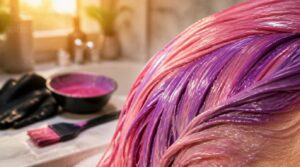
Good news: semi-permanent dye is the most forgiving type out there. Since it just coats the hair shaft without penetrating the cortex, you can often safely reapply in as little as one week if hair’s healthy.
If you’re touching up color between applications, pairing your semi-permanent dye with a gentle 10 volume developer can help minimize extra stress on already-processed strands.
It fades naturally over 4-12 washes, so touch-ups feel low-stakes. Great for playing with vibrant fashion shades without commitment.
Demi-Permanent Hair Dye
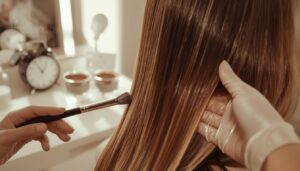
Think of demi-permanent as the middle ground: no ammonia, just a low 10-volume developer depositing color into the outer cuticle. That gentleness means two weeks is usually enough healing time before reapplying, even on slightly damaged strands.
It’s ideal for gray blending or renewing tone without commitment. Still, run a patch test first, and skip a protein mask beforehand only if hair feels strong already.
Permanent Hair Dye
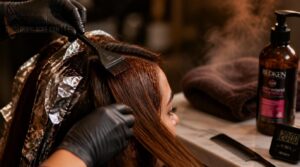
Permanent dye means full commitment: ammonia opens the cuticle, peroxide lifts pigment, and color locks in for the long haul. That power demands respect—wait a full four weeks before reapplying, especially on compromised strands.
Check elasticity first, and if regrowth bugs you, ask your stylist about root-only touch-ups. Color-safe shampoo extends vibrancy and slows fading between sessions, protecting your investment.
Bleach and High Developer
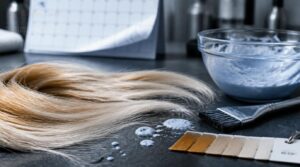
Bleach with 40 volume developer is the nuclear option—fast lift, fast damage. Wait a full four weeks minimum, longer if porosity’s high.
Skip strand tests at your own risk; they reveal how your hair reacts to processing time and heat before you commit.
Overlapping bleach on already-lightened strands causes breakage, not color correction. Patience prevents the chemical haircut nobody wants.
Root Touch-Up Timing
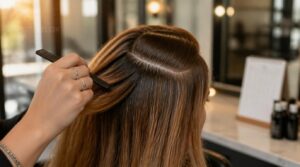
Roots don’t wait for your calendar. Most people need a touch-up every 4 to 6 weeks, though growth rate, contrast level, and dye type all shift that window.
- Fast growers: 3 weeks
- High-contrast color: every 4 weeks
- Balayage/highlights: 8-14 weeks
- Damaged hair: wait longer, prioritize recovery
- Unsure? Ask your stylist before reaching for box dye
How to Know Your Hair is Ready

Calendars are a nice guideline, but your hair doesn’t read calendars. It’s got its own way of telling you it’s ready, if you know where to look. Here’s what to check before you crack open that dye box again.
Elasticity and Breakage Check
Want the real answer instead of guessing? Do the wet hair stretch test. Grab 5-10 strands, stretch gently, measure with a ruler. Healthy hair stretches 30% before breaking and snaps back within 2-3 seconds. Slower recovery or snapping past that threshold means your strand strength and elasticity aren’t ready—wait before processing again.
Dryness and Brittleness
Pass the stretch test but hair still feels like straw? Check moisture and lipid balance next.
Dry, brittle strands signal a stripped cuticle that won’t seal properly, blocking moisture retention.
Quick checklist:
- Hair feels rough, not silky
- Ends look frizzy or split
- Color looks dull, not vibrant
- Strands tangle easily
- No bounce after conditioning
Fix it with deep conditioning and protein repair before recoloring.
Scalp Sensitivity
Your strands aren’t the only thing to check — your scalp talks too. Tingling, redness, or tight skin means irritant buildup from PPD or peroxide hasn’t cleared.
| Sign | Cause | Action |
|---|---|---|
| Itching/redness | PPD sensitivity | Patch test 48hrs |
| Burning | Peroxide exposure | Wait, heal fully |
| Bumps | Allergic reaction | See dermatologist |
Skip a patch test, and you’re gambling on dermatitis.
Porosity and Moisture
Grab a strand and spritz it with water. Beading up? That’s low porosity — cuticle’s sealed tight, slow to absorb. Water vanishes instantly? High porosity, and color will grab fast but fade faster too.
Either way, one dye job usually bumps porosity up a notch. If yours already feels thirsty and dull, hold off until moisture retention improves.
Protein Mask Prep
Insurance for your next color, that’s what a protein mask really is. Time it 7-14 days after coloring, apply to damp hair, add heat with your blow-dryer, cover with a plastic cap, process, then rinse cool. Do this and your next dye job lands even, not blotchy or brassy.
What Happens if You Dye Too Soon?
Patience isn’t just a nice idea here, it’s the difference between healthy hair and a bad hair day that lasts months. Rushing your next color job doesn’t just risk a so-so result, it can set off a chain reaction your strands won’t thank you for. Here’s exactly what you’re up against if you grab that dye box too soon.
Dye too soon and you’re not just risking bad color—you’re risking a chain reaction your hair won’t forgive
Breakage and Flyaways
That flyaway halo isn’t frizz — it’s snapped hair standing at attention. Skipping the waiting period after dyeing strips moisture and lifts the cuticle, causing real breakage.
Breakage Causes worth knowing:
- Weak hair elasticity (do the stretch test — it snaps, not springs)
- High hair porosity guzzling moisture, then losing it fast
- Protein loss leaving strands brittle at the shaft
Straw-Like Texture
Hay isn’t a hair goal. When you re-dye too soon, the cuticle stays lifted and moisture escapes fast, leaving hair rigid and dry.
Fix it with deep conditioning treatments, hyaluronic acid masks, and protein balance — never overload protein alone. High-porosity hair needs extra hydration and humidity protection to recover before your next color session.
Uneven Color Bands
Why does color come out patchy? Blame porosity band formation — high-porosity ends grab pigment 30-40% more than roots, so identical formula, wildly different results.
Add application technique bands from shaky strokes, plus color buildup effects and processing time disparities, and you get real striping. Skip your ideal waiting time and hair health suffers before formula consistency issues even get sorted out.
Halo Effect
Picture a bathtub ring, but on your part line. That’s pigment accumulation at work — dye overlapping old color creates a band 1-2 shades darker.
Cause: application overlap risk, uneven porosity impact, and skipping developer volume adjustments. Prevention? Color banding prevention means root-only touch-ups, precise sectioning, and lower-volume developer near previously bleached lengths.
Chemical Haircut Risk
Third time’s not the charm — it’s the breaking point. Sodium hydroxide alone causes 276% protein loss; stack it with repeated dye and you’re gambling with total strand collapse.
Warning signs before disaster:
- Hair snapping off at the root during a simple brush-through
- Zero elasticity — strands stretch, then just… stay stretched
- A gummy, mushy feel when wet
Run the strand elasticity test first. Skip it, and you’re not touching up color — you’re touching up a chemical haircut.
Safer Fixes Between Dye Jobs

Waiting it out doesn’t mean sitting on your hands. You’ve got options that tweak your color without another round of chemical processing. Here’s what actually works between appointments.
Purple Shampoo for Brassiness
Waiting between dye jobs? Grab purple shampoo in the meantime. It neutralizes yellow brassiness by depositing violet pigment, 2-3 uses weekly is plenty.
Pair it with a hydrating conditioner so you’re toning without drying hair out further. Bonus: some formulas add UV protection to guard your color from fading in the sun.
Blue Shampoo for Orange Tones
Got warm brunette tones fighting your fade-out period? Blue shampoo is your fix, canceling orange tones by color theory. Apply 1-2 times weekly, 2-4 minutes for stronger hues.
Choose pigment strength based on your base color, lighter for medium brown. Follow with a rich conditioner every time, moisture matters as much as toning.
Clarifying Shampoo Fading
Toning shampoos fix hue, but what about color that’s just too dark or too intense overall?
Clarifying shampoo strips buildup using stronger surfactants and higher pH, which opens the cuticle and lifts pigment along with it.
Use it 1-2 times monthly, then deep condition immediately. Porous or damaged strands fade fastest, so don’t overdo it.
Vitamin C Color Lift
Want more muscle than clarifying shampoo alone? Crush white vitamin C tablets (colored ones stain), mix with clarifying shampoo into a paste, and massage into damp hair.
- Patch test 48 hours first—scalp sensitivity is real
- Heat under a cap speeds pigment breakdown
- Repeat every 3-4 days, max four rounds, deep condition after
Works best on semi-permanent dye, not permanent color.
Salon Color Correction
When DIY fixes fall short, it’s time to book a consultation with your stylist.
Pros use shade mapping and strand tests to plan toning neutralization, correct patchiness with evenness techniques, and apply bond support treatments plus conditioning aftercare to protect strands.
They’ll factor in your hair health, dye type, and best waiting time—giving you results DIY methods just can’t match.
Frequently Asked Questions (FAQs)
How soon can I dye my hair again to fix it?
Panicking over patchy color? Breathe. The best waiting time is two weeks minimum, four to six if hair’s damaged. Check elasticity and dryness first—gentle re-dye options exist once your hair actually shows signs of readiness.
Can I dye my hair twice in 2 days?
Please don’t. Double-dyeing within 48 hours causes severe breakage and scalp irritation. Give strands two full weeks minimum—your cuticle needs that recovery time before facing more chemical processing.
How many times can I dye my hair until it falls out?
There’s no magic number—your hair won’t stage a walkout at dye job # What matters is breakage vs. shedding: weak elasticity, snapping strands, and skipped recovery periods cause loss, not the count itself.
Is it okay to dye hair every 4 weeks?
Yes, generally, if hair’s healthy. 4 to 6 weeks works well for root growth blending, letting color fade naturally. Check hair moisture, scalp health, and elasticity first—if it feels rough or brittle, wait longer before your next dye job.
How soon can I recolor my hair if I don’t like it?
Roughly 60% of colorists report breakage complaints stem from rushed re-dyes.
Color-depositing conditioners fix hate-it shades instantly. Semi-permanent? Redo now. Permanent or bleach jobs need a two-week minimum—patch test first, and check scalp sensitivity before committing again.
How long should you wait in between hair dye sessions?
Give it a minimum two weeks for healthy hair, but push that to four to six weeks if strands feel damaged, dry, or brittle — patience now saves you a chemical haircut later.
Can I dye wet or damp hair?
Dripping hair and hair dye go together like flip-flops and ice: technically possible, mostly a mess. Skip soaking-wet strands—water dilutes pigment and opens the cuticle unpredictably.
Towel-dry to damp, not drenched, for reliable color deposit and moisture control.
Does hair texture affect dye waiting periods?
Texture changes everything here. Curly and coily strands absorb dye fast (2 minutes vs. 4 for straight hair) due to higher porosity, so they process quicker but need gentler timing—thick or wavy hair tolerates shorter waits better than fine, damaged strands.
How does pregnancy impact hair dyeing safety?
Pregnancy calls for extra caution: skip dye during the first trimester, then patch test before coloring, since hormones raise scalp permeability and allergy risk. Choose ammonia-free formulas, work in ventilated spaces, and always prioritize your baby’s safety.
Will swimming affect freshly dyed hair color?
Nothing says "vibrant new color" like watching it vanish in a chlorinated pool.
Chlorine interaction starts within hours, fading pigment fast.
Rinse hair pre-swim, wear a swim cap, and use sulfate-free shampoo to protect vibrancy.
Conclusion
Your hair isn’t being dramatic, it’s just quietly asking for a breather. That breather is the real answer to how long should you wait before dyeing your hair again: two weeks minimum, four for permanent color, longer if strands feel like brittle straw.
Rushing the process doesn’t save time, it steals it, trading one bad dye day for weeks of breakage and color bands. Patience isn’t pretty, but it’s the cheapest conditioner you’ll ever use.