
This site is supported by our readers. We may earn a commission, at no cost to you, if you purchase through links.

Your beard doesn’t follow the same rules as the hair on your head. Most guys treat their facial hair like a miniature scalp—shampooing daily, sometimes twice—and wonder why their beard feels like steel wool by Thursday.
Here’s the truth: those natural oils your skin produces aren’t dirt. They’re your beard’s built-in conditioning system, and washing them away every day creates the exact problems you’re trying to solve.
The right washing frequency depends on your skin type, beard texture, and how much you sweat, not some one-size-fits-all schedule. Get this balance wrong, and you’re looking at itchiness, dandruff, and a beard that refuses to cooperate no matter how much oil you slap on it.
Table Of Contents
- Key Takeaways
- How Often Should You Wash Your Beard?
- What Factors Influence Beard Washing Frequency?
- How Often Should Black Men Wash Their Beards?
- What Are The Risks of Overwashing Your Beard?
- What Are Signs You’re Washing Too Often?
- How to Properly Wash Your Beard
- What Products Should You Use for Beard Washing?
- How Often Should You Condition Your Beard?
- How to Keep Your Beard Clean Between Washes
- How to Customize Your Beard Washing Routine
- Frequently Asked Questions (FAQs)
- How often should I wash my beard?
- Should you wash your beard?
- How often should you exfoliate your beard?
- Can you overwash your beard?
- How often should I oil my beard?
- How often should I clean up my beard?
- Can I just use water to wash my beard?
- Can I wash my beard with regular body soap?
- Should I wash my beard after swimming?
- How do seasonal changes affect beard washing frequency?
- Conclusion
Key Takeaways
- Wash your beard 2-3 times per week instead of daily—overwashing strips the natural oils that keep your beard soft and your skin healthy, leading to dryness, irritation, and that steel wool texture you’re trying to avoid.
- Your washing schedule depends on your skin type, beard texture, and lifestyle—oily skin needs more frequent washing, dry or coarse beards do better with once weekly, and active guys who sweat heavily should wash 3 times per week.
- Black men with coarse, curly beards should wash only 1-2 times weekly because tight curl patterns make it harder for natural oils to travel down each strand, making moisture retention the biggest challenge.
- Between wash days, maintain your beard with daily brushing to spread natural oils, lukewarm water rinses to remove debris, and beard oil application on damp hair to lock in moisture without triggering a full wash cycle.
How Often Should You Wash Your Beard?
You don’t need to wash your beard every day like the hair on your head. In fact, that’s one of the fastest ways to wreck your beard and irritate your skin.
Instead, focus on keeping your beard soft and healthy with a quality grooming routine that includes organic beard balm to nourish both hair and skin.
Unlike the hair on your head, washing your beard daily is one of the fastest ways to wreck it and irritate your skin
Let’s break down the washing schedules that actually work for most guys.
Most beards do best with 2–3 washes per week, though the right routine depends on beard shampoo and conditioner benefits that match your hair type and lifestyle.
General Frequency Guidelines
Generally, you should wash your beard 2-3 times per week to maintain beard health without stripping natural oils. Daily washing disrupts your grooming routine by overdrying skin and hair.
A well-structured daily beard maintenance schedule helps you balance cleansing with proper conditioning between wash days.
Your beard washing frequency depends on skin considerations like oiliness and activity level. Some guys do fine with once weekly, while others need more frequent beard maintenance. Listen to what your beard tells you.
A complete beard maintenance and care routine goes beyond just washing frequency to include moisturizing, trimming, and protecting your facial hair from damage.
Washing 2-3 Times Per Week
Washing your beard two to three times weekly hits the sweet spot for most guys. This washing frequency removes sweat, dirt, and product buildup without messing with your skin balance.
If your beard feels dry and brittle after washing, you might be overdoing it or using products that strip away too much natural oil.
Your natural oil production stays steady, which keeps your beard soft and your face comfortable. Daily washing strips those protective oils too aggressively.
Twice weekly cleansing with beard shampoo maintains solid beard hygiene while letting your skin breathe between sessions.
Once Per Week Washing Approach
If your beard runs dry or coarse, a weekly routine works better. One wash per week keeps moisture balance in check while clearing product buildup. Here’s what makes it effective:
- Natural oils protect your skin barrier between washes
- Gentle cleansers won’t strip sebum when used sparingly
- Daily brushing spreads those oils through your beard
- Your face stays hydrated without constant disruption
Pair it with beard oil benefits midweek.
What Factors Influence Beard Washing Frequency?

Your beard isn’t a one-size-fits-all situation. The right washing schedule depends on several personal factors that affect how quickly your beard gets dirty or loses moisture.
Let’s break down what actually matters when you’re figuring out your routine.
Skin Type Considerations
Your skin type calls the shots on how often you need to wash. Oily complexion? You’ll want to cleanse more frequently to cut through excess sebum. Dry skin or sensitive skin needs fewer washes—stick with gentle cleansers and natural ingredients to avoid irritation. Combination skin falls somewhere in between. Normal skin gives you the most flexibility with your hygiene practices while maintaining skin health.
Beard Length and Thickness
As your beard grows beyond two inches, thickness and beard density make all the difference. Longer beards trap more dirt and sweat, so you might need extra washes.
Thicker facial structure with high beard volume holds onto grime faster than sparse growth patterns. Adapt your beard washing techniques to match your beard length—what works for stubble won’t cut it for a full mane.
Beard Type and Texture
Your curl patterns and hair porosity determine how often you should reach for the shampoo. Different beard types respond to washing in unique ways:
- Tightly coiled facial hair holds moisture better but tangles faster
- Wavy beards reflect light differently, showing oil buildup sooner
- High porosity textures absorb product quickly yet dry out faster
- Follicle density impacts how dirt accumulates in your beard
- Growth cycles affect when your beard actually needs cleansing
Adjust your beard maintenance based on these beard texture traits.
Lifestyle and Activity Level
How active you’re dictates your washing frequency more than you’d think. If you hit the gym daily or work outdoors, you’ll need to cleanse 3 times per week to control sweat and odor. Office workers usually stick to 2-3 washes weekly.
Travel impacts your grooming routine too—adjust your beard washing techniques based on water quality and shower access wherever you land.
Climate and Environmental Conditions
Where you live shapes your beard maintenance more than most realize. Hot, humid climates demand more frequent beard washes to remove sweat and oil—think 3 times weekly. Dry, cold air strips natural moisture, so twice per week works better.
High air quality pollution clings to facial hair, requiring extra cleansing. Seasonal shifts mean adjusting your beard shampoo routine—winter calls for less washing, summer for more.
UV protection matters too, so condition after sun exposure.
How Often Should Black Men Wash Their Beards?

Black men with coarse, curly beards face unique challenges that require a different approach to washing. The tight curl pattern and natural texture make moisture retention harder, so you can’t follow the same rules as someone with straight hair.
Here’s what you need to know about washing frequency and keeping your beard healthy without drying it out.
Coarse and Curly Hair Characteristics
Your coarse, curly beard operates differently than straight hair. The tight curl pattern makes it harder for natural sebum oils to travel down each strand, leaving your beard drier and prone to frizz.
That’s why moisture balance and scalp health matter so much. Hair texture like yours benefits from beard conditioner or beard cowashing more than frequent beard shampoo—it helps with frizz control without stripping what little oil you’ve got.
Recommended Washing Frequency
You should be washing your beard one to two times per week—not more. Daily washing strips your natural oils, which your beard growth already struggles to distribute. That frequency guideline respects your skin types and keeps your grooming routine sustainable.
- Wash Monday and Thursday, or pick two non-consecutive days
- Use beard shampoo or a dedicated beard wash, not regular shampoo
- Skip daily washing—it dries out your skin and hair
- Track how your beard feels after each wash
- Adjust your washing schedules if you notice excess oil or dryness
Beard oil usage between washes keeps things hydrated. Your beard care depends on listening, not guessing.
Moisture Retention Strategies
Your natural sebum oils need backup, not replacement. Apply beard oil while hair is slightly damp after washing—it penetrates shafts and improves moisture locking for up to twelve hours. Pair it with a lightweight beard conditioner weekly to reinforce your skin barrier.
In humid environments, humectant-rich products pull water into fibers. Dry climates demand balms that seal hydration without clogging follicles. These hydration techniques respect your beard’s unique structure.
What Are The Risks of Overwashing Your Beard?

Overwashing your beard isn’t just wasteful—it actually damages both the hair and the skin underneath. When you wash too frequently, you create a cascade of problems that can leave your beard looking rough and feeling uncomfortable. Here’s what happens when you go overboard with the shampoo.
Stripping Natural Oils and Sebum
Your skin produces natural sebum oils that keep your beard hydrated and protected. Too much beard shampoo or beard wash strips away this essential moisture barrier, leaving both hair and skin vulnerable.
When you over-cleanse, you’re literally removing the oil that nature designed for beard care. That’s when trouble starts—your beard loses its natural moisture, and you’re fighting an uphill battle maintaining proper sebum balance and beard hydration.
Over-washing can actually contribute to beard dryness and irritation.
Dry Skin and Itchiness
Once you’ve stripped away those natural sebum oils, dry skin shows up fast. Your face starts itching like crazy underneath all that hair. That constant itch? It’s your skin screaming for moisture and beard hydration.
Without proper beard moisturizing and itch relief, skin irritation gets worse. Even the best beard oil can’t fix damage from overwashing with harsh beard shampoo. Dryness prevention starts with washing less, not more.
Beard Dandruff and Beardruff
That dry, irritated skin leads straight to beard flakes falling everywhere—classic beardruff. When you overwash with beard shampoo, you’re drying out the skin underneath, which triggers those white flakes that ruin your beard care routine.
Here’s what causes scalp issues and dandruff:
- Stripping away natural sebum oils that protect your skin
- Creating inflammation that speeds up skin cell turnover
- Leaving your beard irritated and flaky without proper beard oil moisture
Split Ends and Breakage
Eventually, all that excessive beard shampoo weakens your hair follicles and leaves you with split ends climbing up each strand. Your beard care routine should protect against breakage, not cause it.
When natural oils disappear, hair becomes brittle and snaps easily during beard trimming or daily maintenance. Proper beard nourishment through smart hair care prevents split end repair problems before they start.
What Are Signs You’re Washing Too Often?

Your beard will tell you when you’re overdoing it—you just need to know what to listen for. Overwashing creates a specific set of warning signs that are hard to miss once you know what they are.
Here’s what to watch for so you can dial back your routine before things get worse.
Dryness and Brittleness
When your beard feels rough like sandpaper and snaps during combing, you’re likely overwashing. Excessive beard wash depletes the lipid barrier and disrupts hair porosity, preventing moisture from staying locked in your strands.
Humidity effects worsen this—dry air accelerates brittleness while stripping protein balance. Your scalp health suffers too, which directly impacts beard maintenance.
Proper beard care and hair care routines restore flexibility and strength.
Dull Appearance
Frequently, a lackluster beard signals you’re washing too much. When harsh sulfates strip natural oils, facial hair care suffers—dullness reduces beard shine by 40 percent within two weeks. Your beard maintenance routine needs adjustment to preserve hair luster and light reflection.
- Texture definition fades as cuticles roughen and lose their smooth surface
- Color fading accelerates when protective lipid layers vanish from overwashing
- Beard health and hygiene balance requires gentler, less frequent beard wash sessions
Flaking Skin or Beardruff
When white or yellowish flakes appear along your jawline, you’ve crossed into overwashing territory. Beard dandruff signals stripped natural oils—seborrheic dermatitis or fungal overgrowth thrives when skin irritation worsens. Dry patches and beard flakes multiply as your facial hair care routine disrupts skin health.
| Skin Type | Flake Appearance | Key Trigger |
|---|---|---|
| Dry | Small white scales | Harsh cleansers strip oils |
| Oily | Yellowish clumps | Sebum buildup with dead cells |
| Sensitive | Red, itchy patches | Fragranced products irritate |
Flake prevention starts with less frequent washing and proper beard exfoliation. Your beard health and hygiene improve when you preserve protective sebum—skin health depends on balance, not aggressive scrubbing.
To better understand potential causes and remedies, consider learning more about Malassezia globosa and beard care. Beard care and maintenance means listening when beardruff appears.
Tugging or Discomfort When Grooming
If your beard snags or pulls when you comb through it, you’re likely overwashing. Stripped natural oils make hair coarser and skin more sensitive—grooming techniques that once felt smooth now trigger discomfort.
- Dry, brittle strands catch on combs and increase tugging causes
- Inflamed follicles from harsh products heighten skin sensitivity during brushing
- Stiff hair texture resists smooth detangling, worsening grooming and hygiene
Your beard maintenance routine needs adjustment when grooming hurts.
How to Properly Wash Your Beard
Knowing when to wash your beard is half the battle—the other half is knowing how to do it right. The wrong technique can undo all your careful planning and leave you with the same problems as overwashing.
Here’s the step-by-step process that’ll keep your beard clean, healthy, and looking sharp.
Wetting Your Beard With Lukewarm Water

Start every beard wash by getting your whiskers completely soaked with lukewarm water—around 90 to 110 degrees. This water temperature opens your pores without scorching your skin, making gentle cleansing easier while protecting beard hydration.
Lukewarm rinsing feels comfortable, helps your grooming routine flow smoothly, and preps your beard for shampoo by loosening dirt without stripping natural oils.
Daily washing or weekly, proper water temperature matters.
Applying Beard Shampoo Correctly
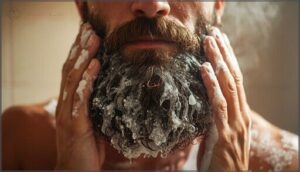
Once your whiskers are fully wet, squeeze a nickel to quarter-sized amount of beard shampoo into your palm. Work it between your hands to build a rich lather, then apply from roots to tips—coating every strand without drowning your face in product.
This measured approach prevents overwashing while lifting oil and grime. Keep water temperature lukewarm throughout for comfort and protection.
Massaging and Cleansing Technique

Now work that shampoo deep into your beard grooming routine with circular motions at the base of each section. Your fingertips—not nails—should massage for 20 to 30 seconds per area, stimulating skin renewal and gentle exfoliation while the beard wash lifts debris. This cleansing method transforms facial hair care from surface-level to follicle-deep, unlocking real beard stimulation and massage benefits.
| Massage Element | Proper Technique |
|---|---|
| Pressure | Light to moderate, mimicking natural sebum flow |
| Motion | Circular strokes using fingertips only |
| Duration | 20–30 seconds per section |
| Direction | Start at cheeks, move toward chin |
| Water Temp | Lukewarm throughout cleansing methods |
Rinsing Thoroughly

After that massage, lukewarm water becomes your rinse weapon—spend at least 20 to 30 seconds guiding it from skin outward to flush every trace of beard wash and residue removal. Hot water strips oils fast, sabotaging beard hydration and gentle cleansing you just built in. Focus beneath your jaw where sweat hides:
- Run water through facial hair until it feels completely smooth
- Check your mirror for leftover suds or film
- Pat—don’t rub—with a soft towel to protect beard grooming gains
Drying and Moisturizing

Once your beard is clean, squeeze—don’t rub—excess water with a microfiber towel to slash frizz by 20 percent and lock in beard hydration. Air drying for 5 to 15 minutes preps hair for moisturizing tips that matter.
Apply beard oil or balm with shea butter while damp to seal moisture for up to 8 hours, stopping dry skin care problems before they start.
What Products Should You Use for Beard Washing?

Your beard isn’t just hair—it needs products designed specifically for facial hair, not the stuff you use on your head. Regular shampoo can strip away oils and leave your beard feeling like straw.
Here’s what you should actually be using to keep your beard clean, healthy, and looking sharp.
Beard-Specific Shampoo
Your regular hair shampoo isn’t built for your face. Beard-specific shampoo uses gentle cleansers and sulfate-free, natural formulas designed to match your skin’s pH.
These beard care products clean without stripping away the oils you need. Look for beard wash with ingredients that moisturize while they cleanse. It’s the difference between healthy growth and constant irritation.
Beard Conditioner
After every beard wash, conditioner locks in moisture you just cleaned away. Panthenol and jojoba seed oil mimic natural sebum, softening coarse hair while protecting skin underneath. You’ll notice four immediate benefits:
- Smoother detangling without breakage
- Frizz control that lasts all day
- Natural shine without greasiness
- Deeper hydration for healthier growth
Choose fragrance-free versions if you’ve got sensitive skin—they work just as well.
Avoiding Harsh Chemicals
Skip the sulfate shampoos that strip your skin dry. Natural ingredients like sodium cocoyl isethionate cleanse without the harsh sting of chemical foaming agents.
Gentle formulas protect your beard and face better than drugstore options loaded with parabens.
Organic options using plant-derived surfactants keep your personal care routine chemical-free while supporting healthy skin and hair growth every wash.
How Often Should You Condition Your Beard?

Conditioning your beard isn’t the same as washing it—you’ll need to do it more often to keep things soft and manageable. The right frequency depends on your beard’s texture and how dry it usually gets.
Here’s what you need to know about conditioning schedules, leave-in products, and daily hydration methods.
Conditioning Frequency Guidelines
Most guys with average beards should condition three to five times per week to keep hairs soft without that greasy feel. Short beards under an inch need less—two to three sessions work fine. Longer beards over three inches? Daily moisture or every other day prevents dryness and tangles.
Start at two to three times weekly, then adjust based on how your beard responds.
Leave-in Conditioner Benefits
Leave-in conditioner locks in beard hydration for hours, keeping coarse hairs soft between washes. It adds slip for detangling ease, so your comb glides through without snagging.
This damage protection shields against wind and indoor heat while soothing the skin underneath. You’ll notice better hair softening and less itch—especially helpful during early growth stages when new whiskers prickle dry skin.
Beard Oils and Balms for Hydration
Beard oil and beard balm deliver serious beard moisture without the weight. Oil benefits show up fast—argan and jojoba mimic natural sebum for skin balance, cutting frizz by 20 percent in four weeks.
Three balm types for hydration tips:
- Glycerin-based pulls moisture from the air for all-day softness
- Shea butter blends lock in hydration and shield against dry environments
- Lightweight grapeseed formulas absorb quickly without greasy buildup
These beard care essentials support beard health and wellness between washes, keeping your personal grooming routine simple and effective.
How to Keep Your Beard Clean Between Washes

You don’t need to wash your beard every day to keep it fresh and clean. There are simple steps you can take between wash days that maintain hygiene without stripping away those natural oils.
Here’s how to keep your beard in top shape when you’re not using shampoo.
Beard Oil Application on Non-Wash Days
On nonwash days, applying beard oil keeps your facial hair soft and your skin hydrated. Use a dime to nickel-sized amount on slightly damp hair for better oil absorption rates.
Work it into the skin first, then comb through to the tips—this distribution method locks in moisture for up to 8 hours and prevents that scratchy, unruly look between washes.
Beard Mist and Dry Shampoo
When you want to refresh your beard without a full wash, grab a conditioning mist or dry shampoo. Spray mist from 6 to 8 inches away for even hydration and a cleaner scent. Dry shampoo addresses oil buildup at the roots—just let it sit a few minutes, then brush through.
- Mist application adds light moisture and revives flat, dry hair between washes
- Dry shampoo absorbs excess oil and sweat without stripping natural sebum
- Oil control keeps your beard looking fresh for social or work settings
- Hydration tips: use mist once or twice daily, but limit dry shampoo to a few times weekly
- Overuse warning: too much dry shampoo clogs pores and causes itchiness—wash fully if your skin feels coated
Daily Brushing and Combing
A quick comb-through every morning handles beard detangling and spreads your natural oils evenly—hair smoothing without any product. Use a wide-tooth comb first to remove knots, then finish with a boar-bristle brush for daily grooming.
These simple brush techniques keep your facial hair clean, prevent buildup, and train hairs to lie flat. It’s one of the easiest beard care tips that actually works.
Rinsing With Water Only
Between your regular beard wash sessions, a 30-second lukewarm water rinse delivers real beard hydration benefits—it flushes out food particles and sweat without stripping natural oils. Water rinsing benefits include skin comfort and fresh facial hair, though hard water can leave mineral buildup over time.
Here’s how to optimize water quality effects in your mens grooming routine:
- Saturate your beard completely with lukewarm water
- Work fingers through to lift surface debris
- Avoid hot water that strips protective sebum
- Pat dry gently to prevent frizz
- Follow with light beard oil on damp hair
How to Customize Your Beard Washing Routine

No two beards are exactly alike, and your routine shouldn’t be either. What works for your buddy might leave your beard dry or greasy.
Here’s how to fine-tune your washing schedule so it actually fits your beard’s unique needs.
Listening to Your Beard’s Needs
Your beard gives you constant feedback if you know where to look. Skin signals like itch or flakes tell you when you’re overdoing it, while hair texture shifts from soft to brittle show you’ve stripped too much oil.
Achieving beard balance means tweaking your routine every few weeks based on what you feel and see. Tailored care beats any one-size-fits-all schedule because your beard’s needs change over time.
Adjusting for Seasonal Changes
As temperatures shift, your seasonal beard care routine needs to shift with them. Winter washing tips focus on cutting back to two or three washes per week to lock in moisture, while summer beard hygiene often calls for more frequent cleansing to combat sweat and oil.
Humidity control matters too—dry climates demand richer beard care products, and muggy weather favors lighter oils for facial hair maintenance.
Monitoring Beard Health
Each week, grab a mirror and run through a quick beard inspection to catch problems early. Your facial hair maintenance isn’t guesswork—it’s about reading the signals your skin and hair health send you.
- Check for skin symptoms like redness, bumps, or flaking beneath your beard
- Feel your hair texture to spot dryness, brittleness, or rough patches
- Watch beard density and growth patterns for thinning or bald spots
Adjust your beard wash routine and beard care products based on what you find.
Frequently Asked Questions (FAQs)
How often should I wash my beard?
You’ll want to wash your beard 2 to 3 times per week.
This balanced washing frequency keeps your beard clean while protecting natural oils, preventing skin irritation, and maintaining healthy beard growth patterns.
Should you wash your beard?
An ounce of prevention beats a pound of cure. Yes, you should wash your beard using gentle cleansing for beard hygiene, skin balance, and oil production.
Proper beard care promotes beard health, beard growth, and hydration through smart beard grooming techniques.
How often should you exfoliate your beard?
Exfoliate your beard one to three times per week using gentle scrubbing techniques.
Men with normal skin do well twice weekly, while sensitive types need once-per-week sessions to prevent irritation and support healthy beard growth.
Can you overwash your beard?
Yes, you can overwash your beard. Washing too often strips away sebum, the natural oil that keeps beard hair soft and skin healthy, leading to dryness, irritation, and breakage.
How often should I oil my beard?
Most men do well oiling their beards once daily, usually right after your morning shower.
In dry climates or with longer beards, bump it up to twice daily to keep everything hydrated and comfortable.
How often should I clean up my beard?
Trim your neckline and cheek lines every three to five days to keep sharp edges.
Check the skin underneath weekly for irritation or ingrown hairs.
Brush daily to distribute natural oils and remove debris.
Can I just use water to wash my beard?
Water only washing works between full cleansing sessions, redistributing natural sebum along your beard.
Daily rinsing with lukewarm water removes surface debris, but you’ll still need beard wash to dissolve oils, product buildup, and bacteria.
Can I wash my beard with regular body soap?
Body soap strips away natural oils your beard needs, thanks to harsh surfactants and higher pH levels. Stick with gentle beard-specific cleansers—then follow up with beard oil or balm to keep everything healthy.
Should I wash my beard after swimming?
Yes, rinse your beard right after each dip. Chlorine and saltwater strip natural oils and leave skin irritated. A quick lukewarm rinse protects beard health, then follow with oil to lock in moisture.
How do seasonal changes affect beard washing frequency?
Cold air dries beards fast, so winter washing drops to one or two times weekly.
Summer heat and sweat push you toward every other day.
Humidity effects mean tropical climates need more frequent cleansing than dry ones.
Conclusion
Most guys overwash their beards by 300%—daily scrubbing when 2-3 times weekly works better. There’s no universal schedule because your skin, sweat, and environment are unique.
Your beard tells you exactly how often you should wash it through texture, smell, and comfort. Oily by day two? Wash more. Dry and brittle after every wash? Scale back.
Listen to what your beard’s actually saying instead of following some generic routine, and you’ll finally get that soft, healthy growth you’re chasing.
- https://en.wikipedia.org/wiki/Body_hair
- https://www.mypsoriasisteam.com/writers/615cad5bd9e5c87398f1d6aa
- https://www.aad.org/public/everyday-care/skin-care-basics/dry/dermatologists-tips-relieve-dry-skin
- https://health.clevelandclinic.org/how-to-shrink-pores
- https://www.medicalnewstoday.com/articles/sebum