This site is supported by our readers. We may earn a commission, at no cost to you, if you purchase through links. This content is for general informational and educational purposes only and is not a substitute for professional medical, dermatological, or nutritional advice.
Your beard itches at 2 p.m., flakes onto your black hoodie, and sticks out sideways by Friday. Sound familiar? That’s not bad genetics, that’s skipped beard maintenance and care. Facial hair grows about half a millimeter a day, and without a routine, dead skin, product buildup, and sloppy trims pile up fast. The fix isn’t a drawer full of fancy products, it’s a handful of smart habits done consistently. I’ve spent years behind the chair watching patchy beards transform into head-turners, and the playbook below covers everything from washing and oiling to nailing your neckline.
Table Of Contents
- Key Takeaways
- Build a Consistent Beard Care Routine
- Wash and Exfoliate Your Beard Properly
- Moisturize With Oils, Balms, and Butters
- Brush, Comb, and Maintain Grooming Tools
- Trim, Shape, and Style Your Beard
- Support Healthy Beard Growth Naturally
- Frequently Asked Questions (FAQs)
- What is the 3 month beard rule?
- How should I maintain a beard?
- What is the best way to care for my beard?
- What is the 4 week beard rule?
- Can beards really make you look older?
- Do beards affect job interview success rates?
- Why does my beard grow patchy?
- Can I dye my gray beard safely?
- Do beards protect against UV sun damage?
- Can beard oil expire or go rancid?
- Conclusion
Key Takeaways
- Consistency beats products: wash your beard 2–3 times weekly with a gentle cleanser, apply 2–3 drops of oil daily on damp skin, and brush with boar bristle to spread natural oils and prevent beardruff.
- Give early growth time—stick with your routine for 4–6 weeks (or 12 weeks for the full "3 month rule") before judging patchiness, since follicles grow on different schedules.
- Trim by length, not guesswork: work in small sections on dry hair, place your neckline two fingers above your Adam’s apple, follow your natural cheek line, and see a barber when edges fade or growth turns uneven.
- Support growth from the inside with protein, zinc, iron, vitamin D, and 7–9 hours of sleep, since under-sleeping can cut growth hormone release by up to 70% and stall your beard’s progress.
Build a Consistent Beard Care Routine

A solid beard starts with showing up consistently. Whether you’re two weeks in or two years deep, your routine is what separates a great beard from a rough one. Here’s what your daily and weekly habits should look like.
And if you want your routine to keep pace with what’s current, brushing up on men’s beard fashion trends helps you shape a beard that looks sharp, not stuck in the past.
Daily and Weekly Care
Every morning, a quick brush-through anchors your beard grooming routine. Short, deliberate strokes align hairs and clear overnight tangles before they get seriously stubborn.
Set your beard washing frequency at two or three times weekly to manage sweat and sebum. Pair that with a consistent beard trimming schedule, and wrap each session with beard oil application for real beard conditioning.
Early Growth Commitment Rules
Stick with your beard maintenance routine for four to six weeks before judging coverage. Patchiness early on is just follicles on different schedules.
- Itchiness peaks around week two as short hairs poke skin
- Gaps fill gradually as beard growth tips toward even length
- Your beard hygiene routine shapes comfort far more than speed
Consistent care beats chasing fixes every rough week.
Wash and Exfoliate Your Beard Properly

Washing your beard sounds simple, but most guys get it wrong and wonder why their skin itches or their hair feels like straw.
Getting this step right makes every other part of your routine work better.
Here’s what you need to know about frequency, cleanser choice, and keeping beardruff away.
How Often to Wash
Imagine your beard after a sweaty gym session, stiff and funky. Beard washing frequency makes a real difference.
| Situation | Wash Frequency |
|---|---|
| Normal skin, light activity | 2–3x per week |
| Oily skin or heavy sweating | 3–4x per week |
| Dry or cold climate | 1–2x per week |
Over-washing strips your natural oils, wrecking your facial hair care routine. Don’t overthink it. Keep it simple.
A quick read on when to wash your beard before trimming helps you nail that balance without the guesswork.
Choose The Right Cleanser
What you wash with matters just as much as how often. Scalp shampoos strip facial skin; a proper beard wash uses milder surfactants and conditioning agents.
Go fragrance-free with ceramides or glycerin to protect your moisture barrier while cutting through oil and buildup. Match it to your skin type: dry skin needs gentler formulas, oily skin can handle a bit more detergency.
Prevent Beardruff and Irritation
Keep beardruff away with a smarter grooming routine. Dry skin under the beard is the real culprit behind beard itchiness, not the hair itself.
- Exfoliate gently once or twice weekly to lift dead skin
- Apply beard oil to slightly damp skin for better absorption
- Use a non-stripping cleanser to protect skin health
Smart beard product selection stops the itch cycle.
Moisturize With Oils, Balms, and Butters

Once your beard is clean, it needs moisture — and that’s where the right products make all the difference. Oils, balms, and butters each play a specific role in keeping your skin hydrated and your beard looking sharp. Here’s how to use them the right way.
How to Apply Beard Oil
Getting the most from your beard oil comes down to timing and technique. Apply it after showering once your beard is mostly dry, not dripping. Rub 2-4 drops between your palms, then work it from your cheeks down to your chin. Massage into the skin underneath too; that’s where beard health and softness start. Visible shine means you’ve overdone it.
How to Apply Beard Butter
Studies show over 60% of bearded men cite dryness as their top complaint. Beard butter solves that.
Work a pea-sized amount between your palms first, then massage it into a slightly damp beard, skin included. Apply chin-to-tips, not just the surface layer. Finish with a quick comb to pull product down the strands for even beard softness.
Avoid Beard Product Overuse
More isn’t always better. About 2 to 3 drops of oil is all most beard lengths actually need, yet tons of guys apply way more.
Beard product overuse smothers follicles and kills those beard oil benefits.
Stacking a beard moisturizer over a beard conditioner without cleansing in between ramps up buildup. Keep product application minimal, one leave-on per session.
Brush, Comb, and Maintain Grooming Tools
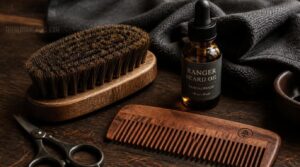
Your tools matter just as much as your products. The right brush and comb can transform how your beard looks and feels day to day. Here’s what you need in your kit and how to keep it all in top shape.
Choose Brushes and Combs
The right tool makes a real difference. For shorter, denser beards, grab a fine-tooth beard comb; it catches small tangles without tearing. Longer hair? Go wide-tooth to reduce breakage risk.
Nylon bristles feel scrubby and detangle well, but they can be harsher on sensitive skin. Contoured, grippy grips matter too, especially when your hands are wet from washing or oiling.
Boar Bristle Brush Benefits
Boar bristles work harder than synthetics. Pull a quality beard brush through your beard and it lifts and aligns hairs while spreading your natural oils from root to tip, all in one pass.
- Dislodges dead skin flakes before they become beardruff
- Reduces flyaway hairs by smoothing the coat
- Captures loose debris between bristles, clearing it out with the brush
Sanitize and Store Tools
Here’s the deal: dirty grooming tools undo all your good work. That beard brush just spread oils everywhere, so clean it.
| Clean It | Store It |
|---|---|
| Warm water rinse | Air-dry fully |
| Quick alcohol wipe | Breathable tray |
| Separate comb parts | Bristles up |
| Weekly deep clean | Never sealed wet |
Rinse razor blades, dry your beard comb, and keep tool maintenance simple. Damp tools breed funk.
For material-specific care tips, this guide to the best beard combs for daily grooming breaks down how to clean wood, horn, and acetate without wrecking them.
Trim, Shape, and Style Your Beard
Alright, your beard’s clean, conditioned, and brushed out. Now comes the part where most guys either level up or hack it all off: the trim. Here’s how to nail your trim schedule, clean up your neckline and cheeks, and pick a style that actually fits your face.
Trim by Beard Length
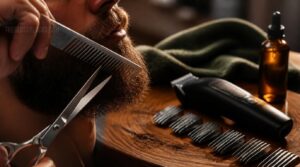
You’ll want to trim by length, not guesswork. Pick your target guard, start one size longer, and step down if needed.
Comb hairs upward, snip what passes the line, and work in small sections since uneven spots show up fastest at junctions. Keep hair dry for accuracy, use clippers for bulk, scissors for detail, and log your guard so every beard maintenance schedule stays repeatable.
Define Neckline and Cheeks

Your neckline and cheek line make or break the shape. Trim with the grain, taper gradually, and let your natural growth map the boundaries. Here’s the playbook:
- Place the neckline two fingers above your Adam’s apple.
- Follow your natural cheek line, not a straight edge.
- Trim dry, in light passes.
- Recheck after combing.
Too high looks patchy; too low kills definition.
Match Styles to Face Shape

Your face shape decides everything. Oval? You win the genetic lottery, almost any beard style works. Square jaw? Soften it with a circle beard or goatee. Round face needs length at the chin, think Balbo. Long and rectangular? Build width on the sides. Diamond faces shine with a Van Dyke. Match beard shaping to your bone structure, and your whole beard maintenance routine gets easier.
For more guidance, explore the best beard styles by face shape to find your perfect look.
When to Visit Barbers

In between trims, watch for signs it’s barber time. Uneven length, patchy hot spots, or a neckline that’s gone rogue all point to uneven growth, not a product problem. Your barber visit frequency should tighten if you keep sharp lines or switch styles.
- Edge work fades first: cheeks, mustache connection, neckline
- Long gaps mean more bulk removal later
- Patchy early growth? Wait for stable coverage before shaping
- Cowlicks and direction changes need pro-level redistribution
Bring your beard grooming kit, mention your goals, and let your barber keep your beard shape maintenance on track.
Support Healthy Beard Growth Naturally

Here’s the truth, friend: your beard grows from the inside out. Great products only get you so far if your body’s running on empty. Let’s cover the natural growth boosters that make every other step in your routine work harder.
Nutrition for Beard Health
Here’s the deal: your beard eats first. Protein builds the shaft, while zinc and iron keep follicles firing. Skimp on either and growth stalls. Vegans, watch iron since plant sources absorb poorly; pair them with vitamin C. Low vitamin D links to shedding too. Fix deficiencies now, see results in months, not days. Feed your beard health from the inside.
Your beard eats first—feed it protein, zinc, iron, and vitamin D to grow strong from within
Sleep, Exercise, and Stress
Here’s a stat worth knowing: adults sleeping under 6 hours cut growth hormone release by up to 70%. That hormone drives overnight repair, including your beard health.
Sleep 7–9 hours consistently.
Exercise moderately; it boosts blood flow to follicles.
Skip overtraining, which spikes cortisol and stalls beard growth.
Manage stress; chronic stress wrecks your skin barrier and beard itch prevention.
Lock these in, and your beard care routine works harder.
Monitor Growth and Damage
Here’s a fun one: beard hair grows roughly 0.3 to 0.5 millimeters per day, yet most guys judge progress by feel, not facts. Don’t.
Measure length weekly under consistent lighting, same angle, same spot. Track shedding versus breakage by checking the tips: tapered ends mean breakage, full-length strands mean shedding.
Log seasonal changes too, since cold, dry air spikes beard damage even when your hair growth cycle stays steady.
Use Beard Growth Kits
Thinking a beard growth kit is magic? Not quite. Here’s the honest read:
- Consistency beats quantity. Daily use over weeks, not one-off dabs.
- Check the ingredients. Oils and balms condition; true follicle growth needs proof.
- Watch your skin. Fragrance-heavy formulas can trigger beardruff and derail your beard maintenance and care.
Pair any kit with solid beard grooming tools, solid nutrition, and patience. Your beard health wins on routine, not hype.
Frequently Asked Questions (FAQs)
What is the 3 month beard rule?
The 3 month beard rule means committing to full growth for 12 weeks without trimming or resetting. It gives your beard enough time to reveal true coverage, patchiness, and beard growth potential.
How should I maintain a beard?
How should I maintain a beard? Stick to a routine: wash with gentle cleanser, apply beard oil daily, brush with boar bristle, trim by length, define your neckline, and see a barber for shaping.
What is the best way to care for my beard?
What’s the best way to care for your beard? Treat it like a plant, not a pet. Wash weekly, brush daily, moisturize while damp, and trim split ends. Consistency beats products.
What is the 4 week beard rule?
What is the 4 week beard rule? Simple: give your beard a full month before judging it or switching strategies. Follicles grow unevenly early, so resist overcorrecting. Stick to consistent beard maintenance and care.
Can beards really make you look older?
Can beards really make you look older? Yes, but only visually. Grey hairs, patchy density, and dry texture add years. Keep your beard clean, moisturized, and evenly trimmed, and your beard confidence stays youthful.
Do beards affect job interview success rates?
Yes, but modestly. Interviewers form impressions within seconds, and a neatly trimmed beard reads as disciplined while scruff reads as careless. Match your beard grooming to industry norms, then let your answers do the heavy lifting.
Why does my beard grow patchy?
Why does my beard grow patchy? Genetics set your follicles’ androgen sensitivity, so some spots lag. Add uneven shedding, clogged pores, irritation, or rough grooming, and gaps look worse. Patience plus consistent care helps.
Can I dye my gray beard safely?
Can I dye my gray beard safely? Think of silver strands as a blank canvas. Yes, if you patch test first, avoid dyeing irritated skin, follow the processing window, and stop immediately if redness or burning appears.
Do beards protect against UV sun damage?
Do beards protect against UV sun damage? Only partially. Hair shades skin, but UV sneaks through gaps and beard edges. Don’t skip sunscreen on exposed areas. Solid beard care plus broad-spectrum SPF keeps your beard health on point.
Can beard oil expire or go rancid?
Can beard oil expire? Absolutely. Oils oxidize over time, especially in heat and light. Watch for sour smells, color shifts, or separation. Store bottles cool and dark, and toss anything rancid.
Conclusion
Here’s a number worth chewing on: your beard grows roughly five inches a year, yet most guys quit shaping it after week three. That’s the real reason beards fail, not genetics.
Stick with the basics of beard maintenance and care, wash it, oil it, brush it, trim the neckline, and patience does the rest. Your face will thank you by month two. Consistency beats expensive products every single time.