This site is supported by our readers. We may earn a commission, at no cost to you, if you purchase through links. This content is for general informational and educational purposes only and is not a substitute for professional medical, dermatological, or nutritional advice.
Beard culture hasn’t just survived the clean-shaven era, it’s completely taken over. From the boardroom to the weekend market, men’s beard fashion trends in 2026 reward precision and intention, not just growth. A 1 mm difference in stubble length or a misaligned fade line can shift your entire look from sharp to sloppy.
Your face shape, skin type, and lifestyle all factor into which style actually works for you. Knowing what’s trending matters, but knowing what fits your face matters more. This guide covers the styles leading 2026, the tools to execute them, and the routines that keep everything looking intentional.
Table Of Contents
- Key Takeaways
- 20+ Men’s Beard Styles Trending in 2026
- Best Trending Beard Styles by Face Shape
- Professional, Youthful, and Mature Beard Looks
- How to Shape and Maintain Trending Beards
- Fixing Patchiness, Beard Itch, and Dandruff
- Frequently Asked Questions (FAQs)
- Are beards out of style in 2026?
- What beard style is trending now?
- What are the trendy beard styles for 2026?
- What is the 3 month beard rule?
- How do beard trends differ across cultures?
- What beard styles work for sensitive skin?
- Can diet affect beard growth and quality?
- How long to grow a full beard?
- Do beards affect professional workplace perception?
- Can diet and nutrition improve beard growth?
- Conclusion
Key Takeaways
- Your face shape is the foundation of every beard decision — choosing a style that works against your natural structure will undercut even the most well-maintained look.
- Stubble between 1–7 mm dominates 2026 trends because it delivers high visual impact with minimal upkeep, making it the smartest default for most men.
- Precision beats length every time — a sharp neckline, clean fade, and consistent trim schedule matter more than how long or full your beard actually grows.
- A simple, consistent routine (washing 2–3 times a week, applying oil on damp hair, exfoliating twice weekly) is what separates a sharp beard from one that just looks grown-out.
20+ Men’s Beard Styles Trending in 2026
Beard culture in 2026 is sharper, more intentional, and more varied than ever. Whether you want something low-maintenance or fully sculpted, there’s a style built for you. Here are the looks defining the year.
From laid-back stubble to bold full beards, 21 trending beard styles for 2026 covers the full spectrum so you can find exactly what suits your face shape and lifestyle.
Stubble and Short Beards

For most men in 2026, stubble is the move. Short Stubble sits at 1-2 mm. Medium Stubble at 3-4 mm hits the sweet spot. Long Stubble nears 5 mm. Follow these Beard Growth Top Tips: Trimming Your Beard every few days keeps your edges sharp.
- You’ll look sharper instantly
- Your jawline gets defined
- Confidence builds naturally
- Low effort, high impact
Full and Natural Beards

Ready to go longer? A full beard takes real commitment. Your beard growth timeline runs 2-6 months for dense, even coverage, so don’t quit early.
Stick to a beard maintenance routine: wash 2-3 times weekly and comb daily after a warm shower. Beard oil application on damp hair seals moisture and adds softness.
A natural beard always rewards patience.
Faded and Sculpted Styles
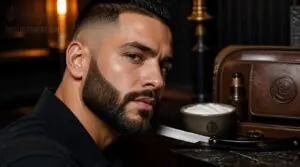
If patience built your full beard, precision is the next move. Faded and sculpted styles reward structure over length. A Precise Fade Beard tapers longer cheek lines to a shorter neck trim within 2-4 mm. The Sculpted Goatee works well with strong face shape compatibility, especially on rounder faces. A Beardstache gives bold contrast. Replicate fades every 10-14 days to stay sharp.
For step-by-step guidance on nailing the separation and keeping lines crisp, explore this breakdown of the taper fade with beard that covers everything from skin prep to touch-up timing.
Mustache-Led Beard Styles
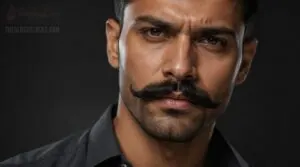
Precision already runs your look, so let the mustache lead. Mustache-Led Beard Styles shift the focus up. A Beardstache pairs a thick mustache with short stubble, no full beard needed. The Van Dyke Beard splits a pointed goatee from a disconnected mustache. For something bolder, the Horseshoe Moustache and Hollywoodian beard both frame the lower face with real presence.
Classic Heritage Beards

The classic heritage look pulls from Victorian grooming and mid-century military style. Think the Garibaldi Beard or a Hollywoodian Beard with a clean upper lip and fuller lower coverage.
Keep your cheek line defined, trim every 10-14 days, and set your neckline two fingers above the Adam’s apple. A light balm holds the shape without stiffness. It’s timeless, not trendy.
Best Trending Beard Styles by Face Shape
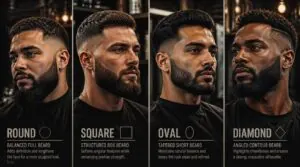
Because your face shape drives everything, a beard style face shape match isn’t optional, it’s the foundation.
For a beard for round face, choose short and angled. Sculpted corners and faded sideburns build the structure you’re missing. Skip anything round or full, it only adds softness.
Square jaw? A beard for square face needs fuller chin length to soften that strong jaw line without widening it further.
Oval is the easiest case. A beard for oval face fits most styles naturally. Trimmed goatees look especially sharp here because they emphasize already-balanced proportions.
For a beard for diamond face, go fuller at the cheeks and lighter at the chin. That extra width in the mid-face corrects the narrow-jaw silhouette.
Professional, Youthful, and Mature Beard Looks

A beard tells the room something before you speak. What it signals, and who it says you are, depends on how you wear it.
Your beard speaks before you do — and what it says depends entirely on how you wear it
Professional beard styles stay tight: 2–6 mm with a clean fade and sharp cheek lines. That defined neckline projects authority without looking like you’re trying too hard.
Youthful beard looks lean into texture. Go 4–8 mm, let the fade ease into your sideburns naturally, and finish with a light beard oil. It reads current and approachable without overworking it.
Mature beard styles favor fullness. Strong jaw emphasis, shadowed cheeks, and a minimal mustache-goatee combo deliver a dignified look. These beard grooming tips reflect the top beard fashion trends 2026 is setting, where intention always beats size.
How to Shape and Maintain Trending Beards
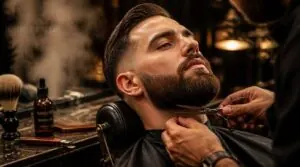
A great beard isn’t just about the style you pick — it’s about how you maintain it. The right tools, products, and habits separate a sharp beard from a forgettable one. Here’s what you need to keep yours on point.
Trimming and Shaping Tools
The right tools make the difference. Your beard trimmer should come with guards at 1, 2, and 3 mm for reliable length control.
Beard trimmer guards take the guesswork out of your beard trimming technique, keeping edges clean and consistent. Add a dedicated mustache trimmer for tight detail work, and make sure all your beard shaping tools feel truly ergonomic.
Washing, Oil, and Balm
Wet your beard with water first, then shampoo. Over-washing strips natural oils, so limit it to two or three times a week.
Once your washing routine is dialed in, you might consider pairing it with a defined look like a short boxed beard style that stays polished between wash days.
Pat dry, then apply beard oil while slightly damp. That’s when beard oil benefits kick in: even spread, softer strands, less itch. For hold, add balm on top. Beard balm benefits include both conditioning and light shape control.
Skin and Beard Exfoliation
Dead skin under your beard clogs follicles and worsens flaking. Beard exfoliation twice a week is where you start.
- Use a soft scrub for beginners
- Switch to a chemical exfoliant for persistent flakes
- Rinse thoroughly under dense hair
- Patch test anything new first
- Low frequency protects your skin barrier
That’s your path to better beard skin health and less irritation.
Beard Growth Kit Review
With clean skin, a beard growth kit gives ingredients somewhere to work.
| Ingredient | Benefit | Timeline |
|---|---|---|
| Minoxidil | Boosts follicle blood flow | 3–6 months |
| Biotin | Helps with keratin production | Ongoing |
| Saw palmetto | Reduces DHT locally | 2–4 months |
Apply twice daily, then seal with beard oil or beard balm. Your beard grooming routine fills the gaps, and a beard trimmer shapes what’s growing in.
Fixing Patchiness, Beard Itch, and Dandruff
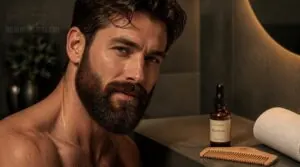
Good maintenance habits get you far, but some problems need a targeted fix.
Patchy beard growth, persistent itch, and beard dandruff are common, and all fixable.
- Switch to a fragrance-free beard wash: fragranced formulas trigger irritant reactions and flare scaling.
- Use antifungal shampoo twice weekly for beard dandruff treatment when you notice greasy, adherent flakes.
- Follow beard oil application tips: apply to damp skin post-wash for real absorption.
- Stop over-scrubbing. It breaks down your skin barrier and fuels the itch cycle.
Patchy spots often trace back to follicle sensitivity or chronic scratching thinning density. Give it time. Beard dandruff prevention and beard itch relief both come down to consistency, clean skin, fully rinsed product, and a balanced routine.
Frequently Asked Questions (FAQs)
Are beards out of style in 2026?
Beards aren’t out of style. In 2026, stubble and sculpted styles still lead urban fashion and grooming trends. Regional preferences differ, but influencers and brands keep beard culture firmly relevant across all demographics and workplaces.
What beard style is trending now?
Right now, stubble rules everything. Street style and runways both favor 1–7 days of growth with a matte, sanded finish and a sharp, tapered neckline. It keeps it all easy. Your jawline does the work.
What are the trendy beard styles for 2026?
Short stubble is the low-effort entry point. Medium stubble reads more deliberate. Long stubble pushes into rugged territory. A full beard demands real attention, and the French Fork beard is the boldest move of
What is the 3 month beard rule?
The 3month beard rule is straightforward: don’t make any major shaping decisions for at least the first three months. Your beard growth timeline needs that window to fully reveal its true density and fill pattern.
How do beard trends differ across cultures?
Your culture shapes your beard just as much as your face shape does. Religious tradition drives modest lengths in the Middle East, East Asian men usually prefer clean looks, and South Asian styles go bolder.
What beard styles work for sensitive skin?
Stubble’s your safest bet. Shorter hair creates less friction, traps less sweat, and needs fewer products to maintain it. For sensitive skin, use a fragrance-free beard oil and wash with a gentle, sulfate-free cleanser.
Can diet affect beard growth and quality?
Think of your follicles as a garden. Without the right fuel, nothing thrives. Protein, zinc, and iron directly support beard growth and quality. A mindful diet and proper beard hydration lay the foundation for results.
Once your beard is growing in well, tailor its shape to your face and explore these beard styling tips for different lengths to keep it looking sharp.
How long to grow a full beard?
Most men reach a full beard in two to six months. The beard growth cycle varies, but patience is a virtue. Push through the itchy phase around your 1 month beard mark and keep going.
Genetics, age, and hormones all affect how fast your whiskers fill in, so check this guide to how long a beard takes to grow for a realistic timeline.
Do beards affect professional workplace perception?
Yes, beards affect perception at work. Beard grooming matters most. Corporate roles favor conservative, neat styles, while creative fields give you more room. Whatever your industry, a clean and shaped beard signals confidence and control.
Can diet and nutrition improve beard growth?
Your diet directly affects beard follicle health. Without enough protein, zinc, and iron, keratin production slows and growth stalls. Chronic inflammation from poor eating makes things worse. Clean up your nutrition and your beard responds.
Conclusion
Studies show men with a consistent grooming routine are perceived as 20% more competent in professional settings. That one stat makes the whole case.
Mens beard fashion trends in 2026 aren’t about chasing every new style; they’re about owning the one that fits your face. Know your shape. Invest in the right tools. Build a solid routine and stick to it.
The sharpest beard you’ll ever wear is the one you actually take care of.