This site is supported by our readers. We may earn a commission, at no cost to you, if you purchase through links. This content is for general informational and educational purposes only and is not a substitute for professional medical, dermatological, or nutritional advice.
Most guys splash it on, feel the sting, and figure that burn means it’s working. Rookie move. That sting tells you the alcohol’s stripping moisture your skin needs, not proof the product’s doing its job.
Real benefits of aftershave application show up in what happens after the sting fades: sealed micro-cuts, calmed razor burn, skin that isn’t tight and flaky by lunchtime. Ingredients like witch hazel and glycerin work together, one tightens, one hydrates, and the balance matters more than the burn.
Get the formula and technique right, and your skin heals faster, fights bacteria better, and holds moisture like it should.
Table Of Contents
- Key Takeaways
- What Does Aftershave Do for Skin?
- Aftershave Benefits for Irritation and Healing
- Antiseptic Benefits of Aftershave
- Moisturizing and Skin Barrier Benefits
- How to Apply Aftershave Properly
- Frequently Asked Questions (FAQs)
- Can I use after shave on my pubes?
- Should you apply aftershave daily?
- Do men use aftershave anymore?
- Is it necessary to apply aftershave?
- Can aftershave replace daily facial moisturizer products?
- Does aftershave work on electric razor irritation?
- Are alcohol-free aftershaves better for aging skin?
- Can aftershave help with post-shave acne breakouts?
- Should aftershave be applied morning or night?
- Is aftershave safe to use every day?
- Conclusion
Key Takeaways
- That sting you feel isn’t proof aftershave’s working — it’s alcohol stripping moisture your skin actually needs, so judge results by how your skin feels hours later, not by the burn.
- Aftershave earns its keep through real ingredients like witch hazel, glycerin, aloe vera, and shea butter, which team up to seal micro-cuts, calm razor burn, and lock in hydration.
- Antiseptic formulas — whether alcohol-based or alcohol-free with tea tree and hydrosols — cut infection risk by fighting bacteria in freshly shaved, vulnerable skin.
- Getting the technique right matters as much as the formula: apply within 1-2 minutes on damp skin, use a dime-sized amount, and press it in with gentle circular motions instead of rubbing.
What Does Aftershave Do for Skin?
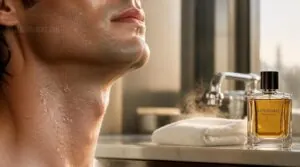
Aftershave isn’t just a splash-and-go step — it’s doing real work on your skin. Get the formula and technique right, and you’re looking at fewer bumps, less sting, and a healthier finish after every shave. Here’s what’s actually happening under the surface, and what you need to know before you reach for that bottle.
Nail the amount you use and you’ll dodge the irritation that comes from overdoing it — this guide on how much aftershave to use breaks down the right dosage for your skin type.
How Aftershave Works
Once you slap it on, aftershave gets straight to work through surface interaction with freshly shaved skin.
It triggers a protective barrier while antiseptic agents fight bacteria fast:
- Seals micro-cuts
- Tightens pores
- Locks in moisture
- Calms irritation
Many formulas rely on alcohol or witch hazel as antiseptic ingredients to keep bacterial growth at bay.
That’s rapid absorption doing real work, not just smelling nice.
Aftershave Types and Formulations
Not every bottle works the same way, and that’s by design.
Transparent alcohol splashes hit fast and dry quick, great for oily skin.
Gel-based aftershaves and thick base formulations sit heavier, built for calming.
Emulsion lotion types, aftershave balm, and aftershave lotion favor moisture over sting.
Cooling menthol formulas add refreshment, while fragrancefree skincare protects sensitive faces from flare-ups.
Key Skin-Supporting Ingredients
The bottle’s only half the story, what’s inside does the real work.
Aloe vera cools and hydrates fast. Witch hazel tightens pores without the sting. Glycerin pulls moisture in like a sponge, while shea butter locks it there. Vitamin E fights free radicals, and tea tree oil knocks out bacteria. Together, they turn a simple splash into real skin support.
Aftershave Benefits for Irritation and Healing
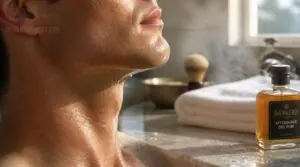
Fresh off the razor, your skin’s basically raw and asking for backup. That’s where aftershave earns its keep, tackling everything from burn to breakouts. Here’s exactly what it’s doing for you, step by step.
Calming Razor Burn
That burning strip along your jaw after shaving? That’s razor burn, and it’s your skin telling you it’s inflamed. Aloe vera cools instantly while calming razor strokes. Witch hazel tones and reduces redness. Together, they interrupt inflammation fast, delivering real skin soothing and supporting skin barrier repair right when your face needs it most.
Reducing Redness and Stinging
Redness sticks around when your barrier’s already stressed, and stinging is your skin waving a red flag. Menthol cools on contact, while panthenol and niacinamide calm and rebuild. Green tea polyphenols fight that inflamed feel, too.
For best results, smooth these soothing ingredients on with gentle upward strokes, following this guide on what to apply after shaving your face to calm irritation fast.
- A cool, tingling wave across hot skin
- Blotchy patches fading to even tone
- A calmer, less reactive jawline
- Less "hot to the touch" feel
- Smoother texture by day’s end
Protecting Nicks and Micro-Cuts
A close shave can leave tiny openings behind, and that’s where smart wound surface care earns its place. Apply aftershave with clean hands, then press lightly instead of rubbing. This helps micro-cut healing without reopening sensitive spots.
An antiseptic or antibacterial formula can reduce surface exposure to bacteria, dirt, and friction. Alcohol-free balms still deliver barrier protection through soothing humectants and emollients, helping skin healing stay comfortable.
Limiting Ingrown Hairs
Because ingrown hairs start with irritation, shave with hair growth direction and keep razor stroke count low. Rinse after each pass, don’t pull skin, and support moisture retention through postshave care.
Exfoliation timing matters: after shaving, exfoliate to free trapped hairs. Warm compress use for 10 to 15 minutes helps. Avoid picking hairs, which disrupts your skin barrier and anti-inflammatory response.
Supporting Post-Shave Recovery
Your postshave recovery starts the moment the razor leaves your skin. Apply a balm while skin is slightly damp, then press it in, don’t rub. Gentle absorption techniques limit friction while humectants restore hydration.
Look for soothing ingredients, ceramides, fatty acids, and occlusives. This combination helps barrier repair, reinforces the moisture barrier, and gives antimicrobial action less irritated skin to manage.
Antiseptic Benefits of Aftershave
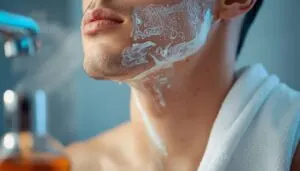
After shaving, your skin is more exposed than it looks, especially around tiny nicks and irritated follicles. A good aftershave helps keep that freshly shaved surface clean and better defended. Here’s how its antiseptic side helps your skin after the razor.
Reducing Bacteria on Skin
Freshly shaved skin needs a microbial load reduction fast. Alcohol-based aftershave acts like a skin sanitizer, delivering rapid bacteria killing in tiny cuts, while tea tree, witch hazel, and green tea provide gentler antibacterial and antimicrobial action.
Alcohol-free formulas support pH balance defense and skin barrier protection. Hydrosols and glycerin encourage bacterial growth inhibition, while a light antimicrobial film formation helps keep freshly shaved skin cleaner.
Lowering Infection Risk
Micro-cuts are small doors for bacteria, so infection prevention starts the moment your razor leaves the skin. Use an antiseptic aftershave to support skin disinfection, microbial protection, and wound healing without stripping your barrier.
For sensitive skin, Hypochlorous Acid Action offers antibacterial defense while pH Balance Protection and Barrier Function Support keep the acid mantle resilient. That’s Antiseptic Ingredients Effect.
Blocking Dirt and Irritants
Killing bacteria is only half the job. Your skin also needs a shield against everything floating around it: dust, sweat, pollution.
That’s where pore-closing mechanisms come in. Witch hazel tightens follicles fast, while cold water keeps them contracted for up to 30 minutes.
- Barrier formation: squalane and shea butter block particles
- Breathable films: glycerin lets skin exchange oxygen
- Microbiome protection: prebiotics crowd out harmful microbes
Alcohol-Based Antiseptic Action
Blocking dirt is step one. Alcohol is what actually kills what’s already there, using protein denaturation and membrane disruption on bacterial cells.
| Concentration | Action | Effect |
|---|---|---|
| 60-90% | Solvent penetration | Breaches microbial defenses |
| 70% | best concentration | Deepest antiseptic action |
| Below 50% | Weak evaporation | Poor topical application |
Alcohol-Free Antimicrobial Ingredients
Not everyone wants that alcohol burn, and that’s fine. Aloe vera gel bases (often 90% of the formula) pair with clove or tea tree oil for antimicrobial punch minus the sting. Clove oil actually outperforms tea tree against yeast like Candida. Add glycerin and vitamin E for moisture, and you get a slightly acidic pH your skin actually likes.
Moisturizing and Skin Barrier Benefits
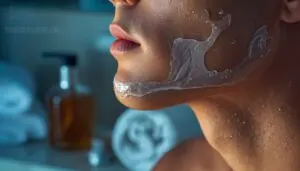
Shaving strips your skin of moisture, and that’s where aftershave earns its keep. A good formula doesn’t just protect — it pulls hydration back in and patches up the barrier you just roughed up. Here’s exactly how it gets that job done.
Shaving strips moisture from skin, and a good aftershave pulls it back in while repairing the barrier underneath
Restoring Lost Hydration
Your skin loses water fast under a razor, like a sponge wrung dry. That’s why hydrating aftershave ingredients matter: glycerin and hyaluronic acid work as a humectant combination, pulling moisture from deep layers and the air itself.
Apply while skin’s still warm, right after shaving, for max absorption. Layer aftershave first, before any cream, so those humectants soak in before anything seals the surface.
Repairing The Moisture Barrier
Real repair means rebuilding structure, not just topping off water.
Your ceramide lipid matrix makes up half your skin’s natural lipids, and ceramide-rich balms restore it within 24 hours.
Niacinamide boosts your own ceramide production up to five-fold, while panthenol speeds fibroblast repair fast.
Tallow’s fatty acid profile mirrors your sebum, integrating straight into the barrier for real, lasting hydration.
Aloe and Glycerin Benefits
Two ingredients, one job: pull water in and keep it there. Aloe vera gel runs about 99% water, so it floods your skin with instant hydration while calming redness on contact.
Glycerin’s the workhorse humectant, dragging moisture from the air straight into your barrier. Together, they leave that cool, non-greasy finish barbers love post-shave.
Shea Butter and Vitamin E
Thick, buttery, and packed with fatty acids like oleic and linoleic, shea butter locks moisture in while easing dry, stressed skin. It’s naturally loaded with vitamin E, mostly alpha-tocopherol, the antioxidant heavyweight that fights cellular damage.
That combo helps skin barrier repair, not just surface shine. Your skin’s lipids and shea’s makeup are close cousins, which is why it soothes so fast.
Preventing Post-Shave Dryness
Tight, flaky skin after a shave? Rookie move to ignore it. Your razor strips natural oils, so humectants like glycerin and hyaluronic acid pull moisture back in, while occlusives lock it there.
- Glycerin and hyaluronic acid quench parched skin
- Squalene and ceramides rebuild the barrier
- Petrolatum and beeswax seal in hydration
- Balms beat harsh alcohol formulas for lasting comfort
How to Apply Aftershave Properly
Great aftershave means nothing if you’re slapping it on wrong. Timing, amount, and technique all play a role in how well it actually works. Here’s exactly how to get it right, step by step.
Best Time to Apply

Timing is everything, and rushing it is a rookie move.
Cold rinse first, then apply within 1-2 minutes while skin’s still damp and warm, pores open, absorption maxed.
| Time | Product | Why |
|---|---|---|
| Morning | Alcohol-based | Antiseptic, quick-dry |
| Evening | Balm/moisturizer | Overnight repair |
| Post-shave | Damp skin | Peak absorption |
Use gentle circular motions for even coverage and real barrier protection.
Correct Amount for Each Area
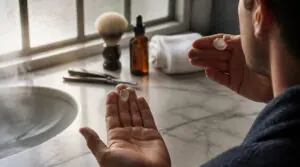
More product isn’t better, it’s just wasted.
A dime-sized portion covers your whole face; bump it up 20-30% for the neck and jawline, where razor burn hits hardest.
Body areas like legs need quarter-sized amounts.
Sensitive skin? Cut it in half.
Balms need more than alcohol splashes.
Work it in with gentle circular motions.
Gentle Application Technique
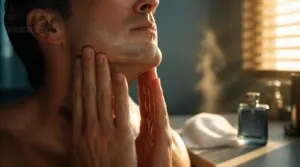
Getting the amount right means nothing if you slap it on wrong.
Rub aftershave between your palms first, warm product spreads easier and absorbs faster into damp skin.
Then use gentle circular motions, pressing rather than dragging.
- Pat skin gently, never rub
- Apply with light pressure only
- Avoid harsh rubbing on nicks
This friction reduction protects your skin barrier while locking in moisturizing benefits.
Choosing by Skin Type
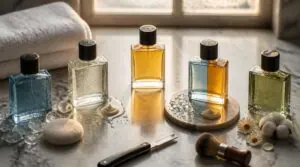
Your skin type calls the shots here. Oily skin wants a lighter, alcohol-based formula, it dries fast and tightens pores. Dry skin needs moisturizing, humectant-rich creams to fight tightness.
| Skin Type | Best Aftershave Style |
|---|---|
| Oily | Light, alcohol base |
| Dry | Creamy, moisturizing |
| Combination | Lighter on T-zone |
| Sensitive | Fragrance-free, alcohol-free |
| Normal | Balanced, adaptable |
Combination skin? Split the difference.
Sensitive Skin Safety Tips
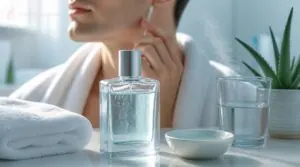
Sensitive skin doesn’t forgive rookie moves. Go fragrance-free and alcohol-free, always patch test behind your ear overnight first.
- Cleanse gently with warm water
- Skip harsh actives and acids
- Keep showers under 10 minutes
- Patch test 72 hours before full use
- Watch for fragrance allergens in the label
Your skin barrier stays calm when you control the triggers, not the other way around.
Frequently Asked Questions (FAQs)
Can I use after shave on my pubes?
Short answer: skip it. That sensitive skin isn’t built for alcohol or fragrance. Instead, reach for a fragrance-free moisturizer made for the pubic region, applied right after shaving to protect your skin barrier.
Should you apply aftershave daily?
Yes, for daily shaving. Pick the right formula for your skin type: moisture barrier support for dry skin, witch hazel for oily, aloe and chamomile for sensitive skin. Daily use also delivers antiseptic protection against everyday nicks.
Do men use aftershave anymore?
More than ever. 74% of men aged 22-38 use premium aftershave regularly, and 92% treat it as a distinct grooming step, not an afterthought, proving this "old-school" habit has fully modernized into daily skincare.
Is it necessary to apply aftershave?
Skipping it isn’t just a rookie move, it’s a gamble. Aftershave delivers essential post-shave care, working as an antiseptic to prevent infection, calm razor burn, and lock in moisture your skin desperately needs after the blade.
Can aftershave replace daily facial moisturizer products?
Think of aftershave as your post-battle balm, not your daily armor. It offers quick moisture barrier support, but lacks the skin hydration depth, layering power, and long-term skin health benefits a real facial moisturizer delivers.
Does aftershave work on electric razor irritation?
Electric shavers still cause friction and pull, leaving skin red and bumpy.
Aftershave soothing ingredients like panthenol and aloe deliver real razor burn relief. For sensitive skin, grab alcohol-free options that hydrate without stinging or drying you out.
Are alcohol-free aftershaves better for aging skin?
Yes. Mature skin makes less oil naturally, so alcohol strips what little it has left. Alcohol-free formulas with aloe, shea butter, and vitamin E boost hydration, support elasticity, and aid barrier repair without that harsh, drying burn.
Can aftershave help with post-shave acne breakouts?
Only if you’re already clear. Acne-prone guidance says skip aftershave during active breakouts, since alcohol dries skin and worsens irritation.
Once clear a few weeks, alcohol-free options with tea tree oil offer antiseptic protection without the flare-up risk, always patch test first.
Should aftershave be applied morning or night?
Timing’s a personal call, not a rulebook. Apply right after shaving, morning or night, since damp skin absorbs faster. Evening use adds overnight healing benefits while you sleep, dodging sun exposure that morning routines have to compete with.
Is aftershave safe to use every day?
Daily use can feel like armor for your face, but it’s not one-size-fits-all. Sensitive skin needs fragrance-free, alcohol-free formulas with aloe. Watch for razor burn or stinging, patch test new products, and moisturize consistently.
Conclusion
Good aftershave works like a bodyguard, quiet, steady, always on duty.
The real benefits of aftershave application aren’t in the sting, they’re in the healing, the protection, and the balance you build into your routine. Skip the burn test. Judge your bottle by how your skin feels three hours later: calm, hydrated, and clear. Master the technique, pick the right formula, and your skin won’t just survive the shave. It’ll thrive.