This site is supported by our readers. We may earn a commission, at no cost to you, if you purchase through links. This content is for general informational and educational purposes only and is not a substitute for professional medical, dermatological, or nutritional advice.

Most men blame their skin for ingrown hairs. The real culprit is almost always their technique.
A dull blade drags hair down before snapping it below the surface, and pressing too hard makes it worse—compressing the follicle so the cut end has nowhere to go but sideways. Add coarse or curly hair to the equation, and that trapped stub becomes a guaranteed problem.
Wet shaving should actually reduce ingrown hairs compared to dry shaving, but only when done right. The details matter more than most people realize—blade sharpness, pressure, prep, grain direction—and getting them right changes everything.
Table Of Contents
Key Takeaways
- A dull blade is the top cause of ingrown hairs — it drags hair below the skin surface before snapping it, so replace your blade every 5–7 shaves.
- Multi-blade cartridges lift and cut hair below the skin level, making single-blade safety razors a smarter choice for anyone prone to razor bumps.
- Prep matters as much as technique — warm water, gentle cleansing, and pre-shave oil together can cut the cutting force your blade needs by up to 40%.
- What you do after the shave counts too: cool water, a pat-dry, and alcohol-free balm keep follicles calm and break the ingrown hair cycle.
Why Wet Shaving Causes Ingrowns

Wet shaving feels like the right move, but the technique itself can work against you. A few specific habits and hair traits are behind most of the ingrown hairs people deal with. Here’s what’s actually causing the problem.
If you want to get ahead of the cycle, these beard ingrown hair solutions and prevention tips can help you pinpoint exactly where your routine is going wrong.
Curly or Coarse Hair
If you have curly or coarse hair, wet shaving works against your biology. Curly hair curves back toward the skin after being cut, and coarse strands leave thicker, sharper stubs that pierce the follicle wall — triggering pseudofolliculitis barbae. Natural oils can’t travel down tightly coiled shafts easily, leaving hair dry and resistant.
Understanding the most common causes of razor bumps can help break the cycle, since most persistent cases come down to a few preventable habits.
- Oval-shaped follicles produce curly hair that exits the skin at an angle, increasing re-entry risk
- Coarse fiber thickness means each shaved edge leaves a more prominent stub
- Shaving with the grain reduces the chance that cut hair curls back into surrounding skin
Understanding this, the average Asian hair diameter ranges from 80 to 120 microns, showing the upper end of coarse texture.
Dull Blades and Tugging
A dull blade doesn’t just shave poorly — it drags. Razor blades drag across hair instead of slicing cleanly, bending each strand at roughly 45 degrees before snapping it below the skin surface. That retraction is what causes ingrowns.
A dull blade drags hair to a breaking point below the skin — and that’s exactly where ingrowns begin
Replace your blade every 5–7 shaves. Microscopic blade fractures develop invisibly, making a seemingly usable blade surprisingly destructive to your skin.
Excess Pressure Problems
Dragging a blade is one problem. Pressing too hard is another — and just as damaging.
A safety razor weighs about 0.5 pounds. That’s all the pressure you need. Push down with 2–3 pounds and you’re forcing hair below the skin surface, where it retracts and curls inward. That alone causes ingrowns.
Light pressure also protects your blade. Heavy use flexes the blade edge, creating inconsistent cuts and more irritation with every stroke.
Clogged Pores and Dead Skin
Pressure isn’t the only thing working against you. Dead skin is, too.
Every day, dead skin cells accumulate inside your hair follicles. Mix that with sebum — the oil your skin naturally produces — and you’ve got a recipe for pore blockage. That clogged follicle forces growing hair sideways or back inward.
Here’s what that buildup actually does:
- Dead cell accumulation traps debris inside follicles, narrowing the exit path for new hair growth.
- Sebum buildup acts like glue, binding dead cells together and deepening the blockage.
- Pore congestion shows up as rough texture, small bumps, or dark spots on the skin surface.
- Blackhead formation happens when that trapped material oxidizes — oxygen hits it and turns it dark.
- Clogged hair follicles create the exact conditions that push hair beneath the skin instead of out through it.
Wet shaving can smear this debris across your skin rather than clearing it. Without proper exfoliation between shaves, the cycle repeats — and ingrown hairs keep coming back.
Multi-Blade Razor Risks
Most people assume multi-blade cartridges give a closer, safer shave. They don’t.
The blades are packed tightly together, creating a lift-and-cut effect — hair gets pulled up and severed below the skin surface. That subsurface cutting is exactly what triggers razor bumps.
Add the friction from three to five blades dragging across your skin per stroke, and you’re inviting skin irritation, folliculitis, and repeat ingrowns.
Prep Skin Before Wet Shaving

Good prep is what separates a clean shave from one that leaves you dealing with bumps for days. Your skin needs a little groundwork before a blade ever touches it. Here’s what to do before you start.
Warm Water Softening
Before your blade touches your face, warm water is doing the heavy lifting. At 85–95°F, warm water causes facial hair keratin to absorb moisture, swelling each strand’s diameter by up to 15%.
Pairing this prep with a well-maintained brush makes a real difference—check out these beard shaping tool maintenance tips to keep your boar’s hair bristles working at their best.
That makes hair noticeably more pliable — requiring roughly 40% less cutting force. Softer hair means cleaner cuts and far fewer ingrown hairs before you’ve even picked up the razor.
Gentle Cleansing First
Warm water softens the hair, but clean skin is what lets the razor actually do its job. Surface oil, sweat, and dead skin debris sit between your blade and your hair — blocking a clean cut and clogging follicles. A quick, gentle cleanse removes all of that before your razor makes contact.
Low pH cleansers — particularly those with salicylic or glycolic acid — go further. They chemically loosen the dead skin layer, freeing hairs that might otherwise curl sideways into the follicle. For recurring razor bumps, a 4% benzoyl peroxide wash targets folliculitis directly. Choose a non-comedogenic, gentle surfactant formula so you clean without stripping the barrier dry.
Pre-Shave Oil Benefits
After cleansing, one step makes a real difference: pre-shave oil.
Massaging it into your beard for 30 seconds does three things:
- Softens coarse hair shafts so the blade cuts cleanly instead of pulling
- Reduces blade drag across the skin, preventing micro-tears
- Reinforces your skin barrier with fatty acids and vitamin E
Choose a non-comedogenic carrier oil — jojoba or avocado work well — to lubricate without clogging follicles.
Lift Hairs With Washcloth
A warm washcloth does more than feel good — it physically lifts hairs away from the skin, setting up a cleaner, safer shave.
| Step | Detail |
|---|---|
| Water temperature | 120–140°F softens hair keratin effectively |
| Application time | 30–60 seconds is the sweet spot |
| Cloth material | 100% cotton terrycloth retains heat best |
| Folding method | Fold into 10×15 cm, 3–4 layers thick |
| Motion | Press gently — never rub — across the face |
Lifted hairs cut cleanly. Flat, skin-hugging hairs get shaved below the surface and curl back in — that’s how ingrown hairs form.
Avoid Irritated Dry Skin
Shaving over dry or irritated skin is asking for trouble. Skin below 40% moisture tears more easily under the blade, raising your ingrown risk immediately.
A ceramide barrier cream applied ten minutes before you shave cuts razor-induced micro-tears by roughly 70%.
Follow with a hyaluronic acid moisturizer — it restores hydration fast, keeping your skin supple and ready.
Choose Ingrown-Safe Razors and Blades

Your razor isn’t just a tool — it’s the thing standing between you and a face full of red bumps. The wrong blade can undo every bit of prep work you did before stepping into the shower. Here’s what to look for when choosing gear that actually works with your skin.
Single-Blade Safety Razors
The single-blade safety razor is one of the best tools you can use to prevent ingrown hairs. Its guard design sits between the blade and your skin, controlling depth and reducing trauma to the follicle.
The balanced metal handle gives you real control over angle and pressure.
Fewer moving parts mean less mechanical irritation — and fewer ingrowns.
Sharp Stainless Steel Blades
The razor matters, but the blade inside is what actually touches your skin. Stainless steel blades resist corrosion and hold a precise edge — usually between 15 and 20 degrees — that slices hair cleanly without tugging.
Many feature PTFE or micro-bevel coatings that reduce friction and extend sharpness.
A dull blade drags. A sharp one cuts.
Replace Blades Regularly
A sharp blade is a clean blade. Replace your blade every 5–7 shaves — or weekly if you shave daily. A worn edge drags instead of cuts, raising ingrown hair risk by up to 30%. Watch for wear indicator signs like fading lubricating strips or increased skin irritation.
For a deeper look at protecting sensitive skin throughout the process, shaving techniques for men with sensitive skin pair well with timely blade changes to keep irritation at bay.
| Shaving Frequency | Replace Blade Every |
|---|---|
| Daily | ~1 week |
| Every other day | 2–3 weeks |
| Twice weekly | 4–6 weeks |
| Less often | 6+ weeks |
Blade dullness also compounds with poor storage. Humidity accelerates corrosion, cutting blade life by up to 50%. Keep blades dry. The good news? Safety razor longevity is cost-friendly — blades run $0.20–$0.50 each. Blade sharpness maintenance doesn’t have to be expensive.
Rinse Between Strokes
A sharp blade means nothing if it’s clogged.
Rinse your razor every one to two strokes under cold running water. Cold water keeps the blade cool and prevents heat-induced dulling. It also closes pores between strokes, blocking debris from entering follicles.
A clean blade glides cleanly — fewer passes, less irritation, fewer ingrowns.
Store Blades Dry
Leaving your blade dripping in a steamy shower is a fast track to rust. After each shave, shake off the water, pat the blade dry with a clean towel, and move it somewhere ventilated.
- Store outside the shower to cut humidity exposure
- Elevated, open storage lets moisture drain and evaporate
- Dry air = longer edge life — less corrosion, smoother shaves
Shave With The Grain Correctly
Shaving with the grain sounds simple, but most people get it wrong in ways that quietly cause ingrowns over time. The good news is that a few deliberate habits can change your results completely. Here’s what you need to get it right.
Map Hair Growth Direction

Most men assume all facial hair grows straight down. It doesn’t. Hair growth direction shifts across every zone — your cheeks, jawline, and each side of your neck can all run differently.
Start with the finger-feel technique: drag your fingertips across dry stubble. Smooth means you’re moving with the grain. Rough means against it.
Use a cotton ball drag check to confirm — it’ll glide with the grain and snag against it. For trickier spots, try the card edge method: slide a credit card across dry skin in different directions. Smooth movement confirms the grain direction.
Once you’ve tested each zone, sketch a quick visual arrow map — a simple face diagram with arrows showing which way hair flows in each area. Your neck alone might have three different directions. This map becomes your guide, so your blade always follows the hair’s natural path.
First Pass With Grain

With your grain map in hand, you’re ready to act on it. The first pass in your wet shaving routine does one job: follow the hair’s natural direction, nothing more.
- Shaving with the grain removes hair without forcing the blade against follicle resistance
- Gravity-guided shaving means letting razor weight control do the cutting — no pushing
- Ideal blade exposure on a single-blade safety razor keeps the angle consistent and safe
Short Gentle Strokes

Think of each stroke as a small, deliberate cut — 1 to 3 centimeters, no more. That stroke length gives you real control over blade angle, so it stays locked at that 30° sweet spot through every curve of your jaw and neck.
Short strokes also reset pressure with each motion, letting the razor’s own weight do the work and keeping hairs from getting forced below the skin.
Light Pressure Only
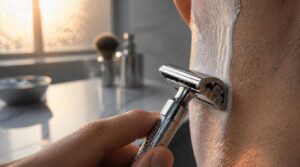
Your razor isn’t a scrubbing tool — let the razor do the work. Heavier razors naturally supply enough cutting force on their own, so your hand just guides, never pushes.
Pressing harder doesn’t improve the shave. It compresses skin, traps hair follicles, and increases irritation. Keep these in mind:
- Light pressure prevents follicle compression
- Relaxed skin lets hair retract cleanly after cutting
- Razor weight replaces hand pressure entirely
- Gentle touch reduces redness and razor burn
Limit Repeat Passes

Every extra pass removes a little more of your skin barrier. Two passes — with grain, then a careful second round — manages most shaves cleanly.
Beyond that, you’re creating cumulative skin trauma, not a closer shave. If you missed a spot, re-lather and take one targeted stroke.
Chasing excellence with repeat passes leads straight to razor burn and inflammation.
Build Protective Lather and Glide

Good technique only takes you so far without the right lather behind it. Think of lather as your razor’s insurance policy — it keeps the blade gliding instead of dragging, and dragging is what triggers ingrowns. Here’s what to get right before the blade ever touches your skin.
Use a Shaving Brush
A shaving brush does more than spread soap — it lifts hairs away from the skin, which is exactly what you need to avoid ingrowns. Boar bristle brushes work especially well here, providing firm exfoliation as you lather.
Soak animal hair brushes in warm water (around 100°F) for at least 30 seconds first.
Store your brush handle-down in ventilation so bristles dry fully between uses.
Hydrated Cream or Soap
What’s in your lather matters as much as how you apply it.
A good shaving cream or soap isn’t just foam — it delivers humectants like glycerin that pull moisture into skin, emollients that soften and reduce blade drag, and occlusives that lock hydration in.
That rich, slick lather keeps your skin barrier protected from the first stroke to the last.
Re-Lather Between Passes
That fresh coat of lather you applied before your first pass? It’s gone by the time you finish. Skin gets exposed, friction builds, and hairs get pushed back under.
Re-lather between every pass. Use your boar brush to rebuild a rich, slick lather directly on skin. Its stiff bristles lift hairs and clear debris while restoring your protective barrier.
- Razor drag increases on bare skin
- Exposed follicles invite ingrown hairs
- A boar brush exfoliates as it re-lathers
- Lather thickness determines how cleanly each hair gets cut
Avoid Dry Touch-Ups
Once you’ve re-lathered, don’t undo that work with a dry touch-up. Running a razor over bare skin strips moisture fast, raises friction, and creates tiny nicks that inflame follicles.
A clogged blade drags instead of cuts. That tugging is exactly what pushes hairs sideways into the skin.
If you need a cleanup pass, re-lather first — every time.
Maintain Proper Razor Angle
Getting the angle right is what separates a clean shave from one that leaves bumps. Most safety razors perform best at about 30 degrees to the skin — roughly one full spine width between blade and cheek. At that angle, the razor’s own weight does the cutting. You don’t push. You guide.
Calm Skin After Every Shave

The shave is done, but your skin’s work isn’t over yet. What you do in the next few minutes — and the days that follow — can mean the difference between clear skin and a fresh crop of ingrown hairs. Here’s what your post-shave routine should include.
Cool Water Rinse
The moment your razor lifts off your skin, cool water becomes your first line of defense. Rinse immediately with water around 60–70 °F.
This temperature contrast — from warm prep water to cool rinse — tightens the skin surface, closes pores, and calms inflamed follicles fast. It also clears leftover lather and debris that could otherwise clog follicles and trigger ingrowns.
Pat Dry, Never Rub
Once the cool rinse is done, reach for a soft cotton towel. Pat your skin dry — short, light contacts only. Never drag the towel across your face.
Rubbing creates friction on freshly shaved skin, and friction means irritation, redness, and a weakened skin barrier. Gentle patting absorbs moisture without pulling at sensitive follicles or causing the micro-abrasion that sets off post-shave bumps.
The same gentle principle applies to how much product you reach for — keep your aftershave to the right aftershave amount for your skin type, since excess pooling can clog pores and undo all that careful drying work.
Alcohol-Free Aftershave Balm
Reach for an alcohol-free aftershave balm the moment you’ve patted dry — your skin barrier is open and vulnerable right now.
- Aloe vera calms redness and rehydrates quickly
- Witch hazel tightens pores without the sting
- Allantoin or chamomile reduces inflammation at the follicle
- Squalane or lanolin locks moisture in without clogging pores
Exfoliate Between Shaves
Dead skin is your skin’s worst enemy between shaves. It piles up over follicles and traps hairs before they can surface. Exfoliate two to three times weekly — not daily — to clear that buildup without irritating skin.
You have two solid options: physical or chemical exfoliation. A washcloth or African net sponge works well for physical exfoliation using gentle circular motions. For chemical, a BHA like salicylic acid goes deeper, dissolving debris inside the pore itself. Follow either with a urea lotion to lock in hydration.
Target high-risk zones — bikini line, underarms, face — where ingrowns hit hardest.
Space Out Shaving Days
Your skin doesn’t recover instantly after a blade passes over it.
Shaving every 48 hours gives follicles time to settle and reduces trapped-hair risk greatly. Aim for two to three times weekly.
If you’re switching from daily shaving, drop to every other day first.
Most razor bumps clear within two weeks once you space things out.
Frequently Asked Questions (FAQs)
How to prevent ingrown hairs when shaving downstairs?
Want fewer bumps downstairs? Shave with the grain, prep skin with warm water, and use an alcohol-free balm after. Loose, breathable underwear helps too.
Can diet affect ingrown hair frequency?
Diet plays a minor supporting role. Better hydration keeps skin resilient, zinc aids follicle healing, omega-3s reduce inflammation, and vitamin A promotes cell turnover — but shaving technique remains the primary driver of ingrowns.
Do ingrown hairs resolve on their own?
Yes, many ingrown hairs resolve on their own within one to two weeks. If you notice spreading redness, pus, or worsening pain, see a doctor — those are signs of folliculitis or infection.
When should a dermatologist treat ingrown hairs?
Most ingrown hairs clear up on their own, but see a dermatologist if you notice spreading redness, pus, fever, or a painful lump that won’t budge after a week of home care.
Are ingrown hairs linked to hormonal changes?
Hormones absolutely influence your hair follicle behavior. Shifts during puberty, pregnancy, menopause, or conditions like PCOS alter androgen levels, making hair coarser — and coarser hairs are far more likely to curl back into skin.
Can laser removal permanently prevent ingrown hairs?
Laser hair removal can offer long-term hair reduction — not a guaranteed permanent cure. It works by targeting pigment in the hair shaft, damaging follicles over multiple sessions to progressively reduce regrowth.
Conclusion
Once you understand the craft, wet shaving ingrown hair prevention stops feeling like damage control and starts feeling like mastery.
Sharp blades, proper prep, grain-direction awareness—these aren’t extra steps, they’re the whole equation.
Your skin doesn’t fail you randomly; it reacts to exactly what you give it.
Treat each shave as a deliberate act, not a rushed ritual, and the results will follow.
The technique was always the answer.