This site is supported by our readers. We may earn a commission, at no cost to you, if you purchase through links. This content is for general informational and educational purposes only and is not a substitute for professional medical, dermatological, or nutritional advice.
You smooth on your moisturizer, give it a minute, and your face still feels greasy. That slick film doesn’t mean you used too much — it means the product isn’t sinking in.
Several things explain why your facial moisturizer is not absorbing into the skin. Dead skin buildup, a weakened barrier, or a formula that doesn’t match your skin type can all play a role.
None of these problems stick around once you know what’s causing them. Spot the right cause, adjust your routine, and that cream finally does its job. It hydrates the skin instead of sitting on top of it.
Table Of Contents
- Key Takeaways
- Why Facial Moisturizer Sits on Skin
- Dead Skin Buildup Blocks Absorption
- Your Skin Barrier Controls Moisture
- Wrong Formula for Your Skin Type
- Ingredient Balance Affects Absorption
- Applying Moisturizer at The Wrong Time
- Layering Mistakes Cause Pilling
- How to Improve Moisturizer Absorption
- Overnight Masks Help Seal Hydration
- When Poor Absorption Signals Bigger Issues
- Frequently Asked Questions (FAQs)
- Conclusion
Key Takeaways
- Dead skin buildup acts like a physical roadblock — regular, gentle exfoliation (AHAs once or twice a week) clears the path so your moisturizer can actually reach living skin.
- A damaged skin barrier is often the hidden reason products sit on your face; look for stinging, chronic redness, or sudden product sensitivity as early warning signs.
- Apply moisturizer within three minutes of washing, on slightly damp skin — waiting too long can cut absorption efficiency by up to 50%.
- Matching your formula to your skin type matters more than the brand: heavy creams block oily skin, light gels leave dry skin parched, and silicone‑heavy formulas can seal the surface against everything you layer on top.
Why Facial Moisturizer Sits on Skin
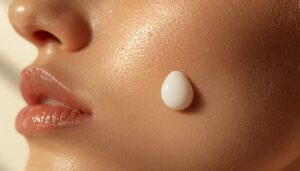
Your moisturizer is doing its job — but your skin might not be letting it in. Before you switch products, it helps to recognize what’s actually happening on your skin’s surface. There are a few telltale signs that absorption isn’t working the way it should.
If your moisturizer seems to sit on top rather than sink in, the way you’re layering and massaging it on could be the real culprit, so it’s worth reviewing these tips for properly applying facial moisturizer.
Greasy Film After Applying
A greasy film after moisturizing usually means the product hasn’t absorbed — it’s just sitting on top.
- Oil-heavy formulas linger because larger oil molecules absorb slower than water-based ingredients
- Applying too much leaves excess that mixes with sebum, amplifying shine for up to two hours
- Warm skin over 30°C spreads oils thinner but more visibly across the surface
- Low humidity below 40% causes water evaporates fast, concentrating oils on your skin
Using a proper nickel-size amount each time can reduce the greasy residue.
Sticky or Tacky Finish
A sticky finish is different from greasiness — it’s usually a sign that your moisturizer can’t fully absorb.
Silicone-heavy formulas are a common cause. When silicone concentrations exceed 5%, they create a surface film that never quite dries down. Overapplying product makes this worse. More product doesn’t mean more hydration — it just builds residue.
High humidity prevents evaporation, leaving that unmistakable tacky layer behind.
Dry Again Within Hours
Tacky skin is frustrating, but feeling dry again within hours is a different problem entirely.
Humectant-only moisturizers maintain hydration for just 3–5 hours before levels drop below baseline. Without an occlusive to seal moisture in, transepidermal water loss continues steadily. At night, TEWL increases two to three times, explaining that parched feeling every morning despite moisturizing the night before.
Product Rolling or Pilling
One more frustrating sign that your moisturizer isn’t working: it rolls into tiny balls right on your skin. This is pilling, and it usually means product friction, incompatible formulas, or too much product applied at once.
When layers haven’t fully absorbed, mechanical friction shears them into clumps — especially around the nose and mouth where skin moves most.
Dead Skin Buildup Blocks Absorption
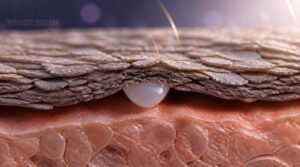
Dead skin doesn’t just sit on the surface — it quietly blocks everything you apply from actually sinking in. Think of it like a locked door standing between your moisturizer and the living skin beneath. Here’s what’s really happening, and how to fix it.
How Flakes Trap Moisturizer
Think of dead skin cells as a layer of old, cracked tiles sitting on top of your skin. When flakes accumulate, they form micro barriers that physically block moisturizer from reaching living skin.
The aqueous phase of your cream sits on top, never penetrating. Instead of hydrating, it just creates that frustrating greasy film you’re trying to avoid.
Gentle Exfoliation Benefits
Regular exfoliation does more than clear the path for your moisturizer — it actively improves how your skin behaves overall. Removing dead skin buildup accelerates cellular turnover, stimulates collagen synthesis, and boosts lymphatic drainage to reduce puffiness.
Here’s what consistent gentle exfoliation delivers:
- Fades hyperpigmentation by exposing fresher skin cells beneath the surface
- Enhances nutrient delivery through improved circulation to skin layers
- Promotes skin turnover rate for a naturally brighter, smoother complexion
AHA Exfoliants for Texture
When dead cells pile up, alpha hydroxy acid dissolves their bonds — clearing the path through chemical exfoliation.
Ideal pH levels of 3.5–4.5 enhance skin turnover rate while reducing irritation. Molecular size shapes penetration depth: glycolic goes deepest; mandelic suits sensitive skin.
| AHA | Key Benefit |
|---|---|
| Glycolic acid | Deep exfoliation, faster renewal |
| Lactic acid | Balanced, gentle exfoliation |
| Mandelic acid | Ideal for sensitive skin |
Acid blend benefits include collagen stimulation and surface renewal. Always follow concentration safety guidelines — start with lower strengths first.
Avoid Over-exfoliating Skin
More isn’t better here. Exfoliating too often strips the protective lipid layer, leaving skin shiny, tight, and vulnerable. Once or twice a week is enough.
If you notice burning when moisturizing or increased breakouts, stop immediately. Recovery takes 5–7 days without exfoliants, plus a ceramide-based moisturizer.
Enzyme exfoliants are a gentler swap if your skin tends toward sensitivity.
Your Skin Barrier Controls Moisture

Your skin barrier does more than protect — it actively controls how well moisture gets in and stays there. When it’s working properly, hydration flows through; when it’s not, even the best moisturizer can’t do its job. Here’s what you need to understand about how your barrier works and what keeps it functioning.
Stratum Corneum Basics
Your skin’s outermost layer — the stratum corneum — acts like a protective wall.
It’s built from flat, protein-packed dead cells called corneocytes, stacked 15 to 20 layers deep and embedded in a lipid matrix of ceramides, cholesterol, and fatty acids.
This brick-and-mortar structure controls moisture retention and determines how well anything you apply actually absorbs.
Damaged Barrier Symptoms
When your barrier is damaged, your skin sends clear signals. Stinging and burning appear even with products you’ve used for months.
You might notice chronic redness that doesn’t fade, unexplained breakouts, or a dry, papery texture that returns within an hour of moisturizing.
Sudden product reactivity — where gentle formulas now irritate — is one of the earliest signs of barrier dysfunction.
Lipids That Support Absorption
Your barrier doesn’t just need water — it needs fat. Lipids like squalane act as carriers, slipping through the stratum corneum’s microscopic gaps and opening pathways for active ingredients to follow.
Squalane mimics your skin’s own natural oils, so it integrates quickly without feeling heavy. That compatibility is what makes it so effective at restoring barrier permeability and pulling moisture deeper in.
Ceramides and Fatty Acids
Ceramides are the mortar holding your barrier bricks together. Your skin actually produces at least 12 distinct ceramide types, each with a specific role. Ceramide 3, for instance, directly promotes hydration retention. Without adequate ceramides, moisture escapes freely.
Barrier repair moisturizers work best when they pair ceramides with complementary fatty acids — especially linoleic acid — in balanced ratios that mirror your skin’s own natural lipid composition.
Wrong Formula for Your Skin Type
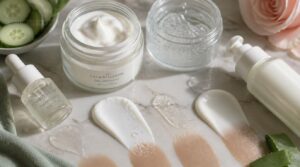
Not every moisturizer works for every face — and using the wrong formula for your skin type is one of the most common reasons products just sit there instead of sinking in. Your skin’s needs dictate the texture, weight, and ingredients it can actually absorb. Here’s what to know based on your specific skin type.
The same principle applies to toners — understanding how to choose a facial toner for your skin type ensures every step of your routine actually works with your skin, not against it.
Sensitive skin is especially finicky about formula compatibility, so checking out skincare tips for sensitive skin prone to irritation can help you avoid common triggers like fragrance and comedogenic ingredients.
Oily Skin and Heavy Creams
If you have oily skin, a heavy cream is working against you. Rich formulas often contain comedogenic ingredients like isopropyl myristate (rating: 5) and coconut oil (rating: 4), which block pores and trigger breakouts. They also sit on the surface, causing rebound oil production within hours. Your skin compensates by producing even more sebum.
Heavy creams create texture mismatch problems on oily skin:
- Greasy film lingers for up to 30 minutes
- Product pills and rolls instead of absorbing
- Pores appear more congested, especially in the T-zone
- Stickiness makes you want to skip moisturizer entirely
- Shine increases noticeably throughout the day
Instead, reach for oil-free, non-comedogenic formulas — lightweight gels or fluid lotions absorb within minutes and won’t clog pores.
Dry Skin and Light Gels
The opposite problem affects dry skin. Light gels feel cooling, but their high water content evaporates quickly, leaving your skin feeling tight within the hour.
Without enough occlusive ingredients, humectants like glycerin and hyaluronic acid actually pull moisture out rather than locking it in.
Apply to slightly damp skin, then layer a barrier cream over the gel to seal hydration in.
Combination Skin Concerns
Combination skin is perhaps the trickiest to moisturize. Your T-zone overproduces oil while your cheeks stay dry — sometimes even flaky.
Using one moisturizer across your whole face means one zone always loses. A heavy cream clogs your T-zone; a light gel leaves your cheeks parched.
The fix? Zone-specific application works best.
Sensitive Skin Considerations
Sensitive skin has one golden rule: less is more. When your barrier is reactive, even a well-meaning moisturizer can trigger redness or stinging.
Fragrance is the top offender — over 80 essential oils are documented causes of contact dermatitis. Stick to fragrance-free formulas containing ceramides, niacinamide, or panthenol. Always patch test on your neck for 48 hours before applying anything new to your face.
Choosing Lighter Textures
Switching to a lighter texture isn’t just about comfort — it’s about chemistry. Molecules under 500 Daltons penetrate skin directly, and most lightweight serums are formulated around exactly these small actives.
Heavy creams can’t make that claim. A water-based gel with glycerin (92 Da) or niacinamide absorbs within seconds, leaving no film to block what comes next.
Ingredient Balance Affects Absorption
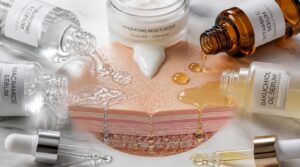
Not all moisturizers are built the same — and the ingredients inside actually determine how well your skin can absorb them. The balance between humectants, emollients, occlusives, and certain additives like silicones makes a real difference in what your skin gets out of a product. Here’s what each ingredient type does and how the wrong balance might be working against you.
Humectants Draw in Water
Humectants are your moisturizer’s water magnets. Glycerin, weighing just 92 daltons, slips into the outer skin layer and binds water through its three hydroxyl groups — holding up to ten times its weight. It creates a sustained hydration reservoir lasting up to 72 hours. Hyaluronic acid works similarly but needs adequate ambient humidity to perform.
- Glycerin penetrates the stratum corneum and draws water inward
- Hyaluronic acid plumps the surface but may underperform in dry air
- Together, they provide layered, lasting hydration
Emollients Smooth Rough Skin
Think of emollients as your skin’s spackling paste. They fill microscopic gaps between dead skin cells, creating a visibly smoother surface.
Plant-derived fatty acids — like linoleic acid in rosehip oil and oleic acid in sweet almond oil — integrate directly into your skin’s lipid matrix. That integration doesn’t just feel good; it restores your barrier and keeps skin smooth for up to six hours.
Occlusives Seal Moisture
Occlusives are the final lock on your skin’s hydration vault. Once humectants draw water in and emollients smooth the surface, occlusives seal hydration by forming a physical film that blocks moisture from escaping. Petrolatum, the gold-standard occlusive, reduces transepidermal water loss by up to 99%. Lanolin goes further — it mimics skin lipids, integrating naturally while still sealing the barrier.
Occlusives are the final lock on your skin’s hydration vault, with petrolatum alone reducing moisture loss by up to 99%
- Petrolatum — most effective, reduces TEWL by up to 99%
- Dimethicone — breathable silicone barrier, lightweight feel
- Lanolin — mirrors your skin’s own lipids
- Beeswax — semi-solid seal, natural origin
- Mineral oil — non-comedogenic, reduces TEWL by ~30%
Layering an occlusive over your moisturizer isn’t overkill — it’s strategy. Occlusive layering synergy means each ingredient beneath works harder and longer. Apply your occlusive last, and your product absorption improves noticeably.
Silicone-heavy Formulas
Silicones work differently from traditional occlusives. Ingredients like dimethicone form a smooth, semi‑permanent film on your skin’s surface rather than absorbing into it.
That film can trap moisture effectively, but it also limits what gets through afterward. If you layer water‑based serums on top, they’ll likely pill or sit uselessly on the surface instead of absorbing.
Oils Before Water-based Products
Oils applied before water-based serums create a hydrophobic barrier that blocks water-soluble actives from reaching deeper skin layers. Your skin is naturally lipid-rich, so oils pass through easily — but they seal the surface in the process. Follow this order:
- Cleanser
- Water-based serum
- Moisturizer
- Facial oil
Apply products thinnest to thickest. Oleic acid in oils can actually open pathways for actives — but only after those actives have already penetrated.
Applying Moisturizer at The Wrong Time
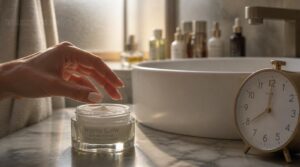
Timing matters more than most people realize regarding moisturizer. Apply it at the wrong moment and even a great product can’t do its job properly. Here’s what to pay attention to.
Damp Skin Absorbs Better
Damp skin is more receptive to moisturizer than dry skin. After cleansing, your stratum corneum holds surface water that triggers corneocyte swelling, loosening the waxy barrier between cells.
This creates a surface water window where humectants find moisture immediately available, improving humectant efficiency.
This balance of hydration and integrity reflects the broader shift toward ethical skincare ingredient trends that prioritize both skin barrier health and transparent sourcing.
Apply moisturizer to slightly damp skin within 60 seconds for noticeably better absorption.
Dry Skin Reduces Hydration
Waiting too long after cleansing isn’t the only timing mistake. Applying moisturizer to completely dry skin can cut absorption efficiency by up to 50%.
Without surface moisture, humectants have nothing nearby to draw in.
If your skin also has low NMF levels — common with filaggrin gene mutations — the deficit compounds, leaving skin unable to bind atmospheric water effectively.
Apply After Cleansing
Cleansing sets the stage — but your next move matters just as much.
Apply moisturizer on slightly damp skin, right after rinsing, and you give humectants something to work with. The thin surface moisture left on your face acts like a bridge, helping product spread evenly and absorb rather than sit.
This is your post-cleanse moisture seal.
Best Post-wash Window
How long is too long to wait? The answer matters more than most people realize. The three-minute rule is your standard: apply moisturizer on slightly damp skin within three minutes of washing.
The same timing logic applies after a sheet mask, so if you’re wondering whether to moisturize after using a sheet mask, seal in that leftover serum quickly.
Because facial skin loses water so quickly, especially with indoor heating, choosing the right formula matters just as much as timing—this guide to picking a moisturizer for dry skin can help you find one that actually locks in that moisture.
- Skin begins losing moisture rapidly the moment you rinse
- Post-wash evaporation accelerates fast on exposed skin
- Best hydration timing locks water in before it escapes
Lukewarm water — around 98–100°F — temporarily opens intercellular pathways, making damp skin absorption far more effective.
Mist Before Moisturizing
If you’ve already missed the three-minute post-wash window, a facial mist can step in. Misting before moisturizer recreates that damp surface, helping humectants like hyaluronic acid pull water into the skin rather than drawing it from below.
Try the mist sandwich technique — mist, apply serum, mist again — to enhance absorption at every step.
Layering Mistakes Cause Pilling
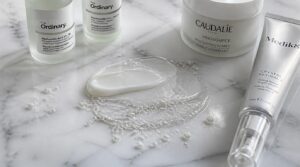
Even when your timing is perfect, the order and combination of products you use can quietly work against you. Layering skincare the wrong way creates a physical barrier that stops moisturizer from reaching your skin — and causes that frustrating pilling you might have noticed. Here are the most common layering mistakes to watch out for.
Wrong Product Order
The order you apply products matters more than most people realize. Thinnest to thickest is the rule — start with cleansed skin, then toner, then serum, then moisturizer.
Applying oil before a water-based moisturizer creates a barrier that repels it. Actives need time to settle before you layer over them.
Get the sequence right, and absorption follows.
Too Many Skincare Layers
There’s a point where more products actually mean less absorption. Your skin can only take in so much.
Once the stratum corneum saturates, additional layers sit on the surface instead of sinking in. Think of it like a sponge that’s already full — anything extra just pools on top.
Stick to four to six products for the best results.
Incompatible Formulas
Some formulas simply don’t get along. When you layer a silicone-based primer over a water-based serum, they repel each other — the result is pilling and poor penetration.
Similarly, pH mismatches can quietly destroy active ingredients; vitamin C needs pH 2.6–3.2, while most moisturizers sit at pH 5–7, causing rapid oxidation.
Incompatible textures don’t just feel unpleasant — they block absorption entirely.
Heavy Oils Too Early
Heavy oils — think avocado or tamanu — need 15–25 minutes to penetrate fully. Apply them too early, and they create a greasy surface film that blocks your serum and moisturizer from reaching the skin.
They can also dilute sunscreen SPF and reduce vitamin C’s potency.
Save heavy oils for last, or use them at night.
Waiting Between Layers
Oils need time to settle — and so does everything else. Wait 30–60 seconds between each layer.
Thin serums absorb fastest, needing only 30 seconds. Actives like retinol need 2–3 minutes before moisturizer.
Skip the wait, and products collide, pill, and sit uselessly on the surface. Rushing is the most fixable mistake in your routine.
How to Improve Moisturizer Absorption
Getting moisturizer to actually sink in comes down to a few small but important habits. The good news is that none of them require overhauling your entire routine. Here’s what to change.
Cleanse Away Residue
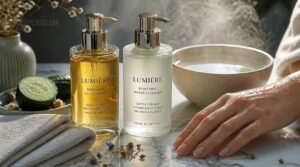
Before your moisturizer can work, your skin needs a clean surface. Oil-based cleansers dissolve waterproof sunscreen and makeup residues that water alone can’t shift. Follow with a gentle water-based cleanser to clear away remaining particles and restore your skin’s natural pH.
This double cleanse routine removes every barrier — including dead cell buildup — so moisturizer finally absorbs instead of sitting on top.
Use The Right Amount
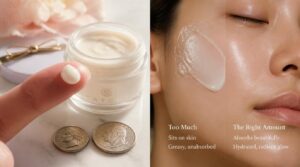
Once your skin is clean, the next variable is quantity. Too much product doesn’t absorb — it sits on top and leaves a greasy film.
A dime-sized amount works for creams; a nickel-sized amount suits lotions. Dry skin benefits from slightly more, while oily skin needs less.
At night, you can safely increase your amount by around 20–30% to support skin repair.
Press, Don’t Rub
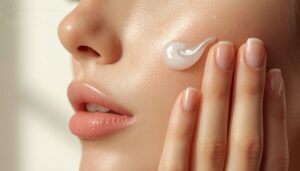
How you apply moisturizer matters as much as what you apply. Press, don’t rub — pressing creates gentle hydrostatic pressure that pushes active ingredients deeper into the epidermis.
- Press for 3–5 seconds per area for up to 23% better serum penetration
- Use your ring finger around the eyes to avoid irritation
- Press upward on the neck to support lymphatic flow
- Apply lightly on the T-zone to avoid overstimulating oil glands
- Pressing reduces skin stretching by up to 40% versus rubbing
Massage Gently Into Skin
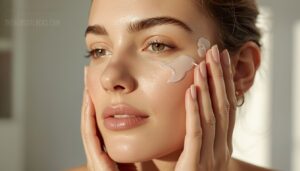
Once the product is on your skin, a short gentle massage makes a real difference. Use your fingertips with light, controlled pressure, and sweep outward and upward — this effleurage motion spreads moisturizer evenly along your facial contours without dragging.
Follow with soft rhythmic tapping across the cheeks and forehead to improve surface contact.
Keep the whole routine under thirty seconds.
Seal Hydration When Needed

Think of an occlusive as the final lock on a door. Once your moisturizer absorbs, a thin layer of occlusive seal keeps that hydration from escaping.
- Try petrolatum at night for deep overnight barrier repair
- Use morning dimethicone under sunscreen for a lightweight, non-greasy seal
- Apply the moisture sandwich technique on flights to fight 10% cabin humidity
Overnight Masks Help Seal Hydration

Overnight masks take your nighttime routine one step further by creating a breathable seal that holds hydration in while you sleep. Done right, they can make a real difference — especially if your skin often feels dry again by morning. Here’s what you need to know before adding one to your routine.
How Occlusive Masks Work
An occlusive mask works like a second skin over your moisturizer. It forms a hydrophobic seal that traps water against the surface, creating a humid microenvironment.
That moisture softens the stratum corneum, making it more permeable.
When hydration levels rise above 40%, active ingredients can penetrate up to five times deeper — a meaningful difference overnight.
Preventing Overnight Water Loss
While you sleep, your skin loses moisture through a process called transepidermal water loss. Here’s how to stop it overnight:
- Apply a humectant like glycerin first
- Layer an emollient such as ceramides or squalane
- Seal with shea butter or petroleum jelly
- Add colloidal oatmeal to soothe while sealing
This slugging technique locks hydration in and reduces morning dryness.
Reusable Silicone Mask Benefits
A reusable silicone mask takes overnight sealing further. The KentDO 3D Silicone Facial Mask presses your serums against the skin, extending their contact time by up to 30 minutes.
It’s medical-grade, BPA-free, and safe for sensitive skin.
One mask replaces hundreds of disposables, cutting 93% of associated waste — effective deep skin hydration treatment without the guilt.
When to Use Masks
Timing matters more than most people realize. Morning masking after cleansing creates a hydrated base before sunscreen or makeup. Evenings are better for intensive treatment — active ingredients work undisturbed for hours.
- Post-shower: Apply a sheet mask or hydrating mask on warm, damp skin within five minutes.
- Pre-event: Use brightening masks 15–20 minutes before.
- Nightly: Seal hydration with a sleeping mask or KentDO 3D Silicone Facial Mask after serums.
Avoiding Clogged Pores
Masks won’t clog pores if you choose wisely. Look for non-comedogenic labels — these formulas won’t trap sebum.
Avoid coconut or jojoba oils; they’re too heavy for congested skin. Use only a pea-sized amount; excess product creates greasiness.
Double cleanse beforehand to clear buildup. Swap pillowcases regularly — overnight bacteria transfer quietly block pores by morning.
When Poor Absorption Signals Bigger Issues
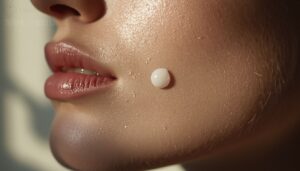
Sometimes the problem isn’t your routine at all. Your skin might be sending a signal worth paying attention to. Here are a few patterns that point to something deeper than a skipped step.
Persistent Dryness After Moisturizing
Sometimes your skin’s dryness has nothing to do with your moisturizer.
Hypothyroidism slows cell turnover, leaving a buildup of dead skin cells that blocks absorption.
Nutrient deficiencies — especially in zinc, vitamin A, or vitamin D — quietly weaken your skin barrier.
Certain medications, like diuretics, cause medication‑induced dryness that no topical cream can fully fix.
If your skin stays dry despite a solid routine, look inward.
Irritation From Strong Actives
Strong actives — retinoids, high-strength AHAs, potent vitamin C — can quietly sabotage your moisturizer when overused. Concentration jumps are a common culprit: switching too fast to a stronger formula overwhelms skin before it’s ready.
- Persistent burning rather than mild tingling
- Raw patches between active-use days
- Moisturizer sitting on top instead of absorbing
- Redness that worsens after layering products
Patch test new actives first, always.
Low Humidity Effects
Winter air dryness, combined with indoor heating’s impact, speeds up transepidermal water loss from your skin’s surface. This environmental dryness raises evaporation‑speed risks, causing skin dehydration symptoms like tightness and flaking even after moisturizing.
Monitor humidity levels and use a humidifier to cut environmental moisture loss. That eases dry‑environment skin loss, so your moisturizer can finally absorb properly.
Hormonal Skin Changes
Hormones quietly reshape your skin from the inside out.
Progesterone in the luteal phase can ramp up sebum production, making moisturizer slide off oily skin without absorbing.
Estrogen fluctuations may trigger melasma or weaken barrier function — especially during menopause, when skin holds less moisture.
Even cortisol from stress drives inflammation, blocking effective absorption.
Adjust your routine as your hormones shift.
Nutrient Deficiency Clues
What you eat quietly shapes how well your skin absorbs moisture. Vitamin D deficiency reduces filaggrin production, weakening your skin’s natural moisture factor. Low vitamin A thickens the stratum corneum, blocking penetration. Zinc deficiency impairs barrier repair.
B vitamins support ceramide synthesis, while vitamin C protects barrier lipids.
Persistent dryness despite moisturizing may signal a nutritional gap worth investigating.
Frequently Asked Questions (FAQs)
Can diet affect how skin absorbs moisturizer?
Yes, diet plays a real role. Omega-3s strengthen your barrier, while high-glycemic foods and dairy can trigger inflammation and sebum imbalance. Nutrient deficiencies in vitamins A and zinc further impair skin repair and hydration uptake.
Does drinking more water improve skin hydration?
Drinking more water helps, but only if you’re already dehydrated. Studies show benefits appear after at least two weeks of consistent intake, and mainly in those drinking under two liters daily.
How does age affect moisturizer penetration over time?
Your skin naturally absorbs moisturizer less efficiently as you age. Hyaluronic acid levels decline, skin cell turnover slows, and dermal absorption decreases — making lightweight, low-molecular-weight formulas increasingly important.
Can stress cause moisturizer to stop working effectively?
Yes, stress genuinely disrupts your skin’s ability to absorb moisturizer. Cortisol depletes barrier lipids, increases water loss, and slows repair — meaning products sit on the surface rather than penetrating effectively.
Conclusion
Funny how a product promising "deep hydration" can sit on your face like it’s waiting for a bus.
But why your facial moisturizer isn’t absorbing into the skin usually comes down to fixable mismatch — dead skin, a struggling barrier, the wrong formula, or poor timing.
Adjust one thing at a time. Exfoliate, simplify your layers, apply on damp skin.
Your moisturizer was never the problem. It just needed the right conditions to finally work.