This site is supported by our readers. We may earn a commission, at no cost to you, if you purchase through links. This content is for general informational and educational purposes only and is not a substitute for professional medical, dermatological, or nutritional advice.
Most guys pour on aftershave like they’re putting out a fire. The sting feels like proof it’s working, so more must mean better protection, right? Wrong. Your face absorbs what it needs in about a milliliter or two, and everything beyond that sits on the surface doing nothing except clogging pores and announcing your cologne from three cubicles away.
Figuring out how much aftershave to use comes down to your product type, your skin type, and a technique that takes ten seconds longer than slapping it on. Here’s the exact amount your face actually wants.
Table Of Contents
- Key Takeaways
- Start With 1–3 Milliliters After Shaving
- Measure Amount by Aftershave Type
- Adjust Aftershave for Your Skin Type
- Prepare Skin Before Applying Aftershave
- Apply Aftershave Using Proper Technique
- Recognize Excessive Aftershave Application
- Estimate How Long Aftershave Lasts
- Frequently Asked Questions (FAQs)
- What is the 5 spray rule?
- How to correctly use aftershave?
- How long should 100ml of aftershave last?
- How many sprays of aftershave should I use?
- Can aftershave expire or lose effectiveness?
- Should you refrigerate aftershave for better results?
- Can aftershave replace moisturizer in your routine?
- How long does aftershave scent typically last?
- Is aftershave safe for neck and chest?
- Can I use aftershave on other parts of my body?
- Conclusion
Key Takeaways
- Most faces need only 1–3 ml of aftershave (roughly coin-sized), and anything beyond that sits on the surface, clogging pores instead of adding protection.
- Your skin type sets your dose: oily skin needs about 1 ml, dry skin up to 4 ml, sensitive skin just 2–3 drops, and combination skin gets a thin base layer with extra only on dry zones.
- Apply to slightly damp skin immediately after shaving, pat instead of rub, cover only shaved areas, and wait 2–3 minutes for full absorption before layering anything else.
- Burning redness, greasy shine, stickiness, or breakouts are all signs you’ve used too much—cut your next application by half rather than blaming the formula.
Start With 1–3 Milliliters After Shaving
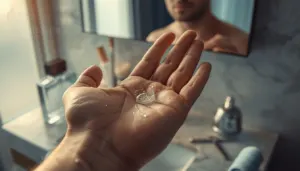
Most guys pour on way more aftershave than their face actually needs, and their skin pays for it. The sweet spot for most faces sits between 1 and 3 milliliters, roughly a coin-sized amount in your palm. Here’s how to find your number and know when you’ve crossed the line.
Your skin type also shapes how much you can handle — oily faces tolerate more, while dry or sensitive skin calls for less, so check out the best aftershave scents for every skin type before you pour.
Most Faces Need 1–3 Ml
For most faces, 1 to 3 ml covers everything you need. Think of it like seasoning food: enough to do the job, never drowning the dish. Here’s how that range breaks down:
- 1 ml for oily or normal skin
- 2 ml for most standard shaves
- 3 ml for dry skin or winter months
- 2 to 3 drops for sensitive spots
Your skin absorption controls the rest. More product doesn’t mean better results; it just means thicker film.
Increase Only When Necessary
Start at the low end of that range and wait. Give your skin two to three minutes to absorb before judging coverage. If shaved areas still look patchy, add another small amount.
Adding while product sits wet just increases surface load and can compromise your skin barrier function. Your application technique matters less than patience here. More product won’t fix irritation; it usually causes it.
Aim for Thin Coverage
Think of aftershave like paint primer. A thin coat covers the surface; a thick one just pools and peels. Your goal is thin coverage that disappears into skin within a minute or two, not a visible layer sitting on top.
Aftershave works like paint primer: a thin coat sinks in, while a thick one just pools and peels
A light touch application works because aftershave concentrates its benefits in the first milliliter. Extra product adds greasiness, not moisture locking or better postshave care. Check for these signs:
- Skin looks matte or lightly sheened, not coated
- Product absorbs within two minutes
- No white residue along the jawline
- Shaved areas feel soothed, not slick
If you can see where product ends and skin begins, you’ve used too much. Wipe the excess rather than rubbing it in. A skin type mismatch often hides behind overapplication, so rule out quantity before blaming the formula. Choosing the right formula also matters, since aftershaves with soothing ingredients like aloe can reduce redness and inflammation while calming freshly shaved skin.
Avoid Visible Product Buildup
Visible buildup starts where thin coverage ends. Watch your jawline, hairline, and the sides of your nose. These contours trap product that palms miss.
Your application technique controls this. Residue left on fingertips often pools at facial edges, so finish with a quick fingertip gel spread across those spots instead of adding more product.
Prevention beats correction. Rinse before you apply, keep layers thin, and let each one absorb. That’s residue barrier prevention in practice: less product means fewer chances for buildup, shine, and clogged pores.
Measure Amount by Aftershave Type
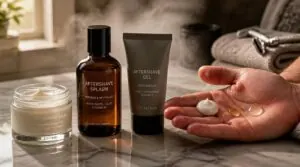
The right amount of aftershave depends on what’s actually in your bottle. A balm and a splash behave nothing alike, so using one universal measurement will leave you either dry or drowning. Here’s how much of each product type you should be using.
Balms: Dime-Sized, 2–3 Ml
A balm works like a moisturizer with a mission. Squeeze out a dimesized amount, roughly 2 to 3 ml, and you’re set. Balms absorb slower than splashes, so use lighter pressure and cover only central facial zones. Too much leaves a film.
- Start with 2 to 3 ml
- Pat gently, don’t rub
- Skip oily zones if needed
- Adjust for your skin type
Lotions: Dime-Sized, 2–3 Ml
A lotion sits between a balm and a splash, so the math stays simple.
Dispense a dimesized amount, 2 to 3 ml, and work it over cheeks, forehead, and neck.
For the best results, rub it between your palms first so it warms up and spreads evenly, and check out this guide on the benefits of aftershave application for tips on pressing it in with gentle circles.
Lotions absorb within a minute or two, which makes them easy to slot into any facial care routine.
Keep coverage thin, and increase the dose only if your skin type feels tight afterward.
Splashes: Start Nickel-Sized
A splash is the trickiest format because alcohol evaporates fast, tempting you to overpour. Start with a nickelsized portion, roughly 1 to 3 ml, poured into your palm. Rub your hands together, then pat it onto shaved areas rather than slapping it on.
Splashes disinfect and tighten skin but don’t moisturize deeply, so your skin type determines whether you follow with balm.
Gels: Start Pea-Sized
Gels are the most forgiving format because they absorb fast and leave no greasy film. Start with a peasized amount, about 0.25 to 0.5 ml, and warm it between your palms. Massage into damp skin using circular motions, focusing on the neck and jawline where razor burn prevention matters most.
Oily and combination skin types benefit most from gel application. If your face still feels tight after ten minutes, add a moisturizing lotion on top rather than more gel.
Sprays: Begin With 1–2 Sprays
Sprays need the lightest hand of any aftershave format. Begin with 1–2 sprays, held about six inches from your face, and let the mist settle evenly. Sprays work through light coverage, so more product means heaviness, not hydration.
Never spray onto sweaty or damp skin; moisture dilutes the formula and invites skin irritation. Count your sprays consistently to track usage. If fragrance fades fast, move to 3–4 sprays, but only if your skin type tolerates it.
Adjust Aftershave for Your Skin Type

The same amount of aftershave that works for your buddy can leave your face either greasy or gasping for moisture.
Your skin type is the single biggest factor in getting the dose right, and most guys ignore it completely.
Here’s how to dial in your amount whether your skin runs oily, dry, sensitive, or a mix of everything.
Oily Skin: About 1 Ml
Oily skin already produces plenty of its own moisture, so more product isn’t better. Stick to about 1 ml of aftershave for your face and neck.
Why this works:
- Your natural sebum blocks absorption
- Extra product just sits on top
- Overapplication causes shine and clogged pores
Use less, moisturize lightly, and skip the skin irritation. Your skin takes care of the rest.
Dry Skin: Up to 4 Ml
If your skin feels tight or flaky after shaving, you’re on the other end of the spectrum. Dry skin needs up to 4 ml to properly moisturize and support skin barrier repair. Start with 2 ml, then add more if patches still feel rough. Your goal is thin, even coverage, not a heavy layer.
Drier skin loses water faster, so skin hydration matters more here. Apply immediately after rinsing while your face is still slightly damp. This traps moisture and helps the product spread evenly across your face and neck without wasting product.
Sensitive Skin: Two or Three Drops
Sensitive skin doesn’t need more product.
Use two to three drops right after shaving, then spread thinly over your face and neck.
Pat it in, avoid slick pooling, and keep the order simple: clean hands, apply immediately, let it absorb.
Too much can trigger skin irritation or a fragrance clash.
Combination Skin: Apply by Zone
With combination skin, you’re doing two jobs at once.
Apply a thin, pea-sized base layer after shaving, then add a little extra to cheeks and jawline only, where dryness shows up. Keep the T-zone light to avoid grease buildup.
Pat product into slightly damp cheeks, press any leftover residue onto your forehead and nose, then wait 2–3 minutes before sunscreen.
Adjust Amounts Seasonally
Seasonal adjustments matter because humidity and temperature change how fast your aftershave soaks in.
In summer, use lighter balms or lotions, about 1–2 mL total, since evaporation speeds up.
In winter, go up to 3–4 mL on drier zones to support skin hydration and moisture retention focus.
If you feel heat-bite, dial back.
Prepare Skin Before Applying Aftershave

After shaving, treat your skin like it just got exposed to a clean slate. Rinse off residue, then get your skin slightly damp before you apply anything. Timing and prep matter, so you’re ready to use aftershave the right way
Rinse Away Shaving Residue
Rinse right after your last blade pass so shaving residue doesn’t dry. Use cool or lukewarm water, then remove excess water with patting dry, not rubbing.
If debris is stubborn, use a gentle micellar cleanser on a cotton pad, then rinse it off completely to avoid surfactant irritation.
This keeps postshave care cleaner and calmer.
Leave Skin Slightly Damp
Skip the towel entirely here. Leaving clean damp skin before application boosts absorption by up to 30%, since moisture creates temporary pathways for active ingredients. That dampness also improves moisture retention and protects skin barrier function.
Think of it as priming a wall before painting. Patting on damp skin, not bone-dry skin, prevents that tight, stripped feeling.
Apply Immediately After Shaving
Act fast. Apply immediately after shaving to catch skin at its most receptive moment. That window closes quickly.
- Skin hydration peaks right after rinsing
- Moisture retention is highest while skin is still damp
- Patting on damp skin boosts ingredient absorption
- Skin barrier function begins rebuilding within minutes
Delay even 60 seconds and you lose that advantage.
Start With Clean Hands
Your hands carry bacteria, oils, and residue from everything you’ve touched in the last few minutes. Start with clean hands so the aftershave’s ingredients reach skin without interference. That’s basic ingredient transparency in proper postshave care.
Wash and fully dry them first. Wet or oily palms dilute the formula and compromise both skin hydration and skin irritation prevention.
Apply Aftershave Using Proper Technique
Getting the amount right is only half the job. How you apply it shapes whether your skin actually benefits or ends up irritated and overloaded. Follow these five steps to put your aftershave to work the right way.
Dispense Product Into Palms
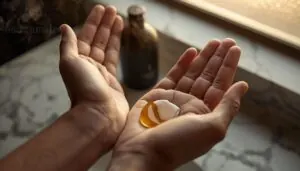
Your palms are the mixing bowl here. Pour aftershave into one palm, then transfer it to the other so both hands share the product evenly.
Use a pea-sized amount for gels or a dime-sized amount for balms and lotions. Rub your palms together briefly to warm the product, which helps it spread smoothly across your face.
Pat Instead of Rubbing
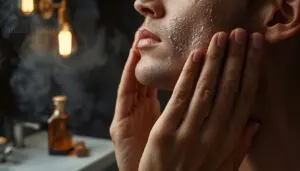
Rubbing is where most guys go wrong. Friction drags product around and can irritate freshly shaved skin, especially if you have skin sensitivity. Patting deposits an even film without the streaks. Think of it like stamping paint, not brushing it on.
- Press palms onto your face gently
- Use fingertips for tight spots
- Keep contact brief and light
- Avoid sliding or dragging motions
- Repeat until product covers evenly
Light pressure lets the film set. Press too hard and you’ll push product off before it settles, which ruins the purpose. This isn’t a massage, and it isn’t a moisturize session. It’s quick, deliberate contact that spreads aftershave where it needs to go.
Give it 30 seconds to absorb before touching anything else.
Cover Face and Neck
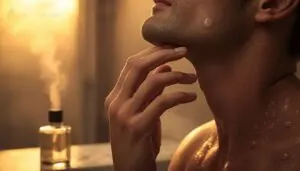
Your neck needs the same attention as your face, but it’s more delicate.
Pat upward along the jawline, then work down the sides and front. Skin there’s thinner, so press lighter on the neck to avoid irritation.
Cover every shaved spot evenly for a proper skin hydration boost. Skip your chest unless you shaved it too.
Treat Only Shaved Areas
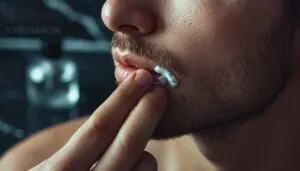
Aftershave belongs only where the razor touched. Your beard line marks the cutoff, so stop there instead of coating your whole face.
Work in shaving zones: cheeks, jawline, then neck. Extra product on your fingertips can transfer past the boundary, so wipe or rinse between zones. Residue and leftover shaving cream let it spread further, and unshaved skin doesn’t need it.
Let Product Absorb Fully

Once the product sits on your shaved zones, give it time to work. Wait two to three minutes before adding anything else, including sunscreen or moisturizer. Rushing creates surface buildup that blocks absorption and leaves a sticky film.
Let Product Absorb Fully, and you get hydrated skin benefits without wasted product. Fragrance application timing matters too; layered scents need a dry base.
Recognize Excessive Aftershave Application
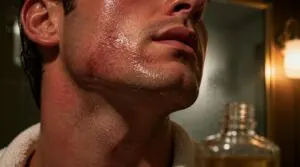
If your aftershave is too heavy, your skin usually tells you fast. Watch for burning redness, slick shine, or stubborn breakouts after you apply. When you see those signs, it’s time to cut back before your next shave.
Persistent Burning or Redness
Persistent burning or redness usually means your skin barrier is still raw from shaving, so alcohol content, fragrance application techniques, or preservatives keep stinging. Treat it like a hot pan: too much pressure and it stays angry. Cut next use, rinse gently, and apply a bland, fragrance-free moisturizer.
- Stop alcohol-based irritants
- Skip fragrance areas
- Use thin, measured layers
- See a clinician if it lasts
Greasy Shine and Stickiness
If you see a greasy shine or feel stickiness after shaving, you likely used too much. Extra film-formers and oils can’t fully absorb, leaving unabsorbed residue. Alcohol and fragrance carriers can also stay behind if your layer is thick.
Try a thin pat, then wait; use a lightweight lotion preference if skin sensitivity shows up.
Clogged Pores or Breakouts
Clogged pores or breakouts often mean your aftershave layer is too thick for your face’s post-shave state. Heavy lipids and poor absorption can trap sebum and keratin, feeding pore-plugging and follicle inflammation triggers. Use proper postshave care: rinse residue, pat thin, and let it absorb.
- Thin pat, no shine
- Change buildup-prone areas first
- Skip occlusive balms if acne flares
- Consider gentle dead skin removal if needed.
Overpowering Fragrance
If your aftershave smells too strong, it often comes from fragrance intensity building up after application. Alcohol and volatile compounds peak a few minutes later, so what feels mild at first can turn into overpowering fragrance quickly.
Your nose also matters: lighter skin odor and higher fragrance concentration increase scent projection, while heavier molecules linger and boost fragrance intensity.
Reduce Your Next Application
Go one step lighter next time. If your skin shows overapplication signs like burning, redness, or stickiness, use less: cut your usual amount by about half.
For skin sensitivity, choose two or three drops instead of a full palm.
Also check alcohol content and let your skin finish absorbing before adding anything else.
You’ll keep control without the sting.
Estimate How Long Aftershave Lasts

Knowing how much product you actually use turns a mystery bottle into a predictable purchase. A little quick math tells you whether that bottle on your shelf lasts two months or ten. Here’s how to calculate uses per bottle and stretch every ounce further.
Calculate Uses Per Bottle
Knowing your math turns a mystery purchase into a budget line item. Divide the bottle size by your typical amount per use, and you’ll know exactly when to restock. A few factors shift the numbers:
- Alcohol content speeds evaporation, tempting heavier pours
- Fragrance concentration affects how much you need
- Residue removal before application
- Skin sensitivity changes per-use volume
- Application order after rinsing
Do the math once. Then track it.
100 Ml at 1 Ml
One milliliter per use is the sweet spot for most men. A 100 ml bottle at that rate delivers about 100 applications, or roughly three months of daily use. Here’s the breakdown:
| Bottle Size | Amount Per Use | Total Applications |
|---|---|---|
| 100 Ml | 1 Ml | ~100 uses |
| 100 Ml | 1 Ml | ~3 months daily |
| 100 Ml | 1 Ml | ~1,000 sprays |
That’s roughly a quarter per use. Cheap insurance against skin sensitivity.
100 Ml at 2–3 Ml
Using 2–3 Ml per application cuts that 100 ml bottle down to about 40–50 uses, or roughly six weeks of daily application. That’s the range for dry skin or heavier balms needing more coverage.
You’ll go through product faster, but proper skin irritation relief sometimes demands it. If your skin type requires this amount, budget accordingly. A bottle becomes a monthly expense, not a quarterly one.
Track Pumps and Sprays
Bottle math gets easier when you count pumps. Most pumps deliver 0.5–1.0 ml per actuation, so two to three presses covers a standard application.
Sprays run less predictable, since valve wear and bottle pressure cause variable dose with each puff. Track your sprays for a week, then divide total volume by uses. That number tells you exactly when the next purchase lands.
Store Aftershave Properly
Good tracking habits only work when the product survives. Alcohol evaporation steals volume and strength from bottles left half-open in steamy bathrooms. Keep yours in a cool, dark cabinet, tightly capped and upright. Write the purchase date on the base to monitor aftershave expiration.
- Store below 70°F, away from sunlight
- Cap immediately after each use
- Refrigeration sensory benefit: a cool splash
- Discard when color or scent shifts
Frequently Asked Questions (FAQs)
What is the 5 spray rule?
The 5 spray rule means starting with five aftershave sprays on face and neck. It’s a baseline, not gospel. Adjust for skin need matching, since spray application loss and fragrance concentration vary.
How to correctly use aftershave?
Start with 1–3 mL, roughly a dime-sized amount, after rinsing shaving residue away. Pat gently onto damp skin—don’t rub. Cover shaved areas only, let it absorb, then finish with moisturizer and sunscreen for complete routine customization.
How long should 100ml of aftershave last?
Here’s the surprise: 100ml can last a month or three. At 1ml daily, expect roughly 100 days. At 2–3ml, you’ll drain it in 33–50 days. Sprays last longer since fragrance concentration matters more than volume.
How many sprays of aftershave should I use?
Start with 1–2 sprays of aftershave. Spray volumes vary by nozzle, so more actuations mean more delivered product. Oily skin needs less; dry skin needs slightly more. Overapplication causes burning and greasy buildup.
Can aftershave expire or lose effectiveness?
Yes, aftershave expires. Most last 2–5 years properly stored; alcohol-based splashes outlast balms. Watch for scent change indicator signs like sourness, plus darkening color or stickiness. Replace products older than five years.
Should you refrigerate aftershave for better results?
Refrigerating aftershave isn’t required. Most formulas stay stable at room temperature; heat and light cause damage, not warmth’s absence. Chilled aftershave offers sensitive skin soothing, but alcoholfree chilling benefit stays limited. Check your label first.
Can aftershave replace moisturizer in your routine?
Can aftershave replace moisturizer? Sometimes, but not entirely. A balm’s moisture limitation shows by midday; true longterm skin health needs a concentrated emollient need fulfilled separately.
How long does aftershave scent typically last?
Expect two to six hours of scent, depending on formula. Alcohol splashes fade fastest, often within a one to three hour scent fade.
Balms and oils last longer, since fragrance concentration impact and skin moisture determine longevity. Heat, sweat, and environmental scent influence shorten duration considerably.
Is aftershave safe for neck and chest?
Yes, when you choose the right formula and use restraint. Your neck and chest have thinner skin than your face, making them more vulnerable to stinging and razor burn.
Can I use aftershave on other parts of my body?
Think of aftershave as a tool built for one-job tool, not a whole-body fix. You can use it on your chest and neck, but skip groin, underarms, and nipples. Their thinner skin stings badly. Practice alcohol content awareness there. Match product to area, or expect skin type mismatch discomfort.
Conclusion
Think of aftershave like seasoning a good steak. A pinch enhances. A handful ruins it.
Once you know how much aftershave to use, the guesswork disappears and your skin stays calm, comfortable, and quietly confident. Start small, watch how your face responds, and adjust from there. Your bottle lasts longer too.
Master the measurement, and you’ll never wonder why your face burns or your coworkers smell you coming.