This site is supported by our readers. We may earn a commission, at no cost to you, if you purchase through links. This content is for general informational and educational purposes only and is not a substitute for professional medical, dermatological, or nutritional advice.

Your trimmer isn’t dull. It’s dry. Nine times out of ten, that snag-and-yank routine means the blades are grinding metal-on-metal, crying out for two drops of oil.
I’ve seen $20 trimmers outlast $200 ones in my chair, and the difference comes down to beard trimmer oil usage. Oil cuts friction, blocks rust, and keeps every tooth cutting evenly instead of chewing through your whiskers.
Here’s the good news: it takes about 90 seconds. Below, I’ll show you which oil to grab, how to apply it without gumming up the works, and how often to keep those blades gliding.
Table Of Contents
- Key Takeaways
- Does Your Beard Trimmer Need Oil?
- What Does Beard Trimmer Oil Do?
- Which Oil Should You Use?
- How to Oil a Beard Trimmer
- How Often Should You Oil Your Trimmer?
- What if Your Trimmer Still Snags?
- Frequently Asked Questions (FAQs)
- Should you oil your beard trimmer?
- What kind of oil do you use for a beard trimmer?
- Can I use WD-40 as clipper oil?
- How often should you oil a trimmer?
- Can I use other oils instead of trimmer oil?
- Does beard trimmer oil have a shelf life?
- Are scented trimmer oils safe for sensitive skin?
- What happens if I over-oil my trimmer?
- Is it safe to oil trimmers with waterproof designs?
- Can I use WD-40 on my trimmer?
- Conclusion
Key Takeaways
- Most snagging and pulling from a beard trimmer means the blades are dry, not dull—two or three drops of lightweight mineral or manufacturer-recommended blade oil cuts friction, prevents rust, and keeps cuts even.
- The oiling routine takes about 90 seconds: unplug and brush out debris, apply 2–3 drops on the pivot (not the teeth), run the trimmer briefly to distribute, then wipe away all excess oil within 60 seconds.
- Oiling frequency depends on use—2–3 times weekly for daily users, after every cleaning for weekly users, after every rinse for wet-use trimmers, and immediately whenever blades feel hot, loud, or draggy.
- Skip household oils, cooking oil, and WD-40, which gum up blades or degrade parts; if snagging persists after proper cleaning and oiling, visible wear, chipping, or rust means it’s time to replace the blade assembly.
Does Your Beard Trimmer Need Oil?

One quick question first: does your trimmer even need oil? Short answer, probably yes. Most stainless steel blades will run without it, but manufacturers still recommend light oiling to cut friction and wear.
Since the Andis T-Outliner ships with its own blade oil, a drop or two before each use is easy, and this Andis T-Outliner trimmer review shows how it holds up over time.
If yours has metal blades or a metal cutting block, blade lubrication isn’t optional, it’s maintenance. Skip it and you’re inviting rust, stiffness, and that sad day when your trimmer starts yanking hairs instead of slicing them.
And here’s the part nobody tells you: a drop of beard trimmer oil now beats buying a new trimmer later. Humid bathroom? Salt air? You’re on the clock. Extending trimmer lifespan starts with thirty seconds of care. Trust me, your future face will thank you.
What Does Beard Trimmer Oil Do?

So what’s actually happening when you oil the blades? More than you’d think.
Blade lubrication does three jobs at once. First, it’s reducing blade friction, so the teeth glide instead of grinding metal-on-metal. Less drag means less heat, and cooler blades stay sharper longer.
Second, oil is preventing rust and corrosion. Even stainless steel sulks in a humid bathroom. A thin film seals those micro-pockets where moisture and beard dust love to hide.
Third, it’s maintaining blade performance. Oiled blades cut evenly at the same speed and recover faster when you snag a coarse patch. Dry blades? They yank.
The payoff is simple: less wear, fewer snags, and you’re genuinely extending trimmer lifespan. Thirty seconds of oiling, years of clean cuts. Fair trade, right?
If your beard grows thick and coarse, pairing regular oiling with a beard trimmer built for thick beards helps blades glide through dense hair without pulling or overheating.
Thirty seconds of oiling buys you years of clean cuts and a trimmer that lasts, which is a fair trade
Which Oil Should You Use?

So you’re sold on oiling. Now, which bottle do you grab?
Here’s the honest answer: the one your manufacturer specifies. Most trimmer brands sell their own blade oil, and it’s usually a lightweight mineral oil. It’s cheap, it works, and it won’t void anything. Check the manual, or just use the tiny bottle that came in the box. You did keep that, right?
No brand oil? A light mineral oil or a quality synthetic blade oil works fine. Synthetics stay cleaner longer and stretch the time between applications, which suits lazy geniuses like me.
Skip the heavy stuff. Automotive oil, transmission fluid, olive oil from your kitchen? No. They’re too thick, they gum up, and they can degrade seals.
Jojoba or almond oil can condition blades without harming rubber o-rings, but go easy. A drop or two, fragrance-free always, since this thing lives near your skin.
Quick rule: thin oil wins. If it leaves gummy buildup, switch to something lighter.
How to Oil a Beard Trimmer
So you’ve got the right oil and you’re ready to go. Good news: this takes about two minutes, and you can’t really mess it up. Here’s the three-step routine I run through before every oiling, so your blades stay sharp and your beard stays snag-free.
Clean and Prepare The Blades
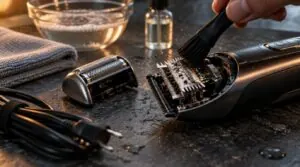
Picture your trimmer blades like a rusty hinge screaming for mercy. Yeah, that’s what skipping prep looks like.
First, unplug and disassemble. Pop the foil or head cover off so you can reach the actual cutting edge. Grab a small, stiff brush and remove debris from the blades and housing. Hair clumps plus oil equals paste, and paste equals heat.
Wipe everything down with a lint-free cloth. Spotted a nick or burr? Don’t oil it. Replace the blade assembly instead.
If your manufacturer allows it, rinse the non-electrical parts with warm water and mild soap, then dry them completely. Moisture trapped in the blade pockets breeds corrosion, and nobody wants that.
Clean blades first, always. Oil over grime just glues the mess in place.
Apply and Distribute The Oil

Applying oil is where most guys rush, and it shows. Put 2–3 drops on the pivot, not the teeth. Tilt your trimmer 45 degrees, then turn on and distribute oil for 5–10 seconds. Rock the head gently so it reaches the side gaps. Done right, you’ll feel a cooler blade and hear less motor strain.
Wipe Away Excess Oil

Oil application technique matters, but the wipe matters more. Grab a dry microfiber cloth and wipe away excess oil within 60 seconds, one direction only, away from the blades. Tilt the trimmer 45 degrees so drips escape the blade gap. Hit the corners with a clean brush. Excess oil removal prevents lint buildup, sluggish blades, and ghosting.
Proper tool storage follows.
How Often Should You Oil Your Trimmer?

A buddy of mine oiled his trimmer once a year. Once. It now cuts like a butter knife through gravel. Don’t be that guy.
Here’s your schedule:
- Daily users: oil 2–3 times a week.
- Weekly users: oil after every cleaning.
- Rarely touch it? Oil every 1–2 weeks so rust doesn’t move in rent-free.
- Wet-use trimmers: oil after every rinse, no exceptions.
- Blades feel hot, loud, or draggy? Oil immediately, then check alignment.
Also, follow the manufacturer recommendations. They built the thing, they know. And remember, a proper oil application technique means one drop, not a dip in a fryer. Good habits keep your blade sharpness preserved and your lines crisp.
What if Your Trimmer Still Snags?
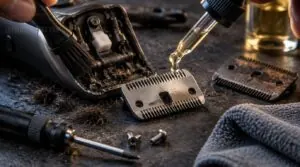
Snagging after oiling is like a car that still pulls left after a tire rotation. Something’s bent, not just dry.
Run through the checklist. Clean the hinge area with a soft brush, because hidden hair accumulation interrupts blade movement. Dry everything completely, then apply fresh blade oil. Uneven blade tension is a classic culprit, so tighten those clamp screws and check that the cutting edges sit parallel to the guard.
Still catching? If snags persist after two full uses of cleaning and proper lubrication, your blades are telling you something. Visible wear, chipping, or rust means replacement time. Same goes for a foil or rotary head that keeps grabbing.
And if the motor stalls or sounds off during cleaning? Stop. Take it to a pro. Your face will thank you.
Frequently Asked Questions (FAQs)
Should you oil your beard trimmer?
Yes, most of the time. If your trimmer has steel blades, oil your trimmer regularly. Blade oil cuts friction and heat, which makes preventive maintenance easy. Oil-free model? Skip it and follow the manual.
What kind of oil do you use for a beard trimmer?
Think of your blades as tiny dancers; they need a slick floor.
Grab Wahl Clipper Oil, a light mineral-based blade oil, for lubricating trimmer blades on your Philips Multigroom Any beard trimmer oil works.
Can I use WD-40 as clipper oil?
Sure, it’s already in your garage, but skip it.
WD-40 is a solvent, not true blade oil, so it’s poor at lubricating trimmer blades and offers weak corrosion prevention. Just follow your manufacturer specifications instead.
How often should you oil a trimmer?
Oil after every 3–5 uses, since frequency depends on how hard you work that trimmer. Thick beard? Oil more often.
Clean blades and remove debris. Add one or two drops, then wipe away excess oil.
Regular oiling keeps cutting smooth and quiet, and if your blades are due for an upgrade, these professional hair clippers are built to handle daily use.
Can I use other oils instead of trimmer oil?
Grabbing cooking oil is a crime against blades! Vegetable oil and olive oil turn gummy and trap hair.
Light mineral oil works fine, but check product compatibility first. Dedicated trimmer oil is still your safest bet.
Does beard trimmer oil have a shelf life?
Ironic, right? The oil protecting your blades can go bad itself. Oil shelf life runs about one to three years.
Spoiled oil hurts blade sharpness preservation and thermal regulation. Toss it if it smells rancid.
Are scented trimmer oils safe for sensitive skin?
A 24-hour patch test tells you a lot.
Scented trimmer oils can irritate sensitive skin, since fragrance triggers itching and redness. For skin irritation prevention, go unscented, or dab a drop behind your ear first.
Lightweight, non-comedogenic options like jojoba and argan oils absorb quickly without clogging pores.
What happens if I over-oil my trimmer?
Here’s the ugly truth: too much oil gums your blades, attracts clippings, and clogs vents, causing motor overheating. It can even slow blade speed. Less is more, folks. Wipe away excess every time.
Is it safe to oil trimmers with waterproof designs?
Yes, but with limits. Waterproof trimmers let you oil exposed blades only, never the sealed internals. Use 2–3 drops, wipe excess, and watch for pooling near seals. Overoiling attracts dust and risks corrosion.
Can I use WD-40 on my trimmer?
Nope, skip the WD- It attracts grime, thins out proper lubricating oil, and speeds up mechanical wear. For real grooming tool care and blade corrosion prevention, stick with clipper-specific oil. Your blades will thank you.
Conclusion
Last month a client brought in a trimmer so dry it squeaked like a rusty gate. Two drops of oil, and it purred through his beard like new.
That’s the whole secret. Regular beard trimmer oil usage turns a snagging, yanking mess into a smooth glide, and it costs you 90 seconds and pennies.
Clean the blades, apply two drops, wipe the excess. Do that, and your trimmer will outlive your favorite jeans.