This site is supported by our readers. We may earn a commission, at no cost to you, if you purchase through links. This content is for general informational and educational purposes only and is not a substitute for professional medical, dermatological, or nutritional advice.

carry centuries of precision behind them. Samurai trimmed their goatees to signal rank. Edo-period barbers set necklines with the same care a swordsmith applied to an edge. That discipline didn’t disappear; it evolved into the clean, symmetrical grooming aesthetic Japanese men are known for today.
The challenge for most guys is that Japanese facial hair grows lighter on the cheeks and stronger on the chin. That’s not a flaw; it’s actually an advantage when you pick the right style. Chin-focused shapes like the Van Dyke or Circle Beard work with that pattern, not against it.
Here are ten styles worth trying.
Table Of Contents
- Key Takeaways
- 10 Japanese Beard Styles to Try
- Choosing a Japanese Beard Style for Your Face Shape and Growth Pattern
- How to Groom and Maintain Japanese Beard Styles
- Japanese Beard History: From Samurai Traditions to Modern Trends
- Japanese Beard Styles in Work, Dating, and Everyday Life
- Frequently Asked Questions (FAQs)
- What is the Japanese intimacy problem?
- Are beards attractive in Japan?
- What is a fu manchu beard?
- What is the most handsome beard style?
- Did Samurai have facial hair?
- Is facial hair becoming more acceptable in Japan today?
- Is keeping facial hair in Japan considered unprofessional?
- Do Japanese men have to shave off their beards?
- What is the Japanese beard called?
- Can I grow a beard while teaching in Japan?
- Conclusion
Key Takeaways
- Japanese facial hair typically grows stronger on the chin than the cheeks, so chin-focused styles like the Van Dyke or Circle Beard work with your natural pattern rather than against it.
- Precision and clean edges matter more than volume — keeping borders tight is what separates an intentional look from an unkempt one.
- Your style choice should be driven by where your hair actually grows consistently, not by what looks good on someone else; map your growth zones first, then pick a shape that anchors there.
- Workplace acceptance in Japan still leans toward minimal, well-defined facial hair, so matching your style to your professional context is as practical as matching it to your face shape.
10 Japanese Beard Styles to Try
Japanese beard styles work with what you’ve got, not against it. Most of these ten cuts favor strong chin growth over thick cheeks, so patchy growth isn’t a dealbreaker. Pick the one that matches your density and daily routine.
If you’re still narrowing down your options, browsing short beard styles suited to various densities can help you match a cut to exactly what your growth allows.
Light Japanese Stubble

suits sparse growth well. You keep it short, around 1–3 mm, so patchiness reads as texture instead of neglect. Japanese men often favor this look because facial hair aesthetics there prize restraint. Use precise beard trimming techniques and define the boundary around your mouth and chin. Recheck every two days; facial hair grooming at this length changes fast.
- Sparse can look intentional when edges stay clean.
- Contrast depends on your hair color against skin tone.
- Trim with the grain to soften harsh lines.
- Moisturize; dry skin blurs the stubble’s sharpness.
- Track your growth window; everyone’s sweet spot differs.
Short Boxed Beard
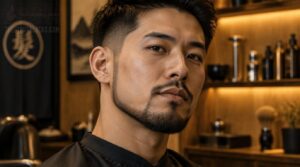
If stubble felt too subtle, step up to a Short Boxed Beard. You keep the chin slightly longer than the cheeks, then cut straight vertical lines instead of arcs. Asian facial hair genetics often mean lighter cheeks, so keep sides near stubble and let chin density carry the box.
| Zone | Guard Length | Frequency |
|---|---|---|
| Chin | 6–8 mm | Weekly |
| Cheeks | 1–2 mm | Every 3 days |
| Neckline | Clean shave | Every 3 days |
| Cheek line | Clipper edge | Weekly |
| Mustache | 3–4 mm | Every 4 days |
These beard trimming guides keep the silhouette repeatable. Straight jawlines suit this best; curly hair needs more frequent edging. Among Japanese beard styles, this one reads polished yet masculine. Follow these beard maintenance tips and the box holds its shape between cuts.
Patchy Goatee

The boxed beard asked for even density. The Patchy Goatee doesn’t. Asian facial hair genetics often leave cheeks light while the chin grows in islands, so you work with your facial hair growth patterns instead of fighting them.
Your playbook:
- Shave cheeks and neckline clean for contrast.
- Trace the goatee outline with a trimmer, no guard.
- Fill gaps with 3–5 mm stubble.
- Re-edge every 3 days.
- Let time thicken sparse follicles.
This is one of the most forgiving Japanese Beard Styles. Consistent beard grooming turns patchiness into definition.
With the right routine, even sparse growth can look intentional — explore beard styling tips for patchy beards to find techniques that work with your natural pattern.
Circle Beard

The Patchy Goatee left your cheeks bare. The Circle Beard connects what’s left. You link your mustache to a rounded chin patch, forming a clean ring around your mouth.
Keep cheeks shaved and the chin even. Edge the lip line every two days. It suits Japanese male aesthetics well: tight, symmetrical, controlled. Budget about ¥3,000 monthly for trims, since many employers still discourage visible facial hair.
Van Dyke Beard

When you want sharp contrast, the Van Dyke beard delivers. It pairs a connected mustache with a pointed chin patch, leaving your jaw bare.
Follow these steps:
- Grow your mustache and chin first.
- Trim cheeks clean.
- Shave the neckline two fingers above the Adam’s apple.
- Shape the chin into a crisp point.
- Edge up daily.
This beard style suits Japanese facial structures with strong chin growth, and consistent beard grooming keeps the lines sharp.
Defined Chin Beard

Focus your growth on the chin only, keeping both cheeks and neck clean-shaved. The defined chin beard earns its name from crisp edges that cleanly separate chin hair from the surrounding skin.
You’ll need to trim consistently to keep those lines looking sharp. Among Japanese beard styles, it suits sparse growers well since chin density matters more than full coverage.
Chinstrap Beard

The chinstrap beard is like a frame around a painting, defining the jawline without filling the canvas. It suits Japanese facial structures with sharper jaw angles.
For those exploring similar precision styles, natural beard styles for Black men offer equally sharp, jaw-defining looks that complement a range of facial structures and textures.
Keep the strap width consistent on both sides for symmetry. This style demands regular edging, so commit to weekly beard maintenance. Among Japanese beard styles, it’s one of the cleanest looks you can wear.
Long Japanese Goatee

Picture a single stripe of chin hair pulling the eye straight down, clean and deliberate. That’s the appeal of a Japanese Long Goatee.
Keep the chin section growing while you trim everything around it sharp. Strong chin growth strength matters here; thin patches break the line. Tidy your edges weekly and comb the length daily to maintain its intentional shape.
A wide-tooth beard comb for long hair glides through the length without snagging, keeping that deliberate downward line smooth and tangle-free.
Ducktail Beard

The Ducktail Beard earns its name from the forked point at the chin, which sets it clearly apart from rounder Japanese beard styles. You’ll need solid density along the jaw to pull off a clean, readable split.
If your growth is uneven, the tail drifts off-center, so keep both sides combed and trimmed evenly. Touch up that chin outline regularly.
Full Beard

The Full Japanese Beard is the most intentional style here. It covers your entire chin and jawline with a clean, sculpted silhouette rather than loose, overgrown growth.
- Trim consistently to keep length even
- Define a clear cheek and neckline
- Use beard care products for density control
Strong beard styling techniques support beard style adaptation and sharpen facial hair social perception.
Choosing a Japanese Beard Style for Your Face Shape and Growth Pattern

Picking the right style starts with knowing what your face and genetics actually allow. Face shape, growth density, and workplace context all play a role in narrowing down your options. Work through each factor below to find the style that fits your life.
Face Shape Compatibility
Match your beard shape to your face before committing to a style. Round faces benefit from bottom-heavy styles like a long goatee or Van Dyke, which add vertical length.
Square faces need softer jaw edges, so skip sharp cheek lines. Oval faces can handle most beard styles for Japanese people, from light stubble all the way to a full beard.
Growth Pattern Assessment
Face shape is one factor, but your growth pattern matters just as much for beard shape selection. After shaving, track where hairs emerge consistently over several days to find your primary growth zones.
Your facial hair growth rate varies by area, so anchor Japanese beard styles where your coverage is strongest and they’ll hold their shape between beard trimming sessions.
Cheek Density
Once you’ve mapped your growth zones, check mid-cheek coverage specifically. Thin patches there expose themselves fast in Japanese beard styles like the circle beard or chinstrap. A full beard hides that patchiness because bulk hair fills the visual gaps.
Let length build before any beard trimming, since longer hairs tend to bridge the gaps that short stubble simply leaves open.
Pairing patience with a beard growth serum stimulator can help accelerate density in those slower-growing areas while length does its bridging work.
Chin Growth Strength
determines which chin-forward beard styles work for you. A defined Chin Beard, goatee, or chinstrap relies on continuous hair along the lower chin band. Sparse coverage breaks that outline.
Japanese Stubble is more forgiving. Japanese men with uneven chin density find these beard styles easier to pull off when they delay beard trimming and let length build.
Maintenance Requirements
Often, your choice of style sets your beard maintenance workload. Defined edges on styles like the chinstrap or circle beard soften fast, so neckline and cheek cleanup needs to happen regularly. Longer shapes like the ducktail demand more combing and re-balancing trims.
The right beard trimming tools and a consistent beard care routine both keep maintenance and beard hygiene manageable.
Workplace Suitability
Since workplace culture varies, your style choice matters. Light stubble and the Circle Beard score highest for office acceptance in formal settings.
Some firms enforce corporate beard bans in client-facing roles, so check with HR. Japanese grooming culture favors clean precision over volume, which aligns well with business formal dress. Keep lines tight, and you’ll stay within professional beard etiquette.
How to Groom and Maintain Japanese Beard Styles

Think of a clean Japanese beard like a bonsai tree. Every single line matters. Japanese grooming traditions value precision over bulk, so your edges do all the heavy lifting.
A clean Japanese beard, like a bonsai, is defined entirely by the precision of its edges
- Trim borders weekly, even if the length stays the same.
- Set your neckline below the jaw, fading toward the Adam’s apple.
- Brush from ends upward to reduce breakage and spread beard oil evenly.
- Wash two to three times a week; over-washing strips natural oils.
- Use beard oil daily for softness, and add balm when you need shape.
Keep your cheek lines consistent. Loose borders make even sharp beard styles look unintentional. Facial hair maintenance in Japanese cultural norms leans clean and deliberate, so small, frequent sessions beat occasional overhauls every time.
Japanese Beard History: From Samurai Traditions to Modern Trends

Japanese beard history reads like a blade’s edge, sharp with meaning at every turn. Samurai wore full beards as signals of rank and discipline. Trimmed goatee styles appeared in portraits to project bearing and sword skill during the Edo period.
The Tokugawa beard ban reshaped what was acceptable, tightening grooming norms across regions. When the Meiji era arrived, Western facial hair trends entered Japan fast. Circle beards and Van Dyke styles appeared in fashion prints and magazines, mixing old tradition with new influence.
Japanese grooming traditions kept precision at the center. Officers didn’t chase trends. They favored clean, trimmed looks. Modern beard trends carry that same discipline forward. Today, clean lines and symmetry define the Japanese aesthetic, influencing barbers worldwide.
Japanese Beard Styles in Work, Dating, and Everyday Life

Your beard says something before you do. In work settings, on dates, and in daily life, beard styles carry social weight, and Japanese beard styles are designed for that kind of intentional precision.
Five ways these styles work in real contexts:
- Neat, defined edges increase workplace acceptance in formal office settings.
- Chin-focused shapes draw attention to your expressions and smile during close interactions.
- Short styles reduce daily upkeep while still looking sharp and groomed.
- Regular grooming tips keep boundaries clean and polished between barber visits.
- Patchy cheek growth stays less visible when your style focuses on the chin.
Dating culture rewards approachable looks. Offices reward discipline and consistency. Both respond well to a beard that reads as intentional, not accidental.
Frequently Asked Questions (FAQs)
What is the Japanese intimacy problem?
A closed shoji screen hides the room inside. That image fits the so-called Japanese intimacy problem, an informal label for emotional distance many Japanese men show in dating, shaped by facial hair stigma-like cultural norms in Japan.
Are beards attractive in Japan?
Can facial hair really win over Japanese standards? Yes, if you’re neat. Cleanliness standards matter most there. Well-groomed, short beard styles read as stylish masculinity; patchy growth triggers facial hair social stigma, especially in conservative workplaces.
What is a fu manchu beard?
Two thin tendrils drip past your jaw like strands of silk. That’s a fu manchu beard: mustache hair grown only from the corners of your lip, cheeks and chin clean-shaven, demanding dense growth and patient grooming.
In fiction and folklore, characters wearing this style are often portrayed as powerful warriors or sages, a tradition explored in depth through martial arts character archetypes.
What is the most handsome beard style?
There’s no universal answer here. Masculine aesthetics shift by face shape and your growth pattern. The most handsome beard style is simply the one that actually fits your features and that you can consistently maintain.
Did Samurai have facial hair?
Some samurai had minimal facial hair before the 17th century, using beards to signal masculinity and intimidate battlefield enemies. When the Tokugawa Edo period began, the shogunate banned beards, making clean-shaven faces the expected standard.
Is facial hair becoming more acceptable in Japan today?
Dramatically, yes. Beard acceptance trends are quietly but surely shifting Japan’s broader grooming culture. If you’re keeping your facial hair neat and well-trimmed, you’ll find younger generations and international workplaces far more welcoming than before.
Is keeping facial hair in Japan considered unprofessional?
It depends on your workplace. Corporate beard bans remain common in traditional Japanese companies, but tech and international firms are far more relaxed. Younger generations and cosmopolitan settings show growing acceptance of the Japanese beard.
Do Japanese men have to shave off their beards?
Like a blank canvas, the clean-shaven look signals professional readiness. No official beard ban exists in Japan, but if you’re a Japanese man, strong workplace grooming rules and social norms will likely push you clean-shaven.
What is the Japanese beard called?
One word covers it all. In Japanese, hige (髭) is the universal term for any type of facial hair, covering beards, mustaches, and whiskers alike. You’d use it no matter your preferred style or length.
Can I grow a beard while teaching in Japan?
Imagine showing up to your Japanese classroom looking sharp, a well-groomed beard in place. You can grow beard styles while teaching in Japan, but workplace policies vary. It’s always smart to check your contract first.
Conclusion
A veteran Tokyo barber once told a nervous client that the best beard is simply the one you can actually commit to maintaining. That’s been the real point.
Japanese beard styles work because they’re designed around how your face naturally grows, not forced against it. Pick a shape that fits your growth pattern and your weekly schedule, trim it consistently, keep the lines clean, and you’ll never have to chase a look that isn’t yours.