
This site is supported by our readers. We may earn a commission, at no cost to you, if you purchase through links.

Your electric razor glides over your face each morning, but those tiny blades are working harder than you think, dulling microscopically with every pass across stubble and skin. Most men don’t realize their shaver’s performance drops gradually over months, creating a barely noticeable decline that ends with tugging, irritation, and patchy results.
Manufacturers build these devices to last years, but the cutting heads themselves need replacement every 12 to 24 months depending on your specific model, hair type, and how often you shave. Ignoring this timeline doesn’t just compromise your morning routine—it can damage your skin and even wear down the motor faster than necessary.
Understanding the right replacement schedule for your razor, along with the warning signs that blades have passed their prime, keeps your shave smooth, comfortable, and efficient without wasting money on premature replacements.
Table Of Contents
- Key Takeaways
- How Often Should You Replace Electric Razor Heads?
- Key Factors Affecting Razor Head Lifespan
- Signs Your Electric Razor Heads Need Replacing
- Consequences of Using Dull Razor Heads
- How to Extend The Life of Razor Heads
- Step-by-Step Guide to Replacing Razor Heads
- Choosing The Right Replacement Heads
- Cost and Environmental Considerations
- Frequently Asked Questions (FAQs)
- Conclusion
Key Takeaways
- Replace your electric razor heads every 12 to 24 months depending on your specific brand, shaving frequency, and hair type, with daily shavers hitting the lower end around 9-12 months while occasional users can stretch to 18 months or longer.
- Dull blades create pulling sensations, increased skin irritation, and patchy results that force multiple passes, while also straining your shaver’s motor and raising your risk of ingrown hairs and razor burn.
- Proper maintenance—including rinsing after every use, weekly lubrication with manufacturer-approved products, and storing in cool, dry locations—can extend replacement intervals by several months and preserve cutting performance.
- OEM replacement heads cost 20-50% more than third-party options but guarantee compatibility and warranty protection, with annual replacement expenses typically representing just a few percent of your original shaver’s price.
How Often Should You Replace Electric Razor Heads?
Replacing your electric razor heads at the right intervals keeps your shave smooth, comfortable, and irritation-free, but the timing isn’t one-size-fits-all. Different brands offer specific guidance, razor types vary in durability, and how often you shave plays a significant role in when you’ll need fresh blades.
Let’s break down the key factors that determine your replacement schedule so you can stay ahead of dull blades and maintain peak performance.
Manufacturer Recommendations by Brand
Each brand sets its own replacement schedules, so you’ll want to check your shaver’s blade replacement guide for precise timing. Philips usually recommends changing heads every 12 months, while Braun extends that window to 18–24 months depending on the model. Panasonic suggests 12–14 months, and budget brands like Remington vary between 12–24 months.
These brand variations reflect different engineering approaches, warranty policies, and customer support standards for electric shaver maintenance. Regular audits using scientific study methods can help verify the quality and reliability of these replacement schedules.
Typical Replacement Intervals (Foil Vs Rotary)
Foil and rotary razors follow slightly different replacement schedules that reflect their distinct cutting mechanisms and blade wear patterns. You’ll find that foil durability usually lasts 12 to 18 months with regular electric shaver maintenance, while rotary heads often stretch to 12 to 24 months depending on your usage intensity and shaving habits.
Consider these factors when planning your shaver maintenance and blade replacement:
- Daily shavers usually hit the lower replacement interval around 9–12 months for both types
- Occasional users can extend blade wear timelines to 18 months or longer before performance declines
- Coarse hair accelerates foil and rotary head deterioration compared to finer facial hair
- Premium models often deliver longer replacement schedules due to high-quality materials and engineering
Proper razor maintenance between replacement cycles preserves cutting efficiency, though you should still follow manufacturer-recommended shaving head replacement guidelines for best results.
Impact of Shaving Frequency
Your shave cycle directly controls blade lifespan and razor wear patterns. Daily shaving accelerates blade degradation through constant friction and heat, pushing you toward the 9–12 month replacement mark, while infrequent sessions create heavier cutting loads per pass that still stress components.
Shaving frequency and technique together determine how quickly your razor heads lose their edge, making your personal hair growth patterns and shaving performance expectations critical factors in timing replacements.
Understanding the average electric razor lifespan is essential for maintaining ideal shaving results.
Key Factors Affecting Razor Head Lifespan

Your electric razor heads won’t wear out at the same rate as someone else’s, and that comes down to a handful of controllable factors. Understanding what accelerates blade dulling gives you the power to extend their lifespan and get better shaves between replacements.
Let’s break down the three main elements that determine how long your razor heads will actually last.
Hair Type and Coarseness
Your hair texture plays a decisive role in how long your razor heads will serve you well, and understanding that connection puts you in control of your grooming investment. Coarse hair and dense beard growth create more friction and resistance during each pass, which accelerates wear on both foils and blades far faster than fine or sparse hair patterns would.
Coarse hair and dense beards accelerate razor head wear through increased friction, shortening blade lifespan compared to fine hair
- Men with coarse hair often need replacements several months earlier than the standard 12-18 month guideline
- High curl patterns increase blade contact frequency, reducing blade sharpness and overall blade durability over time
- Thick beard density clogs cutting elements more quickly, diminishing shaving performance between cleanings
- Follicle depth affects how much resistance your razor encounters, directly impacting blade lifespan
- Proper razor blade care becomes even more critical when your hair type naturally puts extra demand on your equipment
Shaving Habits and Techniques
How you approach each pass directly influences blade longevity and shaving comfort, making your routine a cornerstone of razor head preservation. Proper shave prep with skin hydration, adjusted blade angle for your skin type, and light pressure during every stroke reduce unnecessary friction that grinds down cutting elements prematurely. Meanwhile, consistent shave frequency and deliberate shaving techniques minimize stress on foils and blades, extending their functional lifespan while delivering exceptional shaving performance and a more comfortable shaving experience every morning.
| Technique | Impact on Razor Head Life |
|---|---|
| Pre-shave hydration and shave prep | Reduces drag, extends blade sharpness |
| Light pressure with proper blade angle | Minimizes foil stress and blade dulling |
| Short strokes following growth direction | Decreases resistance and wear patterns |
| Consistent shave frequency | Balances workload, prevents overuse spikes |
| Post shave care and immediate cleaning | Removes debris that accelerates corrosion |
Your shaving routine and techniques shape both the quality of each shave and how many months you’ll get from your investment. Mastering fundamentals like controlled pressure and directional passes pays dividends in both shaving comfort and replacement costs. Thoughtful shaving tips—such as stretching skin in sensitive areas and avoiding multiple passes over the same spot—preserve cutting edges while delivering the close results you’re after, proving that skillful execution protects your equipment as much as it protects your skin.
Cleaning and Maintenance Practices
Consistent blade and foil care routines prevent premature wear while maximizing razor head longevity through diligent electric shaver maintenance tips. After every use, brush away trapped debris during foil cleaning, rinse water-safe models thoroughly, and allow complete air drying to avoid corrosion.
Weekly razor sanitizing with alcohol-free solutions, periodic lubrication per maintenance schedules, and proper shaver storage away from moisture preserve cutting precision, transforming routine electric razor maintenance tips and blade replacement and maintenance intervals into long-term razor care success.
Signs Your Electric Razor Heads Need Replacing
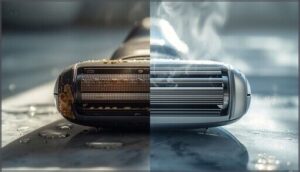
Your electric razor will tell you when it’s time for new heads—you just need to know what to look for.
The warning signs usually show up gradually during your morning routine, affecting both comfort and results. Here are the three main indicators that signal it’s replacement time.
Pulling or Tugging Sensations
When your razor starts pulling or tugging at your whiskers instead of gliding smoothly, that’s blade sharpness sending you a clear message. This uncomfortable sensation signals worn edges, misaligned components, or debris buildup affecting your shaving experience and comfort.
- Dull blades create friction and snagging, compromising shaving technique
- Poor razor alignment causes uneven contact and tugging
- Inadequate skin preparation or dry shaving amplifies pulling
- Neglected foil maintenance traps debris, reducing razor performance and requiring proper razor maintenance tips
Increased Skin Irritation or Razor Burn
When redness, itching, or burning sensations appear minutes to hours after your shave, worn blades are likely dragging across your skin instead of cutting cleanly. This friction from dull foils compromises your shaving comfort and safety, especially if you have skin sensitivity.
Insufficient lubrication during your shaving technique intensifies irritation causes, while post-shave care products containing alcohol worsen razor burn on already compromised skin.
Reduced Shaving Performance
You’ll notice that multiple passes no longer deliver the same closeness you once achieved in a single stroke, a telltale sign that blade sharpness and cutting efficiency have declined.
Worn heads increase razor drag by 20–40%, forcing you to press harder and creating excess skin friction that compromises shaver performance and efficiency.
Hair texture plays a key role here—coarser beards accelerate blade replacement needs, directly impacting shaver performance optimization and razor and blade durability through faster edge degradation inherent in shaving technology and innovation.
Consequences of Using Dull Razor Heads
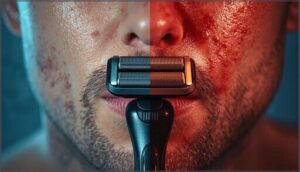
You might think a dull razor head is just an inconvenience, but the reality cuts deeper than that. When you keep shaving with worn-out blades, you’re setting yourself up for a cascade of problems that affect both your skin and your grooming routine.
Here’s what happens when you push those blades past their prime.
Higher Risk of Ingrown Hairs
When blades lose their edge, you’re setting yourself up for ingrown hairs that can turn your shaving experience into a painful ordeal. Dull razor heads force hairs to be cut at improper angles, increasing ingrown hair causes and triggering skin irritation. Here’s what happens:
- Hair gets misdirected below skin level
- Follicles become blocked more easily
- Razor burn intensifies with each pass
- Curly or coarse hair curls back into skin
- Poor hair follicle care leads to chronic problems
Replacement blades restore proper cutting geometry, protecting your skin conditions from deteriorating. Quality razor blade quality matters—especially when shaving technique alone can’t compensate for worn-out hardware.
Uneven or Ineffective Shaves
Beyond ingrown hairs, worn heads deliver patchy, uneven shaves that leave some sections smooth while others still feel rough. Blade geometry deteriorates as edges round off, causing uneven contact with your skin texture and failing to adapt to natural hair growth patterns. Your shaving technique can’t compensate when blade technology fails—replacement blades restore uniform cutting across every contour.
| Problem | Impact on Shaving Experience |
|---|---|
| Dull blade edges | Missed patches, uneven closeness |
| Worn foils/guards | Tugging sensations, razor burn |
| Residue buildup | Inconsistent blade contact, friction |
Potential Razor Malfunctions
When cutting issues persist, your shaver’s internal components start working overtime to compensate for blade wear, generating unusual razor noise and excess heat that strains the motor. Foil damage accelerates this decline, turning routine shaver maintenance into a gamble with razor safety and durability. Replacement blades aren’t just about comfort—they protect the blade technology that keeps your motor running smoothly.
- Grinding sounds signal metal-on-metal friction wearing down precision cutting edges
- Overheating motors struggle against dull blades, shortening your razor’s overall lifespan
- Vibration changes indicate misaligned components caused by uneven foil pressure
How to Extend The Life of Razor Heads
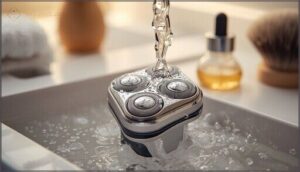
You don’t need to replace your razor heads as often as you think if you take care of them properly. A few simple maintenance habits can add months to their lifespan, saving you money and keeping your shaver performing at its best.
Here’s what you need to focus on to get the most out of every set of heads.
Proper Cleaning and Drying Methods
Consistently rinse your razor head under warm running water right after each shave to flush away hair and skin debris, then shake it gently and let it air-dry completely before storing.
Wipe external surfaces with a damp cloth, but skip harsh dish soap or cleaners that could corrode foils and blades.
This straightforward sanitizing technique protects shaver performance and extends replacement intervals considerably.
Regular Lubrication Tips
Once your shaver’s dry, apply a small drop of manufacturer-approved lubricant to the foils or cutters—friction reduction is key to shaver longevity and blade maintenance. Stick to silicone-based lubricant types designed for electric shavers, not household oils that degrade plastic or foils.
Follow a lubrication schedule of once weekly for heavy users or after every few shaves; this simple razor maintenance step keeps shaver performance sharp and extends the life of replacement blades considerably.
Safe Storage Practices
Where you keep your shaver matters just as much as how you clean it—humidity control and dry storage methods prevent corrosion issues that shorten replacement parts lifespan. Store your razor in a cool, ventilated spot between 60–75°F, away from steamy bathrooms and direct sunlight.
Proper storage solutions protect shaver performance, extend grooming maintenance intervals, and keep razor sanitizing efforts effective, ensuring your shaver maintenance routine delivers maximum value.
Step-by-Step Guide to Replacing Razor Heads
Replacing your electric razor heads doesn’t have to feel like you’re performing surgery on a space shuttle, but you do need to follow the right steps to avoid damaging your shaver or wasting money on the wrong parts.
The process varies slightly depending on your razor’s make and model, though most follow a similar pattern that you can master in just a few minutes.
Let’s walk through the essential steps, from finding the right replacement parts to getting your freshly equipped razor back in fighting shape.
Identifying Compatible Replacement Parts
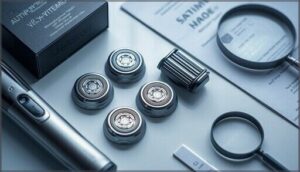
You’ll need to match your replacement blades and foils to your shaver’s exact series and model number, which you can verify through the manufacturer’s official documentation for OEM validation. Cross checking the model code ensures proper part compatibility and protects your warranty coverage.
Authorized retailers and product pages confirm stock availability for electric shaver technology components, preventing costly mismatches during shaver maintenance.
General Replacement Instructions
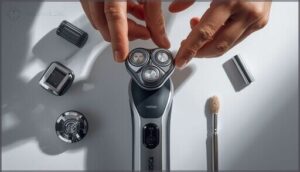
Once you’ve secured the right replacement parts, the actual swap takes less than five minutes when you follow your manufacturer’s replacement schedules. Here’s how to maintain razor maintenance and preserve shaver longevity through proper head compatibility:
- Power off your electric shaver and detach the head assembly by pressing the release button or twisting counterclockwise, depending on your shaver technology.
- Remove worn foils and replacement blades carefully, noting their orientation for correct reinstallation.
- Snap new replacement parts into place until you hear a click, ensuring proper head compatibility.
- Test blade durability by running the shaver briefly before your first use.
Resetting or Calibrating Your Shaver
After installing replacement blades, many modern electric shavers require calibration techniques to restore peak performance. Check your manual for specific reset procedures—most involve holding a button for several seconds while powered off, then reattaching heads to sync sensor alignment. High-end models may prompt firmware updates through their app, recalibrating motor speed and blade positioning to guarantee your razor maintenance delivers consistent results.
| Calibration Step | Purpose |
|---|---|
| Power off and detach heads | Readies shaver for reset procedures |
| Hold designated button 5-10 seconds | Restores factory sensor alignment settings |
| Reattach heads and power on | Syncs new replacement blades with motor |
| Install firmware updates via app | Optimizes electric shaver cutting algorithms |
Choosing The Right Replacement Heads

You’ve got a few choices when it’s time to order new razor heads, and each option comes with its own trade-offs in quality, price, and performance. The key is making sure whatever you buy actually fits your specific razor model and delivers a clean, comfortable shave.
Let’s break down the main factors you need to keep in mind before clicking that “add to cart” button.
OEM Vs. Third-Party Options
When shopping for replacement parts, you’ll face a choice between OEM and third-party options, which affects both your wallet and shave quality. OEM replacement blades usually cost 20-50% more but guarantee compatibility and maintain your warranty coverage. In contrast, third-party alternatives offer price analysis advantages but may introduce potential compatibility issues.
Brand loyalty often influences this decision, though reputable aftermarket manufacturers now provide quality control standards comparable to original equipment. This makes shaver maintenance more affordable without sacrificing razor maintenance standards or electric shaver performance.
Checking Model Compatibility
Before you buy any replacement parts, confirm the exact model number stamped on your electric shaver to avoid costly compatibility checks mistakes. Here’s your model verification checklist:
- Cross-reference the part number on your shaver’s base with the replacement packaging to guarantee perfect alignment
- Verify compatibility on the manufacturer’s official support page, as regional differences can affect shaver maintenance requirements
- Check that the shaving head’s connector design matches your device’s mounting system precisely
- Confirm warranty impact by choosing OEM options that explicitly list your model number
- Test-fit the razor maintenance component gently before full installation to spot any misalignment issues early
Where to Buy Quality Replacements
Once you’ve confirmed compatibility, you’ll want to source your replacement parts from authorized retailers or brand websites, where OEM distributors guarantee factory-fresh foils and blades backed by manufacturer warranties.
Reputable online marketplaces with verified seller ratings offer another reliable avenue for shaver maintenance, while certified replacement vendors often bundle parts with cleaning kits at competitive prices, ensuring your replacement components meet exact specifications without compromising quality or longevity.
Cost and Environmental Considerations

Replacing electric razor heads isn’t just about maintaining performance—it’s also about managing your budget and reducing your environmental footprint. The frequency of replacement directly affects how much you’ll spend over time, but there are ways to make smarter choices that benefit both your wallet and the planet.
Let’s break down the financial impact, explore sustainable options, and look at how thoughtful decisions today can lead to meaningful savings and less waste down the road.
Frequency of Replacement Vs. Cost
Replacement costs for electric razor heads usually run between $10 and $40 per head, depending on brand and type, which means your shaver maintenance budget will add up over time.
When you factor in the recommended 12-to-18-month replacement interval, you’re looking at an annualized expense that represents a few percent of your original shaver’s price, directly impacting razor durability and long-term economic factors in your cost analysis.
Reusable and Recyclable Options
Beyond cost analysis, you’ll want to think about the environmental footprint of your shaver maintenance routine, which many brands now address through thoughtful product design. Look for options that lighten your impact without compromising shaver performance:
- Recyclable materials in electric razor blades and replacement parts that work with household recycling programs
- Green packaging that reduces waste when you purchase new razor heads
- Mail-in recycling programs offered by manufacturers for used components
- Eco-friendly third-party alternatives designed with sustainable designs in mind
Long-Term Savings and Sustainability
When you replace your razor heads on schedule, you’re not just practicing smart shaver maintenance—you’re driving down lifetime shaving costs through better grooming efficiency and resource efficiency. Timely replacement keeps your electric shaving performance sharp while minimizing waste reduction concerns.
Choosing eco-friendly replacement parts made from sustainable materials means you’ll protect both your wallet and the planet through thoughtful cost analysis.
Frequently Asked Questions (FAQs)
Can I sharpen electric razor heads myself?
Sharpening electric razor blades yourself is practically asking for disaster. Most manufacturers explicitly prohibit DIY sharpening due to blade geometry precision requirements, warranty voids, and serious safety precautions that protect your skin and shaver performance integrity.
Do travel cases protect razor heads longer?
Yes, travel cases with hard-shell construction and moisture-absorbing materials can shield shaver maintenance components from dust, impact, and humidity, reducing corrosion and abrasion on electric razor blades when you follow proper storage methods during transit.
Should I replace foils and blades together?
Here’s the twist: while most think foils and blades wear at different rates, replacing both together actually maximizes shaving comfort and razor efficiency, preventing uneven cutting and delivering exceptional performance through proper foil blade sync.
Does water quality affect razor head lifespan?
Water hardness and mineral buildup can contribute to minor corrosion risks on your electric razor. However, the effects of tap water remain minimal when you maintain regular shaver maintenance, proper drying, and follow manufacturer cleaning protocols consistently.
Are subscription services worth it for replacements?
Subscription costs for replacement parts often deliver economic benefits through bundled pricing and service reliability, with users reporting 5% to 30% cost savings while ensuring consistent shaver performance and timely razor maintenance.
Conclusion
Replacing heads might feel like an unnecessary expense, but worn blades cost you far more in irritation, time, and motor strain than a scheduled swap ever will.
Knowing how often to replace electric razor heads—and actually doing it when those 12 to 24 months arrive—transforms your routine from a daily compromise into the sharp, comfortable experience you bought the razor for in the first place. Your skin will notice the difference immediately.
- https://www.oreateai.com/blog/the-lifespan-of-your-electric-shaver-what-to-expect/b8afb701dfae815821d72019e3c2dd36
- https://shavet.co/blogs/tips-for-you/how-long-should-an-electric-razor-last-signs-it-s-time-for-a-replacement
- https://pritechbeauty.com/blogs/news/can-electric-shavers-actually-cause-more-skin-damage-than-razors
- https://www.barristerandmann.com/blogs/our-blog/electric-razors-ingrown-hairs
- https://www.news.market.us/shaving-statistics/