This site is supported by our readers. We may earn a commission, at no cost to you, if you purchase through links.
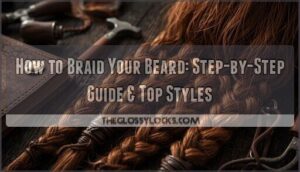
Your beard’s hit that sweet spot where it’s not just facial hair anymore—it’s a canvas. Most guys don’t realize that once you cross the four-inch mark, you’re sitting on Norse warrior potential.
Braiding transforms a standard beard into something that turns heads at the coffee shop and commands respect at the gym. The technique isn’t rocket science, but it does require some know-how about strand division, tension control, and securing methods that won’t unravel mid-conversation.
Whether you’re after a classic Viking look or want to experiment with beads and multiple braids, mastering the basics opens up a world of styling options that go way beyond the standard trim-and-go routine.
Table Of Contents
- Key Takeaways
- Growing and Preparing Your Beard for Braiding
- Basic Beard Braiding Techniques Step-by-Step
- Popular Braided Beard Styles to Try
- Advanced Braiding Styles and Decorative Techniques
- Maintaining and Caring for Your Braided Beard
- Frequently Asked Questions (FAQs)
- How long does a beard need to be to braid it?
- How to braid your beard for beginners?
- How long does your beard need to be to braid?
- Why do people braid their beards?
- How do I braid my beard like a Viking?
- How often should I re-braid my beard?
- Can I braid a short stubble beard?
- Can braiding damage my beard hair?
- How do I prevent beard braid from coming loose?
- What hair products are best for braided beards?
- Conclusion
Key Takeaways
- You need at least four inches of beard length and 2-4 months of patient growth to create workable braids, plus consistent prep with sulfate-free shampoo, conditioner, and lightweight oils like jojoba or argan.
- The classic three-strand braid requires dividing your beard into equal sections and maintaining steady tension while alternating sides in an over-under pattern, then securing the end with silicone or fabric bands to prevent unraveling.
- Popular styles range from single Viking braids and compact goatee braids to advanced techniques like forked braids, three-prong patterns, and decorative bead additions that transform basic facial hair into statement pieces.
- Maintaining your braided beard demands re-braiding every 1-3 days, regular trimming of split ends for edge shaping, quality oil and balm application, and washing every 3-4 days with proper drying techniques to keep the look sharp.
Growing and Preparing Your Beard for Braiding
You can’t braid a beard that isn’t ready for the challenge. Before you start weaving strands like a Norse warrior, you need the right length and the right prep work.
Once you’ve mastered how to grow a Viking beard, you’ll have the foundation needed to tackle intricate braids and traditional Norse styles.
Here’s what you need to nail down before your first braid.
Achieving The Minimum 4-Inch Length Requirement
Patience is your first ally here—beard growth tips reveal that most faces need 2 to 4 months to hit that essential 4-inch mark for beard braiding.
Most beards need 2 to 4 months of patient growth to reach the 4-inch length required for braiding
Your hair follicle care matters: fuel those whiskers with protein, vitamins A, C, and E, plus solid sleep. Trim split ends regularly to keep beard lengthening uniform.
Track your long beard progress weekly with a measuring tape.
Cleansing and Conditioning Your Beard
Once you’ve got the length, switch to beard care mode. Use a sulfate-free beard shampoo 2 to 3 times per week—gently massage it into the skin beneath your whiskers, then rinse with lukewarm water. Follow up with a beard conditioner, leaving it in for 2 to 3 minutes for real beard moisture and hair nourishment.
- Use sulfate-free beard wash to preserve natural oils and prevent dryness
- Massage shampoo into the skin beneath your beard for healthier roots
- Apply beard conditioner after cleansing and leave in for 2 to 3 minutes
- Exfoliate weekly to remove dead skin cells and reduce ingrown hairs
- Pat dry with a soft towel to reduce frizz and protect your whiskers
Applying Beard Oil Before Braiding
After conditioning, your beard needs oil for braid prep success. Apply 2 to 4 drops of lightweight beard oil—jojoba or argan work best—while your whiskers are still damp. This step locks in beard hydration and promotes hair softening without greasy buildup.
Massage from roots to mid-shaft, let it absorb for 1 to 2 minutes, and you’ll notice immediate oil benefits: manageability and reduced breakage during braiding technique work.
For more on essential beard care basics and braiding, see expert recommendations.
Detangling With a Wide-Toothed Comb
Once your oil has absorbed, grab a wide-toothed comb—7 to 9 teeth spaced 5 to 7 millimeters apart work best for beard texture. Start detangling from the ends and work upward using gentle, short strokes. This comb technique prevents breakage and preps your whiskers for braiding technique success.
Key wide tooth benefits for facial hair care:
- Rounded tips reduce irritation during gentle detangling
- Carbon fiber teeth resist bending through dense beard braid sections
- Even tension distribution minimizes snap and damage
Hold your beard lightly at the skin and work in small sections for smooth hair braiding techniques and beard care and maintenance prep.
Use a boar bristle brush to distribute natural oils evenly, a key step covered in these natural beard grooming tips.
Basic Beard Braiding Techniques Step-by-Step
Once you’ve got the length and prep work down, it’s time to learn the actual braiding technique. The good news is that a basic beard braid follows the same pattern you’d use for hair—it just takes a steadier hand and a bit more patience.
Let’s break down the fundamental steps that’ll turn your facial hair into a work of art.
Dividing Your Beard Into Three Equal Strands
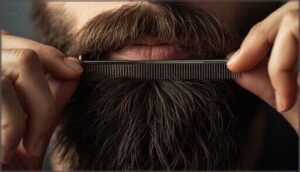
Strand separation sets the stage for everything that follows. Start with a fine comb and divide your beard at the centerline from philtrum to chin, creating three equal sections with roughly the same width. Use light clips to keep each strand in place without tangling.
Hair texture differences between sections can affect braid foundations, so check section alignment from multiple angles before you begin your three-strand braid.
The Classic Three-Strand Braid Pattern
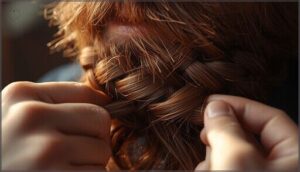
Your fingers create the rhythm once you’ve locked in strand coordination. Cross the right strand over the middle, then the left over the new middle—that’s the pattern recognition heartbeat. Keep it steady and watch the three-strand braid unfold:
- Hold two strands in your dominant hand with your finger between them
- Cross the outside strand over the center in smooth passes
- Alternate sides in an over-under sequence
- Watch for the distinctive V-shaped weave along the surface
- Let the braiding techniques flow without overthinking each move
This classic beard braiding foundation builds braid symmetry naturally when you trust the process.
Maintaining Tension While Braiding
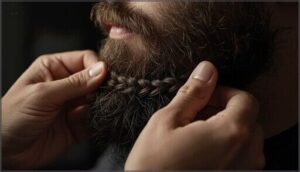
Tension control separates a tight, clean beard braid from loose chaos.
Keep your grip stability locked by resting your forearms and applying steady pressure—not a death grip—on each strand. Hand positioning matters: tuck your fingertips under the weave and use your thumb for gentle downward anchoring near the root.
Adjust your hold every few passes to preserve uniform strand management and prevent slack from creeping in.
Securing The End of Your Braid
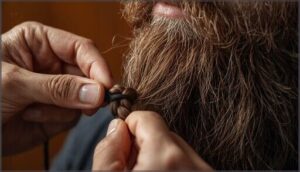
A solid beard braid means nothing if the end unravels by lunchtime. Secure your work with a quality elastic band placed 1.5 inches from the tip—silicone or fabric bands reduce friction and prevent breakage.
For a finishing touch that honors your beard braiding techniques, thread a bead with smooth holes over the end or seal it with lightweight beard-friendly wax to lock everything in place.
Popular Braided Beard Styles to Try

You’ve mastered the basic three-strand technique—now it’s time to put your skills to work with some seriously cool styles.
From timeless Viking braids to quirky wizard twirls, there’s a braided look for every personality and beard length.
Let’s explore the most popular braided beard styles that’ll transform your facial hair from ordinary to legendary.
The Classic Viking Braid
The Classic Viking speaks to a fierce Viking Braid History rooted in warrior culture and modern Facial Hair Styles.
Your Viking Beard Braid runs as one thick rope along the jawline or under the chin, reaching up to 8 inches. Pair it with staggered Braid Patterns along your cheeks for authentic Viking Beard Braids.
Master this timeless Beard Braiding technique, and you’ll honor traditions while showcasing serious Beard Texture through proper weaving.
The Goatee Braid
Your Goatee Braid zeroes in on the signature chin zone beneath your lower lip, delivering a concentrated punch of style. This three-strand weave extends 2 to 4 inches past your chin for a compact, deliberate finish.
Master this Goatee Style with smart tips from Beard Braid Tutorials, and you’ll own a razor-sharp signature look.
- Works best for short to medium Beard Length with defined chin lines
- Focus your Braiding Beard effort below the lip for maximum impact
- Use quality Braiding Tools to keep strands separated and tight
- Cap the end with a small bead for striking Beard Styling Ideas
- Reflects current Facial Hair Trends while honoring classic Braid Patterns
The Forked Braid (Two-Pronged Style)
When you’re ready to level up, the Forked Braid splits your beard into two dramatic pronged ends. This Two Prong Style runs along your jawline or curves under your chin, then divides into parallel strands secured with separate elastics for Braid Securing.
Forked Braid Tips from Beard Braid Tutorials stress using light beard oil before weaving to tame frizz and prevent snagging in this Viking Beard Braids favorite.
The Three Prong Braid
For symmetrical impact, the Three Prong fans out three evenly spaced strands that converge into one Braided Beard. This Expert Twists technique delivers clean Braid Patterns and works for short to long Beard Texture.
Secure each prong with small accessories for extra flair, and tighten regularly to keep Braid Security strong and edges sharp—essential Prong Styling for anyone serious about Beard Braiding mastery.
The Wizard Twirl
When you want pure mythical flair, the Wizard Twirl delivers. Start your central three-strand Braided Beard, then twist upward into a Spiral Braid at the end—think Gandalf meets grooming mastery.
Long, wispy Beard Styles work best for this Beard Twisting magic. Lock the Twirl Variations with a loop knot, add a bead for that sorcerer vibe, and watch heads turn. Beard Styling never felt so enchanting.
Braided Beard With Beads
Beads transform your Braided Beard from warrior to walking art gallery. Thread Beard Beads onto each strand before you finish—metal rings, wood, bone—these Braid Accessories anchor Beaded Styles while showcasing your personality.
Viking Beard Braids shine with staggered Beard Adornments down the length. Master different Braiding Patterns, experiment with Beard Accessories placement, and those Beaded Braid Tips? They’ll make your beard legendary.
Advanced Braiding Styles and Decorative Techniques

Once you’ve nailed the basics, it’s time to push your braiding skills into Viking warrior territory. These sophisticated techniques require more beard length, better control, and a willingness to experiment with creative styles.
From intricate cornrows to decorative beads, here’s how to take your braided beard from simple to showstopping.
Whisker Cornrow for Thick Beards
If you’ve got a thick beard that won’t quit, whisker cornrows are your ticket to advanced braiding methods. These small individual braids follow each whisker line toward your temple, creating curved cornrow patterns across your face.
Start close to your cheekbone and keep sections tight but not fused—you don’t want bulky roots snagging on your collar. Finish behind your ears for a clean profile that showcases serious facial hair care skill.
The Beard Bun Style
The beard bun style merges bun styling with beard wrapping to create one of the most functional men’s beard styles out there. Gather your beard into a single mass, twist it tight, then loop it into a compact knot at your chin or jawline. Secure with clear elastics for knot security that won’t slip.
This hair texturing method works perfectly when you need practical braid variations that keep your braided beard out of the way. For inspiration and guidance on the best beard styles for face shapes, explore options that suit your look.
Adding Beads and Accessories to Your Braid
Your beard transforms into a statement piece when you thread on the right embellishments. Bead selection matters—metal, wood, or glass beads all bring different vibes to your Viking beard braids.
Slide them onto each section before you finish the braid, spacing them every 2 to 4 inches for balanced decoration. These braiding accents and hair adornments refine basic beard styling techniques into authentic accessory trends that turn heads.
Creating Multiple Braids in One Beard
Thick beards reveal braided beard potential that goes way beyond a single ThreeStrand Braid.
Start with braid sectioning—divide your mane into four to six vertical zones based on hair distribution and beard texturing. Each zone becomes its own braid patterns playground.
Try mixing Forked Braid techniques with FiveStrand Braid complexity across multiple strand sections for a look that screams mastery.
Maintaining and Caring for Your Braided Beard

You’ve mastered the braid, but keeping it sharp takes consistent care. A braided beard isn’t a set-it-and-forget-it style—it needs regular attention to stay clean, healthy, and looking fierce.
Here’s what you need to know to maintain your masterpiece and keep those braids tight.
Daily Maintenance and Re-Braiding Schedule
Your braided beard demands consistent attention if you want it to look sharp day after day. Re-braid every 1 to 3 days to keep strands tight and prevent tangles from sneaking in.
Follow these rebraiding tips for solid braid security:
- Alternate braid placements each session to avoid tension spots on your skin
- Check elastic bands for stretching and replace worn beads every 2 to 4 weeks
- Wait 12 to 16 hours after washing before rebraiding to maintain natural oil balance
Track your daily routine in a simple log noting adjustments for smarter beard maintenance.
Trimming Split Ends and Shaping Edges
Your braid won’t shine if frayed ends and uneven edges sabotage the look. Trimming split ends prevents frizz and keeps your beard maintenance on point, while edge shaping along the cheek and jawline delivers facial symmetry that highlights your beard styles.
Use sharp barber shears for split end removal and precise beard shaping—stray hairs wreck even the best long beard care routine.
Using Quality Beard Oils and Balms
Quality products make all the difference in your beard care routine. Jojoba and argan oils deliver beard hydration without clogging pores, while beeswax-based balms offer light hold that keeps braids intact.
Look for balm ingredients like shea butter for moisture and castor oil to boost hair growth.
Proper oil blending gives you beard oil benefits that prevent frizz and flyaways—your mens grooming arsenal isn’t complete without them.
Washing Your Braided Beard Properly
Once you’ve got your oils and balms working overtime, washing becomes your next checkpoint. Hit that braided beard care routine every 3 to 4 days with a sulfate-free beard shampoo and lukewarm water temperature—hot water’s a party crasher for your skin.
Apply gentle cleansing at the braid base, rinse thoroughly, then finish with beard conditioner. Pat dry with a microfiber towel and let air-drying do its thing.
Securing Braids With Elastic Bands or Beads
After washing, lock everything in place with the right hardware. Silicone or fabric-covered elastic bands beat plain rubber every time—they won’t snag or loosen under moisture.
Slide them onto your braid ends, or double up with two bands spaced a quarter inch apart for extra security. Thread metal or wood beads over a small knot for weight and style that actually holds.
Frequently Asked Questions (FAQs)
How long does a beard need to be to braid it?
You need at least four inches of beard length to create a comfortable, workable braid. That length lets you separate three distinct strands without pulling short hairs or losing your grip mid-weave.
How to braid your beard for beginners?
Start with beard prep tips: cleanse, condition, and apply oil for smooth braid techniques.
Divide into three equal strands, then weave right over middle, left over middle—repeat this braid pattern to your desired beard length.
How long does your beard need to be to braid?
Like a rope needs sufficient length to hold a knot, your beard requires at least four inches from chin to tip for a solid three-strand braid that won’t slip or unravel during wear.
Why do people braid their beards?
People braid their beards for cultural expression and personal style—honoring Viking beard braids heritage while making a social statement.
Beard identity becomes art through beard braiding, blending symbolism with practical beard culture and individual flair.
How do I braid my beard like a Viking?
To channel authentic Viking culture, grow your facial hair to four inches, then weave three equal strands from chin to tip.
Maintain even tension throughout, securing ends with beads for traditional Norse inspiration and bold beard texture.
How often should I re-braid my beard?
Rebraid every 3 days to balance braid longevity with beard hygiene. This rhythm prevents hair breakage while keeping your braided beard fresh.
Adjust based on thickness—coarse beards handle 4-day intervals, finer hair needs rebraiding tips sooner.
Can I braid a short stubble beard?
Short stubble won’t hold a braid—you need around 4 inches minimum. Stubble Braid Tips won’t fix physics: Hair Texture Matters, but beard length trumps everything. Focus on Beard Growth Rates and patience before attempting braid techniques.
Can braiding damage my beard hair?
Yes, tight braids can cause hair breakage and split ends from friction risk and beard tension. However, proper beard care tips like conditioning, gentle braid techniques, and rest days minimize braid damage considerably.
How do I prevent beard braid from coming loose?
Maintain even braid tension from root to tip and secure ends with small elastic bands or beard balm.
Rebraid every few days, sleep on silk pillowcases, and keep moisture low to prevent loose ends and preserve braid security.
What hair products are best for braided beards?
You’ll want sulfate-free shampoos, lightweight leave-ins, and quality beard oils with jojoba or argan. Beard balms with shea butter lock moisture in, while beeswax-based formulas hold braid shape without stiffness.
Conclusion
Your beard is no longer just hair—it’s armor, identity, and rebellion all woven together. Learning how to braid your beard unlocks a transformation that separates the committed from the casual.
You’ve got the techniques, the styles, and the maintenance knowledge to make it stick. Now comes the rewarding part: stepping out with a braided statement that doesn’t apologize for taking up space.
Own the look. Polish the craft. Make heads turn.