This site is supported by our readers. We may earn a commission, at no cost to you, if you purchase through links. This content is for general informational and educational purposes only and is not a substitute for professional medical, dermatological, or nutritional advice.

Thick hair holds moisture, volume, and tangles like nobody’s business. One skipped detangling session turns into a week of knots hiding under the surface, and by the time you find them, your comb feels like it hit a brick wall.
Here’s the thing: ripping through knots does more harm than the knots themselves. Snapped strands, sore roots, and a scalp that flinches every time you reach for a brush all trace back to rushing the process.
Learning how to detangle thick hair the right way changes everything. Slow down, use the right products, and your comb will glide instead of fight you every step of the way.
Table Of Contents
- Key Takeaways
- How to Prepare Thick Hair for Detangling
- How to Detangle Thick Hair Step by Step
- Best Tools and Products for Detangling
- How to Detangle Severely Matted Thick Hair
- How to Prevent Thick Hair Tangles
- Frequently Asked Questions (FAQs)
- What softens thick coarse hair?
- How do I untangle severely matted hair?
- Should you detangle matted hair wet or dry?
- What is the best detangler for thick hair?
- How to detangle hair?
- How do you detangle thick curly hair?
- How do you detangle matted hair?
- How to detangle matted hair without cutting?
- How to detangle a hair follicle?
- How do I get rid of tangles in my hair?
- Conclusion
Key Takeaways
- Rushing through knots causes more damage than the tangles themselves, so slow down and work in small sections with your fingers before reaching for a comb.
- Always detangle damp hair, not wet or dry, after soaking it with leave-in conditioner for 15-20 minutes so the product actually penetrates the strand.
- Work from the ends upward, never starting at the roots, and hold hair above each knot to protect your scalp from tension.
- Prevent future tangles with weekly deep conditioning, loose protective styles, satin pillowcases, and trims every 6-8 weeks.
How to Prepare Thick Hair for Detangling

Thick hair fights back when you rush into detangling dry. A little prep work changes everything and saves your strands from unnecessary stress. Here’s exactly how to set your hair up for a smooth, pain-free session.
Start by sectioning your hair and misting each part with a leave-in conditioner, then work through knots with your fingers before reaching for a comb, a routine covered in more depth in this guide to managing frizzy, thick hair texture.
Dampen Hair for Easier Detangling
Skip fully wet hair. Towel dry first with a gentle squeeze until strands stop dripping, that’s your damp hair timing sweet spot. Damp hair feels cool, slightly heavy, and cuticles are primed for absorption. This controlled stretch keeps strands elastic without over-stretching them.
Grab your detangling spray or leave-in now, since damp hair takes product best before you pick up that wide-tooth comb. Always start detangling at the ends and work upward, since this proper detangling technique prevents knots from being pushed toward the scalp and worsening tangles.
Apply Conditioner for Extra Slip
Now that hair’s damp, it’s time to load it up. Grab a leave-in conditioner with shea butter or coconut oil, or a watery, gel-textured formula for max slip.
Apply in small sections using downward strokes or prayer-hands motion. Mix in a little water to activate slip. Target stubborn knots directly, and keep your detangling spray nearby for reapplication.
Let Treatments Penetrate Fully
Now don’t rush this part. Let that conditioner sit for 15 to 20 minutes so it actually penetrates the shaft instead of sitting on top. Research backs this up too: a 30-minute soak boosts absorption depth by nearly 70%. If your strands are extra dry, stretch it to 30-60 minutes for deeper moisture treatments.
Divide Hair Into Sections
Once your treatment has soaked in, grab your clips. Start with a vertical part down the middle, then split each side horizontally to create four small sections. Thicker hair may need six.
Clip each section at the base. This hair sectioning technique keeps strands separated so your detangling brush works through one small area, ends upward, without re-tangling finished sections.
How to Detangle Thick Hair Step by Step
Once your hair is prepped, it’s time for the real work. Detangling thick hair takes patience and the right order of steps, not brute force. Follow this sequence and you’ll work through knots with way less pain.
Think of it like training your hair to behave — the four factors that speed up that process apply here too, from product choice to technique consistency.
Finger-Detangle Large Knots First

Your fingers are the best tool you own, use them first. Feel for dense, resistant clumps that won’t separate with light pressure, that’s a large knot.
- Apply leave-in conditioner to the knot
- Massage in oil for extra slip
- Isolate small sections with clips
- Use finger pressure control, never force
Work each knot alone before reaching for a comb.
If your fingers get stuck, switch to a wide-tooth comb for detangling curls to avoid unnecessary breakage.
Start at The Hair Ends

Knots hold tightest at the ends, so that’s where you take control first. This is Ends-First Detangling, and it’s a true tension-free technique.
Work small sections with fingers, then a wide tooth comb. Gentle combing here prevents snags before they start, giving you real hair strand release without the fight.
Once your curls are combed and tangle-free, switching to sharp shears for cutting curly hair makes all the difference in keeping each strand clean and frizz-free.
Work Slowly Toward The Roots
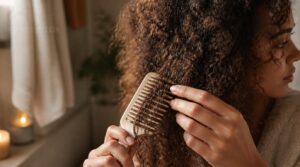
Once the ends are smooth, resist the urge to speed things up. Move upward in small sections, using gentle upward motion and a slow combing pace of about 1-2 inches per minute.
- Keep strand separation gradual
- Use your detangling brush lightly
- Pause at each knot
- Avoid yanking near the scalp
- Let root tension control your pace
Hold Hair Above Each Tangle

Gravity is not your friend here. Lift the section above the knot and give it real support, this simple hair elevation strategy takes pressure off the strands below.
With one hand holding, comb from ends upward in small sections. This tangle support technique protects your roots while gentle combing and finger detangling release each knot cleanly.
Reapply Product When Needed

Dry hair grabs and pulls. If your comb starts catching or strands feel stiff, that’s your cue: reapply leave-in conditioner or detangling spray to that section.
Target problem areas first. Even short breaks let hair dry out, so mist it again before continuing.
Work from ends upward in small sections, keeping every pass slick with gentle combing instead of force.
Best Tools and Products for Detangling

The right tools make detangling faster and a lot less painful. Your comb, brush, and products work together, not against each other. Here’s what belongs in your detangling kit.
Rounded Wide-Tooth Combs
Your Rounded Wide-Tooth Comb is the real MVP here. Wide teeth spacing glides through thick strands without snagging, while rounded tips protect your scalp and cuts.
Look for an ergonomic handle grip for control, plus anti-static coating to tame flyaways. Durable acetate resists bending.
Always section your hair and work from ends upward for smooth, pain-free results.
Flexible-Bristle Detangling Brushes
Once combs handle the big knots, swap to a flexible-bristle detangling brush. Bending bristles hug your scalp and cut breakage up to 56%. Vented design speeds drying. Ergonomic grips reduce fatigue. Durable nylon resists snapping.
- Flexible pins flex with knots
- Vents release trapped water
- Wide spacing eases pulling
- Grippy grips stay steady
- Work from ends upward
Moisturizing Leave-in Conditioners
Brushes manage the tangle, but conditioner controls the hair moisture underneath.
Apply a leave-in conditioner to damp sections before you comb through with a wide-tooth comb. Look for shea butter or coconut oil for lasting slip and scalp comfort.
Thick, coily hair needs heavier formulas; fine strands do better light. Reapply to ends throughout the day for touch-ups.
High-Slip Detangling Sprays
Conditioner sets the moisture, but a detangling spray finishes the job in seconds.
Look for slip agents like silicones or hydrolyzed proteins, plus a fine-mist nozzle for even coverage.
- Mist damp sections generously
- Choose fragrance-free if scalp-sensitive
- Confirm humidity stability on the label
- Pick residue-free formulas
- Comb through with a wide-tooth comb
Lightweight Natural Hair Oils
A few drops seal in what the spray started. Lightweight natural hair oils like jojoba or fractionated coconut absorb fast, add slip, and smooth cuticles without weighing thick strands down.
Rub between palms, then work through damp ends. This boosts hair elasticity and blocks breakage, so skip the scalp and stick to 1-2 drops.
How to Detangle Severely Matted Thick Hair

Mats are a different beast than everyday tangles. They need patience, not muscle. Here’s how to work through them without losing hair or your temper.
Saturate Mats With Conditioner
Mats don’t budge for shampoo alone. Saturate every section fully with a rich deep conditioner, layering leave-in conditioner and detangling spray for extra slip. Let it penetrate 10-15 minutes.
- Softer strands
- Less pulling
- Calmer scalp
- Real progress
- Less dread
Oil-infused saturation on stubborn spots helps too, before gentle combing begins.
Loosen Mat Edges Gently
Once saturation sets in, start at the outer edges, not the center. Use finger separation to gently pull the perimeter apart, working inward with a soft half-twist motion. Hold hair above the knot to ease scalp tension.
Follow with a widetooth comb and light detangling spray for extra glide before moving deeper.
Separate Mats Into Smaller Knots
Break the loosened edges down into bite-sized knots instead of tackling the whole mat. Isolate matted sections, then work small sections with your fingers before reaching for a wide-tooth comb.
- Pea-sized knots, not fist-sized ones
- Clip freed strands immediately
- Track detangling progress section by section
- Prevent re-entangling by separating pieces
Finish each with light detangling spray for glide.
Avoid Pulling or Ripping
Force never wins against a mat. If a knot resists, stop and add more product instead of yanking harder.
Force never wins against a mat—when a knot resists, stop and add more product instead of yanking harder
Gentle handling beats speed every time. Use slow combing, finger separation, and steady product reapplication to ease strands apart. This protects against hair breakage and keeps your progress intact instead of creating new tangles.
Seek Professional Help When Necessary
Some knots just need a pro. If mats have sat for months, or you’re seeing real hair breakage, book a salon consultation instead of risking your length. While you’re waiting on that appointment, check whether your hair porosity is affecting how tangles form, since high porosity strands mat more easily and need extra care between salon visits.
Houston stylists run about $94 to $125 an hour, sometimes with travel fees for mobile visits. Always verify certifications first, then ask about maintenance plans to keep tangles from coming back.
How to Prevent Thick Hair Tangles

Detangling thick hair is only half the battle, the real win is not having to do it every day. A few smart habits keep knots from forming in the first place. Here’s what actually works.
Deep Condition Hair Weekly
Tangles start where hydration ends. Give thick hair a weekly deep conditioning routine using a rich deep conditioner or hair mask, leaving it on 20-30 minutes for real hair hydration.
Cover with a shower cap for gentle heat, then rinse cool. Consistent conditioning builds hair elasticity improvement and breakage prevention, so future detangling sessions get easier, not harder.
Wear Loose Protective Styles
Once your hair is hydrated, keep it that way with loose protective styles. Braids, twists, or buns should feel secure, not tight. Loose placement prevents scalp tension and reduces friction against fabric, cutting down on breakage. Tuck ends smoothly to avoid snagging, and remove styles gently in sections for easy takedown without new tangles.
Sleep on Satin Pillowcases
Protective styles only work if your pillowcase cooperates. Cotton grabs at strands all night, undoing your progress.
Satin pillowcases cut friction, so hair glides instead of snagging. That means better moisture retention, smoother strands by morning, and fewer knots to fight tomorrow. Satin also regulates temperature, keeping you comfortable enough to stay still while you sleep, which naturally means less breakage.
Protect Hair From Heat
Good sleep habits mean nothing if your flat iron undoes them the next morning. Always apply heat protectant spray first, air-dry before styling when you can, and follow a temperature control guide (300°F for fine strands, 350°F for thick). Use even product application root to tip, limit heat frequency to twice weekly, then finish with a detangling brush for smooth, gentle combing results.
Trim Split Ends Regularly
Split ends don’t heal, they only spread. Once the shaft frays, conditioner can smooth it temporarily, but only a trim removes it for good.
Book trims every 6 to 8 weeks, or stretch to 10-12 if you’re low-manipulation. Ask your stylist for a dusting cut, just 2 to 5mm.
- Fewer knots
- Stronger ends
- Slower damage travel
- Longer healthy length
Frequently Asked Questions (FAQs)
What softens thick coarse hair?
Water and conditioner team up as your best softening duo. Water-based softening loosens knots as strands swell, while conditioner coats each shaft for slip. Add hair oils or hydrating masks for deeper hair hydration and easier, pain-free combing.
How do I untangle severely matted hair?
Saturate severely knotted hair with conditioner and let it sit 20-30 minutes. Loosen mat edges first, then gently separate into smaller knots. Never rip through tangles. If mats won’t budge, seek professional mat removal instead of forcing it.
Should you detangle matted hair wet or dry?
Wet, almost always. Damp hair with conditioner slip loosens mats without snapping strands. Finger-detangle first, then loosen mat edges gently. Dry detangling raises breakage risk from friction, so save it for light, everyday knots only.
What is the best detangler for thick hair?
Think of the best detangler as a peacemaker between strands. Look for silicone-based slip agents, cationic conditioning agents, and a pH-balanced, fragrance-free formula, these ingredients smooth cuticles and cut friction without weighing thick hair down.
How to detangle hair?
Dampen strands first, then apply leave-in conditioner for slip. Section hair into 4-6 parts. Finger detangle knots at the ends, then work upward with a wide-tooth comb, gently and without pulling.
How do you detangle thick curly hair?
Start damp, coat strands with leave-in conditioner, then finger detangle before switching to a detangling brush. Section hair first, work ends to roots, and finish with a cold water rinse for extra shine and closure.
How do you detangle matted hair?
That birds-nest at the back of your head isn’t a lost cause, it’s just thirsty. Saturate the mat fully, section your hair, then finger detangle before easing a comb from ends up. Weekly deep conditioning stops the sequel.
How to detangle matted hair without cutting?
Saturate mats with deep conditioner or detangling spray for slip. Section your hair, then finger detangle gently from the ends upward before switching to a wide-tooth comb. Patience beats scissors every time.
Once your hair is fully detangled, you’re ready to choose your extension hair, and knowing how long deep wave hair for passion twists typically lasts can help you plan your next install.
How to detangle a hair follicle?
Follicles live under your scalp, so you can’t detangle them directly. Instead, focus on root tension relief through scalp massage, gentle follicle brushing, and finger detangling the hair shaft with conditioner and a wide-tooth comb.
How do I get rid of tangles in my hair?
Wet hair, gentle hands, patient combing: that’s your formula. Apply conditioner to damp strands, finger detangle first, then glide a wide-tooth comb from ends upward through small sections until every knot releases smoothly.
Conclusion
The slower you go, the faster your hair frees itself. That’s the paradox behind how to detangle thick hair, patience beats power every time.
Your comb should feel like a conversation, not a fight. Stick to sections, keep hair damp, and let slip do the heavy lifting.
Skip a day and knots multiply. Show up daily and your strands stay loose, soft, and ready.
Master this rhythm, and tangled mornings become a thing of the past.