This site is supported by our readers. We may earn a commission, at no cost to you, if you purchase through links.

You know that moment when you’re scrolling through Instagram, heart-eyes emoji at the ready, seeing someone rock perfectly colored curls—and you think, “I could totally do that myself”? Here’s the truth: dyeing curly hair at home isn’t quite like coloring straight hair.
Curls are thirstier, more fragile, and they absorb color unevenly because of their natural texture and varying porosity along each strand. One wrong move and you’re dealing with patchy color, fried ends, or curls that’ve lost their bounce entirely.
But with the right prep work, technique, and aftercare, you can absolutely transform your curls safely in your own bathroom—without the salon price tag or the risk of walking out with heat-damaged ringlets that look nothing like what you envisioned.
Table Of Contents
Key Takeaways
- Curly hair requires understanding your unique porosity and elasticity before dyeing because curls absorb color unevenly along each strand, making strand and patch tests non-negotiable insurance against patchy results or allergic reactions.
- Choosing ammonia-free, semipermanent dyes paired with bond-building treatments like Olaplex protects your curl pattern from the structural damage that traditional bleach and harsh formulas cause when breaking disulfide bonds.
- Proper application means sectioning hair into quadrants, starting at resistant roots, using porosity equalizers on damaged ends, and never rushing the process—skimping on product or exceeding processing time leads to uneven color and compromised curl integrity.
- Post-color maintenance hinges on weekly deep conditioning masks, limiting washes to 2-3 times per week with sulfate-free shampoo, protecting against UV damage, and scheduling touch-ups every 4-6 weeks to keep both color vibrancy and healthy curls thriving long-term.
Preparing Curly Hair for At-Home Dyeing
Before you even crack open that dye bottle, you need to know what you’re working with. Curly hair isn’t one-size-fits-all, and understanding your unique texture can make the difference between gorgeous results and a disaster you’ll be fixing for months.
Let’s walk through the essential prep work that’ll set you up for success.
Assessing Hair Porosity and Elasticity
Before you mix a single drop of dye, you’ve got to understand your hair’s porosity and elasticity—they’re the gatekeepers to color success. Here’s what to check:
- Water absorption speed: High-porosity hair soaks up liquid fast, while low-porosity strands resist it
- Product uptake patterns: Notice if products sit on top or sink right in
- Elasticity break test: Gently stretch a wet strand—healthy hair stretches 20–30% before snapping
- Visual porosity cues: Look for frizz, dryness, or uneven porosity along each curl
- Chemical impact history: Previous treatments increase porosity and reduce strength
Understanding these factors prevents uneven color and hair breakage down the road. Knowing your hair’s ability to retain moisture is key for dye success.
Conducting a Strand and Patch Test
Once you know your porosity, don’t skip the strand test—it’s your insurance policy against color disasters. Grab a hidden section from the nape and apply your mixed hair dye exactly as the product instructions say. This reveals gray coverage, damage potential, and color predictability on your unique curls.
A patch test behind your ear checks for allergy identification, reducing reaction risks when dyeing curly hair safely. This test helps preview results and ensures desired color outcomes.
Gathering Tools and Protective Gear
Once your patch and strand tests are out of the way, let’s talk gear. Protecting your skin and curls from harsh chemicals is non-negotiable. For hair dye success, gather these must-haves:
- Nitrile or latex gloves for safe Glove Material
- Cape Coverage or an old towel for drips
- Non-metal Mixing Bowls and salon-style Brush Types
- Skin Barriers around your hairline to prevent staining
Each tool keeps your hair protection game strong and your color adventure clean.
Choosing Safe Hair Dye and Techniques
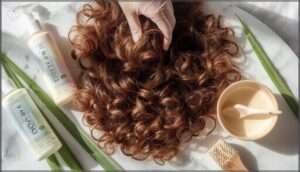
Choosing the right products and techniques makes all the difference when coloring curly hair at home. You want options that keep your curls healthy and vibrant, not stressed or fried.
Here’s what you should look for before you get started.
Selecting Gentle, Curly Hair-Friendly Dyes
Ever wondered why some dyes leave curls limp and lifeless? Choosing hair dye for curly hair means prioritizing ammonia-free dyes, low-allergen formulas, and silicone-free options to preserve your curl pattern.
Pair a semipermanent shade or vegan colour range with sulfate-free shampoos—these safe hair dyeing techniques help you avoid harsh chemicals, keeping your curls vibrant and healthy.
Exploring Bleach Alternatives for Curls
Curious how to lighten curly hair without risking major damage? High-lift dyes and ammonia-free lighteners offer safer bleach alternatives, lifting color while minimizing peroxide exposure.
For subtle changes, natural lightening with chamomile or cinnamon is gentle on curls.
Always pair these safe hair dyeing techniques with bond-building support—think Olaplex—to keep your curl pattern resilient and prevent hair damage.
Understanding Open Air and Sweeping Techniques
When you’re ready to explore gentler hair coloring techniques, open air colour lets you paint lightener directly onto hair sections without foils—making the hair color application process less intense than traditional methods.
This sweeping variation follows your natural curl placement, creating dimension while reducing the damage comparison you’d see with enclosed heat.
It’s why trend adoption of these open-air benefits keeps growing among curl enthusiasts approaching the hair color process safely.
Using Bond-Building Treatments Like Olaplex
When chemical treatments crack open those structural disulfide bonds during coloring, bond builders like Olaplex step in to reconnect them—preventing hair damage that usually follows bleach or dye.
Mix bond multipliers directly into your color formula before at-home application, and you’ll see real bleach damage reduction while maintaining your curl pattern.
That’s how Olaplex curl benefits protect your texture through hair color damage repair without compromising your results.
Step-by-Step Guide to Dyeing Curly Hair
Now that you’ve got your supplies and safety checks done, it’s time to get into the actual coloring process. This is where preparation meets action—and trust me, following a clear sequence makes all the difference between “salon-worthy” and “oops, what happened?”
We’ll walk through each essential step to help you apply color like a pro, from the first section to that final rinse.
Sectioning and Preparing Hair
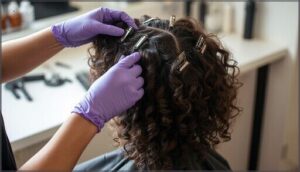
Think of sectioning as setting up your canvas before painting—it’s the foundation of even color application. Divide your hair from crown to nape, then vertically behind each ear to create four main quadrants.
Use sturdy clips to secure each section, then work smaller subsections within each quadrant. This systematic hair division ensures proper dye saturation and helps maintain your curl integrity throughout the hair coloring process.
Mixing and Applying Color Evenly
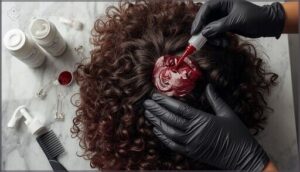
Getting your dye mixture right is where precision meets artistry. Most home color kits use a 1:1 or 1:1.5 dye-to-developer ratio, while professional formulas often call for 1:2—usually 2 ounces of color with 4 ounces of 20-volume developer for reliable gray coverage.
Here’s your game plan for even color application:
- Start at your roots where hair is most resistant, applying product directly from the bottle to your scalp area
- Use a porosity equalizer on damaged ends before dyeing to prevent dark, patchy bands
- Pull color through with a tail comb rather than rubbing it in like shampoo—this ensures strand saturation without tangling
- Work systematically through each subsection to avoid spotty application and missed interior sections
- Fully saturate every strand from root to tip within each section; skimping on product is the fastest route to uneven results
Don’t rush bottle application—taking time now prevents visible demarcation lines later. Your curls deserve complete, even coverage in every quadrant.
Timing and Monitoring Color Development
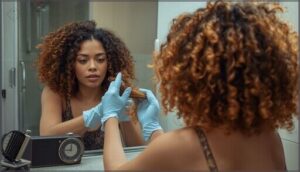
Once your color is on, set a timer for the processing time listed on your box—usually 30 to 40 minutes for permanent dye. Visual monitoring matters: check a test strand every 10 minutes to see if the tone has developed.
Heat impact from your scalp accelerates chemical processing at roots, so prioritize fiber health and hair integrity by never exceeding the maximum time, protecting hair vibrancy long-term.
Rinsing and Initial Conditioning
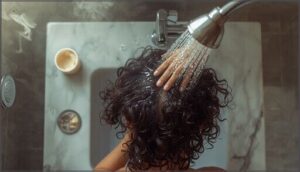
When time’s up, tilt your head back and rinse thoroughly with lukewarm water—never hot, which lifts the cuticle and accelerates color fade. Water temperature and water quality both matter: hard tap water can dull your fresh shade, so consider a shower filter.
Keep rinsing until water runs clear, then skip shampoo. Instead, smooth on your post-color conditioning mask immediately; this initial conditioning step restores moisture-protein balance, aids hair hydration, and begins deep-condition repair after chemical processing.
Essential Aftercare for Colored Curly Hair
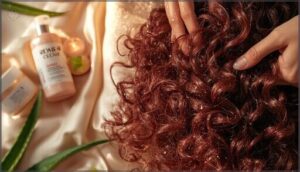
Your curls just went through a lot, and how you treat them over the next few weeks will make or break your color results. The good news is that aftercare doesn’t have to be complicated—you just need to focus on a few key habits that keep your hair hydrated, protected, and healthy.
Let’s walk through the essentials that’ll help your color stay vibrant and your curls stay bouncy.
Deep Conditioning and Hydration Masks
You’ll want to reach for a Deep Hydration Hair Mask at least once a week after dyeing—this is where the magic happens. These formulas boost hair moisture by binding water to damaged keratin, while low-molecular-weight ingredients actually penetrate your curls’ cortex.
Balance is key: alternate between protein-rich masks and deep condition treatments focused purely on hydration to keep your curls flexible, strong, and totally vibrant.
Minimizing Heat and Mechanical Damage
Once your curls are moisturized, protecting them from daily stress becomes your next priority. Heat styling and rough handling can unravel all that hard work, especially on color-treated hair.
Here’s how to keep damage at bay:
- Always apply heat protectants before any hot tools—they shield up to 450°F
- Switch to microfiber towels (they’re 45% gentler than cotton)
- Practice gentle detangling with your fingers or a wide-tooth comb
- Keep blow-dryer temps below 365°F to preserve your curl pattern
- Let curls air dry whenever possible to avoid cuticle cracking
Impact loading—yanking through tangles—breaks fibers faster than gradual stretching, so take your time.
Protecting Curls During Sleep and Showers
Nighttime and shower routines can make or break your color. Swap cotton for silk pillowcases to cut friction by 40% and lock in moisture—your curls will thank you. Try a loose “pineapple” bun before bed to preserve definition.
In the shower, rinse with cool water to seal the cuticle and slow fading, then apply pre-shampoo treatments to block mineral buildup. Finish by scrunching gently with microfiber towels instead of rubbing.
Tips to Maintain Vibrant Color and Healthy Curls
You’ve put in the work to color your curls at home, and now the real challenge begins—keeping that color fresh and your texture thriving. Maintaining both vibrant color and healthy curls isn’t about luck or expensive salon trips.
The truth is, it’s about practical strategies that’ll help you protect your investment and keep your curls looking their absolute best. Let’s walk through them.
Preventing Color Fading and Frizz
You’ve just achieved that perfect color—now let’s lock it in. Limiting washes to 2–3 times weekly and switching to sulfate-free shampoos can extend vibrancy by 30%, since traditional cleansers strip moisture and accelerate fading.
UV protection is your secret weapon; ultraviolet rays account for up to 63% of color loss.
Skip heat styling when possible, use microfiber towels to minimize frizz, and guard against humidity with conditioning agents that strengthen your curl pattern.
Regular Use of Hydrating Curl Cremes
Consistently applying a hydrating curl creme transforms your colored curls from fragile to flourishing. These formulations boost moisture retention while tackling breakage reduction through ingredient profiles rich in humectants and emollients that shield against environmental stressors.
For routine integration that works:
- Layer leave-in conditioner first on damp hair for slip
- Follow with Only Curls Hydrating Curl Creme to lock in hydration
- Reapply between washes to maintain softness
This simple habit keeps your curls vibrant and resilient.
Scheduling Touch-Ups and Refreshing Color
You’ll want to plan permanent color touch-ups every four to six weeks as your roots emerge, while semi-permanent formulas need replenishing every two to three weeks to fight color fading.
Protective treatments like Olaplex extend hair color longevity between sessions by locking pigment into the shaft.
For grey coverage and blended color upkeep, consider scheduling salon visits at four-week intervals to maintain vibrancy without over-processing your curls.
Embracing a Consistent Curly Hair Care Routine
Think of curly hair care like building muscle—you won’t see results from one workout, but a solid routine changes everything. Space washes every few days to preserve moisture retention, layer leave-ins and gels on soaking-wet curls for long-term hydration, and skip the brush once they’re dry to prevent mechanical damage.
Curly hair care is like building muscle—consistency with spacing washes, layering products on wet hair, and avoiding brushes transforms your curls over time
Consistent conditioning and gentle handling are your tickets to vibrant color and thriving curls that bounce back stronger every wash day.
Frequently Asked Questions (FAQs)
How often should I dye curly hair?
Your dye frequency depends on the type: permanent color needs root touch-ups every 4-6 weeks, while semi-permanent refreshes work every 2-3 weeks.
Hair porosity and washing frequency directly impact how long your color lasts.
Can I dye wet or damp curls?
Applying color to wet or damp curls can reduce color intensity and dye penetration, leading to evenness concerns and increased hair dryness.
Always follow product instructions—most permanent dyes require dry hair to protect hair health after dyeing and guarantee moisture retention.
What if my curls lose their pattern?
Imagine your tight 3b curls loosening to soft waves after coloring—frustrating, right? Curl pattern damage often signals lost elasticity or broken hair bonds.
Prioritize hydration, balance protein and moisture treatments, and try redefining curls with gentle, preventative measures.
Should I trim before or after dyeing?
Trim timing matters—cutting split ends before dyeing boosts damage prevention and even dye absorption.
But trimming after lets you visualize your length and helps stylists tailor the haircut to your new color, enhancing hair aftercare and overall stylist vision.
How long does color last on curly hair?
Regarding curly hair, color longevity is a moving target—think “here today, gone tomorrow.” Dye type matters, but porous curls fade faster.
Washing frequency, heat styling, and root touch-ups all shape your color maintenance journey.
Conclusion
The riskiest thing about learning how to dye curly hair at home isn’t the color—it’s playing it safe and never trying. You’ve got the roadmap now: prep smart, choose gentle formulas, apply with intention, and never skip the aftercare.
Your curls are resilient enough to handle transformation when you respect their needs.
So grab that dye, trust your prep work, and give yourself permission to experiment. The best version of your curls might be just one bold move away.
- https://www.statista.com/statistics/1378742/at-home-hair-coloring-among-women-in-selected-countries/
- https://scandinavianbiolabs.com/blogs/journal/hair-dye-statistics
- https://www.futuremarketinsights.com/reports/customizable-hair-dye-market
- https://store.mintel.com/report/us-home-hair-color-market-report
- https://www.sciencedirect.com/science/article/abs/pii/S0160412016300186