
This site is supported by our readers. We may earn a commission, at no cost to you, if you purchase through links.
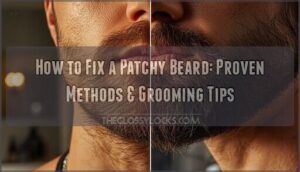
You stare in the mirror and see a beard that looks more like a patchy lawn than the full, commanding presence you want. You’re not alone. Nearly 40 percent of men deal with uneven facial hair that leaves frustrating gaps no matter how long they wait.
The good news? A patchy beard isn’t a life sentence. Your genetics load the gun, but your hormones, lifestyle, and grooming habits pull the trigger.
Most patchy beards respond incredibly well to a combination of proven growth techniques and smart styling tricks. Whether your sparse spots come from low testosterone, poor nutrition, or just bad follicle luck, you can transform those thin areas into respectable coverage with the right approach.
Table Of Contents
- Key Takeaways
- Why is My Beard Patchy?
- Essential Nutrition for Beard Growth
- Proven Methods to Fix a Patchy Beard
- Daily Beard Care and Grooming Tips
- Styling Tricks to Conceal Patchy Areas
- Lifestyle Changes to Support Beard Growth
- Frequently Asked Questions (FAQs)
- What causes a patchy beard?
- Should I let my beard grow if it’s patchy?
- Do beard patches fill-in?
- Are patchy beards attractive?
- Does shaving fix a patchy beard?
- Can beard transplants permanently fix patchy areas?
- How long until patchy beards naturally fill in?
- Does shaving make your beard grow back thicker?
- Conclusion
Key Takeaways
- Your genes control 80-90% of your beard density, but hormones like testosterone and DHT are the real game-changers you can actually influence through lifestyle choices and proven treatments.
- Minoxidil 5% applied twice daily and microneedling with a derma roller (0.2-0.5mm weekly) are the two scientifically backed methods that show the strongest results for filling in patchy spots within 12-16 weeks.
- Most patchy beards naturally fill in between your early and late twenties as testosterone levels peak, so giving your beard at least 90 days of uninterrupted growth before judging coverage is critical.
- Simple daily habits like getting 7-8 hours of sleep, maintaining a healthy weight, and using proper grooming techniques (washing 2-3 times weekly, daily beard oil, strategic trimming) have measurable impacts on beard thickness and growth.
Why is My Beard Patchy?
Patchy beard growth is frustrating, but it’s not your fault. A lot of different factors work behind the scenes to determine how your facial hair grows.
Let’s break down the main reasons your beard might have gaps or thin spots.
Genetic Factors Affecting Beard Growth
Your genes write most of the beard story—heritability estimates show that 80 to 90 percent of facial hair density comes from your DNA, not your daily routine. Specific genes control androgen receptor sensitivity and follicle response, which explains why your buddy’s beard fills in fast while yours stays patchy.
Your beard density is 80 to 90 percent written in your DNA, not shaped by your daily habits
Ethnic differences matter too: Mediterranean men often grow thicker beards than East Asian populations. Age and onset also play a role, since many beards don’t peak until your mid-twenties. The density of facial hair is also affected by hair follicle patterns formed during development.
Hormonal Imbalances and Beard Growth
While your DNA sets the stage, hormones direct the performance. Low testosterone levels or hypogonadism effects can leave your beard sparse—studies show men with testosterone below 300 ng/dL often report reduced facial hair.
DHT conversion matters most: DHT stimulates terminal hair growth, but you also need responsive androgen receptors to activate follicles.
Thyroid impact plays a role too: both hypothyroidism and hyperthyroidism disrupt hair cycling, thinning beards.
Testosterone replacement therapy may be an option to increase beard density. Hormone therapy can restore density when deficiency is the culprit.
Age and Natural Beard Development
Beyond hormones, age plays a huge role. Puberty onset triggers facial hair around 11 to 16, but teen maturation is uneven—most guys see patchy beards into their twenties. Many beards fill in by the late twenties or early thirties, then hit a thirties plateau as testosterone dips about 1% yearly. Ethnic variation and genetic influence mean timelines differ wildly.
| Age Range | What’s Happening |
|---|---|
| 11–18 years | Puberty onset; sparse, uneven growth |
| 20s | Follicles mature; density increases |
| 30s+ | Thirties plateau; testosterone declines |
| All ages | Ethnic variation shapes your beard |
Your patchy beard may just need time.
Medical Conditions Impacting Facial Hair
Sometimes a patchy beard signals underlying medical conditions. Autoimmune alopecia (alopecia areata) can create bald patches—around 22% of men see regrowth within 16 months. Androgen disorders and low testosterone levels reduce density, while thyroid dysfunction shortens hair growth cycles. Nutritional deficiencies in iron, zinc, or vitamin D also thin facial hair. Dermatologic conditions like psoriasis or fungal infections disrupt follicles. If patchiness appears suddenly, see your doctor.
Lifestyle and Environmental Contributors
Your daily choices shape beard health more than you might expect. Poor nutrition, chronic stress, and sleep deprivation all tank testosterone by 10–15%, thinning your facial hair. Smoking triples your risk of patchy alopecia, while pollution clogs follicles and stunts growth.
- Diet deficiencies in protein, zinc, or vitamin D slow follicle function
- Stress effects raise cortisol, disrupting hair cycles
- Sleep deprivation under six hours increases sparse areas by 20%
Exercise and better lifestyle factors reverse much of this damage.
Essential Nutrition for Beard Growth

You can’t build a strong beard without the right fuel. What you eat directly affects your hair follicles and hormone production.
Let’s look at the foods, nutrients, and hydration strategies that actually make a difference in filling out your facial hair.
Foods That Promote Beard Density
Your diet can make or break your beard density. Fatty fish like salmon deliver omega-3s and protein—around 20 grams per serving—to fuel keratin production in each hair shaft.
Eggs give you complete protein and biotin, while nuts and seeds pack vitamin E and healthy fats that protect follicles from stress.
Toss in leafy greens and whole grains for iron and zinc, and you’ve built a solid foundation for thicker facial hair.
Key Nutrients: Protein, Zinc, Vitamin D, Iron
Protein synthesis runs your beard’s keratin production, so a protein-rich diet with lean meats and legumes makes a real difference. Zinc absorption aids follicle function—aim for 8-11 mg daily from oysters or a multivitamin. Vitamin D deficiency shortens growth phases, so grab oily fish or fortified cereals. Iron sources like red meat boost oxygen delivery to follicles.
Good nutrition creates nutrient synergy for thicker growth.
Hydration and Its Impact on Hair Health
Your beard’s hydration needs go deeper than surface moisture. Water makes up 25% of each hair strand—skip enough of it and follicle hydration function crashes.
Dehydration weakens protein bonds, causing brittle, break-prone hairs. The scalp hydration cycle suffers too, shrinking blood flow that feeds follicles.
Water quality impact matters: hard water strips natural oils. Drink filtered water daily for hydration hair texture wins and real hair health gains.
Supplements for Supporting Beard Growth
Your body can’t always deliver enough beard growth nutrients through food alone. That’s where beard growth supplements step in. Biotin benefits include stronger hair strands—aim for 5,000-10,000 mcg daily. Vitamin D triggers testosterone production, while zinc’s role aids follicle recovery. Look for supplement ingredients like selenium and copper too. These vitamins work together, filling nutritional gaps your diet misses.
Proven Methods to Fix a Patchy Beard

You’ve covered the basics with diet and lifestyle, but now it’s time to talk about the heavy hitters. These are the methods backed by real research that actually work to stimulate new beard growth.
Let’s look at the proven techniques you can use to fill in those patchy spots.
Using Minoxidil for Facial Hair Growth
You’ve probably heard people talking about Minoxidil for patchy beard areas, and here’s the thing—it actually works. Clinical studies show applying 5% Minoxidil twice daily can boost facial hair growth within 12 to 16 weeks.
It extends your hair’s growth phase and improves blood flow to those stubborn follicles.
Some guys experience skin irritation or temporary shedding, but results speak for themselves when you stick with it.
Microneedling to Stimulate Follicles
Another powerful option for patchy beard areas is microneedling with a derma roller. Those tiny needles create controlled micro-injuries that activate stem cells in your hair follicles and boost collagen production. Studies show 82% of users see significant improvement after 12 weeks of weekly sessions.
Enhanced absorption helps your beard products work better too. Here’s what happens:
- Needle lengths of 0.2-0.5 mm work best for facial hair
- Session frequency matters—weekly treatments show the strongest results
- Hair follicles stimulation increases growth factors and circulation
Adverse effects like mild redness usually clear up within a week.
Peppermint Oil for Growth Stimulation
If you prefer a natural approach, peppermint oil delivers impressive results for beard growth stimulation. Research shows 3% peppermint oil achieved 92% hair growth after just four weeks—outperforming minoxidil at 55%.
The oil boosts IGF-1 levels and follicle stimulation while increasing follicle depth by 236%. Mix a few drops with a carrier oil and massage into your patchy beard areas twice daily for safe, effective application methods.
Combining Multiple Growth Techniques
You’ll see even better results when you stack these beard growth methods together. Studies show microneedling plus minoxidil delivers four times more hair regrowth than minoxidil alone—with 82% of men reporting over 50% improvement.
Multi-technique kits combining minoxidil integration, derma rolling, and growth serums activate 94% new facial hairs and create 55% denser beards. That’s the synergy effectiveness you’re after for fixing patchy beard issues.
Daily Beard Care and Grooming Tips

You’ve got the growth tools in your toolkit. Now let’s talk about the daily habits that make the biggest difference.
Your grooming routine can turn a thin, uneven beard into something that looks fuller and more polished.
Letting Your Beard Grow Without Trimming
Here’s the truth about patchy beard growth: you need to resist the urge to trim for at least 90 days. Follicle cycles run on their own timeline, and patchiness reduction happens naturally as dormant hairs wake up.
Those gaps you see at week three? They’ll fill in by week twelve when slower-growing areas catch up and create natural coverage.
Brushing and Conditioning for Fuller Appearance
Daily brushing combined with beard conditioner transforms thin coverage into the appearance of fullness. Research shows men who condition and brush regularly can see visual density gains of 10–15% because hairs lay uniformly instead of clumping.
Here’s your patchy beard grooming protocol:
- Apply 5–10 drops of beard oil after washing
- Work the oil through with downward strokes
- Brush gently to distribute sebum and align fibers
- Repeat oil application on non-wash days for hydration effects
Frequency matters—condition up to three times weekly to prevent breakage while maintaining scalp health underneath.
Strategic Trimming to Blend Patchy Areas
Once your beard reaches four weeks of growth, blending techniques with a trimmer transform patchy zones into a uniform appearance. Set guards shorter on sparse cheeks and taper toward denser chin growth—strategic trimming can make beards look 15–25% fuller.
Trim every 2–3 days to maintain smooth fades. Add styling products after each trim to boost thickness and hold your beard’s shape.
Regular Washing and Moisturizing Practices
Washing your beard 2–3 times weekly keeps follicles healthy without stripping natural oils that protect against breakage. Choose beard-specific cleansers—regular shampoos dry facial hair and irritate skin. After every wash, apply beard oil or balm to damp hair for maximum moisture absorption.
- Cleanser choice: Beard shampoos contain milder surfactants than scalp formulas
- Oil benefits: Jojoba and argan lock hydration into each strand
- Post-wash care: Immediate moisturizing prevents flaking and maintains skin health
Styling Tricks to Conceal Patchy Areas
Sometimes the best solution isn’t growing more hair—it’s working smarter with what you’ve got. A few clever styling tricks can make your beard look fuller and more even without waiting months for growth.
Let’s look at some practical ways to disguise those patchy spots and create a polished appearance.
Choosing Beard Styles for Patchy Beards

You can’t hide what won’t grow, but you can absolutely work with it. Stubble advantage matters—shorter lengths naturally blend sparse zones.
When your cheeks are the problem, goatee focus or Van Dyke/Balbo styles shift attention to your chin and mustache. Jawline styles like chin straps emphasize your best growth areas.
Match your face shape to the right beard styles for patchy beard success, and suddenly those gaps become invisible.
Using Beard Fillers and Beard Dye
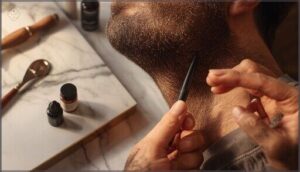
Think of beard fillers and beard dye as your instant optical illusion. Fiber fillers and tinted pens can temporarily conceal patchy areas, giving your beard a thicker look right away.
The beard filler market growth shows they work—but be careful with dyes. Some contain allergens that can irritate your skin. Always follow application guidelines and patch-test first.
Creating Definition With Trimming Techniques
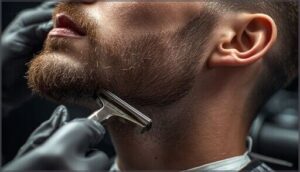
Sharp borders do the heavy lifting at hiding gaps. Here’s how trimming creates structure:
- Neckline shaping – Position your neckline two finger widths above your Adam’s apple to tighten your jawline and shift focus from sparse areas.
- Cheek line trimming – Keep a high, clean cheek line to frame denser growth and minimize bare patches.
- Length gradients – Use shorter guards on thin zones, longer on fuller areas, blending everything smoothly.
Professional shaping transforms patchy beards into sharp beard styles.
Maintaining a Consistent Grooming Routine
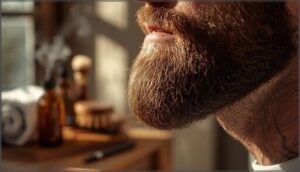
Once you’ve defined your shape, lock it in with a steady grooming routine. Wash 2–3 times weekly, moisturize daily with beard oil, and brush to spread product and exfoliate skin. Schedule trims every 4–5 weeks to maintain structure.
Integrated routine beats random upkeep—consistent beard care and maintenance are what turn patchy into polished.
Lifestyle Changes to Support Beard Growth

Your beard doesn’t just grow based on what you put on it. What happens inside your body matters just as much.
Let’s talk about the daily habits that can either help your beard fill in or hold it back.
Exercise and Improved Circulation
When you move your body regularly, you’re doing your beard a solid favor. Exercise boosts testosterone and improves blood flow to your face—meaning more oxygen and nutrients reach those follicles. Studies show that moderate-to-vigorous activity can roughly double skin blood flow.
Even better, breaking up long sitting sessions helps reverse the circulation problems that come with being sedentary, ultimately improving beard growth.
Managing Stress and Sleep Quality
Your stress levels and sleep habits have a direct line to your beard growth. When you’re stressed, cortisol keeps follicles stuck in the resting phase—fewer hairs growing means a patchier beard.
Sleep’s testosterone link is real: drop below 5 hours nightly and your testosterone can fall 10–15%. One study even found 48 hours of sleep deprivation slashed beard growth by 19%. Aim for 7–8 hours to support circadian beard rhythms and keep follicles active.
Weight Management and Hormone Balance
Sleep helps, but so does what you see on the scale. Carrying extra weight suppresses testosterone—each 1% rise in body fat drops testosterone by about 0.21 ng/dL. That matters because testosterone and DHT fuel beard growth. Obesity triggers insulin resistance and inflammation, both of which dampen hormone levels and thin your beard.
Dropping 15% of your body weight can raise free testosterone by 51.78 pmol/L:
- Exercise boosts circulation and hormone production – Walking or lifting increases testosterone naturally
- Weight loss restores the testosterone–DHT axis – Losing fat reduces aromatization and reactivates follicles
- Energy deficit backfires – Extreme calorie restriction and overtraining crash hormone levels, reversing gains
Population trends confirm it: as average BMI climbed from 25.83 to 27.96 kg/m² between 1999 and 2016, testosterone levels dropped across young men. Maintain a healthy weight, and your hormones—and your beard—benefit.
Avoiding Habits That Hinder Hair Growth
Even if you exercise and eat right, a few bad habits will sabotage your patchy beard. Smoking cessation protects follicles from nicotine-induced vasoconstriction. Sleep optimization keeps growth hormones steady. Alcohol moderation preserves zinc and B vitamins. Steroid avoidance prevents DHT spikes that miniaturize follicles.
Avoid grooming mistakes like over-trimming. Managing stress levels and prioritizing sleep matter more than any supplement.
Frequently Asked Questions (FAQs)
What causes a patchy beard?
Your genes mostly call the shots—they decide how sensitive your follicles are to DHT and testosterone.
But hormones, age, lifestyle choices, and some medical conditions also shape your beard’s patchiness.
Should I let my beard grow if it’s patchy?
Yes, let your patchy beard grow for at least four to eight weeks before judging coverage.
Longer hairs from denser areas naturally drape over thin spots, making patchiness less noticeable as growth continues.
Do beard patches fill-in?
Most patchy beards do fill in naturally over time—about 32% of men see fuller facial hair between ages 20 and 25, with many continuing to improve into their late twenties.
Are patchy beards attractive?
Most surveys show patchy beards rank low in attractiveness—84% of women prefer clean-shaven faces.
But here’s the good news: grooming impacts attractiveness markedly. Well-maintained stubble scores higher than neglected, fuller beards.
Does shaving fix a patchy beard?
No, shaving won’t fix a patchy beard. Scientific evidence confirms the shaving myth: it doesn’t increase follicle stimulation or hair density.
Visual perception tricks you—blunt ends look darker, but facial hair coverage doesn’t improve.
Can beard transplants permanently fix patchy areas?
Beard transplantation can permanently cover patchy beard gaps—graft survival rates reach 85–95% using modern techniques.
Density limitations depend on your donor supply and skin blood flow, but results remain stable once healing completes after 9–12 months.
How long until patchy beards naturally fill in?
Ever wonder when those thin spots will finally catch up? The maturation process for patchy beard areas usually takes two to four months of growth, though genetic influence and hormonal effects mean full facial hair density often arrives in your late twenties.
Does shaving make your beard grow back thicker?
No, shaving doesn’t make your beard grow back thicker. Clinical trials confirm this is a myth.
Hair appears coarser after shaving only because blunt tips feel rougher than natural tapered ends.
Conclusion
Rome wasn’t built in a day, and neither is a great beard. You now have the blueprint to fix a patchy beard through proven growth methods, smart nutrition, and strategic styling.
Your genetics set the stage, but your daily habits write the script. Start with one or two techniques that fit your lifestyle. Stay consistent for at least three months.
Those frustrating gaps won’t vanish overnight, but with patience and the right approach, you’ll transform sparse coverage into the commanding beard you’ve always wanted.