This site is supported by our readers. We may earn a commission, at no cost to you, if you purchase through links. This content is for general informational and educational purposes only and is not a substitute for professional medical, dermatological, or nutritional advice.
Most men assume a patchy beard is a testosterone problem. It’s not. DHT receptor sensitivity, not your total hormone levels, determines whether your follicles produce thick hair, and no supplement changes that. On top of that, facial hair growth cycles don’t fully mature until your early 30s, so patches at 22 or 25 are often just biology doing its job on schedule.
That doesn’t mean you’re stuck. Between smarter styling choices, proven topical treatments, and the right nutritional support, you have more control over your beard than you think. Here’s what the evidence actually backs.
Table Of Contents
- Key Takeaways
- Why is My Beard Patchy?
- How to Make a Patchy Beard Look Fuller Now
- Can You Grow Hair in Patchy Beard Areas?
- Beard Care, Nutrition, and Lifestyle Habits That Support Growth
- When Should You See a Dermatologist for a Patchy Beard?
- Frequently Asked Questions (FAQs)
- Is it possible to fix a patchy beard?
- Is patchy beard permanent?
- Does patchy beard mean low testosterone?
- Can a patchy beard be attractive?
- What causes a patchy beard?
- Should I let my beard grow if it’s patchy?
- Do beard patches fill-in?
- Are patchy beards attractive?
- Does shaving fix a patchy beard?
- Can beard transplants permanently fix patchy areas?
- Conclusion
Key Takeaways
- A patchy beard is almost never a testosterone problem — it comes down to how sensitive your follicles are to DHT, which is determined by genetics, not hormone levels.
- Facial hair growth cycles don’t fully mature until your early 30s, so patchiness in your 20s is often just biology running on schedule, not a permanent condition.
- Minoxidil and microneedling are the most evidence-backed treatments for actually growing hair in sparse areas, but both require at least 90 days of consistent use before meaningful results appear.
- Grooming strategy — choosing the right length, style, and brushing technique — can make a patchy beard look significantly fuller right now, without waiting for any treatment to kick in.
Why is My Beard Patchy?

Why your beard has patchy spots comes down to three factors: genetics, hormones, and timing.
If genetics are working against you, exploring patchy beard styles for teens can help you find looks that actually work with your growth pattern rather than against it.
Your genetic follicle density is fixed at birth, and DNA markers directly control where thick hair grows. DHT receptor sensitivity determines whether those follicles activate. In fact, follicle sensitivity to DHT matters more than your overall testosterone levels for beard thickness and density.
A patchy beard before 30 is common, because the facial hair growth cycle doesn’t fully mature until your early 30s.
How to Make a Patchy Beard Look Fuller Now
You don’t have to wait months to see improvement. A few styling adjustments can make your beard look noticeably fuller starting today. Here’s what to work with right now.
Best Beard Length and Styles
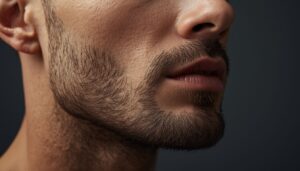
Length is where beard styling starts. Short stubble, around 3–5mm, blends gaps into a natural, even shadow. Push any longer, and low-density areas read wider, not fuller.
These four beard styles reduce patch visibility most:
- Even stubble unifies your beard length
- A circle beard hides sparse cheeks
- A defined goatee skips coverage gaps
- A low-fade style matches your densest zone
Strategic Trimming and Brushing
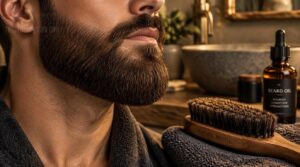
Once you’ve picked your style, maintenance holds it together. When you trim your beard, keep lengths consistent across zones. Mismatched lengths highlight patches by creating edge contrast.
For more guidance on shaping each zone to suit your features, these beard grooming tips for different face shapes can help you trim with intention, not guesswork.
Brush your beard after washing, while hair is still conditioned. A boar bristle brush separates hairs evenly, improving coverage without clumping. Brushing with the grain keeps flyaways down and your clean lines sharp.
Beard Fillers and Dye
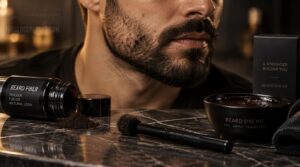
Trimming experiences shape, but visible gaps still need beard camouflage techniques. Temporary beard fillers use fiber or pigment to bridge sparse areas. Fibers cling to existing hair; pigments sit on skin. Both wash out easily.
Beard dye works by darkening lighter or gray hairs uniformly, reducing visible contrast. Match your undertone for natural-looking beard color correction, not just the shade.
Can You Grow Hair in Patchy Beard Areas?

Yes, you can actually grow hair in patchy areas, but the results depend heavily on what you use and how consistently you use it. Several proven methods range from topical treatments to mechanical stimulation, and knowing which ones hold up under scrutiny matters. Here’s what the evidence says about each option.
Among the most well-researched approaches, minoxidil and derma rolling for beard bald spots have shown measurable regrowth when applied regularly over several months.
Minoxidil Results and Risks
Minoxidil for beard growth is off-label, not approved for facial hair. It works by promoting hair follicle stimulation, extending the growth cycle, but results take four to six months of daily use.
Side effects include skin irritation and accidental transfer to nearby areas. If you have cardiovascular concerns, see a doctor first. Stopping minoxidil means your patchy beard gradually returns.
Microneedling Use and Safety
Sessions with a derma roller create tiny punctures that trigger hair follicle stimulation, gradually improving facial hair density in areas of beard patchiness.
Use a 0.5mm needle depth and limit microneedling to once weekly on beard skin, which is more sensitive than scalp. Always disinfect your device, don’t share it, and skip if you have active breakouts or inflamed skin.
Oils and Supplement Claims
Biotin deficiency affects fewer than 1% of men, yet beard supplements built around it still dominate shelves.
Most beard oil does what a moisturizer does: it coats your skin and hairs, improving appearance without triggering new follicle activity.
Natural beard thickening blends rarely drive real hair growth unless you’re correcting a shortfall.
Beard thickening claims consistently outpace the clinical evidence.
Growth Timeline and Expectations
Take a guy who starts minoxidil at week two, sees nothing visible by week eight, and quits entirely. He gave up right before things get interesting.
Your beard development timeline isn’t linear, and the anagen phase for facial follicles moves slowly. Most men need a full 90 days of consistent treatment before their true facial hair growth potential shows up.
Beard Care, Nutrition, and Lifestyle Habits That Support Growth

Your body’s the foundation of everything your beard does. To fix a patchy beard from the inside, start with adequate daily protein. Hair shafts are built from keratin, which comes from amino acids, so aim for at least 0.7 grams per pound of bodyweight each day. A quality whey protein for men makes hitting that daily amino acid target far easier, especially on busy days when whole-food sources fall short.
Iron and zinc are just as critical for beard nutrition. Low iron limits oxygen delivery to your follicles, and zinc deficiency disrupts keratinization, both of which stall healthy growth.
Sleep and stress affect your beard more than most men expect. Elevated cortisol pushes follicles out of their growth phase faster than you’d think. Lifestyle changes like seven to nine hours of daily sleep, regular exercise, and avoiding smoking help stabilize your overall follicle environment.
Elevated cortisol quietly pushes your beard follicles out of their growth phase faster than any styling mistake
When Should You See a Dermatologist for a Patchy Beard?

Most patchy beard problems respond well to patience and the right routine. But some don’t, and waiting too long costs you follicles you can’t recover.
See a dermatologist if you notice:
- Bald spots that appeared within days or weeks
- Redness, crusting, or pustules around patches
- Beard thinning combined with fatigue, weight changes, or cold intolerance
- No regrowth after months of minoxidil or derma roller use
- Smooth, shiny skin with no visible follicle openings in the patch
Scarring alopecia destroys follicles permanently. The sooner you catch it, the better your options.
Dermatological treatments for hair loss, like corticosteroids and JAK inhibitors, need medical supervision. Don’t self-prescribe. If you’re serious about fixing a patchy beard, a dermatologist is your clearest path forward.
Frequently Asked Questions (FAQs)
Is it possible to fix a patchy beard?
Yes, but the degree of improvement depends on the root cause. Beard genetics set your follicle density, meaning some patches won’t fully fill in, while others respond surprisingly well to minoxidil, grooming, or better nutrition.
Is patchy beard permanent?
Does a patchy beard have to stay that way? Not always. If the cause is temporary, like incomplete hair follicle activation, your density can improve. Beard genetics matter, but scarring’s the real barrier to regrowth.
Does patchy beard mean low testosterone?
Rarely. Most men with a patchy beard have completely normal testosterone levels. Your hair follicles vary in androgen sensitivity by region, so genetics, not low testosterone, usually determines where and how your beard fills in.
Can a patchy beard be attractive?
A collage doesn’t need every tile to be beautiful.
Research confirms a well-groomed patchy beard can rate higher on attractiveness than an unkempt full beard or a clean-shaven face. Your grooming matters more than density.
What causes a patchy beard?
Ever notice your patchy beard has nothing to do with effort? Your genetics largely determine how your hair follicles respond to testosterone and androgen receptors. Hormones, age, and health conditions all add to the mix.
Should I let my beard grow if it’s patchy?
Short stubble is like a screen door: every gap shows through. Let it grow out for at least four to eight weeks. Longer hairs drape over thin spots, making your patchy beard look noticeably fuller.
Do beard patches fill-in?
Most patchy beards do fill in naturally with age. Around 32% of men notice much fuller facial hair between ages 20 and 25, with many continuing to see real improvement well into their late twenties.
Are patchy beards attractive?
Surveys show 84% of women prefer clean-shaven faces, but that doesn’t settle it for you. Grooming quality shifts perception more than density. Well-maintained stubble consistently ranks higher in facial hair aesthetics than a neglected beard.
Does shaving fix a patchy beard?
Think shaving resets your patchy beard? It doesn’t. Shaving only cuts the hair shaft, but it can’t change follicle density underneath. When regrowth comes in, your facial hair coverage looks exactly the same as before.
Can beard transplants permanently fix patchy areas?
Like planting seeds in bare soil, a beard transplant moves healthy follicles directly into patchy spots. Modern facial hair transplant techniques achieve 85–95% graft survival, delivering permanent results once healing finishes around 9–12 months post-procedure.
Conclusion
Most men who finally figure out how to fix a patchy beard stop obsessing over the mirror and start working with what they have. That shift matters.
Your patches don’t define what’s possible. Smarter styling, consistent minoxidil use, and the right nutrition stack the odds in your favor, even if your follicles need more time. Give the process six months before you judge it. Patience here isn’t passive; it’s the whole strategy.