This site is supported by our readers. We may earn a commission, at no cost to you, if you purchase through links.
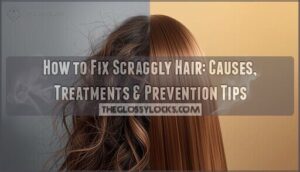
Scraggly hair doesn’t happen overnight—it’s the result of accumulated damage from heat tools, chemical treatments, and daily wear that leaves strands dry, frizzy, and impossible to manage. When your hair feels rough to the touch and refuses to lay smooth no matter how much product you apply, it’s sending clear signals that the protective cuticle layer has been compromised.
The good news is that understanding what’s causing the damage puts you in control of reversing it. Whether you’re dealing with split ends that climb up the hair shaft or brittle strands that snap during brushing, targeted treatments and adjusted routines can restore your hair’s strength and shine.
Table Of Contents
Key Takeaways
- Scraggly hair results from accumulated damage—heat styling above 365°F, chemical treatments, and moisture loss weaken the cuticle and protein structure, making strands brittle and prone to breakage you can reverse through targeted care.
- Regular trims every 6-8 weeks stop split ends from traveling up the hair shaft, while weekly deep conditioning masks and oils like coconut (which reduces protein loss by 39%) restore moisture and elasticity your damaged strands desperately need.
- Daily habits matter more than you think—washing 5-6 times weekly with hydrating formulas, detangling gently from ends to roots, and always using heat protectants below 300°F prevents the damage that creates scraggly texture in the first place.
- When at-home treatments don’t work, professional keratin services and custom-blended salon masks deliver bond-rebuilding repair you can’t replicate yourself, while persistent issues require a dermatologist’s medical expertise to address underlying causes like hormonal shifts or follicle inflammation.
What Causes Scraggly Hair?
Understanding what’s behind scraggly hair is the first step toward fixing it for good. The causes range from everyday habits you mightn’t think twice about to deeper issues like nutrition and genetics.
Let’s look at the main culprits that leave your hair looking damaged and frayed.
Lack of Moisture and Hydration
Your hair is about 25% water, and when that balance drops, you’ll notice the damage quickly. Moisture deficiency weakens hair porosity, leaving strands brittle and prone to breakage. Dehydration disrupts blood flow to follicles, reducing nutrient delivery and affecting growth quality.
Hair is 25% water, and when that balance drops, moisture deficiency weakens porosity, leaving strands brittle and starved of nutrients
Adequate hydration can help prevent dehydration’s effect on hair, including hair loss. To restore hair hydration, focus on scalp hydration first—deep conditioning treatments replenish what dryness steals and rebuild your hair’s protective barrier.
Heat Styling and Chemical Damage
While moisture loss weakens your hair’s foundation, hot tools and chemicals deliver the knockout punch. Heat styling above 365°F damages 75% of your hair’s structure—you’re literally cooking your strands. Chemical treatments break down protein bonds, leaving hair brittle and prone to breakage. Heat styling can strip natural oils from hair, leading to dryness and damage.
Here’s what you’re up against:
- Heat Damage Threshold: Temperatures above 365°F cause significant cuticle layer erosion
- Chemical Bond Disruption: Perms and relaxers weaken structural protein cohesion
- Protein Structure Impact: Keratin denatures at 428°F, causing irreversible damage
- Cumulative Damage Effects: Daily heat styling multiplies damage over months
- Hair Breakage: Combined heat and chemical stress reduces elasticity by up to 65%
Always use a heat protectant—it’s your hair’s shield against thermal assault.
Poor Hair Care Habits
Beyond heat and chemicals, everyday routines quietly sabotage your strands. Harsh shampoo use strips protective oils, while rough handling when brushing wet hair causes up to 40% more breakage. Infrequent washing clogs follicles, and skipping conditioner leaves hair vulnerable to splitting. Tight hairstyles create constant tension, leading to traction alopecia over time.
| Hair Care Mistake | Immediate Impact | Long-Term Consequence |
|---|---|---|
| Harsh Shampoo Use | Strips natural oils | Chronic dryness, brittleness |
| Rough Handling | Strand breakage | Thinning, uneven texture |
| Infrequent Washing | Sebum buildup | Follicle blockage, slower growth |
| Skipping Conditioner | Increased friction | Split ends, tangling |
| Tight Hairstyles | Follicle tension | Traction alopecia, receding hairline |
Your hair maintenance habits matter more than you think—small changes prevent big damage.
Environmental and Lifestyle Factors
Outside your bathroom, the world wages war on your strands. Air pollution releases free radicals that weaken your cuticle, while UV radiation breaks down proteins and fades color—blonde hair yellows fastest.
Chlorine strips oils, hard water leaves mineral deposits, and high humidity triggers frizz.
Chronic stress delays follicle regeneration, and smoking chokes off blood flow to your scalp. Environmental stressors and lifestyle choices compound damage daily.
Nutritional Deficiencies and Genetics
Vitamin deficits sabotage hair health from the inside out. Low iron starves your hair follicles of oxygen, causing brittleness and shedding—especially if you’re menstruating or vegetarian. Genetic factors hardwire your hair texture and susceptibility to breakage through proteins like keratin.
Key nutritional culprits include:
- Vitamin D deficiency slowing hair growth and follicle creation
- Biotin and zinc shortfalls thinning strands and weakening the hair shaft
- Protein-poor diets triggering increased shedding and poor texture
Iron supplements and balanced nutrition restore hair follicle health when nutrient imbalance is the root cause.
How to Repair Scraggly Hair at Home
You don’t need a salon appointment to start turning scraggly hair around. With the right at-home techniques, you can repair damage, restore moisture, and bring back smoothness in just a few weeks.
Here’s how to give your hair the care it needs from your own bathroom.
Regular Trimming to Remove Split Ends
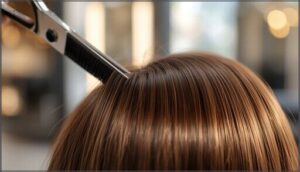
Think of trimming like pruning a plant—snipping away damaged bits helps the rest thrive. Trimming every 6 to 8 weeks prevents split ends from traveling up your hair shaft. This simple habit stops breakage, improves manageability, and keeps your hair looking polished. Even micro-trims (removing less than 1/4 inch) preserve length while preventing scraggly ends from worsening.
| Hair Type | Trimming Frequency |
|---|---|
| Fine/Heat-Styled | Every 6-8 weeks |
| Medium/Thick | Every 8-12 weeks |
| Curly/Coily | Every 10-12 weeks |
| Color-Treated | Every 6-8 weeks |
| Growing Out Length | Micro-trims as needed |
Deep Conditioning Treatments and Hair Masks
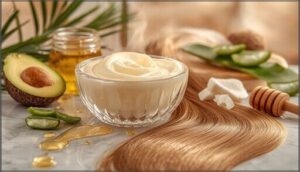
When did your hair last get a real drink? Deep conditioning treatments and hair masks deliver the moisture repair your scraggly strands desperately need.
These protein treatments penetrate deeper than regular conditioners, strengthening weakened hair and restoring elasticity.
Apply weekly, focusing on mid-lengths to ends, and leave on for 20-30 minutes. This consistent hair nourishment reduces breakage and brings back that smooth, manageable texture you’re after.
DIY Remedies With Oils and Natural Ingredients

Your kitchen pantry holds powerful repair solutions that rival salon treatments. Coconut oil leads with impressive oil penetration rates, reducing protein loss by 39% when applied before washing.
Layer it with argan oil for surface shine, or blend avocado and honey into a DIY mask. Its efficacy comes from vitamins and moisture-binding properties that restore scraggly ends within 20-30 minutes.
Washing and Drying Techniques for Healthier Hair

Washing too often strips natural oils, but research shows 5-6 washes weekly actually improves hair condition and reduces brittleness. Here’s your damage-control routine:
- Use lukewarm water (32-38°C) to protect cuticles from shock
- Massage shampoo into your scalp for 45 seconds, not your ends
- Blot with a microfiber towel—never rub vigorously
- Apply heat protection before blow-drying at low settings
- Keep the dryer moving to prevent concentrated damage
Best Products for Fixing Scraggly Hair

You’ve already started repairing your hair at home, but the right products can make all the difference in speeding up your results. Choosing formulas that target dryness, damage, and frizz will help you restore smoothness and shine faster than home remedies alone.
Here’s a breakdown of the most effective product types to add to your routine.
Hydrating Shampoos and Conditioners
When your hair feels like straw, a hydrating shampoo can be your first line of defense against dryness and damage. These formulas use gentler surfactants that cleanse without stripping moisture, while key ingredients like glycerin and aloe vera draw water into each strand. Consumer demand has surged in 2025, with 62% seeking multifunctional dry hair solutions that combine hydration with frizz control.
| Ingredient | Primary Benefit |
|---|---|
| Aloe Vera | Soothes scalp and locks in moisture |
| Glycerin | Draws environmental humidity to hair |
| Coconut Oil | Penetrates shaft to prevent protein loss |
Pair your shampoo with a conditioner enriched with argan or shea butter for complete hair moisture restoration. Usage statistics show significant improvements in manageability and reduced breakage.
Eco-friendly options with sustainable packaging now appeal to 45% of buyers, while AI personalization tools help match products to your specific dry hair needs—making it easier than ever to find what works for you.
Intensive Repair Masks and Oils
If regular shampoo isn’t cutting it, intensive repair masks and oils deliver the heavy-duty nourishment your hair damage repair routine needs. The global repairing hair mask market—valued at $2.5 billion in 2023—reflects growing awareness of these products’ remarkable power.
Best masks for scraggly hair repair include:
- Deep conditioning formulas with fermented pink Camellia oil and hydrolyzed proteins
- Masks that increase hair nutrition by +147% after multiple applications
- Weekly treatments that reduce breakage by approximately 19%
- Products improving elasticity for 96% of users after 28 days
Best oils for scraggly hair repair feature:
- Coconut oil reducing protein loss by 39% as a pre-wash treatment
- Argan oil restoring moisture with vitamin E and antioxidants
- Jojoba oil mimicking natural scalp oils without heaviness
- Formulas cutting broken hair by 93% in clinical use
For dry and damaged hair, apply masks 2-3 times weekly. If you’ve got fine strands, once weekly prevents buildup while still delivering oil benefits and ingredient composition advantages that seal split ends and boost shine.
Leave-in Conditioners and Serums
While masks work wonders overnight, leave-in conditioners and serums give your scraggly hair all-day protection without weighing it down. These lightweight formulas lock in hydration, smooth frizz, and create an environmental shield against daily stressors.
With 32% of people using leave-in treatments weekly, you’re joining a proven hair repair routine that addresses damage repair while keeping strands soft and manageable.
Heat Protectants and Sun Protection Sprays
Heat styling without protection strips 25% of your hair’s moisture, accelerating that scraggly look you’re battling. Heat protectants create a barrier that slows heat transfer, while sun protection sprays shield against UV rays that cause color fading and breakage.
Look for silicone-based formulas with natural oils—they reduce friction and lock in hydration, giving you measured hair health improvements with consistent use.
Daily Hair Care Tips to Prevent Scraggly Ends

You’ve invested in great products and treatments, but if your daily habits aren’t doing your hair any favors, those scraggly ends will keep coming back.
The good news is that a few simple adjustments to your routine can make a real difference in preventing damage before it starts.
Here’s what you need to focus on to keep your hair smooth and healthy between salon visits.
Gentle Detangling and Brushing Methods
Detangling hair gently starts at the ends, not the roots, to minimize hair breakage along the hair shaft. Your brush stroke length matters—short, controlled movements work best with paddle brushes or wide-toothed combs designed for sensitive hair tools.
Best practices include detangling on damp hair with conditioner for slip, and adjusting your detangling frequency based on your hair type. These simple hair care tips prevent unnecessary damage while keeping scraggly ends at bay.
Avoiding Excessive Heat Styling
Cutting back on heatstyling tools is one of the smartest moves you can make for scraggly hair. Lower temperatures below 300°F help prevent protein breakdown, while heat protectants reduce moisture loss—though they won’t eliminate heat damage entirely.
Try styling alternatives like air drying or heatless styles to give your hair a break. When you do use heat, always apply a heat protectant first.
Proper Scalp Care and Moisturizing
Your scalp health directly influences hair moisture levels, and a well-hydrated scalp means stronger, shinier hair. Within just 15 days of consistent moisturizing, your scalp’s moisture retention improves noticeably, reducing breakage and frizz while supporting healthier growth.
Here’s how to keep your scalp properly moisturized:
- Choose hydrating shampoos that don’t strip natural oils from your scalp
- Apply scalp serums with barrier-enhancing ingredients to reduce inflammation
- Incorporate weekly hair masks that target both scalp and strand hydration
- Limit washing frequency—most people benefit from washing every other day
- Use leave-in moisturizers formulated specifically for your hair type
Protecting Hair From Environmental Stressors
Beyond what you do at home, environmental stressors like UV radiation and pollution effects quietly damage your hair every day. Climate change has intensified these challenges, making hair protection essential.
Use protective products with UV filters and antioxidants to shield against sun and pollution. Physical barriers—wide-brimmed hats or scarves—offer extra defense during prolonged exposure, preventing heat damage and preserving your hair’s moisture barrier.
When to Seek Professional Help for Scraggly Hair
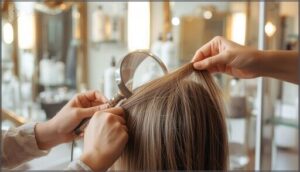
Sometimes scraggly hair doesn’t respond to at-home treatments, no matter how diligent you’re with your routine. If you’ve tried everything and your hair still looks damaged, it’s time to call in the professionals.
Here are three salon solutions that can transform stubborn scraggly hair when DIY methods aren’t cutting it.
Salon Treatments and Keratin Services
When at-home remedies aren’t enough, keratin treatments offer professional help for scraggly hair you can’t ignore.
This in-salon hair solution seals your cuticle, reduces frizz for months, and improves styling efficiency by cutting drying time in half.
Treatment costs generally range from $50 to $300, and with safety innovations like formaldehyde-free formulas now standard, you’re getting effective hair repair that’s gentle on your strands.
Custom-Blended In-Salon Masks
Stylists custom-blend ingredients right before your appointment—targeting your unique hair damage with botanical oils, proteins, and vitamins you can’t replicate at home.
Here’s what makes these professional hair treatments worth the investment:
- Ingredient Selection: Your stylist analyzes your scalp and hair to choose oils, antioxidants, and lipids that address your specific moisture loss and breakage patterns.
- Deeper Penetration: Professional application techniques and heat tools push active ingredients inside your hair shaft, not just the surface.
- Efficacy Comparison: In-salon hair solutions deliver stronger, longer-lasting hair repair than DIY masks—think bond rebuilding, not temporary shine.
- Scalp Benefits: Custom formulas often include antibacterial ingredients that improve circulation and balance oil production for healthier growth.
- Market Trends: Individualized hair treatment demand is skyrocketing, with the global hair mask market projected to reach $991.9 million by 2030.
These custom masks transform scraggly ends in under five minutes, making hair silkier and more resilient immediately.
Consulting a Hair Specialist for Persistent Issues
When scraggly hair won’t budge despite your best efforts, you need more than another deep conditioner—you need answers. Scalp examinations and diagnostic assessments reveal what’s really causing your hair damage, from hormonal shifts to follicle inflammation.
Professional treatments like PRP therapy show 60% complete remission rates for thinning. Your hairstylist addresses cosmetic hair repair, but persistent issues demand a dermatologist’s medical expertise for lasting hair health.
Frequently Asked Questions (FAQs)
Can scraggly hair be reversed completely?
Completely reversing hair damage isn’t realistic—broken protein bonds and fractured cuticles stay damaged.
Hair regrowth replaces scraggly strands over time, while strategic treatments and cuticle repair efforts minimize breakage and improve hair health temporarily.
How often should I replace hair care products?
You’ll want to rotate shampoos every few months to prevent buildup.
Replace hair oils within a year of opening, and swap out serums or styling products when they change in smell, texture, or color.
Does hair texture change with age naturally?
Yes, your hair texture shifts naturally as you age. Hormonal hair changes, hair diameter decline, and scalp oil reduction all contribute to drier, coarser strands—making genetic hair factors and aging hair texture unavoidable realities.
Are silk pillowcases worth it for scraggly hair?
Silk pillowcases reduce friction and breakage while helping your hair retain moisture overnight. They’re worth considering if you’re fighting frizz, split ends, or dryness—especially compared to cotton, which absorbs natural oils.
Can medication side effects cause scraggly hair?
Certain medications can trigger hair breakage and dryness through drug-induced texture changes or medication hair loss, causing treatment side effects that damage your strands.
Though managing medication effects often leads to reversible hair damage once adjusted.
Conclusion
Picture your hair as silk fabric that’s been left in the rain—rough now, but capable of regaining its luster with the right care. Learning how to fix scraggly hair means committing to consistent moisture, protective styling, and regular trims that stop damage before it spreads.
Your strands won’t transform overnight, but each treatment and careful choice builds toward hair that feels soft, looks healthy, and answers your touch with renewed strength.
- https://www.instagram.com/marcusrfrancis/?hl=en
- https://www.haircode.uk/knowledge-base/hair-health-and-science/how-moisture-helps-damaged-hair
- https://www.dermimatch.com/the-importance-of-hydration-for-hair/
- https://pmc.ncbi.nlm.nih.gov/articles/PMC11501000/
- https://consultqd.clevelandclinic.org/novel-treatment-regimen-may-slow-hair-loss-promote-scalp-health