
This site is supported by our readers. We may earn a commission, at no cost to you, if you purchase through links.
You’re not imagining it—those white flakes drifting from your beard aren’t just dry skin, and a regular moisturizer won’t make them disappear. Most men assume beard dandruff stems from poor hygiene or cold weather, but the real culprit is often a microscopic yeast called Malassezia that thrives in the oil-rich environment beneath your facial hair.
This fungal overgrowth triggers seborrheic dermatitis, the same inflammatory condition behind scalp dandruff, and it affects up to 70% of bearded men at some point.
The good news? Targeted antifungal treatments can reduce symptoms by half within just a few weeks, but only if you understand what’s actually happening under those whiskers and adjust your grooming routine accordingly.
Table Of Contents
Key Takeaways
- Beard dandruff stems from Malassezia yeast overgrowth that triggers seborrheic dermatitis, affecting up to 70% of bearded men—not poor hygiene or simple dry skin as commonly assumed.
- Ketoconazole-based medicated shampoos reduce fungal loads by 60-80% within four weeks when applied for 2-5 minutes, making them your most effective first-line treatment against persistent flaking.
- Environmental factors like low humidity below 40% increase flaking by 15-25%, while excess sebum production spikes Malassezia colonization by 19%—meaning both dryness and oiliness can worsen your condition.
- Daily washing with pH-balanced cleansers, weekly gentle exfoliation, and fragrance-free moisturizers maintain control after treatment, but overwashing strips natural oils and worsens symptoms by 10-20%.
Causes of Beard Dandruff
Those white flakes in your beard aren’t showing up because you’ve skipped a shower or two. Beard dandruff has real causes that go deeper than hygiene, and understanding what’s triggering it is your first step toward getting control.
Let’s break down what’s actually happening under that beard of yours.
Seborrheic Dermatitis and Fungal Growth
Seborrheic dermatitis is the primary culprit behind your beard dandruff. This condition stems from Malassezia, a yeast that thrives in oily, sebaceous-rich beard areas.
When this fungus multiplies, it irritates your skin barrier, triggering redness and flaking. Studies show Malassezia appears in over 90% of symptomatic cases.
Antifungal therapy, particularly ketoconazole treatment, can reduce symptoms by 50–70% within weeks.
Dry Skin and Environmental Factors
While Malassezia plays a starring role, your environment can be equally disruptive. Low humidity—below 40%—boosts visible flaking by 15–25%, and central heating strips away 10–20% of surface moisture over weeks. Cold, dry air correlates with a 12–18% spike in itch and scaling.
Protect your skin barrier with these moves:
- Monitor indoor humidity control between 40–60%
- Limit friction from scarves and tight collars
- Restore moisture balance with targeted hydration
Skin Oiliness and Sebaceous Glands
Excess sebum production flips the script—oily skin can be just as problematic. Sebum regulation matters because facial sebaceous glands pump out 2.3–3.1 times more oil in oily-beard skin, spiking Malassezia colonization by 19%.
That oil imbalance feeds the fungus, worsening seborrheic dermatitis. Your skin pH shifts, gland activity accelerates, and beard dandruff thrives unless you restore proper oil balance through targeted facial hygiene and dandruff treatment strategies.
Common Misconceptions About Beard Dandruff
Many people think poor hygiene causes beard dandruff—but that’s myth busting you need. Dandruff stigma ignores the real fungal role: Malassezia drives 40–60% of cases. Misdiagnosis rates hit 22% when you mistake seborrheic dermatitis for simple dry skin.
Beard dandruff isn’t about poor hygiene—it’s a fungal infection that causes 40–60% of cases and gets misdiagnosed as dry skin
Your skin barrier matters more than how often you wash. Smart dandruff treatment with dandruff shampoo targets the actual problem, not imagined dirt.
Recognizing Beard Dandruff Symptoms

You can’t tackle beard dandruff if you don’t know what you’re dealing with. The signs aren’t always obvious, and sometimes what looks like dry skin is actually something more persistent.
Let’s break down the key symptoms so you know exactly what to watch for.
Flaking and Scaling Under The Beard
You’ll notice beard flakes appearing on your collar or when you run a hand through your beard—sometimes white, sometimes yellowish and waxy. These visible scales form when Malassezia yeast triggers inflammation, disrupting your skin’s normal turnover cycle.
Microscopic flaking affects 50-70% of mild seborrheic dermatitis cases, even when you don’t see obvious debris. The fungal infections create persistent scaling that standard dandruff shampoo alone may not resolve.
Redness, Itching, and Skin Irritation
Beyond the flakes, you’ll often feel intense itching that disrupts your day—studies show itch intensity averaging 4.2 on a 10-point scale in beard dandruff cases. Redness appears in 18-28% of affected individuals, signaling skin inflammation driven by Malassezia-related irritation causes.
When seborrheic dermatitis symptoms escalate, dermatitis treatment with targeted redness treatment becomes essential for flare management and lasting itch relief.
Greasy Patches and White or Yellow Scales
You’ll recognize seborrheic dermatitis symptoms when greasy patches appear alongside white or yellow scales that won’t wash away with regular cleansing. These skin lesions affect 3–5% of adults, concentrated where your sebaceous glands produce the most sebum.
Fungal infections from Malassezia drive this beard dandruff, requiring targeted dandruff treatment options like anti-dandruff shampoo with antifungal agents for effective dandruff prevention and treatment.
Effective Beard Dandruff Treatments
You don’t have to live with the flakes and itch—there are proven treatments that actually work. Most cases respond well to the right products and techniques, though you might need a dermatologist’s help for stubborn flare-ups.
Let’s walk through your treatment options, from medicated shampoos to prescription creams.
Medicated Shampoos (Ketoconazole, Selenium Sulfide, Zinc Pyrithione)
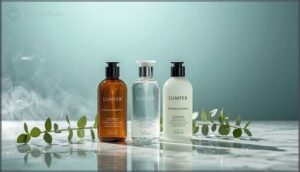
For tackling beard dandruff, medicated shampoos are your first line of defense. Ketoconazole stands out as the benchmark—reducing fungal loads by 60-80% within four weeks and offering the best treatment outcomes.
Selenium sulfide and zinc pyrithione are solid alternatives, each bringing unique antifungal properties that improve scalp health. These fungal inhibitors don’t just mask symptoms; they attack Malassezia at its source.
Proper Application Techniques for Best Results
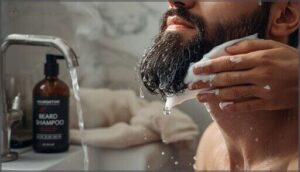
Getting your shampoo timing right makes all the difference. Leave ketoconazole on for 2–5 minutes before rinsing—that’s when the antifungal action peaks. Gentle massaging helps the medicated application reach every flake, while lukewarm water prevents irritation.
Watch your skin closely during treatment; if redness worsens, it’s time to reassess. Consistency beats intensity every time in beard care and dandruff treatment and prevention.
Use of Cortisone and Steroid Creams
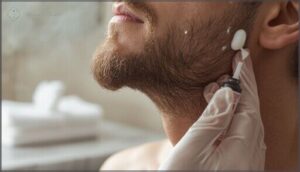
Topical steroid creams can tame inflammation fast, but they’re not your long-term solution. When beard dandruff flares with redness, low-potency hydrocortisone (1%) offers quick relief—yet using it beyond two weeks risks skin thinning and other corticosteroid risks.
- Limit steroid creams to 2-week courses maximum
- Avoid high-potency formulas on facial skin
- Never apply to open or cracked areas
- Consider anti-inflammatory alternatives like calcineurin inhibitors for maintenance
Your skin sensitivity matters more than speed.
When to Consult a Dermatologist
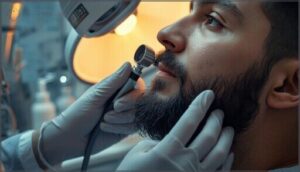
When your beard dandruff doesn’t budge after four to six weeks of over-the-counter treatment, it’s time for a dermatologist referral. Severe itching, chronic flaking, or spreading redness can signal underlying dermatological conditions—fungal resistance, skin infection, or even psoriasis.
Specialists use patch testing and cultures to pinpoint triggers, then prescribe prescription-strength antifungals or alternative therapies your bathroom cabinet can’t match.
Daily Beard Care and Hygiene Tips

Once you’ve tackled the flakes with the right treatments, keeping them away means building better daily habits. Your beard needs consistent care—not complicated routines, just smarter ones.
Here’s how to maintain a healthy beard and prevent dandruff from making a comeback.
Regular Washing and Gentle Exfoliation
You’ve probably noticed those annoying flakes falling from your beard—but consistent care makes all the difference. Weekly exfoliating with a gentle scrub can reduce beard dandruff by roughly 28% within a month, while daily washing with a pH-balanced cleanser steadily clears scalp and facial scales.
- Wash daily with lukewarm water to cut irritation by about 22%
- Exfoliate weekly using a soft brush to remove keratin buildup
- Avoid over-washing—more than once daily worsens flaking
- Use gentle scrubbing motions to prevent skin irritation
- Choose pH-balanced antidandruff shampoo for maximum flake reduction
These beard care and exfoliation techniques protect your skin while keeping your beard looking sharp.
Choosing The Right Beard Shampoo and Cleanser
Once you’ve got your washing routine down, zeroing in on the right formula matters. Ketoconazole, selenium sulfide, and zinc pyrithione are the shampoo ingredients that cut Malassezia fungus by up to 70% in controlled trials. Look for fragrance-free, pH-balanced cleansers to spare your skin unnecessary irritation while knocking out scalp and beard dandruff.
| Active Ingredient | Proven Reduction |
|---|---|
| Ketoconazole | Up to 70% in 4 weeks |
| Zinc Pyrithione | 30–50% flake drop |
| Selenium Sulfide | 40–60% scale improvement |
Choose anti-dandruff shampoo that lists these actives and skip the scents—your beard care regimen will thank you.
Moisturizing Without Irritation
After cleansing, lock in skin hydration with a fragrance-free beard moisturizer—ceramide formulas dropped itch by 72% in one trial. Gentle cleansers won’t strip your barrier, and non-irritating humectants like glycerin boost moisture 15% more than petroleum alone.
Balance occlusives with hydrators to calm beard dandruff without flare-ups. Choose products that respect skin conditions, not aggravate them.
Avoiding Common Triggers and Bad Habits
Often, your worst enemy is overwashing—more than once daily strips natural oils and spikes dryness by 10–20%. Skip fragranced products and harsh essential oils; irritant avoidance cuts itching by 15–25%. Steer clear of petroleum jelly, which traps debris.
Smart beard hygiene and dandruff prevention mean respecting your skin’s balance, not sabotaging it with bad habits that worsen facial health and skin conditions.
Natural Remedies for Beard Dandruff

If you prefer a gentler approach, several natural ingredients can help tackle beard dandruff without harsh chemicals.
These remedies work by addressing the root causes—fighting fungal growth, restoring moisture, and calming irritated skin.
Let’s look at some evidence-backed options you can try at home.
Tea Tree Oil and Its Antifungal Benefits
Tea tree oil packs serious antifungal properties that target the Malassezia fungus responsible for beard dandruff. Studies show a 5% oil concentration reduces fungal growth by up to 80% without the harsh edge of prescription antifungal medications.
Higher concentrations can trigger redness, so start cautiously.
- Apply for 2–5 minutes before rinsing to optimize contact time
- Alternate-day use minimizes skin irritation risks
- Effective treatment duration usually spans 4–6 weeks
Coconut Oil and Olive Oil for Moisturizing
Moisture is your first line of defense when dry, flaky skin strikes your beard. Coconut oil boosts skin hydration by 11% after four weeks while reducing water loss, and olive oil delivers oleic-acid hydration that cuts roughness by 16%.
Blending these natural remedies together amplifies their oil benefits by 20–25%, giving you serious beard moisturizing power without prescription formulas or harsh chemicals.
Aloe Vera and Lemon Juice as Soothing Agents
Aloe vera brings powerful natural soothers to your beard care arsenal, cutting inflammation by up to 40% while boosting skin hydration by 15–25%.
When you dilute lemon juice 1:4 with water, you get gentle exfoliants that remove flaky scales without stripping moisture.
Together, these ingredients tackle beard dandruff with antimicrobial action that’s 10–25% more effective than aloe alone.
How to Safely Use Home Remedies
Patch testing isn’t optional—it’s your first line of defense against contact dermatitis, cutting irritation risk by 60%. Apply any essential oils diluted to 2% or less on your inner forearm, wait 24 hours, then check for redness.
Limit home remedy frequency to three times weekly, choose non-comedogenic carrier selection like jojoba, and watch your skin sensitivity carefully while treating beard dandruff.
Top Products for Beard Dandruff Relief
You don’t have to guess which products actually work—there are proven options that target the root causes of beard dandruff. I’ve seen patients get relief when they switch to the right formulas and tools.
Here are three standout products that can help you take control of flaking, itching, and irritation.
1. Nizoral Anti Dandruff Shampoo Treatment
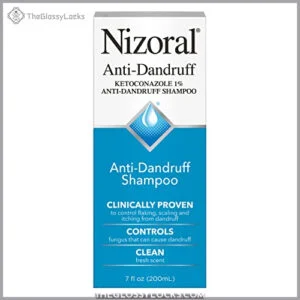
If you’re battling stubborn flakes, Nizoral Anti-Dandruff Shampoo packs a proven punch against beard dandruff. Its ketoconazole benefits stem from the 1% concentration that targets Malassezia—the fungal culprit behind most flaking and itching.
Clinical trials show it slashes fungal colonies by up to 90% after four weeks of twice-weekly use, making it a go-to scalp treatment that works just as well on facial hair.
You’ll notice relief from skin conditions and treatment becomes straightforward: lather into damp beard, leave for three to five minutes, rinse thoroughly, and repeat twice weekly for lasting anti-dandruff control.
Best For: Anyone dealing with persistent beard dandruff or itchy flakes who wants a clinically proven treatment that works in just two applications per week.
- Ketoconazole wipes out up to 90% of the fungus causing your flakes after four weeks, giving you real, measurable results
- You only need to use it twice weekly, so one bottle lasts longer and fits easily into your routine
- Safe for all hair types including color-treated or gray beards, plus it won’t strip your facial hair
- Can dry out your beard and skin if you use it more often than recommended, so stick to the twice-weekly schedule
- Might sting or irritate if your skin’s already broken or super sensitive in certain spots
- You’ll see flakes come back if you stop using it completely, so it requires ongoing maintenance
2. King Gillette Beard Care Wash
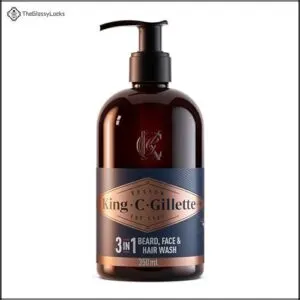
King C. Gillette Beard Wash Benefits your daily routine with gentle cleansing that won’t strip your skin or beard. Infused with coconut water, argan oil, and avocado oil, this shampoo keeps skin moisturizers balanced while you tackle beard dandruff head-on.
Product reviews highlight its ability to rinse clean and lather well, though some users report occasional dryness.
For beard care and maintenance, it doubles as a face wash and conditions beard health without harsh chemicals. Apply it with gentle circular motions to support your dandruff battle and maintain control over flakes.
Best For: Guys with beards who want a gentle daily cleanser that tackles dandruff while keeping both skin and facial hair soft and conditioned.
- Infused with coconut water, argan oil, and avocado oil to moisturize and condition your beard and skin without harsh chemicals
- Works well as a multi-purpose product—use it as a beard wash, face wash, or even body wash when needed
- Lathers easily and rinses clean, making it simple to remove dirt, oil, and product buildup from your beard
- Some users experience dryness or skin irritation, especially if you have sensitive skin
- The pump mechanism can be defective on certain bottles, which is frustrating when you’re trying to dispense the product
- May not leave your beard as soft as other products, and the coconut scent might be too strong for some people’s taste
3. Panasonic Cordless Beard Trimmer
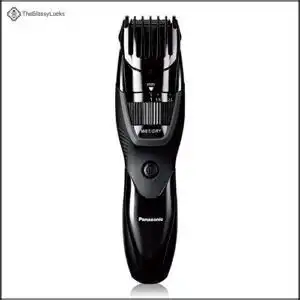
Maintaining your beard at the right length can prevent irritation that worsens dandruff. The Panasonic ER-GB42-K offers 19 length settings and a 45-degree blade system for precise beard styling without tugging. Its cordless design and waterproof build make grooming tips easy to follow—trim in the shower if you’d like.
Trimmer maintenance matters: clean the detachable head after each use for trimmer safety and longevity. Though some users report battery concerns over time, its ergonomic grip and hypoallergenic blades support beard care and maintenance while you focus on beard health and mens grooming tips.
Best For: Men with beards who want precise styling control and the flexibility to trim wet or dry, especially if you’re managing beard dandruff and need a hygienic, easy-to-clean tool.
- 19 adjustable length settings and sharp 45-degree blades give you precise control for any beard style without pulling or irritation
- Fully waterproof and washable with a detachable head, making it easy to clean thoroughly and use in the shower
- Cordless and lightweight design with 50 minutes of battery life makes it convenient for travel and daily grooming
- Battery life may decline over time according to some user experiences, potentially requiring earlier replacement
- Higher price point compared to other trimmers on the market
- Durability concerns reported by some users, with breakage occurring within the first six months of use
Frequently Asked Questions (FAQs)
Can beard dandruff spread to other people?
Good news: beard dandruff isn’t contagious. While Malassezia globosa and skin flakes might sound alarming, transmission risks are nonexistent.
Your personal hygiene affects only you—dandruff won’t jump ship through casual contact.
Does shaving completely cure beard dandruff permanently?
Shaving won’t permanently cure beard dandruff. The underlying skin condition—seborrheic dermatitis or fungal colonization—persists even without hair.
Flakes usually return within weeks unless you treat the root cause with medicated shampoo.
How long does beard dandruff treatment take?
Most beard dandruff clears within two to four weeks with consistent treatment, though stubborn fungal infections may linger longer.
Severe flare-ups need patience—symptom relief builds gradually as your skin’s healing process unfolds.
Is beard dandruff worse in specific seasons?
Yes, winter often triggers worse beard dandruff. Dry air impact and low humidity effects disrupt your skin barrier, intensifying itching and seasonal flareups.
Climate influence matters—cold weather aggravates skin fungus activity and dermatology-related beard health concerns.
Conclusion
Think of your beard as territory—you wouldn’t let invaders colonize it without a fight. Those flakes signal that Malassezia has taken ground, but you now hold the weapons: antifungal shampoos, consistent hygiene, and strategic moisturizing.
Learning how to get rid of beard dandruff isn’t about flawlessness; it’s about reclaiming control through informed action. Your skin will respond when you treat the root cause, not just the symptoms. Clear skin starts with understanding what you’re actually fighting.



Eric White
March 23, 2020 at 07:16 PM
Yeah dandruff is indeed the bad thing... I use to have on my head... but fortunately yet not faced any on my beard :)
Raymond Miles
March 23, 2020 at 07:55 PM
You are lucky :)