This site is supported by our readers. We may earn a commission, at no cost to you, if you purchase through links. This content is for general informational and educational purposes only and is not a substitute for professional medical, dermatological, or nutritional advice.
Your skin flares up after switching laundry detergents, and you spend weeks blaming the wrong culprit. Sound familiar? Sensitive skin acts like a smoke alarm with a hair trigger, reacting to things that barely register with other people.
Behind that reaction sits a real, physical story: a weakened barrier, overactive nerve endings, or genetics you can’t control. Understanding sensitive skin irritation causes helps you stop guessing and start protecting your skin with purpose.
Once you know what’s driving the redness, itching, or stinging, calming it down gets a lot less complicated.
Table Of Contents
- Key Takeaways
- Signs of Sensitive Skin Irritation
- Common Sensitive Skin Irritation Causes
- Everyday Triggers That Worsen Irritation
- How to Calm Sensitive Skin
- Top 5 Products for Sensitive Skin
- When Sensitive Skin Needs Medical Care
- Frequently Asked Questions (FAQs)
- Why does my skin feel irritated and sensitive?
- Why is my skin sensitive to touch all of a sudden no rash?
- What diseases cause hypersensitive skin?
- What are the 5 signs of skin sensitivity?
- Why does my skin feel sensitive and irritated?
- Why has my skin suddenly become so sensitive?
- What is hypersensitive skin a symptom of?
- What are the 4 types of sensitive skin?
- Can sensitive skin worsen with age?
- Is sensitive skin hereditary or genetic?
- Conclusion
Key Takeaways
- Your skin’s redness, itching, dryness, or sudden touch sensitivity are real signals pointing to a weakened barrier, genetics, or nerve reactivity, not random overreactions.
- A damaged skin barrier lets irritants in and moisture out, so rebuilding it with ceramide-rich, fragrance-free moisturizers is the most effective fix.
- Everyday triggers like fragranced products, harsh detergents, certain fabrics, weather extremes, and stress can quietly worsen sensitive skin over time.
- See a dermatologist if irritation lasts more than four to six weeks, shows signs of infection, or comes with severe allergic symptoms like swelling or trouble breathing.
Signs of Sensitive Skin Irritation

Your skin has a way of telling you when something’s wrong. Sometimes it’s obvious, and sometimes it’s a subtle change you almost miss. Here are the signs worth paying attention to.
Unexplained redness or irritation after shaving, for instance, might trace back to something as simple as a dirty blade, which is why learning to properly disinfect your razor to reduce inflammation can make a noticeable difference.
Redness and Inflammation
Your cheeks flush, and it feels warmer than usual. That’s your blood vessels dilating, pulling more blood to the surface. This can come from mast cell activation, cytokine signaling, or barrier dysfunction letting irritants sneak in.
Common causes include:
- Fragranced products
- Weather extremes
- Stress
- Allergens
- Harsh cleansers
For example, rosacea affects millions and can cause persistent facial redness.
Redness signals your skin needs gentler care.
Itching, Burning, and Stinging
Redness usually isn’t alone. It brings itching, burning, or stinging, each with its own nerve pathway. Itching fires through C-fibers when pruritogens activate receptors. Burning means nociceptor sensitization, often heat-related. Stinging comes from mechanical or chemical contact. Inflammatory mediator release makes nerves more reactive.
These skin irritation triggers signal it’s time for a barrier repair moisturizer.
Dryness, Flaking, and Cracking
Once nerves start firing, skin often loses its grip on moisture next. Transepidermal water loss speeds up, leaving skin tight, flaky, or cracked.
Watch for:
- Rough patches that catch on clothing
- Fine cracks around heels or fingers
- Flaking that worsens after hot showers
Cold air and long showers make it worse. A ceramide moisturizer helps rebuild the barrier and lock moisture back in.
Rashes, Bumps, and Blisters
Cracked skin can also erupt into something more visible: a rash. It might show up as flat splotches, raised bumps, or fluid-filled blisters.
Contact dermatitis often brings red, swollen skin after touching nickel or harsh soap. Blisters that ooze or crust may signal infection.
See a doctor if a rash spreads fast, comes with fever, or won’t heal after two weeks.
Sudden Sensitivity to Touch
Why does a soft towel suddenly feel like sandpaper? That’s tactile allodynia — when normal touch triggers pain. Causes range from nerve fiber damage to stress-induced reactivity or medication sensitization.
Environmental triggers matter too. Track flare-ups to spot patterns.
See a dermatologist for skin reactivity assessment and trigger identification if touch sensitivity appears without a rash.
Common Sensitive Skin Irritation Causes
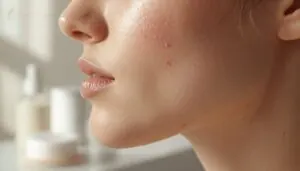
Sensitive skin rarely acts out for no reason. Something underneath is usually driving the redness, itching, or irritation you feel. Here are the most common causes behind it all.
Weakened Skin Barrier
Think of your skin as a brick wall: cells are bricks, lipids are mortar. A weakened skin barrier loses mortar fast.
When choosing how to exfoliate a compromised barrier, our exfoliating mitt vs. washcloth comparison helps you find the gentler option that won’t strip away what little mortar remains.
Without that mortar in place, skin turns reactive fast, which is exactly why building a proper post-shave routine matters as much as the shave itself.
Your skin is a brick wall of cells and lipid mortar, and a weakened barrier loses that mortar fast
- Ceramides drop 30-40%
- Water loss triples (up to 40 g/m²/h)
- Lamellar structure disruption breaks lipid layers
- Skin pH imbalance shifts from 5.5 toward 6.5
This lets irritants in and moisture out, fueling ceramide deficiency and constant flare-ups.
Genetic Predisposition
Sometimes sensitive skin runs in the family, and your genes set the stage before any product touches your face.
FLG gene mutations weaken skin barrier function directly, while SPINK5 variants and rare CARD11 inheritance patterns raise inflammatory skin response risk too.
| Genetic Factor | Effect |
|---|---|
| FLG mutation | Barrier breakdown |
| SPINK5 variant | Enzyme imbalance |
| CARD11 | Early-onset risk |
| Family history | 3-5x risk |
| Population risk | Varies by ancestry |
Irritant Contact Dermatitis
Touch something harsh enough, and your skin fights back fast. Irritant contact dermatitis happens when a substance directly injures your skin barrier, not through an allergy.
Symptoms often show up right at the exposure site: burning, redness, swelling, even blisters. Wet cement, harsh chemicals, and everyday products can trigger it.
Treatment usually means avoiding the irritant, using fragrance-free moisturizer, and sometimes a topical corticosteroid for flare-ups.
Allergic Skin Reactions
Your immune system can overreact to harmless substances, sparking IgE mediated reactions in your skin. This starts with allergen sensitization, then mast cell degranulation and histamine release upon re-exposure.
A late phase response can follow hours later, prolonging redness and swelling.
Fragrance allergy and preservative sensitivity are common culprits. Contact allergen avoidance and antihistamine therapy help manage flare-ups effectively.
Chronic Inflammatory Skin Conditions
Some sensitive skin isn’t just reactive, it’s chronically inflamed. Psoriasis, eczema, and rosacea involve deeper immune pathways, not just surface irritation.
- Psoriasis flare triggers include stress and infections
- Atopic dermatitis needs consistent barrier repair
- Rosacea treatment options calm redness and bumps
Hidradenitis suppurativa and seborrheic scalp relief also require targeted, ongoing care rather than one-time fixes.
Everyday Triggers That Worsen Irritation

Your skin doesn’t just react to what’s inside your medicine cabinet. It reacts to what you wear, what’s in the air, and even how you’re feeling that day. Let’s look at the everyday culprits that tend to set it off.
Fragrances, Dyes, and Preservatives
That lovely perfume smell? It’s often the culprit. Fragrance allergens like linalool affect up to 3% of people. Dyes and preservatives cause similar contact dermatitis.
| Ingredient | Reaction Risk |
|---|---|
| Linalool | 1-3% allergic |
| MIT | ~5% dermatitis |
| Red 40 | 0.1% hives |
| DMDM hydantoin | Eczema flares |
Choose fragrance-free, hypoallergenic products.
Fabrics, Detergents, and Metals
Ingredients aren’t the only irritants hiding in plain sight. Clothing fabrics matter too.
- Nickel snaps and zippers trigger red, itchy patches
- Polyester traps heat and sweat against skin
- Detergent residue causes stinging or itching
- Organic cotton scores 9/10 for skin comfort
Choose stainless steel hardware and natural fibers. Wash new clothes twice before wearing them.
Weather and Airborne Allergens
Fabric isn’t the only thing brushing against your skin all day — the air is too. Pollen exposure risk climbs on warm, windy days, while rain briefly washes particles away before counts rebound. High humidity feeds mold spores; dry wind scatters them further. Thunderstorms can burst pollen grains, spiking symptoms fast.
These environmental irritants demand fragrance-free skincare and a strong skin barrier.
Stress and Lifestyle Habits
Your body reacts to weather, but it also reacts to you. Stress raises cortisol, weakens your skin barrier, and worsens redness or itching. Poor sleep, skipped meals, and too much screen time compound the effect.
Support skin from the inside: prioritize sleep quality, hydration, and movement. Then support it outside with a barrier repair moisturizer and fragrance-free skincare.
How to Calm Sensitive Skin
The good news is that calming sensitive skin often comes down to a few simple habit changes. You don’t need a complicated routine, just the right approach at each step. Here’s where to start.
Use Gentle Fragrance-free Cleansers

Think of cleansing as step one in skin barrier repair, not just getting clean. Choose a fragrance-free cleanser with mild surfactants and skin-compatible pH.
- Avoid soap salts (too alkaline)
- Skip fragrance and dyes
- Rinse fully with lukewarm water
Residue left behind can trigger surfactant sensitivity, so gentle, thorough rinsing matters as much as the product itself.
Simplify Active Skincare Ingredients

More isn’t always better. Stacking retinol, vitamin C, and acids at once causes active ingredient overload, leaving skin raw instead of radiant.
Stick to single-action ingredients like niacinamide or bakuchiol, a low-irritant retinoid alternative. Check labels for transparency, and simplify your routine to just one active until skin adjusts.
Restore Moisture With Ceramides
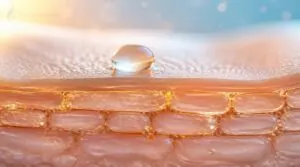
Picture mortar between bricks—that’s ceramides in your skin. They seal in moisture and block irritants.
Ceramide levels drop with age, weather, and harsh products. A fragrance-free moisturizer with ceramides rebuilds this lipid barrier.
Look for:
- Ceramide NP
- Cholesterol
- Fatty acids
- Hyaluronic acid
- Niacinamide
Together, they restore barrier function and lasting hydration.
Protect Skin From Weather

Weather is a trigger you can’t avoid, but you can outsmart it.
Cold wind strips moisture fast—cover up and use a thick barrier cream. Indoors, run a humidifier to fight dry air.
| Season | Key Risk | Protection |
|---|---|---|
| Winter | Cracking | Barrier cream, gloves |
| Summer | Sweating | Fragrance-free moisturizer, UPF clothing |
| Windy days | Water loss | Full coverage |
Adjust your skin barrier care with the seasons.
Top 5 Products for Sensitive Skin
Choosing the right products can make a real difference in how your skin feels day to day. You don’t need a complicated routine, just a few trusted options that work with your skin instead of against it. Here are five products worth keeping in your medicine cabinet.
1. Aveeno Skin Relief Hand Cream Fragrance Free
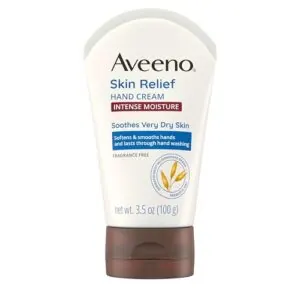
Hands take a beating from constant washing, and this cream was built for that exact problem. The fragrance-free formula blends prebiotic oat with petrolatum and glycerin, sealing in moisture for 48 hours even after repeated washing.
It’s non-greasy and absorbs fast, so you’re not left rubbing sticky palms on your jeans. Some users notice slight pilling, but the SkinSAFE-rated, irritant-free formula makes it a solid pick for dry, sensitive, or eczema-prone hands.
| Best For | People with dry, sensitive, or eczema-prone hands who wash frequently and need long-lasting moisture without a greasy feel. |
|---|---|
| Fragrance-Free | Yes |
| Sensitive Skin Use | Yes |
| Package Size | 3.5 oz |
| Certification | Not specified |
| Form | Cream |
| Key Ingredient | Prebiotic Oat |
| Additional Features |
|
- Provides 48 hours of intense moisture, even through repeated hand washing
- Fast-absorbing, non-greasy formula that won’t leave hands feeling sticky
- Fragrance-free and gentle, making it suitable for sensitive or irritation-prone skin
- May pill on application for some users, even on clean, dry skin
- Priced higher than basic hand creams
- Limited availability in larger sizes or in physical stores in some regions
2. CeraVe Daily Moisturizing Lotion Face Body
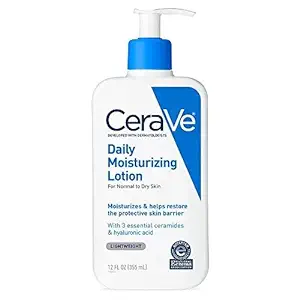
Think of your skin barrier like a brick wall, with ceramides as the mortar holding it together. This lotion restores three of them (1, 3, and 6-II) using MVE technology, a slow-release system that delivers hydration over 24 hours.
Hyaluronic acid pulls in extra moisture, while the fragrance-free, non-comedogenic formula suits both face and body. It’s also accepted by the National Eczema Association, giving you real reassurance if breakouts or flare-ups are a concern.
| Best For | People with dry, sensitive, or eczema-prone skin who want a lightweight, fragrance-free lotion for daily face and body hydration. |
|---|---|
| Fragrance-Free | Yes |
| Sensitive Skin Use | Yes |
| Package Size | 12 fl oz |
| Certification | NEA Accepted |
| Form | Lotion |
| Key Ingredient | Ceramides |
| Additional Features |
|
- Contains three essential ceramides to help restore and strengthen the skin barrier
- MVE Technology delivers steady, 24-hour hydration without feeling greasy
- Fragrance-free, non-comedogenic, and accepted by the National Eczema Association
- May not offer enough moisture for very severe dryness or cracked skin
- Packaging details, like the pump dispenser design, aren’t clearly specified
- Results can vary depending on individual skin type and climate conditions
3. Tide Free & Gentle Laundry Detergent Pods
 View On Amazon
Moisturizer only helps so much if your laundry routine works against you. That’s why Tide Free & Gentle deserves a spot in your routine — no dyes, no perfumes, just NEA and NPF certified cleaning power.
It dissolves fully in cold water, so you skip the heat that dries out sensitive skin. One pod removes tough stains without leaving residue behind, keeping clothes gentle against irritated or eczema-prone skin.
| Best For | People with sensitive skin, allergies, or fragrance sensitivities who want an easy, no-measure laundry solution that’s gentle on eczema-prone skin and baby clothes. |
|---|---|
| Fragrance-Free | Yes |
| Sensitive Skin Use | Yes |
| Package Size | 81 count |
| Certification | NEA & NPF Certified |
| Form | Liquid Pods |
| Key Ingredient | Concentrated Detergent |
| Additional Features |
|
- Hypoallergenic formula with no dyes, perfumes, or irritating residues, and certified by NEA and NPF for sensitive skin
- Dissolves completely in all water temperatures, including cold, so you can skip hot cycles that dry out skin
- 3-in-1 pods combine cleaning, stain removal, and color protection with no measuring required
- May need pretreating for tough stains like grass, grease, or dried food
- Costs more per load than traditional liquid or powder detergents
- Not suitable for hand washing, pre-soaking, or heavy-duty/industrial cleaning needs
4. Neosporin Eczema Essentials Daily Moisturizing Cream
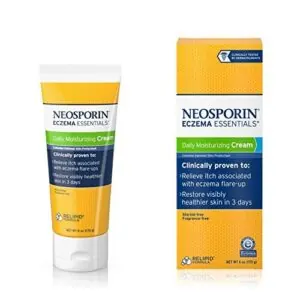
Clean clothes are step one. What actually calms your skin day to day is a cream built for eczema itself, and Neosporin Eczema Essentials fits that job well.
It combines colloidal oatmeal with the Relipid formula, including ceramide NP, to rebuild your barrier fast. Clinical testing showed visibly healthier skin in just three days.
Steroid-free and fragrance-free, it’s approved by the National Eczema Association, so you can use it daily on your face, hands, and body without added irritation.
| Best For | People with mild to moderate eczema looking for a steroid-free daily cream that calms itching and helps repair the skin barrier. |
|---|---|
| Fragrance-Free | Yes |
| Sensitive Skin Use | Yes |
| Package Size | 6 oz |
| Certification | NEA Approved |
| Form | Cream |
| Key Ingredient | Colloidal Oatmeal |
| Additional Features |
|
- Contains colloidal oatmeal and provides clinically proven itch relief on contact
- Steroid-free, fragrance-free, and antibiotic-free, with National Eczema Association approval
- Non-greasy after about 3 minutes and safe for daily use on face, hands, and body
- Not meant for infected, weeping, or open wounds without medical guidance
- Results depend on consistent daily use; symptoms can return if you stop
- May not be strong enough on its own for moderate to severe eczema cases
5. Cortizone 10 Maximum Strength Anti Itch Ointment
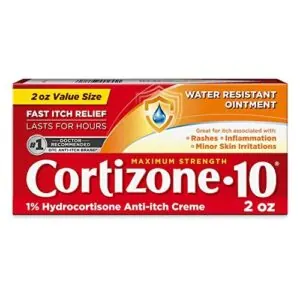
Some days a barrier cream isn’t enough, and the itch just won’t quit. That’s when Cortizone 10 Maximum Strength earns its spot in your cabinet.
With 1% hydrocortisone, the max strength sold without a prescription, it calms itching from bug bites, poison ivy, and minor rashes fast. The petrolatum base is water-resistant, so relief holds up through sweat or a quick wash.
Use it 3-4 times daily. Skip it on broken skin, and check with a doctor before seven days pass.
| Best For | Anyone dealing with stubborn itching from bug bites, poison ivy, oak, sumac, psoriasis, or minor rashes who wants fast, lasting relief in a single tube. |
|---|---|
| Fragrance-Free | Not specified |
| Sensitive Skin Use | Yes |
| Package Size | 2 oz |
| Certification | Not specified |
| Form | Cream |
| Key Ingredient | Hydrocortisone 1% |
| Additional Features |
|
- Maximum strength 1% hydrocortisone available without a prescription
- Water-resistant petrolatum base keeps relief going even through sweat or washing
- Safe for adults and kids 2 and up when used as directed
- Not meant for children under 2 without a doctor’s okay
- Can’t be used on broken skin, eyes, or mouth
- Using it for more than 7 days straight needs medical supervision
When Sensitive Skin Needs Medical Care

Most sensitive skin flare-ups calm down with the right products and a little patience. But some signs mean it’s time to call a dermatologist instead of waiting it out. Here’s what to watch for.
Persistent or Worsening Irritation
When does irritation stop being "just dry skin"? Acute irritation clears within six weeks. Beyond that, it’s chronic, and treatment resistance matters.
If gentle cleansers and ceramide-rich moisturizers don’t help within 4-6 weeks, don’t wait. Worsening symptom progression despite barrier function optimization signals it’s time for medical evaluation needed—especially past two months without improvement.
Sudden Sensitivity Without Rash
Pain or burning with no rash in sight? That’s your nerves talking, not your skin. Neurological triggers like nerve compression or diabetic neuropathy cause this, alongside:
- Stress-driven histamine release
- Medication side effects (retinoids, antibiotics)
- Thyroid or kidney disease
- Sudden climate shifts
- B12 deficiency
Stick with fragrance-free ceramide moisturizers, avoid known triggers, and get evaluated if it persists.
Infection or Severe Allergic Signs
Watch for hives spreading fast, a raised patch of skin turning into welts, or swelling throat, breathing difficulty, dizziness fainting. These signal anaphylaxis.
Separately, fever infection, warmth, and worsening pain or sores near broken skin suggest allergic contact dermatitis or contact urticaria has turned infected.
Either way, don’t wait it out. Call 911 or see a doctor immediately.
Dermatologist Diagnostic Testing
Your dermatologist starts with a detailed history and visual examination, then narrows things down using targeted tools:
- Skin patch testing – allergens applied to your back over several days
- Dermoscopy – magnifies lesions to check pigment patterns
- Wood light exam – UV light reveals discoloration or fungal clues
- Skin biopsy or scraping – samples tissue when the cause stays unclear
Possible Eczema or Rosacea
Two conditions often get confused: eczema and rosacea. Location gives you a clue—rosacea stays centered on your nose, cheeks, and chin, while eczema spreads to elbows, knees, or hands.
Sensory signs differ too. Rosacea brings burning that fades in hours; eczema causes lasting itch. Visible blood vessels signal rosacea. Since treatments diverge sharply, your dermatologist confirms the diagnosis before recommending a fragrance-free moisturizer or targeted therapy.
Frequently Asked Questions (FAQs)
Why does my skin feel irritated and sensitive?
Funny how the products meant to soothe you often cause the problem. Barrier disruption lets irritants reach nerve endings, sparking an inflammatory response. Environmental exposure and product chemicals raise your skin’s reactivity, leaving it easily triggered by everyday contact.
Why is my skin sensitive to touch all of a sudden no rash?
Sudden touch pain often means nerve hypersensitivity, not visible damage. Allergic contact, weather triggers, or stress can inflame nerve endings beneath the skin barrier.
Even without a rash, lipid barrier repair and gentler routines usually calm skin reactivity within days.
What diseases cause hypersensitive skin?
Like a smoke alarm that won’t stop blaring, your skin can overreact to nothing. Eczema, rosacea, and allergic contact dermatitis top the list, often rooted in genetic predisposition, a filaggrin mutation, or the atopic march.
What are the 5 signs of skin sensitivity?
Five key signs: redness patches with stinging or burning, itching sensations that won’t quit, dryness flaking into rough patches, rash bumps appearing after contact, and sudden touch sensitivity where even soft fabric feels irritating.
Why does my skin feel sensitive and irritated?
Think of your skin as a moat guarding a castle. Once that lipid barrier weakens, irritants slip through, nerve endings fire faster, and histamine response triggers kick in—leaving skin reactive, dry, and quick to flare.
Why has my skin suddenly become so sensitive?
Your skin barrier can weaken fast. Hormonal changes, environmental shifts, new products, stress, and diet changes all trigger it. Even fragrance-free formulations may sting once skin turns reactive, so simplify your routine and add ceramide moisturizers to rebuild protection.
What is hypersensitive skin a symptom of?
Your skin isn’t just "touchy" — it’s talking. Hypersensitive skin often signals hidden inflammatory diseases, systemic conditions, neurological sensitivities, or medication reactions. Genetic barrier disorders play a role too. Persistent flare-ups warrant a dermatologist consultation to rule out deeper causes.
What are the 4 types of sensitive skin?
Four main types exist: Naturally Sensitive (genetic factors tied to eczema or rosacea), Environmentally Triggered (weather, pollution), Product Reactive (contact dermatitis from cosmetics), and Mature Skin (thinning, dryness with age).
Can sensitive skin worsen with age?
Yes, and it’s not just in your head. Aging skin barrier decline, reduced sebum, and slower cell turnover leave skin thinner and more reactive, so use a gentle, fragrance-free moisturizer daily.
Is sensitive skin hereditary or genetic?
Often, it runs in families. A genetic skin barrier weakness, inherited sensitivity traits, and family history risk can all raise your odds of reactive, easily irritated skin passed down through generations.
Conclusion
Your skin isn’t broken, and it isn’t overreacting for no reason at all. Every sting, flush, and itch is your body sending a signal worth reading closely. Once you understand sensitive skin irritation causes, that signal stops feeling random. You start recognizing patterns instead of chasing guesses.
Swap one harsh product, add a ceramide-rich moisturizer, protect your barrier daily, and irritation loses its grip. Calm skin isn’t luck. It’s the quiet result of paying attention.