This site is supported by our readers. We may earn a commission, at no cost to you, if you purchase through links. This content is for general informational and educational purposes only and is not a substitute for professional medical, dermatological, or nutritional advice.

Most people grab whatever’s hanging in the shower without a second thought. But that small choice, a mitt or a soft cloth, quietly shapes how your skin looks, feels, and heals every day.
Exfoliating mitts and washcloths work differently at the skin’s surface. One delivers real mechanical scrubbing force to lift dead cells; the other buffs with a gentler touch that won’t disturb your skin barrier. Using the wrong one can leave you flaky, irritated, or wondering why your skin never glows the way it should.
Knowing which tool fits your skin type and routine changes everything.
Table Of Contents
- Key Takeaways
- Exfoliating Mitt Vs Washcloth: Key Differences
- Which Tool Exfoliates Skin Better?
- Skin Types and Irritation Risks
- Hygiene, Cleaning, and Replacement
- Which Exfoliation Tool Should You Choose?
- Frequently Asked Questions (FAQs)
- Do dermatologists recommend exfoliating gloves?
- Do dermatologists recommend using a washcloth?
- Can I exfoliate with just a washcloth?
- How often should I use a Korean exfoliating mitt?
- Can exfoliating mitts help remove ingrown hairs?
- Which option is more environmentally friendly?
- Can you use both tools in one routine?
- Do exfoliating mitts improve self-tanner application?
- Are exfoliating mitts safe to use during pregnancy?
- Conclusion
Key Takeaways
- Exfoliating mitts deliver stronger mechanical scrubbing for rough spots like knees and elbows, while washcloths offer the gentler daily touch that sensitive or reactive skin actually needs.
- Your skin type is the real decision-maker here — oily skin can handle a mitt a few times a week, but dry, eczema-prone, or sensitive skin is better off with a soft washcloth to keep the barrier intact.
- Hygiene matters more than most people realize — both tools breed bacteria fast in a damp shower, so rinse after every use, air dry fully outside the bathroom, and replace them every 2–3 months.
- You don’t have to pick just one — use your mitt once a week on stubborn rough patches and reach for your washcloth daily everywhere else for the best of both worlds.
Exfoliating Mitt Vs Washcloth: Key Differences
At first glance, an exfoliating mitt and a washcloth might seem like cousins in your shower caddy, but they work very differently on your skin.
The same idea applies to your cleansers — just as texture and formulation change how a product performs, understanding the real differences between shower gel and body wash helps you choose what actually works for your skin.
As an esthetician, I’ve seen clients get better results simply by matching the right tool to their skin’s needs.
Let’s break down the key differences so you can pick your winner with confidence.
Materials and Fiber Types
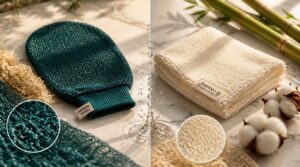
Because your skin deserves the right fabric, let’s peek inside these tools.
Most exfoliating mitts use synthetic materials like nylon filaments, engineered for durability and hygienic performance. Washcloths lean toward natural fiber textiles, such as cotton or bamboo, which feel softer but wear out faster. Bamboo washcloths in particular offer natural antibacterial and hypoallergenic properties, making them a favorite for sensitive and acne-prone skin.
| Material | Found In | Best For |
|---|---|---|
| Nylon filaments | Exfoliating mitts | Consistent exfoliation |
| Sisal fibers | Mitts | Rough areas like knees |
| Cotton mix | Washcloths | Gentle daily cleansing |
| Bamboo | Washcloths | Sensitive skin |
Fancier options exist too. Silk exfoliating gloves offer luxury with moderate exfoliation, while mesh sponges mix washcloth softness with scrubbing power.
Texture and Abrasiveness

Texture is where these two tools really part ways. A washcloth offers a mild, fuzzy surface that buffs lightly, while an Exfoliating Mitt packs a Textured Surface built for real Mechanical Exfoliation. Think gentle breeze versus brisk wind.
Here’s the key: mitts feel rougher dry, softer wet, yet quality ones keep working. Cheap versions flatten fast, while well-made options keep gripping dead skin.
| Tool | Texture Level | Best Use |
|---|---|---|
| Washcloth | Mild | Daily cleansing |
| Exfoliating Mitt | Moderate to firm | Weekly deep exfoliation |
Your heels need firm; your face doesn’t. Match the grit to the spot.
Absorbency and Drying Speed
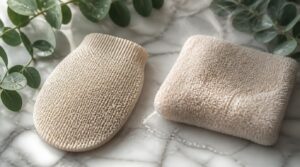
Drying speed matters as much as texture. Washcloths are super absorbent, holding up to 25 times their weight in water, but they release it fast thanks to a loose weave. Mitts absorb less (8-15 times) yet trap moisture in dense fibers, staying damp for hours. That lingering dampness invites bacteria.
| Tool | Absorbency | Drying Time |
|---|---|---|
| Cotton washcloth | High | 1-2 hours |
| Microfiber mitt | Moderate | 20-30 minutes |
| Terry cloth mitt | High | 4+ hours |
Quick-dry materials like nylon and viscose dry 50-70% faster than cotton. Always air dry fully, ideally outside the humid bathroom.
Durability and Replacement Costs

Durability affects both your wallet and your skin. Mitts cost $3-20, while cotton washcloths run $2-6. Quality cotton tolerates daily laundering at 60°C without thinning, while mitts need replacing every 2-6 months.
For tackling rough texture and stubborn bumps at the source, a physical scrub routine for ingrown hairs pairs especially well with a durable washcloth you can launder regularly.
| Tool | Lifespan | Cost |
|---|---|---|
| Microfiber mitt | 2-4 months | $8-20 |
| Cotton washcloth | 6+ months | $2-6 |
| Terry mitt | 3-6 months | $3-12 |
Always air dry to protect fabric durability and textile hygiene.
Which Tool Exfoliates Skin Better?

Now that you know how these two tools differ, let’s get to the fun part: which one actually wins the exfoliation game?
As an esthetician, I get this question all the time, and the honest answer is "it depends on what your skin needs that day."
Let’s break it down by situation, from deep dead skin removal to everyday gentle polish, so you can pick your winner with confidence.
Deep Dead Skin Removal
Want that satisfying "roll away the dead skin" feeling? Exfoliating mitts win here. Their tight loops and textured panels grip dead skin and surface oils as you scrub, so physical exfoliation feels stronger and more consistent with every stroke.
Washcloths can remove dead skin too, but they fold and crease, so pressure shifts unevenly. For stubborn buildup, mitts deliver more friction per pass.
Gentle Daily Exfoliation
When your skin sensitivity runs high, gentle daily exfoliation calls for a softer touch. A washcloth wins here because its flat, single-layer fabric delivers light friction without deep scrubbing.
Use short, circular passes on damp skin, and skip heavy pressure entirely. Since mechanical exfoliation adds up fast, a washcloth keeps your routine predictable and your skin barrier calm.
Results on Rough Areas
The rough patches on your elbows, knees, and heels tell the real story. An exfoliating mitt grips these spots better than a washcloth, letting you apply steady pressure over uneven surfaces. That textured weave lifts stubborn dead skin cells directly, so you often see visible flaking during use.
For texture improvement on rough areas, use your mitt on damp skin once or twice weekly.
Face Versus Body Use
Here’s the golden rule: your face and body aren’t teammates. An exfoliating mitt belongs on your body, where thicker skin experiences friction well. Facial skin sensitivity is much higher, so gentle cleansing with fingertips beats any fabric. Never use a body mitt on your face; that’s a one-way ticket to redness and irritation. Treat them separately, always.
Exfoliation Frequency
How often should you scrub? Less than you think. For most people, skin exfoliation works best one to three times weekly, depending on your skin type. Mechanical exfoliation with a mitt or washcloth adds friction, so frequency matters:
- Dry or sensitive skin: once weekly
- Normal skin: two times weekly
- Oily skin: up to three times
- Irritation appears: stop immediately
Overexfoliation damages your barrier, so chase skin texture improvement, not flawlessness.
Skin Types and Irritation Risks

Here’s the truth I tell every client: the best exfoliating tool isn’t the fanciest one, it’s the one that matches your skin type. A mitt that works wonders on your friend’s resilient skin might leave yours red, stinging, and seriously annoyed.
The best exfoliating tool isn’t the fanciest one — it’s the one your skin actually agrees with
Let’s walk through how each option behaves on different skin types, the irritation warning signs to watch for, and how to keep your protective barrier happy.
Sensitive and Reactive Skin
If your skin flushes at the mere thought of a scrubby mitt, listen up. Sensitive skin has a weaker barrier, so irritants slip through and spark stinging or redness fast.
For you, a soft washcloth with gentle cleansing is the safer bet. Skip harsh mechanical exfoliation and prioritize skin barrier protection. Patch test anything new, and always pat, never rub.
Dry or Eczema-Prone Skin
Eczema-prone skin loses moisture faster than normal skin, so aggressive exfoliation can backfire. A soft washcloth wins here. Use lukewarm water, keep baths under ten minutes, and choose gentle, soap-free cleansing. Pat dry with a soft towel, never rub, then apply a fragrance-free moisturizer within minutes while skin is still damp. That’s smart eczema care and solid skin barrier protection.
Oily and Acne-Prone Skin
If oily skin is your struggle, a washcloth still earns its spot. Scrubbing hard with a mitt can irritate pores and worsen an acne breakout, so stick with gentle cleansing twice daily.
Pair a soft cloth with a salicylic acid wash to unclog pores, then finish with a lightweight, oil-free moisturizer. Remember, stripping oil triggers more oil, so balance wins.
Over-Exfoliation Warning Signs
Your skin talks to you, so listen up! Whether you use a mitt or washcloth, over-exfoliation warning signs show up fast: redness, burning, stinging, and peeling that won’t quit.
- Persistent redness or skin irritation that lingers after showering
- Tightness, flaking, or rough patches instead of smoothness
- Sudden congestion and breakouts from a damaged moisture barrier
If products suddenly sting, stop scrubbing immediately.
Protecting Your Skin Barrier
Here’s the good news: your skin barrier wants to heal, and you can help it. Think of it as a brick wall, with your skin cells as bricks and barrier lipids as mortar. Scrubbing too hard chips away that mortar, so moisture escapes and irritants sneak in.
To protect it, stick with gentle cleansing using lukewarm water and a creamy, low-pH cleanser. Then moisturize with ceramides or petrolatum while your skin is still damp. Skip exfoliating gloves and washcloths until your skin calms down.
A ceramide barrier repair cream applied right after cleansing helps replenish the lipids your skin loses when its barrier is compromised.
Hygiene, Cleaning, and Replacement
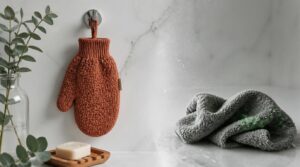
Here’s the part nobody warns you about: your exfoliating tool can turn into a bacteria hotel if you’re not careful. A damp washcloth sitting in your steamy bathroom is basically a welcome mat for microbes, and they can move in within a day or two.
Let’s walk through how to wash, dry, store, and eventually retire each tool so your skin stays happy and healthy.
Bacterial Growth Risks
Here’s a dirty little secret: that washcloth bunched in your shower corner? It’s basically a bacteria hotel with a "no vacancy" sign flipped to "welcome."
Cotton washcloths are moisture magnets. Their dense loops hold water for six to eight hours, and that damp nature creates a five-star buffet for bacteria like Staphylococcus aureus. Yikes.
Exfoliating mitts fight back. Their synthetic fibers dry within two to three hours, and their open weave lets air circulate freely. Less moisture means less microbial growth, plain and simple.
Bath poufs are the worst offenders, though. All those folds and crevices trap dead skin cells and body oils, feeding bacterial colonies you can’t rinse away.
Bottom line: keep either tool dry, and never share it. Shared personal items risk spreading more than just kindness.
Proper Washing Methods
A quick rinse isn’t enough, friends. Proper washing methods keep your tools safe and gentle on the skin.
- Wash with lukewarm or cold water
- Use any good soap
- Rub lightly in circular motions
- Rinse thoroughly afterward
- Skip bleach on absorbent fabrics
Heat melts fibers and ruins shape, so keep water cool. Light pressure plus a full rinse equals skin irritation prevention you can count on.
Safe Drying and Storage
After washing, how you dry matters just as much as how you clean. Air dry both tools hung open so air reaches every surface.
Quickdry materials like synthetic mitts handle this fast, but absorbent fabrics need more time and space. Cool dry storage away from shower steam keeps moisture retention from turning into that telltale musty smell.
When to Replace Each
Every tool has an expiration date your skin will notice before you do.
Synthetic mitts last 2-3 months with proper care, while natural fiber mitts like sisal break down faster and need replacement every 2-4 weeks. Cotton washcloths hold up for 1-2 months with regular use.
If something smells off or the texture feels softer, it’s time to swap it out.
Avoiding Cross-Contamination
Your exfoliating mitt and washcloth can quietly collect bacteria between uses. Cross-contamination is a real concern, even in your shower.
Good hygiene practices mean keeping tools apart:
- Don’t use your face washcloth on your body
- Store each tool in its own spot
- Never share mitts or cloths between people
- Rinse thoroughly after every single use
Simple rules protect your skin.
Which Exfoliation Tool Should You Choose?
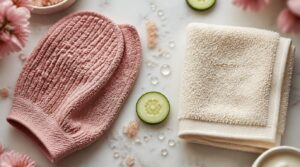
Choosing between a mitt and a washcloth really comes down to your skin’s needs and goals. The right pick depends on how often you exfoliate, your skin type, and what you want to spend. Here’s a quick breakdown to help you decide.
Choose an Exfoliating Mitt
Pick the exfoliating mitt when you want serious dead skin removal results. It’s built specifically for rough, stubborn areas like elbows and knees where a basic washcloth just won’t cut it.
The textured mesh does all the heavy lifting, making your exfoliation faster and more effective. If you have sensitive skin, just choose a fine weave and ease into it.
Choose a Washcloth
A washcloth is your best bet for gentle cleansing without the intensity. It’s soft and absorbent, making it perfect for skin sensitivity or daily face routines.
Reach for it when you:
- Want to lift dead skin cells softly
- Have reactive or sensitive skin
- Need an absorbent option for your face
- Prefer low-effort daily care
Cost and Long-Term Value
Both tools are budget-friendly upfront, but cost and long-term value tells a fuller story.
Mitts run $6 to $12 and last about a year with daily use when you air dry them after every session.
Washcloths cost less per pack but need replacing every one to three months.
The more durable and absorbent choice wins on yearly spend.
Safe Usage Recommendations
No matter which tool wins your skincare budget, the right daily habits keep your skin healthy long-term.
- Use circular motion with light pressure; being gentle on the skin prevents damage
- Rinse after each use and wash with mild soap weekly
- Air dry completely in a ventilated area outside the bathroom
- Replace every 2-3 months, sooner if odor or discoloration appears
Frequently Asked Questions (FAQs)
Do dermatologists recommend exfoliating gloves?
Dermatologists generally say yes, but with conditions. They recommend gentle pressure and soft circular motions, avoiding use on broken skin. Sensitive skin types should proceed cautiously, since over-scrubbing can compromise your skin barrier.
Do dermatologists recommend using a washcloth?
Yes, most dermatologists say washcloths are fine for gentle daily cleansing as long as you choose a soft, fresh cloth each shower, apply light pressure, and avoid scrubbing any area with active irritation or breakouts.
Can I exfoliate with just a washcloth?
A damp washcloth creates gentle physical exfoliation by lifting dead skin through friction. Use small circular motions, light pressure, and limit sessions to 2–3 times weekly to avoid irritation.
How often should I use a Korean exfoliating mitt?
How often should you use a Korean exfoliating mitt? Once a week is your sweet spot. Sensitive skin needs every two weeks. Daily use turns exfoliation into punishment, so always keep your circular motion gentle.
Can exfoliating mitts help remove ingrown hairs?
Can exfoliating mitts help with ingrown hairs? They really can. Circular motion across skin lifts away the dead skin cell layer that traps those hairs, letting them grow out freely instead of curling back inward.
Which option is more environmentally friendly?
Which option is more environmentally friendly? Coincidentally, natural fiber textiles like bamboo washcloths win here. A cotton washcloth lasts up to 12 months, while an exfoliating mitt sheds microplastics through textile abrasion, polluting our waterways.
Can you use both tools in one routine?
Can you use both tools in one routine? Yes! Use the exfoliating mitt once a week on rough spots like knees and elbows, then use your washcloth for gentle daily cleansing on other softer areas.
Do exfoliating mitts improve self-tanner application?
Mitts improve self-tanner application because their non-porous fibers don’t soak up the formula like a washcloth does. More product actually reaches your skin, and thorough dead skin removal means a smoother, longer-lasting color payoff.
Are exfoliating mitts safe to use during pregnancy?
Are exfoliating mitts safe during pregnancy? Generally, yes — if you keep the pressure light and gentle. Pregnancy skin becomes reactive fast, so skip aggressive scrubbing and always follow dermatologist recommendations for pregnancy safe skincare routines.
Conclusion
The difference between glowing, genuinely healthy skin and a lifetime of frustrating dullness can come down to one small, simple shower tool.
The exfoliating mitt vs washcloth debate isn’t about which looks fancier. It’s really about what your skin actually needs. Sensitive skin craves gentle, careful buffing. Rough, stubborn patches need the firm scrubbing power a mitt delivers. Pick the right tool, stay consistent, and your skin will show you exactly how grateful it’s.