This site is supported by our readers. We may earn a commission, at no cost to you, if you purchase through links. This content is for general informational and educational purposes only and is not a substitute for professional medical, dermatological, or nutritional advice.

Most people grab whatever’s in the shower without a second thought—but that bottle makes more difference than you’d expect. Shower gel and body wash sit side by side on store shelves, look nearly identical, and do the same basic job.
The gap between them, though, comes down to formulation: surfactant concentration, pH level, fragrance load, and what they actually do to your skin barrier over time.
For dry or sensitive skin, picking the wrong one is a slow drip of daily damage.
Knowing which suits your skin type, your budget, and your routine puts you in control of something you do every single day.
Table Of Contents
- Key Takeaways
- What Are Shower Gel and Body Wash?
- Shower Gel Vs Body Wash: Core Differences
- Ingredients Found in Shower Gel and Body Wash
- Beneficial Ingredients to Seek Out
- Ingredients to Avoid in Either Product
- Choosing The Right Product for Your Skin Type
- Shower Gel Vs Body Wash: Moisturization and Skin Health
- Tips for Using Shower Gel and Body Wash Effectively
- Shower Gel Vs Body Wash: Which Should You Choose?
- Frequently Asked Questions (FAQs)
- Which is better shower gel or body wash?
- Can I use shower gel to wash my body?
- What body wash should I use for hidradenitis suppurativa?
- Why did people stop using bars of soap?
- Can I use shower gel as a body wash?
- What is the purpose of shower gel?
- Is it better to shower with soap or gel?
- Can shower gel be used as body wash?
- Can I use shower gel every day?
- What are the disadvantages of shower gel?
- Conclusion
Key Takeaways
- Body wash is the better pick for dry or sensitive skin because it’s built with moisturizing ingredients like glycerin and ceramides that protect your skin barrier instead of stripping it.
- Shower gel works best if you have oily or acne-prone skin — its higher surfactant concentration cuts through excess oil and rinses clean without leaving a heavy, pore-clogging residue.
- Ingredients like parabens, sulfates, and synthetic fragrances can quietly damage your skin over time, so checking the label before you buy is worth the extra 30 seconds.
- No matter which one you use, applying moisturizer within three minutes of stepping out of the shower — while your skin is still damp — makes a bigger difference to your hydration than the cleanser itself.
What Are Shower Gel and Body Wash?
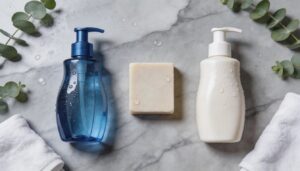
Before picking a side, it helps to know what you’re actually comparing. Shower gels and body washes might look alike on the shelf, but they’re built differently — and those differences matter for your skin.
Knowing how each formula is designed for your skin type makes it much easier to choose the one that actually works for you.
Here’s a closer look at what each one is and how they both stack up against old-school bar soap.
Defining Shower Gel and Its Key Characteristics
Shower gel is a clear, gel-based cleanser engineered for quick, effective cleansing. Its viscosity balance comes from thickening polymers that give it that signature thickness without feeling heavy.
Here’s what makes it stand out:
- Clear transparency — most formulas are visually translucent
- Surfactants create rich lather fast
- Higher fragrance concentration for a bold scent
- Squeezable packaging controls how much you use
- Skin conditioning agents and quick drying finish leave skin feeling clean
Defining Body Wash and Its Key Characteristics
Body wash takes a gentler approach. Built on a water base, it blends mild surfactant concentration with strong emollient presence — think glycerin, oils, and ceramides — to cleanse without stripping.
That’s what gives it the creamy, lotion-like feel.
The preservative system keeps it shelf-stable, while smart packaging design makes dispensing easy.
For anyone chasing the moisturizing benefits of body washes, this is where skin type suitability really starts to matter.
How Both Differ From Traditional Bar Soap
Bar soap is a whole different story. It’s solid, alkaline by nature, and can throw off your skin’s pH balance — which sits around 5.5.
Liquid cleansers win on viscosity control, travel convenience, and shelf life thanks to sealed packaging materials. They rinse clean, reduce soap scum, and give you more ingredient control.
That’s the core differences between shower gel and body wash versus bar soap in short.
Shower Gel Vs Body Wash: Core Differences
Shower gel and body wash might look similar on the shelf, but they’re built differently and behave differently on your skin. A few key areas separate them — and knowing what those are makes it easier to pick the right one.
Here’s where the real differences show up.
Texture and Consistency Compared
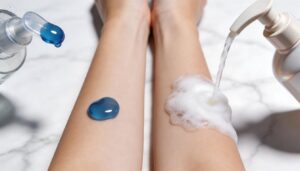
The texture is where these two products really part ways. Shower gel’s higher viscosity — thanks to thickening polymers — keeps it from running off your skin too fast, giving you better Spreadability Dynamics. Body wash pours freely and disperses quickly.
| Feature | Shower Gel | Body Wash |
|---|---|---|
| Viscosity Range | Thick, gel-like | Fluid, lotion-like |
| Post‑Rinse Feel | Light, refreshed | Soft, moisturized |
| Shelf‑Life Stability | Holds structure well | Can separate under heat |
Lather, Foam, and Cleansing Performance
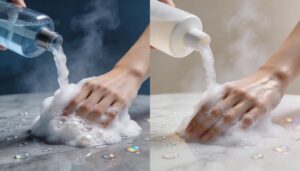
Lathering up tells you a lot about what’s actually in your cleanser.
Shower gels rely on higher surfactant concentrations — usually 8–12% — producing rich lather with strong foam stability and slower bubble decay.
Body washes use milder cleansing agents, so lather richness is moderate but gentler on skin.
| Feature | Shower Gel | Body Wash |
|---|---|---|
| Foam Stability | High, longer-lasting | Moderate, quicker decay |
| Air Incorporation | Dense, uniform bubbles | Lighter, softer foam |
Fragrance Concentration and Sensory Experience
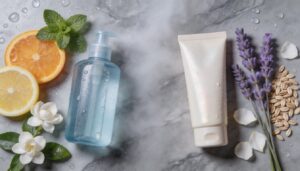
Scent is where shower gels and body washes really part ways. Shower gels carry higher Fragrance Load Levels — generally 8–12% fragrance concentration in personal cleansing products — while body washes stay between 1–2%. That gap shapes your entire Sensory Perception in the shower.
| Feature | Shower Gel | Body Wash |
|---|---|---|
| Fragrance Content | High (8–12%) | Mild (1–2%) |
| Scent Longevity | 4–6 hours | 2–3 hours |
Top Note Impact hits immediately, but if you have fragrance sensitivity, that intensity can cross your Irritation Threshold quickly. Fragrance-free options skip fragrance oils entirely — a smart pick for reactive skin.
PH Levels and Skin Compatibility

Your skin sits naturally at pH 4.5–5.5 — slightly acidic, like it was designed that way.
Shower gels lean more acidic through Acidic Buffering, while body washes can leave mild Alkaline Residue that disrupts Barrier Enzyme Activity.
Hard Water Interaction makes this worse by trapping residue on skin.
| Factor | Shower Gel | Body Wash |
|---|---|---|
| Typical pH | 4.5–5.5 | 5.5–7.0 |
| Alkaline Residue Risk | Low | Moderate |
| Barrier Enzyme Activity | Better preserved | May be affected |
| pH Balanced Formulas | Common | Varies by brand |
| Hard Water Interaction | Less residue buildup | Higher residue risk |
Ingredients Found in Shower Gel and Body Wash

What’s actually inside your shower gel or body wash matters more than most people realize. The ingredient list tells you how a product will perform, how it’ll feel on your skin, and whether it’s a good match for your needs.
Here’s a closer look at the key ingredient categories you’ll find in both.
Surfactants, Emulsifiers, and Preservatives
Every cleanser runs on a three-part engine: surfactants, emulsifiers, and preservatives. Anionic surfactants do the heavy lifting — cutting through oil and dirt — while amphoteric surfactants keep things gentle. Nonionic emulsifiers hold the formula together.
Here’s what each does:
- Anionic surfactants create rich lather, but can dry sensitive skin
- Amphoteric surfactants adapt with pH for balanced cleansing
- Nonionic emulsifiers stabilize oil-water blends smoothly
- Preservatives guarantee shelf-life stability and prevent spoilage
- Preservative efficacy depends on pH compatibility with surfactant chemistry
Effective emulsifiers form a stable interfacial film to prevent droplet coalescence.
Moisturizing Agents in Body Wash Formulas
Body wash earns its reputation through smart moisturizing agents working together. Glycerine — a powerful humectant — pulls moisture into your skin as you rinse.
Ceramide delivery restores the barrier lipids, cleansing strips away.
Plant oil emollients like jojoba and shea soften without heaviness, while squalane benefits dry skin by locking suppleness in.
Together, these barrier repair strategies keep your skin genuinely hydrated.
Exfoliating Additives in Shower Gels
Shower gels often do double duty — cleansing and sloughing off dead skin at the same time. Exfoliating ingredients like sea salt and oatmeal deliver that polish, each with different intensity levels.
Bead suspension systems keep biodegradable exfoliants evenly distributed, so every pump works consistently.
Acidic exfoliation agents like glycolic or salicylic acid go deeper, while particle size control and skin compatibility testing make sure these formulas stay effective without causing irritation.
Fragrance Sources: Natural Vs Synthetic
Fragrance in cleansers comes from two camps — natural extracts and lab-created synthetics. Here’s what sets them apart:
- Natural essential oils come from plants but vary batch-to-batch and fade faster without fixative technologies.
- Bio-based synthetics deliver consistent fragrance content and longer wear.
- Allergen labeling and regulatory standards apply to both under IFRA guidelines.
- Sustainable harvesting and fragrance-free options address environmental and sensitivity concerns, especially when phthalates are a worry.
Beneficial Ingredients to Seek Out

Not all ingredients are created equal — some do the heavy lifting while others are just along for the ride. Knowing what to look for on a label puts you in control of what actually touches your skin.
Here are the key ingredients worth seeking out.
Ceramides, Glycerin, and Hyaluronic Acid
Regarding barrier repair mechanisms, three ingredients stand out: ceramides, glycerin, and hyaluronic acid.
Ceramides handle lipid layer restoration by sealing your skin’s outer surface. Glycerin’s humectant synergy draws moisture in across a wide pH stability range. Meanwhile, molecular weight effects determine how deeply hyaluronic acid penetrates.
Together, these ingredients mirror the layered approach behind products like this I’m From Rice Toner review, where barrier repair and deep hydration work in tandem rather than isolation.
Together, these moisturizing ingredients offer serious skin barrier protection you’ll actually feel after every wash.
Natural Oils, Shea Butter, and Essential Oils
Beyond those three powerhouse ingredients, natural oils and butters bring their own kind of skin barrier protection. Shea Butter Occlusion works by forming a light film on your skin that slows moisture loss after rinsing. Olive Oil Emollient softens rough texture by delivering fatty acids that stay behind even in rinse-off formulas.
Look for these four when scanning labels:
- Shea butter — melts on contact and helps lock in post-wash hydration
- Olive oil — listed as olea europaea oil; smooths skin without heavy residue
- Essential oils (lavender, tea tree) — check concentrations; Essential Oil Safety matters since high levels can irritate sensitive skin
- Plant Oil Barrier Benefits via Oil Emulsification Techniques — oils blended with surfactants rinse clean but leave comfort behind
NIVEA Shea Butter Body Wash is a solid example of these moisturizing benefits done right. Natural extracts like these make a real difference.
Vitamins E and B5 for Skin Barrier Support
Two vitamins quietly do heavy lifting in barrier-focused cleansers.
Vitamin E provides Antioxidant Defense by neutralizing free radicals that weaken your skin’s Lipid Matrix Support structure.
Provitamin B5 supports Moisture Retention and Skin Repair Promotion, helping your skin bounce back after cleansing.
Together, this Synergistic Vitamin Pairing strengthens skin barrier protection through moisturizers better than either ingredient alone — worth scanning your label for both.
Soothing Botanicals Like Aloe Vera and Almond Oil
When botanicals enter your cleanser, the difference shows up right after the rinse. Aloe Vera delivers an instant Cooling Sensation and Silky Slip, while Almond Oil — usually sourced through Cold-Pressed Extraction — provides Emollient Synergy and Barrier Reinforcement for softer skin.
Look for these natural extracts and essential oils in body washes if you want real moisturizing benefits:
- Aloe vera soothes and hydrates without greasiness
- Almond oil softens and reduces post-wash tightness
- Together, they balance cleansing with gentle conditioning
- Both suit most skin types, especially sensitive skin
Ingredients to Avoid in Either Product

Not every ingredient on a label is there to help your skin. Some common additives in shower gels and body washes can actually work against you, causing dryness, irritation, or long-term harm.
Here are the ones worth watching out for.
Parabens and Phthalates in Cleansers
Check your labels — parabens and phthalates are two cosmetic ingredient safety concerns worth knowing. Parabens preserve shelf life but carry endocrine risks, while phthalates hide inside fragrance systems.
Regulatory limits vary widely by country, and label transparency isn’t always reliable. Detection methods in product surveys found both in roughly 40–60% of cleansers tested.
| Ingredient | Why Avoid It |
|---|---|
| Methylparaben | Endocrine disruptor |
| Propylparaben | Detected in 40%+ cleansers |
| Diethyl phthalate | Often unlisted on labels |
| Butylparaben | EU-restricted compound |
| Fragrance phthalates | Skin sensitivity trigger |
Choose paraben-free, phthalate-free options as safe alternatives.
Harsh Surfactants That Strip The Skin Barrier
Some surfactants in shower gels and body washes cause real damage. Sodium lauryl sulfate (SLS) and sodium laureth sulfate (SLES) are synthetic detergents that disrupt pH balance and trigger lipid loss — leaving skin tight and rough.
Don’t assume sulfate-free means safe; sulfate-free misconceptions are common. High foam intensity often signals aggressive surfactant chemistry in personal cleansers, raising contact dermatitis risk.
Watch for:
- Sodium lauryl sulfate (SLS)
- Sodium laureth sulfate (SLES)
- High-concentration anionic surfactants
- Cocamidopropyl betaine in strong formulas
- Unlisted detergent blends that delay barrier repair
Heavy Fragrances and Dyes for Sensitive Skin
If your skin stings after a shower, fragrance content or dyes might be the culprit.
Fragrance Sensitivity Triggers include synthetic perfumes and masking scents that cause itching or redness.
Dye‑Induced Irritation from colorants like CI 19140 can cause contact dermatitis.
Choose fragrance‑free, hypoallergenic options with Allergen-Free Formulas and Mild Colorants.
| Ingredient to Avoid | Why It’s a Problem |
|---|---|
| Synthetic fragrance blends | Common Fragrance Sensitivity Triggers |
| CI 19140 / CI 14720 dyes | Cause Dye-Induced Irritation |
| Masking scents | Still irritate sensitive skin |
| Fragrance preservative combos | Increase overall irritation risk |
| Non-hypoallergenic packaging dyes | Can transfer to skin |
Microbeads and Microplastics in Exfoliating Formulas
Microbeads — those tiny plastic spheres in some exfoliating formulas — carry real Plastic Pollution Risks. They pass straight through wastewater filters, adding microplastic particles to waterways and harming marine life.
On your skin, they can cause micro-tears.
That’s why Regulatory Bans Overview policies now restrict them in many countries.
Look for Biodegradable Exfoliants like jojoba beads instead — same exfoliation benefits, zero environmental impact of microbeads.
Choosing The Right Product for Your Skin Type
Your skin type is the most important factor when choosing between a shower gel and a body wash. The wrong pick can leave your skin feeling tight, stripped, or even irritated over time.
Here’s what works best for each skin type.
Best Cleansers for Dry and Normal Skin
Dry skin needs a cleanser that gives back as much as it takes. Look for Ceramide Rich or Oatmeal Soothing body washes — they help protect your moisture barrier while washing away the day.
Non-Soap Cleansers and pH Balanced Formulas around 5.0–5.5 keep things gentle.
For normal skin, a Fragrance-Free Gentle body wash works beautifully without overthinking it.
Shower Gel Benefits for Oily and Acne-Prone Skin
If oily or acne-prone skin is your reality, shower gel can work in your favor. Oil-Control Surfactants — like sodium laureth sulfate and amphoteric types — lift excess sebum without leaving a film behind.
Quick Rinse Residue design means less clogging.
Look for Salicylic Acid Action on body breakouts, Niacinamide Balance to regulate oil, and Barrier-Friendly Formulas with antibacterial agents that clean without stripping.
Gentle Body Wash Options for Sensitive Skin
Sensitive skin needs a gentler approach. Look for Soap-Free Formulas that skip harsh traditional soaps, and choose Fragrance-Free Options to avoid common irritants.
Hypoallergenic Labels and Dermatologist Recommended picks provide an extra boost of confidence. Key ingredients to prioritize:
- Glycerin and mild surfactants like coco glucoside for gentle cleansing
- Colloidal oatmeal or aloe vera to calm irritation
- Formulas free of dyes, parabens, and synthetic fragrance
How Personal Preference Shapes The Right Choice
Beyond skin type, your personal preferences matter just as much. Texture Preference plays a big role — if you love that gel-like snap of freshness, a shower gel fits.
Prefer something creamy? Body wash wins. Fragrance Preference, Packaging Preference, Skin Goal Focus, and Budget Consideration all guide the choice too.
A consumer preference survey found 47% favored liquid cleansers — proof that personal feel drives decisions.
Shower Gel Vs Body Wash: Moisturization and Skin Health
Cleansing is only part of the story — what happens to skin’s moisture balance matters just as much. Shower gels and body washes handle hydration very differently, and knowing that difference can change how your skin feels every day.
Here’s a closer look at how each one affects your skin’s health.
How Body Wash Supports The Skin Moisture Barrier
Body wash does more than just clean — it actively works to protect your skin barrier.
Moisturizing agents like glycerin and ceramides act as humectants, pulling water into the outer skin layer.
Mild surfactants leave beneficial residual film benefits behind, supporting barrier lipid reinforcement after rinsing.
| Feature | Benefit | Key Ingredient |
|---|---|---|
| Humectant Retention | Locks in moisture | Glycerin |
| Post‑Rinse Conditioning | Softens skin | Shea Butter |
| Mild Surfactant Impact | Reduces barrier stripping | Glucosides |
Why Shower Gels Suit Refreshing Over Hydrating
Shower gels are built for an invigorating cleanse, not deep hydration. Their light viscosity — shaped by the impact of thickening polymers on gel texture — creates quick foam that rinses fast and clean.
Add a menthol boost or citrus fragrance, and that cooling sensation hits instantly.
They simply skip the hydrating ingredients found in body washes.
| Feature | Shower Gel Behavior | Why It Matters |
|---|---|---|
| Product Texture | Lightweight, fluid gel cleanser | Rinses quickly, no residue |
| Fragrance Profile | Strong citrus fragrance | Enhances invigorating feel |
| Cooling Sensation | Menthol boost on contact | Immediate invigoration |
Post-Shower Moisturizer Use for Best Results
Whether you used a gel or a wash today, what happens right after your shower matters just as much. Apply moisturizer within three minutes — while your skin still feels damp. That’s the sweet spot where emollients and water work together.
Apply moisturizer within three minutes of showering — damp skin is your best ally for locking in hydration
| Step | Why It Works |
|---|---|
| Damp Skin Technique | Locks in residual moisture before evaporation |
| Application Timing | 3-minute window maximizes skin hydration |
| Occlusive vs Humectant | Layering both seals and attracts water |
| Product Layering | Lotion first, oil second for best barrier support |
| Water Temperature | Warm (not hot) showers preserve your skin’s natural emollients |
Tips for Using Shower Gel and Body Wash Effectively

the most out of your cleanser isn’t just about what’s in the bottle — it’s also about how you use it. few small habits can make a real difference in how your skin feels after every shower.
what’s worth knowing.
Best Application Tools: Hands, Loofah, or Washcloth
The tool you pick matters more than you’d think.
Hands offer the gentlest friction control, making them ideal for sensitive or dry skin. A loofah ramps up exfoliation intensity but demands strict tool hygiene — dry it fully after every use. Washcloths sit right in the middle, giving you manageable scrubbing with easy laundering.
Match your tool to your skin sensitivity and your cleanser’s texture for the best results.
Water Temperature and Its Effect on Skin
Water temperature is one of the most overlooked variables in your shower routine. Hot water risks are real — it disrupts your skin moisture barrier, strips sebum balance, and worsens dryness over time.
Lukewarm benefits, by contrast, are straightforward: less barrier stress, better oil retention, calmer skin overall.
- Hot water accelerates transepidermal water loss
- Cold shower effects include temporary itch relief but can sting compromised skin
- Lukewarm water keeps your skin’s natural defenses intact
How Often to Shower Based on Skin and Climate
How often you shower isn’t one-size-fits-all. Your Activity Level, skin type, and Climate-Driven Frequency all matter.
After a Post-Workout Rinse, your skin moisture barrier needs gentler care.
Oily skin tolerates daily washing better; dry climate skin care calls for skipping days to prevent flaking.
Seasonal Humidity shifts things too — humid environment bathing differs from dry winter routines.
Water Hardness can tighten skin further, so adjust accordingly.
Hygienic Storage and Packaging Best Practices
Your bottle habits matter more than you’d think. Keep caps tightly closed after every use to limit bacterial growth inside the packaging.
Nozzle Positioning counts too — don’t let it touch the shower floor.
Pump vs Flip-top: pumps win for Cross-Contamination Prevention since they limit hand contact with the opening.
Store bottles upright in a well-ventilated spot for proper Bottle Ventilation and Cap Hygiene.
Shower Gel Vs Body Wash: Which Should You Choose?
By now, you have a solid picture of what sets shower gel and body wash apart. The right pick really comes down to skin type, budget, and what you want from your daily shower.
Here’s a simple breakdown to help you decide.
When Shower Gel is The Better Option
Shower gel pulls ahead in a few specific situations. If you have oily or acne-prone skin, its clarifying formula — often featuring a matte finish — helps control excess sebum without over‑moisturizing.
You’ll also appreciate its fragrance longevity, cooling sensation on application, and travel convenience in compact, leak‑resistant bottles.
Some formulas even reduce eye irritation risk with milder surfactants.
| Situation | Why Shower Gel Wins | Key Benefit |
|---|---|---|
| Oily or acne-prone skin | Controls sebum effectively | Matte finish, non‑comedogenic |
| Morning routines | Bold, lasting scent | Fragrance longevity |
| Traveling | Compact, leak‑resistant packaging | Travel convenience |
When Body Wash is The Better Option
Body wash earns its spot when your skin needs more than just a rinse. Its moisturizing benefits of body washes — glycerin, ceramides, shea butter — leave a Non-Greasy Finish that feels genuinely soft post‑shower. Post Shower Softness is real here.
| Body Wash Advantage | Best For |
|---|---|
| Moisturizing ingredients | Dry or sensitive skin |
| Refillable Eco Design | Sustainability‑minded users |
| Quick Rinse Efficiency | Busy morning routines |
| Non‑Greasy Finish | Everyday comfort |
Cost Comparison Across Popular Brands
Price matters — and the gap between brands is wider than you’d expect. Here’s a quick cost comparison to help you decide:
| Brand | Product Type | Price Per Ounce |
|---|---|---|
| NIVEA | Body Wash | $0.26 |
| Aveeno | Body Wash | $0.32 |
| Dove | Shower Gel | $0.37 |
| Olay | Shower Gel | $0.47 |
| Premium Lines | Fragrance-Rich Formulas | $0.70–$1.10 |
Retail channel pricing also plays a role — online retailers often run 5–15% lower than drugstores. Factor in loyalty discounts and seasonal promotions, and your per-bottle cost can drop 20–40%.
Final Checklist for Making Your Decision
Now that pricing is in your corner, here’s a quick gut-check before you buy:
| What to think about | Your Pick |
|---|---|
| Skin Type Matching | Gel for oily; wash for dry |
| Fragrance Preference | Bold scent or fragrance-free? |
| Budget Considerations | Compare cost-per-ounce first |
| Travel Convenience & Ingredient Transparency | Check size and label honestly |
Trust your skin tells you.
Frequently Asked Questions (FAQs)
Which is better shower gel or body wash?
Neither wins outright — it’s like choosing between coffee and tea. Your skin type, goals, and lifestyle decide.
Dermatologist recommendations consistently point back to one answer: the right product is simply the one your skin reacts to best.
Can I use shower gel to wash my body?
Yes, you can. Shower gel is designed for full-body use and cleans effectively. Just avoid eyes and open wounds, patch test if you have sensitive skin, and rinse thoroughly.
What body wash should I use for hidradenitis suppurativa?
For hidradenitis suppurativa, a fragrance-free, sulfate-free antibacterial cleanser works best.
Dermatologists often recommend a chlorhexidine soak or benzoyl peroxide wash with patch-specific application to calm flare areas without stripping your skin barrier.
Why did people stop using bars of soap?
Bar soap fell out of favor mostly because of hygiene perception and convenience. People worried about bacteria buildup on damp bars, and pump bottles just made showering faster and cleaner-feeling.
Can I use shower gel as a body wash?
Most shower gels work just fine as a body wash. They’re both designed to cleanse skin under the shower. Just apply, lather, and rinse — same routine, same result.
What is the purpose of shower gel?
Gel cleanses your skin using surfactants that lift away dirt, oil, and bacteria.
Many formulas add a moisturizing effect, fragrance content for a daily hygiene boost, and light exfoliating ingredients — leaving skin feeling fresh and clean.
Is it better to shower with soap or gel?
Both can work well — it really comes down to your skin type. Gel suits oily skin; soap fits normal skin.
For dry or sensitive skin, a moisturizing body wash usually wins.
Can shower gel be used as body wash?
Yes, shower gel can work as body wash. Check the label claims first — if it says "for body," you’re good.
Patch test if you have sensitive skin to avoid irritation risk.
Especially if buildup from oils and styling products is a concern, trying a scalp detox treatment at home on a small area first can help you gauge how your skin responds.
The Godefroy Medium Brown Hair Tint Kit for sensitive skin uses a gentle formula that minimizes redness and discomfort during application.
Can I use shower gel every day?
Absolutely — but daily use adds up fast.
To avoid cumulative dryness risk, choose a gentle surfactant choice, use lukewarm water to your advantage, and always rinse residual cleanser completely before stepping out.
What are the disadvantages of shower gel?
Shower gel’s drying effect can strip skin lipids, cause allergic irritation, and disrupt your barrier.
High fragrance, parabens, phthalates, and microplastic particles add environmental waste and potential skin irritation from certain ingredients.
Conclusion
Imagine being stuck in a soap opera where shower gel and body wash are the drama queens. Seriously, though, choosing between them isn’t a soap-filled nightmare once you understand their differences.
Regarding shower gel vs body wash, it’s about finding your skin’s perfect match. Consider your skin type, needs, and preferences to make an informed decision.
With this knowledge, you’ll be cleansing like a pro, and your skin will thank you every day.