This site is supported by our readers. We may earn a commission, at no cost to you, if you purchase through links. This content is for general informational and educational purposes only and is not a substitute for professional medical, dermatological, or nutritional advice.

That gritty apricot scrub from the drugstore? It’s doing more damage than good for most skin types. Physical scrubs with rough particles can tear the skin surface, and yet they’re still flying off shelves because "exfoliation" has become a catch-all word that means almost nothing without context.
Your skin type changes everything. The exfoliant that clears your oily friend’s pores can strip a dry complexion raw in two uses. Knowing how to choose an exfoliator for your skin type isn’t only about avoiding irritation. It’s the difference between glowing skin and a compromised barrier that takes weeks to recover.
Here’s what to look for.
Table Of Contents
- Key Takeaways
- Choose Exfoliators Based on Your Skin Type
- Compare Chemical and Physical Exfoliators
- Match Ingredients to Skin Concerns
- Set The Right Exfoliation Frequency
- Prevent Irritation and Barrier Damage
- Frequently Asked Questions (FAQs)
- How do I know what kind of exfoliant to use?
- What are the three types of exfoliants?
- What do Koreans use for exfoliation?
- What is the best type of exfoliator for my skin?
- Can you exfoliate during pregnancy safely?
- Does exfoliation help with ingrown hairs?
- How does diet affect skin cell turnover?
- Can exfoliators expire or lose effectiveness?
- Should exfoliation routines change with seasons?
- Conclusion
Key Takeaways
- Your skin type is the only real starting point — oily skin thrives with salicylic acid diving into pores, dry skin needs lactic acid’s gentle hydration boost, and sensitive skin belongs with PHAs that work slowly without the sting.
- Chemical exfoliants dissolve dead skin uniformly without microtears, while physical scrubs polish the surface — but jagged particles like apricot kernels are essentially sandpaper, so stick to jojoba beads or a soft washcloth if you go physical.
- More isn’t better: start once a week, let your skin recover, and only increase frequency if your skin type genuinely tolerates it — redness, stinging, and unexpected breakouts are your barrier waving a red flag.
- Exfoliation leaves fresh skin exposed, so moisturizing right after and wearing SPF 30+ daily aren’t optional steps — skip them and you’re trading glow for dark spots and a compromised barrier.
Choose Exfoliators Based on Your Skin Type

The right exfoliator isn’t one-size-fits-all — your skin type is the starting point for everything. Getting this match wrong is exactly how people end up red, flaky, or breaking out. Here’s what works for each specific skin type.
Knowing your skin type prevents the most common exfoliation mistakes — and this guide to exfoliating without irritation breaks down exactly why the wrong match leads to redness, flaking, or breakouts.
Normal Skin: Gentle Exfoliation
Although your skin type seems balanced, irritation can still creep in. Normal skin does well with gentle exfoliation; exfoliating once a week is plenty. According to experts, normal skin can safely use either mechanical or chemical exfoliation methods, but gentle remains best.
- Use low-strength AHAs or PHAs
- Opt for leave-on toners or serums
- Skip anything gritty or abrasive
- Follow up with moisturizer
Barrier protection still matters here. Don’t let "normal" fool you into thinking you can do more.
Oily Skin: Salicylic Acid
Oily skin? Meet your match. Salicylic acid, a beta hydroxy acid, is oil-soluble, so it slips into pores and clears the gunk. That’s real pore unclogging, plus built-in sebum regulation and anti-inflammatory action for redness.
Start with 0.5–1% in a cleanser or serum, two nights weekly. Apply to dry skin, moisturize after, and wear sunscreen daily.
Dry Skin: Hydrating AHAs
Dry skin calls for a different tool. AHAs are water-soluble, so they work on the surface, smoothing flaky patches instead of diving into oily pores.
Lactic acid is your friend here, offering a hydration boost while it exfoliates. Glycolic acid works too, but it’s stronger. Start around 5%, apply at night, and follow with a ceramide moisturizer for barrier repair.
Combination Skin: Targeted Exfoliation
Combination skin means playing both sides. Your T-zone gets oily while your cheeks stay dry, so one product everywhere won’t cut it. Think divide and conquer.
Use chemical exfoliants like a salicylic acid toner only on oily zones. Leave cheeks alone or treat them gently. This targeted exfoliation helps skin barrier protection where you’re dry.
Not sure what you are? Wash your face, wait 30 minutes, and check where shine appears.
Sensitive Skin: PHAs
When your skin flares at everything, PHAs are your people. Polyhydroxy acids deliver gentle resurfacing without the sting.
Why sensitive skin loves them:
- Larger molecules penetrate slowly, so less irritation
- They support skin barrier protection and hydration
- They’re non-photosensitizing
Look for gluconolactone or lactobionic acid on labels. Use a few times weekly, leave briefly, rinse gently. No scrubbing.
For more options suited to post-shave routines, best moisturizers for freshly shaved legs covers gentle, hydrating picks that won’t clog pores or cause irritation.
Compare Chemical and Physical Exfoliators
So you know your skin type, but now comes the real fork in the road: chemical or physical? Both get rid of dead skin, but they do it in completely different ways, and one wrong pick can leave your face staging a protest.
Let’s break down how each method works so you can choose like a pro, not a gambler.
How Chemical Exfoliation Works

No scrubbing required. Chemical exfoliation works by dissolving the glue holding dead skin cells together.
Alpha hydroxy acids like glycolic and lactic loosen that top layer so it sheds smoothly. Beta hydroxy acids, like salicylic, dive into pores.
Strength depends on concentration and pH, so match the formula to your skin type. Gentle beats aggressive, always.
How Physical Exfoliation Works

How does physical exfoliation work? Friction, plain and simple. You rub, particles lift dead skin cells off the surface.
Tools range from washcloths to scrub granules to microdermabrasion devices. Smaller, micronized particles feel gentler. Larger granules? Rougher on your skin barrier.
Wet your face with lukewarm water first. Massage in gentle circles for about 30 seconds. Rinse thoroughly. Anything more invites microtears, not glow.
Benefits of Each Method

So which method earns its spot on your shelf? Both, honestly. It depends on your skin type and goals.
- Chemical: deeper, uniform exfoliation, no microtears
- Chemical: boosts collagen and fades dark spots
- Physical: instant smoothing and softness
- Physical: boosts circulation for a healthy glow
- Both: clear away buildup so serums absorb better
Chemical exfoliation works below the surface. Physical exfoliation polishes the top. Your skin barrier appreciates either, done gently.
Choosing The Gentler Option
Gentle wins. Always. Your skin type decides how gentle.
If you have sensitive skin, PHAs like gluconolactone are your safest bet. Large molecules, minimal penetration, low irritation risk. Mandelic acid works too, thanks to its bigger molecular size.
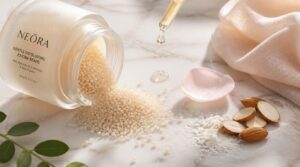
For physical exfoliation, choose ultra-fine spherical particles. Jojoba beads and rice powder polish without micro-tears. A well-formulated jojoba bead scrub for sensitive skin pairs these perfectly round particles with soothing ingredients like aloe or oat extract to keep irritation in check.
| Skin Type | Gentle Chemical | Gentle Physical |
|---|---|---|
| Sensitive | PHAs, low-dose mandelic | Soft cloth |
| Dry | Lactic acid | Rice powder |
| Oily | Low-dose salicylic | Jojoba beads |
| Combination | Enzymes | Jojoba beads |
| Mature | PHAs, enzymes | Rice powder |
Start rinse-off, not leave-on. Shorter contact time means less overexfoliation risk. Build tolerance slowly.
Avoiding Harsh Scrubs

That bargain-bin scrub with crushed shells? It’s sandpaper in a jar. Apricot kernels and other jagged granules create micro-tears, and microbeads are bad for your face and the ocean.
Skip anything rough. Choose fine, round particles instead, or just use a washcloth with light pressure. Overexfoliation starts with harsh formulas. Your skin deserves better.
Match Ingredients to Skin Concerns
Here’s the truth most product labels won’t tell you: the ingredient list matters more than the pretty packaging. Picking the right acid or enzyme for your specific concern is the difference between glowing skin and a red, angry face. Let’s break down which ingredients do what, so you can shop like a pro.
AHAs for Dryness
When dry skin feels rough, AHAs are your friend. Lactic acid stands out because it exfoliates while pulling in moisture. Glycolic acid works too, but it’s stronger and less forgiving.
| AHA | Best For | Watch For |
|---|---|---|
| Lactic acid | Dryness, hydration | Mild tingling |
| Glycolic acid | Texture, dullness | More irritation |
| Mandelic acid | Sensitive dryness | Slower results |
Keep concentrations under 10 percent. Follow with a ceramide moisturizer to lock in hydration retention. Your skin will thank you.
BHAs for Clogged Pores
Oily skin? BHAs are your match. Salicylic acid is oil-soluble, so it slips into pores and dissolves the gunk causing congestion.
Look for 1 to 2 percent strength with a pH between 3 and 4. Paula’s Choice Skin Perfecting 2% BHA Liquid is a solid pick for oily and acne-prone skin.
Start slow. Twice weekly, then build up.
PHAs for Sensitivity
If salicylic acid makes your skin sting, meet PHAs. These are chemical exfoliators with larger molecules, so they work slowly and stay near the surface. Translation: less irritation, still smoother skin.
Look for gluconolactone or lactobionic acid on the label. Choose fragrance-free formulas with glycerin or panthenol. And always patch test first. Sensitive skin deserves proof, not promises.
Enzymes for Dullness
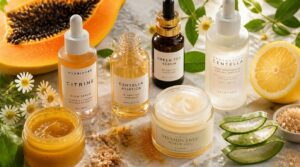
Dull skin? Enzymes are your friend. They dissolve dead cells on the surface only, no stinging, no drama. Look for papain from papaya or bromelain from pineapple. Both brighten without irritating. Use an enzyme peel weekly and your serums absorb better too. Think of it as spring cleaning for your face. Gentle, effective, and perfect for skin texture improvement.
Acids for Dark Spots
Why do dark spots stick around? Because pigment runs deep, and surface scrubbing won’t touch it. You need acids that interrupt melanin itself.
Kojic acid and azelaic acid inhibit tyrosinase, the enzyme driving pigment production. Tranexamic acid targets melasma beautifully. Mandelic acid suits sensitive skin types, fading spots gently.
Pair with glycolic acid for exfoliation, and dark spot fading gets real. Patience required.
Set The Right Exfoliation Frequency

Here’s the truth I tell every client: more exfoliation isn’t better exfoliation. Your skin rebuilds on its own schedule, and rushing it just leaves you red and cranky. So how often should you actually exfoliate, and how do you do it right? Let’s break it down.
More exfoliation isn’t better — your skin rebuilds on its own schedule, so don’t rush it
Start Once Weekly
Here’s the golden rule: start slow. Exfoliate once a week, then reassess. Your skin needs recovery time between sessions, especially if you’re sensitive or dry. Over-eager beginners wreck their barrier before week two. Don’t be that person.
Apply your chemical exfoliant to clean, dry skin, follow with moisturizer, and always patch test first. Pick a day. Monday works. Consistency beats enthusiasm every single time.
Adjust for Skin Type
Once weekly is your baseline, not your destiny. Oily and acne-prone skin often tolerates two or three sessions. Dry skin? Stay at once. Combination skin can handle twice, but watch those cheeks. Sensitive skin should stay weekly, maybe less. If your skin stings, flakes, or glows angry red, you’ve overshot. Back off before your barrier files a complaint. Your skin type sets the pace.
Apply Products Correctly
Technique matters as much as the product itself. Start with clean, dry skin.
Physical scrubs need a pea-sized amount, small circles, thirty seconds, light pressure. Let the scrub do the work.
Chemical exfoliants? Apply a thin layer and don’t rub. Rinse thoroughly, then moisturize. Skip retinol that night.
Your skin will thank you.
Alternate Exfoliation Methods
Your skin gets bored. Or rather, it gets battered. Using one method every time is like eating the same meal daily: eventually something breaks.
Alternate physical exfoliation with chemical exfoliation. One week a scrub, the next an acid. This keeps your exfoliation frequency honest and helps bar function repair between sessions.
Whatever your skin type, rotation prevents overdoing any single approach.
Patch Test New Products
New bottle, same rules: patch test first. Apply a quarter-sized amount (or half a pea for actives) to your inner arm or elbow crease. Leave it, watch for burning, stinging, hives, or swelling. If irritation shows up, rinse with lukewarm water and shelve the product.
A skin sensitivity test takes minutes. A damaged barrier takes weeks. Choose wisely.
Prevent Irritation and Barrier Damage
Here’s the truth I tell every client: your skin barrier forgives a lot, but it keeps score. Exfoliation goes wrong fast when you ignore the warning signs, and trust me, your face won’t be shy about sending them. Let’s talk about protecting that barrier so your glow doesn’t come with a side of regret.
Signs of Over-Exfoliation
If your skin could talk, over-exfoliated skin would scream. Watch for redness and flushing, stinging from products that never bothered you before, and a tight, dry feeling that no moisturizer seems to fix. Persistent flaking, rough texture, and unexpected breakouts also signal trouble. These are your skin’s warning lights. Ignore them, and barrier function repair becomes a much longer, more painful project.
Avoid Damaged Skin
So your skin is flaring. Now what? Stop exfoliating on damaged skin. Full stop. No scrubbing, no picking at flakes, no rubbing with rough pads. Friction spreads irritation and slows healing. Skip tight collars and helmets where you can, too. Keep hands off and let your barrier function recover. Pushing through irritation never works. It just buys you weeks of repair.
Moisturize After Exfoliating
Once your skin calms down, feed it. Exfoliation strips natural oils, so moisturize right after to restore hydration and protect barrier function. Wait five minutes if you’re tingling, then apply while skin is slightly damp. That damp window helps humectants spread and sink in.
Look for these ingredients:
- Glycerin or hyaluronic acid for moisture
- Ceramides to rebuild lipids
- Aloe or allantoin to calm irritation
- Niacinamide to reduce redness
Match texture to your skin type. Lightweight lotions for oily skin, richer creams for dry. Massage gently until absorbed. Your face should feel comfortable, never tight.
Apply Daily Sunscreen
Moisturizer repairs. Sunscreen protects. Skip it and you undo everything.
Exfoliation leaves fresh skin exposed, and UV rays love fresh targets. That’s how dark spots happen.
Use SPF 30 or higher, broad spectrum, water resistant if you sweat. Apply 15 minutes before going outside. Reapply every 2 hours. Choose a noncomedogenic, pH balanced formula for your skin type. Sensitivity matters here, so be diligent.
For sensitive or acne-prone skin, a broad spectrum SPF 30 facial sunscreen that’s noncomedogenic keeps pores clear while still defending against UV damage.
When to Stop Exfoliating
When do you stop? Simple: when your skin starts fighting back. Burning, stinging, visible redness, or active peeling are classic irritation signals.
Increased dryness and tightness after exfoliating means skin barrier damage is already underway. Continued scrubbing causes microtears and compounds the problem fast.
Pause everything now. Let your skin fully normalize first, then reintroduce exfoliation gently, once a week.
Frequently Asked Questions (FAQs)
How do I know what kind of exfoliant to use?
Picking the perfect exfoliant starts with your skin type. Oily skin? Chemical exfoliants. Dry skin? Physical exfoliants or hydrating acids. Choose wrong, and irritation wins.
What are the three types of exfoliants?
There are three types: physical exfoliants scrub with particles, chemical exfoliants dissolve dead cells using acids like AHAs, and enzyme exfoliants break down skin-cell bonds without any friction. Your skin type ultimately decides which fits.
What do Koreans use for exfoliation?
Koreans use leave-on exfoliating toners, two-sided exfoliating pads, rice and sugar scrubs as physical exfoliants, and chemical exfoliants like glycolic or lactic acid. The Korean skincare routine keeps it all gentle: once or twice weekly.
What is the best type of exfoliator for my skin?
The best exfoliator always matches your specific skin type. Oily and acne-prone skin does well with salicylic acid. Dry skin benefits most from hydrating chemical exfoliants like lactic acid. Sensitive skin needs something much gentler.
Can you exfoliate during pregnancy safely?
Yes, but go easy. Pregnancy-safe exfoliation looks like low-strength AHAs or a mild physical scrub, no more than every two weeks. Avoid high-dose salicylic acid. Patch test anything new, and always keep your picks fragrance-free.
Does exfoliation help with ingrown hairs?
Short answer: exfoliation helps with ingrown hairs by clearing the dead skin that traps hair just below the surface. A client struggling with persistent ingrown hairs saw real improvement after adding physical exfoliation twice weekly.
How does diet affect skin cell turnover?
Diet is basically your skin’s backstage crew. Vitamins A, C, and zinc drive cellular renewal. Antioxidant-rich foods fight oxidative damage. High sugar slows turnover. Your plate shapes your skin’s pace more than most people realize.
Can exfoliators expire or lose effectiveness?
Can exfoliators expire or lose effectiveness? Absolutely. Salicylic acid and glycolic acid break down over time. Check the PAO symbol on your label. Once the product changes color, smell, or texture, product efficacy is gone.
Should exfoliation routines change with seasons?
Think of your skin as a weather app: it always updates. Winter raises irritation risk, so cut back frequency. Summer heat clogs pores. Seasonal skincare adjustment means responding to your skin, not a rigid calendar.
Conclusion
The best exfoliation is the kind you barely notice. No redness, no tightness, no regret the next morning. Knowing how to choose an exfoliate for your skin type means accepting that less is almost always more.
Your skin isn’t just a surface to sand down. It’s a living barrier worth protecting. Give it the right ingredients at the right frequency, and it’ll finally reward you with the clear, calm glow you’ve been chasing all along.