This site is supported by our readers. We may earn a commission, at no cost to you, if you purchase through links. This content is for general informational and educational purposes only and is not a substitute for professional medical, dermatological, or nutritional advice.
Frizz isn’t a hair problem—it’s a physics problem. When your hair’s outer cuticle layer lifts, it pulls in atmospheric moisture and swells unevenly, turning smooth strands into a flyaway halo by mid-morning. High-porosity hair does this fastest, but even healthy hair surrenders to humidity, heat damage, or a simple cotton pillowcase dragging across strands overnight.
The fix isn’t a single miracle product. Getting rid of frizzy hair naturally means addressing the actual mechanics—sealing cuticles, restoring moisture balance, and breaking the small daily habits quietly working against you.
Table Of Contents
- Key Takeaways
- Causes of Frizzy Hair
- Use Natural Moisture to Smooth Frizz
- Try DIY Frizz-Reducing Hair Masks
- Wash and Dry Hair Properly
- Prevent Frizz Every Day
- Frequently Asked Questions (FAQs)
- How to fix frizzy old lady hair?
- How to get rid of frizzy hair naturally?
- How to get frizz-free hair?
- How do you remove Frizz from hair at home?
- How do you control frizzy hair?
- Can natural frizzy hair be fixed?
- How to tame frizzy hair?
- How to stop hair from being frizzy?
- What is the best home remedy for dry frizzy hair?
- How do I permanently fix dry frizzy hair?
- Conclusion
Key Takeaways
- Frizz is a physics problem—when your cuticle layer lifts, it pulls in humidity and swells unevenly, so sealing those scales flat is the real fix, not chasing miracle products.
- Natural oils like coconut, argan, and olive work as protective barriers by coating each strand and locking moisture in before weather or washing can strip it out.
- Small daily habits—sleeping on silk, rinsing with cold water, and swapping terry cloth for microfiber—quietly make or break your frizz control over time.
- Consistent moisture management beats any one-time treatment; understanding your hair’s porosity tells you exactly how much hydration it needs and how fast it loses it.
Causes of Frizzy Hair

Frizz isn’t random — your hair is actually trying to tell you something.
Once you understand the triggers, you can actually fix it — common causes of frizzy, poofy hair are easier to address than most people think.
Before you can fix it, it helps to know what’s setting it off in the first place. Here are the main culprits worth knowing about.
Raised Hair Cuticles and Moisture Swelling
Every time your hair gets wet, Water-Induced Cuticle Lift occurs beneath the surface. Water enters the shaft, causing cuticle swelling and lifting the tiny keratin scales. Repeated exposure leads to Cuticle Hygral Fatigue, gradually weakening your hair’s protective layer over time.
This damage manifests in frizz through multiple mechanisms:
- Swelling-Induced Friction makes strands rough and puffy
- Cuticle Scale Separation creates micro-roughness that traps tangles
- Uneven Moisture Absorption causes partial lifting along each strand
- Poor moisture retention lets hydration escape through lifted gaps
- Damaged cuticle health reduces shine and increases frizz visibility
Natural oils as antifrizz agents and cuticle sealing techniques help restore that flat, smooth surface.
Humidity and High-Porosity Hair
High-porosity hair is the real humidity culprit. When cuticle scales are lifted or damaged, humid air triggers Rapid Moisture Gain—strands swell fast in what’s called Humidity‑Triggered Swell—then suffer Quick Moisture Loss as hydration escapes just as quickly. That cycle keeps hair puffy and unpredictable.
Protective Sealing Techniques using natural oils as anti-frizz solutions and Weather‑Adaptive Styling can stabilize moisture retention before the weather wins.
Low‑porosity hair experiences humidity effects on low-porosity hair that leave strands feeling heavy or sticky.
Dryness, Damage, and Split Ends
Humidity isn’t the only enemy. Dry, damaged hair craves moisture so badly that the cuticle lifts just trying to get it — and that’s where frizz takes hold.
- Split ends travel upward without regular split end management
- Rough brushing disrupts scalp sebum balance fast
- Skipping a deep conditioning routine leaves strands brittle
- Moisture restoration to reduce frizz starts with cuticle sealing
Heat Styling and Chemical Treatments
Dry, damaged strands are already vulnerable — then add a flat iron or bleach, and you’ve doubled the problem. Heat styling and its effect on frizz is cumulative: skipping heat protectant spray or ignoring tool temperature control strips moisture from hair with every pass.
Chemical relaxer timing matters too, as overprocessing raises porosity quickly. Keratin treatment aftercare — especially sulfate-free shampoo — helps lock results in longer.
Genetic Texture and Natural Porosity
Some people do everything right and still wake up to a frizzy mess — and honestly, genetics might be running the show. Follicle shape determines curl pattern and strand geometry, while keratin structure controls how fast moisture enters or escapes. Cuticle inheritance affects how tightly those scales sit, and thinner strand diameter lifts more easily.
Sometimes perfect hair habits still lose to genetics — your follicles, not your routine, write the rules
Understanding your natural hair porosity is where real hair texture improvement starts.
Use Natural Moisture to Smooth Frizz
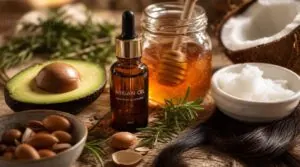
Your kitchen probably holds more frizz fighters than you’d expect. A few natural oils and simple pantry staples can do what expensive serums often can’t — feed your hair real moisture and keep cuticles lying flat.
Here’s what actually works.
Coconut Oil Pre-Wash Treatment
Coconut oil acts as a protective barrier, applied before shampooing, to shield hair from water absorption during washing. Applying 1–2 tablespoons to mid-lengths and ends forms a film that minimizes moisture penetration.
For best results, pair this pre-wash routine with a gentle shampoo — hair care facts and washing tips can help you fine-tune frequency and keep your scalp balanced.
Let the oil sit for 30–60 minutes, as this dwell time softens cuticles effectively. During this period, detangle gently and avoid heat to prevent damage.
After the dwell time, shampoo thoroughly to achieve real frizz control, moisture retention, and cuticle sealing. This process ensures hair remains hydrated and smooth.
Argan Oil for Shine and Softness
Argan oil earns its reputation fast. Its fatty acid coating wraps each strand, while vitamin E protection and phenolic antioxidants guard against daily damage.
The result? Real hair shine, genuine moisture retention, and cuticle sealing that calms frizz.
For lightweight conditioning, warm a few drops between your palms and focus on end-focused application only. Once or twice weekly keeps frizz control consistent without greasiness.
Olive Oil for Very Dry Hair
Straw-like strands that snap and puff? Olive oil’s oleic acid coats each hair shaft, delivering moisture retention and cuticle sealing that heavier damage desperately needs.
Follow this simple warm oil infusion routine:
- Apply a light-weight dosage — 1 teaspoon — to slightly damp hair.
- Use a mid-length focus, avoiding roots entirely.
- Leave 15 minutes, then shampoo out for build-up control.
- Repeat as weekly conditioning.
Natural oils work. Don’t overdo it.
Aloe Vera Gel for Lightweight Hydration
Aloe vera is nearly pure water — and that’s exactly why it works. Its moisture-binding polysaccharides lock hydration into each strand without the heavyweight feel of oils. That lightweight slip factor makes it ideal for frizz-prone hair that needs moisture retention and cuticle sealing, not grease.
Apply aloe gel to damp hair using the leave-in gel method for a non-greasy finish and a cooling scalp sensation.
Apple Cider Vinegar Rinse for Cuticle Smoothing
Your hair cuticle behaves like a pinecone — it opens when conditions are off and closes when they’re right. An apple cider vinegar rinse restores pH balance naturally, smoothing those raised scales flat.
- Dilution Ratio: Mix ½ cup ACV with 1½ cups cold water
- Contact Time: Leave on 1–5 minutes, then rinse thoroughly
- Frequency Guidelines: Use 1–2 times weekly; skip if scalp sensitivity flares
When to Use Leave-in Hair Oil
Oil timing matters more than most people realize. Post-wash oiling on damp hair gives you the smoothest spread — dry strands can make even the best frizz control oil sit heavy and uneven.
| Timing | Best For |
|---|---|
| Post-wash oiling | Hair moisture retention on damp ends |
| Pre-heat oiling | Protecting before blow-drying |
| Dry touch-ups | Between washes flyaway control |
Focus on ends coating only — roots don’t need it.
Try DIY Frizz-Reducing Hair Masks
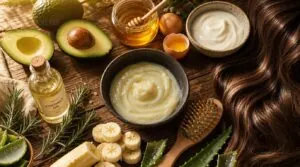
Your kitchen probably already has everything you need to fight frizz at the source. DIY hair masks work by delivering concentrated moisture and protein straight to the cuticle — no fancy ingredients required.
These masks combat frizz by targeting the hair cuticle directly, sealing in hydration and strengthening strands.
Here are six simple options worth adding to your routine.
Honey and Yogurt Moisture Mask
Honey pulls moisture into each strand—that’s the humectant benefit working in your favor. Mix 1 tablespoon of honey with 2 tablespoons of plain yogurt; the lactic acid smoothing action gently refines texture while locking in hydration.
Apply to roots, leave for 15 minutes, then rinse with cold water.
Use this DIY hair mask for frizz control weekly.
Avocado Mask for Deep Conditioning
Avocado takes deep conditioning to another level. Mash half a ripe avocado—texture adjustment matters here, so aim for lump-free—then try these steps for your avocado mask:
- Pair with olive oil for hydration and oil pairing benefits
- Apply root to ends, focusing on dry sections
- Leave on 20–30 minutes for full mask timing
- Post-mask rinsing: rinse thoroughly, then shampoo twice
Your hair will thank you.
Banana Mask for Soft, Smooth Hair
Bananas bring something avocado can’t—silica benefits that support strand elasticity and potassium conditioning that genuinely softens dry, frizzy hair. Blend one ripe banana into a lump-free banana paste; uneven texture means uneven results.
| Step | What to Do | Why It Works |
|---|---|---|
| Oil Pairing | Mix in 1 tsp olive oil | Adds shine and seals moisture |
| Apply | Spread root to ends | Even potassium conditioning coverage |
| Timing | Leave 15–20 minutes | Silica benefits absorb fully |
Your aftercare rinse matters—use cold water, then shampoo twice. Among DIY hair masks, this banana and honey variation stands out for softness you’ll actually feel.
Egg Mask for Protein Support
Think of eggs as a reset button for weak, frizzy strands. This DIY hair mask is a proven protein treatment—white vs. yolk matters: whites firm, yolks condition.
Apply using the gloved-hands method from roots to ends, leave for 20 minutes, then rinse with cold water only. Caution regarding temperature is crucial—hot water scrambles the egg on your hair.
Conduct a patch test first to avoid irritation, and keep use monthly to prevent protein overload.
Rice Water Rinse for Strength and Shine
Rice water is one of the most underrated home remedies for frizzy hair. Its starch coating smooths the cuticle surface, while inositol elasticity support helps strands flex instead of snapping. The amino acid boost strengthens each fiber from within.
For extra conditioning power, try fermented rice water—its natural pH balance of around 4.2 makes it especially effective at sealing the cuticle.
Overnight Oat Milk Mask Option
Oat milk makes a surprisingly effective overnight hair treatment. Its proteins and lipids coat each strand, creating a moisture film that helps hair lie flatter by morning.
Apply it root to end after washing, cover with a shower cap, then rinse clean. Always do an irritation patch test first—store-bought oat milk often contains additives that can trigger scalp sensitivity.
Discard any leftovers; freshness matters with DIY masks.
Wash and Dry Hair Properly
How you wash and dry your hair matters more than most people think.
Small habits — like the water temperature you rinse with, or the towel you grab — can either calm your cuticles or rough them right up.
Here’s what to do differently.
Use Sulfate-Free Shampoo

Your shampoo could be quietly sabotaging your frizz control. Regular formulas use harsh sulfates that strip your scalp’s natural oils, leaving hair dry and reactive.
Choosing sulfate-free shampoos and conditioners means relying on gentle surfactants instead — so moisture stays where it belongs. Don’t stress about lower lather expectations; less foam doesn’t mean less clean.
Bonus: it helps color preservation and scalp sensitivity too.
Shampoo Less Often to Preserve Sebum

Your scalp produces sebum for a reason — it’s nature’s built-in conditioner. Washing daily strips that protective layer, leaving strands dry and frizz-prone.
Finding the right wash cadence is key to sebum balance and scalp oil management. Cut back gradually; a short adjustment period is normal. Use dry shampoo or blotting for product buildup control between washes.
Condition After Every Wash

Every wash strips some moisture — conditioner puts it back.
Apply a hydrating conditioner from mid-lengths to ends, practicing scalp exclusion to avoid greasiness. Conditioner timing matters: leave it on two to three minutes for real detangling slip.
Rinse thoroughly until hair feels clean, not coated.
For extra-dry strands, swap in a deep condition or DIY hair mask weekly for frizz control.
Finish With a Cold-Water Rinse

Once conditioner has done its job, switch to cold water — around 12 to 18°C — for a final 30-second rinse. This simple Temperature Timing trick delivers real Cuticle Sealing action: cold water flattens those shingle-like scales against the shaft, locking in the softness you just built.
The result? A genuine Moisture Lock, reduced frizz, and a Shine Boost that warm water simply can’t give you.
Use Microfiber Towels or Cotton T-Shirts

Now that your cuticles are sealed, don’t undo that work with a rough towel rub. Swap terry cloth for a microfiber towel — its excellent Fiber Absorbency wicks moisture fast, cutting Drying Speed dramatically. That means less frizz-window exposure.
Use the Patting Technique: press and squeeze, never rub. Lint Reduction and Friction Management keep cuticles flat.
A soft cotton T-shirt works just as well.
Air-Dry or Plop Hair Gently

Once your microfiber towel has done its job, resist the urge to blast your hair dry. Instead, try hair plopping — a technique that lets curls set while gravity works in your favor.
- Fabric Choice: Use a microfiber towel or soft cotton T-shirt — never terry cloth
- Gentle Squeeze: Press water out slowly; no wringing
- Root Lift: Position hair at the crown so the roots dry with natural volume
- Plop Timing: Leave the wrap on for at least two hours, or overnight for defined results
- Post-Plop Refresh: Release gently, separate curls with fingers, and skip the brush
Air-drying after plopping keeps the cuticle calm — no heat, no friction.
Prevent Frizz Every Day

Washing your hair right is only half the battle. What you do the rest of the day — how you sleep, brush, eat, and style — shapes how your hair behaves long-term.
These daily habits make the biggest difference.
Sleep on Silk Instead of Cotton
Your pillowcase matters more than you’d think. Cotton creates surface drag against your strands all night, lifting cuticles and pulling moisture away by morning.
Switching to a silk pillowcase solves three problems at once: friction reduction, moisture retention, and static prevention. Silk’s smooth weave also facilitates hair alignment while you sleep. A silk bonnet works equally well for longer hair.
Brush With Boar Bristles Carefully
A boar bristle brush is one of the quietest tools in natural frizz control — but only when used right. Wait until hair is dry or slightly damp, never soaking wet. Divide into sections, then use root-to-tip strokes with gentle bristle pressure.
This sectioned brushing method coats each strand evenly with scalp oils.
Clean bristles weekly to avoid redistributing old residue.
Limit Heat Styling and Use Protectant
Heat is one of frizz’s biggest triggers — so if you can’t cut it out entirely, manage it smarter. Start with low-heat settings, then apply a thermal protectant spray before using any hot tools. Employ a sectioned styling technique for even coverage, as fewer heat passes reduce cumulative damage.
Let hair cool before brushing — this cool-down brushing step locks your style in naturally.
Use Dry Shampoo Between Washes
Dry shampoo manages scalp oil control without water — just spray it at your roots, let it sit, then brush out the residue. Stick to one or two uses weekly (frequency guidelines matter) and choose formulas with kaolin clay or rice powder for ingredient selection that won’t weigh hair down.
Pair it with a leave-in conditioner for volume enhancement and lasting frizz control.
Eat Hair-Healthy Nutrients
Your hair reflects what you eat — it’s that simple. Load your plate with salmon and eggs for Protein Power and Iron Boost, as these supply the amino acids keratin needs to stay strong.
Omega-3 Benefits from walnuts and flaxseed keep strands moisturized from the inside out.
Add bell peppers for Vitamin C Collagen support, and drink at least 2 liters of water daily.
Trim Split Ends Every 8–10 Weeks
Think of split ends as small cracks in a windshield — leave them, and they spread. That’s Split-End Migration in action, traveling up the shaft and stealing your length.
Regular trims every 8–10 weeks stop damage before it multiplies. Micro-Trim Precision removes only the frayed tips, so your Length Retention Strategy stays intact.
Don’t skip — trim smart.
Consider Professional Frizz Treatments
Sometimes, home remedies just aren’t enough — and that’s okay. Professional treatments for frizz go deeper than any DIY mask.
A Keratin treatment or Brazilian Blowout seals the cuticle and blocks humidity for up to 12 weeks. Japanese hair straightening restructures strands permanently.
Treatment longevity depends on your aftercare routine, so follow your stylist’s guidance closely to protect your results.
Frequently Asked Questions (FAQs)
How to fix frizzy old lady hair?
Gray and silver strands tend to feel coarser and drier — use scalp hydration, gentle detangling, silk pillowcases, regular trims, and silicone-free products to calm frizz and restore smoothness naturally.
How to get rid of frizzy hair naturally?
You can tame frizz naturally using natural oils, an apple cider vinegar rinse, and DIY hair masks for frizz control.
A nighttime hair wrap is another effective method — these simple home remedies for frizzy hair that actually work.
How to get frizz-free hair?
Frizz-free hair starts with sealing your cuticles and locking in moisture.
To achieve this, use natural oils, DIY hair masks for frizz control, an apple cider vinegar rinse, and a silk pillowcase to smooth strands daily.
How do you remove Frizz from hair at home?
Want smoother hair without a salon visit? Simple home remedies for frizzy hair work effectively. These methods include using natural oils as anti-frizz agents, applying DIY hair masks and treatments, and adopting practical habits like using microfiber towels to minimize frizz and sleeping on a silk pillowcase nightly.
How do you control frizzy hair?
Control frizzy hair by sealing moisture in at every step — from cold-air blow-drying and anti-frizz serums to protective up-dos and humidity-resistant styling products that keep strands smooth all day.
Can natural frizzy hair be fixed?
Yes — but "fixed" isn’t quite the right word. Your natural texture isn’t broken.
With consistent moisture lock, pH balance, and the right natural remedies for frizzy hair, you can absolutely tame it on your terms.
How to tame frizzy hair?
Taming frizzy hair begins with sealing the cuticle. Use pH-balanced conditioners, DIY oil blends, and protective night wraps.
Microfiber towels, humidity protection, and natural remedies for frizzy hair keep strands smooth daily.
How to stop hair from being frizzy?
Stop frizz by keeping cuticles flat and hair well-moisturized. Use silicone-free products, pH balancing sprays, and humidity protective styling. Simple home remedies for frizzy hair work better than you’d expect.
What is the best home remedy for dry frizzy hair?
Coconut oil, honey masks, and avocado treatments are the best home remedies for dry frizzy hair — each one seals moisture, smooths the cuticle, and leaves strands softer without harsh chemicals.
How do I permanently fix dry frizzy hair?
Permanently fixing dry frizzy hair isn’t one dramatic move — it’s consistent care.
Restore moisture, protect your cuticle daily, and address your hair’s unique porosity, and the frizz genuinely fades over time.
Conclusion
Seal the cuticle, restore the moisture, break the habits holding your hair back. That’s the whole game—and now you know how to play it. Learning how to get rid of frizzy hair naturally isn’t about chasing one miracle product; it’s about understanding what your hair actually needs and giving it that, consistently.
Small shifts compound fast. Swap the pillowcase, rinse cold, oil before you wash. These consistent actions create the right environment for your hair to flourish.
Your hair doesn’t need fixing—it needs the right conditions to thrive.