This site is supported by our readers. We may earn a commission, at no cost to you, if you purchase through links.
Your beard won’t grow the same way your friend’s does, and that’s not a problem—it’s genetics. Black men face unique challenges when growing a beard: tightly coiled hair that curves back into the skin, patchy spots that take years to fill in, and dryness that turns a fresh beard into a brittle mess.
The difference between a beard that looks sharp and one that looks neglected comes down to understanding your hair texture and working with it, not against it. You need the right techniques for cleansing coarse hair, oils that actually penetrate each strand, and a trimming strategy that prevents ingrown hairs before they start.
Growing a full, healthy beard as a Black man means combining patience with a targeted routine that caters to your specific needs.
Table Of Contents
- Key Takeaways
- What Influences Beard Growth in Black Men?
- Building a Beard Care Routine
- Nutrition and Lifestyle for Healthy Beard Growth
- Overcoming Common Beard Problems
- Styling and Grooming Tips for Black Men
- Frequently Asked Questions (FAQs)
- What helps black men’s beard grow?
- How long does it take to grow a beard for a black man?
- Is it harder for black men to grow beards?
- Why is beard growth so hard for black men?
- How to grow a healthy beard as a black man?
- How long does it take a black man to grow a beard?
- Do black men need beard treatment?
- How can a black man make his beard grow?
- Do black men need beard oil?
- How can I stimulate my beard to grow?
- Conclusion
Key Takeaways
- Your beard’s texture and growth pattern come from genetics you can’t change, but you control the routine—cleanse with sulfate-free shampoo 2-4 times weekly, moisturize daily with natural oils like jojoba or argan, and exfoliate once or twice a week to prevent ingrown hairs from coiled hair curling back into your skin.
- Nutrition fuels beard growth from the inside: eat protein-rich foods like eggs and salmon, load up on biotin, zinc, iron, and vitamins A, C, D, and E, drink 8 glasses of water daily, and get 7-8 hours of sleep to boost testosterone production.
- Patience beats impatience every time—most Black men see real density in 2-6 months, patchy spots often fill in after 8-12 weeks, and full coverage can take into your late thirties as follicles mature at different rates.
- Prevent the common problems before they start: trim every 1-2 weeks with sharp tools to avoid breakage, shave with the grain using a fresh blade every 5-7 shaves, skip regular shampoo that strips natural oils, and apply beard balm twice daily to lock in moisture and stop brittleness.
What Influences Beard Growth in Black Men?
Your beard growth journey isn’t just about patience—it’s shaped by forces you can’t control and some you can. Genetics, hormones, and how your hair naturally grows all play a role in what your beard looks like and how fast it fills in.
If your beard tends to grow curly or unruly, you can learn how to train your beard to grow straight and work with your natural texture instead of against it.
Let’s break down the three main factors that determine your beard’s potential.
Genetic Factors and Hair Texture
Your beard’s texture comes straight from your DNA. Follicle shape determines hair curl—oval or curved follicles create those tight coils unique to Black men, while keratin structure affects thickness and strength.
Genetic variants control how your facial hair grows, from density to coil pattern. These texture inheritance factors set your baseline, making your beard distinctly yours from day one.
Scientists are continually identifying genes that play a role in determining hair texture and growth patterns.
Hormones and Age
Genetics set the stage, but hormones run the show. Testosterone levels peak in your twenties and thirties, fueling beard growth and density. As you age, testosterone gradually drops—slowing hair growth and thinning your beard.
Genetics load the gun, but testosterone pulls the trigger—peaking in your twenties and thirties before age slowly thins your beard
Hormone balance matters beyond testosterone alone:
- Growth hormone decline reduces follicle activity
- Thyroid function impacts metabolism and hair growth
- Cortisol spikes from stress disrupt growth patterns
- Insulin sensitivity affects nutrient delivery to follicles
Age factors shape your beard’s timeline, but lifestyle choices influence how hormones support men’s health and hair growth.
Common Growth Patterns and Challenges
Your beard won’t fill in overnight. Growth begins with steady expansion as follicles respond to testosterone, but patchy areas around your cheeks and chin are normal before full connection happens.
Black men often see tightly coiled patterns that increase ingrown hairs and uneven density. Some guys achieve fullness by their mid-twenties; others fill in through their late thirties as follicle health matures.
Building a Beard Care Routine
Growing a thick beard isn’t just about letting it grow wild—it takes a deliberate routine. Your beard’s unique texture demands specific care that regular hair products can’t provide.
Understanding how to style your beard helps you work with your growth pattern instead of against it, especially in areas where coverage naturally thins.
Here’s how to build a solid foundation that keeps your beard looking sharp and feeling comfortable.
Cleansing and Conditioning Techniques

You can’t build a strong beard on a weak foundation—cleansing and conditioning are where it all starts. Here’s your core routine:
- Wash with sulfate-free beard shampoo 2–4 times weekly using lukewarm water to preserve natural oils
- Apply lightweight beard conditioner for 1–3 minutes focusing mid-shaft to ends for hair moisture
- Rinse thoroughly and pat dry to lock in hydration and prevent frizz
Good beard hygiene sets everything else up for success.
Moisturizing With Natural Oils and Balms
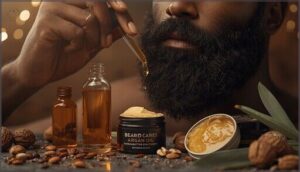
After cleansing, it’s time to moisturize with natural ingredients that work. Jojoba oil mimics your skin’s own oils, while argan oil softens coarse hair with vitamin E.
Apply beard oil daily to damp skin—warm it between your palms first. For extra hold and hydration, reach for beard balm blending shea butter with carrier oils. These natural moisturizers reduce itch and lock in skin hydration.
To further benefit your grooming routine, consider products enriched with core natural balm ingredients that provide deep nourishment and antioxidants.
Exfoliating to Prevent Ingrown Hairs

Ingrown hairs plague Black men because tightly coiled hair curls back into skin. Gentle exfoliation breaks that cycle—use a soft scrub or washcloth once or twice weekly, massaging for 20 to 30 seconds.
Chemical peels with salicylic acid at 2 percent unclog follicles without scratching. Exfoliate your skin before shaving to lift hairs and promote skin renewal, cutting ingrown hair risk over four to six weeks.
Trimming and Detangling Coarse Beard Hair
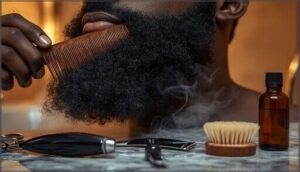
Coarse hair tangles fast, so detangling tools save you frustration. Start with a widetoothed comb on damp beard, working from tips to roots—never yank through knots. Then trim with sharp clippers or scissors to shape your curly beard and snip split ends.
- Use a detangling comb before trimming to prevent tugging
- Dampen hair with warm water for easier combing
- Apply beard oil for slip and smoother detangling
- Trim small sections at a time for control
- Brush afterward to train hairs and reduce frizz
Nutrition and Lifestyle for Healthy Beard Growth

You can’t grow a healthy beard on grooming products alone. What you put in your body matters just as much as what you put on your beard.
Let’s break down the nutrition and lifestyle habits that’ll give your beard the fuel it needs to thrive.
Essential Vitamins and Minerals
Your beard needs fuel from the inside out. Biotin and B vitamins support hair follicle health and strengthen each strand.
Zinc and iron prevent mineral deficiency that slows hair growth, while vitamins A, C, and D boost nutrient absorption and collagen production. A healthy diet for beard growth beats beard supplements every time—nutrition for hair starts on your plate.
Foods That Promote Beard Growth
Think of your diet as a beard-building blueprint. Eggs deliver high-quality protein and biotin—essential for hair growth.
Spinach packs iron and vitamin A to nourish follicles. Grab a few Brazil nuts for selenium, salmon for omega-3 healthy fats, and avocados for vitamin E.
These protein sources and food supplements fuel beard nutrition better than any pill can.
Hydration and Sleep
Your beard health depends on what happens while you’re asleep. Here’s how hydration and sleep patterns work together:
- Drink 8 glasses of water daily to support nutrient delivery to your follicles
- Cut fluids 90 minutes before bed for uninterrupted restful nights
- Aim for 7-8 hours nightly to boost testosterone production
- Apply beard moisturizer as part of your morning routines
Water intake fuels growth. Sleep seals the deal.
Exercise and Stress Reduction
Physical activity does more than build muscle—it’s a testosterone booster and stress relief powerhouse. Just 30 minutes of moderate exercise five days a week can drop your stress by 20 percent in two months, supporting beard growth.
Try morning workouts or quick interval sessions. They boost mood, improve mental wellness, and create the hormonal environment your beard needs to thrive.
Overcoming Common Beard Problems

Growing a beard comes with its own set of challenges, especially when you’re working with coarser hair. You might deal with patchiness, ingrown hairs, itchiness, or dryness that can make the whole process frustrating.
Here’s how to tackle the most common problems and keep your beard looking healthy.
Managing Patchiness and Uneven Growth
Patience is your first weapon against a patchy beard. Growth cycles operate in spurts, so those bare spots often fill in after 8-12 weeks of consistent beard care for black men.
While you wait, try these patchy beard solutions:
- Style around gaps – Shape your beard to minimize uneven texture correction
- Apply growth serums with biotin to support beard growth and maintenance
- Consider beard fillers for temporary coverage during special events
Preventing and Treating Ingrown Hairs
Curly facial hair on black men can twist back into the skin, but you can fight this. Warm water softens hairs before shaving—take a 5-minute shower first. Shave with the grain using a sharp blade, replacing it every 5 to 7 shaves.
Exfoliate 2 to 3 times weekly with a gentle scrub to clear dead cells. Apply jojoba oil daily to keep follicles open and prevent irritation.
Reducing Itchiness and Beard Dandruff
Flakes and itching signal dry skin beneath your beard. Use a gentle beard shampoo twice weekly to strip away buildup without robbing natural oils.
After washing, lock in moisture with jojoba or argan oil—these beard oil benefits include itch relief and dandruff treatment. Exfoliate once weekly with a soft brush for proper scalp care.
If flakes persist, try a medicated dandruff shampoo containing zinc pyrithione for effective beard maintenance.
Solutions for Dryness and Breakage
Brittle strands signal a moisture crisis. Switch to a hydrating beard conditioner with hyaluronic acid and follow with oil therapy using jojoba on damp hair to restore moisture balance.
Apply a beard moisturizer containing shea butter twice daily for breakage prevention. Deep condition weekly for 15 minutes. Limit heat styling and use a wide-tooth comb—proper hydration and moisturization turn beard repair into daily habit, not emergency fix.
Styling and Grooming Tips for Black Men

You’ve put in the work to grow a healthy beard—now it’s time to make it look sharp. The right style can completely transform your look, but it takes more than just letting it grow wild.
Let’s talk about how to choose a style that fits your face, keep everything lined up, and avoid the mistakes that’ll have you starting over from scratch.
Choosing The Right Beard Style for Your Face Shape
Your face shape analysis determines which beard style will make you look your best. Oval faces handle most styles, while round face beards need length at the chin for jawline enhancement.
Square faces benefit from rounded edges that soften angles. Diamond shapes work well with goatees, and oblong faces need width through fuller cheeks.
Black men’s grooming starts with matching your natural contours to the right beard styling approach.
Maintaining Shape and Length
Precision cutting every week or two keeps your beard even and prevents split ends from sabotaging your length consistency. Set your comb guard to match your desired length across all sections—don’t taper unless that’s your plan.
Clean up your jawline edges every month for sharp definition. Use quality beard balm and a beard comb after your beard shampoo routine to lock in shape maintenance between trims.
Avoiding Common Beard Grooming Mistakes
Over-trimming stunts beard growth and creates uneven patches you’ll regret later. Trim only 1/8 to 1/4 inch at a time and keep your grooming tools sharp to prevent hair breakage and razor bumps.
Skip regular shampoo—it triggers skin irritation and dryness. Always moisturize after beard trimming to dodge ingrown hairs. Smart beard maintenance beats constant damage control every time.
Frequently Asked Questions (FAQs)
What helps black men’s beard grow?
Healthy beard habits like eating lean proteins, managing stress, and staying hydrated support testosterone and DHT production.
These hormones activate hair follicles, driving facial hair growth and thickness in Black men’s beards.
How long does it take to grow a beard for a black man?
Most Black men see noticeable facial hair growth within 6 to 12 weeks, but full beard density usually takes 2 to 6 months depending on your genetics and hormones.
Is it harder for black men to grow beards?
Growth rate varies by individual, averaging 3 to 5 inches monthly.
Black men don’t face harder beard growth—just unique hair texture issues like curly beard management and ingrown hairs requiring specific black skin care.
Why is beard growth so hard for black men?
Tightly coiled hair curls back into your skin more easily, triggering ingrown hairs and breakage.
Lower follicle density in some areas creates patchiness, while curly texture makes growth appear slower than it actually is.
How to grow a healthy beard as a black man?
You need a solid routine: cleanse two to three times weekly with beard shampoo, moisturize daily using natural beard oil, exfoliate regularly to prevent ingrown hairs, and maintain healthy beard habits through proper nutrition and consistent beard care.
How long does it take a black man to grow a beard?
You’ll see stubble within 2 to 4 weeks, but real beard density takes 1 to 3 months. Facial hair growth patterns vary—some black men need longer for full coverage.
Do black men need beard treatment?
Think of your beard care like a garden—it won’t thrive on neglect.
Yes, Black men need beard treatment because coarse hair texture, ingrown hairs, and skin conditions demand targeted beard care, specialized beard products, and consistent facial care routines.
How can a black man make his beard grow?
You can’t force genetics, but you can support beard growth through solid beard care.
Boosting testosterone with proper sleep and stress management, eating protein-rich foods with zinc and biotin, and staying hydrated consistently.
Do black men need beard oil?
Absolutely. Your beard oil softens wiry hairs, soothes the skin underneath, and prevents that maddening itch and flaking most Black men battle daily. Your beard’s coarse texture craves moisture that regular skin can’t deliver alone.
How can I stimulate my beard to grow?
You can’t force follicles overnight, but regular beard massage boosts blood flow for hair follicle stimulation.
Pair it with protein-rich foods, zinc supplements, adequate sleep to support testosterone levels, and consistent beard care and maintenance routines.
Conclusion
The beard you want is already beneath your skin—you just have to bring it out the right way. Learning how to grow beard black man starts with accepting your texture, feeding your body what it needs, and staying consistent when growth feels slow.
Skip the shortcuts and trust the process. Your beard won’t look like anyone else’s, and that’s the point. Keep it clean, keep it moisturized, and let patience do the heavy lifting.