
This site is supported by our readers. We may earn a commission, at no cost to you, if you purchase through links.
Most people don’t realize that weak shower pressure isn’t just annoying—it’s often a fixable problem hiding in plain sight. Your showerhead accumulates mineral deposits, valves drift partially closed over time, and small leaks siphon water away before it ever reaches you.
The good news is that you don’t need expensive equipment or a plumber to reclaim that powerful stream you’re missing. A bucket test reveals your current flow rate in minutes, and simple fixes like soaking your showerhead in white vinegar or checking your water valves can restore pressure naturally.
With the right approach, you can transform a disappointing trickle into a satisfying spray using tools you already own and methods that cost almost nothing.
Table Of Contents
- Key Takeaways
- How to Test Your Shower Water Pressure
- Common Causes of Low Shower Water Pressure
- Cleaning Your Showerhead Naturally
- DIY Methods to Improve Shower Pressure
- Upgrading to a High-Pressure Shower Head
- Checking and Fixing Shower Plumbing
- Top Products to Boost Shower Water Pressure
- Preventing Future Water Pressure Problems
- Frequently Asked Questions (FAQs)
- Conclusion
Key Takeaways
- You can diagnose weak shower pressure in minutes using a simple bucket test to measure gallons per minute, with anything below 2.0 GPM signaling a fixable problem that doesn’t require professional help.
- Mineral buildup from hard water is the most common culprit behind low pressure, and soaking your showerhead in white vinegar for 4-24 hours dissolves calcium deposits naturally without harsh chemicals.
- Partially closed water valves—whether at the main shutoff, branch line, or shower valve—can reduce pressure by 15-50%, and simply rotating them fully counterclockwise restores flow immediately.
- Regular monthly pressure monitoring and quarterly valve inspections catch problems early, preventing minor issues like slow leaks or gradual mineral accumulation from escalating into expensive plumbing emergencies.
How to Test Your Shower Water Pressure
You can’t fix what you can’t measure, so the first step is finding out exactly how weak your shower pressure actually is. A simple bucket test will give you hard numbers in minutes, no fancy equipment required.
Once you know where you stand, you’ll be able to pinpoint the problem and choose the right fix.
Measuring Flow Rate With a Bucket
Grab a five-gallon bucket and place it directly under your showerhead to master flow rate testing. Turn the water on full blast, then time precisely how long it takes to fill. Divide the collected gallons by the minutes elapsed to calculate your GPM—your key metric for pressure assessment.
If your GPM reads below 2.5, low water pressure may be drying out your skin—so pairing this test with a nourishing post-shower moisturizing routine can help restore hydration.
This bucket method gives you the hard numbers you need to diagnose weak shower water pressure and reclaim control over your morning routine. Understanding the importance of methodological rigor is essential for accurate assessments.
Comparing Results to Standard Benchmarks
Once you’ve measured your flow rate, stack it against standard benchmarks to see where you stand. Most modern showers run at 2 to 2.5 GPM, while older fixtures might hit 1.5 GPM. Anything below 2 GPM signals low water pressure that’s robbing you of a decent shower experience. Understanding dictionary definitions can help you better comprehend the technical terms used in flow rate analysis.
- 2.5 GPM benchmark – The ideal reference point for flow rate analysis and pressure testing
- 2.0 GPM threshold – Acceptable flow comparison that still delivers solid water metering results
- Below 1.5 GPM – Your signal to take action and start improving shower experience immediately
Identifying Signs of Low Pressure
Beyond the numbers, you’ll spot low pressure symptoms fast. Your shower takes forever to heat up, or the temperature bounces between scalding and freezing—classic flow rate issues.
Notice a weak shower pressure that barely rinses shampoo? That’s a pressure drop sign demanding attention.
Listen for whistling or banging from pipes during water pressure tests, and watch for spray strength that vanishes when other taps run.
If you’re renting and spot these warning signs, check out portable high-pressure shower heads designed for renters that install without permanent modifications.
Common Causes of Low Shower Water Pressure
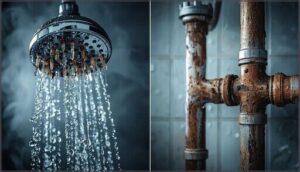
Low shower water pressure doesn’t just happen on its own—there’s always a culprit behind that disappointing trickle. Identifying the root cause is the first step to reclaiming the powerful shower you deserve, and most issues are simpler to diagnose than you’d think.
Low shower pressure always has a culprit, and identifying the root cause is simpler than you think
Here are the four most common reasons your shower pressure has dropped, along with what each one means for your plumbing system.
Mineral Buildup and Limescale
Hard water leaves calcium carbonate deposits that choke your showerhead over time, and this mineral buildup is why your flow rate tanks. Here’s what limescale does to your system:
- Mineral deposits narrow nozzle openings, creating uneven spray patterns and dropping water pressure locally
- Carbonate accumulation corrodes rubber washers and gaskets, causing leaks
- Regular descaling with white vinegar dissolves buildup without harsh chemicals
- Hard water areas require more frequent maintenance to prevent corrosion
Partially Closed Valves
A valve stuck halfway kills your water pressure before it reaches the showerhead, and you won’t know until you check every shutoff in the supply line.
Here’s your valve inspection breakdown:
| Valve Type | Pressure Drop | Fix Time |
|---|---|---|
| Main shutoff | 30-50% reduction | 2 minutes |
| Branch valve | 20-40% reduction | 1 minute |
| Shower valve | 15-30% reduction | 3 minutes |
Rotate each handle fully counterclockwise during plumbing maintenance to eliminate flow resistance and restore your flow rate instantly.
If pressure remains weak after adjusting valves, consider upgrading to specialized shower heads designed for low water pressure that maximize force even within federal gpm limits.
Old or Clogged Shower Heads
Your shower head might look fine, but limescale crusting inside those tiny nozzles silently strangles your flow rate by narrowing each outlet.
Mineral deposits create uneven spray patterns or complete dead zones on the spray face, dropping showerhead efficiency fast.
A fifteen-minute soak in warm white vinegar using natural cleaning methods to break down buildup restores water flow without harsh chemicals.
Cleaning or replacing that clogged nozzle restores flow immediately, giving you back the pressure you thought was gone for good without touching a single pipe.
Hidden Plumbing Leaks
Even small plumbing leaks divert flow from your shower, quietly dropping water pressure across your entire plumbing system. Pressure testing with calibrated equipment reveals hidden leaks by tracking pressure drop over time, while water metering over a fixed period confirms unexplained consumption.
Professional leak detection combines acoustics and thermal imaging for pipe inspection without tearing into walls, making leak repair precise and targeted before pipe corrosion worsens your low water pressure further.
Cleaning Your Showerhead Naturally
Mineral buildup is the most common culprit behind weak shower pressure, but you don’t need harsh chemicals to fix it. White vinegar breaks down limescale naturally and restores flow in most cases, making it your first line of defense.
Here’s how to clean your showerhead the right way and keep it running at full strength.
Removing and Soaking in Vinegar
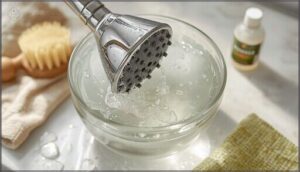
Want to crush mineral buildup without harsh chemicals? Vinegar immersion is your answer. This descaling method dissolves calcium deposits that strangle your flow rate, restoring your showerhead to peak performance.
Here’s how you reclaim control:
- Detach the shower head and submerge it completely in plain white distilled vinegar
- Let it soak 4 to 24 hours, depending on how severe the mineral buildup has become
- Rinse thoroughly with water to flush out loosened deposits
- For stubborn spots, use a soft brush to finish the job without scratching
Scrubbing Away Mineral Deposits
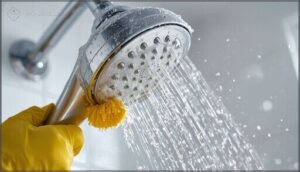
After the vinegar soak loosens mineral deposits, mechanical agitation seals the deal. Use a soft-bristled brush or old toothbrush to scrub around the nozzles where scale accumulates, targeting areas with visible buildup.
This physical removal restores flow rate and improves low water pressure by clearing passages that regulate shower water pressure.
Rinse under running water to flush away dislodged debris, restoring ideal showerhead maintenance and water pressure regulation.
Regular Maintenance Tips

Consistency wins the battle against mineral buildup. Test your flow rate monthly using the bucket method, tracking results to catch pressure drops early. Inspect valves quarterly, ensuring they’re fully open, and clean your showerhead every four weeks with vinegar to maintain peak water flow.
This simple routine of pressure monitoring and DIY plumbing repairs prevents costly professional interventions, keeping your shower performing at peak efficiency through proactive pipe maintenance and water flow optimization.
DIY Methods to Improve Shower Pressure
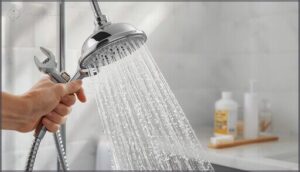
You don’t always need new equipment or a plumber’s expertise to reclaim the shower pressure you deserve. Many pressure problems stem from simple issues you can fix yourself in just a few minutes with basic tools or no tools at all.
Before you spend money on upgrades, try these straightforward adjustments that solve low pressure issues in most homes.
Fully Opening Water Valves
One of the simplest plumbing fixes for low water pressure starts at your main shutoff and shower valve—both need to be fully open to allow maximum water flow through the supply line.
A partially closed valve creates unnecessary resistance, dropping pressure even when your municipal supply is adequate.
Check both valves, turn them counterclockwise until they stop, then measure your flow rate again to confirm the improvement.
Timing Showers During Off-Peak Hours
Municipal supply optimization often reveals clear water demand patterns tied to morning and evening routines, when simultaneous use across your neighborhood creates pressure fluctuation throughout the plumbing system.
Scheduling your shower during off-peak hours—usually mid-morning or early afternoon—lets you sidestep peak hour management issues and capture better shower water pressure without touching a single valve, though this strategy won’t fix chronic low water pressure caused by pipe restrictions or buildup.
Turning Off Other Water-Using Appliances
Beyond adjusting your schedule, appliance scheduling gives you immediate control over demand management in your plumbing system. Pausing the dishwasher or washing machine during your shower can reclaim 10–20% of lost flow rate, especially in homes where high water usage appliances siphon pressure away from fixtures.
This pressure monitoring tactic restores water flow without altering your setup, optimizing flow optimization through smart water usage coordination.
Inspecting and Replacing Kinked Shower Hoses
After controlling appliance demand, check your shower hose for kinks or bends near the connections that choke water pressure. Inspect the shower hose length and hose material for visible damage, bulging, or cracking.
If leak detection reveals seepage when pressurized, replace it immediately to restore shower pressure. Confirm thread compatibility, tighten fittings snug without overtorque, and run water to verify hose flexibility and proper plumbing repairs.
Upgrading to a High-Pressure Shower Head
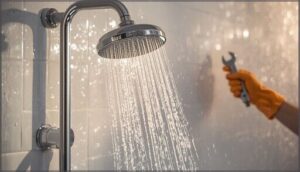
Sometimes a deep clean and a few tweaks won’t cut it, and that’s when swapping out your old shower head makes all the difference. The right high-pressure model can transform a weak trickle into a satisfying spray, often without any plumbing work beyond unscrewing the old fixture.
Here’s what you need to know about choosing, installing, and optimizing a new shower head for maximum pressure.
Choosing The Right High-Pressure Model
Look for models rated to deliver 2.0 to 2.5 gpm at standard pressure settings, which can increase flow by 1.5 to 2.5 times over your current showerhead.
Check valve compatibility and spray patterns—narrower jets feel stronger than broad patterns at the same flow rate.
Shower head materials like brass resist mineral buildup better than plastic, giving you sustained pressure booster performance for increasing shower water pressure.
Installing a New Shower Head
Upgrading your showerhead puts you back in the driver’s seat. Showerhead installation takes under ten minutes with basic tools—grab an adjustable wrench, wrap threads clockwise with plumber’s tape, hand-tighten the new unit, then snug it slightly with your wrench to avoid thread damage.
- Turn off the shower valve before loosening the old head
- Clean mineral deposits from the shower arm threads
- Apply three wraps of Teflon tape in a clockwise direction
- Check for leaks after turning water back on slowly
Removing Flow Restrictors for Better Flow
Most showerheads ship with a built-in flow restrictor that caps throughput at 2.0–2.5 gallons per minute, but pulling that small disc or screen from the base can bump your flow rate by 20–50% immediately. You’ll notice a fuller spray pattern and measurably higher pressure.
Though removing flow restrictors may breach local codes and void your warranty while sacrificing water efficiency.
Checking and Fixing Shower Plumbing
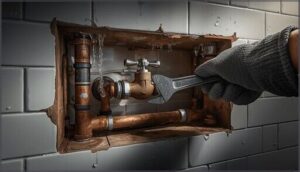
Sometimes the problem isn’t your shower head at all—it’s what’s hiding behind the wall. The pipes, valves, and connections feeding your shower can develop leaks, corrosion, or blockages that strangle water flow before it even reaches you.
Here’s how to inspect your shower plumbing, fix common issues yourself, and know when it’s time to call in a professional.
Inspecting for Leaks or Corrosion
Hidden leaks and corrosion can silently rob you of water pressure, so start your pipe inspection by checking exposed piping and fittings for dampness, mineral deposits, or rust.
During valve examination, look around the escutcheon plate for water staining or white calcified scaling that signals long-term corrosion.
Listen for continuous drips when fixtures are off—your first clue to plumbing leaks demanding immediate attention.
Cleaning or Replacing Shower Valves
When valve maintenance won’t restore flow, shower valve repair demands immediate action—remove the trim and escutcheon to access the cartridge, clean mineral deposits with vinegar, and replace worn seals or O-rings to fix weak shower pressure.
If the cartridge shows damage, valve replacement becomes your only path forward for restoring proper plumbing repair and ending low water pressure for good.
When to Seek Professional Help
Some plumbing emergencies demand expert intervention, not DIY troubleshooting for low water pressure. Call a licensed professional when you’ve exhausted simple fixes yet still face weak shower pressure, suspect hidden leaks causing water damage, hear banging noises signaling pipe corrosion, or notice mold near your plumbing system.
Professional inspection catches problems your eyes can’t see, preventing catastrophic failures in your home’s critical infrastructure through proper leak detection and plumbing repair.
Top Products to Boost Shower Water Pressure
Sometimes the best fix isn’t something you already have—it’s something you can buy and install in under ten minutes. If cleaning and adjusting valves hasn’t solved your pressure problem, a few targeted products can make a real difference without calling a plumber.
Here are three tools that consistently deliver results for homeowners dealing with stubborn low-pressure issues.
1. SparkPod High Pressure Rain Shower Head
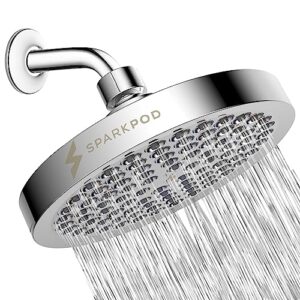
You’re done settling for weak, disappointing sprays—the SparkPod High Pressure Rain Shower Head delivers the commanding flow you’ve been missing. This 6-inch round fixture installs without tools, features 90 self-cleaning rubber jets that resist mineral buildup, and operates at 1.8 GPM for energy efficiency without sacrificing performance.
Customer reviews consistently report noticeable improvements in perceived shower strength after installation, and you can remove the flow restrictor to release even more pressure. It fits standard 1/2-inch NPT connections, making this upgrade straightforward for any homeowner ready to take control of their shower experience.
| Best For | Homeowners frustrated with weak water pressure who want a simple, no-tools upgrade that delivers a stronger, full-coverage shower experience. |
|---|---|
| Material | ABS Plastic |
| Primary Use | Shower Head |
| Installation | No-tool required |
| Water Flow | 1.8 GPM maximum |
| Maintenance | Easy-clean rubber jets |
| Finish | Polished Chrome |
| Additional Features |
|
- Installs in minutes without tools and fits standard plumbing connections
- 90 self-cleaning rubber jets resist mineral buildup and stay maintenance-free
- Energy-efficient 1.8 GPM flow saves on water heating costs while maintaining strong pressure
- Some users find they need to remove the flow restrictor for truly high pressure, which can be tricky
- A few reviewers report the pressure boost isn’t as dramatic as expected
- May require a crescent wrench for a completely secure fit despite the “no-tool” claim
2. Durgol Universal Descaler Solution
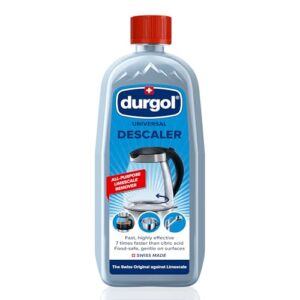
When a new showerhead isn’t enough, Durgol Universal Descaler Solution addresses mineral buildup at the root. This professional-grade liquid removes calcium and limescale from showerheads, pipes, and other fixtures that restrict your water pressure.
You soak affected components for the recommended duration—usually 15 to 30 minutes—then rinse thoroughly to restore flow. It works faster than household vinegar and leaves no residue or odor, giving you quantifiable results in a single application.
Always follow dilution instructions and wear gloves during use.
| Best For | Homeowners dealing with stubborn mineral deposits on showerheads, coffee makers, or kettles who want faster results than vinegar can provide. |
|---|---|
| Material | Liquid Solution |
| Primary Use | Descaling Agent |
| Installation | Pour and rinse |
| Water Flow | N/A |
| Maintenance | Removes limescale buildup |
| Finish | Unscented |
| Additional Features |
|
- Dissolves limescale quickly—usually within 15 to 30 minutes—so you’re not waiting hours for results.
- Works on multiple household items like coffee makers, kettles, and shower fixtures, making it versatile.
- Leaves no smell or aftertaste, which matters especially for appliances that touch food or drinking water.
- Requires careful measuring and dilution, so you need to read the instructions closely before each use.
- Some bottles have German labeling, which can confuse you if you don’t speak the language.
- Acidic formula means you’ll need gloves and proper ventilation—it’s not a casual spray-and-wipe product.
3. APLusee Shower Head Shut Off Valve
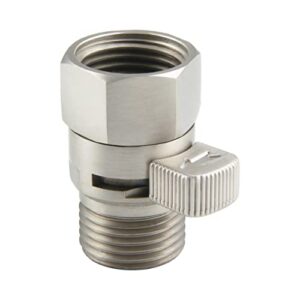
Beyond cleaning, installing the APLusee Shower Head Shut Off Valve gives you precision control over shower flow and water conservation. This brass valve fits between your existing shower head and hose with standard 1/2-inch threading, letting you pause water mid-shower without adjusting the main supply or temperature settings.
It features an adjustable lever for pressure regulation and doubles as a leak prevention tool during maintenance.
The installation requires only an adjustable wrench and thread sealant tape, making it an accessible DIY home repair that saves water and extends the life of your fixtures.
| Best For | Homeowners looking to pause water flow mid-shower for lathering or shaving, control high water pressure, or conserve water without sacrificing temperature settings. |
|---|---|
| Material | Brass |
| Primary Use | Flow Control Valve |
| Installation | Universal G 1/2 connection |
| Water Flow | Adjustable lever control |
| Maintenance | Ceramic cartridge |
| Finish | Brushed Nickel |
| Additional Features |
|
- Easy DIY installation with standard 1/2-inch threading and basic tools like an adjustable wrench and plumber’s tape.
- Adjustable lever allows you to regulate water pressure or completely shut off flow without touching main shower controls.
- Durable solid brass construction resists corrosion and extends fixture lifespan while helping reduce water waste.
- Included seal may slip during installation, potentially requiring extra plumber’s tape for a leak-free connection.
- Directional arrow on the lever might face backward, making it less intuitive to operate at first glance.
- May not fit all shower head types or pipe configurations without additional adapters or modifications.
Preventing Future Water Pressure Problems
You’ve fixed your water pressure, but keeping it that way takes a little ongoing attention. A few simple habits can stop those same problems from creeping back in.
Here’s how to stay ahead of pressure issues before they start affecting your showers again.
Routine Showerhead Cleaning
You can’t fix what you ignore, so inspect your showerhead every 3–6 months to catch mineral buildup early.
Soak it in a 1:1 distilled white vinegar solution for 4–8 hours, then scrub with an old toothbrush to dislodge stubborn deposits and improve flow. Rinse thoroughly, replace gaskets as needed, and run hot water to flush debris—keeping weak shower pressure from creeping back.
Monitoring Water Pressure Regularly
Once a month, measure your shower’s flow rate with a bucket test and record the results in pressure logs—you’ll spot trouble before it ambushes you.
Track readings against a 1.5–2.5 GPM baseline, and if you see consistent drops or your pressure gauge dips below 40 psi, investigate valves, mineral buildup, or hidden leaks immediately to stop low water pressure cold.
Addressing Minor Issues Early
A stitch in time saves your plumbing—regular checks catch weak shower pressure before it becomes a disaster. Inspect fixtures and valves monthly for leaks or wear, tighten fittings immediately, and replace worn washers to prevent major plumbing repair solutions down the line.
- Schedule leak detection inspections every month to catch hidden problems
- Document sudden pressure drops for faster troubleshooting low water pressure
- Perform valve maintenance by checking all shut-off points quarterly
- Keep a pressure monitoring log to spot trends before they escalate
- Tackle fault prevention with quick fixes instead of waiting for emergencies
Frequently Asked Questions (FAQs)
Does hard water affect shower pressure over time?
Yes, hard water gradually chokes your shower’s flow. Calcium and magnesium deposits coat pipes, valves, and showerhead nozzles over time, restricting water passage and dropping your flow rate noticeably—especially in regions with water hardness above 120 mg/L.
How often should I check my main water valve?
Like tending a steam engine, annual valve inspection keeps your plumbing humming. Check your main water valve yearly for proper operation, and every 3–6 months if corrosion or leaks appear during pressure checks.
Will a shower pump work with low municipal pressure?
A shower pump can boost flow when municipal pressure falls short, but many require minimum inlet pressure to function reliably.
Check system compatibility and local municipal codes before installing any pressure booster.
Can multiple showers running simultaneously reduce my pressure?
When everyone in your house hits the shower at once, you’re splitting the available flow rate across multiple outlets, which divides your plumbing system’s capacity and triggers noticeable pressure drops at each showerhead.
Conclusion
Most homeowners surrender to weak water pressure like it’s a life sentence, but you now hold the blueprint to break free. No plumber required, no expensive overhaul—just deliberate action and basic tools.
Whether you’re dissolving mineral deposits with vinegar, cranking open hidden valves, or swapping in a high-pressure showerhead, you’ve got proven methods to improve shower water pressure naturally.
Your mornings don’t have to feel like defeat. Take control, fix what’s broken, and reclaim what’s rightfully yours.
- https://vidalux.co.uk/
- https://news.google.com/publications/CAAqKAgKIiJDQklTRXdnTWFnOEtEWFJ2YlhObmRXbGtaUzVqYjIwb0FBUAE?hl=en-US&gl=US&ceid=US%3Aen
- https://bowmarwsd.colorado.gov/news-article/troubleshooting-high-or-low-water-pressure
- https://www.portland.gov/water/report-water-quality-issues/water-pressure-and-flow
- https://findtoptrends.com/blog/how-your-showerhead-and-fridge-became-political-statements/