This site is supported by our readers. We may earn a commission, at no cost to you, if you purchase through links.

Your hair colorist mixed the perfect shade, applied it with precision, and sent you home with vibrant, head-turning color. Then you washed it three days later and watched half that brilliance swirl down the drain. Sound familiar?
Most color fade isn’t inevitable—it’s the direct result of post-coloring mistakes that sabotage pigment before it has a chance to settle. The harsh truth: conventional hair care strips color faster than sun exposure or chlorine ever could.
Learning how to look after your colored hair and keep it luscious for longer means breaking some deeply ingrained washing habits and embracing a few game-changing product swaps that protect your investment from day one.
Table Of Contents
- Key Takeaways
- Wait Before Washing Freshly Colored Hair
- Choose The Right Shampoo and Conditioner
- Limit Shampooing to Preserve Color
- Condition and Deep Treat Regularly
- Use Cool Water When Washing Hair
- Protect Hair From Heat Styling Damage
- Shield Hair From Sun and Environmental Stress
- Maintain a Healthy Diet for Hair Strength
- Schedule Regular Trims to Prevent Split Ends
- Refresh Color Between Salon Visits
- Frequently Asked Questions (FAQs)
- What is the best way to wash colored hair?
- What water temperature is best for colored hair?
- What is the best way to protect colored hair from heat?
- What are the best sulfate-free products for colored hair?
- How often should I trim split ends?
- Can I swim with freshly colored hair?
- Does hair texture change after coloring treatments?
- How often should I use clarifying shampoo?
- Will hard water affect my hair color?
- Can I color my hair during pregnancy?
- Conclusion
Key Takeaways
- Wait 72 hours before your first wash after coloring because the cuticle stays open during this time, and washing too soon strips unbonded pigment before it locks into your hair’s cortex.
- Switch to sulfate-free shampoos and wash only every 2-3 days with cool water (below 70°F) to seal the cuticle and prevent color molecules from escaping with each rinse.
- Always apply heat protectant spray before styling since it cuts moisture loss by up to 50% and can preserve your color for an extra 2-4 weeks compared to unprotected heat exposure.
- Schedule trims every 6-8 weeks to stop split ends from traveling up the shaft, which can boost color retention by up to 40% by maintaining healthier, less porous ends.
Wait Before Washing Freshly Colored Hair
You’ve just walked out of the salon with fresh color, and now the countdown begins. The first few days after dyeing are critical for locking in that vibrant shade you just invested in.
Here’s what you need to know about timing your first wash and why it makes all the difference in how long your color stays bold. If you’re exploring options that require less upkeep overall, choosing low-maintenance hair color can help you extend time between salon visits while keeping your look fresh.
Why The 72-Hour Rule Matters
Your hair’s cuticle stays open right after coloring, making those first 72 hours critical for pigment bonding and cuticle sealing. Wash too soon and you’ll sabotage color retention before the color molecules even lock in. Here’s why waiting matters for color longevity:
- The cuticle needs time to close and trap pigment deep in your hair’s cortex
- Early washing strips surface color from porous, color-treated hair before it stabilizes
- Delaying that first shampoo dramatically improves color protection and reduces fade
- Your natural oils actually help seal the cuticle, preventing premature hair damage
Effects of Early Washing on Color Longevity
Washing within the first 48 hours can slash your color longevity by removing unbonded dye molecules before they penetrate the cortex. Early wash cycles disrupt the dye bonding process and increase hair porosity, accelerating color fading with each shampoo. Timing your dye session properly—understanding how long the process takes—helps you plan that crucial 48-hour waiting window without rushing through application or cutting corners on processing time.
That’s why pigment retention strategies start with patience—delaying washing preserves color-treated hair and ensures color fade prevention through proper color preservation and color-safe products timing. Similarly, understanding scientific study summaries can help in identifying key factors that affect hair color longevity.
Choose The Right Shampoo and Conditioner
Your shampoo and conditioner can make or break your color. The wrong formula strips pigment faster than you can say “faded,” while the right one locks in that vibrant shade you worked hard to get. If you’ve got purple hair, using the right purple shampoo helps maintain that cool tone without washing out the color you love.
Here’s what you need to know about choosing products that actually protect your investment. Knowing how long your hair dye lasts helps you choose products designed to extend that window and keep fade at bay.
Sulfate-Free Formulas for Color Care
You need sulfate-free shampoo if you want your color to stick around. Sulfates strip pigment with every wash, but sulfate-free formulas use gentle cleansing agents like glucoside surfactants that protect color-treated hair.
They keep your cuticle closed and pH balanced, locking pigment inside the cortex. Studies show measurably better color retention over weeks—your rebellion against fade starts with color-safe products.
Benefits of Color-Protectant Products
Color-protectant products work smarter, not harder. They use mild cleansers that minimize oxidative stress on dye molecules while cationic polymers reduce cuticle friction and lock in pigment.
UV filters limit photo-oxidation, and antioxidants fight environmental fade from free radicals.
pH-balanced formulations maintain cuticle integrity, giving you longer-lasting color retention. That’s how color-safe products actually preserve what you paid for.
Limit Shampooing to Preserve Color

Here’s the truth: every time you lather up, you’re washing away pigment molecules that give your color its punch. The less you shampoo, the longer your shade stays vibrant and true.
Let’s break down how to stretch those wash days without sacrificing freshness.
Optimal Washing Frequency
You’re in control of how long your color stays vibrant—and it starts with your wash cycle. For most color-treated hair, washing every 2–3 days strikes the sweet spot between scalp freshness and fighting color fade.
Daily lathering strips pigment molecules and raises hair porosity, fast-tracking dullness. Stretch your shampoo timing, use color-safe products, and watch your vibrancy hold strong through weeks of hair maintenance.
Using Dry Shampoo Between Washes
Dry shampoo benefits your color-treated hair by soaking up root oils that can dull your shade between washes. Stick to inert formulas—rice starch or silica work well—and avoid daily buildup that threatens scalp health.
Spray from 15–20 cm, let it sit for two minutes, then massage it through to refresh hair texture without water. This hair care tip extends your color and gives you freedom from constant washing.
Condition and Deep Treat Regularly

Conditioning isn’t just an afterthought—it’s your secret weapon for keeping color vibrant and hair healthy. Color-treated strands lose moisture faster than untreated hair, making regular deep conditioning essential, not optional.
Here’s how to lock in that moisture and protect your investment.
Moisturizing Benefits for Colored Hair
Your color-treated hair loses moisture up to 40% faster than virgin strands, making deep conditioning non-negotiable.
Humectants like glycerin pull water into your hair shaft, while lipid replenishment through silicone or natural oils seals that moisture inside.
This dual approach restores internal bonds weakened during coloring, locks in vibrant pigment, and keeps your hair soft instead of straw-like. That’s proper hair nourishment.
Weekly Hair Masks and Leave-in Conditioners
Think of weekly hair masks as insurance for your color investment—they restore up to 40% more moisture retention in a single session and rebuild weakened keratin for measurable strength gains.
Rotate protein-rich formulas with humectant-packed options to boost hair elasticity without buildup.
Layer a leave-in conditioner over your mask for dual-action color locking and daily moisture retention that keeps pigment vibrant between washes.
Use Cool Water When Washing Hair
Hot water might feel relaxing, but it’s actually working against your color by opening up the hair cuticle and letting all that expensive pigment wash right down the drain.
Switching to cool water keeps the cuticle sealed tight, locking in your color and adding serious shine.
Here’s what you need to know about temperature and how to make cool-water washing work for you.
How Water Temperature Affects Hair Color
Hot water strips away your hard-earned color faster than you’d think. Here’s what temperature does to your color-treated hair:
- Hot water opens cuticles, letting dye molecules escape with every rinse
- Warm temperatures accelerate pigment washout, especially in semi-permanent formulas
- Cool water seals the hair cuticle, locking color inside where it belongs
- Heat increases dye solubility, causing more color transfer to your towel
- Cooler rinses preserve vibrancy, keeping your hair color looking fresher between salon visits
Master water temperature control for serious color fade prevention.
Step-by-Step Guide to Washing With Cool Water
You’ve got the temperature talk down—now let’s walk through the washing routine that locks in your color. Start by rinsing your color-treated hair under cool water below 70°F to minimize cuticle opening and boost color locking.
Apply a nickel-sized amount of sulfate-free, color-safe shampoo to your scalp only, gently massaging for 20–30 seconds—this gentle cleansing protects hair porosity without stripping pigment. Rinse thoroughly for at least 30 seconds, then condition mid-lengths to ends.
Finish with a final cool-water rinse to seal everything in.
Protect Hair From Heat Styling Damage
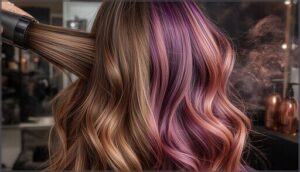
Heat styling is one of the fastest ways to destroy your freshly colored hair. Those hot tools might give you the look you want, but they’re also stripping moisture and fading your color with every pass.
Let’s break down how to protect your hair when you can’t skip the heat.
Importance of Heat Protectant Sprays
You absolutely need heat protection before grabbing that flat iron or curling wand. A quality heat protectant spray creates a barrier on your hair shaft that cuts moisture loss and reduces cuticle damage by up to 50%. Silicone-based formulations work best, distributing heat evenly while preventing breakage.
This simple step preserves your color for an extra 2–4 weeks, keeping those vibrant tones from fading prematurely.
Air Drying Vs. Blow Drying Colored Hair
Air drying wins for color-treated hair—hands down. It slashes heat damage and keeps pigment locked in up to 50% better than blow drying.
High heat accelerates color fade by 15–30%, especially on vivid shades. If you must blow dry, use thermal protection and a cool-shot finish.
Better yet, towel-dry to 80% and let natural drying take over. Your color will thank you.
Shield Hair From Sun and Environmental Stress

Your hair color didn’t come cheap, so don’t let the sun and pollution strip it away. UV rays and environmental stressors can fade your vibrant hue faster than you think, leaving you with dull, brassy results.
Here’s how to keep your color locked in, no matter what the world throws at it.
Using UV Protection for Hair
Your color-treated hair deserves the same photoprotection tips you’d give your skin. UV filters in hair sunscreen shield pigment from breaking down under direct sunlight—studies show they maintain color stability far better than unprotected strands.
Look for anti-fade products with broad-spectrum coverage, and reapply every few hours outdoors. Pairing colorsafe products with a wide-brimmed hat amplifies hair protection, keeping your hair health and vibrancy intact longer.
Avoiding Chlorine and Pollutants
While UV matters, chlorine damage and pollutant effects pose equally serious threats to color-treated hair. Pool chemicals react with pigment molecules, stripping vibrancy within days—that’s environmental stress your strands can’t afford.
Build strong hair barriers before swimming:
- Saturate hair with fresh water to limit chlorine absorption
- Apply protective oil or leave-in conditioner as a shield
- Wear a swim cap for maximum color protection
- Rinse immediately after exposure using color-safe products
- Deep condition weekly to counteract hair damage prevention needs
Your hair health depends on proactive hair care against pollutants.
Maintain a Healthy Diet for Hair Strength

Your hair color is only as strong as the body feeding it. What you eat directly impacts how well your strands hold onto that vibrant hue and resist breakage.
Your hair color’s strength starts with what you eat—nutrition directly impacts vibrancy and breakage resistance
Let’s break down the nutrients your color-treated hair craves and why water matters more than you think.
Essential Vitamins and Minerals
Your hair’s strength starts from within, and mineral deficiency can sabotage your color faster than you think.
Feed your follicles vitamin A for scalp health, vitamin C to fight oxidative stress from dye processing, and vitamin E for moisture retention. Don’t overlook biotin and omega-3 fatty acids—they support keratin formation and reduce inflammation.
Hair supplements bridge dietary gaps, ensuring nutrient balance drives vibrant, resilient hair growth and damage prevention.
Hydration and Its Impact on Hair Health
Water balance transforms how your colored hair holds pigment and resists breakage—dehydration creates a cascade of damage.
To maintain optimal hair health, consider the following steps:
- Drink eight glasses daily to support moisture levels from within and maintain cuticle health.
- Monitor hair porosity to choose the right hydration products for your strand structure.
- Increase intake during heat styling to offset water loss and preserve hair health.
- Track hydration’s effect on your hair’s shine and color vibrancy.
Schedule Regular Trims to Prevent Split Ends
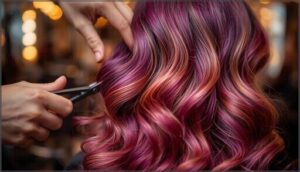
You might think trims are just about style, but they’re one of your biggest allies in keeping colored hair vibrant and healthy. Split ends travel up the hair shaft like a bad rumor, making your color look dull and damaged no matter how much product you use.
Here’s what you need to know about timing your trims and recognizing when your hair’s begging for a cut.
How Trims Help Color Last Longer
Think of your ends as gatekeepers—when they’re ragged, your color-treated hair loses vibrancy fast. Regular trims every six to eight weeks slash split end prevention needs while boosting color retention by up to 40%. Here’s how trim benefits protect your investment:
| Trim Impact | What It Does | Color Payoff |
|---|---|---|
| Damage Reduction | Stops splits from creeping upward | Fewer dull patches |
| Hair Porosity Control | Balances moisture absorption | Even dye hold |
| Mechanical Protection | Less breakage during styling | Extended hair color life |
| Cuticle Smoothing | Reflects light uniformly | Enhanced saturation |
Healthier ends mean your hair growth stays strong and your shade stays bold between salon sessions.
Signs It’s Time for a Haircut
Your strands won’t send you a calendar reminder—they’ll show you. Watch for splits climbing beyond 1 cm from your tips, signaling it’s time to book that appointment.
Here’s what screams “rescue me”:
- Tangling intensifies after every wash despite careful brushing
- Your curl pattern looks choppy and uneven from breakage
- Shedding exceeds 100 hairs daily, pointing to hair damage prevention needs
- Ends feel weighted and lifeless, killing your hair texture bounce
- Frizz control products stop working their magic
Catching these early keeps colored hair thriving.
Refresh Color Between Salon Visits
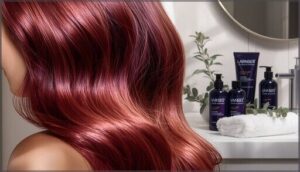
You don’t have to wait months for your next salon appointment to keep your color looking fresh. There are smart ways to maintain vibrancy at home without risking damage or uneven tones.
Let’s look at two key strategies that give you control between professional visits.
Color-Depositing Conditioners and Masks
You’ve got power between washes with color-depositing conditioners and masks designed for color refresh. These products deliver pigment deposit straight to your hair shaft, keeping vibrant tones locked in longer.
Use conditioners weekly for lighter touch-ups on color-treated hair, then rotate in masks every few weeks for deeper color maintenance. Match your shade carefully during product selection to avoid unwanted tones on color-treated hair.
When to Consult a Professional Stylist
Dramatic color changes demand a hair stylist’s expertise before you commit. Book a color consultation at your hair salon 1-2 weeks ahead for thorough hair assessment and damage evaluation.
Your stylist guidance includes strand tests, precolor planning, and a tailored hair care routine.
Skip this step if you’re seeing breakage, past allergic reactions, or scalp sensitivity—your colored hair deserves professional hair care tips first.
Frequently Asked Questions (FAQs)
What is the best way to wash colored hair?
Don’t let your color treated hair go down the drain. Use a color safe shampoo, wash with cool water, and limit shampooing to 2–3 times weekly for best color preservation.
What water temperature is best for colored hair?
Lukewarm water around 36–38°C protects color-treated hair by limiting cuticle lifting and thermal damage. Cool final rinses seal the cuticle, reducing color fade. Hot water strips pigment fast, especially in porous, bleached strands.
Using the right hair care techniques can make a significant difference in maintaining healthy and vibrant colored hair.
What is the best way to protect colored hair from heat?
The best defense is a strategic offense: always apply a heat protectant before styling.
Shield your color with thermal products, lower tool temps to 180°C, and air dry whenever possible to prevent fade.
What are the best sulfate-free products for colored hair?
You’ll want sulfate-free shampoo and conditioner designed for color-treated hair—Olaplex No.4 and No.5, Pureology Hydrate, or Redken Colour Extend Magnetics all deliver serious color safety while keeping your shade locked in tight.
How often should I trim split ends?
You should trim split ends every six to eight weeks to keep colored hair vibrant and strong.
More frequent cuts—every four to six weeks—help if you’re battling serious damage or breakage.
Can I swim with freshly colored hair?
Diving into chlorine right after coloring is practically asking for disaster. Wait at least 72 hours before swimming to prevent rapid color fade.
Use a swim cap, rinse beforehand, and follow with sulfate-free post-swim care for proper hair color protection.
If you’re coloring more often, waiting closer to 6 to 8 weeks between hair dye sessions gives your strands real time to repair before facing the pool again.
Does hair texture change after coloring treatments?
Yes, color treatments can shift your hair texture by altering cuticle change and hair porosity.
Structural impact from color damage varies—permanent dyes rough up strands more, though conditioning often aids hair texture improvement for colored hair.
How often should I use clarifying shampoo?
For color-treated hair, use clarifying shampoo every four to six weeks to remove product buildup without stripping your vibrant shade.
Hard water or heavy styling products might push you toward the shorter end of that range.
Will hard water affect my hair color?
Absolutely. Hard water’s mineral buildup clings to your hair shaft, causing color fading and dullness over time. Fight back with a chelating shampoo or shower filter to protect your color-treated hair’s vibrancy.
If you’re unsure whether prepping your strands matters, this guide on whether to condition hair before coloring clears up the confusion and helps your color take evenly.
Can I color my hair during pregnancy?
Like stepping into uncharted territory, coloring hair during pregnancy requires caution. Most professionals recommend waiting until after the first trimester, choosing ammonia-free formulas, ensuring proper ventilation, and consulting your obstetrician about chemical exposure risks.
Conclusion
Your color is like a slow-burning flame—it doesn’t extinguish overnight, but every careless habit fans it closer to ash.
Now you know how to look after your coloured hair and keep it luscious for longer: skip the scorching water, ditch the sulfates, and treat each strand like the investment it is.
Stop waiting for fade to happen. Take control of your routine, protect what you paid for, and let your color burn bright.