This site is supported by our readers. We may earn a commission, at no cost to you, if you purchase through links.
Your beard stops being an asset the moment it crosses the line from sharp to scruffy. That line sits somewhere between two days of stubble and a full mountain man mane—the short beard zone where most men live but few truly master.
The difference between looking polished and looking like you gave up shows up in millimeters. Your jawline either gets enhanced or buried. Your professional image either strengthens or suffers.
Learning how to maintain a short beard means controlling those millimeters with precision. The right tools, consistent technique, and a solid daily routine transform facial hair from an afterthought into a defining feature that works for you instead of against you.
Table Of Contents
- Key Takeaways
- What Defines a Short Beard
- Essential Tools for Short Beard Maintenance
- How to Wash Your Short Beard Properly
- Daily Care Routine for Short Beards
- Top 5 Products for Short Beard Care
- How to Trim and Shape Short Beards
- Solving Common Short Beard Problems
- Beard Oil and Balm Benefits
- Maintaining Stubble and Very Short Beards
- Growing and Maintaining a Short Boxed Beard
- Frequently Asked Questions (FAQs)
- How to maintain a very short beard?
- How to maintain a stubble beard?
- Does beard oil do anything for a short beard?
- How often should I trim my short beard?
- Should I use a barber or trimmer to maintain my short beard?
- What are the best products to use for short beard maintenance?
- Are there any tips for styling a short beard?
- Does everyone suit a short beard style?
- Can I dye my short beard at home?
- How does diet affect short beard growth?
- Conclusion
Key Takeaways
- A short beard demands daily discipline with the right tools—clippers for bulk, trimmers for edges, brushes for oil distribution, and scissors for precision work around your mustache.
- Wash your beard 2-4 times weekly with sulfate-free formulas at 100-105°F, then lock in moisture with beard oil applied to damp hair and skin to prevent dryness and flaking.
- Trim every 1-2 weeks using guards between 1-14mm depending on your style, defining sharp cheek lines and a neckline one to two fingers above your Adam’s apple for clean definition.
- Apply lightweight beard oil daily to soften hair and hydrate skin underneath, reserving beard balm only for styling hold since short beards absorb products faster than longer growth.
What Defines a Short Beard
A short beard sits under two inches in length and stays close to your face with clear definition. You’ll recognize it as intentionally maintained facial hair rather than weekend stubble or a full bush.
Proper trimming and shaping techniques help maintain its groomed appearance and prevent it from looking patchy or uneven—here’s how to shape a short beard for a clean, defined look.
Understanding the fundamentals of length, popular styles, and specific approaches like the boxed beard gives you control over your look.
Length and Style Characteristics
A short beard sits between 1 and 14 millimeters, giving you a clean, professional look that demands less commitment than a full beard. Your facial hair texture and growth patterns dictate how dense it appears at different lengths.
Most men find 3 to 8 millimeters highlights the jawline best. Proper beard maintenance requires trimming every 2 to 7 days to preserve your chosen style options and keep lines sharp.
Popular Short Beard Styles
Your facial hair can take several directions once you settle on a length.
Short stubble at 1 to 3 millimeters delivers a clean daytime look that pairs with any face shape.
The corporate beard sits at 4 to 6 millimeters with crisp cheek and neck lines for office environments.
A boxed beard uses defined rectangular edges and 6 to 9 millimeters of growth for bold style trends.
For detailed inspiration and maintenance, review these short beard style options.
Short Boxed Beard Overview
A boxed beard creates a rectangular silhouette through sharp cheek lines and a straight bottom edge. You’ll maintain 1 to 3 millimeters on the cheeks and 4 to 8 millimeters on the chin for contrast.
Edge maintenance demands weekly shaving to preserve crisp borders. Beard symmetry matters—both sides mirror for balanced facial hair.
Beard density on your chin determines the box depth, while proper trimming techniques keep boxed styles from feathering along defined edges.
Essential Tools for Short Beard Maintenance

You can’t maintain a short beard without the right tools in your arsenal. Each tool plays a specific purpose, from controlling length to perfecting edges and keeping everything healthy.
Here’s what you need to master your beard maintenance routine.
Clippers Vs Trimmers for Length Control
You need both clippers and trimmers for complete short beard maintenance. Clippers handle bulk removal and guard length adjustments from 1 to 25 millimeters, while trimmer blades excel at edging and clean lines.
Motor performance matters—clippers offer higher wattage for thick hair, but trimmers deliver precision around your jawline. Use clippers for your weekly trimming schedule, then switch to your beard trimmer for sharp definition. Master both cutting techniques for professional results.
Scissors for Precision Detailing
Precision cutting demands fine-pointed blades under 0.5 mm thick. Look for convex blade materials that deliver razor-sharp edges and adjustable tension for tight control. Ergonomic handle designs with offset grips reduce wrist strain during detailed beard trimming around your mustache.
Maintain sharpness through professional honing when edges dull. These tools enhance your short beard maintenance beyond basic grooming tips—they’re essential for your weekly trimming schedule.
Brushes and Combs for Daily Care
Boar bristle brushes distribute natural oils along your beard to soften fibers and reduce frizz. Choose a boar bristle brush with stiff bristles that resist bending on coarse hair.
Wooden combs with wide tooth spacing minimize snagging during hair detangling. For beard styling precision, select fine tooth combs with 15 to 25 teeth.
These grooming tools and products form the foundation of effective beard care routines.
How to Wash Your Short Beard Properly

Washing your short beard isn’t complicated, but doing it wrong can leave you with dry skin, irritation, and a scruffy appearance.
The right approach keeps your beard clean without stripping away the natural oils that protect your skin and hair. Here’s what you need to know to wash your short beard the right way.
Choosing The Right Beard Wash
Your beard wash types matter more than you think. Choose formulas with jojoba or argan oil for skin compatibility and moisture without grease.
Check ingredient labels for sulfate-free, pH-balanced options that match your skin type—dry skin needs shea butter, oily skin requires lighter cleansers. Fragrance options range from essential oils to fragrance-free for sensitive faces.
Cleansing power should lift dirt without stripping natural oils, supporting your grooming routine and beard maintenance and care goals. For more details on natural ingredient recommendations, consult thorough beard wash guides.
Optimal Washing Frequency
Your skin type and lifestyle dictate washing schedules—aim for 2 to 4 times weekly to keep beard hygiene in check without drying out your face.
Oily skin types handle daily washes better, while dry skin needs every 3 to 4 days. Heavy workouts or water quality issues push frequency up.
Balance your grooming routine with beard oils after washing to lock in moisture and support solid beard maintenance and care.
Proper Water Temperature and Technique
Hot water strips natural oils and triggers skin irritation around hair follicles—keep temperatures between 100 and 105 Fahrenheit during facial cleansing. Your beard washing technique matters as much as the beard wash itself for proper beard maintenance.
- Rinse with lukewarm water to loosen dirt before applying product
- Massage beard wash in circular motions for 15 to 20 seconds
- Use warm water during washing to enhance cleansing efficiency
- Switch to cool water for final rinse to seal hair cuticles
- Pat dry gently with a microfiber towel to prevent breakage
Follow these beard care tips alongside your trimming schedule for ideal results.
Daily Care Routine for Short Beards

Your short beard won’t maintain itself. A consistent daily routine protects your investment and keeps both hair and skin in top condition.
Follow these three essential steps to lock in your style and prevent the most common grooming problems.
Morning Brushing and Oil Application
Start your daily maintenance with a soft bristle beard brush for 30 to 60 seconds to distribute natural oils and control bedhead.
Follow with beard oil when your facial hair is clean and slightly damp—use three to four drops for very short beards, warming the bottle in your hands first. Brush the oil through to coat each hair shaft, then wait one to two minutes before styling.
Moisturizing for Skin Health
After applying beard oil, lock in skin hydration with a lightweight moisturizer formulated for facial care.
Target the skin beneath your beard with humectant benefits from glycerin to draw water into surface layers, then seal moisture with occlusives to restore lipid balance.
Use fragrance-free formulas daily if you have dry skin, or every other day for oily types—this step prevents flaking and promotes long-term skin health.
Evening Maintenance Steps
Before bed, seal in moisture with a light application of beard oil to reduce overnight dryness and support your nightly beard care routine. Gently brush to distribute the oil evenly, preventing tangles while maximizing beard oil benefits.
Skip heavy balms to avoid greasy pillowcases and clogged pores. Sleep on a clean pillowcase for proper sleep hygiene—this evening routine tips approach sets up easier morning prep and consistent beard maintenance.
Top 5 Products for Short Beard Care
The right products make short beard maintenance easier and more effective. You don’t need a cabinet full of gear, just the essentials that actually work.
Here are five proven tools and products that deliver professional results at home.
1. Wahl Cordless Hair Clipper
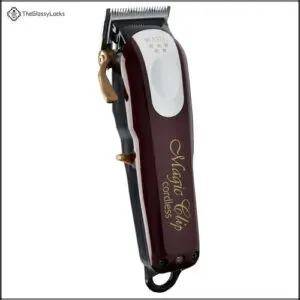
The Wahl Cordless Magic Clip delivers professional-grade power for short beard maintenance. Its 2161 Stagger-Tooth Blade cuts clean fades without pulling, while the adjustable taper lever lets you dial in precise lengths.
You’ll get 100+ minutes of cordless runtime per charge—enough for multiple grooming sessions. At 10 ounces, it won’t fatigue your hand during detailed work. The kit includes eight attachment guards, blade oil, and a cleaning brush.
This clipper manages thick facial hair without bogging down, making it ideal for weekly trimming schedules.
| Best For | Barbers and home users who want professional-quality fades and trims without dealing with cords getting in the way. |
|---|---|
| Primary Use | Professional hair/beard trimming |
| Weight | 16 ounces |
| Material | Metal/plastic construction |
| Power Source | Cordless rechargeable |
| Maintenance | Includes cleaning brush/oil |
| Price Range | Premium professional grade |
| Additional Features |
|
- Runs for 100 minutes on a single charge, so you can knock out multiple cuts before plugging it back in
- The stagger-tooth blade handles thick hair without snagging or pulling
- Lightweight at 10 ounces, which means less hand fatigue during detailed fade work
- The taper lever doesn’t have set click positions, so getting the exact same length twice can be tricky
- No charging dock included—you’ll need to store the transformer separately
- Pricier than similar clippers on the market
2. Panasonic Cordless Beard Trimmer
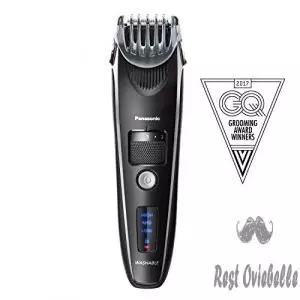
The Panasonic ER-GB42 gives you 19 length settings from 0.5mm to 20mm with a single dial. Its 45-degree blade angle cuts sharp lines on your cheeks and neckline without snagging through dense hair.
You’ll get up to 60 minutes of cordless runtime and can use it while charging. The stainless-steel blades are hypoallergenic and fully washable under running water. At 0.18 pounds, it won’t strain your wrist during detailed mustache work.
The quick-adjust dial eliminates guard changes between lengths.
| Best For | Anyone who wants precise control over their beard length without swapping guards, especially if you travel internationally or want a trimmer that works wet or dry. |
|---|---|
| Primary Use | Beard and mustache trimming |
| Weight | 0.18 pounds |
| Material | Stainless-steel blades |
| Power Source | Cordless/corded hybrid |
| Maintenance | 100% washable |
| Price Range | Premium consumer grade |
| Additional Features |
|
- 19 length settings on a single dial means you can fine-tune your look without fumbling with attachments
- Fully washable design makes cleanup quick—just rinse under the tap
- Works cordless for up to 60 minutes or plugged in, so you’re never stuck waiting for a charge
- Higher price point compared to basic trimmers might not fit every budget
- Some users report the blades can catch or pull on thicker beards
- Battery life can fall short of the advertised 60 minutes depending on usage
3. Muhle Beard And Hair Scissors
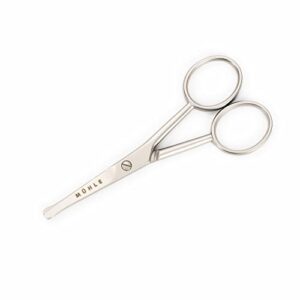
The Muhle Beard And Hair Scissors deliver surgical precision for mustache edges and stray whiskers that clippers can’t reach. Their 4-inch matte stainless steel blades feature rounded tips that won’t nick your skin during close work around your lips and nose.
You’ll cut through coarse beard hair cleanly without tugging, thanks to ground edges that stay sharp through daily use. The ergonomic grips reduce hand fatigue during detailed sessions. Rinse the blades after each use and dry them completely to prevent corrosion.
| Best For | Beardsmen who need precise control for detailed mustache shaping and cleaning up stray hairs that electric trimmers miss. |
|---|---|
| Primary Use | Manual facial hair trimming |
| Weight | 2.39 ounces |
| Material | Stainless steel |
| Power Source | Manual operation |
| Maintenance | Requires regular cleaning |
| Price Range | Budget-friendly |
| Additional Features |
|
- Rounded tips prevent accidental nicks during close trimming around sensitive areas
- Sharp stainless steel blades cut cleanly through coarse hair without pulling
- Compact 4-inch size makes them easy to store and handle for detailed work
- Manual cutting takes more time and effort than electric trimmers
- May struggle with very thick or dense facial hair
- Requires regular cleaning and thorough drying to prevent rust
4. Diane Boar Bristle Military Wave Brush
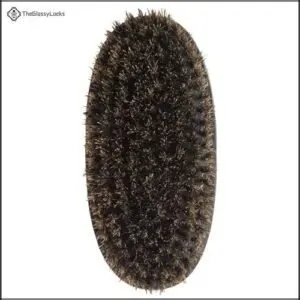
The Diane Boar Bristle Military Wave Brush transforms your short beard routine with 100 percent natural bristles that lift and distribute scalp oils evenly through facial hair. You’ll eliminate shedding along your edges while the 9-row design covers multiple strands per stroke.
The varnished wood handle fits your palm perfectly for quick daily sessions without hand strain. Brush your beard each morning to reduce itchiness and add natural shine. Clean trapped hairs from bristles after use and let the brush air dry bristle-side up.
| Best For | People with short beards or medium to coarse hair who want to distribute natural oils, reduce itchiness, and add shine while creating 360 wave styles. |
|---|---|
| Primary Use | Hair brushing and styling |
| Weight | Not specified |
| Material | Boar bristles/wood |
| Power Source | Manual operation |
| Maintenance | Low maintenance |
| Price Range | Economy |
| Additional Features |
|
- 100% natural boar bristles spread scalp oils evenly through facial hair for healthier-looking beards
- 9-row design covers more hair per stroke, making grooming faster and more efficient
- Comfortable wood handle works well for daily use without causing hand fatigue
- Bristles may feel too soft for very thick beards or too stiff for sensitive skin
- Not ideal for very fine or thin hair types
- Some users experience bristle shedding despite advanced implantation technology
5. Jack Black Beard Oil For Men
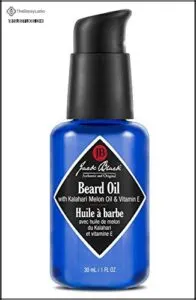
Jack Black Beard Oil delivers certified organic natural oils like marula and plum to soften dry facial hair while preventing itchy skin beneath your beard. You’ll apply just a few drops to damp facial hair after washing.
The dermatologist-tested formula absorbs quickly without greasy residue and contains vitamin E and carrot extract to protect against environmental damage. At $28 for 30 milliliters, this paraben-free oil works best when you rub it between your palms and massage it through your beard to the skin.
| Best For | Men with dry, brittle beards who want a certified organic oil that softens facial hair and prevents itchy skin without leaving a greasy feel. |
|---|---|
| Primary Use | Beard conditioning and care |
| Weight | Not specified |
| Material | Organic natural oils |
| Power Source | No power required |
| Maintenance | Direct application |
| Price Range | $28 |
| Additional Features |
|
- Made with certified organic ingredients like plum oil, marula oil, and kalahari melon oil, free from parabens and synthetic fragrances
- Absorbs quickly into both beard and skin, reducing itchiness while adding healthy shine and control
- Dermatologist-tested formula with antioxidants like vitamin E and carrot extract to protect against environmental damage
- At $28 for 30 milliliters, it’s pricier than many other beard oils available
- May not suit men with sensitive skin or allergies to specific natural ingredients in the formula
- Not recommended if you have open cuts or nicks, as natural ingredients may interfere with proper healing
How to Trim and Shape Short Beards
Trimming your short beard isn’t about randomly cutting hair—it’s about creating sharp lines that give you complete control over your look.
The right approach transforms patchy growth into a defined style that draws admiration. Master these fundamental techniques to maintain a beard that looks intentional, not accidental.
Master trimming techniques to transform patchy growth into a sharp, intentional style that commands respect
Setting The Right Guard Length
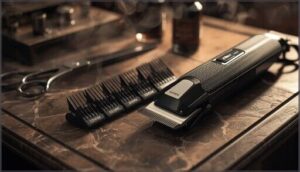
Your beard trimmer’s guard length determines everything—start with a longer setting and work down to avoid cutting too short. For a classic short beard, use 4 to 10 mm guards depending on density and face shape.
Trim with the grain first, then lightly against it to catch strays. Adjust clipper settings between zones: shorter on cheeks, longer on the chin for natural contour and sharp beard maintenance.
Defining Clean Neckline and Cheek Lines

Your neckline sits one to two fingers above the Adam’s apple—mark center first, then mirror the curve toward each ear.
For cheek lines, follow your natural growth edge or drop lower for a boxed look. Use a detail trimmer for precision beard edging, check both sides in multiple mirrors for facial symmetry, and shave below the neckline for sharp jawline definition.
Shaping Around The Mustache
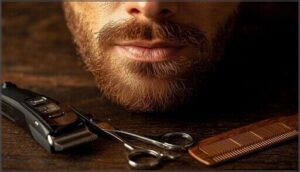
Your mustache can make or break your short beard. Comb hairs straight down, then trim along your upper lip’s natural curve—leave a narrow strip roughly the width of your nose to keep the mouth clear.
Use small scissors for precision work on stray hairs while a detail trimmer takes care of the basic lip line. Check both sides regularly for beard symmetry.
Weekly Trimming Schedule

Once you’ve shaped your mustache, lock in a weekly routine to keep everything sharp. Most short beards stay neat with one full trim every seven days, though faster growth may push you to every five.
Your weekly session should cover three key areas:
- Full length pass with a guarded trimmer at your chosen setting
- Neckline cleanup to prevent chest hair blending
- Cheek and edge maintenance for crisp, symmetrical lines
This beard care rhythm prevents that overgrown, puffy look.
Solving Common Short Beard Problems
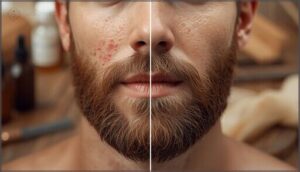
Even well-maintained short beards can develop issues that undermine your polished look.
You don’t need to tolerate patchiness, itching, or irritation when effective solutions exist. Address these common problems with targeted techniques that restore your beard’s health and appearance.
Managing Patchy Growth Areas
Your growth patterns don’t define your beard—how you work with them does. Target patchy beard fixes by choosing chin-focused styles like a goatee that highlight full areas.
Use beard fading techniques to blend thin spots into sharper edges. Daily brushing redistributes hair over gaps, while proper beard care routine with oils keeps strands flexible enough to cover weak zones.
Support facial hair growth with protein-rich foods and hydration for long-term beard growth.
Relieving Itchiness and Irritation
Itch relief starts beneath your beard, not on it. Apply 2 to 3 drops of beard oil directly to skin while damp after showering—jojoba and argan formulations absorb fast without residue. Exfoliate once weekly with gentle scrubs to lift dead skin causing beardruff, then massage in lightweight skin care products. Natural oils in beard balms soothe irritation remedies while taming stubborn hairs.
- Aloe vera gel calms inflamed areas when left on for 15 to 20 minutes
- Tea tree-infused products fight bacteria triggering persistent itch
- Boar bristle brushing distributes sebum that prevents dry flaking
- Shea butter balms deliver deep nourishment to raw skin patches
Preventing Ingrown Hairs
Sharp trimming techniques stop ingrown hair causes before they start. Shave with the grain using single-pass strokes and light pressure—your razor shouldn’t scrape skin bare. Switch to guarded clippers at 1 to 2 millimeters for curly hair solutions that leave room for hairs to exit straight.
| Preventive Measures | Frequency | Skin Type Factors |
|---|---|---|
| Beard exfoliation with salicylic acid wash | 2-3 times weekly | Essential for coarse or curly facial hair care and grooming |
| Apply clarifying beard oil after trimming | Daily | Softens emerging hairs on thick or sensitive skin |
| Use electric shaver instead of multi-blade razors | Every other day | Reduces pseudofolliculitis barbae risk |
| Gentle skin taut hold during shaving | Each shave | Prevents cut hairs retracting below surface |
Exfoliate twice weekly around your neckline where friction meets beard growth—dead cells trap new hairs underneath. Targeted beard oils with shea butter keep strands supple so they grow out instead of curving back. Beard maintenance isn’t about flawlessness; it’s about smart grooming advice that works with your beard health, not against it.
Treating Dryness and Flaking
Dry skin care starts with lightweight moisturizer applied to damp skin right after washing—trap water before beard oil seals it in.
Beard hydration demands gentle exfoliation once weekly to lift scales without damaging your barrier. Fight beardruff with pyrithione zinc washes two to three times per week, then follow with beard conditioner and beard balm for flake prevention that actually lasts.
Beard Oil and Balm Benefits

Beard oil and beard balm transform short facial hair from rough stubble into a well-groomed statement.
These products work differently on shorter beards than longer ones, so you need to know which one to reach for and when. Master the application techniques below to enhance softness, control, and healthy growth.
How Beard Oil Works on Short Hair
Beard oil benefits short beards by penetrating the skin beneath to deliver hydration and reduce itch. Lightweight formulas like jojoba coat each hair strand, smoothing cuticles for hair softening and a natural beard shine.
Oil absorption occurs quickly on shorter growth, preventing dryness without clogging pores. This essential beard care step improves both beard maintenance and comfort, making your short beard easier to manage during each beard trim.
When to Use Beard Balm
Apply beard balm when your short beard needs moisture and light hold simultaneously. Beard balm benefits include hydration for dry skin solutions and styling control for neat beard maintenance.
Use beard balm after washing or when flyaways disrupt your beard trimming results. Balm application tips recommend warming a small amount between palms before distributing through your short beard. These beard hydration methods and balm hold techniques keep your short beard comfortable and shaped throughout the day.
Application Techniques for Maximum Effect
Your facial hair absorbs styling products best when damp. Warm three to five drops of beard oil between your palms before working it into your beard from roots to tips.
For beard balm, use a pea-sized amount and distribute evenly using downward strokes for edge control. This beard layering method enhances trimming results while supporting daily beard maintenance tips and proper beard trimming techniques.
Maintaining Stubble and Very Short Beards

Stubble and very short beards demand a different approach than longer styles.
You can’t rely on the same products or trimming schedules that work for fuller beards. Here’s what you need to know to keep that razor-sharp stubble looking intentional.
Ideal Length for Stubble Maintenance
Target 1.5 to 2 millimeters to keep your stubble looking sharp and intentional. This length creates uniform facial hair density while maintaining clean growth patterns across your jawline.
Most men find this sweet spot minimizes skin irritation and provides maximum definition. Use a quality trimmer with a 2-millimeter guard for consistent beard maintenance.
Regular trimming at this length prevents patchy areas and keeps your short beard looking deliberate rather than unkempt.
Daily Vs Weekly Trimming Approach
Choose between daily touch-ups and weekly trims based on how fast your beard growth accelerates. Daily maintenance keeps edges crisp with quick passes using shorter guard settings, preventing bulk from building up overnight.
Weekly trimming tackles larger irregularities and resets uneven growth patterns more thoroughly.
- Daily sessions take less time per pass but demand consistent habit-building
- Weekly beard trim removes split ends and refines neckline definition more effectively
- Combining both approaches—light daily care plus deeper weekly sessions—yields the sharpest short beard results
Product Needs for Minimal Length
Once your trimming approach locks in, match products to your actual hair coverage. Lightweight hydrators like beard oil soften stubble without greasing skin directly underneath.
Gentle cleansers and beard wash strip less oil than bar soap, keeping short growth flexible. Non comedogenic facial moisturizers double as under-beard care when length stays minimal. Skip beard balm—trimmers and fast-absorbing oils handle stubble better than thick waxes designed for longer beard care.
Growing and Maintaining a Short Boxed Beard

The short boxed beard stands out with its sharp angles and defined edges.
Growing one takes patience and precision from the first week of growth to daily upkeep.
Master these four essentials to build a beard that turns heads and stays consistently sharp.
Achieving Initial Growth Length
Your beard genetics and hormone balance drive the first 4 to 6 weeks of the growth phase, when hair follicles start producing visible length. During this time, each follicle on your face activates independently, converting fine hairs into coarser facial hair grooming requires.
Proper skin preparation through gentle exfoliation and hydration fosters healthy beard growth while beard care products minimize early shedding during beard maintenance.
Nutrition and Hydration for Beard Health
Your follicles need fuel from within to support beard growth and facial hair strength. Hydration tips start with 2 to 3 liters of water daily to prevent flaking and itch under your beard.
Healthy fats from omega benefits like fatty fish boost hair growth and shine, while skin nutrition through biotin-rich foods and beard supplements strengthens each strand for exceptional beard health and beard care results.
Trimming Techniques for Sharp Lines
Sharp lines don’t happen by accident. Master beard shaping with precision cutting using these edge trimming moves.
- Set your guard between 2.0 and 3.0 mm for uniform density and crisp facial contouring
- Define a curved neckline 1.5 to 2.5 inches above your Adam’s apple
- Angle cheek lines downward for a clean, slim finish
- Keep skin taut while trimming to prevent wobbly edges
- Use slow strokes with a precision trimmer for line definition that pops
Avoiding Common Styling Mistakes
Most styling errors wreck beard symmetry before you notice. Master these grooming essentials to maintain facial harmony and keep your short beard sharp.
| Styling Errors to Avoid | Trimming Tips for Correction |
|---|---|
| Shaving neckline to jawbone | Set line where head meets neck |
| Trimming entire beard wet | Always work with dry hair first |
| Carving cheek line too low | Keep natural growth, remove strays only |
| Using one guard length everywhere | Keep cheeks 1–2 mm shorter than jawline |
| Overlapping oil and heavy balm | Use 3–4 drops oil only on short beards |
Smart beard shaping means understanding where trimming mistakes happen and how beard maintenance adjusts with your natural contours.
Frequently Asked Questions (FAQs)
How to maintain a very short beard?
Think of your face as a canvas that demands precision every single day.
Maintaining a very short beard requires trimming techniques with adjustable guards set between 5 to 3 millimeters for consistent beard length control.
How to maintain a stubble beard?
Keep your stubble length at 2-3 mm using a quality trimmer with guard settings between 4mm and 2mm.
Trim every 2-3 weeks, define your neckline and cheek lines, and moisturize daily for healthy skin underneath.
Does beard oil do anything for a short beard?
Beard oil transforms dry whiskers into soft, manageable facial hair while hydrating the skin underneath.
Apply 2-4 drops daily to reduce itchiness, minimize breakage, and create the appearance of fuller growth.
How often should I trim my short beard?
You should trim your short beard every 1 to 2 weeks to maintain clean lines and prevent overgrowth. Faster-growing areas like cheeks may need weekly attention to keep sharp edges consistent.
Should I use a barber or trimmer to maintain my short beard?
You control your schedule with a trimmer at home while barbers deliver sharper lines using professional clippers.
Trimmer precision improves with practice, reducing grooming frequency costs and letting you fix beard styling mistakes immediately.
What are the best products to use for short beard maintenance?
You’ll need quality grooming tools and facial products to keep short beards sharp.
Invest in precision trimmers, boar bristle brushes, hydrating beard wash, lightweight beard oil, and styling aids like beard balm for hold.
Are there any tips for styling a short beard?
Start by brushing your short beard downward to train growth direction.
Apply lightweight beard oil for moisture, then use styling balm sparingly to hold shape without stiffness while maintaining clean cheek and necklines.
Does everyone suit a short beard style?
Not everyone suits a short beard equally. Face shape analysis, skin type considerations, and facial structure influence how beard styles appear.
Hair texture impact and beard style personalization help determine your best facial hair fit.
Can I dye my short beard at home?
Yes, you can dye your beard at home using temporary, permanent, or natural dyes.
Patch test 24-48 hours before application, follow manufacturer instructions carefully, and apply barrier cream to prevent skin staining.
How does diet affect short beard growth?
You’re what you eat—your beard proves it. Protein intake, vitamin balance, mineral supplements, and healthy fats support hormone regulation that drives beard growth, making nutrition essential for men’s grooming and proper beard care.
Conclusion
Your beard doesn’t care about your grooming goals. It’ll grow wild, patchy, and uneven unless you force discipline into the equation. Learning how to maintain a short beard means rejecting the chaos—committing to the tools, the routine, and the precision that separate sharp from sloppy.
Your face becomes the canvas. Your consistency determines whether that canvas displays mastery or surrender. Control the millimeters. Own the outcome. Make your beard work for you.
- https://www.youtube.com/watch?v=-ikl4-eO2Ho
- https://www.styleseat.com/blog/haircut-number-system/
- https://us.dollarshaveclub.com/blogs/club-chronicles/what-clipper-guard-size-should-i-be-using-to-trim-my-beard
- https://www.wilkinsonsword.com/blogs/mens/what-is-the-best-stubble-length-for-your-face-shape
- https://voltgrooming.com/what-beard-length-is-best-for-you-2024-guide/