
This site is supported by our readers. We may earn a commission, at no cost to you, if you purchase through links.
Your thick hair looks stunning when it cooperates, but fighting through a 45-minute blow dry that leaves your arms aching and your strands half-damp is nobody’s idea of a good time. Most people treat thick hair like it’s just ‘more hair,’ cranking up the heat and hoping for the best—then wondering why they end up with frizz, flatness at the roots, or that weird half-straight, half-wavy texture.
The truth is, thick hair needs a completely different game plan, from the products you apply on soaking-wet strands to the exact angle you point that nozzle. Master the right sequence, and you’ll cut your drying time in half while getting salon-level volume and smoothness that actually lasts.
Table Of Contents
Key Takeaways
- Thick hair requires a complete system overhaul—from sulfate-free shampoo and microfiber towel blotting to heat protectant application on 70-80% dry strands—because skipping prep work guarantees frizz and wasted effort.
- Your blow dryer needs 1875-2000+ watts with a concentrator nozzle, paired with a vented round brush and strategic sectioning, to cut drying time in half while building salon-level volume that actually holds.
- Always blow dry bottom layers first with airflow directed root-to-tip along the hair shaft, then lock in lift with the cool shot for 5-15 seconds per section to seal cuticles and prevent immediate style collapse.
- Limit heat styling to 2-3 times weekly at the lowest effective temperature, sleep on satin pillowcases, and choose lightweight volumizing products that won’t flatten roots or create greasy buildup.
Essential Prep Before Blow Drying Thick Hair
Your thick hair won’t cooperate with heat styling if you skip the groundwork. The right prep work makes the difference between a smooth blowout and a frizzy mess that fights you every step of the way.
Start with freshly washed hair and apply a heat protectant evenly—this prep routine for smooth, long-lasting results works the same way your styling foundation does.
Here’s what you need to lock down before you even pick up that dryer.
Start with the basics: voltage compatibility, dual settings, and whether the model you’re eyeing actually shows up on lists of top-rated travel hair dryers that frequent flyers trust.
Choosing The Right Shampoo and Conditioner
Your hair care starts at the sink, where choosing sulfate-free shampoo and moisturizing conditioner transforms thick hair from frizzy to manageable. Hair type analysis helps you select formulas that won’t strip natural oils or irritate your scalp.
Look for products designed specifically for natural hair that combine gentle cleansing with nourishing ingredients like shea butter and argan oil.
- Look for color-safe formulas with gentle surfactants that won’t over-strip thick strands
- Prioritize moisturizing ingredients like glycerin, ceramides, and panthenol for hydration without weight
- Choose sulfate-free benefits to protect scalp sensitivity and maintain natural moisture balance
- Avoid heavy silicones near roots that cause buildup on thick hair
Match your hair products to your porosity level for best results.
High-porosity hair thrives with protein-rich formulas, while low-porosity strands need lightweight moisture—explore deep conditioning treatments tailored to your hair’s unique needs to lock in hydration and strength.
Proper Towel Drying Techniques
Once you’ve rinsed your conditioner, grab a microfiber towel and gently blot sections to absorb moisture without rubbing, reducing cuticle damage by up to 60%.
Skip the friction—wrap your hair in a loose turban style for 2–5 minutes to remove excess water efficiently.
This moisture removal strategy sets you up for faster blow drying while delivering serious frizz reduction on thick hair.
Detangling Without Breakage
Now you’re ready to tackle knots without causing hair breakage. Start with a wide-tooth comb on damp hair, working from the ends upward to eliminate snap points on thick hair. Apply a detangling spray or leave-in conditioner first to strengthen strands and minimize friction during gentle combing.
Section your hair into manageable portions, finger-detangle tight knots, and wait until hair’s 70–80% dry before blow drying with a round brush.
Applying Heat Protectant Products
Before you pick up that blow dryer, lock in heat protection with a thermal spray or serum. These protectant oils create a barrier against damage prevention up to 450°F, shielding your hair from protein breakdown during hair styling.
Apply a dime-sized amount (quarter-sized for long thick hair) to towel-dried strands, focusing mid-length to ends. Don’t skip this—your thick hair depends on it.
Selecting The Best Tools for Thick Hair
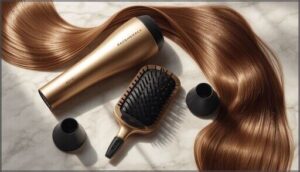
Your tools make or break your results with thick hair. The right blow dryer, brush, and attachments cut your drying time in half while giving you salon-quality volume and smoothness.
A solid hair care routine for long hair starts with these styling essentials and extends to how you treat your hair between washes.
Let’s break down exactly what you need in your arsenal to take full control of your thick hair.
Choosing a Powerful Blow Dryer
You’ll need a powerhouse hair dryer with 1875–2000+ watts to conquer thick hair without endless blow drying sessions. Look for AC motors, which deliver consistent airflow under heavy loads and outlast cheaper alternatives.
Ionic technology tames frizz and static while you work. Multiple heat settings give you precise control, protecting your strands from unnecessary damage.
Invest in professional-grade durability, and you’ll master volume every single time.
Nozzle Attachments for Precision
Attach a narrow concentrator nozzle to your blow dryer, and you’ll direct airflow exactly where you want it. This precision styling tool focuses heat along the hair shaft, minimizing frizz while cutting drying time.
Keep the nozzle 6–8 inches from your strands for even heat distribution and targeted smoothing. You’ll achieve salon-level control, shaping thick hair without over-drying surrounding sections or sacrificing your hard-won volume.
The Ideal Brush for Volume and Smoothness
A vented round brush slices drying time in half, letting air flow through while you work. Choose nylon bristles with flexible bases—they glide through dense strands without snagging, essential when you’re blow drying thick hair.
Match brush width to your hair density: wider surfaces lift roots evenly and distribute heat protectant coverage, creating that volumizing effect you’re after without the tangle-induced frustration.
Sectioning Clips for Manageability
Clip Selection transforms chaos into control—rust-resistant sectioning tools grip thick hair without slipping mid-style. Professional clips with smooth interiors prevent snagging during hair sectioning, while spring-loaded designs free your hands for blow drying.
Four essentials for manageable styles:
- Magnetic clips secure parietal and crown regions systematically
- Wide-jaw designs accommodate dense subsections for volumizing
- Rust-proof clip materials endure repeated heat exposure
- Smooth edges protect strands during sectioning tools manipulation
Step-by-Step Blow Drying Technique
Now that you’ve got your tools ready, it’s time to master the actual technique. Blow drying thick hair isn’t about rushing through it, it’s about working smarter with a system that tames all that volume.
Follow these essential steps to transform your drying routine from chaotic to controlled.
Dividing Hair Into Manageable Sections
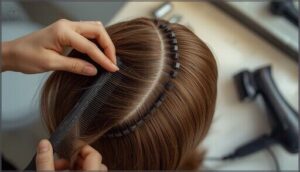
You’re about to take control of your thick mane—start by dividing it into four to eight manageable segments, depending on your hair’s density. Use metal-free sectioning clips to create discrete working areas, which prevents tangling during styling.
Break each segment into thin, uniform subsections for precise round brush work and faster blow drying. These hair partitioning techniques minimize heat exposure while giving you total command over volume.
Blow Drying The Bottom Layers First
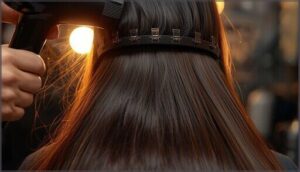
Start at the nape and blow dry your bottom layers completely before touching the top sections. This layered drying approach prevents heat distribution overload on your scalp while giving you rock-solid volume control from the base up.
Direct your hair dryer downward along each subsection, maintaining consistent tension. You’ll build authentic root lift and optimize styling efficiency as trapped moisture escapes first, protecting your thick hair from unnecessary heat protectant wear.
Using a Round Brush for Volume
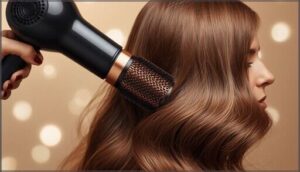
Grab a 1.5–2 inch round brush with a vented barrel—nylon bristles glide through thick strands without snagging.
Lift each subsection at the scalp, rotate the brush away from your head, and hold heat for 15–20 seconds per segment. This tension grip creates lift that lasts 6–8 hours.
Blast cool air briefly after each rotation to lock that root elevation into place.
Directing Airflow to Minimize Frizz
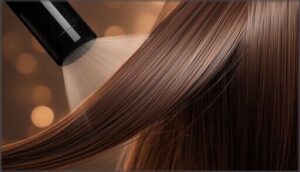
After you’ve set that volume, point your nozzle down the hair shaft—root to tip—to seal cuticles flat and lock in smoothness. Airflow control is everything for frizz reduction: keep the dryer moving in long, steady sweeps rather than back-and-forth jerks.
This cuticle alignment technique, paired with your heat protectant and round brush work, delivers smooth blowouts that stay frizz-free for days.
Tips for Volume, Shine, and Long-Lasting Style

You’ve mastered the mechanics of blow drying, but the real secret lies in those finishing touches that transform good hair into show-stopping volume and shine.
These next techniques will help you lock in your style so it actually lasts beyond the first hour. Let’s break down the pro moves that separate flat, lifeless results from hair that holds its shape and catches the light all day long.
Lifting Roots for Maximum Volume
You want sky-high volume? Focus your blow dryer’s nozzle directly at the roots while tilting your head forward slightly.
Apply a root lifting spray or volumizing mousse at the crown first—it creates grip without weight. Use your round brush to pull vertical sections upward as you direct heat at the base, locking in lift with each pass.
Using The Cool Shot to Set Style
After building that volume at your roots, hit the cool shot button immediately—don’t skip this. The blast of cool air freezes your cuticle in place, locking in shape and boosting shine by 20–40%.
Hold the nozzle close for 5 to 15 seconds per section. This simple cool shot benefits trick turns your thick hair from styled to set, giving you long-lasting hold that won’t collapse by lunchtime.
Applying Finishing Products for Shine
Once your blow drying is done, seal the deal with shine serums or gloss sprays—just a pea-sized drop at the mid-lengths and ends. Heat-activated formulas work magic on thick hair texture, smoothing the cuticle without flattening your volumizing work. Skip these finishing oils near the roots to avoid grease. Your texture choices matter:
- Lightweight silicones for slip
- Argan oil for natural luster
- Alcohol-free gloss sprays
- Emulsion serums for even distribution
- Heat-safe styling products for protection
Apply with fingertips, distribute evenly, and watch your hair care routine transform.
Avoiding Common Mistakes With Thick Hair
Common pitfalls can sabotage your thick hair styling tips before you finish. Rubbing with a towel raises frizz—blot gently instead. Never detangle immediately after washing; wait until hair is 50% dry. These blow drying techniques for thick hair demand precision:
Precision matters—blot thick hair gently and detangle when half dry to avoid frizz and breakage
| Mistake | Solution |
|---|---|
| Skipping heat protectant | Apply before every session |
| Using maximum heat | Choose lowest effective setting |
| Brushing soaking-wet strands | Wait for partial drying |
| Over-applying root products | Keep oils on mid-lengths only |
Master these hair damage prevention basics, and your hair care routines transform into breakage reduction wins with proper frizz control methods and styling product selection.
Maintaining Healthy, Beautiful Thick Hair

Your blow-drying technique means nothing if you’re frying your hair every single day. Real mastery comes from knowing when to step back, how to protect your style while you sleep, and which products won’t sabotage your volume.
Let’s lock in the habits that keep your thick hair healthy and gorgeous between blow-dry sessions.
Limiting Heat Exposure and Frequency
Your thick hair can take only so much thermal stress before you see the consequences. Daily high-heat styling multiplies your hair breakage risk by 60%, so protect your investment by following these heat limits:
- Blow dry no more than 2-3 times weekly to preserve keratin bonds and minimize heat damage.
- Keep each session under 15 minutes to reduce cumulative thermal exposure.
- Always apply heat protectant before every blow drying session, without exception.
- Use your dryer’s lowest effective heat setting to achieve results while preventing damage.
- Alternate with air-drying or diffused styling between blow drying days for damage prevention.
These blow drying techniques for thick hair balance style with long-term health.
Overnight Care to Preserve Volume
Your volume survival starts the moment you turn off the dryer. Let hair cool completely before touching it to lock in root lift—this prevents flattening by up to 40%.
Sleep on a satin pillowcase to reduce friction during hair maintenance, then use a loose, low-profile braid to preserve hair volume overnight.
Morning revival is simple: lightly mist volumizing spray at roots without saturating.
Choosing Styling Products for Thick Hair
Your thick hair demands products that pack punch without the weight. Reach for lightweight volumizing mousse or flexible-hold serums labeled specifically for thick hair—these deliver control without stiffness.
Apply heat protectants rated to 350°F minimum before blow-drying, choosing moisturizing formulas with silicones or natural oils. Skip heavy waxes near roots; they create greasy buildup fast.
Light styling serums on ends tame frizz while preserving that hard-won volume.
Adjusting Techniques for Best Results
Your routine needs fine-tuning as your skills grow. Track dry time, frizz levels, and volume gains every three sessions—aim for 15% improvement in at least two metrics.
Adjust heat settings between medium and medium-high, keep your dryer six inches from strands, and master airflow management by directing heat root-to-tip.
Temperature control and personalization methods transform good technique into professional-level results.
Frequently Asked Questions (FAQs)
How often should I replace my blow dryer?
Most styling tools perform reliably for five to seven years with regular use, though high-end models often reach eight to ten.
Watch for reduced airflow, inconsistent heat, or frequent overheating—these signal it’s time.
Can I blow dry hair when its soaking wet?
You can, but soaking wet hair conducts heat poorly, risking damage. Towel-dry first to remove excess moisture, then blow dry with heat protectant—this minimizes heat exposure while preserving your thick hair’s integrity.
Whats the best room temperature for blow drying?
Like a warm hug versus a scorching iron, your blow drying room should feel comfortable, around 70–75°F.
This temperature keeps you relaxed while heat protectant and proper heat settings shield thick hair from thermal damage.
Should I blow dry hair in a specific direction?
Yes, always blow dry from roots to ends, following your Hair Growth Patterns. This Airflow Direction flattens cuticles for Frizz Reduction and preserves Natural Texture.
Proper Blow Dry Techniques protect Thick Hair while enhancing shine.
How do I fix over-dried or damaged hair?
Over-dried strands lose 15-25% of their moisture, craving intensive repair.
Apply bond-building treatments weekly, limit heat exposure to twice weekly, use deep conditioning masks, and always protect with thermal serums for damage control and breakage prevention.
Conclusion
Blow away the frustration and take control of your thick hair with the right approach. When you know how to properly blow dry thick hair, you’re not fighting density—you’re using it to build volume, shine, and a style that holds.
Section strategically, work from roots to ends, and let your tools do the heavy lifting. Your arms will thank you, your hair will cooperate, and those salon results become your everyday reality.