This site is supported by our readers. We may earn a commission, at no cost to you, if you purchase through links. This content is for general informational and educational purposes only and is not a substitute for professional medical, dermatological, or nutritional advice.

That widow’s peak that used to sit lower, the temple hair thinning enough to see scalp under bathroom lighting: your hairline hasn’t given up, but it has started sending warning signals.
Some recession comes from genetics and DHT, a hormone byproduct that shrinks sensitive follicles year after year. Some comes from tight ponytails or buns pulling at the same spots daily. The cause matters, because it decides which treatments will actually work for you.
Here’s the good news: regrowing hair on a receding hairline is possible for most people, especially when you catch it early and match the right treatment, medical, in-office, or natural, to what’s actually happening under your skin.
Table Of Contents
- Key Takeaways
- Can You Regrow a Receding Hairline?
- How to Regrow a Receding Hairline
- Best Medical Treatments for Hairline Regrowth
- In-Office and Surgical Hairline Restoration
- Natural Ways to Support Hairline Growth
- Frequently Asked Questions (FAQs)
- Can hair regrow on a receding hairline?
- Why is Gen Z balding so fast?
- How can I regrow my frontal hairline?
- How do you get your hairline to grow back?
- Can you regrow hair from a receding hairline?
- How to rebuild a receding hairline?
- Can a receding hairline regrow?
- Can a receded hair line be treated naturally?
- How to stop a receding hairline?
- How do I develop a receding hairline friendly routine?
- Conclusion
Key Takeaways
- Catching hairline recession early gives you the best shot at regrowth, since miniaturized follicles can bounce back but scarred or long-dormant ones can’t.
- Medications like minoxidil (topical or oral) and DHT blockers such as finasteride or dutasteride offer the strongest evidence for regrowth, especially when combined.
- In-office treatments like PRP therapy, microneedling, low-level laser therapy, and exosome injections can boost results when at-home care isn’t enough.
- Whatever routine you choose, you need to commit for at least six months and keep it up long-term, since stopping treatment lets DHT and shedding come right back.
Can You Regrow a Receding Hairline?

Yes, in many cases you can, but it depends on what’s causing your hairline to recede in the first place. Some causes respond well to treatment, while others need a different approach or come with limits you should know upfront. Here’s what actually drives hairline recession, so you know what you’re working with.
For a closer look at the hormonal, genetic, and lifestyle factors involved, this breakdown of common reasons your hairline recedes can help you pinpoint your specific situation.
Genetic Hairline Recession
Blame your family tree. If a receding hairline runs in your family, you’re dealing with DHT binding to sensitive follicles, shrinking them gradually. This is polygenic, so siblings can differ.
Regional sensitivity hits temples and frontal areas first, driven by hormones. Miniaturization progresses over years, not overnight, before later stages, hair transplant surgery may become the realistic option. Early treatment can target DHT sensitivity in follicles to slow progression.
Traction and Styling Damage
Not every hairline recession is genetic. Tight ponytails, buns, or cornrows pull constantly on the hairline, causing traction alopecia. Add friction damage from tight elastics or rough fabrics, and hairline breakage speeds up. Hair extensions add weight, worsening pull. Give your scalp breaks, loosen protective styles, and try gentle scalp massages instead of tension.
Scarring Alopecia Warning Signs
Scarring alopecia (also called cicatricial alopecia) needs quick attention. Watch for burning, itchy scalp, or tenderness before patches even appear. Follicular scaling, small bumps, or patchy loss with smooth shiny skin signals active scalp inflammation—an autoimmune response destroying follicles. Frontal fibrosing alopecia often starts this way.
Catching it early means corticosteroid injections can still help; waiting doesn’t.
When Regrowth is Unlikely
Not all hairline loss bounces back. Once scarring alopecia destroys a follicle, that spot is gone for good—no cream or pill regrows it.
Regrowth is also unlikely with:
- Long-untreated androgenetic alopecia
- Severe follicle miniaturization
- High DHT sensitivity despite treatment
- Stopping medication (relapse follows fast)
Early action matters most. Waiting years lets thinning become permanent.
How to Regrow a Receding Hairline

Regrowing a receding hairline takes more than picking a product off the shelf. It’s about building the right habits around treatment, timing, and follow-through. Here’s how to set yourself up for real results.
Start Treatment Early
Timing matters most regarding hairline recovery. Follicles in early miniaturization can still bounce back, but waiting lets damage become permanent.
| Stage | Follicle Status | Treatment Response |
|---|---|---|
| Early thinning | Miniaturized, reversible | High |
| Moderate recession | Partial damage | Moderate |
| Expert loss | Scarred/dormant | Low |
Starting minoxidil or a DHT blocker like finasteride now helps preserve follicle health before options narrow.
If you’re weighing which route fits your routine and goals, this guide to proven hair loss prevention strategies for men breaks down how each treatment works over time.
See a Dermatologist
Before buying anything off the shelf, get a proper diagnosis. A dermatologist checks your scalp and hair follicles, reviews family history, and rules out inflammation.
- Scalp exam for scaling or redness
- Medical history review
- Hairline pattern assessment
- Suited treatment planning
This visit shapes whether minoxidil, finasteride, or another approach fits your specific hair regrowth needs.
Track Hairline Changes
Progress hides in plain sight if you’re not measuring it right. Snap photos from the same angle, distance, and lighting every time—soft, even light beats harsh backlighting for judging hairline density.
Mark baseline reference points like temple corners, then rate scalp coverage on a 0-10 scale every 8-12 weeks. This catches real hairline progression instead of daily styling noise.
Commit for Six Months
Six months isn’t a suggestion—it’s the minimum runway hair follicles need to show real change. Patience in treatment matters here: whether you’re using minoxidil, finasteride, dutasteride, microneedling, or low-level laser therapy, daily consistency beats sporadic effort.
Resist judging results at week six. Keep tracking progress, manage expectations, and hold off on evaluating results until you’ve hit that full checkpoint.
Maintain Long-Term Results
Here’s the catch: hitting six months is just the beginning, not the finish line. Your follicles need consistent medication use for as long as you want the results.
- Keep your dosing schedule steady, no skipped days
- Watch scalp health for irritation or buildup
- Take baseline photos to track hairline stability
- Support results with sleep, protein, and iron
Stop treatment, and DHT or shrinking follicles return within months.
Stop treatment and DHT rushes back, shrinking follicles again within months
Best Medical Treatments for Hairline Regrowth
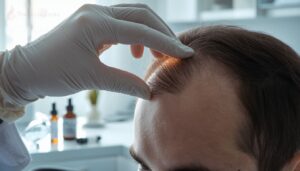
When talking about real regrowth, medications carry the strongest evidence behind them. You’ve got a few solid options, from topical treatments to daily pills, each working a little differently. Here’s a rundown of the five you’ll want to know about.
Topical Minoxidil
Topical minoxidil is your frontline option, FDA-approved for androgenetic alopecia in 2% and 5% strengths. Apply it directly to thinning areas daily using the dropper.
Only about 1.4% absorbs into a healthy scalp, so side effects stay mostly local: itching, scaling, or irritant dermatitis in 2-6% of users. Expect a shedding phase before regrowth kicks in—that’s follicles cycling, not failure.
Oral Minoxidil
Skip the dropper altogether, and oral minoxidil becomes your tablet-based backup plan. This antihypertensive drug, used off-label for hair loss, works as a vasodilator—relaxing vessels so more blood reaches follicles.
- Regrowth in 60-70% of users
- Doses as low as 0.5-5mg daily
- Watch for fluid retention
- Requires blood pressure monitoring
- Best under a dermatologist’s supervision
Finasteride for DHT
If oral minoxidil boosts blood flow, finasteride (brand name Propecia) targets the hormone driving hairline recession: DHT. It blocks 5-alpha reductase, cutting scalp DHT by up to 60%.
| Detail | Finasteride |
|---|---|
| Dose | 1mg daily |
| Scalp DHT drop | Up to 60% |
| Timeline | 3-6 months |
Long-term use matters—stopping lets DHT rebound, and progress reverses.
Dutasteride Options
Not responding to finasteride the way you’d hoped? Dutasteride (Avodart) blocks both type I and II 5-alpha reductase, giving a broader DHT reduction than finasteride alone.
It’s off-label for hairline thinning, taken as a daily 0.5mg capsule.
Safety-wise, watch for reduced sperm count, and skip it if your partner’s pregnant. It also lingers in your system up to 6 months after stopping.
Combination Treatment Plans
Two mechanisms beat one. Pairing a DHT blocker (finasteride/Propecia or dutasteride) with minoxidil targets hair loss from both angles — this DHT minoxidil pairing stops shedding while stimulating new growth.
Dual therapy sequencing often starts both together, adding PRP therapy, microneedling, or low-level laser therapy after 3-6 months if needed.
- Early intervention strategy preserves follicles
- Oral topical combo suits stubborn cases
- Maintenance combination therapy prevents regression
- Track progress monthly
In-Office and Surgical Hairline Restoration
If at-home treatments aren’t cutting it, your dermatologist has stronger tools to offer. These in-office options work faster and often go deeper than anything you can do on your own. Here’s what’s actually available, from quick scalp treatments to permanent surgical fixes.
PRP Therapy
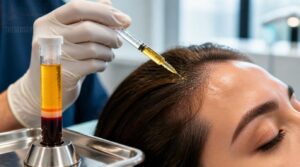
PRP therapy uses your own blood, spun down to concentrate platelets, then injected into thinning scalp areas. Those platelets release growth factors that support follicle repair.
Most protocols run three sessions spaced weeks apart. Results, when they happen, build gradually, not overnight. It’s not a hair transplant, and outcomes vary, so ongoing sessions may be needed for lasting benefit.
Microneedling Treatments
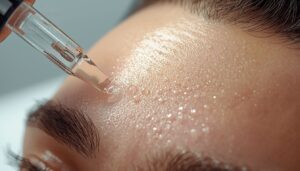
Tiny needles, big payoff: microneedling creates controlled micro-injuries that jumpstart your scalp’s wound healing response, boosting collagen and blood flow around follicles.
Devices target submillimeter to low-millimeter needle depth, using crisscrossing pass coverage patterns for even trauma. Pair it with minoxidil (not finasteride) for up to 4x better absorption. Sessions run every 4-6 weeks, using gentle, soothing serums rather than harsh actives.
Low-Level Laser Therapy
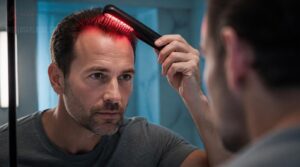
If you’d rather skip needles altogether, Low-Level Laser Therapy (LLLT) uses red light to energize hair follicles without heat or pain.
Devices target 655nm wavelength, with typical fluence ranges between 0.04–50 J/cm2 and irradiance under 100 mW/cm2. This prolongs the anagen phase by 30%, boosting hair density over consistent, at-home sessions.
- Non-invasive, no downtime
- No prescription needed
- Comb or cap devices available
- Improves circulation
- Painless treatment duration
Exosome Scalp Injections

Exosomes—tiny messengers released by stem cells—get injected directly into the scalp to wake up sluggish hair follicles. Sources vary (adipose, placental, even salmon-derived), but the goal’s the same: deliver growth signals right where you need them.
| Protocol | Schedule | Result |
|---|---|---|
| Standard | 4 sessions, 14 days apart | +44.4 hairs/cm² by week 12 |
| Clinic-based | 3–4 sessions, 4–6 weeks apart | Improved density |
| Maintenance | Ongoing | Sustained gains |
No reported side effects in studies so far.
Hair Transplant Surgery
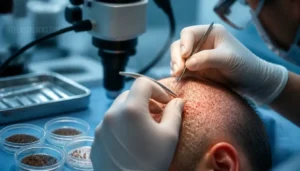
When medications and injections plateau, surgery becomes the honest next step.
Your surgeon first checks the donor area—the back and sides of your scalp—for density. FUE removes individual follicles (tiny scars); FUT strips a section for a linear scar. Grafts settle into pre-made recipient sites, following your natural hair direction. Graft survival often exceeds 90%. Posttransplant care involves gentle washing and avoiding sun for two weeks.
Natural Ways to Support Hairline Growth

Not every hairline strategy needs a prescription pad. Some simple, natural habits can genuinely back up whatever else you’re doing, and a few even have real research behind them. Here’s where to start.
Rosemary Oil
Grandma’s herb garden might hold real answers for hair thinning. Studies show rosemary oil rivals 2% minoxidil after six months, with less scalp irritation.
- Dilute with a carrier oil before applying
- Massage into hairline 2-3 times weekly
- Watch for redness—it’s concentrated, so less is more
Consistency matters more than quantity here.
Scalp Massage
Rubbing oil in is one thing—working it in with real pressure is another.
Massage boosts blood circulation to the follicle, delivering oxygen while easing scalp tension. Use fingertip pressure, light-to-moderate, in small circles for 5 minutes daily. It also redistributes natural oils and offers real stress relief. Skip it if your scalp’s irritated or sore.
Pairing your scalp massage with the right products matters too — read up on how often to oil curly hair so you’re sealing in moisture without skipping the deep conditioning your strands actually need.
If massage alone isn’t cutting it, pairing it with a gentle, low-irritation formula from this guide to the best hair growth products for men can help avoid the scalp irritation some users report.
Saw Palmetto
Massage helps circulation, but if you want an active ingredient alongside it, saw palmetto is worth a look.
It’s a natural DHT blocker, cutting scalp DHT by roughly 32%—working similarly to finasteride, just gentler. Extracts come as capsules or liquid, dosed around 320mg daily. Side effects are mild (stomach upset, occasionally). It won’t outperform finasteride, but paired with scalp massage, it’s a reasonable low-risk addition.
Protein and Iron Intake
Supplements only go so far—your plate matters too. Aim for 0.8g protein per kg body weight daily; pair it with heme iron (red meat, poultry) for better absorption than plant sources alone. Add vitamin C at meals to boost uptake, and skip tea or calcium right alongside iron-rich foods.
Nutritional deficiencies, especially low iron, disrupt the hair growth cycle—correcting them helps roughly 70% of affected people.
Gentle Hairline Styling
How you treat your hairline daily matters as much as what you eat. Avoid tight tension—skip slicked-back buns and tight elastics that pull at the temples. Reduce friction with silk pillowcases and finger-styling instead of aggressive brushing. Choose gentle hold products, apply thin layers, and keep heat tools away from the edges. Loose, protective styles support genuine hairline preservation over time.
Frequently Asked Questions (FAQs)
Can hair regrow on a receding hairline?
Yes, often, especially with early intervention strategies. Genetic thinning responds well to minoxidil or finasteride, while shedding from stress or deficiency usually reverses. Scarring alopecia is the exception, since destroyed follicles won’t regrow no matter the treatment.
Why is Gen Z balding so fast?
Old genes, new habits: genetic predisposition hasn’t changed, but chronic lifestyle stress factors, poor sleep, doom-scrolling, and diet fads pile on stress-induced hair loss and hormonal imbalance hair loss, accelerating telogen effluvium in already-vulnerable follicles at younger ages.
How can I regrow my frontal hairline?
Start early with minoxidil, finasteride, or combination therapy for genetic thinning. Add scalp massage and protein intake for support.
For faster results, ask about PRP therapy, microneedling, or hair transplant surgery—natural remedies alone rarely reverse severe recession.
How do you get your hairline to grow back?
Pair topical minoxidil application with finasteride DHT blocking for the strongest results, add scalp massages or rosemary oil for support, and consider a hair transplant if follicles are already gone.
Can you regrow hair from a receding hairline?
Turning back the clock like a VHS rewind isn’t quite possible, but active follicles can bounce back. Catching hormonal hair loss before follicle miniaturization locks in gives minoxidil and finasteride real traction—combination therapy stabilizes or regrows hair in over 90% of men.
How to rebuild a receding hairline?
Rebuilding a receding hairline works best with layered care: finasteride blocks DHT, minoxidil wakes up follicles, PRP and microneedling boost absorption, DHT-blocking shampoos support scalp health, and transplant surgery restores density when medical options plateau.
Can a receding hairline regrow?
Bald in the front, full in the back — genetic hairlines rarely lose everything at once. A receding hairline can regrow when follicles are miniaturized, not destroyed. Early intervention with finasteride and minoxidil helps roughly 90% see thicker, denser growth within months.
Can a receded hair line be treated naturally?
Yes, if follicles aren’t scarred. Rosemary oil, scalp massage, and saw palmetto (a DHT-blocking herb) can slow shedding and support thickness. Add biotin, pumpkin seed oil, and gentle styling for consistent, gradual results over several months.
How to stop a receding hairline?
Picture your hairline as a shoreline you can defend before the tide takes more ground. Start DHT blockers like finasteride or dutasteride and minoxidil early, add PRP therapy or laser stimulation, eat protein-rich meals, and see a dermatologist for long-term maintenance.
How do I develop a receding hairline friendly routine?
Treat your hairline like soil, not scenery: gentle cleansing, daily scalp massage, tension-free styles, and a nutrient-rich diet. Add caffeine shampoo, biotin, and track changes monthly with photos—consistency beats intensity every time.
Conclusion
Ready to stop guessing at what your hairline needs? Learning how to regrow hair on receding hairline areas comes down to acting early, matching treatment to cause, and staying consistent for months, not days.
Minoxidil, finasteride, or a simple rosemary oil routine won’t work overnight, but they work. Your follicles aren’t dead, just dormant, waiting for the right signal. Give them one.
Track your progress, be patient, and trust the process you’ve built, one small step at a time.