This site is supported by our readers. We may earn a commission, at no cost to you, if you purchase through links.
That sticky film creeping across your bathroom walls isn’t dirt—it’s an invisible layer of polymer residue from every spritz of hairspray you’ve used. The propellants evaporate instantly, but the holding agents stay behind, creating a tacky surface that traps dust, yellows over time, and makes your walls look dull and grimy. Left untreated, this buildup becomes stubborn and can even interfere with future paint jobs or wallpaper adhesion.
The good news? You don’t need harsh chemicals or professional cleaners to tackle it. With a few household supplies and the right technique, you can restore your walls to their original clean state and keep hairspray overspray from taking over your bathroom again.
Table Of Contents
- Key Takeaways
- Why Does Hairspray Stick to Bathroom Walls?
- How to Identify Hairspray Residue on Walls
- Essential Supplies for Hairspray Removal
- Preparing Walls for Safe Cleaning
- Step-by-Step: Cleaning Painted Bathroom Walls
- Removing Hairspray From Wallpapered Walls
- Using Rubbing Alcohol for Stubborn Residue
- Alternative Household Solutions for Removal
- Preventing Future Hairspray Buildup on Walls
- Safety Tips and Common Mistakes to Avoid
- Frequently Asked Questions (FAQs)
- Can hairspray residue on bathroom walls cause any damage?
- How often should I remove hairspray from bathroom walls?
- Can I use the same methods to remove hairspray from bathroom tiles?
- Are there any alternative methods to remove hairspray from bathroom walls?
- Can hairspray damage grout or tile surfaces?
- How often should bathroom walls be cleaned?
- Does hairspray buildup attract mold or mildew?
- Can hairspray residue affect air quality indoors?
- What finishes are most resistant to hairspray?
- Conclusion
Key Takeaways
- Hairspray leaves a sticky polymer film on bathroom walls that traps dust, yellows over time, and can interfere with future paint or wallpaper—but you can remove it using basic household supplies like dish soap, white vinegar, or rubbing alcohol without harsh chemicals.
- The best approach depends on your wall type: painted walls handle mild dish soap or 1:1 vinegar-water solutions, while wallpapered surfaces need barely-damp cloths with pH-neutral cleaners to avoid loosening adhesive or causing warping.
- Prevention beats cleanup—hold hairspray 8-10 inches from your hair, aim away from walls, use short bursts, and wipe down bathroom walls weekly with a mild cleaning solution to stop buildup before it hardens.
- Skip harsh products like ammonia, bleach, acetone, and abrasive scrubbers that strip paint and damage wallpaper, and always test any cleaning solution on a hidden spot first to protect your wall’s finish.
Why Does Hairspray Stick to Bathroom Walls?
Hairspray doesn’t just vanish into your hair—it leaves behind a sticky film that clings to everything nearby. The culprit is the polymer-based formula that makes your hairstyle hold, and it acts like invisible glue on your bathroom walls.
Understanding what you’re dealing with makes removal easier, so let’s break down why this residue is so stubborn.
Composition of Hairspray Residue
Hairspray residue is basically a sticky film made of styling polymers like polyvinylpyrrolidone mixed with fragrance compounds and fixatives. When you spray, the propellants evaporate and leave behind this tacky layer that clings to your walls. The polymers create film formation through surface interactions, and over time, this hairspray buildup attracts dust and yellows.
That’s why cleaning hairspray from bathroom walls gets harder the longer you wait. Effective communication about clear science information is vital for understanding complex topics like this.
Effects of Overspray and Buildup
Once those polymers settle, the real trouble starts. You’re not just dealing with a sticky patch—hairspray buildup creates a thin film that turns into a dull, milky haze on your walls. Surface damage sneaks up on you too. Here’s what happens when overspray takes over:
- Fine particles cluster on the highest wall points, forming shiny halos
- Dust and moisture cling to the film, darkening paint gradually
- Porous or textured surfaces absorb more residue than glossy finishes
- The buildup traps oils from skin and cleaning products, creating stubborn stains
- Future wall treatments like wallpaper or fresh paint won’t stick properly
That haze you’re seeing? It’s residue formation in action. The longer hairspray sits there, the harder residue removal strategies become. Regular buildup prevention through bathroom cleaning tips beats tackling layers of film removal later. Your walls don’t have to look patchy—hairspray removal techniques work best when you act fast. Effective research methodology is essential in understanding the impact of hairspray on surfaces.
How to Identify Hairspray Residue on Walls
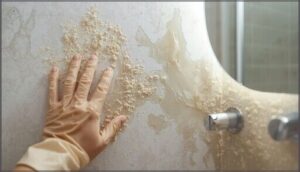
You’ll know hairspray residue is there when your walls feel tacky to the touch or you notice a dull, slightly sticky film that attracts dust and lint. Wall inspection starts with running your hand across the surface—if your fingers stick slightly or leave visible tracks, you’ve found hairspray buildup.
Look for these telltale signs during your residue detection:
- A cloudy or yellowed appearance on light-colored walls that wasn’t there before
- Concentrated areas around your styling station where overspray settles most
- Dust and hair clinging stubbornly to spots that should wipe clean easily
Surface analysis becomes easier once you know what you’re looking for.
Hairspray stains often appear as darker patches on bathroom walls, especially near mirrors and sinks. This cleaning preparation step helps you target problem areas before removing hairspray from walls, making your wall cleaning efforts more efficient.
Essential Supplies for Hairspray Removal

You don’t need fancy products to tackle hairspray buildup on your walls. Most effective solutions are already sitting in your kitchen or bathroom cabinet.
Grab the right supplies and tools before you start cleaning to make the job easier and protect your walls from damage.
Recommended Cleaning Solutions
The right cleaning solutions make all the difference when tackling hairspray buildup without harming your walls.
Start with mild dish soap dissolved in warm water for gentle surface restoration. White vinegar mixed 1:1 with water breaks down oily residue effectively.
For stubborn spots, use diluted rubbing alcohol (50/50 with water). Ammonia-free glass cleaner with a mild degreaser also works well on painted surfaces.
Tools for Safe Wall Cleaning
The tools you choose determine whether you clean safely or damage your paint. Microfiber cloths work best since they remove surface oils without scratching. Gentle sponges with non-abrasive cellulose padding protect smooth walls from lift.
- Soft brushes reach textured surfaces without embedding grit
- Extension arms maintain gentle pressure on vertical areas
- Protective gear includes gloves and eyewear when handling cleaning solutions
Skip melamine foam on glossy paint—it dulls finishes with repeated use.
Preparing Walls for Safe Cleaning
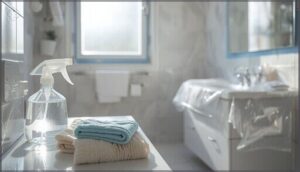
Before you start scrubbing away hairspray residue, you need to set up your bathroom properly. A little prep work protects your walls from accidental damage and keeps the rest of your bathroom safe from drips and spills.
Here’s what you need to do before you pick up that cleaning solution.
Removing Surface Dust and Debris
Before you tackle hairspray buildup, clear away the dust that’s camouflaging the real problem. Use a dry microfiber cloth for surface preparation—it’ll capture 60–70% of loose debris without spreading it around. For textured bathroom walls, a soft-bristle brush works wonders on plaster seams.
Here’s your dust assessment strategy:
| Surface Type | Best Cleaning Tools | Debris Removal Method |
|---|---|---|
| Smooth painted walls | Microfiber cloths | Gentle dry wiping |
| Textured surfaces | Soft-bristle brush | Light circular motions |
| Corners and seams | Vacuum with brush attachment | Low suction passes |
| High-traffic zones | Compressed air (optional) | Quick targeted bursts |
| Moisture-prone areas | Lint-free cloth | Pat, don’t rub |
This surface cleaning step prevents streaking when you apply household cleaning solutions later. Skip it, and you’ll smear dust into a muddy mess that’s twice as hard to remove.
Protecting Flooring and Fixtures
Before you apply any cleaning solution to bathroom walls, shield your floor care investment from drips and splashes. Here’s how to lock down moisture control:
- Layer drop cloths or old towels across tile floor surfaces and around fixtures—waterproofing methods start at ground level.
- Apply painter’s tape for baseboard sealing to block liquid seepage behind trim.
- Verify your vent’s running to manage airborne moisture during surface cleaning methods.
Step-by-Step: Cleaning Painted Bathroom Walls
Once you’ve cleared the surface dust and protected your floors, you’re ready to tackle that sticky hairspray buildup head-on.
Two household solutions work best for painted walls: mild dish soap and a vinegar-water mix. Each method has its place depending on how often you battle hairspray residue.
Using Mild Dish Soap Solutions
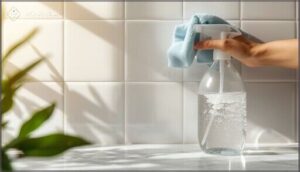
Dish soap cuts through hairspray buildup like nothing else. Mix two drops of mild dish soap with 12 ounces of warm water in a spray bottle. That 2% soap concentration dissolves the sticky polymer film without stripping your paint.
Spray the solution directly onto affected bathroom walls, let it sit for 30 seconds, then wipe clean with a microfiber cloth using gentle circular motions.
Applying Vinegar and Water Mix

White vinegar’s acidic properties break down hairspray residue without harsh chemicals. Mix your vinegar solution at a 1:1 cleaning ratio with water in a spray bottle for effective stain removal.
After wall preparation, spray directly onto bathroom walls and let it sit for 60 seconds. Wipe with a microfiber cloth—no mild abrasives needed.
This works for occasional users cleaning bathroom walls.
Removing Hairspray From Wallpapered Walls
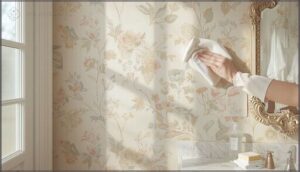
Wallpapered walls need a lighter touch than painted ones because excess moisture can loosen the adhesive or warp the paper.
You’ll use the same basic cleaning agents, but you’ll apply them differently to protect the delicate surface. The key is working quickly with minimal water and testing your approach in a hidden spot first.
Using Gentle Cleaning Agents
Wallpaper needs pH-neutral cleaners that won’t wreck the adhesive holding it in place. Start with a mild dish soap solution—just a few drops mixed into warm water. For stubborn hairspray buildup, switch to a white vinegar mix diluted at equal parts.
Apply your soap solutions or vinegar mix to microfiber cloths, never directly onto the wall, and use gentle circular motions when cleaning bathroom walls.
Avoiding Excess Moisture and Damage
Too much moisture causes bigger problems than hairspray buildup. Wring your microfiber cloth until barely damp—excess water leads to paint peeling, mildew growth, and wallpaper lifting from the adhesive.
Work in small sections and wipe dry immediately with a second cloth.
Keep bathroom humidity below 60 percent during wall maintenance to prevent grout deterioration and mineral deposits on glossy finishes.
Using Rubbing Alcohol for Stubborn Residue
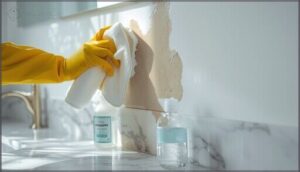
When dish soap and vinegar don’t cut through the sticky buildup, rubbing alcohol becomes your next line of defense. This powerful solvent breaks down hairspray polymers without the harshness of acetone-based removers.
Here’s how to use it safely and effectively on your walls.
Proper Dilution and Application
Rubbing alcohol is effective at cutting through stubborn hairspray buildup, but it’s crucial to use the right dilution ratios to protect your walls. Mix your solution carefully before tackling those sticky spots:
- For light buildup: Combine 1 part rubbing alcohol (70% isopropyl) with 3 parts warm water and a drop of dish soap
- For moderate residue: Use a 1:2 alcohol-to-water ratio
- For heavy deposits: Apply 1:1 solution sparingly
Dampen your microfiber cloth—never soak it—and test a hidden wall area first.
Preventing Wall Surface Damage
Alcohol-based cleaners demand careful wall protection to preserve your finish. Work in small sections and wipe immediately—letting the solution sit risks paint softening or wallpaper adhesive breakdown.
| Damage Prevention Strategy | Why It Matters |
|---|---|
| Blot, don’t scrub | Gentle removal prevents paint abrasion |
| Use minimal moisture | Excess liquid seeps behind wallpaper |
| Work in 2×2 foot sections | Controls surface cleaning and restoration |
| Dry immediately with clean cloth | Finish preservation through quick moisture removal |
Alternative Household Solutions for Removal
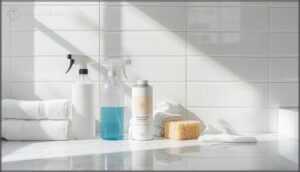
If you don’t have rubbing alcohol on hand, several other household products can break down hairspray buildup just as effectively.
These alternatives use ingredients you probably already have in your bathroom or laundry room.
Here’s what works and how to use each one safely on your walls.
Fabric Softener Techniques
You can break down hairspray buildup using fabric softener—its surfactant properties tackle sticky residue surprisingly well.
Mix one part fabric softener with four parts water for proper fabric softener dilution, then apply with a soft cloth using gentle cleaning methods.
The solution works for removing hairspray from wallpaper and painted surfaces alike, though you’ll need to rinse thoroughly afterward to prevent streaking or additional residue.
Shampoo and Water Methods
You’ll find mild shampoo lifts hairspray residue effectively when mixed with warm water—just add a small soap concentrate amount to your cleaning solution.
Apply gentle scrubbing motions with a microfiber cloth, focusing on sticky patches where hair care products accumulate.
This bathroom cleaning method works well for removing hairspray from wallpaper and painted surfaces, and always rinse thoroughly for complete residue removal.
Melamine Foam (Magic Eraser) Usage
Magic erasers cut through hairspray buildup on bathroom walls when dampened lightly and used with gentle scrubbing motions. This household cleaning solution works for bathroom cleaning tips when applied correctly.
Surface preparation matters before foam cleaning tips come into play:
- Test a hidden spot first to check abrasion risks on painted or wallpapered surfaces
- Keep the melamine foam barely wet to minimize finish damage
- Use light pressure on smooth, non-porous areas
- Rinse thoroughly after removing hairspray from wallpaper
- Avoid excessive scrubbing on glossy finishes
Preventing Future Hairspray Buildup on Walls
Cleaning up hairspray residue is one thing, but keeping it from building up in the first place saves you time and effort down the road.
A few simple changes to your routine can cut down on overspray and make your bathroom walls easier to maintain.
Here’s how to keep hairspray where it belongs—on your hair, not your walls.
Application Tips to Minimize Overspray
You can prevent hairspray buildup with a few simple adjustments. Hold the can 8 to 10 inches from your hair and aim the spray nozzle away from walls. Keep applications short—quick bursts give you control over the spray pattern and reduce overspray.
Open a window or turn on the exhaust fan for ventilation strategies that direct mist away from surfaces, protecting your bathroom from sticky residue.
Routine Cleaning and Maintenance
A weekly cleaning schedule keeps hairspray buildup from becoming a sticky nightmare. Set aside 10 minutes each week to wipe down your bathroom walls with a mild cleaning solution—gentle products like dish soap and water work best for maintenance.
- Dust walls before applying any cleaning solution to prevent smearing residue
- Inspect surfaces for discoloration or texture changes after each cleaning session
- Document which household cleaning solutions work best for your specific wall type
Regular wall inspection catches buildup early, so you won’t need aggressive cleaning hacks later.
Safety Tips and Common Mistakes to Avoid
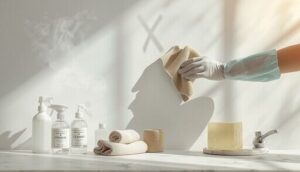
You might think any cleaner will do the job, but some products can strip paint, damage wallpaper, or leave you with a bigger mess than you started with. Knowing what to avoid is just as important as knowing what works.
Let’s cover the products that should stay far away from your bathroom walls and how to protect your surfaces while you clean.
Products to Never Use on Walls
You need to know which harsh chemicals and adhesive removal products will wreck your bathroom walls before you start chemical cleaning. Ammonia-based cleaners strip paint finishes and cause discoloration. Bleach weakens most paints and wallpapers. Abrasive scrubbing powders scratch surfaces. Acetone dissolves wall finishes. Petroleum solvents damage vinyl and cause peeling.
Wall damage prevention means choosing gentle cleaners and safe removal methods for surface protection.
Protecting Paint and Wallpaper Integrity
Your wall’s finish depends on surface cleaning that matches the material. Test mild cleaners on a hidden spot first—paint protection and wallpaper care require pH-balanced solutions that won’t lift latex finishes or fade wallpaper inks.
Damage prevention means using soft microfiber cloths in gentle circular motions, rinsing thoroughly, and drying promptly.
Wall cleaning and maintenance preserves your bathroom’s appearance through careful adhesive removal techniques and hairspray buildup prevention.
Frequently Asked Questions (FAQs)
Can hairspray residue on bathroom walls cause any damage?
Yes, hairspray buildup dulls paint finishes, traps dust, and can soften certain coatings over time. Left unchecked, it creates a sticky film that attracts grime and makes surface deterioration more likely in humid bathrooms.
How often should I remove hairspray from bathroom walls?
Clean your bathroom walls every one to three months to prevent hairspray buildup.
If you use hairspray daily, tackle wall protection every two to four weeks for ideal bathroom maintenance and beauty product removal.
Can I use the same methods to remove hairspray from bathroom tiles?
Tile cleaning tips mostly overlap with bathroom walls—dish soap and vinegar handle hairspray removers on porcelain care and ceramic restoration surfaces. However, bathroom grout needs extra scrubbing, and residue removal requires proper rinsing to prevent streaking.
Are there any alternative methods to remove hairspray from bathroom walls?
Beyond standard techniques, you can try diluted isopropyl alcohol, melamine foam cleaning with plain water, or commercial graffiti removers for stubborn stains.
These gentle products tackle beauty product cleanup without harsh scrubbing on bathroom walls.
Can hairspray damage grout or tile surfaces?
Hairspray creates a stubborn film buildup on grout lines and tile floors, attracting dirt and causing tile staining. Alcohol-based formulas may contribute to surface etching on natural stone, while repeated hairspray buildup gradually weakens grout integrity.
How often should bathroom walls be cleaned?
You should tackle wall cleaning every one to two weeks in most bathrooms. High-traffic spaces or humid conditions need weekly attention, while monthly deep cleans handle soap scum and mineral deposits effectively.
Does hairspray buildup attract mold or mildew?
Yes, the sticky film traps moisture and dust on bathroom walls, creating conditions where mold spores can colonize. High humidity makes this worse, so regular residue removal and proper ventilation are essential for mold prevention.
Can hairspray residue affect air quality indoors?
Like smoke lingering after a fire, aerosolized hair care products release VOC emissions that compromise indoor air pollution levels.
Hairspray particles from bathroom walls contribute to air quality impact, especially without proper ventilation systems managing hairspray buildup.
What finishes are most resistant to hairspray?
Gloss finishes and ceramic coatings stand up best against hairspray buildup. Semi-gloss latex paints resist absorption better than flat finishes, while epoxy surfaces offer enhanced protection on bathroom walls needing minimal wall maintenance and repair.
Conclusion
Think of hairspray residue like compound interest—it accumulates quietly until you’re facing a serious problem. Now you know how to remove hairspray from bathroom walls using simple household solutions, from dish soap to rubbing alcohol.
The key is consistency: tackle buildup before it hardens, protect your walls during application, and maintain a quick weekly wipe-down routine. Your bathroom walls will stay clean, bright, and free from that sticky film for good.
- https://youtube.com/playlist?list=PLvkGV9ilkUHxJ0RcZf4naB1XKfm8P9KYB&si=lINLy1hSwX66gAxg
- https://www.youtube.com/
- https://onlinepubs.trb.org/onlinepubs/nchrp/cd-22/manual/v1appendixb.pdf
- https://academichelpexpress.blog/2024/08/please-use-the-bulleted-points-and-the-rubric-below-to-guide-your-work-your-pa/
- https://x.com/godofprompt/status/1990526288063324577