
This site is supported by our readers. We may earn a commission, at no cost to you, if you purchase through links. This content is for general informational and educational purposes only and is not a substitute for professional medical, dermatological, or nutritional advice.

You bought the box, followed the directions, and now your hair is a shade of copper you never asked for. Henna doesn’t rinse out like regular dye. Its pigment bonds to keratin and coats each strand, so bleach and color removers barely touch it.
That’s frustrating, especially when a stylist’s chemicals might react badly with metallic salts hiding in some "natural" blends. Still, you have options. Learning how to remove henna from hair safely starts with knowing what’s on your strands, then choosing between slow home fading and professional correction. Here’s where to begin.
Table Of Contents
Key Takeaways
- You can’t fully remove henna, because its pigment bonds to keratin and coats each strand, so bleach and color removers barely touch it and the color only fades over weeks and months.
- Check what’s in your henna before you do anything, since compound or "black" blends may hide metallic salts that can react badly with chemical dyes, and a strand test with a clarifying shampoo lets you try a gentle fade first.
- Skip DIY fixes like baking soda, lemon juice, and whitening toothpaste, because they tend to damage your hair far more than they lighten the henna.
- If you want faster change, a stylist can test for metallic salts and correct the color in several spaced-out sessions, or you can grow it out over 12 to 24 months while blending your roots.
Can You Remove Henna From Hair?

You can’t fully remove henna from hair, and that’s the part nobody warns you about. The pigment, called lawsone, binds to keratin and coats each strand like a varnish. Bleach, color removers, and chemical lifts won’t strip it out. It only fades, slowly, over weeks and months.
If you’re weighing henna for the first time, it helps to read up on the main disadvantages of using henna on hair before committing, since the color is so hard to undo.
Henna never truly leaves your hair; its pigment clings to every strand like varnish, so the color can only fade with time
That doesn’t mean you’re stuck. You can lighten the color gradually, soften it, or grow it out. Which route makes sense depends on what’s in your henna. Pure plant-based henna is gentler. "Compound" or "black" blends may contain metallic salts, and those can react badly with chemical dyes, causing heat, smoke, or even melting. Indigo can leave stubborn green tones if you bleach over it. Applying pure henna or a henna-hibiscus mix can also shift dark tones toward a red-brown, and this Mumsnet discussion explains how that makes the contrast with your natural regrowth less noticeable.
Go slowly, and test first.
Steps to Fade Henna at Home
Fading henna takes patience, but you can start gently at home. Begin with the two steps below, and stop if your hair feels dry or rough. Expect gradual results rather than one dramatic change, since henna may soften over several tries.
Identify The Henna You Used
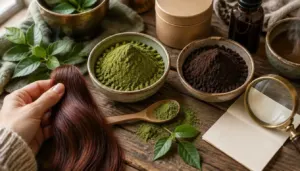
Check your box or jar first. Pure henna is just lawsonia inermis, a bright green powder with a grassy smell. Read the INCI list too, because "natural" on the label guarantees nothing.
Look for PPD or metallic salts. Brown or black powder, or a dark result, may signal them. Plant-only blends need no peroxide, so a non-oxidative formula is reassuring.
Strand-Test a Clarifying Shampoo
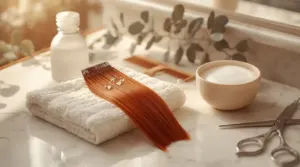
Once you know what’s in your henna, test before you commit. Snip a small hidden section at the nape, or use hair from your brush, about 1 cm thick and including every tone.
Apply the clarifying shampoo and leave it on for 15 to 20 minutes. Rinse, then wait 24 to 48 hours. Check the color and dryness once the strand is dry.
DIY Henna Removers That Can Damage Hair

If gentle fading isn’t moving fast enough, you might feel tempted to reach for kitchen fixes. Skip them. Most popular DIY tricks hit your hair harder than they hit the henna.
Here’s what usually goes wrong:
- Baking soda: It lifts the cuticle and the crystals scratch strands, leaving hair gummy when wet and brittle when dry.
- Lemon juice: Its strong acidity dries hair out, and sun on your scalp afterward may cause burns or rashes.
- Whitening toothpaste: The abrasives scuff the cuticle instead of lifting pigment, and detergents strip your hair.
- Swinging between acid and alkali: The cuticle rarely recovers from repeated pH swings.
Henna binds tightly to hair, so harsh scrubbing or bleach-like chemistry rarely wins. Stick to slow, kind methods and your hair stays far more manageable.
Salon Color Correction for Henna-Dyed Hair
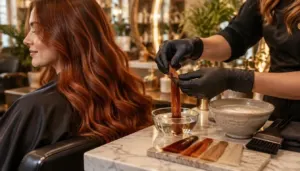
Why do some stylists hesitate to strip the henna? Compound henna may hide metallic salts, and those can react unpredictably with lightener. An experienced hairstylist will snip a strand and run a peroxide and ammonia test first. If it reacts, you’ll need to wait until the hair grows out.
If you’re planning to color over henna down the line, this guide on covering grey hair with henna and whether you need a developer explains what to check first.
If the test passes, expect hair color correction in stages. Your stylist might use a bleach bath to soften pigment, then tone with green shades to cancel leftover red and orange. Expect several sessions spaced weeks apart, so your hair can recover.
| Step | Purpose |
|---|---|
| Strand test | Detects metallic salts |
| Bleach bath | Softens henna pigment |
Tell your stylist about every plant dye and permanent hair dye you’ve used, so repairs get planned.
Growing Out Henna and Blending Roots
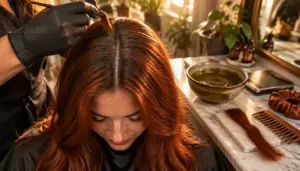
Patience is your best tool, because fading henna only goes so far. Hair grows about half an inch a month, so a full grow-out may take 12 to 24 months. Hair regrowth strategies make this hair change period easier.
Try these steps to soften the visible line:
- Touch up roots every 2 to 4 weeks with 30g to 100g of henna.
- Apply henna to thin root sections only, like lowlights.
- Use less henna at the roots each month.
- Add highlights to blur the contrast, then reduce them over time.
- Strand-test before lightening, since indigo may turn results dull.
Wait one to two months before any chemical color. Meanwhile, post-henna hair care keeps you in control, and color correction can wait.
Frequently Asked Questions (FAQs)
Can I dye over henna with a darker shade?
Think of henna as a coat of paint you can’t scrub off. Yes, you can safely go darker.
Wait two to four weeks, strand-test first, and pick a same depth or darker hair dye shade.
How long does henna stay in hair?
You might hope it’s only a stain, but it isn’t. Henna pigment binding to keratin means color can last two to five years in the lengths. Fading starts around weeks four to six.
Will coconut oil fade henna?
Henna is permanent, but coconut oil may help fade the color. It won’t erase it. Soak your hair, leave it for 12 hours, then wash with clarifying shampoo. Expect gradual, subtle lightening over several rounds.
Conclusion
Ready to stop staring at that copper in the mirror? Start small. Test a clarifying shampoo on one strand, and be patient with the fade.
Knowing how to remove henna from hair means accepting that it fades rather than vanishes. Skip harsh DIY tricks that might leave your strands brittle, and book a colorist if you want faster change. Whatever you choose, treat your hair gently. This color is temporary, and you’re back in charge.