This site is supported by our readers. We may earn a commission, at no cost to you, if you purchase through links. This content is for general informational and educational purposes only and is not a substitute for professional medical, dermatological, or nutritional advice.

Your scalp grows roughly half an inch of hair each month. That’s it. No serum, supplement, or viral TikTok routine changes that ceiling, because your follicles operate on a biological clock that no product can override.
But most people searching for how to make your hair grow faster are solving the wrong problem. The goal isn’t to push past biology. It’s to stop losing ground. Breakage, poor scalp health, and nutrient gaps make hair seem stagnant, when it’s growing and snapping off at nearly the same rate.
Understanding what drives real follicle growth puts you back in control.
Table Of Contents
- Key Takeaways
- How Fast Can Hair Actually Grow?
- Healthy Habits Help Hair Grow Its Fastest
- Stimulate Growth With Better Scalp Care
- Support Growth Through Nutrition and Lifestyle
- Choose Hair Growth Treatments Safely
- Frequently Asked Questions (FAQs)
- How can I naturally make my hair grow faster?
- Can hair grow 2 inches in a month?
- How to grow hair faster in 2 to 3 days?
- What is the #1 hair growth?
- Does hair grow slower as you age?
- Do hormones and pregnancy affect hair growth?
- Can seasonal changes impact how fast hair grows?
- Does hair type affect your growth rate?
- Does wearing hats or helmets slow hair growth?
- Conclusion
Key Takeaways
- Your hair grows about half an inch a month no matter what you do, so the real goal is stopping breakage before it erasure before it erases that progress.
- A clean, well-circulated scalp is the foundation of growth — four minutes of daily massage and washing every two to three days makes a measurable difference over time.
- What you eat matters more than what you put on your hair: protein, iron, zinc, and vitamin D are the nutrients your follicles actually need to keep producing.
- Rosemary oil and minoxidil are the only treatments with real clinical backing — everything else conditions your strands but won’t move the growth needle.
How Fast Can Hair Actually Grow?
Before you chase faster growth, you need to know what your hair is actually capable of. As a trichologist, I hear the same inflated numbers every week, and most of them ignore basic follicle biology. Here’s what the science says about your hair’s real growth speed, starting with the facts.
If uneven growth is part of your frustration, patchy beard filling tips from follicle biology experts can help you work with your genetics instead of against them.
Average Monthly Hair Growth
On average, your scalp hair grows about half an inch per month. That equals roughly six inches per year, or 0.3 to 0.4 millimeters daily. Individual rates vary from 0.5 to 1.7 centimeters monthly, influenced by genetics, age, hormones, and health. According to the hair growth cycle phases, the anagen phase lasts 2 to 7 years, while the telogen resting phase can last up to 3 months before shedding occurs.
Why your length may lag behind growth:
- Breakage along the hair shaft
- Shedding during the hair growth cycle
- Styling damage and friction
- Poor nutrient delivery to hair
- Slower protein synthesis for hair
Remember: your follicles keep producing even when visible length stalls.
The Three Hair Growth Phases
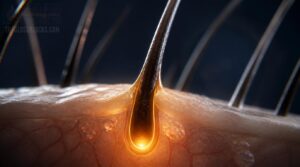
Each strand in the hair growth cycle moves through three phases on its own timeline. The anagen phase drives active growth for 2 to 7 years. Brief catagen follows, signaling the follicle to stop producing. Then the telogen phase releases the strand before regrowth begins.
When shedding lingers even after your thyroid levels settle, this guide on how thyroid issues contribute to hair thinning can help you sort out what else might be going on.
At any moment, 85 to 90% of your scalp hairs stay in anagen.
Genetics and Growth Rate
Your anagen phase extension is largely written in your DNA. Genetics and growth rate are tightly linked: genes regulate how your follicles cycle, how well your body controls nutrient absorption, and whether hormonal balance for hair stays stable.
Family history predicts a lot. But it’s a starting point, not a ceiling, and most biological factors respond to the right habits.
Two-Inches-Per-Month Myth
Genetics set your baseline, but biology sets the ceiling: two inches per month isn’t possible.
- Your hair grows ~0.5 inches monthly, not 2
- No product or technique raises that ceiling
- Hair growth serums work within your biology
- Scalp massage and follicle nourishment tap into what’s there
- Growth cycle optimization and anagen phase extension matter
Social media disagrees, but the follicle won’t.
Overnight Growth Claims Debunked
While you sleep, no oil, mask, or supplement changes what your follicles do overnight. Growth happens at the follicular level, and topical products can’t speed it instantly. Overnight oiling may clog follicles and attract dirt.
Instead, use short 1-2 hour sessions, consistent hair growth serums, scalp massage, stress management, and nutritional support for hair. Results take weeks or months, never one night.
For deeper guidance on building a routine that actually works, essential oils for scalp health and hair growth pair especially well with consistent massage and serum use over time.
Healthy Habits Help Hair Grow Its Fastest

You can’t change your genetic growth rate, but you can stop everyday damage from undoing it. Most breakage comes from small habits you barely notice, like how you brush, tie, and dry your hair. Fix those first, and the length you grow finally stays.
Detangle From Ends Upward
Ripping a brush through knots does more damage than most people realize. When you detangle from ends upward, you loosen knots where they concentrate instead of dragging them through healthy mid-lengths. Work on damp hair, which stretches instead of snapping.
- Divide hair into small sections
- Use a widetooth comb for gentle slip
- Never force through stubborn tangles
This is basic breakage prevention that protects growth you already have.
Use Soft, Covered Hair Ties
Swap your rubber bands for soft, covered ties. Bare rubber grips individual strands and snaps them during removal. Fabric scrunchies and coil-style ties spread tension across the ponytail base, protecting hair shaft strength.
Wear them loosely. Tight styles pull on follicles and cause breakage even with the right tie. This is simple low-manipulation hair care that helps protective hairstyles without stress.
Wash and Dry Gently
Wet hair is at its weakest. Water swells the cuticle, so rough handling snaps strands easily.
Wash with lukewarm water; hot water strips protective oils. Massage shampoo into your scalp using fingertips, never nails, and let the rinse clean your lengths.
For drying, skip rubbing. Blot with a microfiber towel, squeeze gently, and try air-drying hair to at least sixty percent before touching it.
Limit Heat and Chemical Damage
Heat is a leading cause of preventable breakage. Above 300°F, keratin proteins begin to weaken, so strands lose elasticity and snap under normal tension.
Protect your hair with these habits:
- Apply heat protectant from roots to ends before styling
- Use the lowest effective temperature: 250–300°F for fine hair, 350–400°F for coarse hair
- Make one slow pass instead of several rushed ones
- Limit heat styling to every other day or less
- Space out chemical treatments like coloring and relaxing
Since damaged hair cannot grow back stronger, prevention is everything.
Trim Every Eight to Twelve Weeks
Cutting hair does not make it grow faster. Hair grows from the follicle, not the ends. Trims work by split ends prevention: they stop damage from traveling up the shaft and breaking off length you already earned.
Use this schedule:
| Hair Condition | Trim Type | Interval |
|---|---|---|
| Healthy ends | Dusting | 10–12 weeks |
| Rough, fraying ends | Light trim | 8–10 weeks |
| Growing out a cut | Dusting | 6–12 weeks |
Watch for tangles, gummy-feeling ends, or fraying that climbs upward. Those signs mean book sooner. Regular trims support hair breakage prevention and length retention, not growth rate.
Stimulate Growth With Better Scalp Care
Hair grows from the follicle, and the follicle lives in your scalp, so scalp health directly shapes growth. Think of your scalp as the soil where your hair takes root: if it stays clean, well-circulated, and calm, growth follows.
Your scalp is the soil where hair takes root: keep it clean, circulated, and calm, and growth follows
Here are five scalp care habits that support stronger, faster-growing hair.
Four-Minute Daily Scalp Massage

Four minutes a day is the number that matters. Published research on scalp massages uses a standardized four-minute daily routine, so this is the timeframe I recommend.
Place all ten fingertips on your scalp, start at the hairline, and work backward. Cover every zone, including temples and the crown.
This consistent practice helps stimulate hair follicles and helps steady hair growth over months.
Massage With Gentle Pressure

Pressure matters as much as duration. Use gentle to moderate pressure: just enough to feel your scalp move under your fingertips, never enough to cause pain. Firm rubbing won’t speed up dermal papilla stimulation; it risks follicle damage instead.
Move in small circles with your fingertips, not your nails. Adjust pressure on tender areas. If you notice redness or soreness afterward, you pressed too hard.
Keep Scalp Clean and Balanced

Massage works best on a clean base. Your scalp produces sebum, a natural oil that protects skin, but too much of it traps dirt and clogs follicles.
Wash every two to three days with lukewarm water using a gentle shampoo. This helps sebum regulation and scalp circulation, while balanced moisture retention keeps follicles healthy. Avoid harsh scrubbing that strips oils and disrupts your scalp barrier.
Prevent Product Buildup

Styling products can undo a clean scalp. Heavy gels, creams, and silicone-based formulas coat strands and clog follicles, slowing growth. Choose lightweight, water-based products, and apply them to mid-lengths and ends, not roots.
Rinse for at least 30 seconds with cool water. Use clarifying treatments every 2–4 weeks, and favor sulfatefree hair care products for daily gentle cleansing.
For stubborn buildup, a dedicated clarifying shampoo for scalp buildup can reset your scalp between your regular cleansing routine.
Treat Flaking and Irritation

Why does flaking slow your hair growth? Inflammation disrupts the follicle environment. Pat your skin dry, avoid scrubbing irritated areas, and apply a fragrance-free moisturizer while skin is still damp to support hydration for hair health.
- Limit scalp exfoliation during active flare-ups
- Choose ceramide or glycerin-based formulas
- See a dermatologist for persistent irritation
Support Growth Through Nutrition and Lifestyle

Hair growth depends on what happens inside your body, not just the products you put on it. What you eat, how you sleep, and how you handle stress all shape the pace and quality of your growth. The habits below point you toward the most effective changes to make.
Prioritize Protein-Rich Foods
Hair is built from keratin, which your body assembles from dietary amino acids. Without enough protein intake, follicles can’t sustain efficient strand production.
A protein-rich diet doesn’t need to be complicated. Eggs, Greek yogurt, lentils, and fish all supply the essential amino acids your follicles need. Include a protein source at every meal rather than cramming it all into dinner.
Eat Iron, Zinc, Vitamin D
Three micronutrients work alongside protein and biotin to keep follicles performing at their best.
- Iron carries oxygen to follicles; find it in spinach, meat, and fortified cereals
- Zinc (11 mg daily) helps with protein folding and healthy cell repair
- Vitamin D helps regulate your normal hair growth cycles
Get bloodwork before supplementing iron or vitamin D. Don’t self-diagnose a deficiency.
Include Omega-3 Healthy Fats
Every cell in your scalp has a membrane, and omega-3 healthy fats keep those membranes flexible and functional. Fatty fish, walnuts, flaxseeds, and chia seeds are your best dietary sources.
If your protein-rich diet already includes fish twice weekly, you probably don’t need supplements. Fish oil can cause side effects, so ask your doctor before adding it.
Stay Hydrated Daily
Water reaches your follicles through blood, which makes daily water intake foundational to hair hydration and scalp health. Aim for roughly 11 cups if you’re a woman, 16 if you’re a man. For a deeper look at how hydration supports scalp health—without the overhyped growth claims—the science behind drinking water for hair breaks down what adequate intake actually does (and doesn’t) do for your strands.
Your conditioner takes care of the outer strand, but only internal hydration properly aids sebum distribution and keeps your scalp naturally balanced. Pale, straw-colored urine means you’re drinking enough.
Manage Stress and Sleep
Chronic stress pushes follicles into early shedding, a condition called stress-induced shedding. Poor sleep compounds this.
- Aim for 7–9 hours nightly
- Practice 5 minutes of slow breathing before bed
- Write tomorrow’s task list to clear mental pressure
Stress-related hair loss often reverses once stress stabilizes. Daily head massages signal the nervous system to lower cortisol.
Choose Hair Growth Treatments Safely

The hair care market is full of products that promise fast results, but only a handful have real evidence behind them. Before you spend money on treatments, knowing what actually works separates smart choices from wasted ones. Here’s what a trichologist recommends considering, with and without a prescription.
Consider Minoxidil With Medical Guidance
Minoxidil is the most research-backed option for hair follicles stimulation. Applied twice daily, expect three to six months before visible changes appear, and stopping use reverses those gains within months.
Topical versions are considerably safer than oral formulations, which carry notable cardiovascular risks. A dermatologist consultation confirms whether this prescription medication fits your specific type and pattern of hair loss.
Review Evidence for Popular Oils
Most hair oils condition rather than stimulate growth. Among essential oils, rosemary oil stands out, with clinical trials showing it rivals minoxidil for androgenetic alopecia. Peppermint oil also shows measurable follicle stimulation through increased blood flow.
Coconut oil reduces protein loss and breakage. Castor oil, argan oil, and olive oil improve texture and manageability, but don’t expect growth from them.
Avoid Miracle-Growth Product Claims
Some oils deliver real benefits, but marketing language can blur that line fast.
Watch for these red flags:
- "Overnight results" promises
- Before-and-after photos using lighting or styling tricks
- Fine print disclaimers buried in ads
- Testimonials replacing clinical evidence
- "Guaranteed" or universal results language
The FTC requires solid scientific proof behind health claims. If it sounds too good, it is.
Supplement Only When Needed
The same skepticism that protects you from miracle claims applies equally to supplements. Take them only when a confirmed deficiency exists. A protein-rich diet often closes the gap first.
| Nutrient | Why It Matters |
|---|---|
| Biotin supplement | Helps keratin structure |
| Iron and zinc | Fuel follicle cell production |
| Vitamins A, C, and E | Protect scalp tissue |
| Omega-3 fatty acids | Reduce scalp inflammation |
See a Dermatologist for Hair Loss
When shedding accelerates noticeably, a dermatologist can determine whether nutritional deficiencies, stress-related hair loss, or deeper hair follicle health issues are the cause.
Your first appointment usually includes a medical history, scalp assessment, and blood work. Baseline photos and lab results give you documented progress to track against, replacing memory-based guessing with clear, measurable data over six weeks.
Frequently Asked Questions (FAQs)
How can I naturally make my hair grow faster?
How can I naturally make your hair grow faster? Focus on reducing breakage, eating enough protein, and keeping your scalp clean. Follicles grow at a fixed rate, so protecting your length is what shows results.
Can hair grow 2 inches in a month?
No. Average monthly growth sits around 5 inches. Even at the high end of normal, 7 inches is the ceiling. Two inches isn’t biologically realistic for most people.
How to grow hair faster in 2 to 3 days?
Growing hair faster in 2 to 3 days isn’t biologically possible. Hair grows roughly 4 millimeters daily. Focus on reducing breakage through gentle detangling and a protein-rich diet to retain every millimeter your follicles produce.
What is the #1 hair growth?
What is the #1 hair growth factor? Like medieval monks mixing scalp tonics, people still chase magic. The real answer is diet. A protein-rich diet gives follicles the keratin hydrolysates they need to build length.
Does hair grow slower as you age?
Does hair grow slower as you age? Yes. Your anagen phase shortens over time, reducing how long each follicle actively produces new hair. Most people begin noticing this gradual change between ages 50 and
Do hormones and pregnancy affect hair growth?
Yes — and the timing is rarely coincidental. Hormones shape everything: pregnancy elevates estrogen, dramatically reducing hair shedding. After delivery, that sudden drop triggers stress-related hair loss, pushing hair follicles into synchronized shedding within several months.
Can seasonal changes impact how fast hair grows?
Can seasonal changes impact how fast hair grows? They can. Anagen activity peaks in early spring, then falls toward September, when daily shedding nearly doubles. Reduced winter sunlight lowers vitamin D, disrupting your follicle cycle.
Does hair type affect your growth rate?
Does hair type affect your growth rate? Not directly. Follicle biology drives growth, regardless of texture or porosity. What changes is retention — coily patterns shrink visibly, and low elasticity hair breaks faster, masking real progress.
Does wearing hats or helmets slow hair growth?
Wearing hats doesn’t cause baldness, but tight headwear can still work against you. Daily compression, friction, and heat stress follicles that are already genetically vulnerable, speeding up existing thinning rather than creating new hair loss.
Conclusion
Protect what grows, feed what grows, and handle what grows with care. That’s the real answer to how to make your hair grow faster.
Your biology sets the pace, but your habits decide how much of that growth you actually keep. A cleaner scalp, a more complete diet, and gentler daily handling won’t rewrite your genetics. They’ll simply make sure every precious half-inch your follicles produce makes it all the way down to your ends.