
This site is supported by our readers. We may earn a commission, at no cost to you, if you purchase through links.
Your grandfather knew something most men have forgotten: the difference between scraping hair off your face and actually shaving. That difference lives in a piece of folded steel that hasn’t changed much since Sheffield craftsmen perfected it three centuries ago.
Learning how to shave with a straight razor isn’t about nostalgia or looking cool in your bathroom mirror—it’s about taking control of a daily ritual you’ll repeat 20,000 times in your life. The technique demands respect, patience, and a steady hand, but it rewards you with the closest shave possible, zero plastic waste, and the satisfaction of mastering a skill that separates the deliberate from the distracted.
Once you understand the fundamentals of blade angle, grain direction, and proper stropping, you’ll wonder why you ever trusted your face to disposable cartridges designed for profit over performance.
Table Of Contents
- Key Takeaways
- What is a Straight Razor?
- Why Choose a Straight Razor for Shaving?
- Essential Tools and Preparation Steps
- How to Shave With a Straight Razor
- Shaving Safety Tips and Common Mistakes
- Straight Razor Maintenance and Care
- Top 9 Straight Razor Shaving Products
- 1. Dovo Carbon Steel Straight Razor
- 2. Dovo Straight Razor Shaving Kit
- 3. Norton Japanese Sharpening Stone Set
- 4. Premium Leather Razor Strop Sharpener
- 5. Badger Hair Shaving Brush Set
- 6. Taylor Sandalwood Shaving Cream Bowl
- 7. Premium Single Blade Safety Razor
- 8. Stainless Steel Straight Razor Shaver
- 9. CeraVe Gentle Hydrating Face Cleanser
- Frequently Asked Questions (FAQs)
- Conclusion
Key Takeaways
- Straight razor shaving delivers the closest possible shave while eliminating plastic waste and lifetime cartridge costs, though mastery demands three months of disciplined practice focusing on proper blade angle (30 degrees), grain direction, and daily stropping.
- Your shaving success hinges on thorough prep work—soften whiskers with hot water for 2-3 minutes, build thick lather with quality soap and a badger brush, and always shave with the grain first before attempting across-the-grain passes.
- Blade maintenance separates lifelong performance from premature failure: strop 20-40 passes before every shave to realign the edge, hone every 2-3 months with whetstones (4000-8000 grit), and store your razor dry with light oil coating to prevent rust.
- Beginners should start with a 5/8-inch blade on easy cheek areas using zero pressure (let the blade’s weight do the work), avoid daily shaving until your skin adapts, and keep styptic pencil handy for inevitable learning nicks.
What is a Straight Razor?
A straight razor isn’t just another shaving tool—it’s a precision instrument with centuries of history behind it. Before you can master the technique, you need to understand what you’re actually holding in your hand.
Let’s break down the essentials: what defines a straight razor, how it’s built, and what sets the traditional version apart from modern alternatives.
Definition and History
A straight razor is a rigid steel blade hinged to a handle—what old-timers called a cut-throat razor. This razor evolution traces back to ancient civilizations, but the modern version you’ll master emerged in 18th-century Sheffield, England. Blade development took off when Benjamin Huntsman’s crucible steel revolutionized traditional shaving.
Though safety razors stole the spotlight by the 1900s, straight razor maintenance and proper shaving techniques are experiencing a bold comeback today. The art of shaving with a straight razor involves understanding straight razor history to appreciate its value.
Key Components of a Straight Razor
Before you can master the shave, you need to know what you’re holding. Your straight razor breaks down into distinct parts that each play a role in edge maintenance and performance.
- The blade: Usually 3 inches long, with widths measured in eighths (5/8 or 6/8 inch being most common)
- The tang: That narrow extension you grip during shaving
- The scales: Your handle—protects the blade when folded
- The spine: Determines your cutting angle alongside blade geometry
Steel selection matters too. Carbon steel delivers easy honing but rusts fast, while stainless steel resists corrosion and holds an edge longer—though stropping takes more effort. Razor materials and handle design affect balance, so choose what feels natural in your hand. Understanding the blade components is vital for peak shaving performance.
Traditional Vs. Disposable-Blade Razors
Once you grasp blade anatomy, you’ll face a fork in the road: traditional fixed-blade or disposable-blade straight razors. Traditional models require stropping before each shave and honing a few times per year—roughly $10–$30 per professional service. Disposable-blade razors (shavettes) skip that ritual entirely, swapping blades like a safety razor while keeping the straight-razor shaving technique and eco-friendliness intact.
| Factor | Traditional Straight Razor | Disposable-Blade Straight Razor |
|---|---|---|
| Razor Maintenance | Stropping daily; honing 2–4×/year | Replace blade every 1–2 weeks |
| Cost Efficiency | ~$450 upfront; decades of use | Lower entry; ongoing blade costs |
| Shave Quality | Closest shave; lifetime blade durability | Excellent shave; fresh edge per swap |
| Eco-Friendliness | Zero waste after initial purchase | Minimal metal waste vs. cartridges |
Barbershops lean toward shavettes for hygiene—single-use blades dodge cross-contamination risks. At home, traditionalists prize the ritual and razor comparison shows fixed blades win on long-term cost efficiency and blade durability.
Both deliver exceptional shave quality over cartridge razors, and both honor wet shaving’s craft. Your choice hinges on whether you crave the meditative rhythm of razor maintenance or the grab-and-go simplicity of blade swaps.
Why Choose a Straight Razor for Shaving?

You might be wondering if switching to a straight razor is actually worth the effort, especially when modern cartridge razors seem so convenient. The truth is, there’s a reason traditional wet shaving has made such a strong comeback in recent years.
Let’s look at what makes straight razors stand out from the crowd and why so many guys are ditching the disposables for good.
Benefits of a Straight Razor Shave
When you learn proper shaving technique with a straight razor, you’re unlocking benefits that modern cartridges just can’t match. Traditional shaving yields outcomes that’ll make you wonder why you waited so long:
- Skin Benefits: Single-blade wet shaving dramatically reduces razor burn and those annoying ingrown hairs compared to multi-blade systems
- Shave Quality: You’ll get the closest, smoothest cut possible—fewer passes mean less irritation
- Eco Friendliness: Zero plastic waste, just steel that lasts decades
- Cost Savings: One investment replaces years of cartridge purchases
Comparing Straight Razors to Other Shaving Tools
Understanding your grooming preferences starts with knowing how each blade type stacks up. A straight razor delivers maximum closeness and precision—you’re the pilot here, not a passenger. Double-edged safety razors offer solid shave quality with less skill required, while cartridge systems like Mach5 prioritize speed over control.
Your razor comparison boils down to this: mastery versus convenience, ritual versus routine.
Environmental and Longevity Advantages
Beyond the shave itself, you’re making a statement against throwaway culture. Traditional shaving with a straight razor means zero plastic waste—no cartridges choking landfills for a century. One blade, maintained properly, outlasts thousands of disposables.
Here’s what sustainable shaving delivers:
- Waste reduction: Nearly 2 billion disposable razors hit U.S. landfills yearly
- Longevity benefits: A well-maintained straight razor lasts decades, even generations
- Eco friendly impact: No ongoing carbon footprint from manufacturing or electricity
- Green grooming economics: Eliminates constant cartridge purchases
- Shaving safety: Quality steel means fewer skin irritations
Your razor maintenance ritual—stropping, honing—becomes an investment in men’s grooming that actually pays environmental dividends.
Essential Tools and Preparation Steps

Before you put blade to skin, you need the right gear in your corner. Getting set up properly means assembling a few key accessories, prepping your face the right way, and learning how to whip up a lather that’ll protect your skin through every stroke.
Let’s break down what you actually need and how to get everything ready for your first straight razor shave.
Must-Have Shaving Accessories
You’ll need more than just a razor to master this craft. A leather strop keeps your blade singing sharp between shaves.
Grab a quality shaving brush to build that thick lather from shaving soap or shaving cream. Pre-shave oils soften stubborn whiskers, while aftershave lotions calm your skin post-shave.
Shaving bowls help you whip up perfect lather every time.
How to Prepare Your Face and Beard
Proper razor preparation starts with your skin, not the blade. Face cleansing strips away oils and grime that’ll fight your edge, while warm water triggers beard softening through hydration—your facial hair swells and weakens after just two minutes of moisture exposure.
- Wash with a mild cleanser to remove sebum and reduce post-shave irritation
- Soak a hot towel on your face for 2–3 minutes to fully hydrate whiskers
- Apply pre shave oils to lock in moisture and create extra glide
- Time your shave within 10 minutes of skin hydration for maximum softness
Creating The Perfect Shaving Lather
Lather optimization separates novice work from master-class shaves. You’re chasing a water-to-soap ratio around 2.8:1 that delivers slickness without collapse.
Load your badger brush with shaving soap or shaving cream, then add water by the gram until you hit that sweet spot: smooth, bubble-free lather texture that won’t slide down your neck.
Water quality matters, but brush techniques matter more—fan shapes build cushion, domes spread coverage.
How to Shave With a Straight Razor
Now that you’ve got your face prepped and your tools ready, it’s time to put blade to skin. The actual shaving process requires a steady hand, the right angle, and a methodical approach that respects both the razor and your face.
Let’s break down the essential techniques you need to master for a clean, safe shave from start to finish.
Proper Razor Grip and Handling

Think of your hand and razor as one unit—that’s the foundation of blade control. Rest your first three fingers along the blade’s back for stability, place your pinkie on the tang, and position your thumb mid-blade for precision.
This grip gives you razor balance and confident finger placement when shaving with a straight razor. Your hand should feel relaxed, not cramped, letting the tool become an extension of your movement.
Achieving The Correct Blade Angle

Once you’ve nailed the grip, blade angle control becomes your next checkpoint. Start with the razor nearly flat against your skin, then lift the spine just a few millimeters—you’re aiming for roughly 30 degrees.
This sweet spot in razor edge geometry lets the blade slice cleanly without scraping or digging in, keeping skin irritation prevention front and center while you master your shaving technique.
Step-by-Step Shaving Technique

With your blade angle dialed in, it’s time to put everything together. Stretch the skin taut with your free hand—tighter surface means cleaner cuts—then glide the straight razor in short, controlled shave strokes down your cheek.
Rinse the blade after every pass to keep it cutting smooth. Work zone by zone, re-lather as needed, and keep your razor grip relaxed to let the weight do the work.
Shaving With and Across The Grain

Your first pass should always follow the grain—that’s the direction your whiskers naturally grow. Grain mapping sounds fancy, but it’s just running your hand over your face to feel which way the hair lies.
Most guys find their neck hair grows sideways or even upward, so downward strokes there actually cut against the grain.
After your with-the-grain pass, re-lather and go across the grain for extra closeness without the irritation that comes from shaving against it.
Post-Shave Skin Care Routine

Once you’ve finished your across-the-grain pass, it’s time to calm things down. Your skin just lost part of its protective layer, so post-shave care isn’t optional—it’s how you avoid razor burn and irritation.
Here’s your personal care routine for shaving safety and precautions:
- Rinse with cold water to close pores and reduce burning sensations
- Apply an alum block for skin soothing and stopping minor nicks
- Use alcohol-free aftershave balm for moisturizing techniques that actually work
This post-shave routine delivers real irritation relief without the sting.
Shaving Safety Tips and Common Mistakes

Learning to shave with a straight razor means you’re going to make some mistakes—that’s just part of the process. The good news is most common problems are completely avoidable once you know what you’re doing.
Let’s walk through the key safety tips and pitfalls that’ll keep your skin happy while you’re mastering this craft.
Preventing Nicks and Cuts
Keep your blade sharpness dialed in—dull edges force you to press harder, spiking cut risk by 20–25%. Razor maintenance and smart technique beat brute force every time.
Skin preparation matters: hydrated whiskers cut easier, reducing trauma.
Master your shaving angles; even a 10-degree shift increases nicks. Always stretch skin taut, lighten your pressure on the neck, and learn proper cut management with styptic pencils or alum.
Avoiding Razor Burn and Ingrown Hairs
Often, razor burn prevention comes down to shaving technique tips you’ve already mastered: soften whiskers with hot water, maintain that 30-degree blade angle, and always shave with the grain on your first pass.
Ingrown hair treatment starts before trouble hits—gentle skin exfoliation methods remove dead cells, while your post-shave care routine with hydrating aftershave balm calms inflammation.
Re-lather between passes using your shaving brush, keep razor sharpening consistent, and let active bumps rest completely.
Tips for Beginners
Master your straight razor with patience—most beginners need three months of consistent shaving techniques to develop real confidence. Start with blade maintenance basics: strop before every shave, perfect your razor handling on easier cheek areas first, and never rush shave preparation. These shaving tips and tricks separate successful wet shavers from frustrated quitters.
Mastering straight razor shaving demands three months of disciplined practice—strop daily, start on easy areas, and never rush your prep
Rushing razor handling kills progress—deliberate practice beats speed every time when shaving with a straight razor.
| Beginner Priority | Why It Matters | Quick Win |
|---|---|---|
| Safety precautions | Prevents cuts and builds confidence | Use zero pressure—let blade weight work |
| Shave preparation | Softens whiskers, reduces passes needed | Warm water soak for 90 seconds minimum |
| Razor sharpening basics | Maintains edge between hones | Strop 15–20 passes on leather before shaving |
| With-grain only passes | Eliminates razor burn and ingrown hairs | Map growth direction with fingertips first |
| Short controlled strokes | Improves accuracy on contours | Practice 2–3 cm movements on flat areas |
Straight Razor Maintenance and Care

Your straight razor isn’t like those throwaway cartridges you toss every week—it’s built to last a lifetime, but only if you treat it right. Taking care of your blade means keeping it sharp, clean, and protected from the elements that want to destroy it.
Let’s break down the essential maintenance habits that’ll keep your razor performing like new for decades to come.
Stropping and Honing The Blade
Your straight razor loses its edge every time you shave—stropping and honing bring it back. Strop before every shave to realign the microscopic teeth along the blade, and you’ll only need to hone every few months. Think of stropping as tuning up your razor daily, while honing is the deep maintenance that keeps the steel sharp for decades.
- Stropping: Run your blade spine-first along a leather strop with light pressure before each shave
- Honing Stones: Use a progression from 4,000-grit up to 8,000–12,000-grit whetstones for edge maintenance
- Strop Techniques: Flip the razor over its spine, never the edge, to avoid damage
- Blade Sharpening: Apply an X-pattern stroke across the stone to guarantee even contact
- Razor Refurbishment: Avoid heavy pressure during razor sharpening to prevent wire edges
Cleaning and Storing Your Razor
Your blade can last decades—or rust in weeks—depending on how you treat it after shaving.
Rinse your straight razor under lukewarm water for about 15 seconds, pat it dry with a lint-free cloth, then wipe with isopropyl alcohol for razor sanitizing.
Store it in a ventilated stand away from bathroom humidity, and apply a thin coat of mineral oil for rust prevention before blade storage.
Extending Razor Longevity
When you commit to proper razor maintenance, your blade becomes a lifetime investment instead of a disposable tool. Daily stropping techniques and corrosion prevention through oiling can stretch your honing intervals to 6–12 months, while smart steel selection means the difference between decades of service and constant edge preservation battles.
- Strop 20–40 laps before every shave to maintain alignment and delay razor sharpening and maintenance
- Apply protective oil after each use—carbon steel pits within weeks without it
- Use chromium oxide paste every 15–30 shaves to refresh the edge between honings
- Store dry and ventilated; bathroom humidity kills even the finest blade
Top 9 Straight Razor Shaving Products
You’ve learned the technique, now it’s time to stock your kit with the right gear. The tools you choose can make the difference between a smooth, satisfying shave and a frustrating morning at the sink.
Here are nine proven products that’ll set you up for success, from premium razors to aftershave essentials.
1. Dovo Carbon Steel Straight Razor
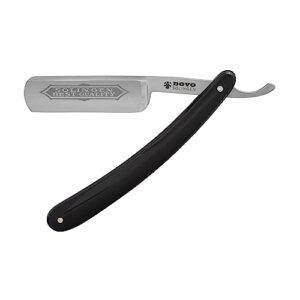
For decades, Dovo’s Solingen-crafted carbon steel straight razor has been the weapon of choice for shavers who refuse to settle. This 5/8-inch blade delivers the closest shave possible when you master proper stropping techniques and blade maintenance.
The full hollow grind gives you that satisfying “sing” as it cuts, though fair warning—handle durability can be hit-or-miss, and it won’t arrive shave-ready.
You’ll need to invest time learning razor sharpening and stropping, but once you nail your shaving technique, this German-made tool becomes an extension of your hand.
Best For: Experienced wet shavers or dedicated beginners willing to invest time in learning proper maintenance and stropping techniques for an authentic, close shave.
- Full hollow-ground carbon steel blade (hardened to 61 HRC) delivers exceptionally smooth cuts and audible feedback while remaining flexible enough to navigate facial contours
- Handcrafted in Solingen, Germany since 1906, representing genuine heritage craftsmanship with a 5/8-inch blade that suits both learning and experienced hands
- Carbon steel construction allows for a razor-sharp edge that glides effortlessly when properly maintained, offering professional-grade performance at a fraction of premium model prices
- Requires significant maintenance commitment including regular stropping, occasional honing, and diligent drying to prevent corrosion—not a grab-and-go tool
- Handle durability is inconsistent, with multiple reports of cracks or breaks in the Cellidur plastic construction despite the high-quality blade
- Doesn’t arrive shave-ready out of the box, meaning you’ll need professional honing services or sharpening skills before your first shave
2. Dovo Straight Razor Shaving Kit
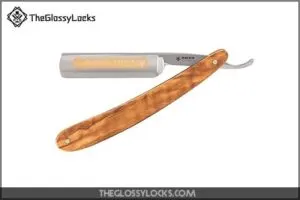
If you’d rather skip the learning curve, Dovo’s First Love shaving kit bundles everything in one box—6/8-inch carbon steel razor, leather strop, care oil, and even a haemostatic pencil for those inevitable learning nicks. The heavier blade helps beginners nail their shaving technique without the white-knuckle grip.
Kit components cover blade maintenance basics, plus Dovo throws in free resharpening your first year. At around $245-$395 depending on the tier, you’re buying decades of razor longevity instead of chasing disposable cartridges.
Best For: Beginners who want a complete entry point into straight razor shaving without hunting down individual accessories or worrying about maintenance in the first year.
- Complete kit includes everything needed—razor, strop, oil, leather balm, and styptic pencil—so you’re not piecing together gear from multiple vendors
- Heavier 6/8-inch carbon steel blade helps new users maintain steady control and cuts through thick beard growth more effectively than lighter razors
- Free factory resharpening within the first year takes the pressure off learning to hone and extends the edge life while you’re still figuring things out
- Carbon steel blade requires careful drying and oiling after every use to prevent rust, which adds maintenance steps compared to stainless options
- May not arrive shave-ready out of the box according to some users, potentially requiring stropping or professional honing before first use
- Price point of $245-$395 is a bigger upfront commitment than trying a single budget razor, though it pays off long-term versus cartridges
3. Norton Japanese Sharpening Stone Set
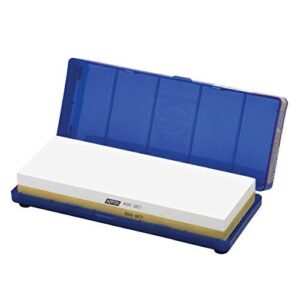
Once you’ve got the right razor, you’ll need the Norton 4000/8000 combination whetstone to keep that edge alive. This dual-grit stone handles both honing process work and edge refining—4000-grit resets dulled bevels, 8000-grit polishes to a shave-ready shine.
Soak it for ten minutes, work through your razor sharpening routine with steady X-strokes, and you’re maintaining decades of razor maintenance without tossing blades.
At roughly $75-$115, it’s your stone selection cornerstone—one block handling what used to require multiple whetstones in traditional shaving technique systems.
Best For: Straight razor users who want a single stone that handles both edge restoration and final polishing without buying separate whetstones.
- Dual-grit design (4000/8000) covers mid-range honing and finish polishing in one stone, cutting your setup costs compared to buying multiple Japanese whetstones
- Comes with a plastic base that works as both a soaking tray and non-slip stand, giving you knuckle clearance for full razor strokes right out of the box
- Soft binder creates fresh cutting slurry quickly during use, making it beginner-friendly and effective even if your technique isn’t perfect yet
- Soft structure dishes and wears faster than harder stones, meaning you’ll need to flatten it regularly with a lapping plate to keep the surface safe for razors
- Some stones arrive from the factory with uneven surfaces that need correction before first use, adding an extra prep step
- Plastic case can crack or feel flimsy during transport, so it’s not the most durable travel companion if you’re honing on the go
4. Premium Leather Razor Strop Sharpener
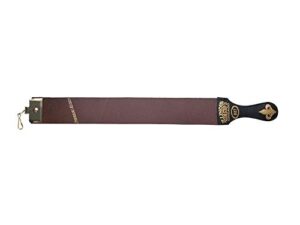
Your whetstone manages the heavy lifting, but between those honing sessions you need a premium leather strop to keep that razor blade singing. This handcrafted 23×2.5-inch cowhide model gives you dual-surface stropping techniques—canvas side loaded with zinc oxide for light razor edge refinement, smooth leather for daily alignment that straightens microscopic deflections without removing steel.
Fifty laps before each shave extends months between whetstone visits, turning strop maintenance into your daily ritual. At around $40-$70, it’s the bridge between blade honing methods and decades of sharp, consistent shaves—pure leather strop care fundamentals.
Best For: Straight razor users who want to keep their blade shave-ready between stone honings without removing steel from the edge.
- Dual-surface design lets you abrade on canvas then refine on leather, giving you two stropping stages in one tool
- Extends time between full honings from a few shaves to several weeks or months with just 50 daily passes
- Handcrafted in the USA from top-grain cowhide that can last 4–5 years with basic conditioning every few months
- Hardware quality is inconsistent according to some users, which matters when you’re hanging tension on it daily
- Leather arrives stiff and slippery out of the box, so you’ll need to condition and flex it before it handles well
- Not beginner-friendly if you’ve never stropped before—wrong technique can roll your edge instead of straightening it
5. Badger Hair Shaving Brush Set
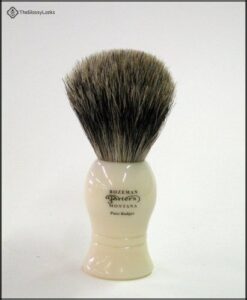
A proper shaving brush transforms soap into lather that protects your skin and lifts whiskers for the blade. This pure badger hair model ($35) whips thick foam fast, with soft bristles that feel gentle during application—key shaving technique fundamentals.
While synthetic alternatives exist, natural badger hair types retain moisture better for consistent lather creation. The lightweight plastic handle keeps it affordable, though serious wet shavers eventually upgrade.
Expect some shedding initially, but with basic brush maintenance tips like thorough rinsing and air-drying, it’s solid starter grooming gear.
Best For: Beginners exploring traditional wet shaving who want authentic badger hair performance without spending over $100 on their first brush.
- Whips up thick, protective lather quickly with most shaving creams and soaps
- Soft natural bristles feel gentle on skin and help reduce irritation compared to canned foam
- Affordable entry point to see if badger hair shaving suits your routine before investing in premium models
- Small brush head may feel cramped if you have a large face or prefer bigger lathering motions
- Lightweight plastic handle lacks the heft and durability of wood or metal alternatives
- Expect bristle shedding and crimping over time, signaling you’ll eventually need an upgrade
6. Taylor Sandalwood Shaving Cream Bowl
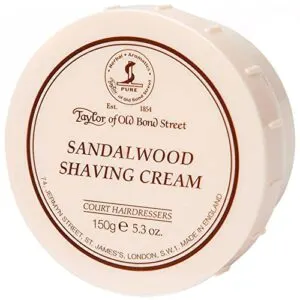
Quality shaving cream makes the difference between a harsh scrape and a glide. Taylor’s Sandalwood Shaving Cream Bowl ($20 for 5.3 oz) delivers shaving cream benefits that align with traditional straight razor shaving technique—rich lather performance that cushions the blade while skin moisturizing properties protect against irritation.
The sandalwood fragrance adds a barbershop vibe without overwhelming your senses. It’s built for razor compatibility with brushes, whipping into thick foam that holds up through multiple passes.
One bowl lasts months of daily shaves, making it solid value for mastering your shaving technique.
Best For: Traditional wet shavers who want a premium cream that builds thick, protective lather with a classic sandalwood scent.
- Rich, cushioning lather works great with brushes and safety razors for smooth, irritation-free shaves
- One bowl lasts months of daily use, making it good value despite the higher upfront cost
- Pleasant sandalwood fragrance with barbershop character that doesn’t overpower
- Requires a shaving brush to get proper lather, adding to your initial investment
- Contains fragrance allergens that may cause reactions in people with sensitive skin
- Pricier than drugstore options, though competitive within the premium shaving cream category
7. Premium Single Blade Safety Razor
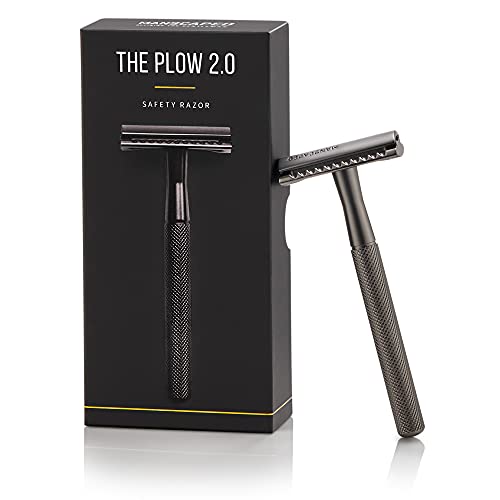
Shifting from straight razors to MANSCAPED’s Premium Single Blade Safety Razor ($34.99) gives you precision without the learning curve. Its brass handle and zinc alloy head with gun metal coating deliver an ergonomic design that balances weight perfectly for a controlled shaving technique.
The optimized cutting angle reduces razor burn, while blade sharpness rivals traditional straight razor performance—think of it as training wheels for mastering men’s grooming. Safety features prevent ingrown hairs better than multi-blade cartridges.
This double-edged safety razor bridges classic craftsmanship with modern razor selection, making it essential for your kit.
Best For: Guys transitioning from cartridge razors who want a closer shave with less irritation, or anyone looking to cut down on plastic waste without jumping straight to a straight razor.
- Weighted brass handle gives you better control and reduces the chance of nicks compared to lightweight plastic razors
- Single blade design means less tugging and fewer ingrown hairs, especially if you’ve got sensitive skin
- Way cheaper long-term since replacement blades cost pennies versus expensive cartridge refills
- Takes some practice to nail the right angle and pressure if you’re used to multi-blade cartridges
- Unscrewing the whole head to swap blades is more tedious than clicking in a new cartridge
- The threading can strip or break if you overtighten it, so you need to be careful during blade changes
8. Stainless Steel Straight Razor Shaver
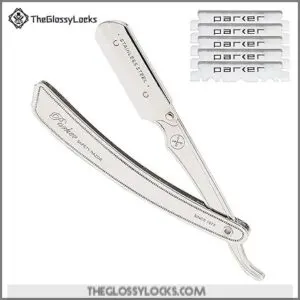
Parker’s stainless steel straight razor ($12.99) puts professional-grade blade sharpening within your reach. This clip-type holder accepts single or half double-edge blades, delivering edge retention that outpaces carbon steel alternatives—you’re looking at longer intervals between honing sessions.
The rust-resistant construction manages humid bathroom environments without the obsessive drying ritual traditional razors demand. Stainless steel maintains a sharp edge through repeated water exposure, making it ideal for daily shavers mastering straight razor techniques.
Five included blades get you started on razor maintenance and care that’s actually manageable for beginners.
Best For: Beginners and daily shavers who want a low-maintenance straight razor experience without constant rust prevention or frequent honing.
- Rust-resistant stainless steel handles humid bathrooms and water exposure without needing to dry it obsessively after every shave
- Longer edge retention means you’ll spend less time sharpening between shaves compared to carbon steel options
- Clip-type design makes swapping blades quick and straightforward, plus you get five blades to start
- The blade holder can be tricky to load and unload safely—requires some care to avoid cuts while swapping blades
- Stainless steel edges can feel harsher on skin and be tougher to hone if you’re new to sharpening techniques
- Low blade exposure limits how sharp you can get your edges for detailed barbering work like crisp line-ups
9. CeraVe Gentle Hydrating Face Cleanser

Your skin takes a beating during straight razor shaves, which makes pre-shave preparation critical. CeraVe’s hydrating face cleanser ($13.49) brings ceramides and hyaluronic acid to the fight—ingredients that fortify your skin barrier before the blade makes contact.
This non-foaming formula removes surface oils and dirt without stripping moisture, setting the stage for better glide and fewer irritations. The gentle cleansing action works particularly well for guys with dry or sensitive skin who’ve struggled with harsh soaps that leave their face feeling tight and vulnerable.
Best For: Men with normal to dry or sensitive skin who want a gentle, barrier-supporting cleanser that preps the face for straight razor shaving without stripping natural moisture.
- Contains three essential ceramides plus hyaluronic acid to strengthen the skin barrier and maintain hydration during the mechanical stress of shaving
- Non-foaming, fragrance-free formula cleanses effectively without over-drying or leaving skin feeling tight before blade contact
- Accepted by the National Eczema Association and designed for sensitive skin, reducing irritation risk for those prone to razor burn or post-shave discomfort
- The non-foaming, lotion-like texture may feel unfamiliar to users accustomed to traditional foaming cleansers
- Not formulated for oily or acne-prone skin types, which may require deeper oil control before shaving
- Some users report it doesn’t remove heavy makeup effectively, though this is less relevant for most men’s pre-shave routines
Frequently Asked Questions (FAQs)
How often should I hone my straight razor?
Think of your blade like a high-performance knife—with daily use and proper stropping, you’ll need honing every 2-3 months.
Lighter users can stretch this to 60-70 shaves before edge maintenance becomes essential.
Can women use straight razors for body shaving?
Yes, women can absolutely use straight razors for body hair removal, though it requires practice. The single blade delivers precise control over legs and underarms, but safety razors offer easier handling for beginners.
Whats the best blade width for beginners?
A 5/8-inch blade width strikes the sweet spot for learning proper shaving technique—narrow enough for maneuverability around your nose and ears, yet wide enough to deliver stability and control while you master stropping and edge geometry fundamentals.
How do I treat cuts from straight razors?
Even seasoned hands sometimes draw blood. First, apply firm pressure with clean gauze, then use styptic powder or alum to stop bleeding.
Clean gently, apply antibiotic ointment, and cover until healed.
Should I shave daily with a straight razor?
Most men shouldn’t shave daily with a straight razor. Your skin needs time to recover between shaves—usually two to three days—especially if you have sensitive skin or you’re still mastering razor technique.
Conclusion
Your first decent shave with a straight razor might take twenty careful minutes—mine did, standing at my grandfather’s mirror with his restored Solingen blade. Three months later, I was done in eight, with better results than a decade of cartridges ever delivered.
Mastering how to shave with a straight razor transforms grooming from thoughtless routine into deliberate craft. The blade doesn’t lie, and neither will your reflection. Now go earn that smooth face.
- https://www.wiseguyreports.com/reports/straight-razor-market
- https://www.grandviewresearch.com/press-release/global-wet-shave-market
- https://www.alliedmarketresearch.com/wet-shave-market-A07780
- https://www.beardbeasts.com/blogs/news/straight-razor-vs-safety-razor-which-shaves-better
- https://www.nakedarmor.com/blogs/news/how-to-save-water-when-shaving