This site is supported by our readers. We may earn a commission, at no cost to you, if you purchase through links.

Your shampoo bar turns to mush in the shower, dissolving twice as fast as it should. The culprit isn’t the formula—it’s sitting in a puddle of water between uses, slowly melting away your investment.
Most people lose half their bar’s lifespan simply because they treat it like regular soap, leaving it on a flat dish where water pools underneath. Shampoo bars need airflow and drainage to stay firm, and the difference between proper storage and a soggy mess comes down to a few simple adjustments.
Once you understand how moisture breaks down these concentrated formulas, you can double their longevity with the right dish, placement, and drying strategy.
Table Of Contents
Key Takeaways
- Shampoo bars lose up to half their lifespan when stored in standing water, so you need draining dishes with ridges, soap saver bags, or elevated racks that allow airflow underneath to keep them firm between uses.
- Humidity above 70 percent triples bacterial growth and turns bars mushy within days, making bedroom storage with proper ventilation far better than keeping them in steamy, unventilated bathrooms.
- Cutting your bar into thirds and rotating between pieces extends longevity by reducing the surface area exposed to water during each shower, while letting unused portions stay completely dry.
- Before traveling, air-dry your bar for 8 to 24 hours and pack it in breathable mesh pouches or ventilated aluminum tins rather than airtight containers that trap moisture and cause deterioration.
How to Keep Shampoo Bars Dry
Water is your shampoo bar’s worst enemy. If you leave it sitting in a puddle or trap it in a humid space, it’ll turn into a mushy mess before you know it. Here are three practical ways to keep your bar dry and ready for its next use.
Using Draining Soap Dishes or Racks
A draining dish is one of the smartest moves you can make for proper shampoo bar storage. These dishes extend solid shampoo life by preventing standing water from softening your bar between washes.
Look for designs that deliver:
- Drainage design with grooves or ridges to channel water away quickly
- Dish material like silicone, bamboo, or wire for moisture control
- Dish placement away from direct shower spray on ledges or racks
- Dish hygiene through regular cleaning to prevent buildup that blocks drainage
Good drainage can double your bar lifespan, slowing dissolution rates and keeping your investment firm. A well-ventilated draining rack or soap saver dish lets air circulate underneath, drying your bar faster between uses and reducing waste. Consider using a bamboo soap dish to further promote sustainability.
Soap Saver Bags for Drainage and Exfoliation
A soap saver bag offers two-in-one benefits: excellent drainage and gentle exfoliation. Hanging your bar in sisal or cotton mesh reduces contact with moisture by 50–70% compared to flat dishes, extending solid shampoo life considerably. The textured weave buffs away dead skin while generating consistent lather. These bags also help to function as zero waste alternatives to plastic loofahs. Look for natural-fiber bags promoting material biodegradability and proper storage through complete air-drying between uses.
| Feature | Sisal Bag | Cotton Mesh | Synthetic Mesh |
|---|---|---|---|
| Exfoliation intensity | Firm, invigorating | Gentle, soft | Variable, may irritate |
| Lather consistency | Rich, concentrated | Creamy, moderate | Moderate to thin |
| Material biodegradability | Fully compostable | Biodegradable | Not biodegradable |
| Bag hygiene | Rinse, air-dry | Machine washable | Harder to clean |
| Usage lifespan | 3–6 months | 6–12 months | 12+ months |
Avoiding Standing Water and Pooling
Even with mesh bags or ridged dishes, pooling prevention demands attention to elevated surfaces and sloped storage. Bars left on flat shelves collect thin films of water that accelerate premature dissolution—up to three times faster than properly drained bars.
Soggy residue invites microbial risks, so prioritize drainage materials and ventilation. Position your shampoo bar storage away from shower floors where moisture lingers longest.
Choosing The Right Storage Container
The container you choose plays a bigger role than you might think in how long your shampoo bar lasts. You want something that allows air to circulate while keeping the bar protected from direct water exposure.
Let’s look at the best storage options that balance ventilation, sustainability, and placement to keep your bar in great shape.
Containers With Ventilation Holes
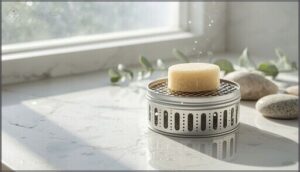
Proper storage containers with built-in ventilation make all the difference for shampoo bar longevity. When evaluating storage solutions, look for these design features:
- Bottom drainage holes that allow rinse water to escape and accelerate drying
- Perforated bases or slotted sides that promote continuous airflow around your bar
- Metal construction like tinplate or aluminum, which resists bacterial growth better than plastic
- Compact sizing (roughly 10 cm × 10 cm) for travel containers that maintain ventilation without bulk
These ventilated designs create a controlled microenvironment that keeps humidity around 30–40%, preventing both the mushiness from excess moisture and brittleness from overdrying.
Research shows bars stored in ventilated containers stay firm two to three times longer than those kept in closed boxes, especially in humid bathrooms. The combination of proper airflow and material choice delivers real mold prevention benefits while extending your bar’s usable life.
Eco-friendly Packaging Alternatives

Beyond ventilation alone, you can support sustainability by choosing storage made from compostable packaging like cardboard or bamboo packaging—both naturally break down and help reduce bathroom plastic.
Reusable materials such as metal travel tins or glass jars last for years, cutting down on replacements.
Paper systems and breathable bags made from wax paper offer portable, planet-friendly options while keeping your bar dry between washes.
Placement Outside Direct Water Flow

Your shower’s spray zone usually extends 25–40 cm from the wall, so position your shampoo bar at least 20–30 cm outside this cone to preserve shelf life.
In a shared shower, mount a rack on the side or back wall away from direct water exposure—this reduces moisture-related softening, lowers microbial risk, and gives your bar proper storage in a dry area between washes.
Preventing Moisture and Humidity Damage

Even if you’ve nailed the perfect draining setup, moisture in the air can still work against you. Humidity is one of those invisible culprits that shortens a shampoo bar’s lifespan without you noticing until it’s too late.
Here’s how to recognize the risks and keep your bar safe from damp conditions.
Storing in Low-humidity Environments
You want to keep your shampoo bar in a spot where the humidity stays between 30 and 50 percent—that’s the sweet spot.
In dry climates, breathable bags and airtight containers both work well for compact storage, though material choice matters. Wood or bamboo trays promote airflow, while proper storage away from heat prevents softening.
A bedroom cupboard beats a steamy bathroom every time for dry storage.
Avoiding Storage in Unventilated Bathrooms
Bathrooms without exhaust fans can hit 70 percent humidity after a hot shower, and that’s where trouble starts. Bacteria multiply nearly three times faster when humidity climbs from 50 to 70 percent, turning your bar into a breeding ground.
In unventilated bathrooms, humidity above 70 percent triples bacterial growth and destroys your shampoo bar within days
Here’s what happens in poorly ventilated spaces:
- Your bar becomes sticky and mushy within days
- Mold spores find a happy home on damp surfaces
- Natural oils degrade faster in warm, moist air
- The bar dissolves between uses instead of drying
- Microbial growth compromises product safety
Alternative storage in a bedroom drawer with a soap saver bag keeps your bar fresh. Ventilation strategies matter—if condensation lingers on mirrors for minutes after your shower, humidity’s already doing damage. Choose dry storage over steamy convenience, and your bar will reward you with months of use instead of weeks.
Signs of Moisture-related Deterioration
Your bar sends signals before it fails completely. Surface softening turns firm edges mushy, while sweating discoloration creates sticky droplets that attract dust. Cracking erosion splits the bar into fragments, and odor changes from fresh to rancid flag oxidized oils. Microbial growth appears as fuzzy spots or slime, shortening shampoo bar longevity dramatically.
| Warning Sign | What You’ll Notice |
|---|---|
| Surface softening | Gooey, sticky texture instead of firm feel |
| Cracking erosion | Edges dissolve, bar loses defined shape |
| Sweating discoloration | Water beads form, color fades or darkens |
| Odor changes | Rancid or musty smell replaces original scent |
| Microbial growth | Visible mold, slimy film, reduced shelf life |
Store unused portions away from direct sunlight and moisture to preserve your investment.
Storing Shampoo Bars for Travel

Traveling with shampoo bars requires a different approach than storing them at home, since you can’t rely on open-air drying between uses. The key is making sure your bar is completely dry before you pack it, then choosing the right container to keep it that way on the road.
Here’s how to prep, pack, and protect your shampoo bar so it arrives intact and ready to use.
Air-drying Bars Before Packing
Before traveling with shampoo bars, let your bar air-dry for at least 8 to 24 hours on a draining dish or clean towel. This drying duration allows surface removal of moisture, protecting bar integrity and hygiene factors during sustainable travel.
Environment conditions matter—choose a well-ventilated spot away from steam. Bars packed damp become mushy, lose mass faster, and can develop odor, cutting their lifespan by two-thirds compared to properly dried ones.
Breathable Travel Pouches and Cases
Once your shampoo bar is dry, material breathability in travel containers becomes your next line of defense. Soap saver bags made from mesh or fabric allow air circulation while traveling with shampoo bars, helping prevent microbial growth that thrives in sealed plastic.
Market trends reflect growing user adoption of aluminum tins with drainage holes—these stay TSA-compliant while avoiding the sogginess trap of airtight cases, supporting sustainable travel without compromising bar integrity.
Packing Tips for Mess-free Transport
Two-layer containment—a breathable inner wrap paired with a rigid outer case—solves approximately 80% of user-reported mess issues during travel.
Position your container in a dedicated toiletry pouch, away from electronics and heat sources that soften bars.
For humid destinations, adapt your drying protocols by extending air-time or briefly chilling the bar before packing to maintain firmness throughout your trip.
Sustainable Practices for Shampoo Bar Longevity

Beyond storage basics, you can adopt a few clever habits that squeeze every last wash out of your shampoo bar. These methods reduce waste, save money, and make your bar last considerably longer.
Here’s how to get the most from it with practical, sustainable techniques.
Cutting Bars Into Smaller Pieces
If you want to stretch your solid shampoo bars beyond their typical 60–90 washes, cutting them into thirds offers smart portion control. You’ll reduce the surface area exposed to water during each shower, protecting the unused segments from unnecessary dissolution.
This rotation strategy also makes travel efficiency a breeze—pack one small piece while the rest stays dry at home. It’s a simple shampoo care tip that extends longevity and promotes sustainable shampoo care without any extra effort.
Using Leftover Pieces Efficiently
Once you’ve cut your shampoo bar into pieces, don’t toss those slivers. Soap saver bags extend remnants by 10–20%, letting you use every fragment until it’s gone. Here’s how to improve shampoo bar benefits and reduce waste:
- Press softened scraps onto a new bar for several extra washes
- Reform dried pieces into a fresh bar
- Drop small bits into mesh bags for easy lathering
- Repurpose final fragments for handwashing or cleaning
Rotating Bars to Allow Full Drying
When you rotate between two shampoo bars, each one gets the surface drying time it needs to maintain bar hardness and longevity. This shower routine adjusts to environmental conditions—humid bathrooms especially benefit from alternation.
Pair proper storage hardware with rotation, and you’ll get the most from shampoo bar benefits while cutting waste reduction by up to three times compared to bars kept constantly damp.
These shampoo care tips deliver real results.
Frequently Asked Questions (FAQs)
Can shampoo bars be stored in the fridge?
Short-term chilling won’t break the bank, but fridge storage isn’t your go-to for shampoo bars.
Room temperature storage beats condensation risks and temperature cycling—stick with dry, ventilated spots for real longevity.
How do you prevent shampoo bar color fading?
Protect your shampoo bar from light exposure, heat effects, and humidity control to preserve pigment stability. Natural ingredients fade faster, so store bars in cool, dark spots with proper ventilation—essential shampoo care tips for maximizing shampoo bar benefits.
Should different shampoo bars be stored separately?
You should keep different shampoo bars separate to prevent scent migration and cross-contamination.
Storing each solid shampoo bar in its own reusable container or wax paper also prevents usage errors and improves moisture management.
Can you store shampoo bars in metal containers?
You can store shampoo bars in stainless steel or aluminum travel tins, but avoid carbon steel versions that rust.
Always make certain your bar dries completely before sealing, and choose containers with ventilation holes for everyday use.
How to remove buildup from shampoo bar storage?
To remove buildup from shampoo bar storage, use acid-based cleaners like vinegar for hard water residue, or alkaline methods such as baking soda paste. Heat and soaking soften crusted deposits, while preventative maintenance reduces future accumulation.
Conclusion
The theory that shampoo bars are inconvenient compared to liquid products falls apart when you master storage. Proper drainage, airflow, and humidity control transform these concentrated formulas from soggy disappointments into long-lasting investments.
When you know how to store shampoo bars correctly, you’re not just preserving a product—you’re maximizing value, reducing waste, and proving that sustainable choices don’t require compromise. The difference between a bar that lasts weeks versus months comes down to where and how you let it dry.
- https://www.environix.com/mold/learning/humidity-mold-growth/
- https://areton-ltd.com/proper-use-storage-tips-for-solid-shampoo-bars/
- https://hellohibar.com/blogs/news/how-to-store-shampoo-bars
- https://www.fortunebusinessinsights.com/shampoo-bar-market-108594
- https://fenix.tecnico.ulisboa.pt/downloadFile/563345090416473/MasterThesis_InesBrilhante.pdf