This site is supported by our readers. We may earn a commission, at no cost to you, if you purchase through links.

Your beard doesn’t come with an instruction manual, but you’ve probably noticed it has a mind of its own. One side grows faster. The neckline creeps down like kudzu. That spot under your chin refuses to cooperate no matter what you do.
Here’s the truth most guys miss: styling your beard isn’t about fighting its natural tendencies—it’s about working with them. Your face shape, growth pattern, and hair texture already tell you exactly what will look best. You just need to know how to read the signs and use the right techniques to bring out your beard’s full potential.
Table Of Contents
- Key Takeaways
- Choosing The Right Beard Style
- Preparing Your Beard for Styling
- Essential Tools for Beard Styling
- Step-by-Step Beard Shaping Techniques
- Maintaining Your Styled Beard
- Frequently Asked Questions (FAQs)
- How do I make my beard look good?
- How to style your beard for beginners?
- How do I properly shape my beard?
- What is best for styling a beard?
- What is the most attractive beard style?
- How can I reduce beard waviness effectively?
- Which products prevent beard dandruff reliably?
- What causes beard split ends and how to fix?
- How often should beard combs be cleaned?
- What techniques improve mustache growth speed?
- Conclusion
Key Takeaways
- Your face shape and natural growth patterns dictate which beard style will look best, so measure your forehead, cheekbones, and face length to choose a style that actually complements your features instead of fighting them.
- Proper prep work—washing twice weekly with sulfate-free shampoo, detangling with a wide-tooth comb, and applying beard oil to damp hair—sets the foundation for any successful styling session.
- Sharp necklines (one finger above your Adam’s apple) and clean cheek lines separate amateur beards from intentional ones, and you’ll need to maintain these edges every 1-2 weeks to keep your look locked in.
- Daily hydration with 3-10 drops of beard oil plus occasional balm application prevents the common problems that ruin most beards—patchiness, flyaways, frizz, and that scraggly look that screams “I gave up.
Choosing The Right Beard Style
Your face is unique, and your beard style should work with it—not against it.
The right products—like knowing how often you should use beard oil—help maintain texture and shape without working against your natural growth pattern.
The secret to nailing your look starts with understanding your face shape, then picking a style that actually complements your features. Let’s break down how to choose a beard that makes you look sharp and confident.
Assessing Your Face Shape
Face mapping is your starting point—grab a measuring tape and pull your hair back. You need hard numbers to nail the right beard shaping strategy for your facial proportions.
- Measure forehead width at the hairline for jawline analysis
- Record cheekbone measurement at its widest point
- Check face length from hairline to chin
- Compare all measurements for a symmetry check
This facial hair blueprint delivers the men’s grooming advice you need for killer beard styling tips. For a deeper dive into how your facial proportions can influence style, try using a face shape calculator tool.
Matching Beard Styles to Facial Features
Once you’ve mapped your face, pair those numbers with the right beard shaping strategy. Your jawline dictates everything—square jaws need fuller sideburns with a trimmed chin strap, while rounded jawlines rock a longer goatee for vertical emphasis.
Your jawline dictates your beard style—square jaws need fuller sideburns with a chin strap, while rounded jawlines demand a longer goatee for vertical balance
| Facial Feature | Best Beard Style |
|---|---|
| Square Jawline | Fuller sideburns + chin strap |
| Rounded Jawline | Longer goatee or soul patch |
| High Cheekbones | Neat cheek line + defined mustache |
| Wide Jawline | Tapered beard narrowing at chin |
| Broad Forehead | Higher cheek start for downward focus |
Face shape analysis reveals your facial proportion blueprint. Cheekbone accentuation works through strategic facial hair placement—high cheekbones pair with clean lines, while low cheekbones benefit from fuller cheek coverage. Jawline enhancement comes from beard symmetry that creates visual balance, not cookie-cutter templates.
Considering Beard Length and Density
Beyond style selection, beard length options and density factors determine what you can actually pull off.
Proper maintenance—like knowing how often to apply beard oil—also plays a role in keeping your beard looking healthy and full.
Short beards under 2 centimeters need weekly trims, while long growth exceeds 6 centimeters and demands daily detangling.
Growth patterns reveal natural direction—thick facial hair texture creates fuller shapes, but sparse coverage requires targeted beard trimming and shaping around patchy zones for uniform beard thickness variations.
Preparing Your Beard for Styling

You can’t sculpt a masterpiece with a messy canvas, and your beard’s no different. Before you pick up those trimmers, you need to get your facial hair clean, soft, and ready to work with.
Here’s how to prep your beard so every trim and shape lands exactly where you want it.
Washing and Conditioning Techniques
Your beard won’t look sharp if it’s dirty or dry. Wash it twice weekly with a sulfate-free shampoo designed for facial hair—this beard cleansing approach maintains hair moisturizing balance without stripping natural oils.
Rinse with lukewarm water, then apply conditioner between washes for beard hydration. Pat dry gently. Finish with beard oil for scalp exfoliation benefits and a quick facial massage to boost beard care results!
Detangling and Brushing The Beard
Knots will sabotage your style before you even start. Grab a wide-tooth beard comb and work from the chin upward using short, gentle strokes—this detangling tip prevents breakage.
Switch to a boar bristle beard brush once you’ve loosened the tangles. Brush once or twice daily to distribute oils and train your hair texture. Your beard maintenance game just leveled up with these beard care essentials!
Softening and Hydrating The Hair
Soft, hydrated hair obeys your every command. That’s why beard hydration and moisture retention matter more than most guys realize.
Beard conditioning unlocks real softness:
- Beard oil replaces stripped oils, coating each strand to lower frizz and boost shine within two weeks
- Beard balm seals in moisture while taming flyaways for 24 to 72 hours
- Leave-in treatments rebuild damaged cuticles and increase strength by 8 to 12 percent
- Lukewarm water during beard care and maintenance preserves natural oils without drying your skin
Oil benefits extend far beyond basic beard care!
Essential Tools for Beard Styling
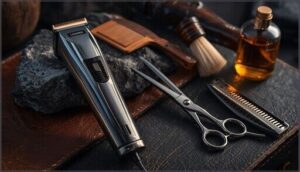
You can’t style your beard with just good intentions and your bare hands.
The right tools make the difference between a sharp look and a scraggly mess that works against you.
Here’s what you need in your arsenal to take full command of your facial hair.
Selecting The Best Beard Trimmer
Your trimmer is the cornerstone of beard trimming and shaping—don’t settle for cheap junk. Look for stainless steel or titanium blade materials that stay sharp and resist corrosion.
Motor speed matters: high-torque motors power through thick hair without stalling. Check charging options—quick-charge cordless trimmers deliver freedom.
Prioritize trim settings with 0.5 mm to 20 mm range for total control. Trimmer ergonomics seal the deal! When choosing equipment, it’s helpful to review a concise overview of the key trimmer features.
Using Scissors, Brushes, and Combs
You can’t tame a wild beard with a trimmer alone—scissors, brushes, and combs finish the job. Stainless steel scissors with 5 to 6 inch blades give you precision for beard texturing and shaping.
Choose your beard brush wisely: boar bristle distributes oils naturally, while nylon resists heat. Wide tooth combs detangle coarse hair without snagging.
Master these trimming tools and you’ll shape like a boss.
Benefits of Beard Oils, Balms, and Waxes
Beard oil benefits go beyond shine and hydration—it hydrates your skin and facial hair while sealing in moisture that lasts all day.
Beard balm adds light hold and nourishment with shea butter for skin hydration. Beard styling wax delivers strong sculpting power for beard maintenance.
Together, these beard care essentials give you total control from conditioning to final shape.
Step-by-Step Beard Shaping Techniques
You’ve got the tools. You’ve got the vision.
Now it’s time to actually shape that beard like you know what you’re doing. The techniques below will walk you through the exact steps—from nailing your neckline to fading those edges—so you can transform a wild mess into something sharp and intentional.
Defining The Neckline and Cheek Lines
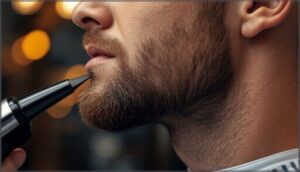
Sharp lines separate a wild scruff from a beard you control. Neckline shaping and cheek line definition give your beard contouring that complements your jawline instead of hiding it.
Here’s your facial mapping strategy for edge definition:
- Find your natural neckline one finger above your Adam’s apple
- Trace a clean curve from ear to ear for proper beard shaping
- Keep cheek lines straight on round faces, curved on angular ones
- Stretch skin taut while trimming for razor-sharp edges
- Refine lines every 2-5 days as growth demands
Master these beard styling tips and you’ll own your look.
Trimming for Full Beards, Goatees, and Mustaches

Once you’ve locked down your lines, it’s time to dial in length and proportion. Full beards thrive with a 2 to 6 mm guard across the jawline—keep it even.
For goatees, trim the chin at 6 to 10 mm while shortening the cheeks for contrast. Mustaches need 8 to 12 mm clearance from your upper lip so you don’t taste your lunch.
Creating Fades and Clean Edges

You’ve shaped your length—now sharpen those edges. A fade blends your sideburns into your beard using graduated guard lengths. Start with a 0 or 1 along the jawline, then work up to 2 through 4 near your ears.
Use clipper-over-comb for softer transitions. Check symmetry with your phone camera. Clean lines transform a decent beard into a statement. Touch up every week or two to keep that edge control razor-sharp.
Maintaining Your Styled Beard

Getting your beard styled is just the beginning—the real work is keeping it sharp. Without a solid maintenance routine, even the best-shaped beard will turn scraggly in a week or two.
Here’s how to lock in your look with regular upkeep, the right products, and quick fixes for the most common beard problems.
Regular Trimming and Grooming Routines
Usually, your facial hair needs attention every one to two weeks to keep that shape locked in. Grab your beard trimmer and knock out those edges—cheek lines, neckline, the works.
Most grooming sessions shave off half a centimeter to keep things balanced. Stick to this trimming cadence and you’ll dodge split ends, wild strays, and that scraggly look nobody wants.
Hydration and Product Application Tips
Your beard craves moisture after every trim session. Hit it with 3-10 drops of beard oil on damp hair—roots to tips—then seal the deal with balm. This product layering locks in hydration and tames flyaways.
Skin care matters too:
- Apply oil while your beard’s still warm from the shower
- Layer water-based serums before oils for maximum absorption
- Reapply lightweight products in dry indoor spaces
- Use balms with shea butter for deeper conditioning
Consistent hydration keeps your grooming sharp.
Addressing Common Beard Styling Problems
Symmetry complaints hit hardest at the jawline—trim the denser side within two to three millimeters for balance. Patchy coverage? Keep cheek lines higher and use light wax on edges.
Flyaway hairs need conditioning balm plus a boar bristle brush.
Neckline definition sits two finger widths above your Adam’s apple. For frizz control, seal with humidity-resistant product after every styling session.
Frequently Asked Questions (FAQs)
How do I make my beard look good?
You can’t wing facial hair care and expect greatness.
Make your beard look good by washing it two to three times weekly, applying hydrating oil daily, and trimming regularly to maintain your chosen shape.
How to style your beard for beginners?
Start with a clean beard. Apply beard oil for softness, then comb through to detangle.
Use your trimmer on a higher guard setting to define your neckline and cheek lines carefully.
How do I properly shape my beard?
Think of a sculptor chiseling marble—that’s beard shaping. Define your neckline above the Adam’s apple, trim cheek lines along natural growth, and use layering techniques for facial harmony and symmetry.
What is best for styling a beard?
The best beard styling combines quality products—oils, balms, and waxes—with the right tools like trimmers and brushes.
Match your grooming routine to your facial structure and beard texture for maximum control and definition.
What is the most attractive beard style?
Medium-length beards (1-2 inches) with defined cheek lines and clean necklines rank highest for facial harmony and masculine looks.
Beard shaping customized to your face creates symmetry, balancing features through smart beard sculpting and mens grooming tips.
How can I reduce beard waviness effectively?
Tame your wavy beard with sulfate-free washes, daily beard oil application, and regular trimming every 2-4 weeks.
Use a light balm for hold, blow-dry along natural hair texture management patterns, and maintain clean necklines for smoother facial hair smoothing.
Which products prevent beard dandruff reliably?
You’ll want dandruff shampoos with zinc pyrithione or ketoconazole, plus moisturizing beard oils with jojoba.
Anti dandruff balms seal in hydration, while medicated treatments tackle stubborn flakes.
Natural remedies include tea tree oil formulations.
What causes beard split ends and how to fix?
Ever notice those frayed tips ruining your look? Beard split ends happen when dryness causes hair breakage, nutrient deficiency weakens shafts, or you skip trimming.
Fix them with regular beard care—trim damaged ends and use quality beard oil daily.
How often should beard combs be cleaned?
You should clean your beard comb after every use with a quick wipe, then do a deep wash weekly.
This cleaning frequency prevents bacterial growth and keeps your beard hygiene on point.
What techniques improve mustache growth speed?
Boost hormone balance through quality sleep and stress reduction. Nutrition tips include protein, biotin, and omega-3s.
Try gentle facial massage to increase blood flow. Proper mustache grooming and beard care maintenance support faster facial hair growth.
Conclusion
What’s the difference between a beard that turns heads and one that barely registers? Execution. You’ve got the blueprint now—face shape analysis, proper tools, trimming techniques, and maintenance routines that actually work.
Learning how to style your beard isn’t some mystery reserved for barbers and influencers. It’s a skill you can master with the right approach and consistent effort. Your beard already has potential. Stop second-guessing it and put these techniques to work.