
This site is supported by our readers. We may earn a commission, at no cost to you, if you purchase through links.
Brown hair has a stubborn habit of clinging to warmth—those red, orange, and brassy yellow tones that creep in uninvited and refuse to leave. You’ve probably noticed how sunlight, heat styling, or even a week of washing can shift your color from cool and refined to unexpectedly fiery.
The culprit isn’t your hair rebelling against you; it’s basic color science at work, and ash toning is your strategic countermove. By depositing blue and violet pigments that neutralize those warm undertones, you’re fundamentally rewriting your hair’s color story.
The process requires precision, an understanding of your hair’s porosity, and the right toner formula—but master these elements, and you’ll transform brassy brown into the cool, dimensional ash tone you’re after.
Table Of Contents
- Key Takeaways
- How to Tone Brown Hair to Ash
- Choosing The Right Ash Toner
- Using The Color Wheel for Ashy Results
- Toning Dark Vs. Light Brown Hair
- Preventing and Correcting Brassy Tones
- Maintaining Ash Brown Hair Color
- Frequently Asked Questions (FAQs)
- Can I use ash toner on colored brown hair?
- How long does ash toner last on brown hair?
- Are there any natural alternatives to ash toner for brown hair?
- Can I tone ash without bleaching first?
- How often should I reapply ash toner?
- Does ash brown work on all skin tones?
- Will toning damage my natural brown hair?
- Can heat styling affect my ash tone?
- Conclusion
Key Takeaways
- Ash toning works by depositing blue and violet pigments that neutralize the red, orange, and yellow undertones naturally present in brown hair, transforming brassy warmth into cool, dimensional color through strategic color wheel principles.
- Your hair’s starting depth determines everything—dark brown requires stronger ash pigmentation and 20-30 minute processing times, while lighter brown needs gentler formulas and 10-20 minutes to avoid over-toning and unwanted green or purple casts.
- Maintaining ash brown demands sulfate-free products, blue or green shampoos used weekly to counteract warm tones, and protection from heat styling and UV exposure, with toner reapplication needed every 4-6 weeks as color naturally fades.
- You don’t need bleach to tone brown hair to ash, but expect subtle neutralization rather than dramatic transformation, and always conduct a strand test 48 hours before full application to prevent disasters like uneven color or excessive cooling.
How to Tone Brown Hair to Ash
Toning brown hair to ash isn’t rocket science, but it does require precision and the right game plan to neutralize those stubborn warm undertones. You’re about to transform your color by counteracting red, orange, and yellow tones with cool blue and violet pigments, creating that coveted ashy finish.
Here’s how to prepare your hair properly and execute the toning process step-by-step for professional-quality results at home.
Step-by-Step Toning Instructions
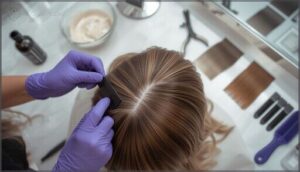
Toning brown hair to ash demands precision with toner application and a solid grasp of color theory. Start by evaluating your hair porosity, which dictates processing time for ash toning products. Apply your chosen toner evenly, monitoring closely as it neutralizes warmth. Master these hair toning techniques and you’ll achieve that coveted ash brown finish every time.
- Mix toner with developer at the manufacturer’s specified ratio, usually 1:2 or 1:1
- Section hair into four quadrants for even saturation and consistent ash results
- Process for 10 to 30 minutes, checking every 5 minutes to prevent over-toning
- Rinse thoroughly with cool water, then seal with a sulfate-free conditioner
Preparing Hair for Toning
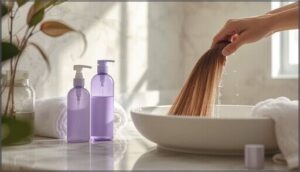
Before you apply toner, your hair needs proper scalp preparation and clarifying. Wash with a mild clarifying shampoo to strip buildup, then rinse with lukewarm water—skip conditioner, as it blocks toner application.
Assess hair porosity using a simple finger test; low porosity requires longer processing, while high porosity absorbs color correction products faster. Always conduct a strand test 48 hours before full ash toning.
Choosing The Right Ash Toner
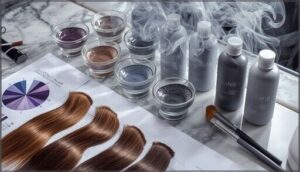
Selecting the right ash toner is the difference between a refined, cool-toned finish and a color disaster that leaves you with green or purple streaks. You’ll need to understand what those confusing label terms actually mean, which pigments counteract your specific warm undertones, and how to match toner strength to your current hair level.
Let’s break down the three critical factors that determine whether your toner delivers that coveted ashy result or falls flat.
Understanding Toner Labels (“Ash” Vs. “Cool”)
The label on your toner bottle matters—”ash” usually signals blue or blue-violet pigments that counteract warm tones, while “cool” emphasizes the same neutralizing effect with a cooler overall tint. Don’t assume both terms mean identical pigment concentration; brand variations exist, and some ash toners pack stronger blue-based undertones than others. Always check product data sheets for exact undertone strength and pigment targets.
Understanding the importance of methodological rigor is essential in various fields, including scientific study summaries.
Blue Vs. Green-Based Toners
Once you’ve decoded those labels, you’ll need to pick your weapon: blue-based toners neutralize orange tones, while green-based formulas counteract red.
Blue toners work best for lighter brown to dark blonde levels, giving you that coveted ashy finish without muddiness.
Green toners tackle excess red undertones—especially after bleaching—so your ash brown doesn’t turn brassy.
Choose based on your hair’s underlying warmth, not guesswork.
Matching Toner to Hair Level
Your hair’s starting level determines which toner strength and pigment balance you need—mismatched formulas either leave warmth behind or create muddy ash undertones.
- Level 3–4 brown hair: Use lighter blue-toned toners to prevent overcast while accounting for hair porosity.
- Level 5–6: Choose stronger blue or blue-violet formulas for true ashy tones.
- Level 7–8: Add violet pigment to offset residual warmth.
- Always strand-test: Verify results before full application.
Using The Color Wheel for Ashy Results
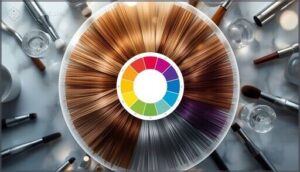
The color wheel isn’t just art class theory—it’s your roadmap to canceling out unwanted warmth and nailing that cool, ashy finish.
The color wheel is your roadmap to canceling out unwanted warmth and nailing that cool, ashy finish
Every shade of brown carries hidden warm undertones that can sabotage your results if you don’t know how to spot and neutralize them.
Here’s how to use complementary colors to take full control of your toning process.
Neutralizing Warm Tones in Brown Hair
Think of color theory as your secret weapon against stubborn warmth. Blue-based toner formulas target orange tones in level 4–6 brown hair, while violet undertones tackle yellow cast.
Your hair porosity determines how well ash brown pigments deposit during the toning process—porous strands grab violet undertones faster.
For lasting ashy tones against brassy brown hair, ash maintenance depends on controlled timing and sulfate-free aftercare.
Identifying Red, Orange, and Yellow Undertones
Your natural lighting holds the key to undertone mapping and color theory mastery. Grab a strand under sunlight and watch for these telltale signs:
- Red undertones flash copper warmth when light hits, resisting blue-based ash toner formulas
- Orange undertones create pumpkin-like warmth in medium brown depths, demanding violet pigment correction
- Yellow undertones glow golden in highlighted areas, requiring blue toners for proper color correction
- Hair porosity affects undertone visibility, with porous strands revealing more brassy brown hair reflections
Selecting The Best Counteracting Pigments
Once you’ve mapped your undertones, match the right pigment to neutralize warmth. Blue-based toner formulas counteract orange and yellow undertones in levels 5–6 brown hair, delivering cool ash brown results.
For stubborn red tones, green-based pigments work better through color correction methods.
Always strand test your neutralization techniques—porosity dictates how fast ashy tones develop during hair toning sessions.
Toning Dark Vs. Light Brown Hair
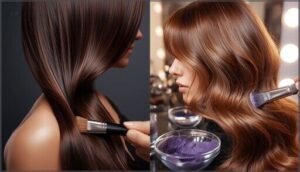
Your starting point matters more than you think when toning brown hair to ash. Dark brown and light brown require completely different approaches, from the toners you choose to the results you can realistically expect.
Here’s how to adjust your technique based on your hair’s depth, plus the products and limitations you need to know before you start.
Adjusting Techniques for Hair Depth
Your brown hair’s starting point changes everything—dark bases need more ash pigmentation to combat stubborn warmth, while lighter shades require gentler toner concentration to avoid overdoing it. Hair Depth Analysis determines your processing times, with darker strands demanding 20–30 minutes versus 10–20 for lighter tones. This affects color absorption dramatically, so adjust your technique accordingly.
| Hair Depth | Toner Approach |
|---|---|
| Dark Brown | Higher ash pigment concentration, blue-based toner, 20–30 min processing |
| Medium Brown | Semi-permanent formulas, balanced application, 15–20 min processing |
| Light Brown | Lower volume developer (10–20), green-based for yellow tones, 10–20 min |
| Pre-Lightened | Monitor closely, dilute toner with conditioner, watch for over-toning |
Master hair toning by matching your brown hair care strategy to your base. Darker hair often needs multiple sessions spaced weeks apart to build ashy tones gradually without drying out your strands, while lighter bases show results faster but fade quicker.
Product Recommendations for Each Shade
Your arsenal matters—matching the right ash toner to your base saves you from dull results and wasted cash. Choose blue shampoo for cooler maintenance between full toning sessions, while ash brown hair dyes and dedicated hair toner formulas deliver striking color correction tips that actually stick.
This shade-matching guide eliminates guesswork—darker bases thrive with Pravana’s controlled pigment, while lighter strands respond beautifully to Wella’s targeted formulas, giving you toning product reviews that translate into real-world ash toner options.
| Product | Best For | Key Benefit |
|---|---|---|
| L’Oréal Paris Feria Multi-Flex Ash Brown | Medium brown (level 5-7) | Built-in conditioning with predictable ash tone |
| Redken Chromatics 7A | Professional-level toning | Controlled fade, reliable cool results |
| Wella Color Charm Paints 9P/6A | Light to medium brown | Neutralizes yellow undertones effectively |
| Pravana ChromaSilk Vivids 6A | Mid-dark brown ranges | Precise ash-dominant pigmentation |
| Joico Color Intensity Ash Brown | Existing brunette bases | Subtle glossing without over-processing |
Expected Results and Limitations
Knowing your toner longevity sets you up for success—expect your ashy hair color to hold strong for 4 to 6 weeks before brassiness creeps back. Hair porosity effects determine whether ash brown deposits evenly or turns patchy, while over-toning risks can leave you with unwanted blue-gray casts that scream amateur hour.
| Factor | Expected Outcome | Limitation |
|---|---|---|
| Color fade rates | Gradual warm shift over 4-6 weeks | Environmental exposure accelerates loss |
| Ash tone variations | Cool brown within 1-2 levels of lift | Can’t eliminate high-level natural warmth |
| Hair toning techniques | Even color on levels 5-7 | Porous hair absorbs unevenly, causing patches |
| Toner processing time | 10-20 minutes for most formulas | Exceeding time yields greenish cast |
| Color correction frequency | Refresh every 4-6 weeks | New growth shows different results than ends |
Preventing and Correcting Brassy Tones
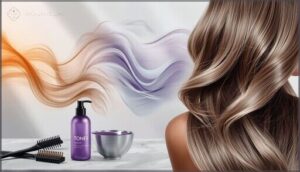
Brassiness doesn’t just appear out of nowhere—it’s your hair’s way of telling you that warm pigments are winning the battle against your cool ash tones. Whether you’re dealing with stubborn orange undertones or a gradual shift back to warmth, understanding what triggers brassiness gives you the upper hand in maintaining that coveted ashy finish.
Let’s break down what causes those unwanted warm tones, how you can tackle them at home, and when it’s time to call in a professional colorist.
Common Causes of Brassiness
You’ll face brassiness when chemical overprocessing damages your cuticle, shifting pigments toward unwanted warmth. UV damage accelerates color fading in toning brown hair, intensifying those orange undertones.
Mineral buildup from hard water and porosity issues create uneven toner absorption, leaving patchy brassy brown hair.
Understanding these triggers gives you control over brassiness removal and maintaining that coveted ashy hair color you’ve worked to achieve.
At-Home Brassy Hair Solutions
When brassiness strikes, you’ve got powerful DIY remedies at your fingertips. Apply violet or blue-based toner formulas once you’ve completed your strand test—this color correction neutralizes those unwanted warm tones instantly.
Use color-depositing blue shampoos twice weekly, rinse with cool water to seal cuticles, and limit washing to preserve your ash tone.
Understanding hair porosity helps you predict how at-home hair treatments will perform on your brassy brown hair when toning brown hair.
When to Seek Professional Help
Sometimes your at-home hair toning techniques hit a wall—that’s when you need salon intervention. Professional consultation becomes non-negotiable when brassy brown hair won’t budge after multiple attempts, or you’re dealing with uneven ash tone distribution across sections.
Reach for expert help if you notice:
- Severe color damage repair needs or visible hair breakage prevention concerns
- Toning mistakes creating unwanted green or purple hues
- Stubborn brassiness despite repeated hair toner applications
Maintaining Ash Brown Hair Color
You’ve done the hard work of toning your brown hair to ash, and now it’s time to keep that cool, elegant color looking fresh.
Without the right maintenance routine, your ash tone can fade quickly or develop unwanted warmth within just a few weeks.
Here’s how to protect your investment and extend the life of your ashy brown color.
Sulfate-Free Hair Care Routines
You’ve worked hard to achieve that perfect ash brown hair, so don’t let harsh sulfates strip it away. Sulfate-free shampoos provide gentle cleansing that protects your color preservation and moisture balance, unlike traditional formulas that contain sodium lauryl sulfate.
These alternatives use milder surfactants like sodium cocoyl isethionate, which respect your hair porosity while maintaining the cool tones your hair toner created—keeping your ash brown hair vibrant between salon visits.
Blue and Green Shampoos for Upkeep
Between toning treatments, blue shampoo neutralizes yellow-orange undertones, while green formulas counteract red tones in ash brown hair. These color protection allies maintain your toner maintenance routine through strategic pigment deposit.
- Apply to wet hair, lather 1–3 minutes for controlled toning treatment
- Start weekly, adjust based on brassy brown hair response and hair porosity
- Choose sulfate-free formulas with UV protection for shampoo selection
- Test a hidden strand before full application to gauge hair toner compatibility
- Alternate with regular color-safe washes to preserve scalp health
Protecting Color From Fading
Beyond your weekly blue shampoo routine, color preservation demands strategic defense against heat and UV exposure. UV radiation accelerates fading by 40% over three months, while styling tools above 180°C strip pigments 20% faster monthly. Shield your ash investment with heat protectants, limit thermal styling to twice weekly, and apply SPF-infused products as your Colour Shield before sun exposure.
| Fading Factor | Protection Strategy |
|---|---|
| UV rays | Wear hats, use SPF 6–15 hair products |
| Heat styling | Apply protectant, keep tools below 160°C |
| Hot water | Rinse with lukewarm water (below 38°C) |
| Frequent washing | Limit shampooing to every 3–4 days |
Frequently Asked Questions (FAQs)
Can I use ash toner on colored brown hair?
Yes, you can, but proceed like you’re mixing potions—ash toner compatibility depends on your brown hair chemistry.
Toner interaction varies with sealed pigments, risking uneven ash toning.
Always patch test before attempting color correction on brassy brown hair.
How long does ash toner last on brown hair?
Your ash brown hair toner will hold strong for 1 to 4 weeks, depending on your hair porosity, washing habits, and how you protect that cool-toned color from heat and harsh sulfates.
Are there any natural alternatives to ash toner for brown hair?
While cassette tapes helped intensify color in the ’80s, today you can try purple shampoos, vinegar rinses, lemon juice, or plant extracts to subtly neutralize warmth in brown hair—though professional hair toner delivers premium ashy results.
Can I tone ash without bleaching first?
You can apply ash toner to brown hair without bleaching, but expect subtle neutralization rather than dramatic transformation.
Non-bleach methods work best on lighter brown shades with existing warmth, depositing cool pigments for Natural Ash Tones.
How often should I reapply ash toner?
Think of ash toner longevity like a candle burning—you’ll need to reapply every 4 to 6 weeks to maintain that cool, brassy-free look as color fading naturally occurs with washing and environmental exposure.
Does ash brown work on all skin tones?
You can rock ash brown on nearly any complexion, but success depends on matching the shade’s depth and coolness to your skin’s undertones—warm complexions may need caramel highlights to avoid looking washed-out.
Will toning damage my natural brown hair?
Toning won’t wreck your hair if you follow directions carefully, use the right developer strength, and keep processing times in check—but skipping those steps risks moisture loss and cuticle damage.
Can heat styling affect my ash tone?
Yes, high temperatures accelerate color fading and shift ash tones warmer through oxidation.
Protect your hair with thermal styling products containing UV filters to preserve brassy brown hair corrections and maintain ash brown hair longer.
Conclusion
Toning brown hair to ash isn’t some medieval alchemist’s riddle—it’s controlled color theory you can replicate at home with the right products and timing. You’ve learned how to identify undertones, select counteracting pigments, and adjust techniques for your specific hair depth.
Now you’re equipped to neutralize brassiness before it takes hold and maintain that cool, dimensional finish. Your hair’s warmth doesn’t dictate your color destiny—your precision does.