This site is supported by our readers. We may earn a commission, at no cost to you, if you purchase through links.
The difference between a majestic beard and a scraggly mess often comes down to one thing—knowing when and how to take the scissors to it. Most guys let their beards grow wild for months, then panic when the mirror reflects something closer to a tumbleweed than the rugged look they were going for.
Trimming a big beard isn’t about hacking away at random—it’s about working with your natural growth patterns, understanding which tools actually matter (spoiler: you don’t need fifteen products), and learning a few key techniques that keep everything looking intentional instead of accidental. Once you nail the fundamentals, maintaining that full, sculpted look becomes second nature.
Table Of Contents
- Key Takeaways
- Preparing Your Big Beard for Trimming
- Essential Tools for Trimming a Big Beard
- Step-by-Step Guide to Trimming a Big Beard
- Top Products for Big Beard Trimming
- Beard Maintenance and Styling Tips
- Frequently Asked Questions (FAQs)
- What is a mistake for beard trimming?
- What is the 4 week beard rule?
- Should you trim a long beard?
- How do you cut a beard for a beginner?
- How to trim a beard like a pro?
- How do you trim a mid-length beard?
- How should a full beard be trimmed?
- How do you manage a big beard?
- How to trim a 2 inch beard?
- What does a 12mm beard look like?
- Conclusion
Key Takeaways
- Trimming a big beard isn’t about random hacking—it’s about working with your natural growth patterns, using the right tools (quality clippers, precise scissors, and proper combs), and following a systematic approach that keeps everything looking intentional instead of accidental.
- Proper prep work makes or breaks your trim—wash with sulfate-free shampoo, detangle from tips to roots with a wide-tooth comb and beard oil, then set up a well-lit trimming station before you even touch the clippers.
- Follow a specific order when trimming: shape the sides and cheek lines first (using a level 2-3 guard), then define your jawline and neckline (one finger above the Adam’s apple), sculpt your mustache and lip line with precision, and finish by blending layers for a natural look using incremental guard changes.
- Maintenance between trims is what keeps your beard sharp—trim every 2-6 weeks depending on density and growth patterns, hydrate immediately after trimming with lightweight oils like argan or jojoba, and avoid common mistakes like cutting dry or rushing through without proper detangling.
Preparing Your Big Beard for Trimming
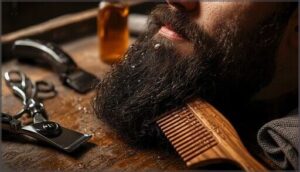
You wouldn’t start trimming a wild mane without some prep work—same goes for your big beard. Before you even pick up the clippers, you need to get your beard clean, tangle-free, and ready to cooperate.
Start with a wash and a good comb-through, then make sure you’ve got quality barber clippers that won’t quit halfway through your thickest growth.
Here’s how to set yourself up for a trim that actually looks intentional (not like you attacked it with a weed whacker).
Washing and Drying Your Beard
A clean canvas makes all the difference in beard care. Start your beard care ritual with lukewarm water and a gentle shampoo (sulfate-free formulas protect that natural moisture).
Here’s your pre-trim wash routine:
- Wet your beard for 30–60 seconds to loosen dirt
- Apply beard wash from skin to ends
- Rinse with cool water to seal the cuticle
- Pat dry with soft towels—never rub
This beard hygiene foundation sets you up for precision trimming and ideal beard health.
Detangling Techniques for Long Beards
Once your beard is damp, it’s time to tackle beard knots. Start with a few drops of oil to add slip—then grab a wide-tooth comb (detangling tools that won’t snap hairs). Work from the tips up in small sections to prevent hair breakage.
For stubborn tangles, gently massage oil into the area and ease through slowly. This tangle prevention step makes your beard trim far smoother.
For additional insights, consider the importance of to improve beard health and appearance.
Setting Up Your Trimming Area
Now that you’ve detangled, set up a proper trimming station with bright, shadow-free lighting (4000–6500 Kelvin works best). Lay a grooming mat or towel to catch clippings, and organize your beard trimmer, guards, and grooming tools on a magnetic strip or foam rack. Keep sanitization spray within reach—clean blades prevent infection.
Good lighting options and tool organization transform sloppy beard trimming techniques into precision work.
Essential Tools for Trimming a Big Beard
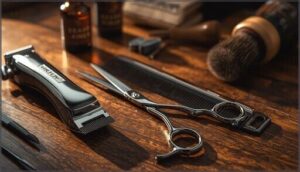
You can’t build a masterpiece with dull tools—trimming a big beard demands the right gear to get sharp lines and a natural shape. Quality clippers, precise scissors, and the right combs make all the difference between a clean, intentional look and a patchy mess.
Let’s break down the essential tools you need to tame that beard like a pro.
Choosing The Right Clippers and Guards
Your clipper blade and guard sizes are the backbone of any serious barbering session—get these right, and you’re halfway to a killer beard.
Start with a 12 mm guard to rough out the shape, then drop to 6 mm for cheek and jawline definition. Use 3 mm around your lip line (no stubble gaps here).
If you want to see the full process in action, check out how to style your beard for a complete step-by-step walkthrough.
For more guidance, review the differences in clipper guard size options to tailor your trim perfectly.
Snap guards on tight, clean them after every pass, and keep those blades sharp for clean cuts—not choppy tugs.
Selecting Beard Scissors for Detailing
Precision work demands the right steel in hand—bevel or convex edge scissors slice through coarse whiskers without snagging, while titanium blades stay sharp longer than standard stainless.
Look for 4–5 inch models with offset grips (less hand fatigue), adjustable tension screws, and rounded tips for safety near skin. Micro serrations grip hairs beautifully, giving you clean, controlled cuts every time.
Using Combs and Brushes for Even Results
The right tool makes all the difference—fine tooth combs create precise guides along your cheeks for symmetrical trimming, while wide tooth versions prevent snagging in dense or curly beard texture.
For detangling tips, always work from ears toward chin (following natural hair alignment), then finish with a quality beard brush to distribute oils and catch any uneven patches before you start shaping.
Step-by-Step Guide to Trimming a Big Beard
Alright, here’s where the real work begins—turning that wild mane into a sharp, well-maintained masterpiece. This step-by-step guide breaks down the trimming process into manageable sections, so you’re not just hacking away blindly.
Follow these techniques in order, and you’ll shape your beard with the precision of a pro (no barber school required).
Trimming The Sides and Cheek Lines

Your sides and cheek line set the stage—get these wrong and even a Viking-worthy beard looks uneven. Start with a level 2 or 3 guard on your beard trimmer, working temple to jawline in smooth strokes.
For precision cheek line trimming:
- Trace a straight or slightly curved line from temple to mustache (no dipping allowed)
- Use your detail trimmer without a guard to skim the skin surface
- Align sideburns with your upper ear edge, then trim 1–3 mm above the jawline
- Check symmetry from multiple angles—mirrors don’t lie
Shaping The Jawline and Neckline

Think of your jawline and neckline as the frame that showcases everything else—mess them up, and your entire beard loses its punch.
For razor-sharp jawline definition, trim along your natural jaw bone with a 3–6 mm guard (depending on length), keeping both sides symmetrical within 2 mm. Your neckline sits one finger above the Adam’s apple, angled slightly upward toward your ears—not straight across.
Defining The Mustache and Lip Line

Your mustache and lip line separate a clean look from a woolly mess—don’t skip this vital step in beard trimming. Mustache alignment and proper lip line definition guarantee facial hair growth doesn’t swallow your upper lip, preserving beard symmetry and polished beard styling.
Here’s your trimming technique breakdown for beard care and maintenance:
- Position your fine-tooth comb horizontally along your upper lip, then trim above it with a precision trimmer (1–3 mm)
- Create a soft arc that follows your natural philtrum—higher at center, tapering toward the corners
- Check symmetry by measuring equal distances from your philtrum to each mouth corner (within 1–2 mm)
- Bevel edges slightly instead of carving harsh lines for a natural finish
Revisit after a few minutes—hair relaxes once cut, revealing strays you missed.
Blending and Layering for a Natural Look

Blending transforms a rough trim into professional beard styling—feathered edges erase harsh lines while layering techniques add depth.
Start with a longer guard near your sideburns, then step down toward your jawline in 2 mm increments for natural transitions. Your beard trimmer should glide slowly to create uniform layers.
Finish with scissor-over-comb texture blending at the cheeks—this prevents stacked, unnatural sections during beard maintenance.
Top Products for Big Beard Trimming
Having the right tools makes all the difference when you’re taming a big beard. You don’t need a whole arsenal—just a few solid products that actually do their job.
Here are four barbershop favorites that’ll help you trim with precision and keep your beard looking sharp.
1. Cricket Ultra Smooth Hair Comb
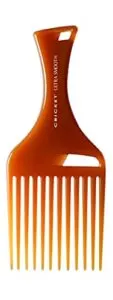
When you’re working through a thick, rebellious beard, you need a comb that won’t snag or break those hard-earned whiskers. The Cricket Ultra Smooth Hair Comb (model 4623) comes infused with argan oil, olive oil, and keratin protein—so it actually conditions while you detangle.
At 8.75 inches long with wide teeth, it glides through curly or coarse facial hair without the tug-of-war you’d get from cheaper tools. It adds lift, reduces frizz, and leaves your beard looking polished instead of punished.
| Best For | Guys with thick, curly, or coarse beards who want to detangle without the pain and add some shine and volume in the process. |
|---|---|
| Brand | Cricket |
| Primary Use | Hair detangling |
| Material | Plastic |
| Weight | 1.13 ounces |
| Suitable For | Thick/curly hair |
| Maintenance Required | Daily cleaning |
| Additional Features |
|
- Infused with argan oil, olive oil, and keratin to condition while you comb
- Wide teeth glide through thick or curly facial hair without snagging
- Adds lift and reduces frizz for a polished, groomed look
- It’s hard to know how much the oil infusion actually does versus a regular comb
- The 8.75-inch size might feel oversized if you’re used to smaller grooming tools
- Probably overkill if you have a short or fine beard
2. Oster Fast Feed Adjustable Clipper
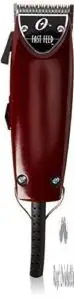
Once you’ve detangled your mane, you need serious power to sculpt it. The Oster Fast Feed Adjustable Clipper brings a whisper-quiet pivot motor that delivers twice the muscle of magnetic clippers—cutting through wet or dry hair without the tug.
Its adjustable blade (size 000 to 1) lets you shift from tight fades to fuller length with a quick lever flip, and the 8-foot cord gives you room to move. It’s built for barbers, but it’ll serve your home setup for years if you keep it oiled and clean.
| Best For | Barbers and serious home users who need a workhorse clipper that cuts fast through all hair types and holds up to daily use. |
|---|---|
| Brand | Oster |
| Primary Use | Beard/hair trimming |
| Material | Steel blade |
| Weight | 1.7 pounds |
| Suitable For | All hair types |
| Maintenance Required | Regular lubrication |
| Additional Features |
|
- Powerful pivot motor cuts through wet or dry hair without pulling or snagging
- Adjustable blade (000 to 1) makes it easy to switch between fades and longer cuts
- Built tough in the USA with an ergonomic design that feels comfortable during long sessions
- Gets hot during extended use, so you’ll need to take breaks
- Doesn’t include a full attachment set—just four guide combs
- Struggles with very thick or long hair and needs regular oiling to stay sharp
3. ZilberHaar Beard Brush

After you’ve carved the shape, you need to train the hair—and that’s where the ZilberHaar Beard Brush shines. Its 100% boar bristles (on a pearwood handle) glide through medium to long beards, distributing oil evenly and detangling without the scratch.
The Regular Soft model packs 58 bristle plugs across 6.1 inches, perfect for sensitive skin. If you’re rocking serious length, grab the Styler Round (222 plugs, 8.4 inches) for blow-dry styling. Both are made in Germany and built to last.
| Best For | Men with medium to long beards who want a durable, natural-bristle brush that distributes oil evenly and works on sensitive skin. |
|---|---|
| Brand | ZilberHaar |
| Primary Use | Beard grooming |
| Material | Boar bristles/wood |
| Weight | Not specified |
| Suitable For | Medium-long beards |
| Maintenance Required | Regular cleaning |
| Additional Features |
|
- 100% boar bristles distribute beard oil and balm smoothly without scratching
- Solid wood handle (pearwood) built in Germany for long-term durability
- Multiple stiffness options let you match bristle firmness to your beard type and skin sensitivity
- May be too small for very thick or extremely long beards
- Stiff bristle versions can irritate sensitive skin, especially on shorter beards
- Requires regular cleaning to keep bristles effective and hygienic
4. V76 Beard Oil Formula
Once you’ve brushed everything into place, lock in the softness with V76 Beard Oil. This 2 oz bottle blends castor, safflower, and jojoba seed oils—each one working to condition coarse hair and hydrate the skin underneath without leaving a greasy film.
Saw palmetto keeps follicles healthy, while vitamin E protects against daily wear. It absorbs fast, smells subtly masculine (think cedar and woods), and won’t clog pores. Just a few drops post-trim keeps your big beard manageable, soft, and looking sharp.
| Best For | Men with coarse or unruly beards who want a lightweight, fast-absorbing oil that conditions hair and skin without feeling greasy. |
|---|---|
| Brand | V76 by Vaughn |
| Primary Use | Beard conditioning |
| Material | Oil blend |
| Weight | 0.16 ounces |
| Suitable For | Coarse beards |
| Maintenance Required | Daily application |
| Additional Features |
|
- Blend of castor, safflower, and jojoba oils softens coarse hair and hydrates skin effectively
- Absorbs quickly with no greasy residue, making it ideal for daily use
- Non-comedogenic formula works well for sensitive skin and won’t clog pores
- Cedar-heavy scent may be too woodsy or strong for some users
- Pump dispenser can malfunction before the bottle is empty
- Higher price point for a 2 oz bottle compared to other beard oils
Beard Maintenance and Styling Tips

Getting your beard trimmed is just the beginning—keeping it healthy and sharp-looking takes a bit of ongoing care.
The good news is that a few simple habits (plus some smart product choices) will keep your big beard looking its best between trims. Here’s what you need to know about maintenance frequency, post-trim hydration, avoiding rookie mistakes, and styling options that’ll make your beard work for you.
Trimming Frequency for Long Beards
Your long beard thrives on a rhythm that respects growth patterns—cheeks and sideburns race ahead while the neckline crawls, so trim schedules shift by zone.
High beard density calls for a 1 to 3 week cadence during peak months, but moderate beards coast on 4 to 6 week intervals.
Seasonal adjustments (hello, summer humidity) can nudge your beard trimmer routine, keeping maintenance tips flexible and your beard trimming and shaping game strong.
Hydrating and Conditioning After Trimming
Moisture balance separates a rough patch from a polished mane—so reach for beard oil or a leave-in conditioner within five minutes of drying to seal the cuticle and lock hydration into every strand.
Post-trim care demands lightweight formulas (think argan or jojoba) that penetrate rather than sit, revitalizing skin beneath while your beard maintenance routines keep flyaways tamed and split ends at bay.
Preventing Common Trimming Mistakes
Precision collapses fast when you rush—so trim after shower when hairs relax, and always comb before each pass to reveal true length.
Skip the urge to cut too short in one session; incremental guard changes (0.5 mm steps) preserve beard symmetry and prevent clipper maintenance headaches.
Check both sides in natural light, and you’ll dodge the most common trimming errors before they wreck your hard-earned beard care progress.
Styling Ideas for Big Beards
A long beard isn’t just face coverage—it’s a statement you can sculpt into dozens of beard styles. Try these beard styling ideas to keep your big bushy beard looking sharp.
- Tapered Viking – Keep cheeks full, taper the chin, and let natural layers add movement (beard texturing at its best).
- Handlebar Fusion – Pair a sculpted mustache with a rounded beard base for facial harmony that draws the eye.
- Textured Fade – Use layering techniques (longer chin, shorter cheeks) and blend with styling products for a polished gradient.
- Tinted Fullness – Even out grays with subtle beard coloring, then finish with oil for controlled shine during beard trimming sessions.
Frequently Asked Questions (FAQs)
What is a mistake for beard trimming?
Trimming a beard without detangling first is like combing wet cement—you’ll snag, pull, and create uneven cuts.
Using the wrong guard length, cutting too close, or skipping proper prep causes irritation and lopsided results.
What is the 4 week beard rule?
The four week rule says you should wait about a month before shaping your beard—it gives your facial hair enough time to reveal its natural growth patterns, density, and boundaries without premature trimming mistakes.
Should you trim a long beard?
A wild, untamed mane might look majestic—but without regular trimming, your long beard becomes a tangled mess.
Yes, trim every 2–4 weeks to maintain beard health, remove split ends, and preserve that sharp, sculpted shape.
How do you cut a beard for a beginner?
Start by washing and drying completely, then comb outward to detangle.
Use a trimmer with guards (try 6mm first), work slowly on your neckline and cheek lines—basic beard trimming builds confidence through simple, controlled cuts.
How to trim a beard like a pro?
Like pro beard trimming, demands precision—start with clean, detangled facial hair, use adjustable clippers with proper guards, follow your facial structure, blend transitions carefully, and finish with conditioning beard oil for polished barbering results.
How do you trim a mid-length beard?
Trimming a mid-length beard requires adjustable clippers with 6–12 mm guards to shape cheeks and jawline, then beard scissors for mustache detailing—always trim dry hair to avoid uneven cuts from shrinkage.
How should a full beard be trimmed?
Think of your full beard as a sculpture—you’re not just cutting hair, you’re revealing shape.
Start by trimming the sides following your natural jawline curve, then define your neckline and cheek lines for clean symmetry.
How do you manage a big beard?
Managing a big beard demands consistent grooming tips and beard care—trim every 4–6 weeks, hydrate daily with styling products like beard oil, and comb through facial hair to distribute oils and prevent tangles.
How to trim a 2 inch beard?
A 2 inch beard trimmer addresses length with a 10-12mm guard first—sweep sides down, then blend the jawline using shorter guards.
Scissors detail your mustache, while beard oil softens fresh edges post-trim.
What does a 12mm beard look like?
A 12mm beard (roughly half an inch) shows natural texture and wave patterns with visible density along your jawline—thick enough to display facial structure while staying manageable, creating balanced visual impact without heavy bulk.
Conclusion
A well-trimmed beard is like a finely tuned instrument—it only sings when you know exactly where to apply pressure. Mastering how to trim a big beard means ditching the guesswork and trusting the process.
The difference between looking like a mountain man and a gentleman isn’t luck—it’s precision. Once you’ve got the technique locked down, your beard becomes your signature, not your struggle.