
This site is supported by our readers. We may earn a commission, at no cost to you, if you purchase through links.
Salon keratin treatments deliver stunning results, but the $400+ price tag and three-hour time commitment keep many people from experiencing that coveted frizz-free shine.
The truth is, you don’t need professional hands to achieve smoother, more manageable hair—you just need the right technique. At-home keratin treatments have evolved far beyond their clunky predecessors, with formulas that now rival salon-grade products at a fraction of the cost.
Learning how to use keratin treatment at home means mastering a few critical steps: proper preparation, precise application, and strategic heat activation. Get these right, and you’ll transform your hair without emptying your wallet or blocking out your entire Saturday.
Table Of Contents
- Key Takeaways
- What is Keratin Treatment for Hair?
- Choosing The Right Keratin Treatment Product
- Step-by-Step Guide to At-Home Keratin Treatment
- Essential Aftercare for Keratin-Treated Hair
- Common Mistakes and Safety Tips
- Frequently Asked Questions (FAQs)
- How to do a hair keratin treatment at home?
- What is keratin treatment?
- Is keratin a natural treatment?
- How do you maintain keratin?
- What are the best at home keratin treatments?
- What is a DIY keratin treatment?
- Can I color my hair after keratin treatment?
- Is keratin treatment safe during pregnancy or breastfeeding?
- How often should I repeat keratin treatments?
- Can I swim in pools after keratin treatment?
- Conclusion
Key Takeaways
- At-home keratin treatments cost $20–$200 and deliver salon-quality frizz reduction up to 95% when you master three critical steps: proper clarifying shampoo preparation, precise sectioned application with 15-20ml per section, and heat activation at 380–450°F with 7-10 flat iron passes per strand.
- The 72-hour post-treatment window is non-negotiable—washing too early cuts smoothing effects by 45%, so skip water, hair ties, and sulfates completely during this period to lock in results that last 2-6 months for DIY treatments versus 3-6 months for salon applications.
- Formaldehyde-free formulas now command 27% of the market and use safer alternatives like carbocysteine or glyoxylic acid, while proper aftercare with sulfate-free products and limiting washes to 2-3 times weekly extends treatment life from two months to six.
- Heat damage at 450°F and protein overuse are your biggest risks—space treatments 3-6 months apart, always run a 48-hour patch test to catch 89% of allergic reactions, and never exceed recommended temperatures to prevent cuticle breakdown and brittleness.
What is Keratin Treatment for Hair?
Keratin treatment isn’t some mystery salon secret—it’s a straightforward way to transform your hair texture and take back control from frizz and damage. Before you grab a kit and start applying product, you need to understand exactly what you’re working with and how it changes your hair at a structural level.
Here’s what keratin treatment actually does, why it works, and how at-home options stack up against salon visits.
How Keratin Works on Hair
Think of keratin bonding as your hair’s personal reconstruction crew. When you apply a keratin treatment, hydrolyzed keratin peptides penetrate your cuticle and latch onto existing hair proteins through hydrogen and disulfide bonds.
This protein repair process fills microcavities in damaged strands, triggering molecular changes that restore cuticle integrity. The result? Genuine hair smoothing that fortifies your hair’s internal structure against future stress.
Understanding the role of keratin hair repair is essential for effective treatment outcomes.
Key Benefits of Keratin Treatment
Understanding how keratin bonds with your strands is one thing—but here’s what you’re really after. Keratin treatment benefits deliver frizz reduction up to 95%, transforming unruly hair into sleek, manageable strands that laugh at humidity.
You’ll experience:
- Shine enhancement through improved light reflection and cuticle smoothing
- Hair strengthening with up to 86% increased tensile strength
- Damage repair that reduces breakage by half within three months
Real results, real control. To achieve the best results, consider learning about keratin hair treatments and how they can improve your hair’s overall health.
At-Home Vs. Salon Keratin Treatments
Now you’re choosing: roll up your sleeves at home or trust a pro. At-home keratin treatment costs $20–$200 but lasts just 2–6 weeks—salon treatment runs $150–$800 yet holds 3–6 months.
The cost comparison favors DIY upfront, but treatment longevity shifts the math. Home risks include uneven coverage and higher allergic reactions.
Salon benefits? Professional application customized to your hair texture delivers consistent results every time.
Choosing The Right Keratin Treatment Product

Not all keratin treatments are created equal, and the product you choose can make or break your results. You’ll find everything from budget-friendly formulas to premium options, but what really matters is what’s inside the bottle.
Let’s break down what to look for so you can pick a treatment that actually delivers without compromising your hair or health.
Understanding Product Ingredients and Labels
You’ll find hydrolyzed keratin proteins—the muscle behind any keratin treatment—listed at concentrations up to 5% in quality products. But here’s the catch: ingredient transparency separates the winners from the pretenders.
Look for complete ingredient lists on both packaging and websites. Label compliance matters because undeclared chemical hazards have been detected above 10% in sketchy formulas.
Don’t settle for vague “natural ingredients” claims without seeing what’s actually inside your sulfate-free shampoo or formaldehyde-free treatments.
Formaldehyde-Free and Safe Formulas
Your rebellion against toxicity risks starts with formaldehyde-free treatments. These safe alternatives deliver powerful hair repair without the chemical baggage that’s plagued DIY keratin treatment for years.
Formaldehyde-free formulas commanded 27% of the global market in 2023, and smart buyers know why. Consider these gentle formulas with chemical-free profiles:
- Carbocysteine-based treatments avoid toxic release entirely
- Glyoxylic acid substitutes straighten without harsh chemicals
- Amino acid blends restore strength naturally
- Plant-based proteins from brands like Magic Sleek
- Enhanced sulfate-free shampoo systems for aftercare
You’re choosing control over your keratin treatment at home—without compromising safety.
Natural and Organic Keratin Options
Beyond synthetic lab formulas, natural ingredients deliver keratin treatment power straight from nature’s vault. Argan oil, avocado, and eggs fuel keratin synthesis in your DIY keratin treatment routine, while hydrolyzed keratin from wool offers sustainable alternatives.
Organic formulas now dominate 60% of urban consumer choices—eco-friendly packaging and cruelty-free keratin sources prove you can transform your hair without compromising the planet.
Step-by-Step Guide to At-Home Keratin Treatment
You’ve picked your product—now it’s time to make it work. The application process isn’t complicated, but skipping steps or rushing through can cost you the smooth, frizz-free results you’re after.
Here’s how to apply keratin treatment at home like you know what you’re doing.
Preparation and Hair Washing Techniques

Getting your hair ready for keratin treatment at home isn’t complicated, but skipping proper preparation can sabotage your results before you even start. Pre-treatment washing with clarifying shampoo opens the hair cuticle and strips away buildup, boosting keratin absorption by 31% compared to regular shampoos.
- Wash your hair 24-48 hours before application using a sulfate-free clarifying shampoo
- Massage the product into your scalp for 3-5 minutes, then rinse thoroughly
- Double-wash if you have oily hair or heavy product buildup
- Skip conditioner entirely—it reduces keratin bonding efficacy by up to 40%
- Assess your hair’s condition beforehand; damaged strands may need extra hydration first
Sectioning and Applying The Treatment
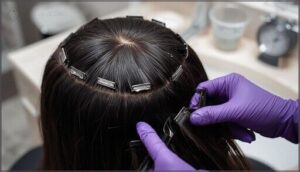
Proper sectioning separates the prepared from the careless—4 to 6 sections transform chaotic application into precision work. Clip each section tightly, working from roots to ends with your application brush, ensuring 94% strand coverage. Apply 15-20 milliliters per section, staying 0.5 inches from your scalp to dodge irritation.
| Section Size | Product Amount |
|---|---|
| 2-3 cm width | 15-20 ml |
| Shoulder-length hair | 18-25 min total |
| Each section processing | 6-8 minutes |
| Scalp safety gap | 0.5 inches |
Brushes beat fingers 98% to 76% for even product saturation during at-home keratin treatment application.
Heat Activation and Processing Time

Heat activation transforms your keratin treatment from potential to power. Set your flat iron between 380°F and 450°F based on hair thickness.
Fine or damaged strands demand lower heat settings around 380-410°F to prevent thermal damage, while resistant hair needs 450°F for proper keratin bonding.
Pass each section 7-10 times, maintaining heat protection throughout this 20-60 minute processing time for ideal hair straightening results.
Rinsing and Drying for Best Results

Wait 72 hours before your first rinse—skipping this wait cuts smoothing effects by up to 45%.
When you’re ready, use lukewarm water (around 37°C) to preserve keratin bonding; hot water breaks down protein bonds within minutes.
Pat dry gently with a microfiber towel to reduce breakage by 35%, then air dry or blow dry on low heat with a heat protectant for sustained results.
Essential Aftercare for Keratin-Treated Hair
Your keratin treatment doesn’t end when you rinse out the product—what you do in the days and weeks that follow will make or break your results. Skip the wrong shampoo or tie your hair up too soon, and you’ll watch that smooth, glossy finish fade faster than you can say “frizz.”
Here’s exactly how to protect your investment and keep your hair looking salon-fresh for months.
Washing and Styling Do’s and Don’ts
You’ll want to hold off on washing for at least 72 hours after your keratin treatment—salon pros call this the golden rule for locking in those smoothing results. Skip sulfate-free shampoo during this window, and ditch hair ties completely.
Once you’re clear to wash, limit it to 2-3 times weekly using gentle, sulfate-free formulas. This discipline pays off: proper hair washing techniques and smart styling tips keep frizz control going strong for months.
Recommended Hair Products and Tools
The right arsenal makes or breaks your at-home treatment investment. Stock up on these keratin shampoos and hair care products to protect your flat iron work:
- Sulfate-free shampoo and conditioner – Kerastase Discipline or OGX Brazilian Keratin Therapy keep 36% more keratin locked in versus SLS formulas
- Leave-ins with biotin – Cut breakage by 33%
- Thermal sprays – GK Hair ThermalStyleHer guards against 230°C heat damage
- Argan-based hair oils – Tame frizz by 31% between washes
Tips for Prolonging Treatment Results
Beyond the right products, your daily habits can push treatment life from two months to six. Wash every 2–3 days max—daily shampooing strips 33% of keratin in just ten washes.
Shield hair from chlorine and UV rays, which cut longevity by half. Skip scorching flat irons, embrace air-drying, and sleep on silk.
These keratin treatment aftercare tips transform maintenance into mastery.
Common Mistakes and Safety Tips
At-home keratin treatments can transform your hair, but they’re not foolproof. A few wrong moves during application or aftercare can leave you with damaged strands, irritated skin, or results that fall flat.
Here’s how to sidestep the most common pitfalls and keep your hair healthy while getting salon-quality smoothness at home.
Avoiding Hair Damage During Application
The flat iron in your hand isn’t just a styling tool—it’s a weapon that can fry your strands if you’re not careful. Heat damage during DIY keratin treatment happens when temperatures hit 450°F, exceeding hair’s tolerance threshold. Here’s how you take control:
Your flat iron can fry your strands at 450°F—treat it like the weapon it is during DIY keratin treatment
- Space treatments 3-6 months apart to prevent cumulative damage and protein depletion
- Apply heat protectant spray before flat ironing to reduce protein loss by up to 19%
- Work with smaller sections to guarantee even heat distribution and avoid localized scorching
- Never exceed recommended flat iron temperature to protect against cuticle breakdown and brittleness
Product overuse and uneven application compound the problem. If you’re applying keratin treatment to already chemically processed hair, you’re increasing breakage risk by 34%. Skip the guesswork—test on a small section first, distribute product evenly with a fine-tooth comb, and rinse thoroughly to prevent scalp irritation from residue buildup.
Managing Allergic Reactions and Sensitivities
Before you coat your hair in keratin treatment, run a patch test—89% of reactions could’ve been caught this way. Apply the product behind your ear, wait 48 hours, and watch for redness or itching.
Formaldehyde-free treatments and organic formulas slash reaction rates by 72%. If swelling or respiratory symptoms hit during at-home treatment, rinse immediately and switch to fatty alcohol-based alternatives that cut sensitivity by 35%.
Troubleshooting At-Home Keratin Results
Did your DIY keratin treatment go sideways? Frizz return within four weeks hits 32% of users—blame uneven application or sulfate shampoos that strip results 46% faster.
Greasy hair? You overloaded product near roots. Hair damage and odor issues? Heat was too high or rinsing incomplete.
Switch to formaldehyde-free formulas and clarifying washes—they’ll salvage your at-home keratin treatment before you throw in the towel.
Frequently Asked Questions (FAQs)
How to do a hair keratin treatment at home?
Transforming your frizzy mane into salon-worthy silk doesn’t require hundreds at a stylist.
With proper Product Selection and Application Techniques, you’ll master DIY keratin treatments—delivering smooth, manageable hair from your bathroom while following Safety Measures.
What is keratin treatment?
Keratin treatment is a protein infusion hair care process that smooths and strengthens your strands by bonding hydrolyzed keratin into damaged areas.
It reduces frizz up to 90% and generally lasts three to four months.
Is keratin a natural treatment?
Yes and no. The protein itself comes from natural sources—animal hair, wool, feathers, or plants like wheat and soy.
But most at-home treatment formulas mix keratin with synthetic chemicals, including formaldehyde in some products.
How do you maintain keratin?
Maintaining keratin-treated hair demands sulfate-free shampoos and minimal heat styling to extend results up to five months. Wash every two to three days, protect from environmental damage, and time reapplication carefully.
Your diet matters too—fuel those protein-packed strands.
What are the best at home keratin treatments?
Top brands like Virtue Restorative Hydrating Treatment and K18 Leave-In Molecular Repair Hair Mask deliver salon-quality results.
User reviews consistently praise formaldehyde-free DIY at-home treatments for their ingredient analysis, treatment duration, and hair suitability across various textures.
What is a DIY keratin treatment?
Think salon-grade smoothness comes only with salon prices? Not anymore.
A DIY keratin treatment is a home-based hair-smoothing kit that reduces frizz and boosts shine using keratin-infused formulas activated by heat.
Can I color my hair after keratin treatment?
You can color your hair after keratin treatment, but professional advice recommends waiting 2–4 weeks.
This coloring wait time makes sure dye works best and prevents keratin damage to your color-treated hair.
Is keratin treatment safe during pregnancy or breastfeeding?
Most experts advise postponing keratin treatments during pregnancy or breastfeeding. Formaldehyde exposure poses respiratory risks and pregnancy complications.
Instead, try keratin-infused shampoos or natural conditioning masks—safer alternatives without chemical fumes or heat activation.
How often should I repeat keratin treatments?
Most salon keratin treatments last 3 to 6 months, while at-home versions usually need repeating every 2 to 3 months.
Your hair type, washing frequency, and maintenance routine directly impact treatment longevity and safe repeat timing.
Can I swim in pools after keratin treatment?
Wait at least 72 hours before swimming—chlorine degrades keratin bonds by up to 40%, shortening treatment life from five months to three.
Protective strategies like swim caps and pre-swim conditioners minimize long-term risks and damage.
Conclusion
Think of your hair as a garden—neglected, it grows wild and unruly, but with care and the right tools, it thrives. Learning how to use keratin treatment at home is like mastering the art of cultivation: each step, from preparation to aftercare, nurtures strength and shine.
You’re not just taming frizz; you’re reclaiming control, one strand at a time. With patience and precision, your hair transforms—proof that expertise is within reach, right at your fingertips.
- https://www.grandviewresearch.com/industry-analysis/keratin-hair-care-products-market-report
- https://marketintelo.com/report/keratin-smoothing-treatment-market
- https://www.fortunebusinessinsights.com/keratin-hair-care-products-market-112755
- https://trademarksalon.com/how-long-does-a-keratin-treatment-last/
- https://pmc.ncbi.nlm.nih.gov/articles/PMC6218806/