This site is supported by our readers. We may earn a commission, at no cost to you, if you purchase through links. This content is for general informational and educational purposes only and is not a substitute for professional medical, dermatological, or nutritional advice.

Generations of Indian women have grown hair past their waists without a single bottle of biotin or keratin treatment in sight. The secret wasn’t genetics or luck—it was a system. Warm oils infused with herbs, weekly scalp massages, and plant-based cleansers passed down like family recipes.
Modern trichology is now catching up to what Ayurveda understood centuries ago: hair growth starts at the scalp, not the strand. These Indian hair growth secrets aren’t mystical rituals reserved for grandmothers—they’re practical, science-backed habits you can build into your week starting now.
Table Of Contents
- Key Takeaways
- Indian Hair Growth Secrets That Work
- Traditional Indian Hair Oiling Ritual
- Ayurvedic Herbs for Hair Growth
- Dosha-Based Hair Care Tips
- Scalp Massage and Growth Techniques
- Indian Diet for Healthy Hair
- Top 5 Ayurvedic Hair Products
- Frequently Asked Questions (FAQs)
- What is the Indian secret for hair growth?
- How do Indians grow their hair so fast?
- How to make Indian hair grow faster?
- What is the secret of Indian hair growth?
- How can Indian hair grow faster naturally?
- How do Indians grow their hair so long?
- How can I regrow my Indian hair?
- Can pregnancy affect traditional hair care practices?
- How often should hair be washed weekly?
- What causes premature graying in young people?
- Conclusion
Key Takeaways
- Your scalp is the starting point for all hair growth, so oiling, massaging, and cleansing it consistently matter far more than chasing trendy products.
- Herbs like bhringraj, amla, and neem aren’t just tradition — they actively support follicle health, balance your scalp’s environment, and reduce shedding when used regularly.
- What you eat shows up in your hair, so getting enough protein, iron, omega-3s, and water gives your follicles the fuel they need to grow strong strands.
- No single ritual transforms your hair — it’s the combination of oiling, herbal care, diet, and scalp massage practiced week after week that builds real, lasting results.
Indian Hair Growth Secrets That Work
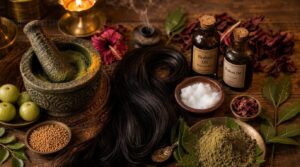
Indian hair care isn’t built on trends — it’s built on generations of scalp-first thinking that actually holds up.
From deep-rooted traditions like batana oil’s hair growth benefits, it’s clear that nature’s oldest remedies often outperform modern formulas.
Ayurveda pulls together oils, herbs, food, and touch into one system that works because every piece complements the others.
Here’s what that looks like in practice.
Why Traditional Indian Routines Focus on Scalp Health
Think of your scalp as a garden — what grows from it reflects how well you tend the soil. Traditional Indian routines prioritize scalp health because everything starts there.
Ayurvedic scalp massage, natural oils for scalp health, and traditional Indian hair cleansing with reetha and shikakai work together to maintain pH balance, microbial harmony, sebum regulation, scalp hydration, and clog prevention.
Generations have passed down the weekly oil massage tradition to nourish follicles and boost circulation.
How Ayurveda Supports Stronger-looking Hair
Ayurveda treats the whole system feeding the hair, not just the hair itself. Through Herbal Oil Fusion and Nutrient Synergy, this approach integrates scalp health, diet, and stress management into a unified strategy.
Bhringraj oil activates dormant follicles, while Amla oil delivers antioxidants directly to the shaft. These targeted treatments exemplify Ayurveda’s focus on nourishing hair at its roots and core.
A simple herbal hair mask or dedicated Ayurvedic Hair Masks routine fosters Mind Body Alignment, transforming care into Radiant Hair Rituals—and delivering tangible, real results.
The Role of Consistency in Length Retention
Consistency is where the real magic happens. Wash Frequency Consistency, Moisture Seal Routine, and Conditioner Application Timing work together to protect strands week after week.
Daily scalp massage for hair growth compounds over time, just like interest in a savings account.
Consistent scalp massage compounds quietly over time, building stronger hair the way savings build wealth
Detangling Tool Standardization and Trim Schedule Discipline prevent setbacks, ensuring steady progress.
A Consistent hair care routine, built on reliable Prewash and postwash oiling strategies, transforms Daily hair-care habits into real length retention.
Common Causes of Hair Fall in Indian Hair Care Traditions
Even with a solid routine in place, hair fall can still show up uninvited. Traction styling from tight braids strains your roots, while mineral buildup from hard water leaves your scalp congested.
Adding pollution irritation, hormonal imbalance, nutrient deficiency, or stress-related hair loss further disrupts balance. This causes your dosha to fall out of sync, quietly disrupting scalp circulation and weakening even nutrient-rich herbal ingredients for hair health.
How Natural Oils, Herbs, Diet, and Massage Work Together
Each piece of this routine builds on the last. Natural oil scalp massages for hair growth create barrier synergy—sealing moisture while herbal oils and their impact on hair growth deliver antimicrobial and anti-inflammatory compounds directly to the follicle. Your Ayurvedic diet for promoting hair growth manages nutrient infusion from within, and scalp massage techniques for hair growth drive a circulatory boost that connects the stress‑nutrient link to real hair follicle stimulation:
- Oils coat and protect the shaft
- Herbs balance microbiome harmony at the scalp
- Diet + massage feed and activate dormant follicles
Traditional Indian Hair Oiling Ritual
Oiling your hair is one of the oldest rituals in Indian households, and there’s a real reason it’s stuck around for generations.
The right oils, applied the right way, can make a genuine difference in how your hair feels, grows, and holds up over time.
Here’s everything you need to know to do it properly.
How Indian Women Oil Their Hair

Traditional Indian hair oiling isn’t one-size-fits-all — regional oil preferences shape every step. Most women part their dry hair and work Ayurvedic hair oil directly into the scalp using circular scalp massage strokes, creating warmth that aids absorption. DIY herbal infusions like curry-leaf coconut oil are common. The frequency of application also depends on hair length, with nighttime oil rituals being popular for deeper conditioning.
| Step | Technique | Common Oil |
|---|---|---|
| Part dry hair | Section and expose roots | Coconut oil |
| Apply to scalp | Circular scalp massage | Castor oil |
| Coat lengths | Smooth downward strokes | Sesame oil |
| Leave on | Overnight or 10 minutes | Ayurvedic hair oil |
| Store oil | Cool, dark container | Infused coconut oil |
Pre-wash Oiling for Reducing Breakage

Before pre-wash oiling builds a defense, oil penetration into the hair shaft preserves protein and reduces friction during washing — that’s hair breakage prevention in action.
Ayurvedic hair oil, applied through a gentle massage, softens strands and improves tensile strength, while cushioning shampoo interaction.
Hot oil treatments work similarly, keeping hair resilient before cleansing stress begins.
Warm Coconut Oil With Curry Leaves
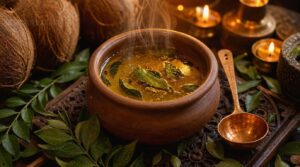
Coconut oil and curry leaves form the foundation of a practical Ayurvedic hair therapy. Begin by washing and drying fresh curry leaves, then gently warming coconut oil over low heat. This leaf infusion technique allows nutrients to permeate the oil. When the leaves darken, remove the mixture from heat.
The oil cooling process is critical: allow the oil to fully cool before straining it into a glass jar. Shelf-life tips recommend using the infusion within a few months for optimal potency. Proper storage preserves both efficacy and aroma.
The aromatherapy synergy of curry-infused oil enhances its therapeutic effects, priming the scalp and supporting hair growth during each application. This holistic approach combines sensory benefits with traditional wisdom.
Castor Oil for Thicker-looking Hair
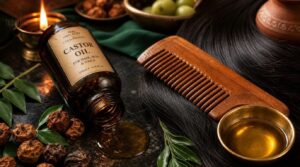
Castor oil is one of those natural remedies for hair growth that genuinely earns its reputation. Its ricinoleic acid power — roughly 85–90% of its fatty acid profile — gives it a viscous coating effect that clings to each strand, creating that temporary thickness trick you’ll notice immediately.
This effect also forms a scalp barrier that locks in moisture, reducing dryness-related breakage.
Always perform a patch test before applying widely.
Neem-infused Coconut Oil for Dandruff-prone Scalps
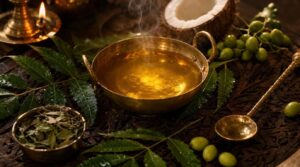
If dandruff keeps coming back, neem and coconut oil might be your most powerful anti-dandruff remedy yet.
Heat coconut oil to around 37°C—this infusion temperature preserves bioactive compounds like nimbin. Add dried neem leaves at a 1:4 concentration ratio.
Apply the mixture twice weekly, using Ayurvedic scalp massage techniques. Work the oil thoroughly into the roots for optimal absorption.
Always perform a patch test safety check first to ensure compatibility with your skin.
How Long to Leave Oil on Hair

Once the neem oil is applied, timing becomes critical. Fine hair requires the shortest duration—just 1–2 hours—to prevent buildup. Thicker or drier hair types benefit from extended absorption periods, even overnight conditioning. Enhancing absorption through thermal methods, like a warm towel wrap, significantly deepens penetration.
- Fine hair: 1–2 hours maximum before washing
- Normal hair: 2–4 hours of prewash oiling works well
- Coarse or dry hair: Overnight oil treatment yields deeper results
- Oily scalps: Limit to 30–60 minutes to avoid exceeding your scalp greasiness threshold
Best Weekly Oiling Schedule for Growth Support
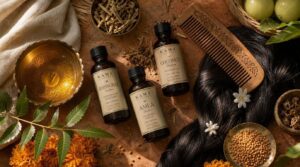
For normal to dry hair, maintaining moisture balance requires 2–3 weekly sessions. Fine or oily hair, however, does best with once-a-week treatment.
Figuring out how much product to start with can make a real difference—this guide on how many ounces of oil to use for long hair helps you dial in the right amount based on your length and hair type.
Apply 1–2 teaspoons of oil using sectioning techniques to ensure even distribution. Massage gently for 5–10 minutes to stimulate absorption and enhance effectiveness.
Track your progress monthly—small consistency wins build real results in Ayurvedic hair care.
Mistakes to Avoid When Oiling Hair
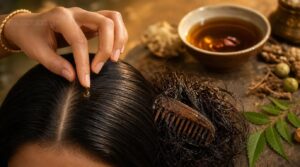
Consistency matters — but so does technique. A few missteps can quietly undo your routine’s benefits.
- Overusing oil weighs hair down and causes buildup that’s tough to rinse out
- Excessive massage force stresses follicles and increases breakage
- Overheating oil risks causing scalp burns, while inadequate rinsing leaves residue behind
Focus on frequency and method of hair oiling — moderate amounts, gentle scalp massage, and proper application zones make all the difference.
Ayurvedic Herbs for Hair Growth
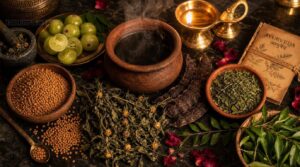
Ayurvedic herbs have been quietly doing the heavy lifting in Indian hair care for centuries. Each one targets something specific — whether it’s a flaky scalp, weak strands, or sluggish growth.
Key herbs worth knowing about.
Amla for Shine, Strength, and Scalp Health
Amla is one of Ayurveda’s most powerful remedies for hair growth — and for good reason. Its vitamin C and antioxidants protect strands from damage while supporting collagen for structural strength.
To use amla oil for strengthening hair, massage an amla oil infusion into your scalp or apply an amla juice rinse weekly. This simple practice delivers essential nutrients directly to the roots.
The pH-balancing treatment soothes the scalp, eliminating flakes and promoting a genuinely healthy environment for hair growth. Regular use ensures calm, flake-free, and resilient hair.
Shikakai as a Gentle Natural Cleanser
Shikakai is your scalp’s quiet reset button. Made from Acacia concinna pods, this ancient natural shampoo creates a saponin lather that lifts dirt and oil without stripping what your scalp actually needs.
Its flavonoid antioxidants and astringent tannins calm follicle stress, while the residue-free rinse leaves hair feeling balanced.
As a pH-balanced wash, shikakai fits seamlessly into any Ayurvedic hair care routine.
Reetha for Sulfate-free Cleansing
Reetha — or soapnuts — has been cleansing hair long before sulfate-free shampoo became a trend.
Soapnut Activation is simple: soak reetha pods in warm water for 15–20 minutes, strain the liquid, and you’ve got your DIY Reetha Liquid ready to use.
Its natural saponins deliver surprising Foam Richness, lifting dirt and buildup while supporting Scalp pH Balance.
This Residue Rinse Technique keeps hair soft, never stripped — true Ayurvedic hair care at its cleanest.
Bhringraj for Fuller-looking Hair
Called the "King of Hair" in Ayurvedic tradition, Bhringraj earns that title through real science. Its wedelolactone power works alongside anti-inflammatory synergy to calm the scalp and support hair follicle regeneration.
- Anagen phase extension keeps strands in their growth cycle longer
- Scalp microcirculation boost feeds follicles with nutrients they need
- Fresh leaf paste applied for 30 minutes delivers actives directly
- Mix with coconut oil for added hair strengthening and hair thickness
Fresh leaf paste applied for 30 minutes delivers actives directly, while mixing with coconut oil enhances hair strength and thickness.
Hibiscus for Softness and Follicle Support
Hibiscus flower is one of those Ayurvedic remedies for hair growth that quietly does so much. Its natural mucilage hydration coats each strand, locking in moisture for a genuinely silky texture. It soothes an irritated scalp and bolsters follicle support by reducing dryness-related breakage.
Blend it with coconut oil for moisturizing hair and herbal treatments to prevent hair loss — plus a gentle tint as a bonus.
Neem for Scalp Balance and Flakes
Few herbs punch above their weight like neem. It’s a true anti-dandruff remedy backed by both Ayurvedic tradition and emerging clinical data on neem.
Neem’s phytochemicals make it a multi-tasker:
- Anti-fungal Neem targets scalp fungi that trigger flaking.
- Anti-inflammatory Neem calms irritation and itchiness.
- Neem leaf paste reduces dandruff severity considerably within one week in study participants.
Among Ayurvedic remedies for hair growth, neem scalp treatments are hard to beat.
Rice Water Rinses for Stronger Strands
Rice water is one of the oldest hair care secrets in Indian tradition — and modern science backs it up. Its inositol elasticity benefit means your strands bend instead of snapping. The starch slip helps detangle without tearing, while amino acid coating leaves hair smoother after every use.
| Rice Water Rinse Benefits | Details |
|---|---|
| Hair shaft strengthening | Amino acids coat and reinforce strands |
| Inositol elasticity | Reduces breakage from brushing |
| Starch slip | Easier, gentler detangling |
| Fermentation acidity | Balances pH for better conditioning |
| Rinse duration | Leave on 10–20 minutes for best results |
This Ayurvedic approach to hair health and nutrition makes rice water rinses a simple, powerful addition to your routine — supporting hair growth naturally.
How to Use Herbal Powders Safely
Herbal powders are powerful — but a few smart habits keep your scalp safe.
- Choose food-grade verified powders labeled for topical or internal use
- Follow dilution guidelines and mix into oil or water, never apply dry
- Do a skin patch test 24 hours before your first DIY hair mask
- Practice hygiene practices — clean bowls, dry spoons, no double-dipping
- Start allergy monitoring after each new herb, one at a time
Dosha-Based Hair Care Tips
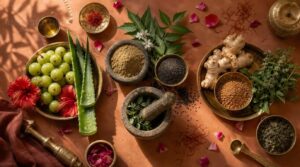
In Ayurveda, your hair type is tied directly to your dosha — and knowing yours changes everything about how you care for it. Each dosha comes with its own set of needs, quirks, and go-to remedies.
Here’s what you need to know for each one.
Vata Hair Qualities and Care Needs
If your hair tends toward dryness, frizz, and breakage, your Vata dosha may be the reason. Vata hair craves moisture retention above all else.
Start with a warm sesame oil or bhringraj oil scalp massage, practice gentle detangling after conditioning, and use weekly hydrating masks.
Nighttime nourishment with a light oil seal and frizz control products keeps Vata hair balanced and strong.
Pitta Hair Qualities and Care Needs
Where Pitta hair runs hot — literally — Pitta types often deal with an oily, sensitive scalp, early greying, and thinning at the crown. Your Pitta hair care routine should center on cooling and calming.
- Use cooling shampoos with mint infusions or neem weekly
- Apply coconut oil or aloe vera to reduce scalp heat
- Follow hydration strategies with cool water rinses only
- Prioritize sun protection — cover your head outdoors
- Commit to gentle styling and dosha-specific hair care routines
Kapha Hair Qualities and Care Needs
Kapha hair is naturally thick and lustrous — but when it’s out of balance, oiliness, buildup, and flatness take hold. Addressing these concerns requires a focus on Lightweight Cleansing and Scalp Decongestion.
Incorporate Detoxifying Shampoos with neem into your routine to clarify the scalp, and maintain Reduced Oil Buildup through Balanced Wash Frequency. These steps ensure excess sebum and residue are managed effectively without stripping natural moisture.
Enhance circulation with a brisk scalp massage using sesame oil, stimulating follicles and promoting vitality. These Dosha-specific hair care routines embody Ayurvedic self-care at its most practical, harmonizing tradition with targeted solutions.
Best Oils for Vata Hair
If your hair is dry, frizzy, or prone to breakage, you’re likely dealing with Vata imbalance. Sesame oil benefits this type beautifully — it deep-conditions while zinc and iron strengthen the shaft.
For a lighter option, almond oil moisturizer works effectively.
Herbal infused blends featuring Ashwagandha oil and licorice root infusion take Vata hair care further.
Castor oil, mixed with coconut oil, adds density.
Best Oils for Pitta Hair
Pitta scalps run hot — literally. If you notice redness, sensitivity, or excessive shedding, your scalp needs cooling down before anything else.
A Cooling Oil Blend built around coconut oil and almond oil serves as your starting point in Ayurveda. Add Amla Oil Blend for antioxidant support, Yashtimadhu Soothing Oil to calm inflammation, Jojoba Moisture Oil for sebum balance, or Sunflower Light Oil for a feather-light finish.
Best Oils for Kapha Hair
If your roots get greasy fast and your scalp feels heavy or itchy, you’re likely dealing with Kapha hair — and your oil choices matter.
Skip thick castor oil and coconut oil here. Instead, reach for a sesame base oil, a grapeseed detox blend, or small amounts of mustard stimulant.
Add a neem cleansing infusion, shikakai light mix, or olive oil to keep Kapha hair care light, circulatory, and buildup-free.
Seasonal Ayurvedic Hair Care Adjustments
Your hair doesn’t live in a vacuum — the seasons shift it constantly. Seasonal dosha balancing for hair maintenance means adjusting your routine every few months.
- Monsoon Light Cleansing with reetha and neem keeps Kapha buildup in check
- Summer Cooling Rinses using amla and hibiscus calm Pitta heat
- Winter Warming Oil massages with sesame nourish dry, Vata-aggravated strands
- Autumn Conditioning Boost with bhringraj prevents seasonal brittleness
How to Choose a Routine by Hair Type
Think of your dosha as a starting point, not the whole map. Layer in your actual hair texture — fine hair needs lighter oils, curly hair craves deeper moisture, and high-porosity strands require frequent conditioning.
Scalp sensitivity, heat styling frequency, and curl pattern care all enhance the picture. These factors refine your approach beyond basic dosha principles.
Dosha-specific hair care routines work best when customized around your real, lived-in hair.
Scalp Massage and Growth Techniques

Your hands are one of the most powerful tools in your hair care routine.
The way you touch your scalp — the pressure, the pattern, the timing — shapes how well your follicles respond to everything else you do. Here’s what a truly effective scalp massage practice looks like.
Champi Head Massage Method
Champi is one of Ayurvedic medicine’s most complete scalp rituals. Warm oil massage therapy begins at your neck and shoulders — the neck-shoulder flow prepares your body to release tension before a single finger touches your scalp.
From there, circular strokes, knuckling technique, and fist rotation work through your scalp, while gentle hair tugging stimulates follicles.
Oil heat retention deepens absorption, supporting scalp circulation, follicle stimulation, and stress reduction.
Circular Scalp Massage for Circulation
After champi loosens tension, circular massage takes things deeper. Use fingertip pads — never nails — with gentle pressure that moves your scalp without sliding across it.
- Section Timing: Spend 10–15 seconds per zone for full scalp coverage
- Incremental Duration: Start at 3–5 minutes, build toward 10
- Warm Oil Synergy: Heat boosts circulation and follicle stimulation naturally
Scientific evidence on scalp massage and hair growth validates daily consistency.
Marma Point Massage Basics
Circular massage builds the foundation — marma point massage takes it further. 107 essential energy points, mapped in ancient Ayurvedic texts, are located where muscles, veins, and tissue converge on your scalp.
| Marma Practice | What It Means for You |
|---|---|
| Marma Identification | Find points using anatomical landmarks |
| Gentle Touch | Thumb pad, firm but never painful |
| Point Duration | Hold each point 5–30 seconds |
| Sequencing Patterns | Move crown to base systematically |
Safety contraindications are important: avoid broken skin or inflammation.
Warm Towel Wrap After Oiling
Once you’ve massaged your oil in, a warm towel wrap seals the deal. Soak a clean cotton towel—towel material choice matters—wring it out, and wrap it snugly around your head. This heat retention tip keeps natural oil massage benefits active longer, improving blood circulation to the scalp.
Leave it on for 10–15 minutes, monitoring scalp comfort throughout the process. Follow with thorough post-wrap cleansing to complete the routine.
Rosemary Essential Oil for Scalp Massage
After that warm towel wrap, your scalp is primed and ready to absorb. Rosemary oil earns its place here: research comparing it to 2% minoxidil showed similar hair count improvements, making its comparative efficacy genuinely impressive.
For your oil dilution ratio, mix two drops into a teaspoon of coconut or jojoba carrier oil. Always do a safety patch test first to ensure no adverse reactions occur.
If irritation does show up despite your patch test, this guide to the best hair dye removers can help you gently correct course.
Apply using a gentle circular technique across the crown and hairline. This aromatic blend aligns beautifully with Ayurveda’s whole-scalp philosophy, promoting holistic absorption and balance.
Lavender and Sandalwood for Relaxation
Once rosemary has done its work, lavender and sandalwood take the ritual somewhere deeper. Add two drops of each to your diffuser blend for a calm bedtime atmosphere that aids aromatic mindfulness and stress management.
Sandalwood’s grounding scent therapy lingers for hours — some blends offer extended fragrance wear up to 12 hours — anchoring the mind-body connection central to integrated scalp care and overall wellness.
Stress Reduction for Healthier Hair Cycles
Chronic stress quietly disrupts your hair cycle — elevated cortisol can shorten the growth phase and push more strands toward shedding. Cortisol control through daily movement, sleep consistency, and meditation practices stabilizes this cycle from within.
Hormonal shifts and environmental changes that alter your curl pattern are explored in depth in this guide to why hair texture changes from curly to straight, giving you a clearer picture of what’s driving the shift.
An Ayurvedic diet rich in adaptogenic herbs enhances stress resilience at a cellular level. This mind-body influence on hair health is the integrated approach to preventing hair loss that Ayurveda has always championed.
Balayam Technique and Traditional Beliefs
Balayam is one of the more intriguing traditional Indian hair care practices — you simply rub your fingernails together briskly for 5–10 minutes, once or twice daily.
The belief centers on fingertip reflex and nerve stimulation connecting to hair follicle stimulation and blood circulation to the scalp. As part of an integrated approach to preventing hair loss, this Ayurvedic self-care habit is low-risk, though evidence review remains limited.
Indian Diet for Healthy Hair

What you eat shows up in your hair—sometimes more than any oil or herb ever could. Indian food traditions have long leaned on specific ingredients that feed your follicles from the inside out.
Here’s what to put on your plate.
Lentils and Yogurt for Protein
Your hair is literally made of protein — so what you eat matters. Lentils and yogurt create powerful amino synergy, forming a near-complete protein duo that fuels keratin production.
Together, they deliver fiber balance, a probiotic boost for gut health, and steady nutrients your follicles actually need.
- Cooked lentils topped with plain yogurt make easy meal prep
- Greek yogurt increases complete protein per serving
- Lentil fiber facilitates digestion and steady nutrient delivery
- Probiotics in yogurt improve gut absorption for hair health
- Add turmeric and cumin to boost this protein-rich foods bowl
Eggs and Spinach for Biotin
Biotin is your follicles’ best friend — and two foods deliver it beautifully together. One cooked egg provides roughly 10 micrograms from the yolk alone, while a serving of spinach adds more.
Aim for the 30-microgram daily biotin target through protein-rich foods like these. Always cook your eggs — raw whites block absorption.
Try a simple spinach-and-egg scramble daily to meet your needs.
Flaxseeds and Walnuts for Omega-3s
Flaxseeds and walnuts are two of the best omega-3-rich foods you can add to your daily plate. Both deliver ALA, a plant-based essential fatty acid that bolsters hair elasticity and shine.
Keep in mind Omega-3 Conversion Limits—your body converts ALA slowly. Grinding flaxseeds boosts ALA bioavailability greatly, while their lignan antioxidants protect your scalp.
Sprinkle both into your balanced diet daily.
Moringa Leaves for Iron and Zinc
Omega-3s strengthen your strands from within — and moringa picks up right where those healthy fats leave off. This nutrient-rich herbal ingredient delivers iron and zinc your follicles genuinely need.
Moringa iron bioavailability improves greatly when you boil the leaves rather than eat them raw. Adding lime juice works as a zinc absorption booster too.
Just watch out for anti-nutrients — phytic and tannic acids limit what your body actually absorbs.
Ghee, Nuts, and Healthy Fats
Your follicles do not just need protein — they need fat to absorb it. Ghee brings fat-soluble vitamins A, D, E, and K straight to your scalp tissue, plus conjugated linoleic acid from its butterfat. Nuts deliver nut polyphenols and essential fatty acids that support cell membranes around every follicle.
Keep balanced fat portions simple:
- One tablespoon ghee daily in warm dal or rice
- A small handful of walnuts for omega-3-rich foods
- Almonds for vitamin E and nutrient absorption support
- Swap butter for ghee — same Ayurvedic nutrition, better fat profile
Triphala and Digestive Balance
Your gut is the quiet engine behind your hair growth. Triphala — that classic three-fruit blend — works through Agni balancing and Ama detoxification, clearing the digestive path so nutrients actually reach your follicles. Think of it as prebiotic gut support from your kitchen cabinet.
Start with Triphala dosing of half a teaspoon in warm water each evening.
Consistent stool regularity, rooted in Ayurvedic nutrition and dosha-specific diet, means your body stops wasting resources — and your hair notices.
Hydration for Scalp and Follicle Support
Water does more than quench thirst — it directly shapes your follicle microenvironment. When scalp humidity balance drops, stratum corneum hydration falls, triggering tightness, flaking, and increased TEWL.
To combat this, drink at least eight glasses daily to support nutrient transport to follicles. Aloe vera scalp care adds barrier occlusion, locking moisture in and maintaining stable, healthy follicles.
Foods to Reduce Based on Dosha Type
What you eat can either feed your hair or fight against it. For Vata, cut back on dry, cold, and raw foods that deplete moisture. Pitta types should avoid hot spices, fermented dairy, and red wine — anything that stokes internal heat. Kapha benefits from reducing sweet desserts and heavy comfort foods.
Stimulant reduction matters across all three doshas, since caffeine and alcohol quietly disrupt dosha balancing and slow hair growth.
Top 5 Ayurvedic Hair Products
Finding the right Ayurvedic product can feel overwhelming when every shelf is packed with options. The good news is that a handful of well-formulated picks actually deliver on the tradition’s promises.
Here are five worth adding to your routine.
1. Life Pursuits Bhringraj Hair Growth Oil
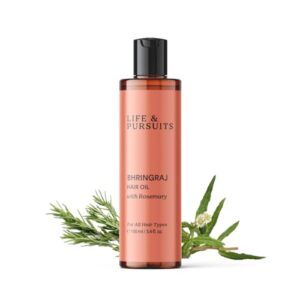
If you want one oil that brings the whole Ayurvedic tradition into a single bottle, Life Pursuits Bhringraj Hair Growth Oil is worth a serious look.
It blends cold-pressed organic oils with heavy-hitting herbs — Bhringraj, Amla, Hibiscus, Neem, and Curry Leaves — and skips synthetic fragrances and silicones entirely.
Massage it into your scalp 2–3 times a week, leave it on for at least two hours or overnight, and give it 8–12 weeks. At $16.99, it’s a solid starting point.
| Best For | Anyone dealing with dry, itchy, or thinning hair who wants a clean, herb-based oil without synthetic additives — including people with color-treated or curly hair, and even babies 6 months and up. |
|---|---|
| Format | Liquid oil |
| Key Herbs | Bhringraj, Amla, Rosemary |
| Vegan & Cruelty-Free | Yes |
| Synthetic-Free | No fragrances, colors, silicones |
| Scent Profile | Strong herbal |
| Price | $16.99 |
| Additional Features |
|
- Packed with well-known Ayurvedic herbs like Bhringraj, Amla, and Hibiscus — no mineral oil, silicones, or synthetic fragrances
- Works as a scalp treatment, conditioner, and moisturizer all in one
- Pretty affordable at $16.99 for a versatile, multi-use product
- The herbal scent is strong — if you’re sensitive to smells or prone to migraines, it might be a dealbreaker
- Results take time; you’re looking at 8–12 weeks of consistent use before noticing much
- Some users have noticed the scent or formula can vary slightly between batches
2. Banyan Botanicals Ayurvedic Herbal Hair Oil
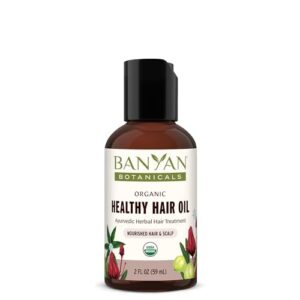
Banyan Botanicals Ayurvedic Herbal Hair Oil keeps things beautifully traditional. It infuses Bhringraj, Brahmi, Amla, and Hibiscus into a sesame and coconut oil base — the kind of formula your grandmother might recognize.
Apply it to your scalp and hair, massage it in, then leave it on for at least 30 minutes or overnight. Wash out with a gentle shampoo, and repeat weekly.
At $16.99 for 4 oz, it’s a clean, vegan option worth adding to your rotation.
| Best For | Anyone who wants a traditional, plant-based hair oil to nourish a dry scalp or give aging and chemically treated hair some extra love. |
|---|---|
| Format | Liquid oil |
| Key Herbs | Bhringaraj, Amla |
| Vegan & Cruelty-Free | Yes |
| Synthetic-Free | Non-GMO, sustainably sourced |
| Scent Profile | Strong soy/sesame |
| Price | $16.99 |
| Additional Features |
|
- Classic Ayurvedic herbs like Bhringaraj and Amla are well-regarded for supporting hair health and scalp circulation.
- Vegan, non-GMO, and sustainably sourced — a clean pick if that stuff matters to you.
- Affordable at $16.99, and works for both scalp massage and general hair treatment.
- The scent is strong — think sesame oil and soy sauce, which not everyone enjoys.
- It’s an oil, so expect a heavier feel and a thorough wash-out afterward.
- At only 4 oz, regular users will go through it pretty fast.
3. OM Botanical Organic Sulfate Free Shampoo
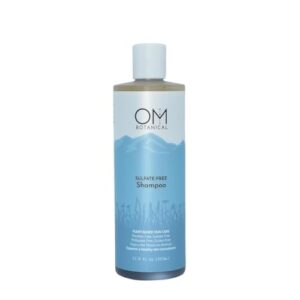
OM Botanical’s sulfate-free shampoo brings Ayurveda into your shower, built around soapnut and shikakai—herbs Indian women have used for centuries. It combines these with neem, fenugreek, and aloe vera, creating a formula free of sulfates, parabens, and artificial dyes.
The shampoo is gentle enough for color-treated or damaged hair and works effectively on dry, curly, or fine strands. Its medicinal scent and minimal lather require an adjustment period for some users.
At $26.60 for 12 oz, it serves as a solid everyday cleanser for a natural hair routine.
| Best For | Anyone looking to take a more natural approach to hair care—especially if you’re dealing with color-treated, dry, or damaged hair and want something gentle enough for daily use. |
|---|---|
| Format | Liquid shampoo |
| Key Herbs | Reetha, Shikakai, Neem |
| Vegan & Cruelty-Free | Yes |
| Synthetic-Free | No sulfates, parabens, dyes |
| Scent Profile | Musky/medicinal |
| Price | $26.60 |
| Additional Features |
|
- Made with real plant-based ingredients (soapnut, shikakai, neem) with no sulfates, parabens, or artificial dyes—as clean as it gets
- Safe for color-treated hair, so you’re not watching your dye job fade with every wash
- Good for a range of hair types—curly, fine, dry, or damaged—without causing extra breakage
- Very low lather, which takes some getting used to if you’re switching from a conventional shampoo
- The scent is strong and medicinal—some people love it, others really don’t
- At $26.60 for 12 oz, it’s a bit pricey, especially if you have long hair or wash daily
4. Havintha Natural Ayurvedic Shampoo Powder
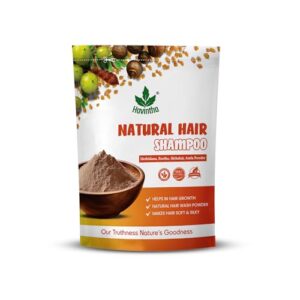
Havintha’s Ayurvedic Shampoo Powder takes hair washing back to its roots — literally. You mix one tablespoon of this herb-packed powder with about 100 mL of warm water, let it soak for 15 minutes, then massage it gently into your scalp.
The blend of amla, shikakai, and reetha cleanses without stripping your natural oils. No sulfates, no synthetic additives.
Users report softer, shinier hair with less breakage over time.
At $11.99 for 227 g, it’s an affordable entry into traditional Ayurvedic hair care.
| Best For | Anyone looking to ditch synthetic shampoos and try a traditional, chemical-free hair care routine — especially those with dry or damaged hair who don’t mind a bit of prep work. |
|---|---|
| Format | Powder shampoo |
| Key Herbs | Amla, Reetha, Shikakai |
| Vegan & Cruelty-Free | Yes |
| Synthetic-Free | No synthetic chemicals |
| Scent Profile | Strong spiced herbal |
| Price | $11.99 |
| Additional Features |
|
- Made from real Ayurvedic herbs (amla, reetha, shikakai) with zero synthetic chemicals or detergents
- Regular use can mean softer, shinier hair with less breakage — especially when you pre-oil first
- One pack goes a long way at just $11.99 for 227 g
- Strong herbal smell that not everyone will love
- No lather and a gritty texture means you’re scrubbing for 15–20 minutes, not 2
- Can strip hair color and may cause extra shedding for those with sensitive scalps
5. Organic Neem Amla Mint Shampoo Bar
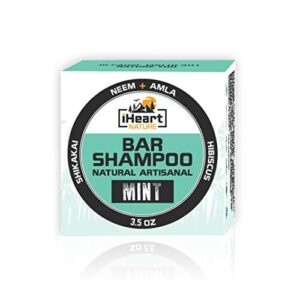
This little bar packs a serious punch. Formulated with neem, amla, shikakai, and hibiscus extracts, it cleanses your scalp while delivering real Ayurvedic benefits — no sulfates, parabens, or synthetic fragrances. The mint essential oil leaves a cooling, rejuvenating sensation that feels genuinely invigorating.
One bar lasts roughly three times longer than an 8 oz liquid shampoo bottle, making it ideal for travelers and zero-waste converts alike.
The adjustment period is real, but most users notice softer, less frizzy hair within a few weeks.
| Best For | Anyone looking to ditch plastic bottles and synthetic chemicals — especially travelers, campers, and people dealing with dry scalp or frizz. |
|---|---|
| Format | Solid bar |
| Key Herbs | Neem, Amla, Shikakai |
| Vegan & Cruelty-Free | Yes |
| Synthetic-Free | No sulfates, parabens, silicones |
| Scent Profile | Cooling mint |
| Price | Not listed |
| Additional Features |
|
- Loaded with real Ayurvedic herbs (neem, amla, shikakai, hibiscus) that actually support scalp health and reduce frizz over time
- Lasts about 3x longer than a regular 8 oz liquid shampoo — solid value for the size
- Fully clean formula: no sulfates, parabens, silicones, or synthetic fragrances, and it’s vegan and cruelty-free
- Can leave hair feeling a bit "squeaky" or under-conditioned, especially at first
- Dissolves faster than it should if you leave it sitting in a wet shower tray
- Takes some getting used to if you’re coming from a high-lather liquid shampoo
Frequently Asked Questions (FAQs)
What is the Indian secret for hair growth?
The real secret is consistency — oiling, herbal care, diet, and scalp massage working together over time.
No single trick does it. It’s a whole system, practiced weekly, that builds stronger, longer hair.
How do Indians grow their hair so fast?
Indians grow hair fast through consistent oiling, herbal care, scalp massage, and protein-rich diets. These habits protect strands, reduce breakage, and keep follicles nourished — so length builds steadily over time.
How to make Indian hair grow faster?
Focus on three things: oil your scalp twice a week, eat enough protein, and stay consistent.
Results take time, but your hair responds well when you build a simple, nourishing routine.
What is the secret of Indian hair growth?
The secret isn’t one thing — it’s everything working together. Consistent oiling, herbal cleansing, nourishing food, and daily scalp massage build a foundation where hair can’t help but thrive.
How can Indian hair grow faster naturally?
Combine regular scalp massage, herbal oil treatments, and a protein-rich diet. Consistency is everything — weekly oiling, gentle cleansing, and staying hydrated gives your follicles the support they need to thrive.
How do Indians grow their hair so long?
Long, lustrous hair doesn’t grow overnight — it grows through years of consistent care. Regular scalp oiling, herbal cleansing, nourishing food, and gentle massage work together as a daily, lifelong practice.
How can I regrow my Indian hair?
Regrowing your hair starts with the scalp. Keep it clean, nourished with herbal oils, and stress-free.
Pair that with a protein-rich diet and consistent massage, and you’ll see real change over time.
Can pregnancy affect traditional hair care practices?
Pregnancy can affect your traditional hair care routine. Hormonal shifts may make your scalp oilier, drier, or more sensitive, so your usual oiling schedule or herbal blends might need adjusting.
How often should hair be washed weekly?
Most people wash their hair 2 to 3 times per week.
If your scalp gets oily quickly, wash more. If it feels dry or tight, washing less often helps protect your natural oils.
What causes premature graying in young people?
Premature graying often comes down to genetics, nutrient deficiencies like low B12 or iron, thyroid imbalances, and oxidative stress from smoking or chronic stress.
These factors can quietly disrupt melanin production in hair follicles.
Conclusion
The roots always tell the story. Every Indian hair growth secret covered here—from champi massages to amla-rich diets—points back to one truth: healthy hair is built slowly, from the scalp up.
You don’t need an elaborate routine overnight. Pick one habit, stay consistent, and let it compound.
A weekly oil session.
A handful of moringa.
Small steps, practiced with intention, grow into the kind of results that get passed down for generations.